October 2025 Archives
As the New Deal Federal Government got involved in encouraging home ownership and guaranteeing home loans, as banks and savings & loan companies failed in the Great Depression, the government commissioned studies of the state of residential real estate in major cities. In recent years, the maps drawn up by the Home Owners' Loan Corporation (HOLC) have been characterized as "redlining maps," a reference to the practice of "redlining," variously defined as blocking the sales of homes to African-American buyers to certain designated neighborhoods or withholding mortgage loans from buyers in predominantly black neighborhoods.
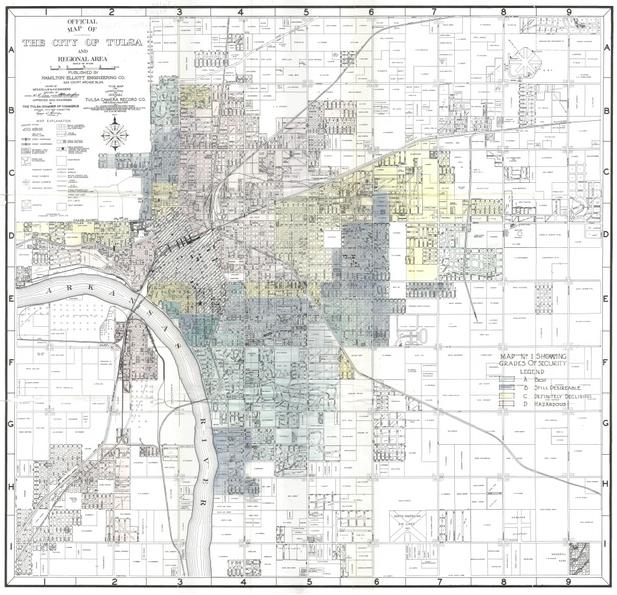
Hundreds of the HOLC maps are now available to view on the University of Richmond's Mapping Inequality website. The maps have been geotagged and overlaid on present-day interactive maps. There are nine maps online for Oklahoma: Tulsa, Oklahoma City, Miami, Muskogee, McAlester, Ada, Norman, Enid, Alva.
The HOLC City Survey Files, 1935-1940, are mostly available online on the National Archives website. The second report for Tulsa, Report of a Survey in Tulsa, Oklahoma, for the Mortgage Rehabilitation Division, Home Owners' Loan Corporation, was submitted on November 26, 1935, by field agent R. L. Olson.
Here is the 1935 HOLC map of Tulsa, superimposed on a modern interactive map.
What I notice about the Tulsa map is that, although the black district is included in Zone D (Hazardous), so are all the white working-class neighborhoods to the northeast (Crutchfield, Springdale), immediately east of downtown (what we now call the Pearl District), Crosbie Heights west of downtown, and all the annexed towns west of the river (West Tulsa, Red Fork, Carbondale, Garden City), which were also almost exclusively white. The "Hazardous" classification appears to reflect proximity to industry and rail. Zone C (Definitely Declining) includes once desirable but aging neighborhoods like Owen Park, Brady Heights and the Near Northside, Riverview north of 15th, the western part of Kendall-Whittier (west of Columbia, north of Admiral), and Forest Orchard (between 11th & 13th, Peoria to Lewis).
Contrast Tulsa's map with Omaha's, where only black neighborhoods were included in Zone D. Wichita marked most of its older section, 58% of the residiential area, as hazardous, including areas that had been prosperous and well-regarded 40-50 years earlier. (Wichita has much more specific descriptions of individual zones and subzones.)
The entire 1935 Tulsa HOLC report is on the National Archives website, but it is arranged back-to-front -- the last page of the online file is the title page of the report.
Olson describes the classifications on the Tulsa map as conservative.
Nine of the leading authorities in real estate in Tulsa gathered at the office of the real estate board and agreed upon the designations shown upon the map. Their names are attached to the map. All portions of the city were later visited by the interviewer making this report and it was noticeable that the grades of security designated by the real estate men were very conservative. Tulsa, being new, has a better class of homes throughout than other cities comparable in size. Grades B [Still Desirable] and C [Definitely Declining] shown upon the map could, without dispute, be considered A [Best] and B respectively.
The August 1936 issue of the Federal Home Loan Bank Review contains a three-page article, "Security Maps for Analysis of Mortgage Lending Areas," that explains the reasons for creating such maps and the characteristics of the four graded areas. The point was for a lender to have an idea of whether a mortgaged property was likely to increase in value, retain value, or decline in value over the term of the mortgage, and to take that into consideration when deciding how much to lend and what proportion of a home's value was safe to lend.
The HOLC report is a fascinating snapshot of Tulsa's 1935 economy -- skilled labor rates, tax rates, unemployment, vacancies, construction costs, bank assets, population trends.
Tulsa has no slum areas. The city was considered for the location of a low cost housing or slum clearance project, as a political sop, but real estate men advised that this was discouraged because of absence of demand or a need for it.
1935 was near the end of Tulsa's streetcar system (although the Sand Springs Railway would continue to operate for another decade and a half). The report mentions a streetcar line north and south on Main Street, run by the United Service Company, with buses to other parts of the city, and that the Union Transportation Company (likely the successor to the Oklahoma Union Traction Company) was "operating only buses." "Only 12 minutes is consumed in the average ride to the outskirts, from the business district." A decade or so earlier, the Tulsa Street Railway had four streetcar lines, including service to Owen Park, Riverview, and the University of Tulsa, while Oklahoma Union Traction served the Fairgrounds and Owen Park, in addition to interurban service to Red Fork and Sapulpa.
In 1935, Tulsa had four banks, all national banks: First National Bank, National Bank of Tulsa, National Bank of Commerce, and Fourth National Bank. National Bank of Tulsa was the successor to Exchange National Bank, Tulsa's only bank failure, which had been reorganized in 1933 with the financial support of local oilmen and no losses to depositors.
Here is the page of the report containing Grades of Security map showing the four areas. The base map shows subdivisions, streets, schools, churches, parks, and civic buildings, which are indexed on the right side of the sheet.
The discussion of neighborhood trends notes the desirability of Osage County near downtown Tulsa, but the legal difficulties in developing the area.
The report had this to say about Greenwood and some of the other areas labeled D:
The negro section of Tulsa is very definitely defined upon Map No. 2. The section lies north of the Frisco railroad tracks, the eastern extremity being Peoria Avenue, the western boundary being Detroit Avenue on the southwest and Cincinnati Avenue on the west. North of the present restricted colored area is some room for expansion which will undoubtedly be required in the near future.To the north and east of the negro section are the homes occupied by wage earners and workers. Across the Arkansas River, in the southwest corner of the city, are two industrial residential sections, both in the vicinity of the refineries.
I never found a Map No. 2 in this file; Map No. 1 is the Grades of Security map.
Appendices include statements of condition for banks and savings & loan companies, summaries of interviews with leading bankers and real estate men. Statistics in the main body of the report include numbers of homes built each year through the 1920s boom and numbers of foreclosures. 1928 was a peak year, with 1337 new homes built, but the numbers fell precipitously after Black Friday, and from 1932-1934 the numbers were only in double digits.
Valuation shrinkage of Tulsa residential real estate was estimated to be between 30% and 50%, with the worst shrinkage at the top end of the market:
By 1930 the city had an unusually large number and percentage of homes, constructed in the boom days, at prices ranging from $25,000 and up to $100,000. When oil brokers and so called "gamblers" were forced to abandon such homes there was no sale for them whatever. Many were offered for 25% of their former value or cost. As a matter of fact the prices paid for these homes did not represent true or actual values because in the hey-day of Tulsa's oil boom there was a mad scramble for homes with very little regard to prices. Eliminating this class of property, which was very small in percentage as compared with the actual number of homes in the city, the shrinkage in value was probably about 40% as represented by sales during the depression.
From the Tulsa Police Department Facebook page:
INDECENT PUBLIC ACTIVITYOn September 22nd, 2025, around 2:45 p.m., Officers responded to 300 S. Denver for a call about Outraging Public Decency.
A witness called in saying a man and woman were engaging in intercourse under a blanket on the sidewalk.
Officers responded and found the man and woman, identified as Klintel Betts and Notoshka Keene, still active under the blanket. Betts attempted to hide from the Officers under the blanket, but was unsuccessful.
Betts and Keene put their clothing back on and were taken into custody without incident.
Klintel Betts was arrested for Outraging Public Decency, and he has a non-extraditable felony warrant out of Kansas for Probation Violation.
Notoshka Keene is a tribal member and falls under the McGirt ruling; therefore, detectives will turn this case over to the FBI and Tribal Authorities for further investigation.
These are arrests, not convictions.
Note the next to last paragraph. These two people were allegedly engaged in the same criminal act of public conjugation (in the middle of the day, within view of the bus station, federal courthouse, and BOK Center main entrance), but one has a special ancestor and the other one doesn't, so he will be prosecuted in state court by our elected DA and she will be prosecuted in Muscogee Creek Nation court or maybe federal court or maybe not at all. We have one crime, committed in the same place at the same time by these two people (it takes two to tango), but two different justice processes, depending on ancestry. That's not equal justice under law, it's apartheid.
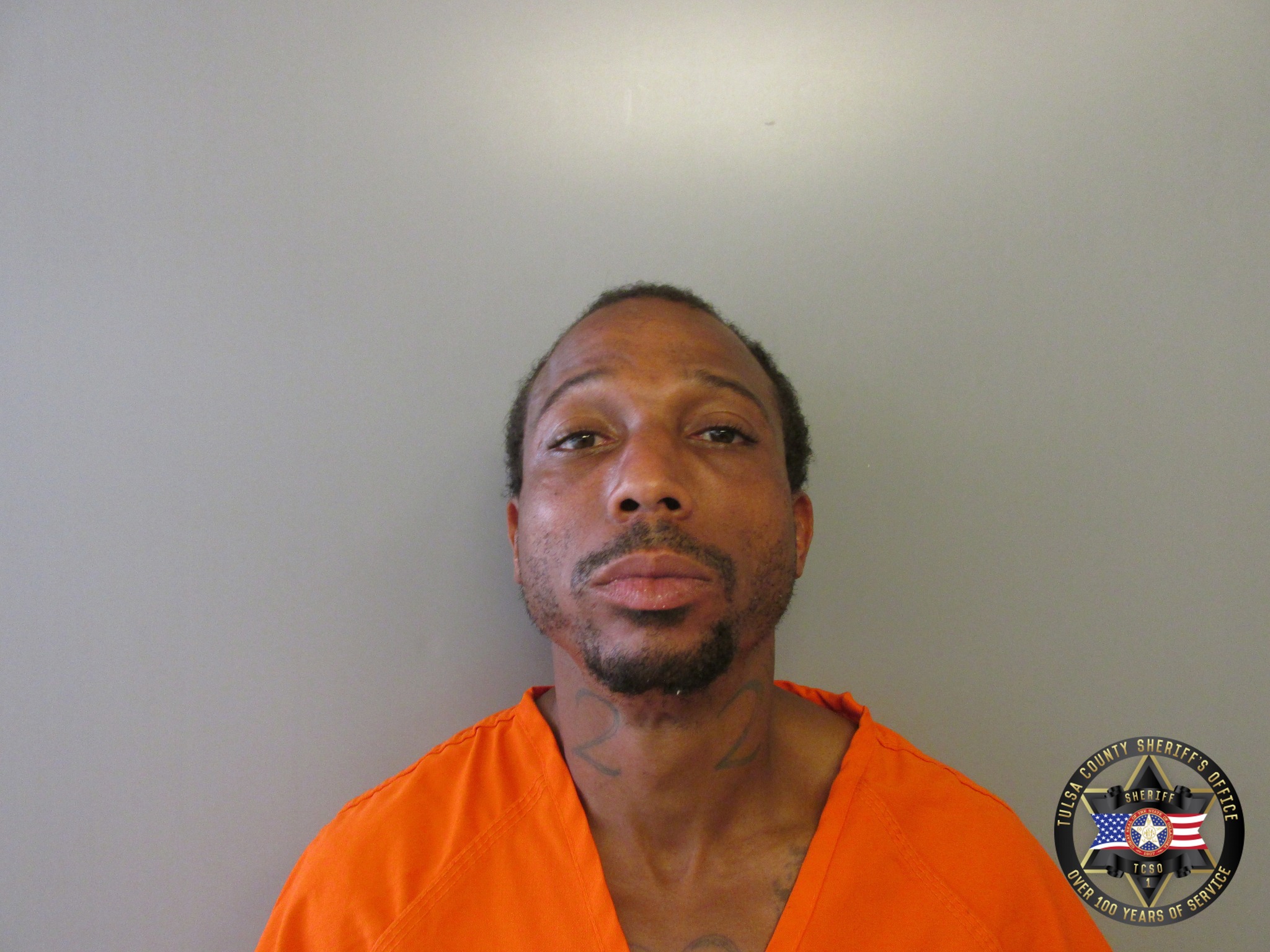
District Attorney Steve Kunzweiler's office has already charged Klintel Dorian Betts with a criminal misdemeanor, a violation of Oklahoma state law. He has been arraigned in District Court by Special Judge Shannon Taylor. Betts has quite a large number of prior encounters with the law. Last summer Betts pled guilty to assault with a deadly weapon and threatening an act of violence; he was given a 10-year suspended sentence, the terms of which he violated this spring, testing positive for meth twice in a row and failing to return for a second retest. In February 2024, Betts was sentenced to court costs and time served for Improper Walking on Roadway and Obstructing and Officer. In 2013, Betts pled guilty to domestic assault and battery, possession of meth, The failure of a prosecution witness to appear spared Betts from conviction for burglary, kidnapping, indecent exposure, and robbery with a firearm in 2012, but his child's mother filed a protective order against him in the same year. Then there was the 2003 deferred sentence for possession of a stolen vehicle.
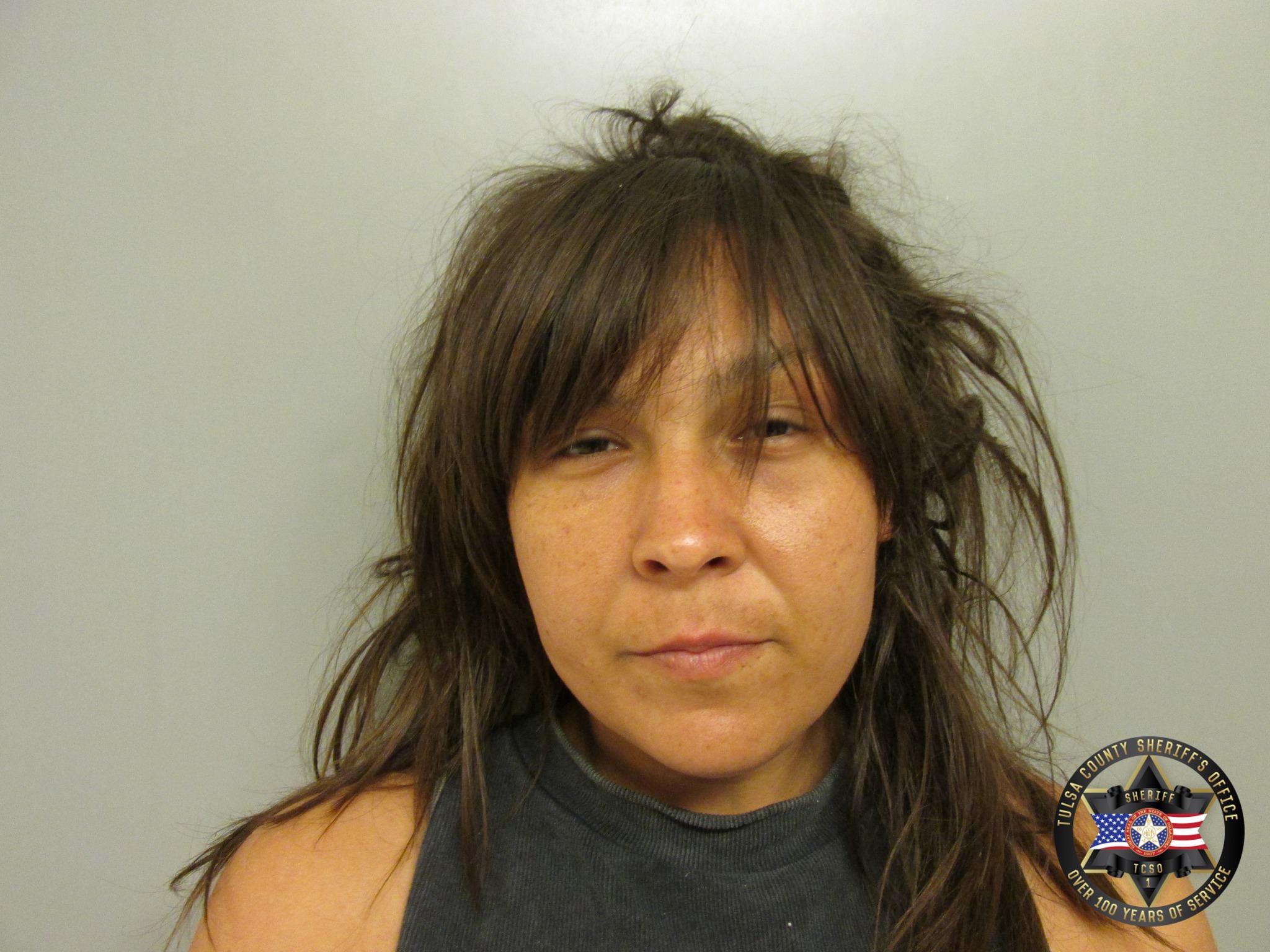
As far as I have been able to determine, Notoshka Keene has yet to be charged with a crime in Muscogee Creek or federal court. Her name does not appear in a search on either platform, although it's now been 13 days since her arrest. I have emailed the Muscogee Creek Nation Attorney General, the chief prosecutor, the Lighthorse (police), and the U. S. Attorney for the Northern District of Oklahoma to ask whether they have or intend to charge Keene. No one has yet responded. (Someone named Natoshka Keene and Natoshka Kenne appears in OSCN dockets; that may or may not be the same person.)
If you've been looking at the lawlessness of San Francisco and Chicago and thinking that could never happen here, because Tulsa County would never elect the kind of pro-criminal, pro-chaos, Soros-backed DAs like Chesa Boudin, George Gascón, and Kimberly Foxx that have allowed crime to run rampant in Democrat-run cities.
But because of the McGirt ruling voters in the eastern half of Oklahoma don't have full control over who prosecutes crime in their counties. If the offender has a claim, however miniscule, to tribal citizenship, the prosecutor will be tribal or Federal. A Soros DA might not win an election for Tulsa County DA, but the likes of George Kaiser could spend enough money to dominate low-turnout tribal elections and put the tribes under the control of left-wing, pro-criminal and pro-chaos officials. At the Federal level, eastern Oklahoma has been and may be subjected to the appointees of a left-wing, pro-criminal president, while the appointees of a conservative president may be blocked by the Democrat minority in the U. S. Senate.
Prosecuting Betts is the office of District 14 District Attorney Steve Kunzweiler, a conservative, tough-on-crime Republican. The District Attorney for District 14 is directly elected by the citizens of Tulsa County. Every American citizen living in Tulsa County is eligible to vote for DA, whether or not they also have tribal citizenship. Kunzweiler was first elected in 2014 and re-elected in 2018 and 2022. In 2018, Kunzweiler received 116,500 out of 198,842 votes cast. The population of Tulsa County in 2020 was 669,279, so Kunzweiler received the votes of 17.4% of the population affected by his decisions as a prosecutor. (There were no Democrats, Libertarians or Independents running in 2014 and 2022; Kunzweiler first won the position in the 2014 Republican runoff.)
If the MCN prosecutes Keene, it will be under the authority of the office of Attorney General Geri Wisner, a Democrat who was appointed to the position in 2022 by the Principal Chief and confirmed by the National Council.
On September 20, 2025, there was an election for MCN National Council. Under the rules in recent elections, all National Council seats are elected at-large, although members must live in the district they seek to represent, so everyone who went to the polls had all eight Class B National Council seats on the ballot, plus a referendum. 3,754 votes were cast in the referendum; the vote totals in the council races ranged from 3,631 to 3,754. In the previous general election, in 2023, 4,026 ballots were cast for Principal Chief, 3,996 voted for Second Chief, and slightly under 4,000 ballots were cast in each of the eight Class A National Council elections. Principal Chief David W. Hill won his 2019 election with 3,399 votes, and the councilors elected in 2019 and 2021, who were in office when Wisner was appointed in 2022 received a maximum just below that number.
So the person who heads the office that prosecutes tribally-affiliated Americans (regardless of tribe) in the City of Tulsa south of Admiral Place and the rest of the former Creek Nation territory was made by people elected by (at most) 3,399 voters, who constitute 0.04% of the 813,184 people who lived in the Creek Oklahoma Tribal Statistical Area (OTSA) as of the 2020 Census. (Here's a link to the MCN election results page, where you'll find links to results containing the numbers above.)
There are only 18,095 registered voters in the MCN. Based on voter registration stats by county from January 2025 and adjusting where historic tribal boundaries split counties, I estimate 450,000 to 500,000 registered Oklahoma voters in the Creek OTSA.
If Keene is prosecuted by the Federal Government, it will be under the authority of the US Attorney for the Northern District of Oklahoma Clinton J. Johnson. Johnson was appointed to that role in 2021 by Joe Biden's Attorney General Merrick Garland, the failed Supreme Court nominee. Johnson was appointed after newly-installed President Biden asked for the resignations of 55 U. S. Attorneys, including R. Trent Shores, Donald Trump's 2017 appointee to the Northern District job.
In other words, depending on the ethnicity of the accused crook, the crime will either be prosecuted by a conservative Republican directly accountable to the voters of his jurisdiction or by someone appointed by the worst Democrat administration in history or by a Democrat tribal official appointed by people elected by a tiny number of voters.
In every other part of the world, local authorities prosecute every crime committed within their boundaries, regardless of the citizenship of the offender. When cameras caught me going five miles over the speed limit in Queensland, the Queensland police sent a speeding ticket to my home in Oklahoma, and I paid it online. The Queensland police didn't refer it to Steve Kunzweiler for prosecution.
Imagine a world in which you are governed not by the laws of wherever you happen to be at the moment but by the laws of your citizenship. The drinking age in Tulsa would be 21 for Tulsans, but 18-year-old visitors from the UK would be allowed to buy a pint at the White Lion. Dutch tourists would be allowed to open brothels in Bowlegs. A Sperry shoplifter in the Skiatook Dollar Tree would get a slap on the wrist, but a Saudi shoplifter would get a scimitar through his wrist. That's the kind of insanity that the previous Supreme Court majority put in place with McGirt.
TPD cites the McGirt ruling as the reason referring Keene to Federal and tribal authorities, but the real reason is the Mayor, not McGirt. Before Monroe Nichols was mayor, the City of Tulsa had asserted its authority to prosecute any criminal activity within its boundaries. That dispute was working its way through federal courts, and with the change in the makeup of the Supreme Court since McGirt (Barrett replacing Ginsburg), the outcome likely would have been a limitation of McGirt or even a reversal, correcting the inaccurate historical claims that underpin Gorsuch's ruling. Nichols promised during the campaign that he would stop the City's legal defense of its authority and would surrender to the tribal cabal, and he did.
It may take some other eastern Oklahoma mayor to push this issue through the courts, someone who can't be bought, someone with thick skin. There would need to be a non-profit public-interest legal organization helping out, but this issue isn't the sort of case that Institute for Justice, Alliance Defending Freedom, or ACLJ has historically taken on. Perhaps the NAACP would take an interest in a case where two people are involved in the same crime, but the black man (Betts) is prosecuted while the white woman (Keene) goes free.
MORE:
- KTUL's story on the arrest of Betts and Keene.
- KOTV's 2012 story on Betts's arrest for robbery and kidnapping, which also mention some of his prior involvements with the criminal justice system
UPDATE 2025/10/22: On October 6, I sent an inquiry to Brandee Beaver, Lead Records Clerk and Case Information Liaison for the Muscogee Creek Nation Attorney General's office. I have yet to receive a reply.
It may be that sex al fresco is not against Muscogee law. Here is the Muscogee (Creek) Nation Code Annotated. Title 14, Crimes and Punishments, section 2-317, does make Indecent Exposure a felony, but this couple was under a blanket. The offense does not appear to be covered under the Major Crimes Act.
RELATED:
The Constitution and Laws (1893) of the Muskogee Nation. Attempted abortion was punishable by whipping: "Be it enacted, That it shall be unlawful for any woman to use medicine calculated to cause infanticide; and any woman who may be found guilty of the violation of this law shall receive fifty lashes on the bare back." (Criminal Laws approved October 12, 1867.)
Present-day https://static1.squarespace.com/static/681cdef655f05d76e9fd3e36/t/682e19d57067053171974c97/1747851733199/title6.pdf">Muscogee Creek law prohibits same-sex "marriage" and does not recognize the validity of such "marriages" performed elsewhere. (Title 6, Section 2-104.)
UPDATE 2025/10/28:
Today I phoned the Muscogee (Creek) Nation Attorney General's office (MCNAG) and spoke to the records clerk. Keene was charged on September 23, 2025, with Outraging Public Decency under Title 14 § 2-114 (A) : MISD-Supplemental Crimes Act (Misdemeanor). The case number is CM-2025-1220. The next hearing is on November 5 in Okmulgee. The judge in the case is Lisa Otipoby-Herbert, and the prosecutor is Matthew J. Hall. Heath Mueller was appointed by the court as defense attorney. The defendant's name is listed as Na Toshka Angela Ann Keene.
As that link will indicate, the case has been in the system, but it can't be retrieved by searching for the name KEENE. Although the defendant's name was spelled correctly in the body of the record, the case is styled Muscogee (Creek) Nation vs. Notoshka Angela Ann King. Note that the first name is also rendered differently in the case title than in the body of the case (Notoshka vs. Na Toshka).
According to the Tulsa County Sheriff's Office Inmate Search, Keene is in custody at the county jail with a status of HOLD/MUSCOGEE (CREEK) NATION. Her address is listed as "Transient."
I asked whether any of the five men arrested in the prostitution sting in Glenpool that took place on October 23, 2025, had been referred to the MCNAG's office; the clerk advised me to direct that question directly to MCNAG Geri Wisner. One of the five, Jeremy Fair, senior pastor of Christ Presbyterian Church (PCA), has claimed in the past to be a Cherokee Nation citizen.
Meanwhile, Klintel Betts, Keene's partner in crime, pled no contest and received an 11-month suspended sentence plus time served. He was released on October 16.
More on this in a later entry.
 Subscribe to this blog's feed: