Oklahoma history books
While I have your attention:
I was asked recently if there were any books on early Oklahoma history I could recommend. Here are a few, some of which I've read only recently. The titles are hyperlinked to the publisher's website if still in print. Where available, I've included links to the Internet Archive's online lending library. Gardner's Books in Tulsa has a shelf of local history books, where I've acquired several of the items listed below. You may also find these in the Oklahoma Room at Tulsa Central Library for in-library use only. You may find these books for sale via AbeBooks or eBay.
This is certainly not a comprehensive list but simply the first books that came to mind, many of which I've read or reread recently, books that I've found enjoyable and informative.
Reference Works
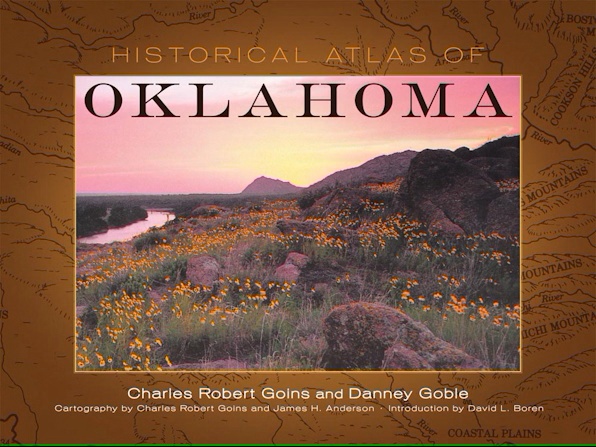
Whatever else you read from the list below, this book should be at your side. Each of over 100 maps is accompanied by an explanatory article on the facing page. Just reading through the book will give you a sturdy framework for further exploration of Oklahoma history. (Map 73 of the 1982 edition features the impressive (and obscene) Democrat gerrymander that preserved Democrat James Jones's 1st District seat for two more terms.)
On the Internet Archive: Internet Archive copy of the 3rd edition, 1982.
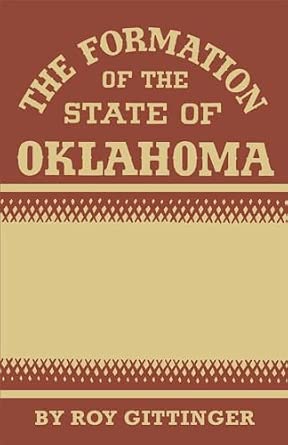 The book traces the process by which a part of the 1803 Louisiana Purchase became Indian Territory and then became Twin Territories and then became the State of Oklahoma in just 104 years. Jerry Gittinger began teaching at the University of Oklahoma Preparatory School in 1902. This book was his Ph.D. dissertation in 1917. It was republished in a second edition in 1939 (the version I have) and was reissued by OU Press as a paperback in 2015. As befits a dissertation, the book is thoroughly footnoted, with specific citation of the bills and debates and officials and treaties that brought the 46th State into existence with its idiosyncratic shape. If Neil Gorsuch had read this book, the McGirt ruling would never have happened, because he would have clearly seen that Congress deliberately and unambiguously dismantled tribal territory and tribal jurisdiction to bring all Oklahomans into the new state as equal participants in the new polity.
On the Internet Archive: Copy 1, copy 2.
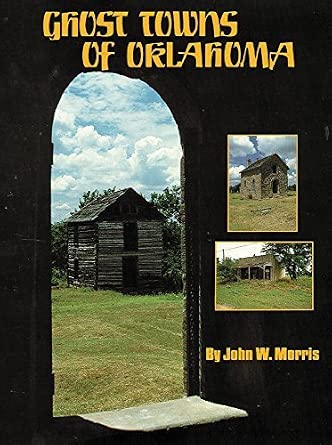 Towns that lost the county seat like Kenton, Cloud Chief, Grand, and Lehigh, exhausted oil and mining boom towns like Denoya (Whizbang) and Picher, towns the railroads bypassed like Centralia, towns drowned by the reservoirs like Keystone, Alluwe, Lugert, Kaw City, and Hochatown, towns crushed by dust storms like Knowles, territorial liquor towns left high-and-dry by prohibition at statehood like Keokuk Falls -- Morris describes the rise and fall of over 100 Oklahoma ghost towns, accompanied by photos and maps.
On the Internet Archive: 1978 edition, copy 2.
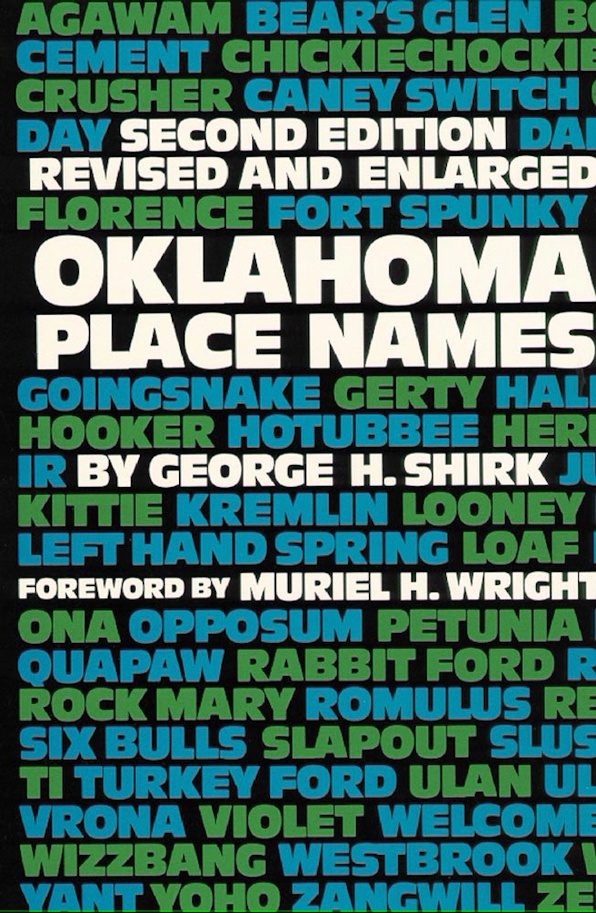 A catalog of the names of Oklahoma counties and towns, the location of each, the origin if known, and the dates when post offices were established and disestablished.
On the Internet Archive: 1965 edition. 1974 edition. 1987 edition.
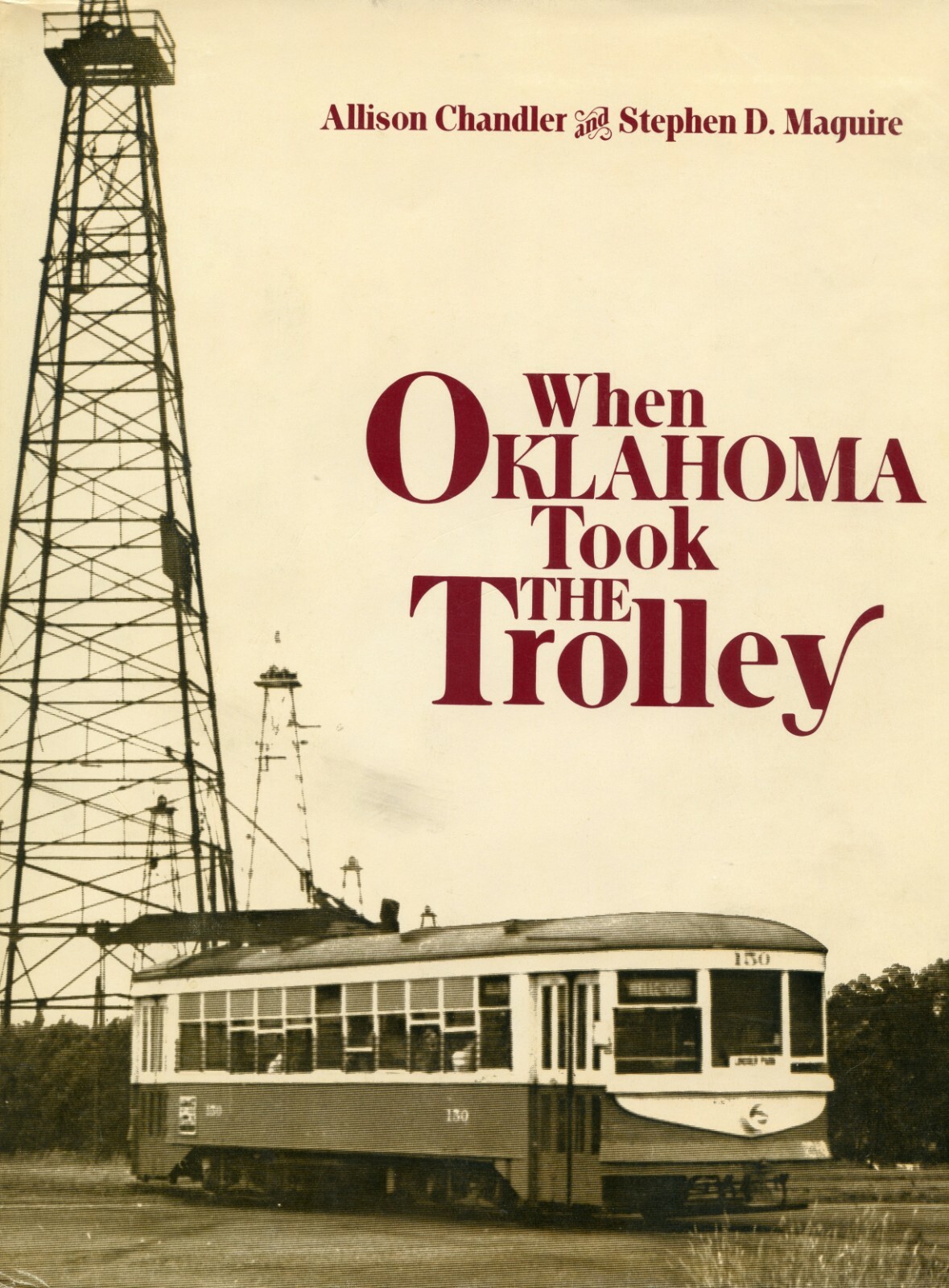 This one is hard to find. It includes articles on each the urban street car lines and interurban electric railways that could be found all over Oklahoma in the years after statehood and, in a few cases, beyond World War II. Maps and photographs illustrate each article. The Tulsa area was served by the Tulsa Street Railway, the Oklahoma Union Traction company (now the Tulsa-Sapulpa Union railroad), and the Sand Springs Railroad (still in operation as a diesel-powered freight line). The sprawling Oklahoma Railway Company linked Oklahoma City to El Reno, Guthrie, and Norman. Interurban lines in the Tri-State region (Miami to Joplin) and the Pittsburg County Railway (McAlester to Hartshorne and Haileyville) took miners between home and work.
Not currently available on the Internet Archive.
Contemporaneous Accounts
In the often-vaunted regions of the Far West, several hundred miles beyond the Mississippi, extends a vast tract of uninhabited country, where there is neither to be seen the loghouse of the white man nor the wigwam of the Indian. It consists of great grassy plains, interspersed with forests and groves and dumps of trees, and watered by the Arkansas, the Grand Canadian, the Red River, and all their tributary streams. Over these fertile and verdant wastes still roam the elk, the buffalo, and the wild horse, in all their native freedom. These, in fact, are the hunting-grounds of the various tribes of the far West. Thither repair the Osage, the Creek, the Delaware, and other tribes, that have linked themselves with civilisation, and live within the vicinity of the white settlements. Here resort also the Pawnees, the Comanches, and other fierce and as yet independent tribes, the nomades of the prairies, or the inhabitants of the skirts of the Rocky Mountains. The region I have mentioned forms a debateable ground of these warring and vindictive tribes. None of them presume to erect a permanent habitation within its borders.
Thus the popular author of "Rip van Winkle" and "The Legend of Sleepy Hollow," "America's first author-celebrity," began the account of his month-long 1832 journey, starting and ending in Fort Gibson, and passing through present day Tulsa, seeing the land before the arrival of the Five Civilized Tribes. When I was in high school, Carlos Tuttle, head of Holland Hall's Upper School and Oklahoma History teacher, gave a lecture depicting Irving and his party riding across the Holland Hall football field. A monument on Easton Street in the Owen Park neighborhood and a Bixby city park on the north bank of the Arkansas River commemorate the visit.
This work has long been in the public domain and can be read on Wikisource, and there are numerous copies on the Internet Archive.
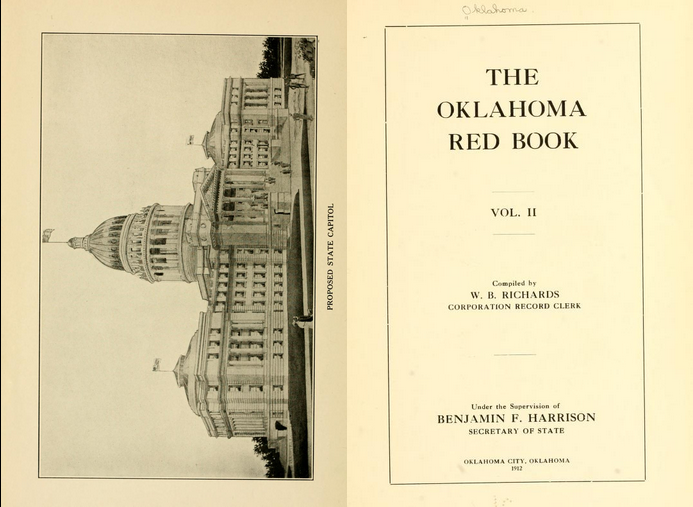
Earlier this summer, I wrote about this two-volume set of books, an official state compendium on Oklahoma's government, political geography, formation, constitution, and treaties.
On the Internet Archive: Volume 1. Volume 2.
 One of the "make-work" projects of the New Deal was the Federal Writers' Project, which employed authors in the work of documenting America state by state. The results are remarkable snapshots of pre-World War II America, after the advent of paved roads and radio, before Interstate Highways and urban renewal. Oklahoma was the very last of the state guides to be published.
Following the standard format, Part 1 contains essays on the spirit of Oklahoma, its natural setting, pre-history, and recorded history, industry, transportation, agriculture, sports and recreation, education, newspapers, literature, architecture and art, music, and folklore and folkways. Part 2 provides a chapter for each of twelve principal cities: Ardmore, Bartlesville, Enid, Lawton, Muskogee, Norman, Oklahoma City, Okmulgee, Ponca City, Shawnee, Stillwater, and Tulsa. The section on Tulsa includes a map showing the principal places of interest and where the highways ran before the freeways were built. Among other things, we learn that the waiting room for the interurban to Sand Springs is at 27 E. Archer. Part 3 consists of 16 tours, typically taking one numbered highway from border to border, plus six shorter tours branching off of the main tours, with mile-by-mile descriptions of cities, towns, and attractions along the route. Tour 1 is US 66 from the Kansas line to the Texas line. Part IV provides a chronology, reading list, and index. There are sections of historical and contemporary photographs.
In 1986, the University of Kansas Press republished the book in a near-facsimile edition, as The WPA Guide to 1930s Oklahoma. The only difference is that the editors restored the historical essay written by Angie Debo, which had been replaced in the original edition with an anonymous substitute. This edition also includes an introductory essay on the American Guide Series, the development of the Oklahoma guide, and the mysterious replacement of Debo's writing.
Internet Archive: Copy 1, copy 2, copy 3, copy 4, copy 5, and 1980s reprint edition.
Looking back from modern times
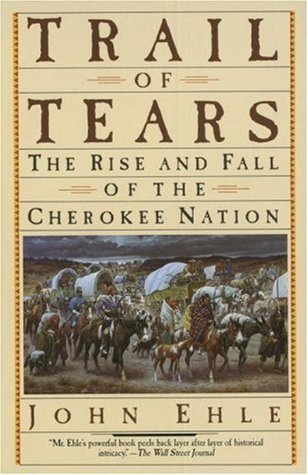 If you grew up in Oklahoma, you probably learned the story of the Cherokee Nation and Indian removal from the perspective of John Ross, the 1/8th Cherokee principal chief and leader of the National Party, which resisted removal west of the Mississippi. Ehle, a North Carolina novelist and historian, tells the story from the perspective of 7/8ths Cherokee warrior Ridge and his family, leaders of the Treaty Party, which believed that removal was the only hope for the nation's survival. Ehle includes correspondence and transcripts which provide eyewitness accounts of the councils and negotiations that shaped the future of the Cherokee. Ross comes across as a charlatan, mingling self-interest and national interest, a maker of false promises who encouraged his people to delay and thus led them into greater privation, disease, and death. The book extends to the assassination of Major Ridge, Elias Boudinot, and John Ridge. There are abundant end notes, keyed to page, and an extensive bibliography.
On the Internet Archive: Copy 1, copy 2, copy 3.
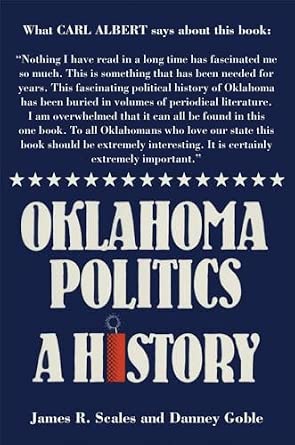 This is a revision and extension of Scales's 1949 doctoral dissertation, "A Political History of Oklahoma, 1907-1949." The book begins with the establishment of Oklahoma territorial government in 1890 and is organized by four-year gubernatorial terms, concluding with new chapters covering the late 1940s and 1950s, with a brief summary of the years following the election of the first Republican governor, Henry Bellmon. I read this earlier this year and learned a great deal. The first half-century of Oklahoma politics was mainly a story of intra-party Democrat conflict, with a short-lasting side dish of socialism.
On the Internet Archive.
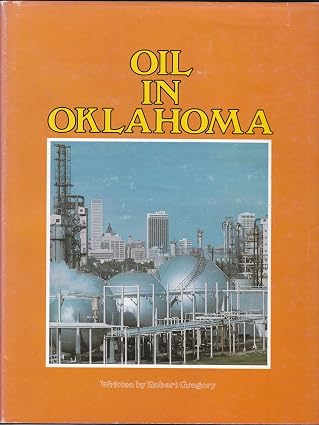 I have written enthusiastically and at length about the mid-1970s series on Oklahoma's oil history produced by KTUL-TV, written and hosted by Bob Gregory. This book captures only some of the words and photos used in the TV series, with articles on Tulsa, J. Paul Getty, Frank Phillips, E. W. Marland, William G. Skelly, the Osage Indians and the headright murders, Thomas Gilcrease, the Seminole field, and Oklahoma City. One episode survives online. The descendants of KTUL owner Jim Leake still have the film and the rights; I hope and pray that they'll make it available to the public once again.
On the Internet Archive.
Memoirs
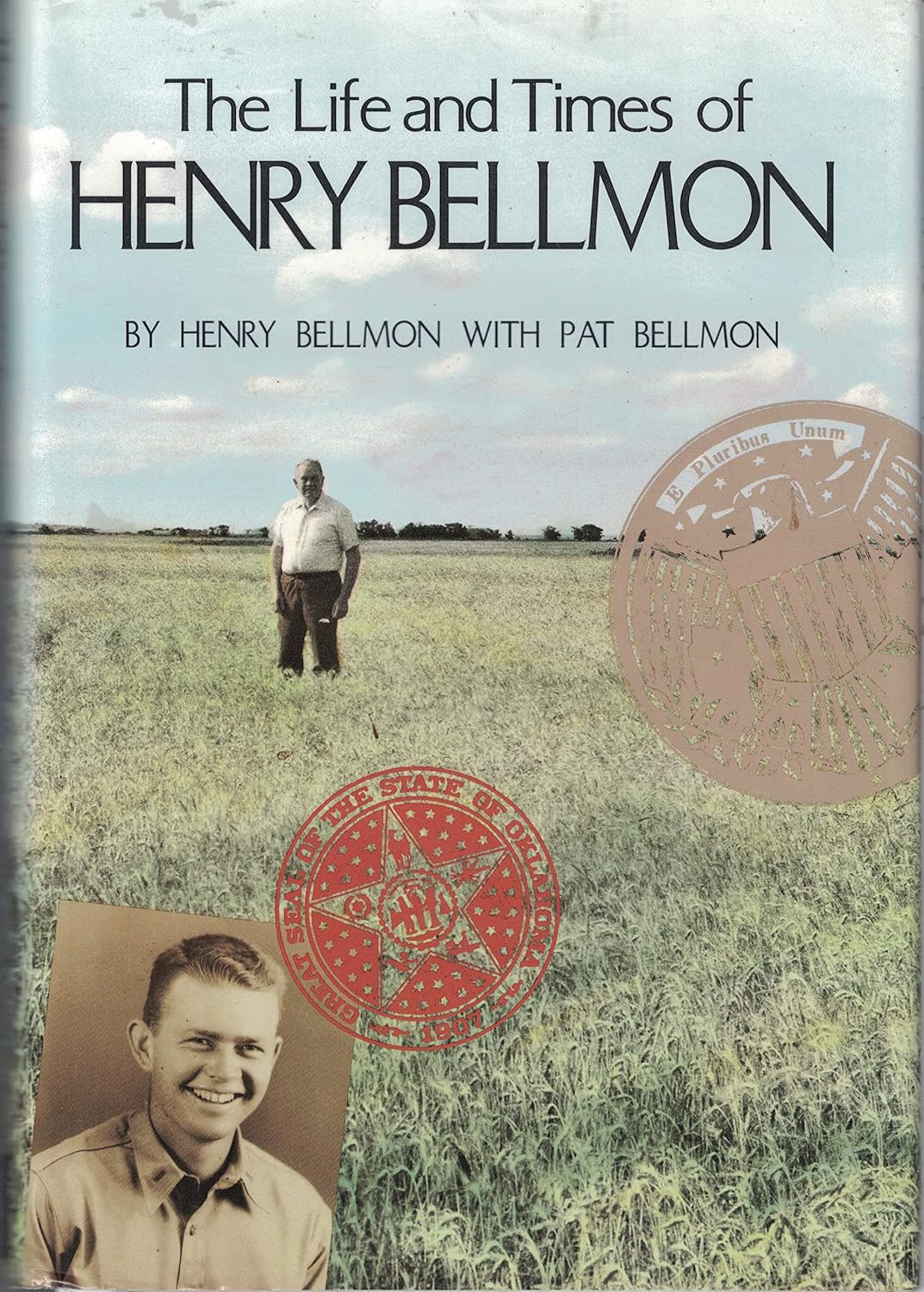 This is the autobiography of Oklahoma's first Republican governor, the founder of the modern Oklahoma Republican Party, who earned the ire of his fellow party members for his support for school busing for racial integration, Jimmy Carter's Panama Canal Treaty, and higher state taxes. Oklahoma Politics: A History has little to say about the Republican Party because the GOP was pathetically irrelevant to Oklahoma politics for all but two of the first 55 years of state history. I've just started reading this, and I'm looking forward to learning how Bellmon took a mostly dead political party into the Governor's Mansion in just a few short years. The first chapters describes Bellmon's childhood on the family farm near Billings and his time as a student at Oklahoma A&M.
On the Internet Archive.
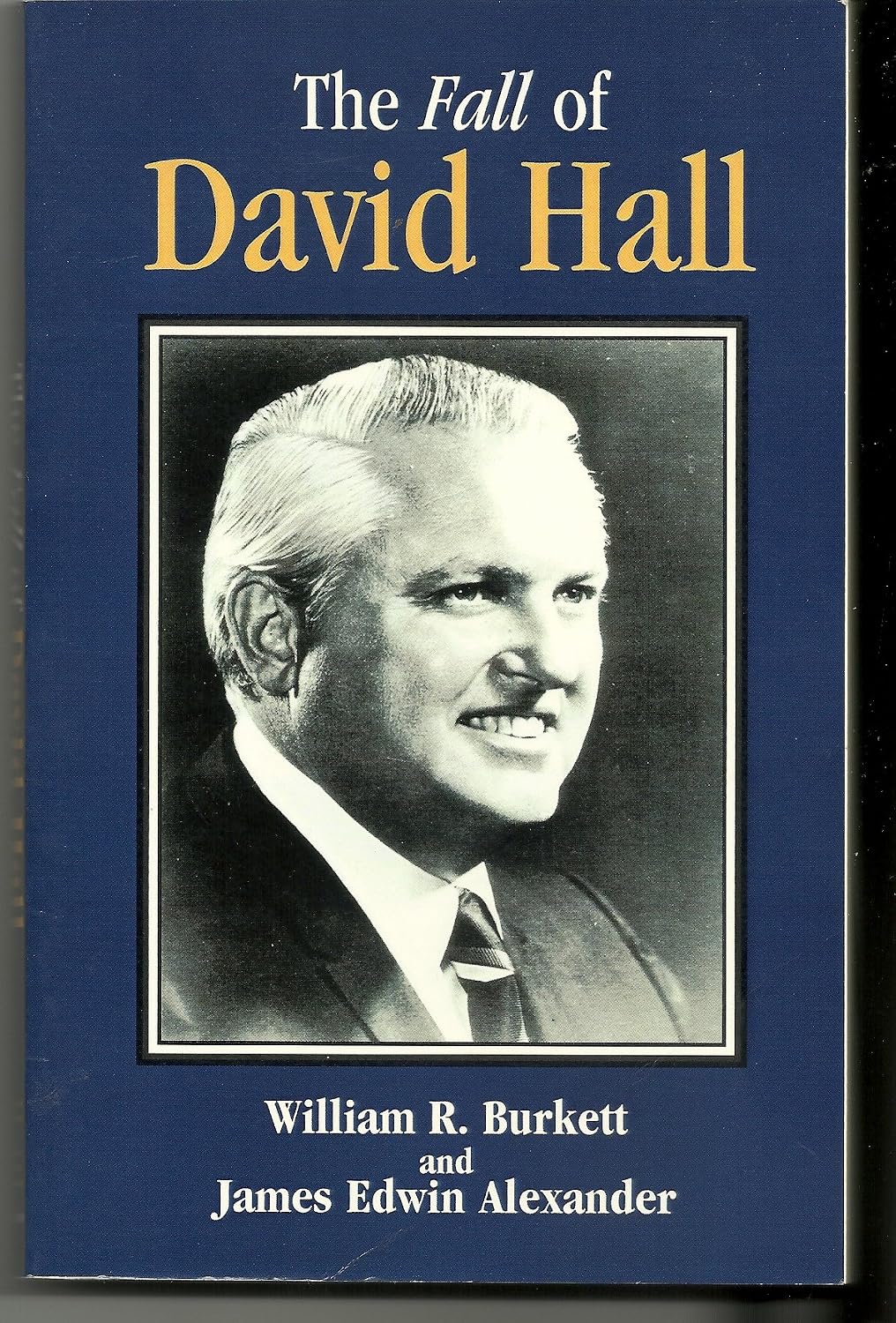 After Oklahoma elected two consecutive Republican governors in 1962 and 1966, Democrat David Hall, the former Tulsa County Attorney, squeaked out a victory over Dewey Bartlett, the first governor eligible to seek re-election. Four years later, finishing third in the Democratic primary, Hall tried to cash in on his way out the door, attempting to redirect pension funds to a California real estate deal. Burkett, the U. S. Attorney who sent Hall to a federal penitentiary. This is a day-by-day memoir of the investigation and prosecution. Here's a short book review by Brett S. Sharp that ran in the November 2000 issue of the journal Oklahoma Politics.
Not currently available on the Internet Archive.
0 TrackBacks
Listed below are links to blogs that reference this entry: Oklahoma history books.
TrackBack URL for this entry: https://www.batesline.com/cgi-bin/mt/mt-tb.cgi/9552
 Subscribe to this blog's feed: