Oklahoma Election 2026: August 2026 Archives
That was a nail-biter! The margin of victory for Mike Mazzei was just over 2000 votes.
At the Mazzei watch party at the Renaissance Hotel, the screens alternated between the official state election board results and Jason Murphey's spectacular statewide precinct map, which displayed the official results as they arrived.
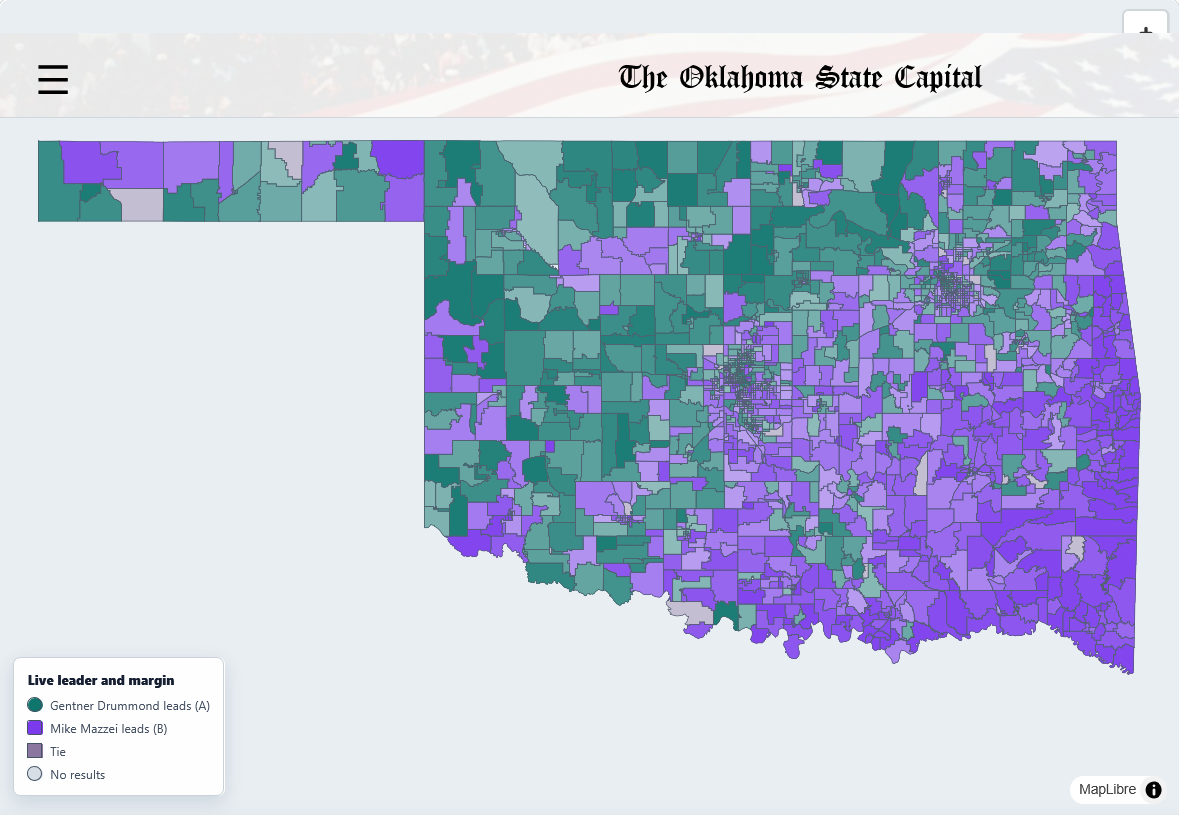
Isn't that division interesting? Indian Territory, eastern and south central Oklahoma, the part of the state affected by the McGirt ruling, went for Mazzei, old Oklahoma Territory went for Drummond, with the exception of the counties around Inola.
Years ago, local TV stations would have offered continuous coverage of an election this significant, and watch parties would have had one or more TVs tuned to their coverage. TV stations used to send out runners to get the results posted on precinct doors to tabulate results ahead of the official tally. When I worked out of KOTV's newsroom on election night 2008, doing cut-ins on KRMG, runners brought in tally sheets from the precincts, which I added into a database to give me an early picture of key local races, like the County Commission race between Sally Bell and Karen Keith.
The media was there, standing on risers in the middle of the room, waiting for Mazzei to speak, but they seemed to be a sideshow. We were getting unmediated access to results displayed geographically.
Another cool feature of the Oklahoma State Capital Runoff Election Command Center was the Arrival Log, capturing the order in which precinct results appeared in the State Election Board results. The very last precinct reporting was in Adair County (010018), detected by the Oklahoma State Capital at 9:56 pm, but the rest of the last 100 precincts in were from Oklahoma and Tulsa counties. The last Tulsa County precinct to report was 720125, 51st to 61st, Peoria to Utica, which was in the tranche of precincts OSC grabbed at 9:46 pm. The first three precincts reporting were from Grady, Harmon, and Texas counties at 7:21 pm. The first Tulsa County precinct came in at 7:36, precinct 720113 with 15 votes, 169 to 129th East Ave, 41st to 61st. Keep in mind that all absentee ballots must be counted before precincts are processed, to avoid the sorts of shenanigans that occur in other states, and this takes longer in big counties. There are a lot more precincts in big counties that have to be processed as well.
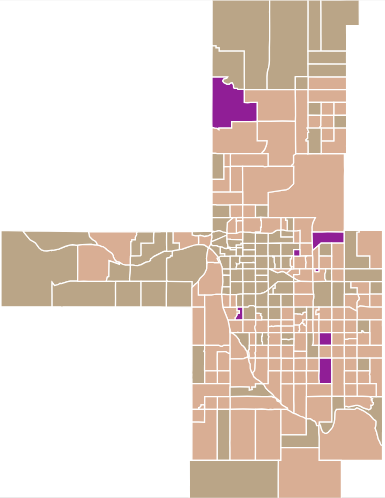
We watched as the number of precincts reporting approached 100%. With only a few dozen remaining, you could zoom in on Tulsa County in Murphey's map and see that about the same number of outstanding precincts in Drummond territory -- midtown Tulsa -- as in Mazzei territory -- south Tulsa and the suburbs, and it seemed likely that Mazzei's narrow margin would hold. (This map is from the Oklahoma State Election Board website. Drummond's precincts are olive, Mazzei's are beige. Not exactly a high contrast. Drummond's strength was in the Money Belt and Midtown, I-244 to 71st, the Arkansas River to Memorial.)
The Mazzei watch party was different than most I've attended: The lights stayed on. The music was kept quiet enough for conversation, but the level of conversation sometimes made it hard to hear. I had a great time catching up with old friends from my decades around Republican politics -- legislators past and present, activists, party leaders -- and making some new acquaintances.
Sometime after Mazzei's victory speech, after an hour or so of Mazzei taking photos with well-wishers, after the nominee had retreated to the campaign's private meeting room, a new group showed up, freshly arrived from Oklahoma City. I was told they flew up after the result was confirmed. At the time, I happened to be speaking to term-limited Sen. Shane Jett, leader of the Oklahoma Freedom Caucus and nemesis of the Capitol lobbyist claque, who pointed them out to me: Speaker Kyle Hilbert, the executive director of the State Chamber, the Hilliary brothers, various and sundry lobbyists. All these men, who had either openly or quietly opposed Mike Mazzei's candidacy, who were waiting in Oklahoma City to hail Gentner Drummond's triumph, now came to Tulsa to pay their respects to the victor. It didn't look like they got their hoped for audience. Vae victis!
It was not a great night down-ballot. Conservative James Taylor's $7,000, seat-of-the-pants solo primary campaign was enough to get a ticket to the runoff in an evenly split field, but Franklin's allies defined Taylor as Walters 2.0 while portraying liberal, recently-Democrat Franklin as a competent, experienced, and moderate administrator. To counter that message with the truth, you need enough money and you need to use it strategically to reach persuadable voters. (Note to Jake Merrick fans: Merrick would have run into the same buzzsaw if he had managed to get into the runoff.) Trial lawyer-backed Bob Sullivan beat former State Sen. Marty Quinn by 10 points; a friend who knows the Insurance Commission says that permanent staff there dread the thought of working for Sullivan.
The strongest statewide win of the night, however, belonged to Kevin West, the conservative candidate in the Labor Commissioner race, with 58% of the vote over his CAMP opponent.
The Freedom Caucus lost a stalwart in District 34 State Sen. Dana Prieto. He was targeted by heavy "independent expenditures" (dark money). Overall, my picks won 3 of 6 State Senate seats, 7 of 8 State House seats.
SQ 844 (property tax exemption reimbursement) went down in flames, with three No votes for every Yes. SQ 846 (constitutional voter ID) won with 55%, passing in every county except Tulsa, Oklahoma, Payne (home to OSU), and Cleveland (home to OU).
Dennis McCollough has been elected Wagoner County Commissioner in District 3. He won the runoff with 65% of the vote, and no Democrat filed for either Wagoner County Commission seat.
The Tulsa City Council races were an expected disappointment, although one of the Mean Girls, District 1's Vanessa Hall-Harper, winning 46% of the vote, has been forced into a November runoff against Corinice Wilson, who got 37%. Supporters of Reggie Williams and Mareo Johnson seem to be coalescing behind Wilson; they just want Vanessa out.
In District 2, Anthony Archie won his rematch with Aaron Bisogno by a 3-to-1 margin. Mean Girl Jackie Dutton survived in District 3, 56%-44%. Incumbent Karen Gilbert won another term in District 5, 58%-42%. Pete Regan's $180,000 in campaign cash bought him 6,337 votes, 69% of the total in District 9.
District 7's result makes me wonder what might have been had Dave Perry gotten started sooner with his campaign. Mean Girl Lori Decter Wright was re-elected with 57% of the vote. Dave Perry got 36%, having only started to campaign in earnest about a week before the election. I saw yard signs for Perry around several neighborhood entrances on election day.
District 6 Councilor Christian Bengel held a fundraiser for his "campaign" on August 20 at El Patron. Josh McFarland and Casey Robinson hosted the event, with State Rep. and Republican nominee for Congress Mark Tedford as honorary guest. The weird thing about that is that Bengel doesn't have an election this year. He won two years ago with 70% of the vote.
The City of Tulsa ONG 20-year franchise renewal passed 63%-37%, but it failed in nearly all precincts north of I-244. 49,762 votes were cast for or against that proposition, but the total number of votes for the six council races added up only to 28,969. Bartlesville approved its ONG franchise renewal. Bixby approved all four bond issues, but Prop 1 ($16,650,000 for public safety buildings) and Prop 3 ($850,000 for parks) were close, with a less than 200 vote margin.
Many school bond issues failed: Dale (Pottawatomie County), Hulbert (Cherokee County), Little Axe (Cleveland County), Newcastle (McClain County), Sallisaw (Sequoyah County), Savanna (Pittsburg County), South Coffeyville (Nowata County). In Westville (Adair County), one bond issue barely cleared the 60% threshold and the other fell short.
The tiny turnout award goes to the Town of St. Louis in Pottawatomie County, which voted 7 to 3 to extend OG+E's electric franchise for another 25 years.
The bedsheet ballot award goes to City of The Village, an enclave surrounded by Oklahoma City and Nichols Hills, who voted on 13 propositions: 9% hotel/motel tax (failed), ONG franchise renewal (passed), and 11 charter amendments (8 passed, 3 failed). The three failed charter amendments would have allowed the city manager to live outside the city limits (failed 33% to 67%), would have increased the dollar threshold requiring a public vote to sell high-value city property from $25,000 to $300,000, and would have made it quicker to pass an ordinance and have it go into effect.
Democrats had only two runoffs: Socialist N'Kiyla Jasmine Thomas won the U. S. Senate nomination over attorney Jim Priest, and Herschel Brown won the nomination in House 99 in Oklahoma City. Kevin Hern should have no problem holding the Senate seat for the GOP in November.
 In-person absentee voting will be available at your county's early voting locations on Thursday, August 20, 2026, from 8 a.m. to 6 p.m., on Friday, August 21, 2026, from 8 a.m. to 6 p.m., and on Saturday, August 22, 2026, from 8 a.m. to 2 p.m. Tulsa County will have in-person absentee voting at the new Tulsa County Election Board location at 12000 E. Skelly Drive and at Tulsa Tech Broken Arrow Campus near 111th Street S & 129th East Ave (aka Florence and Olive). Polls in each precinct will be open Tuesday, August 25, 2026, from 7 a.m. until 7 p.m.
NOTE: Precinct boundaries, voting locations, and district boundaries have changed, in some cases dramatically. Enter your name and date of birth on the Oklahoma State Election Board's online voter portal and you will see where to vote and your sample ballot.
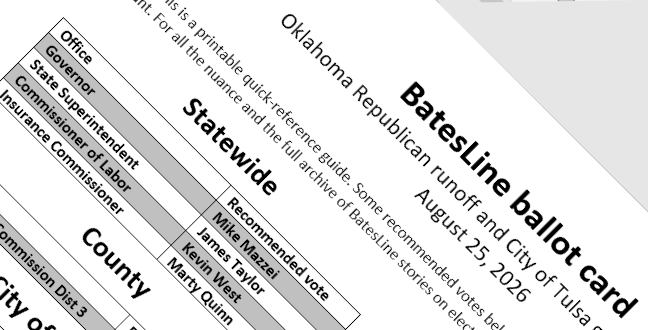
In response to popular demand, I have assembled the guidance detailed below into a downloadable, printable, single-page PDF.
Originally posted on August 11, 2026, and postdated to remain at the top until the polls close on Election Day. I will be adding more links and detail between now and the election.
Here are the candidates I'm recommending and (if in the district) voting for in the Oklahoma Republican primary elections on August 25, 2026. Click the hyperlink on the office to see detailed information on that race and its candidates. (This entry will change as I decide to add more detail, link previous articles, or discuss additional races between now and election day. The entry is post-dated to keep it at the top.)
As I post this, I'm still unsure about several races, and there are other races I had planned to write about in detail, but time is short, people are voting, and many have asked for a summary of my recommendations. My most enthusiastic choices are in bold; in other races, there may be one or two other candidates that would be acceptable, or I simply don't know the endorsed candidate as well as I would like. There are certain incumbents that I'd like to see defeated, but I don't feel comfortable endorsing an opponent at this point. I'll try to fill in TBDs and NOTs before the start of early voting.
- SQ 844 (reimbursement flexibility for property tax exemptions): YES
- SQ 846 (Constitutional voter ID): YES
- Governor: Mike Mazzei
- Superintendent of Public Instruction: James Taylor
- Labor Commissioner: Kevin West
- Insurance Commissioner: Marty Quinn
There are a number of legislative seats statewide with runoffs, but these two are the only ones in the Tulsa area. State Sen. Dana Prieto is a leader in the Oklahoma Freedom Caucus; his runoff opponent ran as a Democrat in the House 72 primary in 2018. House District 9 is an open seat.
- Senate 34: Dana Prieto (i)
- House 9: Scotty Stokes
For legislative races elsewhere, see my ballot card. I took Charlie Meadows's picks as a starting point, then looked at campaign contributions and expenditures. Certain donors and consultants are red flags and indicate a likelihood that the candidate will be a tool (wittingly or unwittingly) of special interests once in office. In a few races, I've gone against a less than enthusiastic pick from Charlie because of the preponderance of red flags on one side.
There are six contested Tulsa City Council seats and one proposition. My picks are based in part on a desire to replace every incumbent possible, especially the Mean Girls Clique, based in part on what campaign contributions filings have revealed about each candidate's alignments and affiliations. You can read my detailed discussion of the six City Council races in the full article, but here are my picks.
- District 1: Reggie Williams Jr (D) (Anyone but incumbent Vanessa Hall-Harper)
- District 2: Aaron Bisogno (R)
- District 3: No recommendation
- District 5: Karen Gilbert (R)
- District 7: Dave Perry (R) (Anyone but incumbent Lori Decter Wright)
- District 9: Shawn Tiemann (D)
- City of Tulsa ONG franchise renewal: YES
I was waiting for the campaign contribution reports due on August 17 to see who the philanthropocrats and the Chamber are backing, but even before I had that information in hand, I mainly wanted to get rid of the Mean Girl Caucus on the City Council. At a recent City Council meeting, while a citizen spoke about the need for independent ethics oversight of the Council, Hall Harper, Dutton, Decter Wright, Laura Bellis, and one redacted non-councilor engaged in ridicule of the speaker over a group chat, giggling and trading looks. Their behavior appalls former councilors across the political spectrum. This isn't the first time they've been caught in this childish behavior. They're on the record labeling conservative Tulsans as "actual fascists," but Bellis, Hall Harper, and Decter Wright teamed up with GT Bynum to keep one of their council colleagues from working for a living because he dared to oppose a tax increase. That seems pretty fascistic to me. If Hall Harper, Dutton, Decter Wright, and Bellis lack the impulse control to wait until after the meeting to share their snarky comments, they don't belong on the City Council. Bellis, alas, is unopposed, but defeating the other three would be a good start.
The only hesitation in District 3 is that Dutton's opponent, Tanisha Bowen, is backed by Mayor Nichols's Tulsa Forward PAC. Sadly, we don't have a third choice.
UPDATE 2026/08/23: After finally connecting with Dave Perry by phone, I was impressed with his knowledge of issues before the council and his key concerns. Although he is recently back in Tulsa, returning to care for aging parents during the pandemic, he attended Union schools in the '70s and '80s and thus has the longest history in Tulsa of any of the three candidates.
In the suburbs:
- Wagoner County Commission District 3: Dennis McCollough
- Bixby Proposition No. 1 ($16,650,000 public safety bond issue): NO
- Bixby Proposition No. 2 ($35,000,000 streets bond issue): NO
- Bixby Proposition No. 3 ($850,000 parks bond issue): NO
- Bixby Proposition No. 4 ($25,000,000 sanitary sewer bond issue): NO
Wagoner County friends tell me that Dennis McCollough is a solid guy who spent his career at the Oklahoma Department of Wildlife Conservation and understands budgets and management. He has been endorsed by the two candidates who did not advance to the runoff. His opponent, Patrick Sampson, makes a lot of conservative noises on social media but his public statements involving his residency and eligibility for the seat may have him in legal trouble.
The projects proposed for the four Bixby bond issue propositions all sound reasonable, but given the issues with city officials of late, voters may want to take this opportunity to cast a vote of no confidence and see some turnover on the council before entrusting city government with more cash.
MORE INFORMATION:
POLLING:
- Pulse Decision Science poll released August 7 has Mazzei leading Drummond 44-38
- CHS poll has Mazzei and Drummond tied, 44 each
- CHS poll on down-ballot races had Sullivan leading Quinn (30%-26%), West leading Pfeiffer (27%-25%), and Franklin leading Taylor (27%-26%), with large numbers of undecided in each race. [This link added for completeness on September 9]
OTHER CONSERVATIVE VOICES:
Here are some blogs, endorsement lists, candidate questionnaires, and sources of information for your consideration.
- Muskogee Politico news, questionnaires, and analysis
- Muskogee Politico legislator tax votes, 2016-2018
- Muskogee Politico primary picks
- Jason Murphey Primary Voter Guide
- Charlie Meadows's picks
- Oklahoma Constitution Index: Scores incumbent legislators on voting record
- iVoterGuide surveys of Oklahoma statewide, federal, and legislative candidates
- Tulsa County Republican Party candidate guide, with links to social media, GOP questionnaires, and GOP candidate interview transcripts
- Make Oklahoma Healthy Again (MOHA) endorsements -- formerly Oklahomans for Health and Parental Rights (OKHPR)
- Oklahomans for Life candidate surveys: Oklahomans for the 2nd Amendment (OK2A)
- NRA-PVF survey grades and endorsements
- Tulsa Beacon endorsements
- OCPAC Action endorsements
ANTI-CONSERVATIVE VOICES:
Historically there have been some endorsement lists that are generally negative indicators, including public employees and teacher's unions (and front groups like Oklahomans for Public Education), but these groups have become careful to conceal their support, which backfires in a Republican primary.
The State Chamber of Oklahoma puts out a voter guide that lists State Chamber PAC endorsements, and it's been updated for the runoff. Being pro-business is great, but please read my 2016 article "Chambers of Horrors" to understand why social and fiscal conservatives, opponents of cronyism, and supporters of historic preservation should find Chamber endorsements problematic.
There are some self-styled "conservative influencers" who have shown themselves confused, inconsistent, or downright treacherous. Caveat lector. Anyone who would work to replace the only conservative on the Tulsa school board with a progressive or promote RINO Gentner Drummond for Governor, or anyone who promotes an inexperienced left-winger for District Attorney, is not someone conservatives should look to for endorsements.
If you appreciate the many hours of research that went into this guide and into the rest of my election coverage, and if you'd like to help keep this site online, you can contribute to BatesLine's upkeep via PayPal. You can also support BatesLine through a paid Substack subscription. In addition to keeping me caffeinated, donated funds pay for web hosting, subscriptions, and paid databases I use for research. Many thanks to those generous readers who have already contributed.
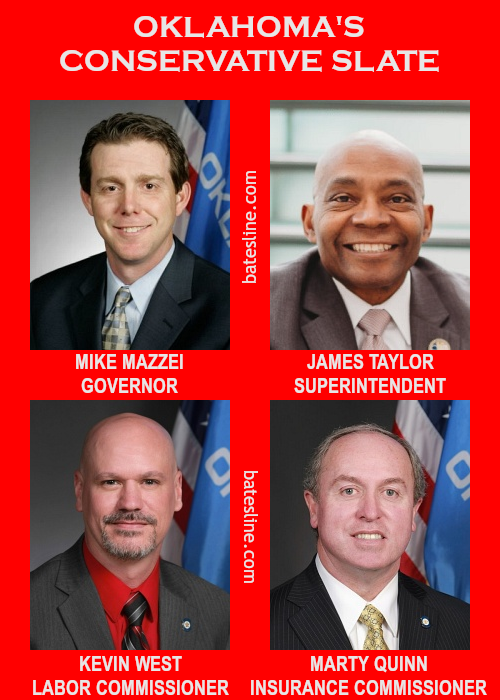
The primary preferences of Oklahoma conservatives were scattered among numerous candidates in the long list of open-seat statewide offices, but in the runoff Oklahoma conservatives have united around a single slate for the four offices remaining on the ballot: Mike Mazzei for Governor, James Taylor for State Superintendent, Kevin West for Commissioner of Labor, Marty Quinn for Insurance Commissioner.
The conservative slate has been endorsed by OCPAC founder Charlie Meadows, Jamison Faught of Muskogee Politico, former State Sen. Jake Merrick, former State Rep. Jason Murphey, Make Oklahoma Healthy Again, Oklahoma Second Amendment Association (OK2A), and many more conservative leaders.
The opposing slate, consisting of Gentner Drummond, Robert Franklin, John Pfeiffer, and Bob Sullivan, are all clients of CAMP, a political consulting firm known for attacking real conservatives and backing big-government, high-tax RINOs in Republican primaries. CAMP's founder, Fount Holland, was charged with illegal collusion in the 2014 campaign to win the Republican nomination for State Superintendent for stealth Democrat Joy Hofmeister. In the most recent Tulsa mayor's race, CAMP worked to elect Democrat County Commissioner Karen Keith. If there's a vote in Oklahoma to raise your taxes, CAMP is likely to be running the Vote Yes campaign. The CAMP slate's contribution reports include lots of typically Democrat donors, lobbyists, special interest PACs, people who want to misuse state government's power and money for their own benefit, not for the general good of the people of Oklahoma.
For the first time in my memory, the State Committee of the Oklahoma Republican Party has endorsed candidates in a statewide runoff, endorsing Mazzei for Governor, James Taylor for State Superintendent, and Kevin West for Labor Commissioner. The State Committee serves as the governing body of the Oklahoma Republican Party in between conventions, and it consists of four committee members from each county, who were elected by grassroots delegates at their local county conventions in odd-numbered years.
The state GOP endorsements are an outgrowth of the OKGOP Certified program. Candidates could apply for the list if they met five simple criteria:
- Has not been registered with any other party for the last five years.
- Has not donated to a Democratic candidate in the last five years.
- Has not supported abortion
- Protected Second Amendment Rights (and has not participated in efforts to infringe on them)
- Agrees with at least 80% of the OKGOP Platform
Now that liberals have figured out they can't win as Democrats in Oklahoma, they're trying to win in GOP primaries. This is precisely the kind of gatekeeping a party ought to be doing. It wasn't a high bar. Five of the eight statewide runoff candidates -- Mazzei, Taylor, West, Quinn, and Sullivan -- met the standard; Drummond, Franklin, and Pfeiffer did not. The OKGOP is right to alert GOP voters to fake Republican candidates. The state party endorsed only in races where only one of the candidates was OKGOP Certified; both candidates for Insurance Commissioner are OKGOP Certified, so neither was endorsed.
Here are a few quick notes on the reasons behind each of my picks:
Earlier this month, I was a guest on David McLain's Truth in Focus Media podcast (TIFMedia on Rumble) to discuss the August 25, 2026, runoff, state questions, and a few other articles here on BatesLine. The episode was recorded on August 6, before many of the developments in the last weeks of the campaign.
 This Saturday I was on Tulsa Beacon Weekend on KCFO AM 970 with Jeff Brucculeri to preview the August 25, 2026, runoff and City of Tulsa general election. In addition to the four statewide Republican runoff elections and the six Tulsa City Council seats, we covered the two state questions, SQ 844 and SQ 846, and the Senate 34 runoff.
The hour-long interview show, sponsored by the weekly Tulsa Beacon newspaper, airs live each week at noon Saturday on AM 970 and streaming online.
You can always find the latest episode of Tulsa Beacon Weekend at this link. I've made a Wayback Machine capture of this week's episode at this permalink.
The Tulsa Beacon newspaper is available by mail subscription, at Wild Birds Unlimited at 61st and Yale, and at the Minute Stop at 131st Street and Aspen in Broken Arrow.

It's disheartening just to watch what's been happening at Tulsa City Hall, and even more disheartening to write about it.
There was a time when I relished digging into the latest issue before the Council, but that was back when we managed to get some good councilors elected on a regular basis, people with integrity and a backbone. It felt possible to make a difference. It hasn't felt like that since the big changes to the election system before 2016.
I appreciate those who continue to post about Tulsa politics on social media, people like RealitySnark (formerly Snarkio) on X, RobertDInTulsa, who monitors the scanner and covers local crime news on X, and This Is Tulsa Too on Facebook. Restaurant reviewer and restaurateur Steve Pisonero recently launched a Facebook group about the homeless blight in Tulsa; all the politically correct folks are appalled, but the people who participate in the discussion are genuinely trying to grapple with real causes and real solutions, not the expensive and unrealistic approaches that keep gender-studies majors employed at non-profits in the Homeless-Industrial Complex.
Tuesday, August 25, 2026, is the City of Tulsa general election. Six of the nine City Council seats are contested; City Auditor Nathan Pickard and Councilors Laura Bellis (District 4), Christian Bengel (District 6), and Phil Lakin (District 8) were re-elected without opposition. A candidate receiving more than 50% of the vote on August 25 has been elected. If no candidate gets more than 50%, there will be a runoff on November 3 between the top candidates whose votes total more than 50%. This is slightly different from a traditional two-candidate runoff in that, if there are more than four candidates and the vote is evenly split (e.g. 24%, 23%, 20%, 18%, 15%), there may be a three-candidate runoff. Unlikely, but possible this year in District 1.
I am not thrilled with our choices. I can only surmise that fewer and fewer Tulsans think the city is worth fighting for, that anything can be done to stop the slide. Many of the challengers look like they jumped in last minute, which is honorable -- I filed for my first council race at 4 p.m. the last day of filing -- and think campaigning consists of nothing more than a website and forum appearances, which is ineffective.
The lack of enthusiasm is evident as you drive around Tulsa. In Council Districts 3 and 7, I saw no indication that a campaign was underway. There were a few yard signs for candidates in the Republican runoff, a few for statewide Democrat candidates, but there were no signs for either the incumbent councilor or challengers. I saw exactly one sign in District 5, supporting incumbent Karen Gilbert. All three candidates are active in District 9, an open seat. Things have been just as quiet on social media.
The most energy and enthusiasm has been in District 1 where four candidates are challenging the incumbent. I saw signs around the district for all but one of the five candidates in roughly equal numbers.
If we're to have any hope of returning Tulsa city government to sanity, the first step is to break up the Mean Girl Clique on the City Council.
At a recent City Council meeting, while a citizen spoke about the need for independent ethics oversight of the Council, Councilors Vanessa Hall Harper, Jackie Dutton, Lori Decter Wright, Laura Bellis, and one redacted non-councilor engaged in ridicule of the speaker over a group chat, giggling and trading looks.
Their behavior appalls former councilors across the political spectrum. This isn't the first time they've been caught in this childish behavior. They're on the record labeling conservative Tulsans as "actual fascists," but Bellis, Hall Harper, and Decter Wright teamed up with GT Bynum to keep one of their council colleagues from working for a living because he dared to oppose a tax increase. That seems pretty fascistic to me. If Hall Harper, Dutton, Decter Wright, and Bellis lack the impulse control to wait until after the meeting to share their snarky comments, they don't belong on the City Council. Bellis, alas, is unopposed, but defeating the other three would be a good start.
The second priority -- and this aligns with the first one -- is to replace as many philanthropocrats and non-profiteers as possible with people who work for a living.
If it seems like I'm grasping at straws in these recommendations, it's because I am. There's not a single candidate running this year that ticks all the boxes -- or even most of the boxes.
If we want high-quality candidates to run for council there needs to be a high-quality organization recruiting them a year ahead of time, preparing them to run, marshalling resources to support their campaigns, and continuing to provide support once they're elected.
With those qualifications in mind, let's look at each race in turn:
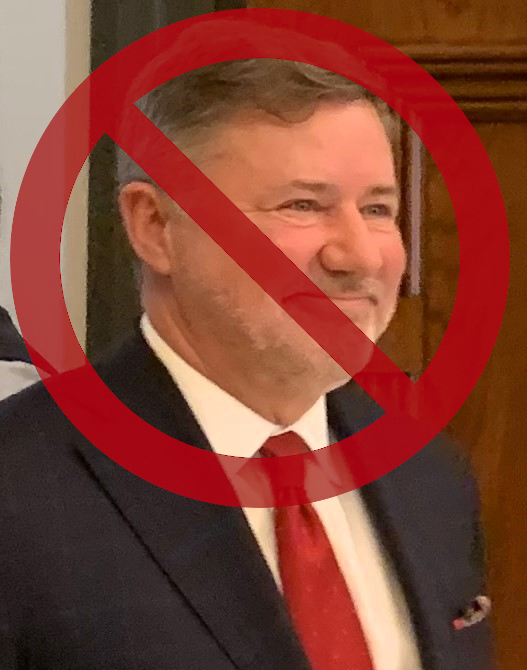 Gentner Drummond wants Oklahoma's children to be in government-subsidized daycare from birth to kindergarten so they won't be "feral."
That's what Drummond told attendees at the Oklahoma Association of Career and Technology Education Summit on August 3, 2026, according to audio obtained by former State Rep. Jason Murphey. The conference is mandatory for all CareerTech teachers in Oklahoma. Both Drummond and State Superintendent candidate Robert Franklin spoke to the conference. Murphey has full audio of each candidate's remarks. On X, Murphey also posted a two-minute clip focused on Drummond's remarks about the state questions and about state-funded childcare. (UPDATE: Murphey has posted a detailed discussion of Drummond's push for universal daycare and points out that Oklahoma's 1998 adoption of universal Pre-K, first in the nation, hasn't produced the promised improvements in educational performance.)
Here are Drummond's remarks to the CareerTech teachers about state-funded childcare:
We got to start with the zero-year-old, that little newborn to the five-year-old. We know that 60% of the brain is developed in the first five years. And yet 60% of our children, households, where they are not being stimulated, properly fed, and not disciplined. And so what's happening to our kindergarten teachers, they're getting feral children in the classroom, right, where they're spending a good bit of their time on four or five kids at the sacrifice of all. So there's a plan. In Oklahoma, if you make less than the federal poverty level, you are eligible for daycare subsidy. That's $15,800. New Mexico, about five years ago, said we're going to raise it to four times. So $58,000 means you and your spouse can work at a fast food store and still get supplemental help to put your child in daycare. They like it so much this year, New Mexico took the lid off, but Oklahoma needs to start with four times. If we do that, we let these children get into a quality daycare center where they are fed, where their minds are stimulated, and where they are taught the essence of discipline to sit in the classroom. If we do that, after five years, we've got children showing up in kindergarten ready to learn and disciplined.
When Murphey posted the highlights clip to X, there were accusations that the audio was manipulated or AI generated. The full 27 minutes makes it clear that these are Drummond's words, and to confirm matters further, Drummond repeated the idea in an interview with Chad Warmington, executive director of the Oklahoma State Chamber.
Warmington: So tell me this. So from if that's the biggest issue for businesses, what's the governor's responsibility for ensuring that Oklahoma develops the workforce that our employers need over the next decade? How can the governor lead on that?Drummond: No state has improved its position in education without the governor owning it.
I'm in a in a in a educ -- it's a keen hunt institute. It's a cohort of governors and those that they that they deem will be governor, and I've been a member of that for a year, and it's remarkable to see lessons learned across the states. For instance -- and you can go to my website drummondok.com -- and it's been there for 18 months but the education policy of mine is is being tweaked constantly but it starts with that one-year-old.
We are thinking, you know, our job starts at as kindergarten at kindergarten. But what's happening, folks, about 60% of our children are in households where they're not getting adequate daycare. They're with a elderly family member. They're sitting in front of a screen. We know that 60% of that brain's developed by five. And these kids are sitting in front of a screen. So their brains are not being developed. They're not being properly nutrition given proper nutrition. And they're feral. They're not being disciplined. So they hit kindergarten as wild banshees. The kindergarten teacher's distracted trying to manage that before she gets to teach.
New Mexico 5 years ago increased the subsidy for daycare from federal poverty level, which is where Oklahoma is today at 15,800, four times that. So mom and dad can work at a convenience store or in hospitality and still get a subsidy from the state. They liked it so much after 5 years they've lift the cap. their children. They have now five years. That one-year-old is now in kindergarten and they're sitting in the classroom and their brains are developed and they're nutri properly nutri nutriented and they're able to learn, right? They're ready to learn.
I'm sure it's no coincidence that early childhood education is a major focus of the George Kaiser Family Foundation.
Drummond makes a garbled reference to the Hunt-Kean Leadership Fellows, a program of the Hunt Institute an affiliate of Duke University.
Oh, look! The George Kaiser Family Foundation is listed as a funder of the Hunt Institute.
Here's how the Hunt-Kean Leadership Fellows program describes itself (emphasis added):
The Hunt-Kean Leadership Fellows program partners with senior-level political leaders who have the knowledge, skill, and will to be effective, equity-minded education policymakers at the state level. Named for renowned education governors Jim Hunt (D-NC | 1977-1985; 1993- 2001) and Tom Kean (R-NJ | 1982-1990), the national, nonpartisan Fellowship launched in the fall of 2014.The Fellows are part of an elite group of high-ranking, elected state officials who have committed themselves to a nine-month immersion in the full education continuum.
Drummond is one of 29 fellows in Cohort 12, the current group of fellows, along with Oklahoma State Rep. Trey Caldwell, Chairman of the House Appropriations and Budget Committee. The cohorts include politicians across the political spectrum, but they seem to focus on politicians either in an influential position or with the potential to climb that ladder. Previous Oklahoma fellows include State Rep. Jon Echols, the Republican nominee for Attorney General; State Rep. Rhonda Baker, who chaired the House Common Education Committee; State Senator Jessica Garvin, who lost her re-election primary to grassroots conservative Kendal Sacchieri; State Superintendent Joy Hofmeister; State Rep. Toni Hasenbeck, who ran unsuccessfully for State Superintendent this year; and Lt. Gov. Todd Lamb, who was in the very first cohort of 15. Former Gov. Brad Henry is the only Oklahoman on the advisory board.
Here's the press release announcing Cohort 12 (emphasis in the original):
Cary, NC. - At a time when education policy has become increasingly polarized, a new class of 29 senior state officials is stepping forward to collaborate on a different path forward. The Hunt Institute today announced its twelfth cohort of Hunt-Kean Leadership Fellows--a bipartisan program that has become the nation's premier training ground for education policymakers, with alumni now including 11 sitting governors, 2 former governors, and leaders from all 50 states.The Fellowship brings together lawmakers, governors, attorneys general, and other state leaders who share a common goal: moving beyond partisan divisions to develop education policies that work for students. Since its inception, the program has equipped 292 elected officials with the research, strategy, and collaborative networks needed to drive meaningful reform in their home states.
By investing in America's political leaders, we're cultivating informed, motivated change agents with the influence to strengthen state education systems and improve outcomes for students. The bipartisan Hunt-Kean Leadership Fellows program:
- Engages Fellows with the latest research and insights on effective, forward-thinking education policies and practices;
- Creates space for open, respectful dialogue that welcomes diverse perspectives and fosters thoughtful debate on complex education challenges; and
- Connects leaders with peers and innovators across the nation who are driving meaningful reform in their states and communities....
"I'm honored to join the next cohort of Hunt-Kean Leadership Fellows," said Attorney General Gentner Drummond (R-OK). "I look forward to learning from my peers across the country and bringing back proven strategies that give Oklahoma families and students the tools and opportunities they need to succeed."...
From December through August, Fellows engage in a rigorous curriculum facilitated by The Hunt Institute's policy teams. Activities include policy discussions, strategy breakouts, site visits and classroom perspective sessions, monthly webinars, and two in-person convenings to share experiences and gain insights from fellow cohort members.
This twelfth cohort continues the Fellowship's mission of building bipartisan leadership that advances innovative education solutions, ensuring that students nationwide have the resources and support they need to succeed.
The Hunt Institute has just started the Hunt-Lee Mayors Leadership Fellows program.
The Hunt-Lee Mayors Leadership Fellows program:
- Develops strategies for expanding pre-K access and childcare infrastructure
- Strengthens partnerships between school districts and city government
- Creates pathways connecting high schools to community colleges and employers
- Builds cross-sector coalitions to address teacher recruitment and retention
- Implements data-driven approaches to improving student outcomes in urban education systems
By investing in education leaders and aspiring local and state policymakers, we are creating a pipeline of informed education leaders, beginning at the municipal and county levels and on to state and national elected office.
Guess who's in the inaugural cohort of 15? Mayor Monroe Nichols of Tulsa.
And the Hunt Institute holds legislators' retreats, too, including five in Oklahoma, beginning in 2022. Here is the policy agenda the Hunt Institute was pushing at their most recent retreat last December.
While these programs present themselves as neutral opportunities to study data and discuss strategies, the sponsors have a set of policy goals that they're promoting, and all of them involve bigger, more intrusive government. (A look at the Hunt Institute's blog posts and policy papers makes this evident.)
They use the flattery of a fellowship to lure in officials, create an us-vs.-them (politicians vs. public) mentality that builds on a politician's need to be liked to create a bond between him and his peers of both parties in other states. When he "brings back" the big-government policies he learned during the fellowship and tries to impose them on his state, he can persist despite opposition because he cares more about impressing his peer officials in other states than persuading his own voters. He can imagine himself as courageously bucking public opinion and following the experts and the data, but he's just a conformist who has found a more prestigious group to conform to.
This was the same sort of dynamic at work in the Broad Institute, whose alumni filled the ranks of Tulsa Public Schools upper administration under Deborah Gist. Once you see the pattern, you see it everywhere: National Governors Association, U. S. Conference of Mayors, National Conference of State Legislatures, all the way down to Leadership Oklahoma and Leadership Tulsa. They're all programs of enculturation and assimilation.
Gentner Drummond has been programmed to believe that it's more important to tax Oklahomans so that our children can be in daycare from birth than to let Oklahomans keep more of our own money so that more families have the option of Mom staying home with the kids. He evidently believes daycares can do a better job of raising children than parents or extended family.
MORE: Drummond tells government employees not to expect zero income tax anytime soon -- anytime ever:
But on zero income tax, is there a path for us to, in the future, ultimately have zero income tax? Sure. After we are top of the nation in education, health care, mental health, that we've created workforce, that we've partnered with our tribes, that we've built our economy, that people are coming into Oklahoma because we're, one, the best people in the nation, two, the most beautiful land, three, the best educators, and a place that people should be attracted. Then we have a path to reducing taxes. But between now and then, we are going to feed the hungry, educate our children, and take care of our elders, because that's the way we are raised.
So, basically, never.
Only three of 17 active candidates for Tulsa City Council have filed the required pre-election contributions and expenditures report with the Oklahoma Ethics Commission. Tanisha Bowen (District 3), Adam Burnett (District 5), and Ben Johnson (District 9), all Democrats, filed their ethics reports by today's 5:00 pm deadline. All three have received donations from Tulsa Forward PAC, the political action committee established by Mayor Monroe Nichols and headed by his chief of staff, Dana Walton. Bowen received $1,000 from Tulsa Forward PAC, Burnett received $1,000, and Johnson received $750. (UPDATE: Pete Regan also received $1,000 from Tulsa Forward PAC.)
Attorney Adam Burnett, who is challenging incumbent District 5 Republican councilor Karen Gilbert, also received donations from Oklahoma Democrat Party chairman Erin Brewer, Democrat Congressional nominee John "Flaky" Croisant, Kalyn Free, Linda Jordan, Margaret Kobos, former Attorney General Steve Lewis, Vince Lovoi, American Theater Company president Bob Odle, Don Smolen. Burnett is a partner in Frasier, Frasier, and Hickman, a personal injury law firm, and he received donations from the name partners, Jim Frasier, Frank Frasier, and Steven Hickman. Jim Frasier is a former Democrat National Committeeman and a former member of the Democrat National Committee. Burnett has raised $15,520.00.
One additional candidate, Pete Regan (District 9) has been filing Continuing Reports of Contributions, but has not filed the required Report of Contributions and Expenditures. Continuing Reports of Contributions are intended for reporting large contributions that arrive after the close of the pre-election reporting period two weeks before the election. Collectively, the Continuing Reports of Contributions total $29,583.96, including $3,000 from incumbent District 9 Councilor and former State Representative Carol Bush, and $3,500 from Cherokee Composites founder Lisa Surritte of Claremore, $3,500 each from FC Tulsa executive director Ryan Craft and Lauren Craft, $3,500 each from Association of Oklahoma General Contractors executive director Bobby Stem and Tiffany Stem of Edmond, $3,500 each from William and Linda Price of Price Family Properties, $1,000 from OSU Center for Health Systems Innovation executive director William Paiva, $1,000 from Tulsa attorney Robert Blakemore. UPDATE 2026/08/19: Regan filed his Report of Contributions and Expenditures after the deadline on Monday. He has raised $179,649.41 -- an insane amount for a City Council election -- and it includes contributions from George Kaiser, former Mayors Kathy Taylor and G. T. Bynum, Tulsa Bizpac (the Chamber's PAC), Tulsa Forward PAC, and the FOP and Firefighters PAC. CAMP is his campaign consultant.
Three more candidates filed Statements of Organization but did not file the Report of Contributions and Expenditures that was due today: Mareo Johnson and Corinice Wilson in District 1, Shawn Tiemann in District 9. Johnson and Tiemann filed their Statements of Organization today, Wilson filed hers on August 4.
UPDATE 2026/08/18: Corinice Wilson (District 1) filed her Report of Contributions and Expenditures at 11:53 pm on August 17.
Effective November 1, 2025, municipal candidates in large cities (population of 10,000 or more as of the last Federal decennial census and a general revenue fund expenditure budget in excess of $10,000,000) are now required to file electronically with the Oklahoma Ethics Commission instead of with their local city clerk.
While the mechanics of filing have changed, the basics of filing are the same as they were over 20 years ago. Reports of Contributions and Expenditures are due at 5:00 pm Monday eight days before the election, to cover all contributions and spending (as well as loans and other transfers) through the Tuesday two weeks before the election. Anyone who has raised or spent at least $1,000 must file reports.
Here are direct links to each of the candidates on the Oklahoma Ethics Commission's Guardian website, with the amounts each has reported raised.
- Mareo Donnell Johnson, District 1, no report
- Corinice Wilson, District 1, $19,318.00 (late report)
- Tanisha Bowen, District 3, $4,300.00
- Adam Burnett, District 5, $15,520.00
- Ben Johnson, District 9, $6,495.00
- Peter Regan, District 9, $179,649.41
- Shawn Christopher Tiemann, District 9, no report
Several candidates, including most of the City Council incumbents, had filed earlier statements of organization and quarterly reports through the temporary local campaign filings portal. Click that link and type "Tulsa" or the name of the candidate into the search box to pull up all filings for a candidate. Click a filing to see the individual summaries and schedules that constitute a filing. As awkward as the old Guardian system is, this is even worse. As of June 1, 2026, the Guardian system has been expanded to cover county, municipal, and school board candidates, and all future filings must be through Guardian.
The following city candidates showed up on the Ethics Commission's temporary portal. The candidate's most recent filing on record, plus the amount raised by that date, plus any carryover from the previous campaign committee, is listed with each name:
- Vanessa Hall-Harper, District 1, 2026 2nd Quarter, $473.76 + $8,370.07 carryover
- Anthony Archie, District 2, 2026 1st Quarter, $100.00 + $6,954.80 carryover
- Jackie Dutton, District 3, 2026 2nd Quarter, $500.00 + $3,679.68 carryover
- Laura Bellis, District 4, 2026 1st Quarter, $12,272.00 + $15,773.95 carryover
- Karen Gilbert, District 5, 2026 2nd Quarter, $525.00 + $12,041.71 carryover
- Christian Bengel, District 6, 2026 2nd Quarter, no activity reported
- Lori Decter Wright, District 7, 2026 2nd Quarter, $1,695.00 + $8,762.67 carryover
Of interest from those reports:
Decter Wright received $500 each from billionaire George Kaiser and his son Philip Kaiser. UPDATE 2026/08/19: Decter Wright appears to have resubmitted the summary of her 2nd quarter report to the temporary local campaign filings portal. No schedules were attached showing contributions or spending.
Bellis's summary shows $12,272.00 raised during the 2026 1st Quarter, including $1,250 from Susan Nichols, manager at Main Square Properties, $1,000 from Aaron Bean, Managing Director of Asemio, $750 from Grant Bumgarner, affiliated with various GKFF initiatives, $500 from former Mayor Kathy Taylor, $250 from Lynn Schusterman, $250 from George Kaiser Family Foundation employee Annie Van Hanken, $250 from Maxine and Jack Zarrow Family Foundation executive director Monica Basu.
Asemio is a company that facilitates data sharing between government agencies and non-profits. From one of the case studies on their website:
In 2019, Asemio teamed up with the Birth Through Eight Strategy for Tulsa (BEST), supported by George Kaiser Family Foundation (GKFF) and Blue Meridian Partners, to support community outcomes improvement initiatives by making data sharing easier...."The health department is committed to the health and well-being of all of Tulsa county. This particular project has helped us expand into serving all of Tulsa county--people who may or may not have ever interacted with the Health Department." -- Monica Rogers[, Division Chief of Data & Technology, Tulsa Health Department]
The report doesn't describe any positive outcomes benefiting the public, but the quotes indicate how delighted all the stakeholders are with being able to share data.
The overarching impression is that left-wing interests -- philanthropists and their non-profit minions -- are funding Tulsa's city candidates, while traditional Republican donors and groups are simply not involved. Here's a theory: Republicans are spending all their money and attention on highly contested statewide races, while Democrats, with few primaries and runoffs and little chance of winning statewide, are directing their funds and focus to "non-partisan" municipal and school board races.
MORE: One PAC related to Tulsa has filed with the Oklahoma Ethics Commission. North Tulsa for Change PAC filed a statement of organization on August 4, 2026, the same day that Corinice Wilson's statement of organization was filed. Sharmien Watkins is listed as the chairperson of both the Wilson campaign and the North Tulsa for Change PAC, and both list the same address, 2250 N. Main Street. The following statement was posted on Wilson's campaign page on Facebook the evening of August 17, 2026:
Good evening, District 1,We want to provide the full facts about the newly registered North Tulsa For Change PAC and its relationship to the Corinice Wilson campaign.
Public records show that individuals working with the campaign are also registered with the PAC. We are not attempting to obscure that relationship. However, the PAC has received no contributions, made no expenditures, purchased no advertising, and funded no campaign activity.
The PAC was established as a long-term vehicle to support principled local leaders and policies that strengthen North Tulsa. It was registered in advance so the proper reporting structure would exist before any money was accepted or spent. The PAC and Dr. Wilson's campaign remain separately registered committees, and all financial activity will be publicly reported as required.
We also want to clarify Dr. Wilson's initial response reported by The Black Wall Street Times. She returned a call from an unfamiliar number. During the approximately one-minute conversation, the caller did not initially identify himself as a journalist, name the publication, or specify the PAC. Once he identified the PAC, Dr. Wilson explained that she was entering class and needed time to "research," meaning she needed to verify its filing and financial information before responding accurately. A campaign representative was later contacted only an hour before the reporter's deadline.
Scrutiny of political money is fair and important, but context also matters. We have provided these facts to The Black Wall Street Times and formally requested an update.
The facts are straightforward: the PAC exists, there is personnel overlap, and it has received no contributions and made no expenditures.In community,
C3
The Black Wall Street Times article is here.
Looking at other PACs active in Tulsa:
Tulsa Forward PAC 2nd quarter report includes $5,000 each from the Cherokee Nation, Muscogee Creek Nation, and Osage Nation, $5,000 from Anne and Henry Zarrow Foundation president Judith Kishner, $5,000 from Steve Mitchell, who heads George Kaiser's private equity company Argonaut, $5,000 from former Omni Air head Rob Coretz (misspelled as Cortez in the report), $5,000 from William Price of Price Family Properties, $1,000 from trial lawyer Clark Brewster, $1,000 from Emily Kaiser, $1,000 from former Democrat Mayor Kathy Taylor, and $2,500 from Groundwork Project PAC (see below). Tulsa Forward PAC has donated to Nick Coffey for Attorney General, Jason Lowe for Oklahoma County Commissioner, Ronald Stewart for State House, and Monroe for Mayor. Tulsa Council contributions that have been reported by the candidates should show up in the Q3 Tulsa Forward report.
Groundwork Project PAC, a Massachusetts based organization that also gave $2,500 to Democrat Cyndi Munson for Governor.
Groundwork Project PAC lists as its purpose:
To help communities win political power and representation, supporting candidates who will fight to deliver justice, equity and democracy to states and regions too often ignored.
Groundwork Project PAC sent this email after the defeat of SQ 832, the infinitely escalating minimum wage constitutional amendment, claiming the vote was rigged against them:
This is what happens when Democrats write states off and leave the field. They give the GOP control of every lever of power, so they can engineer the outcome they want - even when voters are on our side. Heroic local organizers worked their hearts out and did all they could to bring resources into the fight, facing big conservative money at every turn.
In another recent email, Cyndi Munson encourages donors to give to her and to Groundwork Project PAC. The associated non-profit, Groundwork Project, was founded by former Congressman Joe Kennedy III. Last fall, Kennedy identified Oklahoma as one of his four target states, along with Alabama, Mississippi, and West Virginia.
In these states, anti-democratic forces have spent decades building a base to challenge abortion access, voting rights, LGBTQ+ rights, fair representation, and more. We're fighting back by equipping local organizers with the resources they need to win.
All that to say: If you see or hear Monroe Nichols, Cyndi Munson, John Croisant, and other Oklahoma Democrats trying to distance themselves from national "progressive" politicians, they're lying to you.
Links to the Tulsa public safety union PACs. Be warned that their contributions reports are very long, as they consist mainly of small regular donations from individual members. Neither group has reported contributions to city candidates.
- Tulsa FOP Lodge 93 PAC: $10,000 given in 2nd Quarter to Tulsa County District Attorney Steve Kunzweiler, Senate 34 candidate Aaron Forst, and House 86 candidate David Hardin
- Tulsa Firefighters PAC: $16,000 given in 2nd Quarter to legislative candidates Ally Seifried (Senate 2), Randy Cornelius (Senate 17), Brent Driskill (Senate 34), Scotty Stokes (House 9), Sheila Dills (House 69), to Lt. Gov. candidate T. W. Shannon, to Tulsa County Treasurer John Fothergill and District 1 County Commissioner Stan Sallee.
Former State Senator Jake Merrick, the underfunded gubernatorial candidate who managed to finish ahead of well-funded former Speaker Charles McCall in June's primary, has endorsed Mike Mazzei in the Republican runoff for Governor.
When I step back and I look at the whole picture, I see two different approaches to governing. There are areas where Gentner Drummond and I agree. There are areas where I believe he's been right like on illegal marijuana grows. But there are also significant areas particularly involving the proper role of government and institutional accountability where I have serious disagreements.With Mike Mazzei, I find greater alignment around a philosophy of fiscal restraint, parental authority, protection of life, and questioning the size and scope of the state itself. And on DHS reform, I'm not just hearing rhetoric. I'm seeing Mike begin the work of asking questions, bringing people together, and developing potential solutions before he ever takes office. And these things matter to me.
But my own philosophy comes back to an even more fundamental question. It's one I asked earlier.
Before we ask whether Government is doing something effectively or efficiently, let's ask whether government should be doing it at all. And that's the lens through which I evaluate government and candidates. So when I put all that together: life, liberty, limited government, parental authority, property rights, government accountability, DHS reform, and Oklahoma sovereignty.
I find myself aligning more closely with Mike Mazzei, so I'll be supporting him for governor. Not because someone told me to, not because the President endorsed him, and not because I dislike Gentner Drummond. And it's not because I expect Mike Mazzei and I to agree on everything. I am supporting him because when I take the personalities away, take the endorsements away, take the campaign politics away, and compare these candidates against the principles I believe should govern Oklahoma, Mike is just closer to where I believe Oklahoma needs to go.
State Rep. Jim Shaw defeated an insider candidate with grassroots funds and efforts in 2024 and is beloved by grassroots Republicans for refusing to accept PAC and lobbyist campaign contributions and gifts. Shaw is a stalwart in the legislature for protecting rural Oklahoma's farms and ranches against threats like wind farms, humanure, and data centers. Here is Shaw's endorsement of Mazzei:
Chandler, OK -- State Representative Jim Shaw, R-Chandler, endorses Mike Mazzei for Governor, saying Mazzei is the conservative ally Oklahoma needs to advance freedom, protect Oklahoma families, secure Oklahoma land, and hold government accountable."Mike Mazzei has shown that he will fight for Oklahoma workers, taxpayers, landowners and families," Shaw said. "Gentner Drummond wants Republican voters to believe he is a conservative, but voters should judge his record, not his campaign rhetoric. Oklahoma needs a committed conservative, not a slick talking trial attorney."
Shaw, author of the seven-point Save Oklahoma Plan which Mazzei supports, pointed to several clear contrasts in the race.
On foreign ownership of Oklahoma land, Mazzei supports criminalizing hostile foreign ownership of Oklahoma land. Drummond has defended a narrower interpretation of existing law. Drummond is also responsible for the loophole introduced on the affidavit form allowing foreign nationals to continue purchasing new property in Oklahoma, perpetuating illicit activity endangering our communities.
On E-Verify, Mazzei supports requiring employers to verify that new workers are legally authorized to work. "Mike Mazzei stands with Oklahoma workers and the rule of law," Shaw said. "Gentner Drummond is on record saying we don't have the resources to pursue all illegals and has previously mentioned he has no concern with illegal aliens who are obeying the law. What an oxymoron."
On government spending and Green New Deal-style subsidies, Mazzei has a record of fighting wasteful government programs and helped stop a $1.5 billion transferable tax-credit program for wind energy. Drummond offers conservative rhetoric; Mazzei has delivered conservative results.
"The Save Oklahoma Plan is about protecting Oklahoma land, jobs, taxpayers and individual freedom while making government smaller and more accountable. It's an agenda that's popular with the grassroots of this party and should be easy for any conservative candidate to support," Shaw said. "Mike Mazzei is willing to fight for that agenda. Gentner Drummond is not."
"I'm proud to endorse Mike Mazzei for Governor," Shaw concluded."Oklahoma conservatives must choose a candidate who has committed to change the way business is done in Oklahoma City. Mike Mazzei is that candidate."
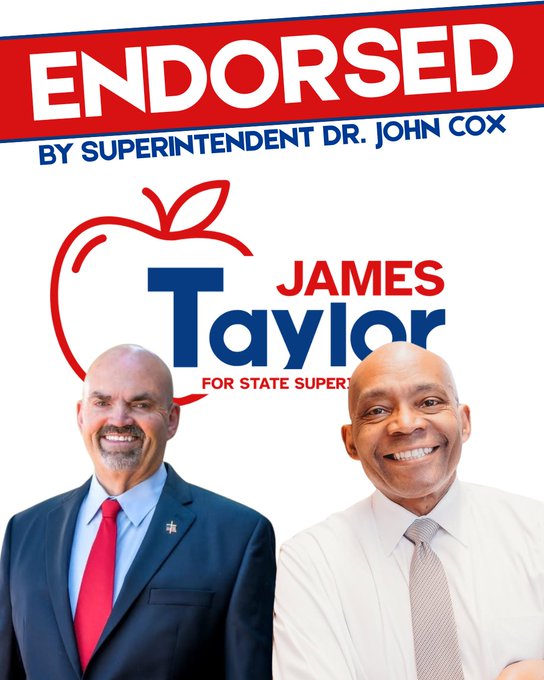 Dr. John Cox, Republican candidate for State Superintendent of Public Instruction, and long-time Superintendent of Peggs Public Schools, has endorsed high school history and government teacher James Taylor in the State Superintendent runoff. Cox finished third in a close seven-candidate primary with 18.4% of the vote.
Congressman Josh Brecheen has endorsed Marty Quinn for Oklahoma Insurance Commissioner. Brecheen served in the State Senate while Quinn served in the State House:
And why Marty Quinn? Because I've watched him for approximately a decade. He's honorable. He's honest. And when you look at people who serve in elected office, there's really one thing I think that separates, more so than anything else, and that is: Are they honest? And do they do what they do because they really believe in it, led by conscience, not political calculation?And I was working on some things that were really important to me, trying to make sure that the tax law was just in the way it was applied to Oklahomans years ago. And there was one person of the entire state legislature that I chose to take over the authorship that I had and hand it over to somebody who I knew was respected in the building, and who I knew would do the right thing and pick the fight because he's ferocious, but he does it with gentleness. And you need somebody who's going to do what they do in the Insurance Commissioner's office because it's really within them to do the right thing when nobody's watching.
Brecheen has also endorsed James Taylor for State Superintendent and Mike Mazzei for Governor:
"Mike Mazzei is the leader Oklahoma needs. No one understands state finance reform better than Mike--his expertise will transform Oklahoma into an economic powerhouse," Brecheen said. "A man of strong character and principled conservatism, Mike Mazzei takes on tough issues with truth and tact, making a lasting impact without division."Brecheen also highlighted Mazzei's role in securing the future of the state's teacher retirement system.
"During our time in state government, I witnessed him spearhead some of the most transformational reforms, including pension reform, ensuring the solvency of the teacher retirement system."
State Rep. Jim Shaw has also endorsed James Taylor for State Superintendent:
I am proud to endorse Dr. James Taylor for Oklahoma State Superintendent of Public Instruction.Oklahoma parents deserve a Superintendent who will put their children first, not special interests in Oklahoma City. Dr. Taylor has the courage to stand up for Oklahoma families and lead meaningful reform.
I encourage every Oklahoma voter to join me in supporting Dr. James Taylor for State Superintendent.
Charlie Meadows, long-time chairman of the Oklahoma Conservative Political Action Committee, has released his runoff picks. He agrees with me on statewide officials (Mazzei, Taylor, West, Quinn) and the state questions (Yes on both), and he's got helpful information on several legislative races mainly in central Oklahoma. Here's what Meadows says about the State Superintendent race:
Taylor has developed and proven over several years a method to inspire teachers and parents to inspire students to want to learn. He also has a plan to reduce the number of emergency certified teachers in such a way it would actually save tax dollars for the citizens of Oklahoma. Dr. Franklin is a highly certified educator and administrator that represents everything that the education establishment has done over the past 40 to 50 year which has driven up the cost of education only to see the academic performance of students decline. If Dr. Taylor doesn't win, the teacher union bosses will have put forth a Republican or Democrat candidate to choose from. What a bad idea for the children of Oklahoma.
A correction to Charlie's statement: Former Tulsa school board member Dr. Jennettie Marshall, the Democrat nominee for Superintendent, was not the teacher's union choice. They hate Marshall because she was a critic of Deborah Gist and the expensive consultantocracy at TPS, because she pushed for the audit that exposed fiscal wrongdoing.
Former State Rep. Jason Murphey has also posted his runoff endorsements:
I've been fielding requests for my views on the state questions, though not so much my picks for the statewide candidates. That's likely because the grassroots ticket is fairly obvious to anyone even slightly engaged: Mike Mazzei for governor, James Taylor for state school superintendent, and Kevin West for state labor commissioner.I am not sure I've ever seen such a distinctly defined ticket of runoff candidates, almost as distinct as the partisan divide itself.
Murphey offers no insight on the Insurance Commissioner race.
Murphey provides some helpful historical context on SQ 846 (constitutional voter ID requirement) and puts SQ 844 in a different light. The problem 844 is trying to address, he says, is specific to Google and Mayes County and could be solved a better way:
And now the Legislature finds itself in a position where the state is picking up a tab for nearly $88 million each year, with--get this--$34 million of that going to Google to cover the tab for their property taxes at their Pryor, Oklahoma data center.Yes, at some point in the past, probably in the 1990s, the Legislature decided that data centers should qualify for this treatment, what is known as the five-year manufacturing entity exemption from the property tax, even though a data center isn't a manufacturing entity, strictly defined. It's pure, corrupt, politics.
By 2021, due to the Google project, that date center subsidy became so pricey that the Legislature cut off that part of the program: no more welfare for data centers; except, by then Google was clearly too politically powerful, and the local Pryor, Oklahoma schools so dependent on the subsidy, that the legislators, in what is an epic special-law-benefit territory--which, in my view, is an abhorrent, corrupt practice prohibited by the state constitution--received a special extension through 2036....
[Speaker Kyle] Hilbert's explanation suggests that this is a problem of the local county assessor, presumably in Mayes county, where he seems to suggest that the county assessor is over assessing that facility, knowing that the state will pay the bill, and Google, receiving a free benefit, won't protest the assessment because they are not paying for it.
Now, the fix for this is easy. If this is an abuse, the legislature would direct the state's Tax Commission, which both oversees the giveaway program and has a role in auditing assessors, to tweak its rules as needed to update the assessor auditing criteria and thus mitigate the harm.
He's got me rethinking my vote on 844.
MORE:
Jamison Faught, the Muskogee Politico, has endorsed Marty Quinn and condemned the slimy attacks targeting Quinn:
Marty Quinn, candidate for Insurance Commissioner, has responded to shameful smears by his opponent, attacking Quinn for being born in Arkansas (I wish that was just a joke... as if one can do anything about where you are born!) and for moving to Arkansas to care for aging parents in their final days.Yes, Bob Sullivan and his supporters are attacking Marty Quinn for prioritizing ailing family a few years back. That's a real jerk move.
I have known Quinn for over fifteen years. He is a man of sincere character and real integrity, the kind of man who would give the shirt off his back if you needed it. He's devoted to his church and his family. This man believes in service and putting others first. He's not the kind of man to malign and besmirch his opposition, because he believes in a positive vision for Oklahoma and setting an example for others.
He's got loads of experience - 40 years as a local insurance agent, and 12 years as a legislator. He knows how insurance works, as an industry veteran and as a consumer, and how the legislative process works and can be leveraged to bring about solutions to problems that consumers face.
Faught adds this useful observation:
This election cycle has been a doozy, with some wild, outrageous, and shameful attacks by candidates (many of whom share the same family of political consulting firms, namely CAMP and affiliates). Don't reward sleazy campaigns with your vote. Don't encourage dirty consultants to continue the same tactics.
BatesLine has been tracking the sleazy smears of CAMP and its predecessors for 20 years.

Have you ever thought about how utility companies get the right to run pipes and cables over or under your back fence or under city streets? When a subdivision is laid out (platted), easements are dedicated by the developer to the city. Some of these are for streets and are owned by the city, while the easements along your back fence (typically five feet from the fence) remain in your ownership, but the City has limited rights to run sewer lines and other utilities through the easement and to grant franchises to utility companies to run their own overhead lines and underground cables and pipes. These franchises are long-term but not permanent and must be renewed when they expire, which opens up an opportunity for city and utility to renegotiate terms. Under Article VIII, Section 4, of the Tulsa City Charter, each franchise must be approved by a vote of the people.
On August 25, 2026, all Tulsans, whether or not there is a City Council race on the ballot, can vote on whether to renew the franchise for Oklahoma Natural Gas for the next 20 years.
The last vote on ONG's franchise was on August 9, 2011, and codified as Title 15, Chapter 3. That 15-year franchise replaced a 25-year franchise approved in 1986.
There are several major differences between the existing franchise and the new franchise the voters are asked to approve:
- The new franchise is longer, 20 years instead of 15. (Section 301)
- ONG will be required to build temporary sidewalks when the sidewalk needs to be reopened before the permanent sidewalk repair can be completed. (Section 307 C.4.)
- The new franchise fee increases from 3.10% to 4.00% of gross receipts, but the additional 0.90% will be deposited in a "special revenue fund for the maintenance, repair, and improvement of Public Ways, including but not limited to right-of-way and median maintenance and enhancement; streetscaping; landscaping; street and highway lighting maintenance, repair, and replacement; sidewalks; and corridor enhancement and beautification." (Section 312)
- ONG will not be charged "any permit fees, lane closure fees and similar fees or charges for construction, installation, maintenance or restoration work on the Distribution System within the rights-of-way." (Section 312)
- The process and timing of changes to ONG's lines due to city requirements to accommodate other utilities in the right-of-way is set out in greater detail. (Section 308)
The current franchise ordinance, No. 22415, is here. The proposed franchise ordinance, No. 25782, is here. Here is a Draftable comparison of the two, highlighting the differences.
When a statutory matter gets written into the State Constitution, amending it is a pain in the ballot.
On August 25, 2026, at the runoff primary election (also the City of Tulsa general election), Oklahoma voters will decide State Question 844, which would change some clauses in Article X, Section 6B of the Oklahoma Constitution. The Constitution grants a five-year property tax exemption for new or expanded manufacturing facilities and mandates the State to reimburse local government for the property tax revenue they would otherwise receive. If SQ 844 passes, the Legislature would decide how much to reimburse and how to divide the reimbursement up among taxing entities.
Here is the gist of SQ844 that will appear on the August 25 ballot:
This measure amends article 10, section 6B of the Oklahoma Constitution. Section 6B incentivizes manufacturers to locate, expand, or acquire manufacturing facilities in Oklahoma through an ad valorem taxation exemption for five (5) years. Currently, the State must reimburse common schools, county governments, cities and towns, emergency medical services districts, vocational technical schools, junior colleges, county health departments and libraries for revenues lost as a result of each exemption provided. This measure authorizes the Legislature to enact laws establishing the levels and methodologies of reimbursement for the previously mentioned local governmental entities resulting from the manufacturing exemption. The laws are meant to ensure that no individual county receives reimbursement in an amount detrimental to other Oklahoma counties. The levels and methodologies will replace the current statutory framework for reimbursement. For the purpose of calculating the limit on indebtedness for political subdivisions, the measure requires such amount be equal to the amount of reimbursement applicable to such property under laws enacted by the Legislature. This measure will have a fiscal impact on the state that will depend on the application of the levels and methodologies adopted by the Legislature.
Here is what will actually change in Oklahoma Constitution Article X, Section 6B, Paragraphs E & F:
E.TheFor the purpose of ensuring that no individual county shall receive reimbursement in amounts that result in a detriment to the other counties of the state, the Legislature shall enact laws to carry out the provisions of this section and to provide forthelevels and methodologies of reimbursement to common schools, county governments, cities and towns, emergency medical services districts, vocational-technical schools, junior colleges, county health departments and libraries for revenues lost to such entities as a result oftheeach exemption provided by this section.F. The assessed valuation of property exempt from taxation by virtue of this section shall be added to the assessed valuation of taxable property in computing the limit on indebtedness of political subdivisions contained in Section 26 of this article, in an amount equal to the level of reimbursement applicable to such property under the laws enacted by the Legislature.
There will be no change to paragraphs A through D, which establish the exemption and eligibility, and paragraph G, which establishes a county option to apportion up to 25% of the county 10-mill property tax on previously exempt manufacturing facilities to economic development.
Proponents in the Legislature want the flexibility to ensure that reimbursements are not as concentrated to particular counties and that they can be scaled to avoid harming the rest of the state budget. Opponents, mainly from the Left, want to see the school districts where these manufacturing facilities are located continue to get the reimbursements they currently enjoy, and they point out that these reimbursements reduce the amount of money they receive in the state school funding formula.
Reimbursements are funded by an earmarked 1% of state income tax collections, but that hasn't been enough to cover the required amount, and the Legislature has had to appropriate additional funds. From FY 2019 through FY 2024, that 1% only covered 30.5% of the reimbursements.
I'd love to see these exemptions go away entirely, along with other taxpayer-funded inducements to private business, but that option isn't on the ballot. For now, Oklahomans need to vote yes to give the Legislature the flexibility to balance the various interests involved without overburdening the taxpayers.
According to the 2026 annual report from the Oklahoma Tax Commission's Ad Valorem Division, 2026 reimbursements for tax year 2025 total $88,635,421, a significant drop from the 2019 tax year peak of $161 million. The 2024 quinquennial analysis of the exemption by the Oklahoma Incentive Evaluation Commission notes that the legislature removed wind farms from the exemption list in 2015, effective for the 2018 tax year, and the previously granted exemptions have been expiring since then.
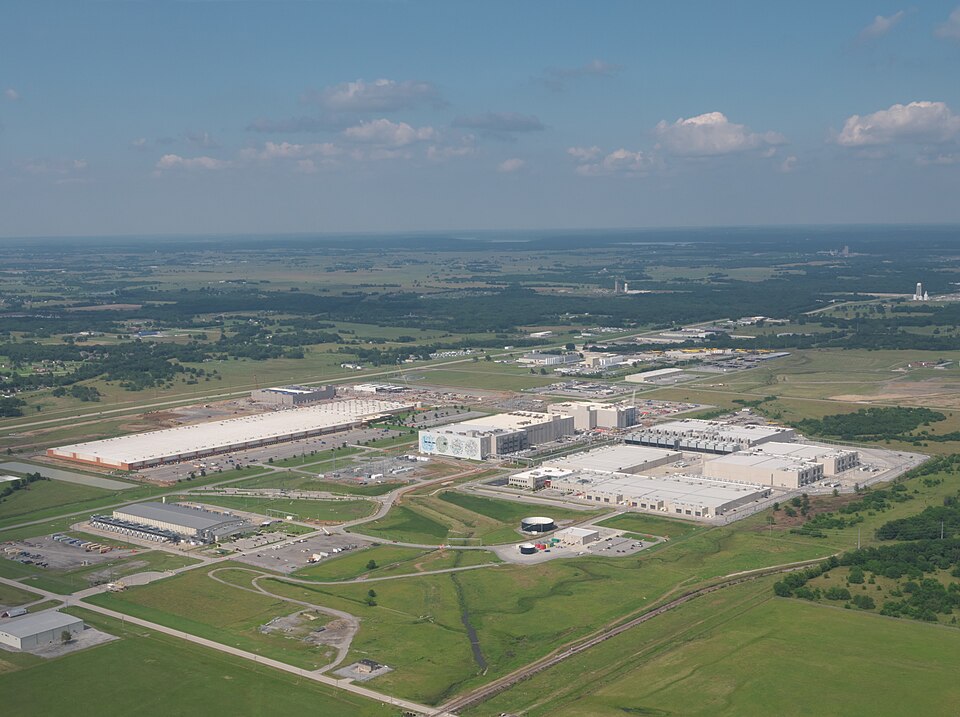
$35.6 million (40%) of this year's $88.6 million reimbursement went to Mayes County. Nearly all of that amount, $34,187,160, is for the exemption to Google LLC - Myall LLC for the data center complex at the Mid-America Industrial Park. That's 38.6% of the statewide total.
(A simple way to reduce the number of data centers being proposed for Oklahoma would be for the Legislature to remove data centers from the list of exempt industries, just as wind power generation was removed in 2015. This could also be accomplished by an initiative petition to amend 68 O.S. 2902, the section of law that defines which types of businesses are eligible for the exemption.)
Tulsa County is the only other county into 8 digits in reimbursements, receiving $16,949,307 for the 2025 tax year. Holly Sinclair (east & west refineries combined) receives the largest benefit at $3.4 million, followed by Kimberly Clark ($2.1 million), Amazon ($1.7 million), Macy's Corporate Services ($1.7 million), Whirlpool Corporation ($1.6 million), Green Bay Packaging ($1.3 million), and AAON Corp ($1.1 million). The remaining exemptions are mainly in five figures.
School districts are the largest recipients of property taxes and are also receiving the bulk of these reimbursements, money they likely would not have received in the absence of the ad valorem tax exemption and other incentives for these industrial developments. The complaints that reimbursements are unfairly concentrated in a few school districts remind me of complaints in the 1970s about districts where large electric power plants were located. On our way to visit my grandparents in Nowata, we would pass the new and growing Oologah Schools complex. Mom (a teacher at Catoosa) would remark on Oologah's new indoor pool and higher teacher salaries, funded by the coal-fired PSO generating plant in the district southeast of the town. At some point, the Legislature changed the law so that public utilities are subject to a higher assessment rate and pay their ad valorem taxes to the state rather than the county, spreading the revenues from regulated public utilities across the state.
Whether these exemptions are funding real job growth or just enable financial gamesmanship is hard to tell. The Macy's distribution center in Tulsa's Cherokee Industrial Park, one of the top beneficiaries, closed this past spring.
Why are property tax exemptions a constitutional matter at all? After the jump, we'll take a look at the history of Article X, Section 6B.
 Subscribe to this blog's feed: