2026 Tulsa area judicial elections
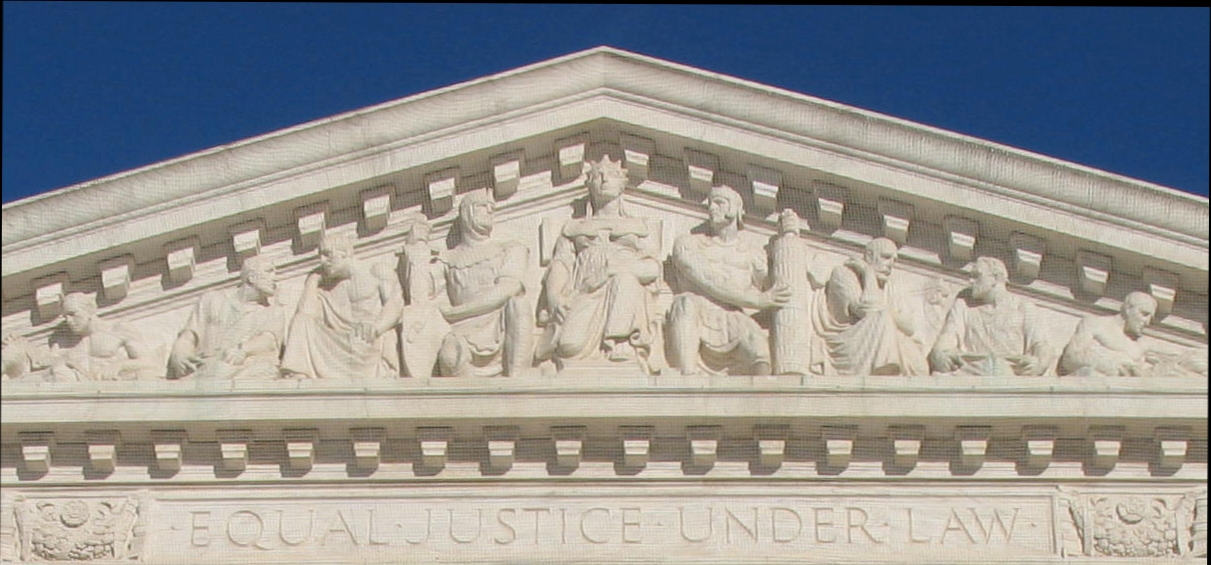 Two district judgeships will be on all of Tulsa and Pawnee Counties' November 3, 2026, ballots. Voters in the eastern Tulsa County portion of the City of Tulsa and Tulsa County north of the City of Tulsa (Skiatook, Collinsville, Sperry, Owasso) will have a third judicial choice to make.
Just north of us, Washington County will elect a new Associate District Judge to replace Russel Vaclaw, who won a District Judgeship in District 11 without opposition.
Here are my recommendations, and my friends in the legal community appear to be unanimous in agreement:
- District 14, Office 1 (Tulsa, Pawnee Counties): Caroline Wall (R)(i)
- District 14, Office 4 (Tulsa County Judicial Election District 4 only): Dustin Allen (R)
- District 14, Office 12 (Tulsa, Pawnee Counties): Kevin Gray (R)(i)
- Washington County Associate DJ: Todd Cone (R)
Oklahoma is divided into 26 judicial districts. Tulsa County shares its 14 district judges with Pawnee County in Judicial District 14. Additionally, each county elects one associate district judge, who serves along side the district judges. The only real distinction is the geography of the constituency. Since the passage of HB 1504 in June 1993, District 14 has five judges nominated and elected by a district within Tulsa County, a judge nominated in Pawnee Couty and elected at-large, and the remainder of judges nominated in Tulsa County and elected at-large. District judges run in competitive non-partisan elections for four year terms.
For Office 1, incumbent District Judge Caroline Wall faces Tom Sawyer. Wall served a term as Associate District Judge for Tulsa County from 2002 to 2006. She was defeated for re-election in 2006 by then-Associate District Attorney Dana Kuehn (who is on this year's ballot as a Supreme Court justice seeking retention). (Wall was not happy about my endorsement of Kuehn.) In 2014, Wall defeated incumbent soft-on-crime judge William Kellough to return to the Tulsa County bench, and by all accounts is a solid judge, vastly improved over her first term of office.
In 2023, Wall dismissed a lawsuit for reparations for the Tulsa Race Massacre for failure "to state a justiciable public nuisance claim" and "to allege a cognizable legal abatement remedy." In her order dismissing the case, Wall wrote, "This court declines to engage in the management of public policy matters that should be dealt with by the legislative and executive branches." She was attacked for her decision by the Black Wall Street Times, who reported that she had ties to far-right wing characters and followed Donald Trump on Twitter. The dismissal was upheld in 2024 by the Oklahoma Supreme Court (OSCN docket here) by an 8-1 majority: "We affirm the District Court's July 12, 2023 Final Order of Dismissal with Prejudice. With respect to their public nuisance claim, though Plaintiffs' grievances are legitimate, they do not fall within the scope of our State's public nuisance statute. We further hold that Plaintiffs' allegations do not sufficiently support a claim for unjust enrichment, nor do the allegations sufficiently support a claim for the unauthorized use of name and likeness under 12 O.S. § 1449."
Wall was challenged by Tom Sawyer (full legal name, Scott Thomas Sawyer) in 2018, and Sawyer is running again this year. Sawyer earned his law degree at Loyola in Los Angeles and has been working in Oklahoma since 2013, serving stints as an Assistant DA in a variety of counties, including Tulsa, Creek, Choctaw, and Mayes. Sawyer ran for the Rogers County associate district judge post in 2022. Sawyer does not appear to be actively campaigning, and he has not filed with the Oklahoma Ethics Commission for this campaign. In 2018, he received $500 donations from Gentner Drummond and Daniel Smolen.
Both Wall and Sawyer are registered Republicans.
In Office 12, District Judge Kevin Gray, a former assistant district attorney first elected judge in 2022, has been challenged by Christopher Camp. Camp, a lawyer in private practice, is not running an active campaign and has not filed with the Oklahoma Ethics Commission. Gray and Camp are both registered Republicans, but Camp only ever votes in November general elections.
Office 4 was the only open competitive seat this year, replacing retiring judge Daman Cantrell. Three candidates filed, Phillip Peak was eliminated in the June primary, and now assistant DA Dustin Allen and special judge Loretta Radford are on the November ballot. The election will take place only within Tulsa County Judicial Election District No. 4, which can be roughly described as north Tulsa County and east City of Tulsa. Here is the official map of Tulsa County judicial election districts.
If you want judges who believe in Equal Justice Under Law, Dustin Allen is the only choice for Office 4.
Dustin Allen is private practice attorney. Allen has been endorsed by State Rep. (and likely future Congressman) Mark Tedford, Tulsa County Sheriff Vic Regalado and a long list of area FOP chapters. His LinkedIn profile says that Allen worked as an ADA in Tulsa County for 9 months, as a Tulsa County Assistant Public Defender for 3 years and 1 month, and as an ADA in Wagoner County for 6 months, covering the period from June 2011 to July 2015, when he began private practice. According to voter and land records, Allen lived near 91st and Memorial before purchasing a home in Owasso, in Election District 4, in 2025. Allen is an alumnus of Bishop Kelley High School and got his law degree from Hofstra. You can get a sense of Allen's demeanor, philosophy, and values from his YouTube channel.
Radford has been endorsed by Judge Cantrell and has among her donors local Democrat figures like Tim Gilpin, Jim Frasier, and John Nicks, as well as former judge William Kellough, who was ousted for being soft on crime in 2014 (see above). According to voter and land records, Radford has had a home in Owasso since 2004.
Looking back a few years, in June 2022 Radford was a Democrat registered to vote in Owasso, while Allen was a Republican registered to vote in south Tulsa. The same was true in November 2018. In the 2024 presidential election, District 4 votes supported Donald Trump over Kamala Harris by 63.4% to 34.5%, so the election ought to be a slam dunk for Allen as long as voters get the word that Allen is a conservative and Radford supports race preferences in our legal system, as detailed below.
What follows regarding Radford's record is largely a repeat from before the June primary, but it's worth repeating for those just now tuning in.
Back in June the Tulsa County Bar Association hosted a forum with the candidates and posted the video (most of it anyway; the beginning seems to be missing).
Loretta Radford has been a Tulsa County special judge since 2022. Special judges are appointed and serve at the pleasure of the elected District Judges. She retired from the US Attorney's Office for the Northern District of Oklahoma in 2019 after 26 years of service. This speaker's bio from 2021 has more about her time in Federal service and her prior job as an Assistant Public Defender in Tulsa County.
Before being hired as a special judge, Loretta Radford was Legal Director for the Oklahoma City University School of Law Center for Criminal Justice. In 2021, while in that role, Radford wrote that diversifying the bench was the "single most important goal" for the law profession in Oklahoma, and she called for "implicit bias" testing and training, imposing this DEI notion upon anyone who seeks to be a lawyer or a judge in Oklahoma (emphasis added):
The single most important goal for the future of the practice of law in the State of Oklahoma is to diversify the bench, the legal clerical support, the district court benches and the appellate courts of this state with people of color. Law Schools need to stress this fact in their recruitment efforts; lawyers need to stress this fact in the courtrooms when they are picking juries and arguing cases, and in carrying out their pro bono or public service duties; Bar Associations need to recognize the historical disadvantage that people of color experience in just trying to compete with the majority; and current judges need to support the addition of people of color to the bench. To have true diversity we must change the culture. The majority has to quit the mindset that they are somehow diminished professionally by giving a taller foot stool to a person of color in order to give that person of color just a minimal opportunity to compete at the same vantage point. When we realize that true diversity and inclusion is a not a handout but a hand up, we can change the culture and improve the efficiency of the legal system for all of the citizens of the State of Oklahoma.I recommend that lawyers, law students, and law school Bar Associations learn to identify the areas of implicit bias that stifle their thoughts and ultimately their work in the legal profession. The Harvard Implicit Bias test is designed to measure the attitudes and implicit biases people may be unwilling or unable to report. Lawyers, students, judges and Directors of Bar Associations should include this test in their training and curriculums. Then, training should be implemented to teach individuals how to combat the bias. It can be instituted for lawyers as a part of the curriculum requirements for admission to the bar; administered to students in first year law school in much the same way that legal research and writing is required; provided in the success training templates as a part of the professional conduct guidelines for every Bar Association; and administered to judges both at the district court level and the appellate level as a part of their oath of office. When all aspects of the legal profession become serious about diversity, we will lose the fear of discussing race and the implicit bias that affects our professional lives. We will lose the unconscious bias that continues to influence the actions and decisions of those we hire, those we promote, who we appoint as judges, how we interact with people of a certain group, and even how we evaluate the work performance of employees. Diversity training, beginning with identifying implicit bias, is the single most effective way to encourage young people to get involved in diversity issues. They will do what they see us do.
In 2022, Radford was very pleased by the confirmation of Ketanji Brown-Jackson to the US Supreme Court:
"She has shown all of America the leadership qualities that she has. And she's given hope, quite frankly, to other people of color, to other people."..."The revelation by today's confirmation is that America's ready for the highest court in the nation to reflect the population and the citizenry of the United States," Radford added.
Here's Radford in 2019, at a forum on "criminal justice reform":
Radford said the lives of countless Oklahomans have been derailed even as necessities for reform have been obvious. According to census counts, 1,047 people are incarcerated for every 100,000 Oklahoma residents. About 10% of children in Oklahoma have had a parent incarcerated at one time or another, and those children become six to seven times more likely than other children to end up in prison themselves.Radford said goals at OCU's Center for Criminal Justice include gathering and studying data to reveal strategies for reducing disparities in the system that affect especially minorities and people in poverty. Worthy of special attention, she said, would be the state's cash bail system. Many people charged with crimes who lack resources end up being jailed for lengthy periods without being convicted of anything. She said there should be more focus, too, on helping people who have made mistakes, like Strahorne-White when she was in her 20s, to avoid incarceration.
In October 2022, just before taking up her appointment as a special judge, Loretta Radford moderated a panel discussion for the "2023 Policy Reveal" for Oklahomans for Criminal Justice Reform (OCJR). That's where Colleen McCarty worked as Policy Counsel and Deputy Director, advocating against sentence enhancements for repeat offenders and arguing that multiple misdemeanor thefts in a six-month period should not add up to a felony. It's a progressive non-profit that puts the interests of the criminal first, and Radford seems delighted to be helping them.
Then there's this story of a case in Judge Radford's courtroom involving the Oklahoma enforcement of a California child support order. I can't vouch for the website, and it's only one side of the story, but there are a lot of links and details provided.
In the Washington County Associate District Judge race, voters will decide between two municipal judges. Todd Cone, a registered Republican voter, is a municipal judge in Nowata and Oologah and runs a private law practice. Alan Wayne Gentges, who was the Democrat nominee for 1st District Congress in 2006 and also ran as a Democrat for State Senate and district attorney, served as town attorney for Ramona, was a Bartlesville city councilor, and since 2021 has been a Bartlesville municipal judge.
0 TrackBacks
Listed below are links to blogs that reference this entry: 2026 Tulsa area judicial elections.
TrackBack URL for this entry: https://www.batesline.com/cgi-bin/mt/mt-tb.cgi/9547
 Subscribe to this blog's feed: