Faith Category
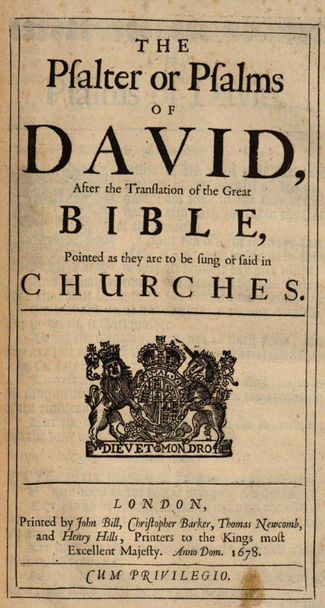 For your consideration during New Year's Resolution Season:
A little over a year ago, I decided I needed to do a better job of feeding my mind and spirit. I notice that my bedtime habit of listening to old British radio comedies (particularly Hancock's Half Hour) to help me drift off to sleep had committed many of the lines and scenes to my memory, without even trying. I thought I ought to seek some more edifying material to listen to often enough that it embeds itself in my memory.
The Psalms are the only divinely inspired hymnal. They cover the gamut of emotion and sentiment in the believer's life, teaching us to set our hopes and affections on God in every circumstance. They challenge us to strive for holiness and express our constant need for forgiveness and mercy. They express awe at God's wondrous works in the past and hopes for his just judgement and deliverance in the future.
Over the last year or so, I have been listening to a series of 60 YouTube videos of someone reciting the complete Book of Psalms -- all 150 -- in daily morning and evening portions for each day of the month, in accordance with the Church of England's Book of Common Prayer.
Psalm-chanting was a common monastic practice, but Thomas Cranmer and the leaders of the English Reformation believed that the people should read or sing the psalms in their own tongue. Starting with the very first Book of Common Prayer (1549), a schedule was set out for reciting the entire Psalter every month as part of the daily office -- the daily services of morning prayer (matins) and evening prayer (evensong). The daily office was another transfer by the Reformers of a monastic practice in Latin (the canonical hours) to lay worship in the vernacular. The Book of Common Prayer also included a schedule for reading through almost the entire Bible over the course of the year. These were retained and refined in subsequent editions, leading to the official 1662 Book of Common Prayer, which is still the official prayer book of the Church of England.
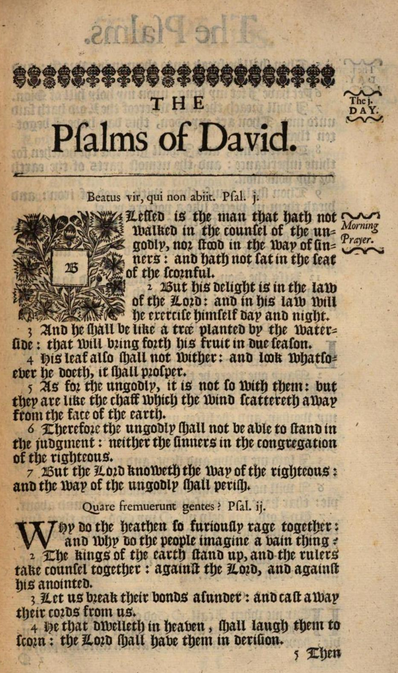 The 60 Psalter portions are intended to be roughly equal in length. Some portions consist of a single lengthy psalm (e.g., Psalm 37), and some contain as many as 6 short psalms (e.g., Psalms 120-125). The longest psalm and longest chapter in the Bible, the great acrostic Psalm 119, is divided across five services, reading 4 to 5 of the 22 8-verse stanzas at each service.
The Psalter used in the BCP is Myles Coverdale's translation, as contained in the Great Bible, the first English translation authorized for use in the Church of England. Although this translation was supplanted by the Bishop's Bible in 1568, which was supplanted by King James I's Authorized Version in 1611, the C of E retained for use in worship the translation of the Psalter which was already familiar to two generations of priests and parishioners.
I chose the BCP version, rather than a modern translation, because I thought the less-quotidian diction and vocabulary would stick better in my memory and because some of the language was already familiar to me from years of singing choral anthems with texts drawn from the Coverdale Psalter. Of this translation, C. S. Lewis wrote, "Even of the old translators he is by no means the most accurate; and of course a sound modern scholar has more Hebrew in his little finger than poor Coverdale had in his whole body. But in beauty, in poetry, he, and St. Jerome, the great Latin translator, are beyond all whom I know."
I found two sources for listening to the Coverdale Psalter, both projects apparently undertaken during Britain's pandemic lockdowns. Paul Edmondson has recorded the 150 Psalms as individual files on SoundCloud. He reads well, steadily at a conversational pace, without pauses. He has also done readings of Ecclesiastes, John's Gospel, Dickens' A Christmas Carol, and passages from Shakespeare.
On YouTube, I found a channel called Cambridge House of Prayer (CAMHOP), which has produced 60 videos of the Coverdale Psalter, each containing a single morning or evening prayer service's portion of the Psalms. The channel's self-description states:
Cambridge House of Prayer is a prayer and worship community of people of all ages and backgrounds that passionately pursues the presence of our God: Father, Son & Spirit.On this channel you can join us in Morning Prayer (Wednesday 8am), Compline (Friday 9pm) as well as other expressions of prayer and worship throughout the week.
'He brought me out into a spacious place, he rescued me because he delighted in me.'
Psalm 18:19
There are links to a website (camhop.uk) that is online, but also to social media profiles that are no longer active. In addition to the Psalter readings, the YouTube channel also has recordings of morning and evening prayer services and readings from the Gospels, accompanied by singer and harpist Lucy Bunce. The last update to the YouTube channel was in May 2021. There's more information about CAMHOP here.
The CAMHOP Coverdale Psalter videos are narrated by Alistair Rouse. He reads slowly, with pauses after each phrase, ideal for someone to listen and repeat after. Videos typically run about 8 minutes. The visual consists of title graphics and static images from old psalm books, so there's nothing you need to watch. The official CAMHOP playlist has a few of the portions out of order, so I built my own, which is available publicly.
I first came across the CAMHOP Coverdale Psalter videos and began using them in 2022. I listen and repeat after the reader as I go for a walk or as I drive around town. I try to listen to both morning and evening portions every day. If I miss a day, I may try to catch up. If I miss a few, I simply resume with the current portion. By now, I would estimate I've listened and recited every psalm at least a dozen times, even taking missed days into account. I've tried to stretch from repeating after every phrase to waiting for the verse to complete, which helps to tie the phrases together in my memory and presents a more cohesive thought to my mind.
For perspective on how to read and understand the Psalms, I recommend C. S. Lewis's book Reflections on the Psalms. (Audiobook here.) Lewis writes as a reader, not an expert:
In this book, then, I write as one amateur to another, talking about difficulties I have met, or lights I have gained, when reading the Psalms, with the hope that this might at any rate interest, and sometimes even help, other inexpert readers. I am "comparing notes'', not presuming to instruct. It may appear to some that I have used the Psalms merely as pegs on which to hang a series of miscellaneous essays. I do not know that it would have done any harm if I had written the book that way, and I shall have no grievance against anyone who reads it that way. But that is not how it was in fact written. The thoughts it contains are those to which I found myself driven in reading the Psalms; sometimes by my enjoyment of them, sometimes by meeting with what at first I could not enjoy....What must be said, however, is that the Psalms are poems, and poems intended to be sung: not doctrinal treatises, nor even sermons. Those who talk of reading the Bible "'as literature" sometimes mean, I think, reading it without attending to the main thing it is about; like reading Burke with no interest in politics, or reading the Aeneid with no interest in Rome. That seems to me to be nonsense. But there is a saner sense in which the Bible, since it is after all literature, cannot properly be read except as literature; and the different parts of it as the different sorts of literature they are. Most emphatically the Psalms must be read as poems; as lyrics, with all the licences and all the formalities, the hyperboles, the emotional rather than logical connections, which are proper to lyric poetry. They must be read as poems if they are to be understood ; no less than French must be read as French or English as English. Otherwise we shall miss what is in them and think we see what is not.
I have an app on my Android phone called BraveNewPipe, an open-source browser front end optimized for streaming videos and audio. It works with a variety of platforms, including YouTube, Bitchute, Rumble, and Soundcloud. It allows for the creation of playlists local to your phone, and it allows videos to play even when the phone screen is locked. It works very well for listening when my hands need to be free, as when I'm out for a walk, and I also use it for listening to podcasts while driving and while doing yardwork and chores around the house.
For the new year, I'm considering adding to my daily Psalter recitation a way to read the Gospels through every month. There are 89 chapters among the four books, which divides nicely into three chapters per day.
Edited from the version originally published on December 25, 2012
Merry Christmas to anyone who happens by BatesLine today.
This Advent (2023) I renewed an earlier attempt to turn the 4-arm, 5-globe reproduction Victorian streetlamp in front of our house into a kind of Advent candelabra. I installed three purple LED bulbs and one pink bulb (for Gaudete Sunday) in the lower arms, and a white bulb in the center, with the intention of lighting one per week. Travel got in the way, as did an electrical fault in one of the arms. So we have three of the four arms and the central, Christmas candle, lit. Maybe next year all of them will work.
My daughter and I drove back together from her college, and we arrived the evening of the 23rd. The next morning (Christmas Eve) she, my wife, and I sang with an ensemble at church, and my youngest son played cello. We sang a 400-year-old carol, "While by the sheep we watched at night," which you might know by the echoing refrain,"How great our joy! Joy, joy, joy!" The carol is Hymn of the Week at Word and Song by Tony Esolen, who tells us about the carol's composer, Friedrich Spee. Esolen asks:
What about the music to which we sing the carol? Can a minor key express joy? It certainly does here. It's that joy that brightens the sky on that solemn night when the eternal Lord was made manifest in time, and the tidings came not to kings and high priests, but to the shepherds watching in the night, perhaps huddling under their coats to keep warm, and keeping their staffs clasped and ready. What else, after all, can you say when the angel gives you this news? All words fail. Des bin ich froh -- it brings me joy.
We had lunch at Señor Pablo's in Sapulpa (we like their molcajete), and I had a short couple of hours to do some shopping before it was time to return to church at 5 pm for the Christmas Eve service of Lessons and Carols. On the way home, I put on this year's Festival of Nine Lessons and Carols from King's College, Cambridge, and as we drove through the rain looking at Christmas lights in midtown Tulsa, we listened to the solo chorister sing the opening verse of "Once in Royal David's City," the Old Testament prophecies of the Messiah, and the bidding prayer that opens the service.
As a Holland Hall high school student, I attended and sang in the annual service of Christmas lessons and carols at Trinity Episcopal Church, modeled after the annual Christmas Eve service from the chapel of King's College, Cambridge. My 8th grade year was the first year I was required to attend, and I expected to be bored. Instead, I was entranced. My last two years in high school, I was a member of the Concert Chorus and was privileged to join in the singing of Tomas Luis de Victoria's setting of O Magnum Mysterium, an ancient poem about the wonder that "animals should see the newborn Lord lying in a manger." As a senior, I was one of the 12 Madrigal Singers. The six ladies sang the plainsong setting of Hodie Christus Natus Est (Today Christ Is Born), repeating it as the students processed into their places. Then all 12 of us sang Peter J. Wilhousky's arrangement of Carol of the Bells, with the 3 basses landing on the final satisfying "Bom!" on that low G.
At the beginning of Trinity's service, after the processional, Father Ralph Urmson-Taylor, who served as Holland Hall's Lower School chaplain, would read the bidding prayer. Confessing Evangelical has it as I remember it. It's worth a moment of your time to ponder.
Beloved in Christ, be it this Christmastide our care and delight to hear again the message of the angels, and in heart and mind to go even unto Bethlehem and see this thing which is come to pass, and the Babe lying in a manger.Therefore let us read and mark in Holy Scripture the tale of the loving purposes of God from the first days of our disobedience unto the glorious Redemption brought us by this Holy Child.
But first, let us pray for the needs of the whole world; for peace on earth and goodwill among all his people; for unity and brotherhood within the Church he came to build, and especially in this our diocese.
And because this of all things would rejoice his heart, let us remember, in his name, the poor and helpless, the cold, the hungry, and the oppressed; the sick and them that mourn, the lonely and the unloved, the aged and the little children; all those who know not the Lord Jesus, or who love him not, or who by sin have grieved his heart of love.
Lastly, let us remember before God all those who rejoice with us, but upon another shore, and in a greater light, that multitude which no man can number, whose hope was in the Word made flesh, and with whom in the Lord Jesus we are one forevermore.
These prayers and praises let us humbly offer up to the Throne of Heaven, in the words which Christ himself hath taught us: Our Father, which art in heaven...
The bidding prayer was written by Eric Milner-White, dean of the chapel of King's College, who introduced the Lessons and Carols service there on Christmas Eve 1918. Jeremy Summerly describes the prayer as "the greatest addition to the Church of England's liturgy since the Book of Common Prayer."
In some versions, the prayer for "all those who know not the Lord Jesus, or who love him not, or who by sin have grieved his heart of love" is dropped, perhaps because of political correctness and religious timidity, but they seem to have been restored in recent years. Who needs prayer more than those who reject the Way, the Truth, and the Life?
The phrase "upon another shore, and in a greater light" always gives me goosebumps as I think about friends and family who are no longer with us, but who are now free from pain and delighting in the presence of the Savior they loved so dearly in this life. As he wrote those words, Milner-White, who had served as an army chaplain in the Great War before his return to King's College, must have had in mind the 199 men of King's and the hundreds of thousands of his countrymen who never returned home from the trenches of Europe.
Which brings us to the final verses of the Epiphany hymn, "As with Gladness, Men of Old", which describes "another shore" as "the heavenly country bright":
Holy Jesus, every day
Keep us in the narrow way;
And, when earthly things are past,
Bring our ransomed souls at last
Where they need no star to guide,
Where no clouds Thy glory hide.In the heavenly country bright,
Need they no created light;
Thou its Light, its Joy, its Crown,
Thou its Sun which goes not down;
There forever may we sing
Alleluias to our King!
The final verses of the processional hymn also speak to that blessed hope:
And our eyes at last shall see Him,
Through His own redeeming love,
For that Child so dear and gentle
Is our Lord in Heaven above;
And He leads His children on
To the place where He is gone.Not in that poor lowly stable,
With the oxen standing by,
We shall see Him; but in Heaven,
Set at God's right Hand on high ;
When like stars His children crowned,
All in white shall wait around.
MORE:
"Once in Royal David's City," the processional hymn from King's College Lessons and Carols, is the Hymn of the Week at Word and Song by Debra and Anthony Esolen.
This year's broadcast of the Festival of Nine Lessons and Carols from King's College Cambridge marked its 105th anniversary. You can listen to the service for the next four weeks on the BBC Sounds website. A pre-recorded video of the service, called Carols from King's, is available internationally for download at a price of £8.33 (about $10 US).
You can download the booklet for the service and a history of the service here. (Direct link to service booklet PDF. Direct link to history booklet PDF.)
The history of the Lessons and Carols service was presented in this 15-minute BBC program, Episode 8 of the series "A Cause for Caroling." (Unfortunately, it was not repeated this year, so you can't listen online at the moment, but it's available through Audible and as an audio CD.) Edward White Benson, first Bishop of Truro, originated the service of Nine Lessons and Carols in 1880. It was published in 1884 and began to be used more widely. From the 2018 service booklet:
The 1918 service was, in fact, adapted from an order drawn up by E. W. Benson, later Archbishop of Canterbury, for use in the large wooden shed which then served as his cathedral in Truro at 10 p.m. on Christmas Eve, 1880.A. C. Benson recalled: 'My father arranged from ancient sources a little service for Christmas Eve - nine carols and nine tiny lessons, which were read by various officers of the Church, beginning with a chorister, and ending, through the different grades, with the Bishop'. The idea had come from G. H. S. Walpole, later Bishop of Edinburgh.Very soon other churches adapted the service for their own use. In the immediate aftermath of the First World War, Milner-White decided that A Festival of Nine Lessons and Carols would be a more uplifting occasion at King's than Evensong on Christmas Eve. He used Benson's plan, but wrote the now-classic Bidding Prayer to set the tone at the beginning. Since then the spoken parts, which provide the backbone of the service, have only occasionally changed.
MORE: John Piper explains what Christmas is all about in 115 words:
Christmas means that a king has been born, conceived in the womb of a virgin. And this king will reign over an everlasting kingdom that will be made up of millions and millions of saved sinners. The reason that this everlasting, virgin-born king can reign over a kingdom of sinners is because he was born precisely to die. And he did die. He died in our place and bore our sin and provided our righteousness and took away the wrath of God and defeated the evil one so that anyone, anywhere, of any kind can turn from the treason of sin to the true king, and put their faith in him, and have everlasting joy.
STILL MORE:
At her blog, A Clerk of Oxford, Eleanor Parker has written a great many articles about the Anglo-Saxon commemoration of the Christian year. This Twitter thread and this blog entry will lead you to a series of articles on the "O Antiphons," the Latin poems of praise to Christ that are read at vespers over the week prior to Christmas day, each one naming a title of Christ reflecting a different aspect of His glory -- Wisdom, Lord, Root of Jesse, Key of David, Dayspring (Morning Star), King of Nations, and Emmanuel (God with us).
Her essay from 1st Sunday in Advent 2020 reflects on Advent, Christmas, and time, on 2020's lack of holidays, the impossibility of "pressing pause" on life, the origins of Christmas and claims of cultural appropriation, the emotional impact of the season. A worthwhile ramble on a gray day. It's all worth reading, but this passage stood out to me, and it cites that wonderful phrase from the bidding prayer that undoes me every year:
The British festival year used to involve numerous seasons and holidays when people could gather together, in extended families and in local communities; now for many people in that 90% it's almost all concentrated on Christmas, and that's a lot of pressure. Of course advertisers exploit that pressure for their own ends, so many of us have a vision in our heads of the 'perfect family Christmas' which may bear little or no relation to how we have actually experienced the season. (I'm sure the journalists are attacking the imaginary advertisers' Christmas more than anything they've seen in real life.)It's typical of the modern Christmas, most of all in its focus on family and childhood, that it leads people to places of strong emotion, both good and bad. Whether your memories of childhood Christmas are happy or unhappy ones, when Christmas comes round there's no escaping them. Whatever your family is or isn't, or whatever you want it to be, this is the time when you are insistently pushed to think about it and to compare yourself to others. Any sense of loss or deficiency in the family is made worse by the contrast with images of other apparently perfect families, or by remembering past happiness, or imagining what could or should be. Grief is harder. Absences are more keenly felt. It's a season when one phrase or one note of a song can open floodgates of emotion, calling forth profound fears, griefs, and longings which in ordinary time we might manage to contain. Christmas used to be a season of ghost stories, and it's certainly a time when it's hard not to be haunted by memories - even happy memories, of 'those who rejoice with us, but on another shore and in a greater light'.
You can call that sentimental, or irrational, but it's very powerful all the same. And it's no coincidence - of course it isn't - that this is all intensified because it takes place at midwinter, when the days are very short and the nights very long; when the weather is cold and hostile; when light is lowest, and the shadows longest. There's a reason we call this season 'the dead of winter', with all the sterility and hopelessness that implies. That makes the Christmas brightness all the brighter, or the darkness all the darker - the lights and the warmth and the company all the more welcome, or their absence all the more painful.
It's a bleak and lonely and isolating time of year, at the best of times; and these aren't the best of times. How much more endless the empty evenings seem now in November than they did in April, now they begin at four o'clock in the afternoon! The 'it's just one day' people can go on saying that as much as they like, but this particular day, after nine months of isolation or separation from family, is going to be hard for a lot of people.
Just remember: If you didn't fulfill every Christmas tradition you wanted to honor, give every gift you wanted to give, sing every carol on or before December 25, there are still eleven days of Christmas remaining!
RELATED: Tom Holland writing in Unherd in December 2020 on The Myth of Pagan Christmas. Holland takes us back to the Christmas feast at the court of King Athelstan in Amesbury in 932, and looks back from there to the idea of measuring time from the birth of Christ:
Bede, more clearly than any Christian scholar before him, had recognised that there was only the one fixed point amid the great sweep of the aeons, only the single pivot. Drawing on calendrical tables compiled some two centuries earlier, he had fixed on the Incarnation, the entry of the divine into the womb of the Virgin Mary, as the moment on which all of history turned. Years, by Bede's reckoning, were properly measured according to whether they were before Christ or anno Domini: in the year of the Lord. The effect was to render the calendar itself as Christian. The great drama of Christ's incarnation and birth stood at the very centre of both the turning of the year and the passage of the millennia. The fact that pagans too had staged midwinter festivities presented no threat to this conceptualisation, but quite the opposite. Dimly, inadequately, gropingly, they had anticipated the supreme miracle: the coming into darkness of the true Light, by which every man who comes into the world is lit.
He concludes with this:
This year of all years [2020] -- with a clarity denied us in happier times -- it is possible to recognise in Christmas its fundamentally Christian character. The light shining in the darkness proclaimed by the festival is a very theological light, one that promises redemption from the miseries of a fallen world. In a time of pandemic, when the festive season is haunted by the shadows of sickness and bereavement, of loneliness and disappointment, of poverty and dread, the power of this theology, one that has fuelled the celebration of Christmas for century after century, becomes easier, perhaps, to recognise than in a time of prosperity. The similarities shared by the feast day of Christ's birth with other celebrations that, over the course of history, have been held in the dead of winter should not delude us into denying a truth so evident as to verge on the tautologous: Christmas is a thoroughly Christian festival.
A follow-up to a recent post about Charles Spurgeon's essay on music in worship.
Brian Sauvé, a pastor and hymnwriter, posted recently on Twitter about his church's approach to music in worship:
I get this question enough that it's probably worth posting about it separately:"How do you do music at your church on Sundays?"
Here's the breakdown:
We sing almost exclusively from the Cantus Christi 2020 hymnal, accompanied by a piano. Most of the settings are in four-part harmony.
We don't amplify anything. I conduct the congregation from the front, but don't sing into a microphone. Sometimes I sing the melody, but often I sing the Tenor part.
We sing 10 songs per service. Three of them stay the same each week (David Erb's setting of Psalm 134, The Lord's Prayer, and the Doxology).
The other seven usually consist of about five Psalms and two hymns. These are scattered at different points of the service, including two that we sing seated during the distribution of the bread and wine for Communion.
Why we sing in four parts:
1. It allows men to sing like men, women to sing like women, children to sing like children.
2. It takes effort. We don't want to offer to the Lord that which costs nothing.
3. It is objectively beautiful, far more so than the best contemporary worship band I've ever heard--and we're not even particularly gifted or anything.
4. Much of the great musical inheritance of the Church is in parts. Lose this skill and you lose access to the richness of that blessing.
How we learn to sing songs in parts:
Every Tuesday evening, barring the last Tuesday of the month, we have a potluck followed by a Psalm-singing workshop. I use the "Sing Your Part" app to teach each group their parts, then we practice. The actual practice is only 45 minutes, so the whole thing only takes 90 minutes each week.
We typically have about 50% of our Sunday attendance at Psalm sing on Tuesdays. This lets us learn, on average, one new song per month.
I couldn't even read music when we started learning this stuff. Any church do this if they decide to.
Sauvé offers a video of his congregation singing a setting of Psalm 134 by David Erb, which they sing every Sunday.
Nearly everyone can learn to sing on pitch and to sing a part. St. John's College in Annapolis, Maryland, has a freshman chorus that includes the entire class, many or most of whom have no previous musical experience. Music is one of the Seven Liberal Arts, one of the quadrivium along with geometry, astronomy, arithmetic, and thus a key component of a classical education. By the end of the year, the freshmen have learned to sing Gregorian chant, polyphonic motets, and harmonized spirituals and folk songs, and they perform in a concert.
The unofficial anthem of the college is Palestrina's Sicut Cervus (Psalm 42:1), learned as part of that freshman chorus experience, and every week on Wednesday afternoon, after classes, a little after 2 p.m., any student or tutor available gathers in the Pendulum Pit in Mellon Hall, a stairwell that has a Foucault pendulum, an upright piano, and excellent acoustics, for the "Sicut Sing," a tradition that began in 2012. Sheet music is available for those who need it, but many students manage without. I was able to participate one Wednesday, and it brought me close to tears of joy.
The words translated: "Like as the hart desireth the water-brooks: so longeth my soul after thee, O God." (Coverdale, Book of Common Prayer)
St. John's student Brian Liu wrote about the weekly Sicut Sing:
I have wondered why it has become so beloved at our school. While some may say that it is loved so much simply because it sounds beautiful, I would suggest perhaps a deeper reason. The theme of the piece is man's yearning for God. And though St. John's is a secular institution, that longing - the longing for something more transcendent than ourselves and our longing for communion with it - is the spirit of our institution. It is the spirit of our educational endeavor. We like to think of ourselves as working towards something higher when we read, write and discuss our texts.
In another post, Sauvé lists four essentials of singing together in worship:
Corporate singing should:
- Be singable by men, women, and children. Parts singing helps greatly with this.
- Include the singing of whole Psalms.
- Sound primarily like people singing (not overpowered by instruments).
- Inspire the cultivation of musical skill.
In his thread providing five reasons to learn parts singing at your church, Sauvé writes:
Many modern unison arrangements are too high for the average man to sing. You discourage men in your congregation when you ask them to sing like Bon Iver....Parts singing grants you access to some of the richest treasures left to us by our spiritual forefathers.
It is astonishing the treasures we have.
Our forefathers laid up some potent bottles in the wine cellar that we cannot even open if we won't learn to sing in parts.
If you can only sing songs written in the last 20 years, you are cut off from all of this richness.
You'll have to rely on popularizers to sing dumbed-down and gutted versions of a few of the old songs.
Tomlin might get you a few.
Shane & Shane might get you a few.But if you learn to use the tools, you'll find a whole world of musical glory in the great tradition of Christian Psalmody and hymnody.
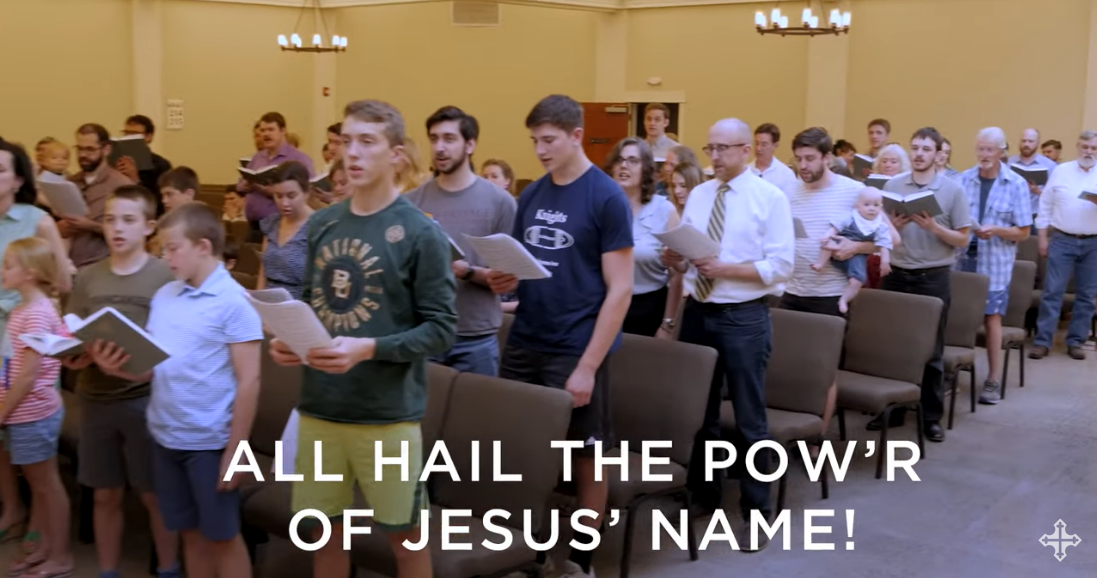
While visiting Annapolis, I've often attended Christ Reformed Evangelical Church, which practices the precepts set out above. Their website lists "Singing of psalms and hymns robustly to God" as a distinctive component of their weekly worship service. One Sunday I was there, they introduced a new psalm setting just before the start of the service, playing each part individually and going over a couple of specifically tricky fugue-like passages so that the congregation would be ready to sing it together the following week. They sing at least a half-dozen hymns and psalms each week, singing all the verses at a brisk pace. Four-part music is printed in the service booklet.
MORE: A playlist of congregational singing from the Cantus Christi hymnal. Here is the Christ Church congregation singing "All Hail the Power of Jesus' Name" (tune Diadem):
RELATED: Tony Esolen offers:
Why guitars are generally not good for leading a congregation in song:
- They don't play the melody, while
- their chords turn muddy in a large space, so
- you have to rely on the soloist, so
- he or she needs to be miked up, so
- the congregation is smothered.
An apt remark by P. Andrew Sandlin:
Church leaders: if your praise band plays songs 90% of your congregation can't sing easily or enthusiastically, you don't have a church music program; you have a musical performance program. Let me urge you to start a church music program.
prompted Noah Goedker to respond with a remark by Charles Spurgeon:
O sweet singer of Israel, remember that the song is not for your glory, but for the honour of the Lord, who inhabiteth the praises of Israel; therefore, select not anthems and tunes in which your skilfulness will be manifest, but such as will aid the people to magnify the Lord with their thanksgivings.
Goedker cited the quotation from the June 1, 1870, edition of The Sword and the Trowel, Spurgeon's monthly magazine. (Direct link to the PDF of all issues from 1870.) Here is the complete essay:
How shall we Sing?COULD we rule the service of song in the house of the Lord, we should, we fear, come into conflict with the prejudices and beliefs of many most excellent men, and bring a hornet's nest about our ears. Although we have neither the will nor the power to become reformer of sacred music, we should like to whisper a few things into the ear of some of our Jeduthuns or Asaphs, who happen to be "chief musicians" in country towns or rural villages. We will suppose the following words to be our private communication :--
O sweet singer of Israel, remember that the song is not for your glory, but for the honour of the Lord, who inhabited the praises of Israel; therefore, select not anthems and tunes in which your skilfulness will be manifest, but such as will aid the people to magnify the Lord with their thanksgivings. The people come together- not to see you as a songster, but to praise the Lord in the beauty of holiness. Remember also, that you are not set to sing for yourself only, but to be a leader of others, many of whom know nothing of music; therefore, choose such tunes as can be learned and followed by all, that none in the assembly may be compelled to be silent while the Lord is extolled. Why should so much as one be defrauded of his part through you? Simple airs are the best, and the most sublime; very few of the more intricate tunes are really musical. Your twists, and fugues, and repetitions, and rattlings up and down the scale, are mostly barbarous noise-makings, fitter for Babel than Bethel. If you and your choir wish to show off your excellent voices, you can meet at home for that purpose, but the Sabbath and the church of God must not be desecrated to so poor an end.
True praise is heart work. Like smoking incense, it rises from the glowing coals of devout affection. Essentially, it is not a thing of sound: sound is associated with it very properly for most weighty reasons, but still the essence and life of praise lie not in the voice, but in the soul. Your business in the congregation is to give to spiritual praise a suitable embodiment in harmonious notes. Take care that you do not depress what you should labour to express. Select a tune in accordance with the spirit of the psalm or hymn, and make your style of singing suitable to the words before you. Flippantly to lead all tunes to the same time, tone, and emphasis, is an abomination; and to pick tunes at random is little less than criminal. You mock God and injure the devotions of his people if you carelessly offer to the Lord that which has cost you no thought, no care, no exercise of judgment. You can help the pious heart to wing its way to heaven upon a well-selected harmony; and you can, on the other hand, vex the godly ear by inappropriate or unmelodious airs, adapted rather to distract and dishearten, than to encourage intelligent praise.
The Time is a very primary consideration, but it is too often treated as a matter of no consequence. Large bodies move slowly, and hence the tendency to drawl out tunes in numerous assemblies. We have heard the notes prolonged till the music has been literally swamped, drenched, drowned in long sweeps and waves of monotonous sound. On the other hand, we cannot endure to hear psalms and solemn hymns treated as jigs, and dashed through at a gallop. Solemnity often calls for long-drawn harmony, and joy as frequently demands leaping notes of bounding delight. Be wise enough to strike the fitting pace each time, and by your vigorous leadership inspire the congregation to follow en masse.
May we in the very gentlest whisper beg you to think very much of God, much of the singing, and extremely little of yourself. The best sermon is that in which the theme absorbs the preacher and hearers, and leaves no one either time or desire to think about the speaker; so in the best congregational singing, the leader is forgotten because he is too successful in his leadership to be noticed as a solitary person. The head leads the body, but it is not parted from it, nor is it spoken of separately; the best leadership stands in the same position. If your voice becomes too noticeable, rest assured that you are but a beginner in your art.
One of your great objects should be to induce all the congregation to join in the singing. Your minister should help you in this, and his exhortations and example will be a great assistance to you; but still as the Lord's servant in the department of sacred song you must not rely on others, but put forth your own exertions. Not only ought all the worshippers to sing, but each one should sing praises with understanding, and as David says, "play skilfully" unto the Lord. This cannot be effected except by instructing the people in public psalmody. Is it not your duty to institute classes for young and old? Might you not thus most effectually serve the church, and please the Lord? The method of Mr. Curwen, and the use of his Sol-fa Notation, will much aid you in breaking ground, and you can in after years either keep to the new method, or turn to the old notation as may seem best to you. Thousands have learned to sing who were hopelessly silent until the sol-fa system was set on foot. The institution of singers, as a separate order is an evil, a growing evil, and ought to be abated and abolished; and the instruction of the entire congregation is the readiest, surest, and most scriptural mode of curing it. A band of godless men and women will often instal themselves in a conspicuous part of the chapel, and monopolise the singing to the grief of the pastor, the injury of the church, and the scandal of public worship; or else one man, with a miserable voice, will drag a miserable few after him in a successful attempt to make psalms and hymns hideous, or dolorous. Teach the lads and lasses, and their seniors, to run up and down the Sol-fa Modulator, and drill them in a few good, solid, thoroughly musical tunes, and you, O sons of Asaph, shall earn to yourself a good degree.
C. H. SPURGEON.
Many churches today have discarded their hymnals, or never had them, in favor of words projected on a screen. Congregants are expected to sing along with worship leaders who emulate the singers on "American Idol" or "The Voice." Men with low voices have three unpleasant options: sing the melody two octaves down, try to make up a harmony part from the bass line (if he has a good enough ear to pick it out), or not sing at all.
But about two centuries ago, evangelical church leaders thought it was important to engage the entire congregation in worship through singing. Churches replaced lyrics-only hymnbooks, commissioning hymnals with music and lyrics harmonized in four parts to accommodate the full range of singing voices. The Curwin sol-fa method taught millions to sing and brought to life the great choral tradition of Wales:
The Englishman, the Reverend John Curwen (1816-1880), adapted his tonic sol-fa method of teaching vocal music from Sarah Glover (1785-1867), of Norwich, Norfolk. Curwen initially employed this technique to teach hymn singing to his Sunday School children, but such was its widespread success that by 1891, some two-and-a-half million people across Britain were being taught in this way. According to Idris Lewis in his book 'Cerddoriaeth yng Nghymru' (Music in Wales) (1945), the great revival of choral singing in Wales during the 1880s and 1890s would not have happened without the growth of sol-fa. For those unable to read musical notation, this system was a breakthrough, and amongst those individuals who promoted the method in Wales were John Roberts (Ieuan Gwyllt) and Eleazar Roberts. Weekly classes were organised to teach hymns, anthems and famous choral works, and in chapels, especially, singing standards were transformed.
A friend who grew up in the Church of God (Anderson, Indiana) tells me that the denomination had traveling singing instructors who went from church to church to teach laypeople to sing hymns in harmony. My wife's grandfather led singing in the Primitive Baptist congregation at Little Flock, Arkansas, where he would "line out" the songs -- singing each line with the congregation singing in reply, using shape-note hymnals (a different form of the Sol-Fa method) for harmonies.
G. K. Chesterton's gate ought to apply: Until we understand why our forefathers in the faith put so much effort into providing congregations with printed hymns in four-part harmony, we ought not discard them for lyrics on a screen. Spurgeon's essay gives us some clues. I have skimmed through a couple of Curwen's books and find it interesting that he does not bother to motivate the reader to teach the congregation to sing harmony; Curwen takes it for granted.
A recent tweet from Jeremy Tate, founder and CEO of the Classic Learning Test (CLT):
Classical education is fundamental an educational [sic] it what it means to be fully human. It is not a politically conservative alternative to the already politically hijacked mainstream education. Instead, it is an education in timeless texts with the aim of cultivating universally agreed on virtues (justice, temperance, fortitude, prudence, kindness, generosity, self-discipline, diligence, honesty, etc). Anyone who argues that other people groups have a completely different moral code is just being silly. You cannot find any culture or society anywhere that values lying, stealing, cheating, betrayal, harshness, impatience, cowardice, etc.My thoughts immediately went to the book Peace Child, missionary Don Richardson's first-hand account of taking the gospel to the cannibalistic Sawi people of western New Guinea (also known as West Papua or Irian Jaya). The Sawi highly valued betrayal and cheating. I wrote about the book many years ago, when I had been reading it to my 8-year-old as a bedtime story.
The book begins with stories of Sawi intrigue that took place prior to the Richardsons' arrival, illustrating the value the culture held for treachery -- "fattening with friendship for the slaughter." You might invite an enemy to your home, feed him and treat him with honor for weeks or months before springing the trap on your trusting victim. You have him over for dinner... and then have him for dinner....
...Richardson feels he has enough of the language to attempt to explain the story of Jesus to a group of Sawi men. He is shocked to find that they see Judas as the hero of the story and Jesus as his dupe -- the ultimate example of fattening with friendship for the slaughter. The realization causes Richardson to feel hopeless that he could find a way to communicate the gospel to this culture. But he prays and God provides in a surprising way, and that's the rest of the story....
When progressives hear conservatives condemning multiculturalism, they wrongly assume that conservatives wish to eradicate other cultures, other languages, other folk customs and force conformity to bland Anglo-Saxon suburbia. In fact, conservative Christians may be doing more than anyone else to preserve dying languages and musical traditions, through the work of groups like Wycliffe Bible Translators. The practice of the evangelical mission community is to translate the gospel into the "heart language" of every people group and, as they come to faith in Christ, to express their faith in their own music.
Richardson's account of the Sawi way of life allows us to draw an important distinction. Multiculturalism insists that we suspend all value judgment of another culture, and so we must not condemn the cannibalistic treachery of the Sawi -- live and let live. A Bible-believing Christian would say instead that there are aspects of a culture which are morally neutral, aspects which are positive, and aspects which are -- let's not mince words -- evil, aspects which disfigure the imago Dei borne by every human of every tribe, tongue, and nation. While every culture in this fallen world has negative elements, some cultures have a built-in engine for reform and improvement, while others may only shed negative elements under outside encouragement or pressure, and so we ought to reject a false moral equivalence between cultures.
One could argue that our own modern western culture values and rewards "lying, stealing, cheating, betrayal, harshness, impatience, cowardice, etc." above the cardinal virtues and other values that Tate lists. The Great Books tradition elevates the literature of the West because of the distinctive western values, rooted in Jerusalem and Athens, that built a great civilization. These values can be found in non-Western cultures to a greater or lesser extent, what C. S. Lewis, in The Abolition of Man, calls the Tao, but nowhere else in the same proportions. If the Tao is the common heritage of all mankind, a law written on our hearts, clearly many human societies have abandoned entire segments of it. A culture that admires treachery will not be capable of the mutual trust required for great endeavors.
MORE: Don Richardson recalls his early encounters with the Sawi, with this amusing anecdote from his efforts to document their language:
The first order of business was to learn the language without any book, teacher or translator. He started by pointing at things hoping someone would tell him the word. But every time he pointed at different objects, they always said, "redig." Eventually, he realized "redig" means "finger." The Sawi don't point with fingers; they point by puckering and aiming their lips.
A 1972 short film based on Peace Child, featuring the Richadrsons and the Sawi:

A rain-filled mikveh (ritual immersion pool) at Korazim National Park, Israel.
Photo © 2023 by Michael D. Bates, all rights reserved.
Here are a couple of useful resources that I recently encountered, one very old, one new, in support of the view that Christian baptism is for those only who are able to profess belief in Jesus Christ and is to be administered by immersion, which is the meaning of the Greek word baptizein, which is transliterated as "to baptize" in most English language translations of the New Testament. The issue is near and dear to my heart for the sake of the Baptists who suffered persecution (including drowning) because of their insistence on affirming the clear teaching of Scripture against human tradition and because of the ongoing insistence by evangelical Presbyterians to divide with their fellow evangelical Christians the unbiblical, divisive, and misleading practice of infant baptism (paedobaptism).
From 1668 to 1704, Benjamin Keach was pastor of the Baptist congregation at Horsleydown, Southwark, across the Thames from the City of London. (In 1861, this congregation built Metropolitan Tabernacle under the pastorate of Charles Spurgeon and has ever since been known by that name.) In 1688, Keach produced a book called Gold Refin'd or Baptism in Its Primitive Purity, setting forth the scriptural doctrine of baptism and rebutting other views. Here is a direct link to the PDF.
GOLD REFIN'D;
OR,
Baptism in its Primitive Purity.
Proving Baptism in Water an Holy Institution of Jesus Christ, and to continue in the Church to the End of the World.
WHEREIN
It is clearly evinced, That Baptizo, or Baptism, is not Aspersion or Sprinkling, or pouring a little Water upon the Face, or any other part of the Body: But that it is Immersion, or dipping the whole Body, &c.
Also that Believers are only the true Subjects (and not Infants) of that holy Sacrament.
Likewise Mr. Smythies Arguments for Infant-Baptism in his late Book, entitled, The Non-Communicant, (and all other Objections) fully answered.
The linked version of the book was formatted by Simon Wartanian, who describes himself as a "software engineer" and "theology nerd." Wartanian modernized scripture references, changed Roman numerals to Arabic, and made some other typographical modifications to accommodate modern readers, e.g., quotation marks around Bible quotations, inline Scripture references. He provides a table of contents with the original headings and those he has added for clarity, and one may click a table of contents entry and be taken directly to the section of the document. His main website includes his A Layman's Systematic and Biblical Exposition of the 1689 London Baptist Confession of Faith, and his posts page has his reviews of new books and his ongoing efforts to transcribe and format public domain theological texts for modern readers. Wartanian offers a Koine Greek verb parsing chart for identifying the tense and voice of a verb.

A mikveh (ritual immersion pool) at Qumran National Park, Israel.
Photo © 2023 by Michael D. Bates, all rights reserved.
But back to Gold Refin'd: The book begins with a letter from Keach and explaining why he felt the need to write this book and outlining its argument. The book is divided into 14 sections, with the first rebutting the idea that water baptism is no longer to be performed. The next four sections prove that immersion is the proper mode of baptism from the meaning of the Greek word, the practice in the New Testament and early church, from the spiritual and metaphorical significance attached to it in Scripture, and by the metaphorical use of the word in Scripture. Seven chapters address the proper subjects of baptism, first proving that believers only are to be baptized and then rebutting arguments in support of infant baptism. Here are the 14 chapter headings:
Edited from the version originally published on December 25, 2012
Merry Christmas to anyone who happens by BatesLine today.
As a Holland Hall high school student, I attended and sang in the annual service of Christmas lessons and carols at Trinity Episcopal Church, modeled after the annual Christmas Eve service from the chapel of King's College, Cambridge. My 8th grade year was the first year I was required to attend, and I expected to be bored. Instead, I was entranced. My last two years in high school, I was a member of the Concert Chorus and was privileged to join in the singing of Tomas Luis de Victoria's setting of O Magnum Mysterium, an ancient poem about the wonder that "animals should see the newborn Lord lying in a manger." As a senior, I was one of the 12 Madrigal Singers. The six ladies sang the plainsong setting of Hodie Christus Natus Est (Today Christ Is Born), repeating it as the students processed into their places. Then all 12 of us sang Peter J. Wilhousky's arrangement of Carol of the Bells, with the 3 basses landing on the final satisfying "Bom!" on that low G.
At the beginning of Trinity's service, after the processional, Father Ralph Urmson-Taylor, who served as Holland Hall's Lower School chaplain, would read the bidding prayer. Confessing Evangelical has it as I remember it. It's worth a moment of your time to ponder.
Beloved in Christ, be it this Christmastide our care and delight to hear again the message of the angels, and in heart and mind to go even unto Bethlehem and see this thing which is come to pass, and the Babe lying in a manger.Therefore let us read and mark in Holy Scripture the tale of the loving purposes of God from the first days of our disobedience unto the glorious Redemption brought us by this Holy Child.
But first, let us pray for the needs of the whole world; for peace on earth and goodwill among all his people; for unity and brotherhood within the Church he came to build, and especially in this our diocese.
And because this of all things would rejoice his heart, let us remember, in his name, the poor and helpless, the cold, the hungry, and the oppressed; the sick and them that mourn, the lonely and the unloved, the aged and the little children; all those who know not the Lord Jesus, or who love him not, or who by sin have grieved his heart of love.
Lastly, let us remember before God all those who rejoice with us, but upon another shore, and in a greater light, that multitude which no man can number, whose hope was in the Word made flesh, and with whom in the Lord Jesus we are one forevermore.
These prayers and praises let us humbly offer up to the Throne of Heaven, in the words which Christ himself hath taught us: Our Father, which art in heaven...
The bidding prayer was written by Eric Milner-White, dean of the chapel of King's College, who introduced the Lessons and Carols service there on Christmas Eve 1918. Jeremy Summerly describes the prayer as "the greatest addition to the Church of England's liturgy since the Book of Common Prayer."
In some versions, the prayer for "all those who know not the Lord Jesus, or who love him not, or who by sin have grieved his heart of love" is dropped, perhaps because of political correctness and religious timidity, but they seem to have been restored in recent years. Who needs prayer more than those who reject the Way, the Truth, and the Life?
The phrase "upon another shore, and in a greater light" always gives me goosebumps as I think about friends and family who are no longer with us, but who are now free from pain and delighting in the presence of the Savior they loved so dearly in this life. As he wrote those words, Milner-White, who had served as an army chaplain in the Great War before his return to King's College, must have had in mind the 199 men of King's and the hundreds of thousands of his countrymen who never returned home from the trenches of Europe.
Which brings us to the final verses of the Epiphany hymn, "As with Gladness, Men of Old", which describes "another shore" as "the heavenly country bright":
Holy Jesus, every day
Keep us in the narrow way;
And, when earthly things are past,
Bring our ransomed souls at last
Where they need no star to guide,
Where no clouds Thy glory hide.In the heavenly country bright,
Need they no created light;
Thou its Light, its Joy, its Crown,
Thou its Sun which goes not down;
There forever may we sing
Alleluias to our King!
MORE:
This year's broadcast of the Festival of Nine Lessons and Carols from King's College Cambridge marked its 104th anniversary. You can listen to the service for the next four weeks on the BBC Sounds website. A pre-recorded video of the service, called Carols from King's, is available internationally for download at a price of £8.33 (about $10 US).
You can download the booklet for the service and a history of the service here. (Direct link to service booklet PDF. Direct link to history booklet PDF.)
The history of the Lessons and Carols service was presented in this 15-minute BBC program, Episode 8 of the series "A Cause for Caroling." (Unfortunately, it was not repeated this year, so you can't listen online at the moment, but it's available through Audible and as an audio CD.) Edward White Benson, first Bishop of Truro, originated the service of Nine Lessons and Carols in 1880. It was published in 1884 and began to be used more widely. From the 2018 service booklet:
The 1918 service was, in fact, adapted from an order drawn up by E. W. Benson, later Archbishop of Canterbury, for use in the large wooden shed which then served as his cathedral in Truro at 10 p.m. on Christmas Eve, 1880.A. C. Benson recalled: 'My father arranged from ancient sources a little service for Christmas Eve - nine carols and nine tiny lessons, which were read by various officers of the Church, beginning with a chorister, and ending, through the different grades, with the Bishop'. The idea had come from G. H. S. Walpole, later Bishop of Edinburgh.Very soon other churches adapted the service for their own use. In the immediate aftermath of the First World War, Milner-White decided that A Festival of Nine Lessons and Carols would be a more uplifting occasion at King's than Evensong on Christmas Eve. He used Benson's plan, but wrote the now-classic Bidding Prayer to set the tone at the beginning. Since then the spoken parts, which provide the backbone of the service, have only occasionally changed.
MORE: John Piper explains what Christmas is all about in 115 words:
Christmas means that a king has been born, conceived in the womb of a virgin. And this king will reign over an everlasting kingdom that will be made up of millions and millions of saved sinners. The reason that this everlasting, virgin-born king can reign over a kingdom of sinners is because he was born precisely to die. And he did die. He died in our place and bore our sin and provided our righteousness and took away the wrath of God and defeated the evil one so that anyone, anywhere, of any kind can turn from the treason of sin to the true king, and put their faith in him, and have everlasting joy.
STILL MORE:
At her blog, A Clerk of Oxford, Eleanor Parker has written a great many articles about the Anglo-Saxon commemoration of the Christian year. This Twitter thread and this blog entry will lead you to a series of articles on the "O Antiphons," the Latin poems of praise to Christ that are read at vespers over the week prior to Christmas day, each one naming a title of Christ reflecting a different aspect of His glory -- Wisdom, Lord, Root of Jesse, Key of David, Dayspring (Morning Star), King of Nations, and Emmanuel (God with us).
Her essay from 1st Sunday in Advent 2020 reflects on Advent, Christmas, and time, on 2020's lack of holidays, the impossibility of "pressing pause" on life, the origins of Christmas and claims of cultural appropriation, the emotional impact of the season. A worthwhile ramble on a gray day. It's all worth reading, but this passage stood out to me, and it cites that wonderful phrase from the bidding prayer that undoes me every year:
The British festival year used to involve numerous seasons and holidays when people could gather together, in extended families and in local communities; now for many people in that 90% it's almost all concentrated on Christmas, and that's a lot of pressure. Of course advertisers exploit that pressure for their own ends, so many of us have a vision in our heads of the 'perfect family Christmas' which may bear little or no relation to how we have actually experienced the season. (I'm sure the journalists are attacking the imaginary advertisers' Christmas more than anything they've seen in real life.)It's typical of the modern Christmas, most of all in its focus on family and childhood, that it leads people to places of strong emotion, both good and bad. Whether your memories of childhood Christmas are happy or unhappy ones, when Christmas comes round there's no escaping them. Whatever your family is or isn't, or whatever you want it to be, this is the time when you are insistently pushed to think about it and to compare yourself to others. Any sense of loss or deficiency in the family is made worse by the contrast with images of other apparently perfect families, or by remembering past happiness, or imagining what could or should be. Grief is harder. Absences are more keenly felt. It's a season when one phrase or one note of a song can open floodgates of emotion, calling forth profound fears, griefs, and longings which in ordinary time we might manage to contain. Christmas used to be a season of ghost stories, and it's certainly a time when it's hard not to be haunted by memories - even happy memories, of 'those who rejoice with us, but on another shore and in a greater light'.
You can call that sentimental, or irrational, but it's very powerful all the same. And it's no coincidence - of course it isn't - that this is all intensified because it takes place at midwinter, when the days are very short and the nights very long; when the weather is cold and hostile; when light is lowest, and the shadows longest. There's a reason we call this season 'the dead of winter', with all the sterility and hopelessness that implies. That makes the Christmas brightness all the brighter, or the darkness all the darker - the lights and the warmth and the company all the more welcome, or their absence all the more painful.
It's a bleak and lonely and isolating time of year, at the best of times; and these aren't the best of times. How much more endless the empty evenings seem now in November than they did in April, now they begin at four o'clock in the afternoon! The 'it's just one day' people can go on saying that as much as they like, but this particular day, after nine months of isolation or separation from family, is going to be hard for a lot of people.
Just remember: If you didn't fulfill every Christmas tradition you wanted to honor, give every gift you wanted to give, sing every carol on or before December 25, there are still eleven days of Christmas remaining!
RELATED: Tom Holland writing in Unherd in December 2020 on The Myth of Pagan Christmas. Holland takes us back to the Christmas feast at the court of King Athelstan in Amesbury in 932, and looks back from there to the idea of measuring time from the birth of Christ:
Bede, more clearly than any Christian scholar before him, had recognised that there was only the one fixed point amid the great sweep of the aeons, only the single pivot. Drawing on calendrical tables compiled some two centuries earlier, he had fixed on the Incarnation, the entry of the divine into the womb of the Virgin Mary, as the moment on which all of history turned. Years, by Bede's reckoning, were properly measured according to whether they were before Christ or anno Domini: in the year of the Lord. The effect was to render the calendar itself as Christian. The great drama of Christ's incarnation and birth stood at the very centre of both the turning of the year and the passage of the millennia. The fact that pagans too had staged midwinter festivities presented no threat to this conceptualisation, but quite the opposite. Dimly, inadequately, gropingly, they had anticipated the supreme miracle: the coming into darkness of the true Light, by which every man who comes into the world is lit.
He concludes with this:
This year of all years [2020] -- with a clarity denied us in happier times -- it is possible to recognise in Christmas its fundamentally Christian character. The light shining in the darkness proclaimed by the festival is a very theological light, one that promises redemption from the miseries of a fallen world. In a time of pandemic, when the festive season is haunted by the shadows of sickness and bereavement, of loneliness and disappointment, of poverty and dread, the power of this theology, one that has fuelled the celebration of Christmas for century after century, becomes easier, perhaps, to recognise than in a time of prosperity. The similarities shared by the feast day of Christ's birth with other celebrations that, over the course of history, have been held in the dead of winter should not delude us into denying a truth so evident as to verge on the tautologous: Christmas is a thoroughly Christian festival.
In a column last week on the role ritual and prohibitions play in group identity for Christians, Rod Dreher recalled a passage in Natural Symbols: Explorations in Cosmology by Mary Douglas about Irish resistance to the Roman Catholic Church's decision to abolish the Friday fast and allowing meat on Fridays.
Reading today's Douthat piece put me in mind of anthropologist Mary Douglas's well-known 1970 book Natural Symbols. If you've heard about the book at all, it's probably in association with her analysis of the Second Vatican Council's ending the requirement that Catholics abstain from meat on Friday. She argued that the "Bog Irish" -- her term for working-class Irishmen in England -- kept the Friday fast despite the efforts of progressive priests to get them to stop, because it was a "condensed symbol" telling them who they were. That is, it signified connection to the past, to Irish identity, and to a cosmology. By casting aside this condensed symbol, Douglas contends, the Catholic hierarchy discarded something far more important than they understood.
Dreher, who has moved from Louisiana to Budapest, lamented that he left his copy of the book back in the States. He had to settle for a few Google Books excerpts from the first chapter.
I emailed him with good news, good news for everyone who wants to look up a half-remembered passage from a book that is temporarily inaccessible: The Internet Archive (archive.org) has a virtual lending library where you can borrow a book for an hour at a time and read it online, or borrow it for 14 days and download it to a DRM-enabled e-reader. All you need is to register for a free Internet Archive account.
For Natural Symbols, three copies were available for borrowing.
This is the Internet Archive's solution to the problem of works still under copyright. Older works, in the public domain because copyright has expired, are available instantly without an account and can be downloaded in numerous formats without restriction. The virtual lending library for copyrighted works simulates browsing in the stacks (the one-hour checkout) or taking it home (the 14-day loan). Special accommodations are available to the print-disabled for many titles.
The discussion of Irish Catholics and fish on Fridays put me in mind of similar extra-biblical restrictions that once defined the culture of many Baptist churches, including the one I grew up in, the First Baptist Church of Rolling Hills. We went to church on Sunday morning, Sunday night, and Wednesday night. We didn't drink and didn't dance. We knew stricter churches that banned standard playing cards, but Rook, without the face cards, was OK. I remember great debate in our church over the propriety of women wearing pants, instead of dresses, to church. My sixth-grade math teacher, Charlie Twiss, was a LDS bishop, and he couldn't join us for our Friday night class outing to see The Little Prince at the Loew's Delman Theater because Friday night was sacrosanct family time. Avoiding caffeine is another practice that would remind a Mormon of his identity and allegiance at very ordinary moments with friends and colleagues. Phrases beginning "We don't...." -- with the emphasis on We -- reinforce group identity.
If you knew how quickly people would forget you after your death, you would not seek in your life to please anyone but God.-- John Chrysostom
I shared that memeified quote on FB recently, and it spawned a few other thoughts.
In central Europe, at least, you only rent your grave. John Banner, beloved as Sgt. Schultz in "Hogan's Heroes," died on a visit to his hometown of Vienna in 1973 and was buried there, but by 1988, the grave was no longer his. His grave marker was removed because the lease had expired and was not renewed by family. (He and his wife had no children.) Someone else was buried there and a new marker erected in 1988. (We enjoy watching at least one of the two nightly episodes, every weeknight at 9 on MeTV, channel 23.2.) A fan had tracked down the grave and placed a placard honoring Banner next to the headstone of the latest occupant.
When visiting Glarus, Switzerland, the hometown of my wife's great-grandfather, in 1990, we had expected to find graves with her family name in the churchyard. We were accustomed to graveyards in New England and the British Isles with very old memorials, and earlier in the same trip had seen the Old Jewish cemetery in Prague where tombstones are stacked on each other -- 12,000 representing 100,000 burials in a tiny plot of land. We were stunned to see that all the burials in this Swiss cemetery were quite recent.
In America, the likelier fate of old graves can be seen in the work of Orange Rex, who found a book of Muskogee County death certificates from 1910 to 1916 in an Oklahoma City thrift shop, has been tracking down graves and stories of the deceased, matching entries in the register against news stories and obituaries. That link leads to the Facebook group, An American History Mystery: A Tale of Death in Muskogee Co, OK 1910-1916, where he has been documenting his research, crowdsourcing additional information, and connecting with the distant relatives of the people whose lives are documented in these ledgers. Many of the people listed are buried in long-neglected cemeteries, reconquered by nature. A few names and stories have elicited reaction descendants, and one name -- Bass Reeves -- remains well known, but most are utterly forgotten. Orange Rex has located the Harding Cemetery north of Muskogee, overgrown even though the most recent burials are as recent as the 1990s.
Orange Rex recently posted on his research into the Lieber Cemetery. It was platted in 1905 by John L. Lieber, who was the first city attorney of Muskogee, owned five theaters in the city, and was been head of the commission on land disputes for the Dawes Commission. His wife Dora was the great granddaughter of an Indian Chief. It was set aside only for burials of blacks, up to 2000 graves. He figures that as many as 1000 were buried there. Yet 117 years later, only one local historian ("former 2 time Genealogy club president and 15 year museum curator") knew about the cemetery but didn't know its name.
Orange Rex, the finder of these records, is a professional firebreather. He writes:
Only God has the right sense of humor to put a fire breather in charge of the lost paper records which might be the only records of their lives besides their bones.I'll breathe the fire of life back into this history. Yesterday I saw a headstone for the first time of a laundry woman that died during childbirth in 1912. Sarah E Clark.
From my research.
I KNEW HER MIDDLE NAME, OCCUPATION AND HOW SHE DIED.
It was a weird sense of pride weighted with the gravity of being the keeper of that knowledge.
Tempus fugit. Memento mori.
While searching for info on the state of Christianity in America circa 1923, when J. Gresham Machen wrote Christianity and Liberalism, I found the US Census Bureau's 1916 two-volume survey:
Religious bodies : 1916 : United States. Bureau of the Census : Internet Archive
This is Volume 1 of a two-volume set, listing Christian denominations and other religious bodies. Includes both statistics and historical information. From the introductory essay:
This report was prepared under the provisions of the permanent census act, approved March 6, 1902, as amended by the act of June 7, 1906. Its purpose is to present statistics of the number of organizations, members, etc., of the different religious denominations of the country and to give, in addition, a review of their historical origin and development, their doctrine, polity, and their missionary, educational, and philanthropic activities....Another body, known as the "Millenial Dawn," has a number of "meetings" in different parts of the country, as have also the "Russellites," or followers of Pastor Russell [Charles Taze Russell, founder of Jehovah's Witnesses], but in neither case was it feasible to obtain any definite statistics. Inquiries have been made of the bureau in regard to the "Holy Rollers," and an effort was made to identify them with specific organizations. It seems probable that the term applies to certain congregations whose members display physical manifestations in their services, similar to those exhibited by some religious bodies in the latter part of the eighteenth and early part of the nineteenth centuries, and which attract public notice for a time, but gradually subside into more normal ways of church life.
The page linked above has the summary table of adherents, attendance, congregations, and facilities. The list of changes since 1906 is interesting: New denominations include the Assemblies of God, Pentecostal Holiness Church, and Holiness Churches, reflecting the institutionalization of the Pentecostal movement, and the Albanian, Bulgarian, and Rumanian Orthodox Churches, the Jacobite Church (Assyrian), and the Lithuanian National Catholic Church, reflecting immigration from Eastern Europe and the Levant. Later in the book, there are church statistics by state (Oklahoma had 5,401 congregations with 424,492 members in 1916), adherents by denomination by state by county (Oklahoma is here) and large cities (Oklahoma City is here; Tulsa didn't make the cut of 25,000 inhabitants in the 1910 census). Oklahoma's largest denomination in 1916 was the Southern Baptist Convention (also the most congregations at 1,112), followed by the Methodist Episcopal Church, South, with the Roman Catholics in 3rd place.
Volume 2, which has a narrative and detailed statistics about each denomination. is here. The link leads specifically to the narrative for the Assemblies of God, founded in 1914, "following upon the great revival in 1907."
Some other resources of interest:
- Brown, William Adams, The church in America : A study of the present condition and future prospects of American Protestantism, Macmillan, 1922
- Weber, Max, The Protestant ethic and the spirit of capitalism, Scribner, 1930
- Interchurch World Movement of North America, Preliminary Grand General Summary, All Budget Statements by Denominations, 1920: A four-page pamphlet printed for the 1920 convention in Atlantic City.
- Krull, Vigilius H., Christian denominations, or, A brief exposition of the history and the teachings of Christian denominations found in English-speaking countries, St. Joseph's Printing Office, Collegeville, Indiana, 1917: A description of Orthodox and Protestant denominations, explaining why they're wrong from a Roman Catholic perspective. Mormons and Dowieites are included with "Other Christian Denominations," but Unitarians, Universalists, Shakers, Swedenborgians, and Christian Scientists are categorized as "Pretending to Be Christians."
- Benson, Robert Hugh, Non Catholic denominations, Longmans, Green & Co., 1921: Another Catholic perspective on Protestants and other Christians in England.
I had the idea of teaching a one-quarter (13-week) adult Sunday School course based on Machen's book, which was written at the dawn of the Fundamentalist-Modernist controversy, which led to the creation of the Orthodox Presbyterian Church in 1935 and planted the seeds for the cultural and religious divisions that began to emerge in the 1960s. Machen's 7-chapter book would be introduced by an account of early 20th century Christianity in America and the influences of Darwin, Marx, Dewey, Freud, and higher criticism, and would be followed by a history of controversy and denominational division since Machen's time.

Saint Francis Health System is revoking full parental access to the medical records of teenage minors (ages 13-17), as of June 15, 2021, according to a notice sent to parents this week.
On Wednesday, May 19, 2021, I received the following message in MyChart, the web portal to the online medical records system used by Saint Francis Health System and many other hospital networks across the country. The message was from "MyChart System Administrator" and at the end of the message was the notice, "You cannot reply to this message."
Thank you for using MyChart to manage your child's medical care. You currently have proxy access to view your child's MyChart account. On June 15, 2021, current proxy access for minors ages 13 to 17 will automatically transition from full access to limited access. Your teen may choose to give you full access after they activate their MyChart account ("MyChart Teen Account").Supporting Your Teen and Their Health Privacy
We encourage parents and guardians to discuss all healthcare conditions and questions with your teen. We also encourage you to partner with your teen and provide the guidance and autonomy necessary to teach your teen how to manage their own health into adulthood.
Why is this change being made?
Oklahoma law allow minors to consent to certain treatment and, in some circumstances, control related health information.
How does my teen request their own MyChart Teen Account?
Teens aged 13 to 17 can request their own MyChart Teen Account using their personal email address. THEY SHOULD NOT USE A SCHOOL EMAIL ACCOUNT. Saint Francis Health System patients can request activation online at www.saintfrancis.com/mychart, or during a visit to their Warren Clinic provider's office. OSU medicine patients can activate their MyChart account at their next clinic visit or by calling their primary care provider office.
What happens when a MyChart Teen Account is activated?
Once the MyChart Teen Account is activated, the teen can choose the parent's level of proxy access to the MyChart Teen Account. The options include:
- Full Access — Parent or guardian has full access to manage their teen's healthcare through MyChart.
- Restricted Access — Parent or guardian has access to the following functions in MyChart:
- request regular and e-visit appointments for the teen;
- request refills;
- review and print allergy and immunization information;
- message the teen's care team; and
- view and pay bills associated with the teen's account.
- Access Revoked — Parent or guardian has no access to the MyChart Teen Account.
What capabilities will my teenager have in a MyChart Teen Account?
They will be able to view test results, send a message their healthcare provider and schedule office visits. They will not have the ability to request prescription refills, schedule a virtual visit, or use telehealth functions.
Will I be able to access Private Messages in the MyChart Teen account?
If your teen provides you with proxy access to their MyChart Teen Account, you will be able to continue to see messages and replies between the teen and their care team. However, your teen can make messages and replies confidential by unselecting those with proxy access each time they start a new message.
Who should I contact if I have questions?
Parents and/guardians should contact their teen's primary care provider office for questions or additional information.
There is no contact information online for the Saint Francis Health System corporate office. The phone number for the legal department is 918-494-2483. I called and no one answered; I left a voicemail asking for a call back with an answer to the question, "What is the Oklahoma statutory provision behind this change?" I encourage other parents to do likewise. I have heard that St. Francis staff received an email about the change, stating simply that teens would be able to create their own MyChart accounts for access to their records, but saying nothing about revocation of access for parents.
So who made the decision? To whom do we appeal? The Saint Francis website isn't very helpful, but it does include a list of the Board of Trustees and Board of Directors.
Board of Trustees
- William K. Warren, Jr.
- The Most Reverend David A. Konderla
- John-Kelly Warren
- Judy Kishner
- Jeff Smith
Board of Directors
- John-Kelly C. Warren, Chairman
- Judy Kishner, Vice-Chair
- Mike Case
- Mike Cooke, J.D.
- Ashley Gable, M.D.
- Jake Henry Jr.
- Rev. Gary Kastl
- William R. Lissau
- Charles McEntee, M.D.
Bishop Konderla is the bishop of the Roman Catholic Diocese of Tulsa and Eastern Oklahoma. In his pastoral letter, "God Builds a House," Bishop Konderla names "Strengthing the Family and the Domestic Church" as the first of three priorities for the diocese.
The family is the foundation of all human society and is currently threatened by forces that could destroy or deform its nature and mission. While assisted by schools and parish programs, parents are irreplaceable as the primary educators of their children.
In light of that eloquent statement, I would expect Bishop Konderla to object to any effort to alienate children from their parents by blocking access to information that parents would need to guide their children on the path of life. So I emailed the bishop at the address on his webpage (bp.d.konderla AT dioceseoftulsa DOT org) in hopes that he would help reverse this policy.
Dear Bishop Konderla,
I am writing to you in your role as a trustee of the Saint Francis Health System to ask for your help regarding a policy change that undermines a parent's God-given responsibility to keep watch over their children, both body and soul, a policy change that will be used by teenagers to conceal sexual activity, abortion, drug use, and gender transition from their fathers and mothers.
Yesterday, parents of teenagers across northeastern Oklahoma were notified by Saint Francis Health System that as of June 15, 2021, they would no longer have full access to their children's medical records, but they would have to receive their 13- to 17-year-old children's consent to continue this access. The notification, sent through the MyChart online medical records website, is attached.
The anonymous message claims that "Oklahoma law allow [sic] minors to consent to certain treatment and, in some circumstances, control related health information." The message does not cite the relevant statutes. There is no signature, no indication of the person or board authorizing this change, no opportunity for parents to object. Parents are directed to "contact their teen's primary care provider office for questions or additional information."
I suspect that this change is being driven by administrators who are not in accord with Christian teaching, whose ethics have been formed by the Sexual Revolution, who believe that children should be free to experiment with sex, gender identity, and intoxicating substances free from the oppressive oversight of Mom and Dad. Parents already must contend with educational, mass media, and social media forces who want to alienate children from their parents; a Christian medical network should not add to that burden.
Certainly there will be situations in which a parent should not have access to his or her child's medical records at any age, e.g. where a child has been removed from a parent's custody for abuse or neglect. But surely the default should be access, with steps taken to remove access only in exceptional circumstances.
I urge you to exercise your spiritual authority as bishop and your corporate authority as trustee, for the sake of Oklahoma families, to identify those who are responsible for this policy and to seek a reversal of it.
Yours sincerely,
Michael D. Bates
Tulsa, Oklahoma
Increasingly, the idea of the family is under attack from both government and private institutions, who prefer to treat people as autonomous, atomized individuals, a world in which all interpersonal relationships are temporary, contingent, and negotiable. HIPAA means my wife and I have to file paperwork at every office and clinic to ensure that we can deal with every medical issue as a family; the default assumption is that we want to hide things from each other. FERPA means that Mom and Dad are expected to pay for college, but aren't entitled to know if Darling Son or Darling Daughter are keeping up with their studies.
Government and society used to assume that, unless proven otherwise, parents are loving and competent and therefore ought to direct their dependent child's medical and educational path, which requires being fully informed. Laws like HIPAA and FERPA assume that Mom and Dad are tyrannical or nincompoops or both and must be kept at bay to enable a young person to flourish. There are, of course, exceptional cases, where an abusive parent has had parental rights terminated or where a child has been placed in foster care because of abuse or neglect, but public and corporate policy increasingly treats these situations as the default; enabling normal parental involvement requires extra steps to be taken.
To expand on something I wrote in my letter to Bp. Konderla, the impetus behind this appears to trace back to the Sexual Revolution and the Psychodelic Sixties, the idea that a person's true self can only emerge through sexual and chemical experimentation. Societal restraints on this experimentation, such as guilt or embarrassment a child might feel if parents were aware of what the child is doing, are oppressive, so schools and doctors must provide cover to enable children true freedom to experiment. Accordingly, these same people believe it necessary that any negative medical or psychological consequences must be addressed privately, hidden from parental scrutiny. What a contrast to the traditional approach, in which societal institutions recognized the value of sexual continence and sobriety, joined with parents in proclaiming the dangers of sexual and chemical experimentation, and cooperated with parents to reduce opportunities for experimentation, and shame, guilt, and embarrassment served as powerful deterrents to foolish behavior.
Edited from the version originally published on December 25, 2012
Merry Christmas to anyone who happens by BatesLine today.
As a Holland Hall high school student, I attended and sang in the annual service of Christmas lessons and carols at Trinity Episcopal Church, modeled after the annual Christmas Eve service from the chapel of King's College, Cambridge.
At the beginning of Trinity's service, after the processional, Father Ralph Urmson-Taylor, who served as Holland Hall's Lower School chaplain, would read the bidding prayer. Confessing Evangelical has it as I remember it. It's worth a moment of your time to ponder.
Beloved in Christ, be it this Christmastide our care and delight to hear again the message of the angels, and in heart and mind to go even unto Bethlehem and see this thing which is come to pass, and the Babe lying in a manger.Therefore let us read and mark in Holy Scripture the tale of the loving purposes of God from the first days of our disobedience unto the glorious Redemption brought us by this Holy Child.
But first, let us pray for the needs of the whole world; for peace on earth and goodwill among all his people; for unity and brotherhood within the Church he came to build, and especially in this our diocese.
And because this of all things would rejoice his heart, let us remember, in his name, the poor and helpless, the cold, the hungry, and the oppressed; the sick and them that mourn, the lonely and the unloved, the aged and the little children; all those who know not the Lord Jesus, or who love him not, or who by sin have grieved his heart of love.
Lastly, let us remember before God all those who rejoice with us, but upon another shore, and in a greater light, that multitude which no man can number, whose hope was in the Word made flesh, and with whom in the Lord Jesus we are one forevermore.
These prayers and praises let us humbly offer up to the Throne of Heaven, in the words which Christ himself hath taught us: Our Father, which art in heaven...
The bidding prayer was written by Eric Milner-White, dean of the chapel of King's College, who introduced the Lessons and Carols service there on Christmas Eve 1918. Jeremy Summerly describes the prayer as "the greatest addition to the Church of England's liturgy since the Book of Common Prayer."
In some versions, the prayer for "all those who know not the Lord Jesus, or who love him not, or who by sin have grieved his heart of love" is dropped, perhaps because of political correctness and religious timidity, but they seem to have been restored in recent years. Who needs prayer more than those who reject the Way, the Truth, and the Life?
The phrase "upon another shore, and in a greater light" always gives me goosebumps as I think about friends and family who are no longer with us, but who are now free from pain and delighting in the presence of the Savior they loved so dearly in this life. As he wrote those words, Milner-White, who had served as an army chaplain in the Great War before his return to King's College, must have had in mind the 199 men of King's and the hundreds of thousands of his countrymen who never returned home from the trenches of Europe.
Which brings us to the final verses of the Epiphany hymn, "As with Gladness, Men of Old", which describes "another shore" as "the heavenly country bright":
Holy Jesus, every day
Keep us in the narrow way;
And, when earthly things are past,
Bring our ransomed souls at last
Where they need no star to guide,
Where no clouds Thy glory hide.In the heavenly country bright,
Need they no created light;
Thou its Light, its Joy, its Crown,
Thou its Sun which goes not down;
There forever may we sing
Alleluias to our King!
MORE:
This year's broadcast of the Festival of Nine Lessons and Carols from King's College Cambridge marked its 102nd anniversary in this year of Covidtide by recording the service in advance. You can listen to the service for the next four weeks on the BBC Sounds website. King's College is allowing worldwide download of this year's edition of "Carols from Kings," a video-recorded program from the chapel which includes some elements of the Lessons and Carols service but is not identical to it. A cappella classical sextet the King's Singers pinch hit this year for adult members of the chapel choir who were exposed to the CCP Bat Virus.
You can download the booklet for the service here. (Direct link to PDF.)
The history of the Lessons and Carols service was presented in this 15-minute BBC program, Episode 8 of the series "A Cause for Caroling." (Unfortunately, it was not repeated this year, so you can't listen online at the moment, but it's available through Audible and as an audio CD.) Edward White Benson, first Bishop of Truro, originated the service of Nine Lessons and Carols in 1880. It was published in 1884 and began to be used more widely. From the 2018 service booklet:
The 1918 service was, in fact, adapted from an order drawn up by E. W. Benson, later Archbishop of Canterbury, for use in the large wooden shed which then served as his cathedral in Truro at 10 p.m. on Christmas Eve, 1880.A. C. Benson recalled: 'My father arranged from ancient sources a little service for Christmas Eve - nine carols and nine tiny lessons, which were read by various officers of the Church, beginning with a chorister, and ending, through the different grades, with the Bishop'. The idea had come from G. H. S. Walpole, later Bishop of Edinburgh.Very soon other churches adapted the service for their own use. In the immediate aftermath of the First World War, Milner-White decided that A Festival of Nine Lessons and Carols would be a more uplifting occasion at King's than Evensong on Christmas Eve. He used Benson's plan, but wrote the now-classic Bidding Prayer to set the tone at the beginning. Since then the spoken parts, which provide the backbone of the service, have only occasionally changed.
MORE: John Piper explains what Christmas is all about in 115 words:
Christmas means that a king has been born, conceived in the womb of a virgin. And this king will reign over an everlasting kingdom that will be made up of millions and millions of saved sinners. The reason that this everlasting, virgin-born king can reign over a kingdom of sinners is because he was born precisely to die. And he did die. He died in our place and bore our sin and provided our righteousness and took away the wrath of God and defeated the evil one so that anyone, anywhere, of any kind can turn from the treason of sin to the true king, and put their faith in him, and have everlasting joy.
STILL MORE:
At her blog, A Clerk of Oxford, Eleanor Parker has written a great many articles about the Anglo-Saxon commemoration of the Christian year. This Twitter thread and this blog entry will lead you to a series of articles on the "O Antiphons," the Latin poems of praise to Christ that are read at vespers over the week prior to Christmas day, each one naming a title of Christ reflecting a different aspect of His glory -- Wisdom, Lord, Root of Jesse, Key of David, Dayspring (Morning Star), King of Nations, and Emmanuel (God with us).
Her essay from 1st Sunday in Advent reflects on Advent, Christmas, and time, on this year's lack of holidays, the impossibility of "pressing pause" on life, the origins of Christmas and claims of cultural appropriation, the emotional impact of the season. A worthwhile ramble on a gray day. It's all worth reading, but this passage stood out to me, and it cites that wonderful phrase from the bidding prayer that undoes me every year:
The British festival year used to involve numerous seasons and holidays when people could gather together, in extended families and in local communities; now for many people in that 90% it's almost all concentrated on Christmas, and that's a lot of pressure. Of course advertisers exploit that pressure for their own ends, so many of us have a vision in our heads of the 'perfect family Christmas' which may bear little or no relation to how we have actually experienced the season. (I'm sure the journalists are attacking the imaginary advertisers' Christmas more than anything they've seen in real life.)It's typical of the modern Christmas, most of all in its focus on family and childhood, that it leads people to places of strong emotion, both good and bad. Whether your memories of childhood Christmas are happy or unhappy ones, when Christmas comes round there's no escaping them. Whatever your family is or isn't, or whatever you want it to be, this is the time when you are insistently pushed to think about it and to compare yourself to others. Any sense of loss or deficiency in the family is made worse by the contrast with images of other apparently perfect families, or by remembering past happiness, or imagining what could or should be. Grief is harder. Absences are more keenly felt. It's a season when one phrase or one note of a song can open floodgates of emotion, calling forth profound fears, griefs, and longings which in ordinary time we might manage to contain. Christmas used to be a season of ghost stories, and it's certainly a time when it's hard not to be haunted by memories - even happy memories, of 'those who rejoice with us, but on another shore and in a greater light'.
You can call that sentimental, or irrational, but it's very powerful all the same. And it's no coincidence - of course it isn't - that this is all intensified because it takes place at midwinter, when the days are very short and the nights very long; when the weather is cold and hostile; when light is lowest, and the shadows longest. There's a reason we call this season 'the dead of winter', with all the sterility and hopelessness that implies. That makes the Christmas brightness all the brighter, or the darkness all the darker - the lights and the warmth and the company all the more welcome, or their absence all the more painful.
It's a bleak and lonely and isolating time of year, at the best of times; and these aren't the best of times. How much more endless the empty evenings seem now in November than they did in April, now they begin at four o'clock in the afternoon! The 'it's just one day' people can go on saying that as much as they like, but this particular day, after nine months of isolation or separation from family, is going to be hard for a lot of people.
Just remember: If you didn't fulfill every Christmas tradition you wanted to honor, give every gift you wanted to give, sing every carol on or before December 25, there are still eleven days of Christmas remaining!
RELATED: Tom Holland writing in Unherd on The Myth of Pagan Christmas. Holland takes us back to the Christmas feast at the court of King Athelstan in Amesbury in 932, and looks back from there to the idea of measuring time from the birth of Christ:
Bede, more clearly than any Christian scholar before him, had recognised that there was only the one fixed point amid the great sweep of the aeons, only the single pivot. Drawing on calendrical tables compiled some two centuries earlier, he had fixed on the Incarnation, the entry of the divine into the womb of the Virgin Mary, as the moment on which all of history turned. Years, by Bede's reckoning, were properly measured according to whether they were before Christ or anno Domini: in the year of the Lord. The effect was to render the calendar itself as Christian. The great drama of Christ's incarnation and birth stood at the very centre of both the turning of the year and the passage of the millennia. The fact that pagans too had staged midwinter festivities presented no threat to this conceptualisation, but quite the opposite. Dimly, inadequately, gropingly, they had anticipated the supreme miracle: the coming into darkness of the true Light, by which every man who comes into the world is lit.
He concludes with this:
This year of all years -- with a clarity denied us in happier times -- it is possible to recognise in Christmas its fundamentally Christian character. The light shining in the darkness proclaimed by the festival is a very theological light, one that promises redemption from the miseries of a fallen world. In a time of pandemic, when the festive season is haunted by the shadows of sickness and bereavement, of loneliness and disappointment, of poverty and dread, the power of this theology, one that has fuelled the celebration of Christmas for century after century, becomes easier, perhaps, to recognise than in a time of prosperity. The similarities shared by the feast day of Christ's birth with other celebrations that, over the course of history, have been held in the dead of winter should not delude us into denying a truth so evident as to verge on the tautologous: Christmas is a thoroughly Christian festival.
Recently I've returned to the habit of reading a book before bedtime and when eating on my own, leaving aside the digital device and focusing my attention on the printed page. In the past few weeks I've finished Calvin Coolidge's autobiography, Arnold Dallimore's biography of Charles Haddon Spurgeon, a short book collecting Spurgeon's controversial writings calling attention to theological liberalism among British Baptists and Congregationalists (known as the "Down-Grade Controversy"), and started into The Federalist Papers, with an introductory essay by Garry Wills.
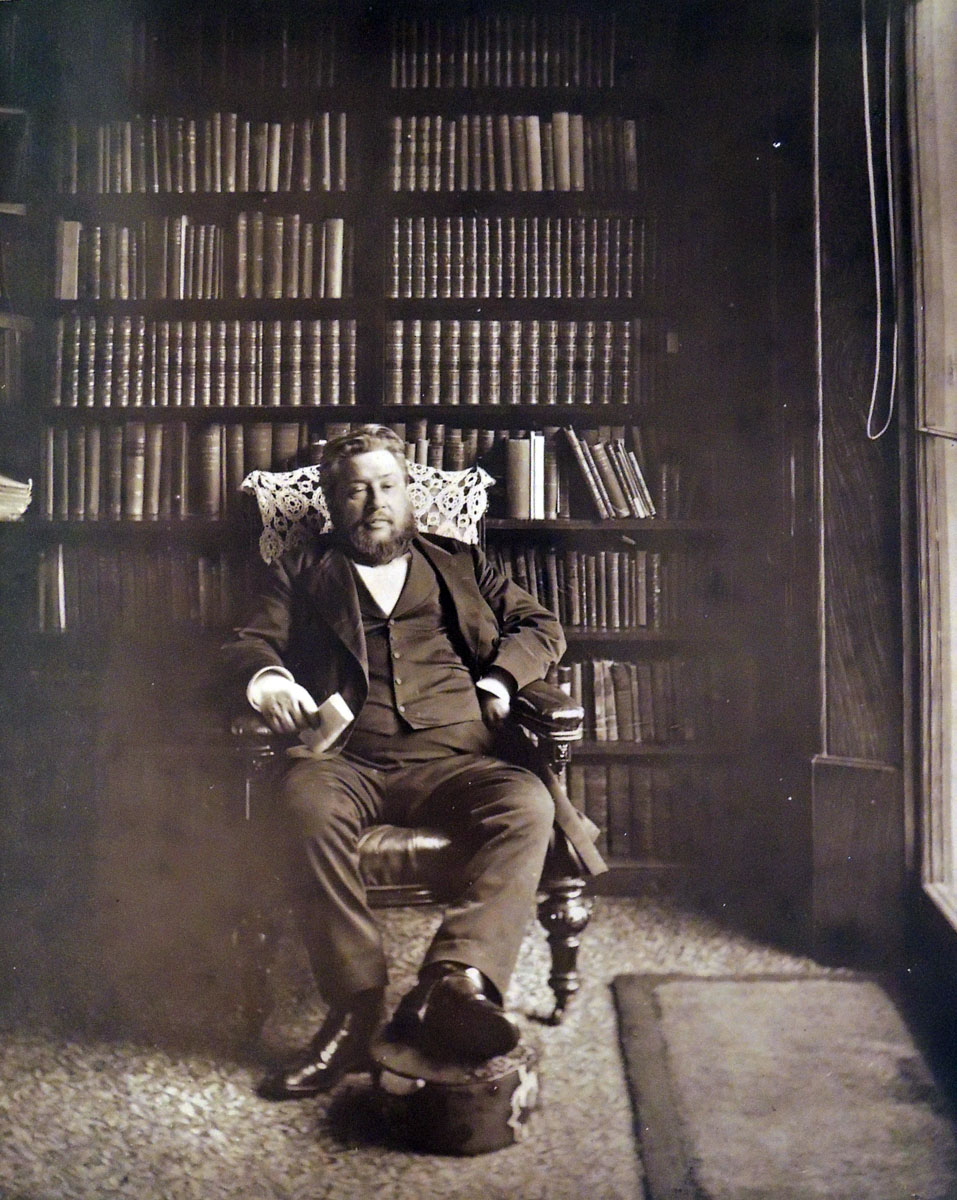 Charles Haddon Spurgeon in his study, 1882, age 48
Charles Haddon Spurgeon (1834-1892) might be considered the first of the megachurch pastors. A Baptist of Calvinist convictions, he was gifted with a prodigious memory, a quick verbal wit, and, most importantly, a godly heritage by way of his grandfather and father, both Independent (Congregational) ministers of the Puritan persuasion. He began at age 16 as preacher and pastor of a Baptist chapel in Waterbeach, Cambridgeshire, then was called to serve as pastor of the historic New Park Street Chapel in Southwark, in greater London, at age 20. His congregation quickly grew to thousands, overflowing the building, requiring a move first to Exeter Hall in the Strand while the church was being enlarged, then to the Surrey Gardens Music Hall, and ultimately to a new facility, the 6,000-seat Metropolitan Tabernacle near Elephant and Castle in Newington, now in the London Borough of Southwark. In addition to preaching twice on Sunday and on other occasions through the week, Spurgeon edited and wrote essays and book reviews for a monthly magazine, The Sword and Trowel, founded an orphanage, founded and taught at a pastor's college, and initiated many other missions and ministries under the auspices of the church.
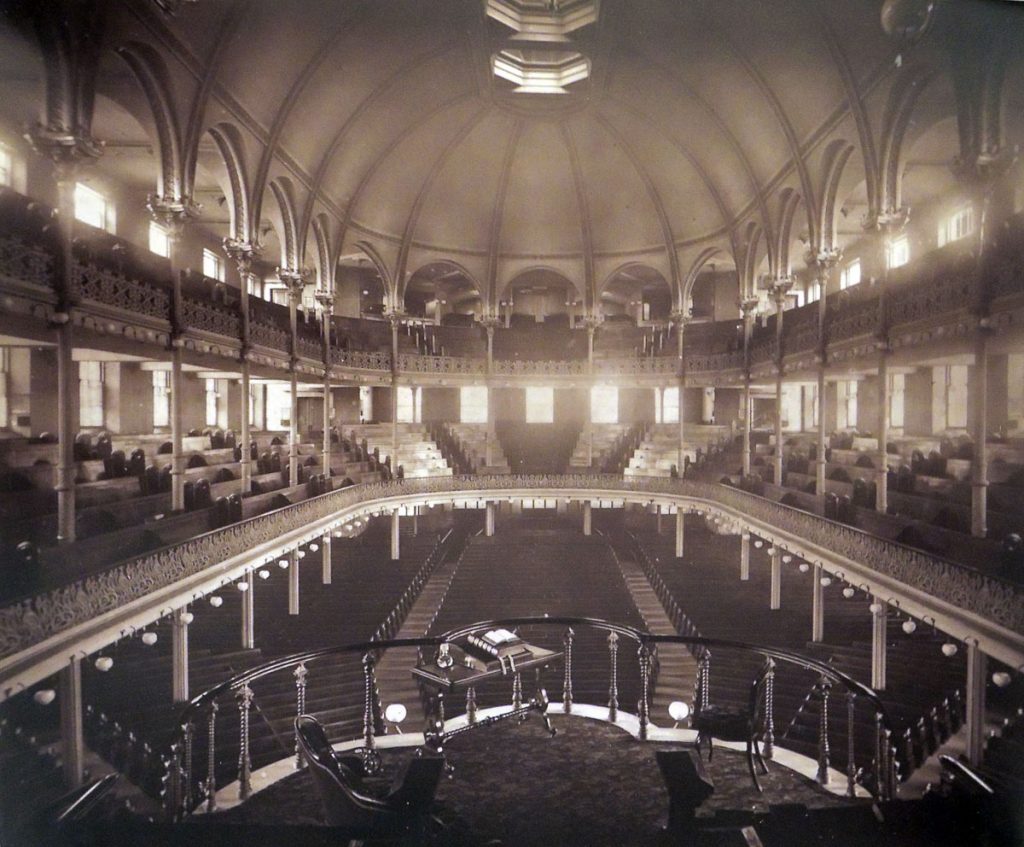 A view of the Metropolitan Tabernacle from the pulpit, 1882
During my time in the south of England two years ago, I worshipped on a few occasions at the Metropolitan Tabernacle, which is still faithfully proclaiming the same gospel that Spurgeon preached in the same straightforward and unadorned way. Although the auditorium is much smaller than in Spurgeon's time -- it took a direct hit during the Blitz and was rebuilt after the war; the Greek Revival portico survived the attack -- every seat was filled, and the congregation was diverse in ethnic background and age. There seemed to be far more non-English faces than English faces in the congregation. No fog machines or colored lights. After a few hymns accompanied by organ, the congregation heard an expository sermon from Dr. Peter Masters or one of his associates. Masters marked his golden anniversary as senior pastor this November.
My curiosity about Spurgeon was rekindled by an item recently posted to social media summarizing his busy but productive weekly schedule, a summary of this passage in Volume 2 of the Autobiography. I pulled Arnold Dallimore's 1985 concise biography of Spurgeon off of the shelf and got through it in a few days, which only whetted my appetite to read more of his own work and to learn more of his life and times. As Spurgeon's opus is entirely in the public domain, there is a wealth of his work available online.
Spurgeon is very accessible to modern readers. Although there will be unfamiliar cultural references, and there have been shifts in meaning for some words, these are not barriers. Spurgeon writes with a warmth and wit that reaches the reader even when difficult subjects are in view.
Major repositories of Spurgeon's work:
Spurgeon's Morning and Evening: His daily devotional, presented in blog form.
The Spurgeon Archive: A selection of Spurgeon sermons and essays and essays about Spurgeon, curated by Phil Johnson, associate pastor of Grace Community Church in Los Angeles. There is a large collection of interesting items from Spurgeon's writing in The Sword and the Trowel, many of them reflecting Spurgeon's sense of humor.
- Spurgeon's account of an 1867 visit to Heligoland (then a British possession off the coast of Germany): Johnson calls "surely the best and funniest of Mr. Spurgeon's travelogues."
- A chapter of the Autobiography devoted to fun
- A caricature and sketch of Spurgeon from Vanity Fair
- Spurgeon's frustration with requests from aspiring blank-verse poets to read and find publishers for their work
- Free advice, including Spurgeon's opinion on the proper length of a sermon
- Spurgeon's love of fine cigars, which he "smoked to the glory of God"
Reformed Reader: Spurgeon collection, which includes his monumental multi-volume commentary on the Psalms, The Treasury of David, arranged for web navigation, and The Down-Grade Controversy: All of the essays, notes, and excerpts from The Sword and the Trowel, the Metropolitan Tabernacle Pulpit, and the Autobiography that are contained in Pilgrim Publications' little book of the same title.
The Spurgeon Center for Biblical Preaching at Midwestern Baptist Theological Seminary: The seminary is home to Spurgeon's personal 6,000 book library (formerly at William Jewell College, acquired for $3,000 in 1905), which is being digitized along with his annotations.
Spurgeon Gems: All 3,563 of Spurgeon's published sermons, with audio recreations of many sermons, books in PDF and plain text format, a collection of prayers by Spurgeon, notable quotes, and materials in Spanish.
Internet Archive collection of works by or about Spurgeon
Spurgeon in print:
Pilgrim Publications, Pasadena, Texas, which reprints facsimile versions of all of Spurgeon's works.
Banner of Truth Trust publishes modern editions and anthologies of Spurgeon's writing, including the Autobiography, a collection of letters, edited with commentary from Iain Murray, and Dallimore's biography.
Susie, The Life and Legacy of Susannah Spurgeon, is due out from Moody Press early next year (2021).
Contemporary biographies of Spurgeon in the public domain:
Shortly after Spurgeon's death, his wife Susannah and his private secretary, J. W. Harrald, assembled a four-volume Autobiography from his diaries, sermons, letters, and notes:
Volume 1, 1834-1854 Reformed Reader: Descriptions of life at Westwood from Susannah Spurgeon's book fund reports from Russell H. Conwell's Life of Charles Haddon Spurgeon, The World's Great Preacher. Other items of interest:
Volume 2, 1854-1860
Volume 3, 1860-1878
Volume 4, 1878-1892
Roy Askins in The Lutheran Witness provides the context:
In 1527, Luther wrote a letter to a friend because the bubonic plague was passing through Europe again and had struck both Silesia, where his friend lived, and Wittenberg, where Luther lived. ...
When the plague struck a town, the wealthy would often flee to the countryside. The question put to Luther was simple: Should a Christian flee this horrific plague?
Here's the letter from Martin Luther: Whether One May Flee From A Deadly Plague.
Luther judges that someone with an obligation to others must stay, unless he is surplus to requirements. Pastors and preachers, judges and mayors, are all ministers of God to the people in the offices of church and state, respectively, and must remain. But there is an exception:
However, where enough preachers are available in one locality and they agree to encourage the other clergy to leave in order not to expose themselves needlessly to danger, I do not consider such conduct sinful because spiritual services are provided for and because they would have been ready and willing to stay if it had been necessary. ...On the other hand, if in great weakness [mayors and judges] flee but provide capable substitutes to make sure that the community is well governed and protected, as we previ-ously indicated, and if they continually and carefully supervise them [i.e., the substitutes], all that would be proper.
Luther goes on to cite the duties of servants to their masters, masters to their servants, parents and children to one another, guardians to orphans. "Likewise, paid public servants such as city physicians, city clerks and constables, or whatever their titles, should not flee unless they furnish capable substitutes who are acceptable to their employer."
Luther notes the obligation on all Christians to ensure that the sick around us are cared for:
Yes, no one should dare leave his neighbor unless there are others who will take care of the sick in their stead and nurse them. In such cases we must respect the word of Christ, "I was sick and you did not visit me ..." [Matt. 25:41-46]. According to this passage we are bound to each other in such a way that no one may forsake the other in his distress but is obliged to assist and help him as he himself would like to be helped.
Luther charges Christians to be bold in caring for their sick neighbors, even in the face of repugnant ailments. He commends the policy of establishing hospitals "staffed with people to take care of the sick so that patients from private homes can be sent there -- as was the intent and purpose of our forefathers with so many pious bequests, hospices, hospitals, and infirmaries so that it should not be necessary for every citizen to maintain a hospital in his own home."
At the same time, it is no sin to protect ourselves from danger as long as we have done our duty to our neighbors:
It is not forbidden but rather commanded that by the sweat of our brow we should seek our daily food, clothing, and all we need and avoid destruction and disaster whenever we can, as long as we do so without detracting from our love and duty toward our neighbor. How much more appropriate it is therefore to seek to preserve life and avoid death if this can be done without harm to our neighbor, inasmuch as life is more than food and clothing, as Christ himself says in Matthew 5 [6:25]. If someone is so strong in faith, however, that he can willingly suffer nakedness, hunger, and want without tempting God and not trying to escape, although he could do so, let him continue that way, but let him not condemn those who will not or cannot do the same.
"Examples in Holy Scripture abundantly prove that to flee from death is not wrong in itself." Luther mentions Abraham, Isaac, Jacob, David, Elijah, and Moses as examples. Luther mocks those who insist that a Christian must remain in danger when it is not necessary:
By such reasoning, when a house is on fire, no one should run outside or rush to help because such a fire is also a punishment from God. Anyone who falls into deep water dare not save himself by swimming but must surrender to the water as to a divine punishment. Very well, do so if you can but do not tempt God, as they are capable of doing. Likewise, if someone breaks a leg, is wounded or bitten, he should not seek medical aid but say, "It is God's punishment. I shall bear it until it heals by itself." Freezing weather and winter are also God's punishment and can cause death. Why run to get inside or near a fire? Be strong and stay outside until it becomes warm again. We should then need no apothecaries or drugs or physicians because all illnesses are punishment from God. Hunger and thirst are also great punishments and torture. Why do you eat and drink instead of letting yourself be punished until hunger and thirst stop of themselves? Ultimately such talk will lead to the point where we abbreviate the Lord's Prayer and no longer pray, "deliver us from evil, Amen," since we would have to stop praying to be saved from hell and stop seeking to escape it. It, too, is God's punishment as is every kind of evil. Where would all this end?
Luther likewise chastises those who refuse to make use of the "man-made" means God has providentially provided to protect them and others:
Others sin on the right hand. They are much too rash and reckless, tempting God and disregarding everything which might counteract death and the plague. They disdain the use of medicines; they do not avoid places and persons infected by the plague, but lightheartedly make sport of it and wish to prove how independent they are. They say that it is God's punishment; if he wants to protect them he can do so with-out medicines or our carefulness. This is not trusting God but tempting him. God has created medicines and provided us with intelligence to guard and take good care of the body so that we can live in good health.If one makes no use of intelligence or medicine when he could do so without detriment to his neighbor, such a person injures his body and must beware lest he become a suicide in God's eyes. By the same reasoning a person might forego eating and drinking, clothing and shelter, and boldly proclaim his faith that if God wanted to preserve him from starvation and cold, he could do so without food and clothing. Actually that would be suicide. It is even more shameful for a person to pay no heed to his own body and to fail to protect it against the plague the best he is able, and then to infect and poison others who might have remained alive if he had taken care of his body as he should have. He is thus responsible before God for his neighbor's death and is a murderer many times over. Indeed, such people behave as though a house were burning in the city and nobody were trying to put the fire out. Instead they give leeway to the flames so that the whole city is consumed, saying that if God so willed, he could save the city without water to quench the fire.
He commends this attitude, which acknowledges God's sovereignty, does not shy away from duty, makes use of "second causes" through which God accomplishes his healing purpose, but does not tempt God by taking unnecessary risks.
"Very well, by God's decree the enemy has sent us poison and deadly offal. Therefore I shall ask God mercifully to protect us. Then I shall fumigate, help purify the air, administer medicine, and take it. I shall avoid places and persons where my presence is not needed in order not to become contaminated and thus perchance infect and pollute others, and so cause their death as a result of my negligence. If God should wish to take me, he will surely find me and I have done what he has expected of me and so I am not responsible for either my own death or the death of others. If my neighbor needs me, however, I shall not avoid place or person but will go freely, as stated above." See, this is such a God-fearing faith because it is neither brash nor foolhardy and does not tempt God.
Religious Affections Ministries has published a new hymnal, and it's available for free download.
Hymns to the Living God is notable for its slim size and the scarcity of copyright notices. Only 294 hymns were selected for inclusion, and nearly all of them are in the public domain.
Scott Aniol, founder of Religious Affections Ministries and chairman of the Worship Ministry Department at Southwestern Baptist Theological Seminary in Fort Worth, explains what it was about Hymns Ancient and Modern, a groundbreaking Anglican hymnal published in 1861, that provided inspiration and model for the approach they took in assembling this new collection of hymns:
Hymns Ancient and Modern (HAM) became the benchmark for all subsequent hymnals for several reasons. First, the editors gave careful consideration to the text/tune marriages within. Previously, very fine hymn texts often fell to disuse due to the terrible tunes with which they were associated. HAM contained text/tune combinations still commonly used today, such as "While Shepherds Watched Their Flocks" with WINCHESTER OLD and "When Morning Gilds the Skies with LAUDES DOMINI.Second, while most previous hymnals had little if any organization to the order of hymns, HAM was organized theologically and liturgically, categorizing hymns based on their purpose and use within the liturgy and broadly in the church year.
Third, desiring to recover some of what they considered lost in the worship tradition of the church, they translated the best of early and medieval Greek and Latin hymns into English, bringing some of the oldest hymns still sung today into use. They also translated several excellent German Lutheran hymns into English as well. This made HAM a truly "catholic" hymnal, drawing its collection from the best of all Christian traditions....
Fourth, although the hymnal editors objected to much of what they considered unhealthy sentimentalism in recently composed Victorian and evangelical revival hymns, they made a point to include what they considered the best of even those hymns....
Fifth, HAM gathered the best of "modern" hymns, including "Holy, Holy, Holy" by Reginald Heber, with NICAEA by John Dykes, and "Crown Him with Many Crowns" by Matthew Bridges, with DIADEMATA by George Elvey. The editors' goal was to sing newer hymns that matched the quality, both in text and tune, of ancient ones....
We had the same goal as the editors of HAM--rather than a descriptive hymnal that simply reflected what various churches were already singing, or a market-driven hymnal intended to appeal to the largest possible audience, we wanted to collect what we believe to be the best available hymns in the English language. We also had similar concerns as editors of HAM--we considered much of what has been written in the last 100 years and that has become the dominant song of evangelical churches to be weak compared to the rich heritage of the past, and so we wanted to create a collection that would model the best hymns, both ancient and modern.
As the editors are not from a liturgical tradition, they chose a different organizing principle:
Second, we carefully organized the hymns according to their usefulness in a liturgy that reenacts our covenantal relationship with God through Christ, beginning with God's revelation of himself and our adoration of him, leading to a recognition of our guilt and need for repentance and faith, then the solution to our need found in Jesus Christ's coming, life, death, and resurrection, followed by the Holy Spirit's work to bring us to Salvation, after which we hear God's Word, Submit ourselves to him, bring our Prayers before him, and experience Communion with him and with his Church. The hymnal concludes with songs of Commission, Comfort, and Benediction.
The editors of the new hymnal, published in 2017, re-tuned some hymns, but used traditional tunes for this purpose rather than insipid guitar riffs of the type that have emerged from the PCA's Reformed University Fellowship and infested congregational worship. "Rock of Ages" to the tune "Redhead", the traditional setting in the UK, is an improvement over the traditional American tune "Toplady" (too familiar from too many movie funeral scenes), and both are much to be preferred over the misaligned "New City Fellowship" tune, in which the natural rhythm of the words is undermined by the tune's tonal peaks. The editors pair "My Hope Is Built on Nothing Less" with "Melita," which you may know as the tune for the naval hymn "Eternal Father, Strong to Save."
The Baptist worship of my youth was dominated by the revival songs of the late 19th and early 20th centuries, while the treasures of 18th century English hymnody were only dusted off at Christmas time. Hymns to the Living God has included a small selection from the gospel song tradition, such as "Great Is Thy Faithfulness" and "It Is Well with My Soul."
Only a handful of modern songs are included. Two of these are by James Montgomery Boice, the late pastor of Tenth Presbyterian Church in Philadelphia and host of Bible Study Radio Hour. A metrical paraphrase of the Apostle's Creed was commissioned specially for the new hymnal.
There are a few nitpicks. The editors print text-only for certain hymns, forcing the singer to turn to a different page to see the tune. I'd prefer to see four-part harmony with each hymn, even though it would increase page count and cost. Likewise, where there are multiple tune choices for a hymn, print both. I was disappointed to see "Praise My Soul, the King of Heaven" set to "Andrews." It's good that there's a note suggesting "Lauda Anima" (the tune I'm used to), but if you're leading a congregation, you want the music for your chosen tune in front of them. Some of my favorite hymns and tunes are missing. ("All My Hope on God Is Founded," for example.)
Musically, the editors are fans of Johann Sebastian Bach (12 hymns set to tunes that he composed or harmonized) and Ralph Vaughan Williams (10 hymns set to the English folk songs he adapted or his own majestic processional tunes).
There are a fair number of textual alterations noted. These are usually done for theological reasons (and I often sing the original text loudly, just to be contrary). I haven't examined all the alterations in Hymns to the Living God carefully, but one caught my eye. One verse "And Can It Be?" is typically altered by Calvinists to avoid conflicting with the doctrine of particular atonement and to avoid a misunderstanding of the nature of Christ's kenosis, or self-emptying. The original:
Emptied Himself of all but love,
And bled for Adam's helpless race;
is changed by the Trinity Hymnal to:
humbled himself (so great his love!),
and bled for all his chosen race.
while Hymns to the Living God uses
Emptied himself and came in love,
And bled for Adam's helpless race!
While it would be bulky and unnecessary to include an explanation for each alteration in the hymnal itself, it would be enlightening to be able to read a rationale for the changes made, whether textual or musical, on a companion website. The hymnal itself could bear to have a single-page explanation of the guiding philosophy behind those choices.
The preface to the hymnal does explain the theological rationale behind the choice of hymns and tunes. The editors reject the idea that a tune is simply a neutral vehicle for words:
Third, we have chosen hymn tunes that we believe best communicate the kinds of sentiments and affections that are fitting for biblical truth. Tozer wisely cautioned, "Human emotions are curious and difficult to arouse, and there is always a danger that they may be aroused by the wrong means and for the wrong reasons." The church's battle against heresy defined Christian orthodoxy; there is a sense in which its battle against irreverent worship has attempted to define orthopathy: right affections. Orthopathy cannot be defined as precisely as the creeds and confessions have delineated Christian doctrine, but hymnbooks function similarly to those confessions. They are an attempt to represent instances of ordinate affection. We hope you find that deep love for Christ pulsing through the veins of our hymnal. As with poetry, musical form is not neutral; rather, melody, harmony, and rhythm combine to give expression to right affections.
Christian educators have come to understand that effective discipleship is not merely about instructing the mind to believe what is right (orthodoxy) or directing the actions to do what is right (orthopraxy); training the affections to feel aright (orthopathy) is an essential link between thought and action and essential to a lifelong walk with Christ. The Abolition of Man, by C. S. Lewis, was my introduction to the importance of learning to love what is good, what is true, and what is beautiful.
The editors also state their case for publishing a physical hymn book in the digital age:
First, when you hold a hymnal in your hands, you hold something of your Christian heritage. The physical nature of a hymnal has the effect of embodying a collection of the work of the church triumphant, and in using such a book, you identify with the entire church, and you sing her experience into yours.Second, when you hold a good hymnal in your hands, you are holding the distilled affective responses of hundreds, if not thousands, of believers. A hymnal is a testimony of how Christians collectively have responded to the various truths of the Christian life. With hymnal in hand, one can peruse these responses and use them as a point of comparison for those of contemporary Christianity.
Third, a good hymnal remains the best devotional literature we have. Devotional literature is formative, and while it does not necessarily have to be printed, hymns in printed form provide a convenient and settled collection for personal and family devotion....
A printed hymnal offers saints a thoughtfully curated collection of some of the finest extra-Biblical expressions of God's truth in warm, devotional form. In this hymnbook you will find the great fundamental doctrines of Christian orthodoxy represented. As John Wesley said of his own hymnal, "This book is, in effect, a little body of experimental and practical divinity." In this volume, you will find words and music to give wings to the Christian's ordinate affections, whether they be of adoration to the Triune God, or of thanksgiving to Christ as Mediator, or of bittersweet tears at His atoning passion, or of steadfast hope in the goodness of God amidst days of trial. So, we trust that this volume contains nothing but songs which are, in the words of Calvin, "not only honest, but also holy," songs which are not just theologically strong, but devotionally warm.
Hymns to the Living God is available as a pew-quality hardback at the very reasonable price of $13.99 or six for $78, and there's a spiral-bound edition for $19.99. You can download it for free as a PDF by providing your email address.
MORE from ReligiousAffections.org:
Kevin Bauder, Research Professor of Historical and Systematic Theology at Central Baptist Theological Seminary, has been posting an affectionate memoir of growing up in fundamentalism.
David de Bruyn, pastor of New Covenant Baptist Church in Johannesburg, South Africa, presents a parable about lollipops and pop music in church, the latest in a category of articles on aesthetics.
Searching through archives, I found this item that I drafted on 3/15/2007, but never finished. Since 2007, Time has placed its archives behind a paywall; the links are all still valid, but unless you pay for a pass, you'll only see an excerpt. But I was also able to find a new article about the 1928 conference and film of Tulsa at that time.
I was looking through Time magazine's archives for references to Tulsa. Time has put all of its back issues online, going back to the '20s.
Media bias in religion coverage is nothing new. Here are some examples from Time's coverage of the 1928 General Assembly of the Presbyterian Church in the USA (PCUSA), which was held in Tulsa. This was the northern half of the Presbyterian mainline, which split over the Civil War in 1861 and reunited in the 1980s. Despite Oklahoma's Southern location and the Five Civilized Tribes' connections with the Confederacy, it was the Northern Presbyterian denomination that first evangelized the tribes and established the first church in Tulsa.
As you read what follows, keep in mind that "fundamentalist" at this point is used to describe Christians who affirm the inerrancy of the Bible, the virgin birth of Christ, the literal, bodily resurrection of Christ, the doctrine that God created the heavens and the earth, and the truth of the miracles described in the Bible.
Here's an article from a March 12, 1928, preview to the 1928 PCUSA general assembly. The first sentence subtly paints fundamentalists as unreasonably refusing to abandon an important doctrine:
For Presbyterians, the Virgin birth is a bone of contention which fundamentalists will not permit liberals to bury. Recently Rev. Dr. Albert Parker Fitch, famed modernist, was installed in the pulpit of the Park Avenue Presbyterian Church. Last week, Rev. Dr. Walter Duncan Buchanan, fundamentalist, filed with the Presbyterian General Assembly a complaint about Dr. Fitch. At the annual meeting of the assembly, this year to be held at Tulsa, Okla., late in May, Presbyterian squabbles are given a good thorough airing. This may be one of the squabbles which will enliven this year's session: New York Presbytery against the field.
From the June 11, 1928, issue, a report on the decisions made by 1928 PCUSA general assembly. Note how a debate over doctrine is dismissed as an "unfortunate uproar." Fundamentalists are portrayed as raging beasts, blowing and stamping, while Modernists reason, and Moderates are clear-thinking:
Often enough in the past,, the annual General Assembly of the Presbyterian Church in the U.S. A. has been an unfortunate uproar concerned with such things as how a god can have a mortal father. Fundamentalists have blown and stamped, Modernists have scoffed and reasoned, Moderates have explained and pleaded. This year, the meeting in Tulsa, Okla., had a minimum of excursions and alarms. The Fundamentalists were apparently in sufficient majority to achieve victory in the things which lay nearest their hearts and Bibles; they could not, however, expect to work their wills...The first thing for the Presbyterians to do was to elect a moderator to succeed Dr. Robert E. Speer. This they did with rapidity on the first ballot. The new moderator is Dr. Hugh Kelso Walker, pastor of the First Presbyterian Church of Los Angeles, a clear thinking moderate, who has never embroiled himself in the Fundamentalist v. Modernist controversy. He beat the Fundamentalist candidate, Dr. J. Ambrose Dunkel of the Tabernacle Presbyterian Church in Indianapolis, by a vote of 593 to 318. The moderate moderator named a vice moderator to help him in administering the affairs of his church. This was the Rev. Joseph M. Broady of Birmingham, Ala....
Their chief officers chosen, the commissioners of the Assembly proceeded to perilous business. What was to be done about many recent proposals for uniting the Presbyterian Church with other denominations? The Presbyterians refused to consider amalgamation with such sects as Christian, Universalist and Congregational Churches, because doctrinal differences seemed too extreme to eliminate at this time.
From the following year, a June 3, 1929, report on the 1929 PCUSA General Assembly in St. Paul. The defender of Biblical doctrine is "ultra," a "mouthpiece," and he "stormed, often discourteously," "fulminated," "lashed." Orthodoxy is "dour."
The question was: should the government of Princeton Theological Seminary be changed? Upon the answer, even if it remained implicit, largely depended the Assembly's choice for Moderator (to succeed Dr. Hugo Kelso Walker of Los Angeles) and the policy and perhaps the doctrine of the greatest, wealthiest, oldest Presbyterian seminary in the U. S.For several months, ultra-Fundamental and orthodox Dr. Samuel L. Craig had stormed, often discourteously, in the pages of his weekly, The Presbyterian. He fulminated against the President of Union Theological Seminary, Dr. Henry Sloane Coffin, because he seemed liberal. He lashed the President of the Princeton Seminary, Dr. J. Ross Stevenson, because he wanted the change. With holy passion he appealed to his readers to realize the gravity of the question. There were other appeals for prayers, for votes.
The impending change meant vesting the control of the Seminary in one board consisting of the present board of directors and the board of trustees. These now form two individual groups, between whom there has been much friction. Slight though this change might seem to laity, Dr. Craig perceived therein the horrid possibility that President Stevenson might thus gain great individual power, that the dour orthodoxy of Princeton might become liberalized. Dr. Stevenson once said that he wanted Princeton to represent the whole Presbyterian church, instead of only the right wing of Presbyterianism. Dr. Craig, mouthpiece of the Right Wing, was assisted by Drs. John Gresham Machen and Robert Dick Wilson of the Princeton Seminary.
Meanwhile, from the May 21, 1928 issue, a report on the 1928 Methodist quadrennial conference describes an accusation against a liberal bishop as "brewed in bitterness":
This was the most important action taken last week by delegates to the Quadrennial Conference. Also, they:Unanimously asserted their confidence in famed liberal Bishop McConnell of Pittsburgh and ordered expunged a charge against him, brewed in bitterness by one George A. Cooke, of Wilmington, Del., of "maladministration and immorality."
From November 21, 1927, issue, news of an overture to the next general assembly regarding divorce.
All U. S. rejoicing in economic prosperity and all self congratulations upon its vast educational system is like the sound of cheerful music as the funeral procession winds its way to the grave, so long as one out of six U. S. marriages ends with divorce. Last week Clarence Edward Noble MacArtney of Pittsburgh and William Chalmers Covert of Philadelphia who have studied the divorce problem for the Presbyterian church, sent that message to 10,000 Presbyterian ministers and recommended that the Presbyterian general assembly at Tulsa, Oklahoma, next May, permit only adultery as the ground for Presbyterian divorces.
This item is notable in that the aim of reducing the divorce rate is shown in a positive light, and it's taken as a given that marriage stability is more important to a nation than wealth and education. In 1928, modernists would say that the miraculous aspects of Christianity could be excised while retaining Christian moral and ethical standards. Forty years or so later, the PCUSA's moral objections to divorce, no longer anchored by the authority of the Bible, were washed away with the tide of the culture.
MORE:
In his 1923 book Christianity and Liberalism, Presbyterian theologian J. Gresham Machen explains that modernist or liberal Christianity is an entirely different religion than Christianity, which uses Christian terms while rejecting its substance. This Day in Presbyterian History, an excellent blog by my friend Wayne Sparkman, director of the Presbyterian Church in America History Center, has an article about Christianity and Liberalism by Chalmers W. Alexander, writing in the Southern Presbyterian Journal in 1949.
This article about the 1928 General Assembly on the Presbyterian Historical Society website doesn't get into the issues and outcomes of the general assembly, but it does feature some history of First Presbyterian Church, the growth of the church and the city, and a postcard of the 1910 First Presbyterian sanctuary. In the five-minute silent film of the conference, you'll see the brand new Gothic Revival sanctuary next to the 1910 building, a glimpse of Boston Avenue Methodist Church still under construction, the original Kendall Hall at the University of Tulsa, and aerial views of downtown, TU, and the area.
Edited from the version originally published on December 25, 2012
Merry Christmas to anyone who happens by BatesLine today.
As a Holland Hall high school student, I attended and sang in the annual service of Christmas lessons and carols at Trinity Episcopal Church, modeled after the annual Christmas Eve service from the chapel of King's College, Cambridge. (The King's College service marked its 100th anniversary this year.)
At the beginning of Trinity's service, after the processional, Father Ralph Urmson-Taylor, who served as Holland Hall's Lower School chaplain, would read the bidding prayer. Confessing Evangelical has it as I remember it. It's worth a moment of your time to ponder.
Beloved in Christ, be it this Christmastide our care and delight to hear again the message of the angels, and in heart and mind to go even unto Bethlehem and see this thing which is come to pass, and the Babe lying in a manger.Therefore let us read and mark in Holy Scripture the tale of the loving purposes of God from the first days of our disobedience unto the glorious Redemption brought us by this Holy Child.
But first, let us pray for the needs of the whole world; for peace on earth and goodwill among all his people; for unity and brotherhood within the Church he came to build, and especially in this our diocese.
And because this of all things would rejoice his heart, let us remember, in his name, the poor and helpless, the cold, the hungry, and the oppressed; the sick and them that mourn, the lonely and the unloved, the aged and the little children; all those who know not the Lord Jesus, or who love him not, or who by sin have grieved his heart of love.
Lastly, let us remember before God all those who rejoice with us, but upon another shore, and in a greater light, that multitude which no man can number, whose hope was in the Word made flesh, and with whom in the Lord Jesus we are one forevermore.
These prayers and praises let us humbly offer up to the Throne of Heaven, in the words which Christ himself hath taught us: Our Father, which art in heaven...
The bidding prayer was written by Eric Milner-White, dean of the chapel of King's College, who introduced the Lessons and Carols service there on Christmas Eve 1918. Jeremy Summerly describes the prayer as "the greatest addition to the Church of England's liturgy since the Book of Common Prayer."
In some versions, the prayer for "all those who know not the Lord Jesus, or who love him not, or who by sin have grieved his heart of love" is dropped, perhaps because of political correctness and religious timidity, but they seem to have been restored in recent years. Who needs prayer more than those who reject the Way, the Truth, and the Life?
The phrase "upon another shore, and in a greater light" always gives me goosebumps as I think about friends and family who are no longer with us, but who are now free from pain and delighting in the presence of the Savior they loved so dearly in this life. As he wrote those words, Milner-White, who had served as an army chaplain in the Great War before his return to King's College, must have had in mind the 199 men of King's and the hundreds of thousands of his countrymen who never returned home from the trenches of Europe.
This year many Tulsans who knew him will hear that phrase and remember David Rollo, who, as Holland Hall's music director, developed the musical tradition of the school's annual Lessons and Carols service at Trinity. David passed away in June 2017. David's friends and family miss him greatly, but he celebrates Christmas this year free of all the pains and physical limitations that plagued him in this life. The 2018 Holland Hall Lessons and Carols service was dedicated to his memory.
Which brings us to the final verses of the Epiphany hymn, "As with Gladness, Men of Old":
Holy Jesus, every day
Keep us in the narrow way;
And, when earthly things are past,
Bring our ransomed souls at last
Where they need no star to guide,
Where no clouds Thy glory hide.In the heavenly country bright,
Need they no created light;
Thou its Light, its Joy, its Crown,
Thou its Sun which goes not down;
There forever may we sing
Alleluias to our King!
MORE:
This year's broadcast of the Festival of Nine Lessons and Carols from King's College Cambridge will be available for the next four weeks on the BBC website. You can download the booklet for the service here. (Direct link to PDF.) This is the final year for organist and choirmaster Stephen Cleobury to direct the service prior to his retirement next September. Cleobury, who took the baton in 1982, has performed a newly commissioned carol each year since 1983. The New York Times profiled the Lessons and Carols service and Cleobury in its Sunday, December 23, 2018, edition.
The history of the Lessons and Carols service was presented in this 15-minute BBC program, Episode 8 of the series "A Cause for Caroling." (Unfortunately, it was not repeated this year, so you can't listen online at the moment, but it's available through Audible and as an audio CD.) Edward White Benson, first Bishop of Truro, originated the service of Nine Lessons and Carols in 1880. It was published in 1884 and began to be used more widely. From this year's service booklet:
The 1918 service was, in fact, adapted from an order drawn up by E. W. Benson, later Archbishop of Canterbury, for use in the large wooden shed which then served as his cathedral in Truro at 10 p.m. on Christmas Eve, 1880.A. C. Benson recalled: 'My father arranged from ancient sources a little service for Christmas Eve - nine carols and nine tiny lessons, which were read by various officers of the Church, beginning with a chorister, and ending, through the different grades, with the Bishop'. The idea had come from G. H. S. Walpole, later Bishop of Edinburgh.Very soon other churches adapted the service for their own use. In the immediate aftermath of the First World War, Milner-White decided that A Festival of Nine Lessons and Carols would be a more uplifting occasion at King's than Evensong on Christmas Eve. He used Benson's plan, but wrote the now-classic Bidding Prayer to set the tone at the beginning. Since then the spoken parts, which provide the backbone of the service, have only occasionally changed.
Earlier this month, the BBC Singers presented A Very Choral Christmas, a concert of carols conducted by John Rutter and Bob Chilcott, two giants of modern choral music. The performance at Saffron Hall was recorded for broadcast; I had the joy of attending an earlier performance at London's Barbican Centre, where we heard Ralph Vaughan Williams' "Fantasia on Christmas Carols," John Rutter's "Star Carol," "Shepherd's Pipe Carol," and "What Sweeter Music," Bob Chilcott's "Shepherd's Carol," "The Midnight of Your Birth," and his special version of the "Twelve Days of Christmas." It was a thrill for me to sing, along with the rest of the audience, under the direction of Rutter; his Three Musical Fables album was regular bedtime listening for my kids, as was his collection of music of the English Church, Faire Is the Heaven, for me, and all of us have had the opportunity to sing his compositions in choirs. Rutter was as joyful and sprightly at the conductor's podium as his music would lead you to expect. (The same is true of Chilcott.) You can listen online through January 20, 2019.
During the interval of the broadcast, Chilcott and Rutter discuss the history of the King's College service and the tradition of selecting a soloist at the moment. As a chorister, Chilcott sang the solo opening verse of "Once in Royal David's City" three consecutive years. Also in the interval, starting at 1:13:43, there is a feature about a BBC "Come and Sing" event, in which members of the public of all ages and abilities (including this writer) sang along with members of the BBC Singers and presented a brief concert in the newly reopened theatre at the Alexandra Palace.
John Piper explains what Christmas is all about in 115 words:
Christmas means that a king has been born, conceived in the womb of a virgin. And this king will reign over an everlasting kingdom that will be made up of millions and millions of saved sinners. The reason that this everlasting, virgin-born king can reign over a kingdom of sinners is because he was born precisely to die. And he did die. He died in our place and bore our sin and provided our righteousness and took away the wrath of God and defeated the evil one so that anyone, anywhere, of any kind can turn from the treason of sin to the true king, and put their faith in him, and have everlasting joy.
STILL MORE:
In the Queen's Christmas message, she recalls the centenary of King's College Lessons and Carols, the Royal Air Force, and the Armistice of World War I. The video begins with the choristers of King's College singing "God Save the Queen" and concludes with "Once in Royal David's City."
Last Monday, October 15, 2018, the University of Central Oklahoma hosted a forum to discuss the issues of sexual orientation and gender identity from a Christian perspective. The event was co-sponsored by several student organizations: S.A.F.E - Student Alliance for Equality, UCO Women's Research Center, BGLTQ+ Student Center, all groups that reject the Biblical perspective on sexuality, and Valid Worldview, a Christian student group based at Fairview Baptist Church.
UCO's Dr. David Macey, Professor of English and Assistant Vice President for Global and Cultural Competencies, and the faculty adviser for Student Alliance for Equality, was the moderator.
The four participants, from left to right:
- Trey Witzel, Associate Pastor, First United Methodist Church of Edmond
- Kris Williams, Q Space LGBTQ+ Facilitator, NorthCare
- Dr. Robert A.J. Gagnon, Professor of New Testament, Houston Baptist University, author of The Bible and Homosexual Practice (Abingdon Press)
- Stephen Black, Executive Director, First Stone Ministries, author of Freedom Realized - Finding Freedom from Homosexuality & Living a Life Free from Labels (Redemption Press)
Dr. Myron Pope, UCO VP for Student Affairs, welcomed the presenters and audience on behalf of UCO, and emphasized the importance of coming together and listening to one another. At a time when so many debates on contentious issues -- or really, the conservative, traditional perspectives on these issues -- are being shutdown by mob threats, UCO is to be commended for allowing this debate to occur. The participants all comported themselves with respect, as did the audience, with the exception of one speaker during the Q&A and an audience member at the end who was called out by Stephen Black for flipping him off as he gave his closing remarks.
The defenders of Biblical truth backed up their arguments with logic and evidence, but also spoke movingly from the heart. The opening question had to do with the source of their passion. Dr. Gagnon recalled a Laurel and Hardy scene, where they're in a lineup of soldiers and asked to step forward to volunteer, and everyone else takes a step back, leaving them as the volunteers. That explained how he felt when he was the only professor at Pittsburgh Seminary (part of the mainline, liberal Presbyterian Church USA) to make the case for the Biblical teaching on sexuality. His efforts ultimately turned into a 500-page book that comprehensively set out the Bible's teaching on the issue and addressed the various challenges that have been raised by religious liberals.
Stephen Black spoke about his personal history, how he became involved in homosexual activity (with the encouragement of his Catholic parish priest), and how God delivered him out of that way of life and then led him into ministry, helping people who deal with unwanted same-sex attraction and gender confusion. Later in the forum, he spoke at length about First Stone Ministries, their approach to counseling and what distinguishes their approach from much-maligned "conversion therapy."
Here is video of the forum itself:
And Q&A with the audience:
At one point, Witzel or Williams mentioned Matthew Vines, the former evangelical who wrote a book disputing the way Christians have understood the Bible's teaching on sex and sexuality. Gagnon replied that he had challenged Vines to a debate, but Vines had yet to accept.
It's in the Q&A that the gloves come off. In the face of Gagnon's thorough exposition of what Jesus taught about the nature of marriage and sex, and the acknowledgement by serious Bible scholars who support gay rights that the Bible condemns homosexuality, the leftists on the stage retreated to the claim that the Bible doesn't matter because we can't trust it. Early on, Witzel boiled down the position of the religious left: "I don't give a damn about scriptural interpretation." Toward the end, Williams claimed it was impossible to know what Jesus said or thought, because the gospels were like a game of telephone -- written down too long after and unreliably transmitted. As J. Gresham Machen pointed out almost 100 years ago, liberal religion is not a variety of Christianity, but an "essentially different type[] of thought and life."
Witzel and Williams illustrated the fact that the liberal Christian's God is one of his or her own invention. Effectively, they say that anything in the Bible that contradicts one's inner sense of morality can be discarded, thereby making one's own feelings the ultimate authority, not God or His word.
But for Christians who define their faith and practice by God's Word, this video, particularly the comments by Robert Gagnon and Stephen Black, will provide a solid apologetic that will strengthen them in their own walk and equip them to strengthen other Christians who feel beleaguered by the world.
MORE:
The day before the forum, Prof. Gagnon spoke at Fairview Baptist Church during the Bible study hour and during the morning service, whose campus ministry, Valid Worldview, co-sponsored the forum. The audio starts about 2 minutes in.
Finally, here is the extended version of a documentary that was screened at Fairview's Sunday evening service, "Such Were Some of You," which tells the stories of several men and women who left the "gay" lifestyle to follow Christ.

A little break from the political:
I was intrigued a couple of months ago to receive an email announcing a new study edition of the Scriptures with notes highlighting the relationship between the land and people of Israel.
The Israel Bible, published by Israel365 and Menorah Books (an imprint of Koren Publishers Jerusalem) is the world's first Bible centered around the Land of Israel, the People of Israel, and the dynamic relationship between them. Designed for both Jewish and non-Jewish readers alike, The Israel Bible offers a unique commentary that seeks to explain God's focus on the Land of Israel alongside the original Hebrew text and the New Jewish Publication Society translation. All 929 chapters highlight verses that relate to Israel, including relevant quotes and perspectives from prime ministers, as well as abundant maps, charts, and illustrations."We are thrilled that The Israel Bible has reached No. 1 on Amazon in these categories," said Matthew Miller, publisher of Menorah Books. "Its success shows that across the religious and denominational spectrum, people are thirsty to study from a modern edition of Tanakh, and even more so, are deeply curious about the connection between the Jewish People and Israel."
Rabbi Tuly Weisz, founder and CEO of Israel365 and the editor of the Israel Bible, said Jews teaching the world Tanakh is a core Jewish concept that can be found in the Book of Isaiah, chapter 2. Isaiah describes that in the end of days, the nations will stream up to Jerusalem for Torah "shall come forth from Zion, The word of Hashem from Yerushalayim" (Isaiah 2:3).
"A new Bible coming forth from Israel and sending the light of Torah into the world is the embodiment of Isaiah's prophecy," Weisz said. "It is clearly a Bible whose time has come."
Weisz said the Bible has been a source of division between Jews and Christians for a millennium. He said that today the Bible is becoming the point that connects Jews and Christians. His Bible, he said, should build a bridge between Jews and the nations.
"The Bible and Israel are what Jews and Christians have in common," he said.
I sent a reply requesting a review copy and received one, gratis, shortly thereafter.
As a book, The Israel Bible is impressive, a hardcover tome weighing in at nearly 2200 pages, with a dustcover featuring illustrations of the flag of Israel, the Temple, the leaders declaring Israel's independence at Tel Aviv in 1948, and the famous photo of awed Israeli soldiers entering the Old City of Jerusalem after liberating it in 1967.
For the Christian reader, The Israel Bible offers the interesting experience of encountering the Hebrew Scriptures as the Jewish people do. The books are arranged in the standard Hebrew order, read "back to front," beginning with the Torah (Five Books of Moses), the Neviim (Prophets, which include most of the books Christians typically categorize as history, such as Joshua and Samuel), and the Ketuvim (Writings, which include Psalms, Proverbs, Job, Song of Songs, Ruth, Lamentations, Ecclesiastes, Esther, Daniel, Ezra and Nehemiah, and Chronicles).
The front matter includes an overview and introduction; a chart of the Hebrew alphabet, which includes final forms of certain letters, numerical values, and vowels; a list of each week's Torah portion with the corresponding Haftarah reading from the Prophets and the Hebrew word by which the portion is known; a list of the Torah readings for holy days and special occasions; and the blessings for before and after reading the Torah, provided in Hebrew, transliterated Hebrew, and English; and a table of maps, charts, and lists.
These maps, charts, and lists often appear with the introduction to a specific book. Many of the maps are like those you've seen in English Bibles -- the territories of the tribes of Israel, the two kingdoms of Israel and Judah -- and some that were new to me. For example, a map the shows the places mentioned in the commentary for Psalms, another shows the places mentioned in the Song of Songs, and the book of Ruth has a map showing Beit-Lechem (Bethlehem) and Moab. Lists include rabbinical opinions of when Job lived and opinions about when Solomon wrote his books. With Leviticus, there is a chart showing the offerings that would be brought by an individual.

As for the Biblical text itself, each book begins with a brief introduction. The text is presented in Hebrew and in English, from the Jewish Publication Society edition of 1985. On many pages, a verse is highlighted in gray accompanied by transliterated Hebrew, indicating commentary at the bottom of the page. The selected verses typically are chosen to highlight something about the land of Israel mentioned in the text or to link the text to later historical events. Some of the commentary is from renowned rabbis of the past.
Some commentary ties the selected verse to events in the history of the modern State of Israel. For example, Exodus 9:1, when the Lord calls Moses to go to Pharaoh and say, "Let My people go to worship Me," has commentary discussing modern day bondage suffered by the children of Israel:
Unfortunately, the bondage of Jews was not limited to the period of slavery in Egypt. There have been many other such incidents in history, even in the 20th and 21st centuries. Golda Meir (1898-1978), while serving as Israel's first ambassador to the Soviet Union, worked tirelessly to facilitate the immigration to Israel of Jews trapped behind the "Iron Curtain." Upon her arrival, some 50,000 Jews greeted Golda for the Shabbat, despite fear of the Soviet regime. She was astonished. "I prayed to gether with them. Oh, how I prayed. I was caught up in a torrent of love so strong it literally took my breath away!" The 10,000 old Israeli shekel banknote, followed by the first 10 New Israeli Shekel banknote, honored Golda Meir with her image on one side and on the other, an illustration of the mass of Russian Jews and the expression, taken from this verse, "Let My people go."
The Israel Bible is easy to navigate (once you know where to look for the books). Printed tabs along the edge of the page make it easy to find a particular book, and the head of each page has the book and chapter in Hebrew and English, as well as the Torah portion name.
At the back of the book are biographical sketches of the contributors to The Israel Bible, descriptions of the scholars and historical figures mentioned in the commentary, and an index to the people, places, and concepts discussed.
The list of transliterated Hebrew names and terms (shown in italics in the English translation of Scripture) is especially helpful to this gentile reader, to be able to look up Yechezkel and see how it's pronounced in Hebrew (y'-khez-KAYL) and that it's the name we see translated in English editions of the Bible as Ezekiel. A section is devoted to the names of Biblical measurements and Jewish holidays.
While I can think of some improvements -- more color, more maps, modern day photos of the places described -- The Israel Bible is a resource that I enjoy browsing through and am happy to have in our home, as a way of seeing the Old Testament through different cultural lenses, both ancient and modern.
Today Attorney General Jeff Sessions held a press conference announcing the Justice Department's religious liberty task force. The summary of Sessions's statement provided on Good Morning America's Facebook page did not seem at all alarming -- in fact it seemed welcome and overdue:
Sessions says the task force will "help the Department fully implement our religious liberty guidance," including "making sure our employees know their duties to accommodate people of faith."
Nor was the 90-second snippet of a press conference that GMA posted anything that seemed controversial.
And yet a Facebook friend, not usually one to post about politics, posted the link with the comment, "I can't believe this is constitutional." This friend's post received four "angry face" reactions. On the original GMA post, there are nearly 3,000 angry reactions, about 700 thumbs-up, and just over 600 expressions of astonishment. Most of the comments on the GMA post appear to be some ranty variation of "Doesn't he know there's supposed to be separation of church and state!"
The Constitution does not require the Federal Government to be hostile to religion or religious people. In fact, it requires the government to avoid burdening the free exercise of religion. Our nation was founded and settled by people (mainly various sorts of Christians) who wanted a place where they could live out their religious beliefs without suffering the persecution and restrictions they faced back in Europe.
For example, in England and Ireland, under the Test Acts and Penal Laws, someone who was not an Anglican was banned from holding public office, serving as an attorney, graduating from Oxford or Cambridge, or even voting. Worship services of religious dissenters could not be held in cities and dissenting preachers might be thrown into prison.
It would be a betrayal of the Pilgrims, Quakers, Catholics, Scots-Irish Presbyterians, Baptists, Amish, and other religious people fleeing persecution to create this country if America turns into a country where once again the Government can impose fines, jail time, or discriminatory restrictions on living according to your religious beliefs.
Here is a link to the full text of Attorney General's speech. Sessions began by describing the importance of religious liberty to those who settled America and those who framed its government:
Freedom of religious is indeed our "first freedom"--being the first listed right of our First Amendment. This has been a core American principle from the beginning. It is one of the reasons that this country was settled in the first place.The promise of freedom of conscience brought the Pilgrims to Plymouth, the Catholics to Maryland, the Quakers to Pennsylvania, the Scot-Presbyterians to the middle colonies, and Roger Williams to Rhode Island. Each one of these groups and others knew what it was like to be hated, persecuted, outnumbered, and discriminated against. Each one knew what it was like to have a majority try to force them to deny their natural right to practice the faith they held dear.
Our Founders gave religious expression a double protection in the First Amendment. Not only do we possess freedom to exercise our beliefs but we also enjoy the freedom of speech. Our Founders' understanding of and commitment to religious freedom was truly brilliant as well as historic. It arose in large part from the principals delineated in the Virginia Statute for Religious Freedom--and its effective advocates: Madison and Jefferson. These guys were ferocious. This weekend, I was rereading Gary Wills' fabulous book, Head and Heart, in which he quotes extensively from Jefferson's Statute, as he refers to it. I commend all of it to you; but one line stood out in particular to me, "That almighty God hath created the mind free, and manifested His supreme will that free it shall remain, by making it altogether insusceptible of restraint."
Of course, this is entirely consistent with another of my favorite Jefferson quotes that you will find at his memorial just across the mall from where we are today: "For I have sworn upon the altar of God eternal hostility against every form of tyranny over the mind of man." This is what our Founders believed. They clearly recognized that an individual's relationship to God is a natural right and precedes the existence of the state, and is not subject to state control.
These concepts were placed into our Constitution and laws and formed a national consensus that has greatly militated against religious hostility and violence--and has helped us to this day to be one of the world's most diverse religious people.
There can be no doubt that we are stronger as a nation because of the contribution of religious Americans. Every day across America, they feed the hungry, shelter the homeless, educate our young people, and care for the sick. They do so not because the government tells them to, but because they want to. They do these things because of their faith. Their faith provides something the state can never provide--meaning and purpose and joy in their life.
(NOTE: The transcript has a paragraph break after each sentence, arranged no doubt for convenience in delivering a speech. For the sake of readability I've provided paragraph breaks where they make sense.)
Sessions then described current threats to free exercise of religion and actions that the Department of Justice has taken to enforce the laws protecting them:
But in recent years, the cultural climate in this country--and in the West more generally--has become less hospitable to people of faith. Many Americans have felt that their freedom to practice their faith has been under attack. And it's easy to see why. We've seen nuns ordered to buy contraceptives. We've seen U.S. Senators ask judicial and executive branch nominees about dogma--even though the Constitution explicitly forbids a religious test for public office. We've all seen the ordeal faced so bravely by Jack Phillips.Americans from a wide variety of backgrounds are concerned about what this changing cultural climate means for the future of religious liberty in this country....
The Department of Justice has settled 24 civil cases with 90 plaintiffs regarding the previous administration's wrong application of the contraception mandate to objecting religious employers. Last month, a district court in Colorado issued a permanent injunction in the case involving the Little Sisters of the Poor, a group of nuns who serve the elderly poor. This is a permanent injunction and a major victory for the Little Sisters of the Poor and religious freedom. The government has no business telling the Little Sisters that they must provide an insurance policy that violates their sincere religious beliefs....
Since January 2017, we have obtained 11 indictments and seven convictions in cases involving arson or other attacks or threats against houses of worship. Our Civil Rights Division has also obtained 12 indictments in other attacks or threats against people because of their religion.... Three weeks ago, we obtained a jury verdict against a man who set fire to a mosque in Texas and sentenced for a man from Missouri for threatening to kill members of a mosque....
In January, we filed a brief in a Montana court to defend parents who claim that the state barred their children from a private school scholarship program because they attend a religious school. We also filed an amicus brief on behalf of the Archdiocese of Washington, D.C., which was refused advertising space for having a religious message--including "joy to the world" on Merry Christmas....
When I was in the Senate, we passed a law called the Religious Land Use and Institutionalized Persons Act, or RLUIPA. Under RLUIPA, the Department of Justice can file a civil action in court when religious groups are discriminated against in zoning laws. Under my tenure as Attorney General, we have not hesitated to use this tool when necessary. In June, we filed suit against a town in New Jersey that had refused over and over again--for eight years--to let an Orthodox Jewish congregation buy land for a synagogue. And just last week we filed a brief in federal court supporting the case of a Hindu temple in Maryland that claimed to have suffered discrimination in its attempts to purchase land.
Sessions provided a brief description of the guidance memo issued earlier:
Soon after taking office, President Trump directed me to issue explicit legal guidance for all executive agencies on how to apply the religious liberty protections in federal law. Our team embraced that challenge. I issued that guidance in October, and it lays out 20 fundamental principles for the Executive Branch to follow. Those include the principle that free exercise means a right to act--or to abstain from action. They include the principle that government shouldn't impugn people's motives or beliefs.We don't give up our rights when we go to work, start a business, talk about politics, or interact with the government. We don't give up our rights when we assemble or join together. We have religious freedom as individuals and as groups. In short, we have not only the freedom to worship--but the right to exercise our faith. The Constitution's protections don't end at the parish parking lot nor can our freedoms be confined to our basements.
Under this administration, the federal government is not just reacting--we are actively seeking, carefully, thoughtfully and lawfully, to accommodate people of faith. Religious Americans are no longer an afterthought. We will take potential burdens on one's conscience into consideration before we issue regulations or new policies. And this Department of Justice is going to court across America to defend the rights of people of faith.
Finally, he announced formation of a religious liberty task force within the DOJ to ensure that the laws which have already been approved by Congress and various presidents are enforced.
The Task Force will help the Department fully implement our religious liberty guidance by ensuring that all Justice Department components are upholding that guidance in the cases they bring and defend, the arguments they make in court, the policies and regulations they adopt, and how we conduct our operations. That includes making sure that our employees know their duties to accommodate people of faith.As the people in this room know, you have to practice what you preach. We are also going to remain in contact with religious groups across America to ensure that their rights are being protected. We have been holding listening sessions and we will continue to host them in the coming weeks.
This administration is animated by that same American view that has led us for 242 years: that every American has a right to believe, worship, and exercise their faith in the public square. This approach has served this country well. We are perhaps the most religiously developed nation in the world and can take pride in respecting all people as they fully exercise their faiths. It is clear that these policies have furthered peace, prosperity, freedom, lawfulness, and clarity. As our nation grows older, we must not let it depart from this magnificent tradition.
Here is Sessions's 25-page memo, "Federal Law Protections for Religious Liberty". It begins with 20 principles, each with a paragraph of elaboration. There follows specific guidance for the various roles a federal agency may play: as an employer, as a rulemaker, as an enforcer of Federal law, as an issuer of contracts or grants. The last 17 pages are an appendix of technical legal details, reciting relevant Federal law and Supreme Court decisions that must govern Federal agencies.
An accompanying two-page directive explains how the DOJ officials who report to the Attorney General are to apply the principles set out in the guidance memo: To incorporate the principles into the DOJ's own employment, rulemaking, enforcement, contracting, and grant-issuing policies; to correct course in DOJ litigation where the previous administration acted contrary to these principles; to apply the principles when issuing legal guidance to other agencies of the Executive Branch; to ensure that new rules issued by other agencies and referred to the DOJ's Office of Legal Policy are consistent with Federal religious liberty laws; and to require all DOJ components, including U. S. Attorney offices, to confer with the Associate Attorney General on "all issues arising in litigation, operations, grants, or other aspects of the Department's work that appear to raise novel, material questions" regarding religious liberty law.
So why the hostile public reaction to what appears to be a firm commitment to upholding the Constitution and laws of the United States regarding religious liberty?
I suspect part of it is that those who have chosen a life of sexual immorality are worried that someday they may encounter someone who is less than enthusiastic about their moral choices. While religious liberty is enshrined in our Bill of Rights and Federal law, sexual license is not, and yet many Americans regard sexual activity as the only source of transcendence, and they consider universal approval of their sexual proclivities a fundamental right.
Their solution to this, articulated by former President Obama and presidential candidate Hillary Clinton, is to reduce the robust protection for freedom of religion to a mere "freedom of worship." So you can think your thoughts privately or discuss them within the walls of your church, but you must set all your religious beliefs aside when you speak in public, when you go to work, when you run your business, when you interact with the Government. This is the sort of bare toleration that the settlers of America endured in the old country under the Test Acts and Penal Laws, not the robust freedom of religion that they sought when they crossed the Atlantic Ocean to the New World.
It should worry religious Americans that so many of our relatives, friends, and co-workers are angered that the Federal government intends to protect our long-standing religious liberties. But we ought to thank God that, at least for the next two-and-a-half years, the U. S. Department of Justice will be doing just that.
MORE: In 2015, Oklahoma Senator James Lankford expressed concerns about the Obama administration's emphasis on "freedom of worship" over "freedom of religion."
UPDATED: Gov. Fallin signed SB1140 on Friday evening, May 11, 2018.
The Oklahoma legislature has approved (UPDATE: and Gov. Fallin has signed) a bill, SB1140, protecting the rights of an adoption agency to use its own judgment and principles in finding the best home for a child. That seems like a common-sense measure, but common sense is not so common these days.
The bill is on Gov. Fallin's desk. Because the Legislature has adjourned, she must sign the bill before it becomes law. If she opts not to sign within 10 days of adjournment, the bill is effectively vetoes, a "pocket veto." She is under pressure from fascists inside and outside Oklahoma to veto the bill. The belief that children are better off with a mother and father qualifies as hate speech in the minds of the totalitarian vanguard of the Sexual Revolution. The welfare of children is not as important as protecting "sexual minorities" against any hint of any attitude about their habits and lusts that falls short of celebration.
I sent an email through the Governor's website. In addition to emailing, you can phone the governor's office and leave a message 24 hours a day at 405-522-8857 (press 6 to leave a message), or speak to someone during office hours at 405-521-2342. (UPDATE: You can now phone to thank her for her signature.)
I am writing to urge you to sign SB1140 into law. This bill is an important protection for adoption agencies, parents giving up their children for adoption, and of course the children themselves. Agencies should be allowed to use their best judgment, informed by what their faith teaches them about families, parenting, and human nature, to provide the best possible home for children, without second-guessing from outsiders who are more interested in attacking conservative views of family and marriage than helping kids.I've heard there's a great deal of pressure to veto this bill. Please remember that the people complaining the loudest about this bill are the same Leftists who trash-talk Oklahoma continually. They hate Oklahoma's conservatism, and they hate that Oklahomans elect Republicans like yourself to office. They won't suddenly start loving Oklahoma if you veto this bill. The Leftists won't rest until Oklahoma has been turned into another failed leftist state like California.
(When I posted this on Facebook, someone pointed out that California has a massive economy and shouldn't be considered a failed state. I pointed out the massive outward migration from California and massive income inequality. California is increasingly unaffordable for those who are neither a tech or entertainment mogul nor on the government payroll (either as an employee or a dependent) thanks to high taxes for leftist boondoggles and regulations that stifle home construction and business formation and retention. Farmers in the fertile Central Valley suffer from policies that divert water from agriculture for the benefit of cities and environmentalists. If it weren't for California's natural beauty and mild climate, the exodus would be more rapid than it is. It's hardly an example for other states to follow.)

Oklahomans for Life have issued this statement about SB1140:
This vitally important legislation promotes life by encouraging adoption. Adoption is a positive alternative to abortion for a mother who feels unable to raise a child. Senate Bill 1140 will result in more, rather than fewer, groups being able to assist in facilitating adoptions, and that will result in fewer babies being aborted.Many women considering abortion wind up choosing life due to encouragement on religious grounds. Faith-based adoption organizations often provide that added encouragement to choose life. SB 1140 is a conscience-protection law which would protect the religious freedom of non-profit groups to facilitate adoptions consistent with their faith.
Attorney David French, writing for National Review, explains what's at stake:
...the issue is whether religious adoption agencies can be forced to place children in family arrangements that violate the agency's "religious or moral convictions or policies." In other words, if she signs the bill, then Oklahoma can't force a Catholic or Protestant adoption agency to place adopted children with, say, single parents or same-sex families. It does not prohibit or interfere with the right of any other adoption agency to implement contrary policies. It does not ban same-sex adoption in the state. Here's the key language of the statute:To the extent allowed by federal law, no private childplacing agency shall be required to perform, assist, counsel, recommend, consent to, refer, or participate in any placement of a child for foster care or adoption when the proposed placement would violate the agency's written religious or moral convictions or policies.In the real world, this bill would have the effect of increasing child placement options in the state. Many religious adoption agencies would rather shut down than violate their religious purpose. The statute allows them to stay open, and it of course allows different agencies with different policies to place children in the homes of their choice. It's a win/win . . . Unless, of course, you seek to use the power of the state to force religious organizations to join the sexual revolution....
French speaks from experience that religious agencies close if the law won't allow them to operate according to their religious convictions, and he links to a list of places where this has already happened -- Massachusetts, California, Illinois, and the District of Columbia. This is not a phantom menace but a real threat faced by faith-based adoption agencies.
French says that Fallin's action on the bill will have an even greater impact beyond its help for adoption agencies.
Each governor who capitulates grants the [corporate and activist] bullies greater power. Each governor who resists diminishes the threat. As red states one-by-one choose to protect religious freedom, corporations will face a real cost if they choose to prioritize extremist conceptions of "social justice" over genuine tolerance and genuine diversity. In short, the best way to end corporate boycotts is to resist corporate boycotts.
French has confidence that Gov. Fallin will do the right thing. Let's do what we can to encourage her in that direction. (UPDATE: She did the right thing. Let's thank Gov. Fallin for her wise decision.)
RELATED: Them Before Us is an organization advocating for "children's rights before adult desires." (That's their graphic up above in this article.)

"I want my mom and dad to love me, and I want them to love each other." -- Jocie, age 7Josie's statement illustrates the universal human longing to be known and loved by the two people responsible for one's existence. Those longings should inform how we talk about marriage and family because children have the most at stake in these conversations. If children could order their own world, it would be one where their mother and father loved them and loved each other throughout their childhood. Children crave both maternal and paternal love, and they feel secure when they see their parents loving each other. It's what they're made for. It's what they long for. And yet, you will seldom hear Jocie's perspective in discussions on marriage or family. Adults dominate these conversations because they hold all of the power.
Them Before Us is changing that.
We focus the discussion on family structure around those who are hit hardest by non-marital childbearing, who are the casualties of no-fault divorce and the redefinition of marriage, or who are intentionally subjected to motherlessness or fatherlessness through reproductive technologies - the children. Kids can't organize, advocate, or defend their own interests. But we can. Them Before Us is here to advocate for children by focusing on the child's perspective through stories and studies. We'll view questions about family from their perspective through their own words.
Children deserve to be heard. Them Before Us is listening.
In their position statement on adoption, Them Before Us says the process must be about the child's needs, not adult "rights":
Them Before Us supports adoption, when it is properly understood. Adoption must always be viewed as a child-centric institution, not simply as a means for adults to have children.No adult - heterosexual, homosexual, or single- has a "right" to adopt.
Rather, every child has a right to parents.
In adoption, the intended parents are not the clients. The child is the client....
We support adoption agencies who prioritize placing children with married heterosexual couples, especially when those couples also fulfill other needed criteria [detailed in the linked statement]. We therefore reject the assertion that gay couples or singles should have "equal access" to adopted children. Adoption agencies need the freedom to evaluate all factors when placing a child, including the gender and marital status of the adoptive family.
In April 1982, during my second semester at MIT, Billy Graham came to speak at the invitation of the evangelical Christian groups on campus, including Campus Crusade for Christ, United Christian Fellowship (the MIT affiliate of Intervarsity), the Chinese Bible Study, and the MIT Seekers, affiliated with Park Street Church. The event was not a typical Billy Graham crusade, but one of a series of lectures on seven college campuses around New England: Yale, Harvard, Dartmouth, MIT, Boston College, University of Massachusetts, and Northeastern. About a month later, he would preach a traditional week-long crusade at Boston University's Nickerson Field.
The title of his talk was "Peace in a Nuclear Age." His MIT appearance took place at the 1200-seat Kresge Auditorium, the 1955 Mid-Century Modern hemi-demi-semi-sphere designed by Eero Saarinen.
Memories are vague 35 years later, but I seem to recall that preparations for Graham's MIT lecture began early in 1982, following the same pattern that the Billy Graham Evangelistic Association (BGEA) used for their larger crusades. The evangelical student groups, which typically worked independently, each with their own emphases and culture, joined together to prepare for the event with prayer, publicity, and training. The training was primarily for following up with interested students after Graham's talk. We were prepared to speak with students who had further questions about the Christian faith, who indicated a desire to follow Jesus or to renew a lapsed commitment to following Him. This might happen there at the auditorium, right after the lecture, or in the days and weeks after, in response to comment cards that attendees were encouraged to submit at the end of the lecture. From the early days of his ministry, Graham understood that the emotions of a crusade would soon fade, and newly committed believers needed instruction in the faith and encouragement to participate in the disciplines of faith -- prayer, God's Word, fellowship -- that sustain a lasting commitment to Christ.
The lecture was also preceded by Operation Andrew, another BGEA standard practice that involved mobilizing the members of the sponsoring student Christian groups to pray for and then personally invite friends and acquaintances to hear Graham speak. The name referred to the apostle Andrew who, as recorded in John 1:41, brought his brother Simon Peter to meet Jesus, saying "We have found the Messiah." While mass advertising was used (including a two-page spread in the student newspaper the week before the event and a half-page ad the day before), a personal invitation from a friend was far more likely to lead to someone attending.
The auditorium was near capacity, and I'm sure that curiosity -- the opportunity to hear a world-renowned figure speak -- was responsible for many in attendance. Graham's lecture was just that, a speech delivered from a podium at one side of the stage, in a fairly subdued and scholarly tone of voice. I don't recall any music or fanfare, nothing like the Billy Graham crusades we'd seen on TV, or the BGEA-sponsored crusade that brought Graham's brother-in-law, Leighton Ford, to Tulsa in 1977. There was no hymn of invitation. Graham made his appeal to the audience to place their faith in Christ and urged those who wanted to learn more about following Christ to stay behind and talk to the students who were serving as counselors that night.
A handful of my fraternity brothers came to the lecture. One complained that Graham offered no political answers to the dangers posed by the Cold War and Mutually Assured Destruction. Others expressed mild approval of what was said -- interesting, unobjectionable, but nothing life changing. One of my fraternity pledge class mates, who was a cradle Catholic, moral but not especially devout, and hearing Billy Graham speak didn't seem to make much of an impression on him. A few years after graduation, he told me that the seeds that were planted at that time that resulted in his return to the Christian faith years later, as a new father.
The Tech's report after the event, headlined "Rev. Billy Graham proselytizes at MIT," stated that the crowd was near-capacity, about nine hundred. Reporter Andrew H. Wold summarized Graham's remarks:
Graham spoke about nuclear war and disarmament only briefly, using that topic to introduce his religious ideas. With or without nuclear weapons, war is inherent in human nature, Graharn asserted. "You can never really be at peace without God," he contended.Graham maintained, however, "It is possible and desirable to eliminate all weapons of mass destruction."
Graham cited examples and quotations from scholars such as Oscar Wilde, Jean-Paul Sartre, and Blaise Pascal to reinforce his presentation. Graham discussed how to believe in Christ intellectually, although he admitted there is no scientific proof that Christ exists....
For the rest of the hour, Graham emphasized the importance of God's role in achieving peace. According to Graham, there are several types of peace: spiritual, personal, interpersonal, and international. Graham did not see much possibility in achieving any of these "without coming to God.''
This link has Billy Graham's 11-minute speech at Harvard's Kennedy School of Government, delivered just a few days before his lecture at MIT and on the same topic. Here is Billy Graham's sermon at Yale University, closer to the in tone and structure to the message he delivered at MIT.
Thanks to the nearly complete online archive of The Tech, I've learned that 1982 wasn't Billy Graham's first visit to MIT. On April 21, 1950, Billy Graham spoke to a crowd of nearly 3,500 MIT students, faculty, and staff at Rockwell Cage, MIT's basketball arena. Graham's visit was sponsored by the Technology Christian Association, which was also holding a blood drive the following Monday and Tuesday afternoons. Later in 1950, TCA would invite Anglican rector and evangelist Bryan Green to speak at MIT.
Graham had only recently come to national attention, thanks to his record-breaking Los Angeles crusade that stretched from September 25 to November 20, 1949, and brought celebrities like Roy Rogers and Dale Evans to faith in Christ.
Graham had preached in January of that year at Boston Garden and returned to Boston in April to preach a series of five meetings that concluded with a crowd of 50,000 in Boston Common, according to a summary of Billy Graham's Boston appearances by the Boston Globe.
Perhaps reflecting a more religious time, the first MIT event, described as a "revival meeting" in the previous week's paper, began with "hymn singing, a prayer and a solo." As he would again in 1982, Graham used the world situation as a jumping-off point for his appeal:
He opened his talk with the observation that, "Never in the history of the human race have we as human beings faced the problems that we face at this hour." He observed that we are heading straight for a third world war, and asserted that although on the outside we laugh and joke, "deep down inside" we are afraid of those things which the future holds in store for us.
Graham spoke about the "menace of Communism," calling it a "fanatical religion," threatening war between East and West, and that "Jesus Christ and the principles of Christianity can be and are the answers to the dilemma we face at this hour."
Graham also dealt with sexual morality and family integrity in his 1950 MIT sermon, pointing to the Kinsey Report as "the prime example of the depths to which our spiritual and moral values have fallen," according to The Tech reporter's summary. (I wonder whether Graham assumed the veracity of the fraudulent report by the perverted Indiana entomologist or considered the report itself as a sign of modern depravity.) Contrary to modern-day claims that evangelicals turned a blind eye to divorce while protesting same-sex pseudogamy, Graham in 1950 sounded the alarm about the "spectacular rise in our divorce rate in recent years.". (The rate had climbed steeply during World War II, from a pre-war level of around 18 divorces per 100 marriages, to a peak of 30 divorces per 100 marriages in 1945, then subsided slightly to 25 per 100 by 1949.) Graham said that the present generation had "humanized God, deified man, and worshipped at the shrine of science."
(That same issue of The Tech lists that spring's schedule of final exams, reports on the Inter-Fraternity Council's formal, which featured a performance by Bob and Ray, spotlights a demonstration of a simple robot by Prof. Norbert Weiner along with an upcoming performance of Karl Capek's play R.U.R., announces a debate between representatives of the MIT Young Republicans Club and the Socialist Party over the need for a government health program, and frets over rising tuition rates -- $800 for the year.)
MORE:
World Magazine recounts Billy Graham's ministry and influence on evangelicalism.
Bobby Ross Jr. has a round-up of newspaper coverage of Billy Graham's death and uses the bylines on the stories -- often belonging to retired religion writers -- to call attention to the decline of the newspaper religion beat and the standard practice of writing, and periodically updating, obituaries of prominent individuals long before they're sick, much less dead.
Included in Ross's links:
- The Pittsburgh Post-Gazette has a detailed timeline of Billy Graham's life and ministry.
- The Oklahoman's religion reporter Carla Hinton recalls interviewing Billy Graham during his 2003 Oklahoma City crusade and how Graham's message about the prodigal son brought reconciliation between Hinton and her own son.
The Charlotte Observer published a lengthy obituary of Billy Graham.
Boston public radio station WGBH interviewed Gordon College professor Marvin Wilson about Billy Graham's 1982 appearances in and around Boston and his meeting with local Jewish leaders.
At Patheos, Brad Roth writes about "that time Billy Graham talked about sex at Harvard" in 1999.
In the '90s, Billy Graham was invited to give a TED talk on technology, faith, and human shortcomings: "David found that there were many problems that technology could not solve. There were many problems still left. And they're still with us. And you haven't solved them...the problem is within us, within our hearts and our souls. Our problem is that we are separated from our Creator, which we call God."
Wikipedia has a list of Billy Graham's Crusades.
Edited from the version originally published on December 25, 2012
Merry Christmas to anyone who happens by BatesLine today.
As a Holland Hall high school student, I attended and sang in the annual service of Christmas lessons and carols at Trinity Episcopal Church, modeled after the annual Christmas Eve service from the chapel of King's College, Cambridge.
At the beginning of the service, after the processional, Father Ralph Urmson-Taylor would read the bidding prayer. Confessing Evangelical has it as I remember it. It's worth a moment of your time to ponder.
Beloved in Christ, be it this Christmastide our care and delight to hear again the message of the angels, and in heart and mind to go even unto Bethlehem and see this thing which is come to pass, and the Babe lying in a manger.Therefore let us read and mark in Holy Scripture the tale of the loving purposes of God from the first days of our disobedience unto the glorious Redemption brought us by this Holy Child.
But first, let us pray for the needs of the whole world; for peace on earth and goodwill among all his people; for unity and brotherhood within the Church he came to build, and especially in this our diocese.
And because this of all things would rejoice his heart, let us remember, in his name, the poor and helpless, the cold, the hungry, and the oppressed; the sick and them that mourn, the lonely and the unloved, the aged and the little children; all those who know not the Lord Jesus, or who love him not, or who by sin have grieved his heart of love.
Lastly, let us remember before God all those who rejoice with us, but upon another shore, and in a greater light, that multitude which no man can number, whose hope was in the Word made flesh, and with whom in the Lord Jesus we are one forevermore.
These prayers and praises let us humbly offer up to the Throne of Heaven, in the words which Christ himself hath taught us: Our Father, which art in heaven...
The bidding prayer was written by Eric Milner-White, dean of the chapel of King's College, who introduced the Lessons and Carols service there on Christmas Eve 1918. Jeremy Summerly describes the prayer as "the greatest addition to the Church of England's liturgy since the Book of Common Prayer."
In some versions, the prayer for "all those who know not the Lord Jesus, or who love him not, or who by sin have grieved his heart of love" is dropped, perhaps because of political correctness and religious timidity, but they seem to have been restored in recent years. Who needs prayer more than those who reject the Way, the Truth, and the Life?
The phrase "upon another shore, and in a greater light" always gives me goosebumps as I think about friends and family who are no longer with us, but who are now free from pain and delighting in the presence of the Savior they loved so dearly in this life. As he wrote those words, Milner-White, who had served as an army chaplain in the Great War before his return to King's College, must have had in mind the 199 men of King's and the hundreds of thousands of his countrymen who never returned home from the trenches of Europe.
This year many Tulsans who knew him will hear that phrase and remember David Rollo, who, as Holland Hall's music director, developed the musical tradition of the school's annual Lessons and Carols service at Trinity. David's friends and family miss him greatly, but he celebrates Christmas this year free of all the pains and physical limitations that plagued him in this life.
Which brings us to the final verses of the Epiphany hymn, "As with Gladness, Men of Old":
Holy Jesus, every day
Keep us in the narrow way;
And, when earthly things are past,
Bring our ransomed souls at last
Where they need no star to guide,
Where no clouds Thy glory hide.In the heavenly country bright,
Need they no created light;
Thou its Light, its Joy, its Crown,
Thou its Sun which goes not down;
There forever may we sing
Alleluias to our King!
MORE:
The history of the Lessons and Carols service is presented in this 15-minute BBC program, Episode 8 of the series "A Cause for Caroling." Edward White Benson, first Bishop of Truro, originated the service of Nine Lessons and Carols in 1880. It was published in 1884 and began to be used more widely.
On December 8, 2013, Holland Hall celebrated the 50th anniversary of the Lessons and Carols service, and I was among the alumni privileged to join the Holland Hall Chorus in two of the anthems under the baton of retired director David Rollo and then-director Steve Dyer. You can watch the entire Holland Hall 50th Anniversary Lessons and Carols online. Here is a six-minute "trailer" of Lessons and Carols.
This year's broadcast of the Festival of Nine Lessons and Carols from King's College Cambridge will be available for the next four weeks on the BBC website. You can download the booklet for the service here. (Direct link to PDF.)
John Piper explains what Christmas is all about in 115 words:
Christmas means that a king has been born, conceived in the womb of a virgin. And this king will reign over an everlasting kingdom that will be made up of millions and millions of saved sinners. The reason that this everlasting, virgin-born king can reign over a kingdom of sinners is because he was born precisely to die. And he did die. He died in our place and bore our sin and provided our righteousness and took away the wrath of God and defeated the evil one so that anyone, anywhere, of any kind can turn from the treason of sin to the true king, and put their faith in him, and have everlasting joy.
Reformation begins with the rediscovery of God's Word:
And Hilkiah the high priest said to Shaphan the secretary, "I have found the Book of the Law in the house of the Lord." And Hilkiah gave the book to Shaphan, and he read it.... Then Shaphan the secretary told the king, "Hilkiah the priest has given me a book." And Shaphan read it before the king.When the king heard the words of the Book of the Law, he tore his clothes. And the king commanded Hilkiah the priest, and Ahikam the son of Shaphan, and Achbor the son of Micaiah, and Shaphan the secretary, and Asaiah the king's servant, saying, "Go, inquire of the Lord for me, and for the people, and for all Judah, concerning the words of this book that has been found. For great is the wrath of the Lord that is kindled against us, because our fathers have not obeyed the words of this book, to do according to all that is written concerning us."...
Then the king sent, and all the elders of Judah and Jerusalem were gathered to him. And the king went up to the house of the Lord, and with him all the men of Judah and all the inhabitants of Jerusalem and the priests and the prophets, all the people, both small and great. And he read in their hearing all the words of the Book of the Covenant that had been found in the house of the Lord. And the king stood by the pillar and made a covenant before the Lord, to walk after the Lord and to keep his commandments and his testimonies and his statutes with all his heart and all his soul, to perform the words of this covenant that were written in this book. And all the people joined in the covenant.
And the king commanded Hilkiah the high priest and the priests of the second order and the keepers of the threshold to bring out of the temple of the Lord all the vessels made for Baal, for Asherah, and for all the host of heaven. He burned them outside Jerusalem in the fields of the Kidron and carried their ashes to Bethel. And he deposed the priests whom the kings of Judah had ordained to make offerings in the high places at the cities of Judah and around Jerusalem; those also who burned incense to Baal, to the sun and the moon and the constellations and all the host of the heavens. And he brought out the Asherah from the house of the Lord, outside Jerusalem, to the brook Kidron, and burned it at the brook Kidron and beat it to dust and cast the dust of it upon the graves of the common people. And he broke down the houses of the male cult prostitutes who were in the house of the Lord, where the women wove hangings for the Asherah. And he brought all the priests out of the cities of Judah, and defiled the high places where the priests had made offerings, from Geba to Beersheba. And he broke down the high places of the gates that were at the entrance of the gate of Joshua the governor of the city, which were on one's left at the gate of the city. However, the priests of the high places did not come up to the altar of the Lord in Jerusalem, but they ate unleavened bread among their brothers. And he defiled Topheth, which is in the Valley of the Son of Hinnom, that no one might burn his son or his daughter as an offering to Molech. And he removed the horses that the kings of Judah had dedicated to the sun, at the entrance to the house of the Lord, by the chamber of Nathan-melech the chamberlain, which was in the precincts. And he burned the chariots of the sun with fire. And the altars on the roof of the upper chamber of Ahaz, which the kings of Judah had made, and the altars that Manasseh had made in the two courts of the house of the Lord, he pulled down and broke in pieces and cast the dust of them into the brook Kidron. And the king defiled the high places that were east of Jerusalem, to the south of the mount of corruption, which Solomon the king of Israel had built for Ashtoreth the abomination of the Sidonians, and for Chemosh the abomination of Moab, and for Milcom the abomination of the Ammonites. And he broke in pieces the pillars and cut down the Asherim and filled their places with the bones of men.
Moreover, the altar at Bethel, the high place erected by Jeroboam the son of Nebat, who made Israel to sin, that altar with the high place he pulled down and burned, reducing it to dust. He also burned the Asherah....
And the king commanded all the people, "Keep the Passover to the Lord your God, as it is written in this Book of the Covenant." For no such Passover had been kept since the days of the judges who judged Israel, or during all the days of the kings of Israel or of the kings of Judah. But in the eighteenth year of King Josiah this Passover was kept to the Lord in Jerusalem.
Moreover, Josiah put away the mediums and the necromancers and the household gods and the idols and all the abominations that were seen in the land of Judah and in Jerusalem, that he might establish the words of the law that were written in the book that Hilkiah the priest found in the house of the Lord. Before him there was no king like him, who turned to the Lord with all his heart and with all his soul and with all his might, according to all the Law of Moses, nor did any like him arise after him.
-- from II Kings 22 and 23 (ESV)
Solomon's Temple still stood, filled with glorious riches. The priestly line of Aaron was unbroken, and priests and Levites continued to make sacrifices and offerings in the traditions that had been handed down to them from their predecessors, going back centuries.
But when King Josiah ordered a renovation of the temple in 623 BC, the Book of the Law was rediscovered. It was read to him, and he responded with grief and repentance, realizing how far his nation had strayed from God's commandments. He made a covenant in the sight of the Lord "to walk after the Lord and to keep his commandments and his testimonies and his statutes with all his heart and all his soul, to perform the words of this covenant that were written in this book." The king purged pagan worship. Under Josiah's leadership the Passover, which God had commanded to be observed annually to remember His mighty deliverance of Israel from Egypt, was observed for the first time since the prophet Samuel's day -- over 400 years earlier.
The restoration of the true worship of God was not accomplished by means of priestly tradition. It was priestly tradition that had led the nation away from God's commandments. The true worship of God was restored when God's written Word was rediscovered.
As in the 7th century B. C., so in the 16th century A. D. Centuries of syncretism and simony had obscured the teachings of Christ and His apostles. The Christians of western Europe were burdened with a mechanistic penitential system that effectively promised salvation for money. The Book, God's Word, was mumbled in Latin if spoken at all, unavailable to the common people in a language they could understand.
But then the Book was rediscovered. Manuscripts of the Scriptures in the original Hebrew and Greek were compiled and published using the new technology of movable type. God's Word was newly translated into Latin, the language of scholarship, and into the vernacular languages of Europe. As clergy, secular rulers, and the laity read God's Word for the first time in centuries, they rent their garments as they realized how far the Church of Rome had strayed from the Scriptures. As in the days of King Josiah, God's Word was the plumb line by which the straightness of doctrine (orthodoxy) and worship (orthopraxy) was measured, and the church was found in need of rectification.
In control systems -- e.g., your car's cruise control, a thermostat, an aircraft autopilot system -- attaining the desired speed, temperature, or position requires constant comparison of the actual condition to the desired, ideal condition. The error between the ideal and the actual is calculated, and a new command is issued to correct for that error, bringing the actual in line with the ideal by means of a negative feedback loop. If no effort is made to compare the actual state to the standard, feedback is impossible, making correction impossible, and causing the actual to drift further and further from the ideal.
The grass withers, the flower fades, but the Word of the Lord remains forever. May those who lead the people of God be ever vigilant to correct teaching and practice by God's Word alone.
George Weigel, a Roman Catholic theologian, has some words for his own church about reformation that American Evangelicals can usefully heed. Reform is not mere change, but restoration of a form that once existed but has been lost.
Authentic Christian reform, in other words, is not a matter of human cleverness, and still less of human willfulness. If the Church is willed by Christ and empowered by the Holy Spirit, then authentic reform means recovering - making a source of renewal - some aspect or other of the Church's "form" that has been lost, marred, misconceived, or even forgotten. Authentic reform means reaching back and bringing into the future something that has been lost in the Church's present. Authentic ecclesial reform is always re-form....
Weigel quotes Joseph Ratzinger, later Pope Benedict XVI, writing in 1970 and looking ahead to the end of the century:
From the crisis of today the Church of tomorrow will emerge - a Church that has lost much. She will become small and will have to start afresh more or less from the beginning. She will no longer be able to inhabit many of the edifices she built in prosperity. As the number of her adherents diminishes, so she will lose many of her social privileges. In contrast to an earlier age, she will be seen much more as a voluntary society, entered only by free decision. As a small society, she will make much bigger demands on the initiative of her individual members.... But in all the changes at which one might guess, the Church will find her essence afresh and with full conviction in that which was always at her center: faith in the triune God, in Jesus Christ, the Son of God made man, in the presence of the Spirit until the end of the world....
Weigel elaborates:
What Ratzinger was outlining here was not a plan, but the reality of ecclesia semper reformanda in the late-modern and postmodern West. Genetically transmitted Christianity - the faith passed along by ethnic custom - was finished. Virtually no one in the Church of the twenty-first century, Ratzinger saw in 1970, would be able to answer the question, "Why are you a Christian?" by replying, "Because my great-grandmother was born in Bavaria" (or County Cork, or Cracow, or Guadalajara, or Palermo - or even South Boston). The only faith possible under late-modern and postmodern conditions is faith freely embraced in a free decision, made possible by an encounter with the risen Lord, Jesus Christ. Therefore, whatever institutions of ecclesial life would remain after what Ratzinger dubbed "the trial of this sifting" (which he believed had been underway for more than a century) would have to reconceive themselves as launching pads for mission, communities where those who had received the gift of faith would have to learn how to offer it to others. That gift would not bring with it, as in the past, social status. But it would bring something far more important: it would bring hope, rooted in faith and exercised in charity.
Although genetically transmitted Christianity is historically associated with Catholicism and Eastern Orthodoxy, but there are many regions and communities around the world where being a Methodist or Southern Baptist or Pentecostal is a part of one's family identity.
The terms of Weigel's conclusion may sound as strange to Catholic ears as they are familiar to evangelical ears.
All of which is to say that the reformation we need at this quincentenary of Wittenberg is a re-formed Church of saints. The cultural dissolution of the West precludes arguing people into the faith. Very few people are going to be argued into belief in a world that accepts "your truth" and "my truth," but not the truth. Yes, the Church needs theologians. Yes, the Church needs fully catechized men and women who can make persuasive arguments, but what the reformed Church of the twenty-first century needs most are witnesses: men and women on fire with missionary zeal, because they have been embraced by the love of Christ and are passionate to share that love with others; men and women who see the world through a biblical optic; men and women sanctified by the sacraments; men and women who know, with Saint Paul, that the trials of the present age are preparing within the ecclesia semper reformanda an "eternal weight of glory" (2 Cor. 4:17).
In honor of the upcoming semimillenial celebration of Martin Luther's 95 Theses, Desiring God Ministries is running a daily series of biographies during the month of October, entitled "Here We Stand: A 31 Day Journey with Heroes of the Reformation," presented both as text and podcast. These are brief -- about 5-7 minutes each -- and my youngest and I have been using them as bedtime reading, each reading alternate paragraphs and learning about these courageous saints who were faithful to the Gospel at great personal cost.
The RSS feed for "Here We Stand" contains direct links to each article and its corresponding MP3, but for your convenience, here are the articles/episodes that have been published to date.
- Intro: Here we stand
- Preview: John Wycliffe: The Morning Star of the Reformation
- Day 1: Peter Waldo: The First Tremor
- Day 2: Jan Hus: The Goosefather
- Day 3: Girolamo Savonarola: The Florentine Forerunner
- Day 4: Peter Melanchthon: The Gentle Lutheran
- Day 5: Wibrandis Rosenblatt: The Bride of the Reformation
- Day 6: Wolfgang Capito: The Protestant Peacemaker
- Day 7: Menno Simons: The Fearless Pacifist
- Day 8: Peter Martyr Vermigli: The Phoenix of Florence
Also on the website is a video series by John Piper: "Are the Solas in the Bible?" The "Solas" are the principles at the heart of the Reformation, each expressed in Latin with a form of the adjective solus, alone. These videos, running about 15 minutes each, are something like watching a chalkboard lecture: Piper discusses several passages of scripture, which are shown on screen, with words circled and underlined as he speaks about them.
During a recent long drive, I tuned in, via the miracle of the internet, to ABC radio in Australia, and listened to the "Overnights" show. In this particular hour, the host was playing songs with "heaven" in the title. Gospel songs about the eternal state of the blessed like "When We All Get to Heaven," "In the Sweet By and By," "I'll Fly Away," and "When the Roll Is Called Up Yonder" were not on the playlist.
I don't know how far back one could trace the metaphor comparing the experience of romantic or erotic love as heaven, but it goes back at last as far as Irving Berlin, whose "Cheek to Cheek," as sung by Fred Astaire in Top Hat was the first song of the hour.
Heaven, I'm in heaven,
And my heart beats so that I can hardly speak,
And I seem to find the happiness I seek,
When we're out together dancing cheek to cheek.
The host played Led Zeppelin's "Stairway to Heaven" -- the lyrics sung Beatles-style by an Australian tribute band called the Beatnix, and the tune accompanying the lyrics to the theme to Gilligan's Island by Little Roger and the Goosebumps. The Righteous Brothers' sloppy and sentimental "Rock 'n' Roll Heaven" was played. There was a number from Jesus Christ Superstar, in which Judas complains that Jesus's followers have "Heaven on Their Minds." But most of the music was about the idea that "Heaven Is a Place on Earth," bliss and ecstasy generated by means of a romantic relationship.
Will Heaven carry any weight as a metaphor for the current and coming generations, in which Christianity is increasingly absent from common culture?
The playlist brought to mind a recent blog entry by Rod Dreher, in which he quotes from sociologist Mark Regnerus's new book Cheap Sex: The Transformation of Men, Marriage, and Monogamy. Regnerus cites data showing that the more liberal an American woman is, the likelier that she will say that she wants more sex than she has been having.
Regnerus sets out a hypothesis:
- More liberal women are less religious than conservative women. (True.)
- More liberal women are therefore more likely to have a difficult time attributing transcendent value to aspects of life such as work, relationships, children, and daily tasks. Some psychologists speak of this attribution as "sanctifying daily life." That is, liberal women are less apt to conceive of mundane, material life as somehow imbued with or reflecting the sacred. For them the world is, to use Max Weber's term, more disenchanted -- predictable and safer, but emptier and less mysterious.
- Nevertheless, most people experience sexual expression as, in some significant way, transcendent, or higher-than-other experiences. Giddens concurs: "Sexuality for us still carries an echo of the transcendent."
- More liberal women therefore desire more frequent sex because they feel poignantly the lack of sufficient transcendence in life. If sex is one of the few pathways to it, then it is sensible for them to desire more of it.
He then tested his hypothesis against data including religious attendance, importance of religion, and changes in religious inclination over time. He found that the strongest correlation to wanting more sex was not political liberalism, but loss of religious belief.
In a world increasingly bereft of transcendence, sexual expression is emerging as an intrinsic value. Sex is the new opium of the masses, [social psychologists Roy] Baumeister and [Kathleen] Vohs claim, a temporary heart in a heartless world. Unfortunately, something so immanent as sex will not -- and cannot -- function in the manner in which religion can, has, and does. (To be sure, some replace it with an appreciation and devotion to nature.) Sex does not explain the world. It is not a master narrative. It has little to offer by way of convincing theodicy. But in a world increasingly missing transcendence, longing for sexual expression makes sense. It should not surprised us, however, that those who (unconsciously) demand sex function like religion will come up short. Maybe that is why very liberal women are also twice as likely to report being depressed or currently in psychotherapy than very conservative women.
(Opiates are also increasingly serving as the opiate of the masses.)
No wonder we have a culture war. Without hope of heaven, all wrongs must be righted in this life. Without hope of heaven, sexual ecstasy would be one of the few paths to something approximating transcendence, and it would seem cruel beyond measure for religious liberty, social stigma, taboos, or any other force to interfere with a person's pursuit of the ultimate orgasm. Indeed, the Sexual Revolution is rooted in that pursuit, and its founding father, Wilhelm Reich, believed that the orgasm was the primal source of life energy. His crackpot ideas found a hearing among the Beat Generation writers in the 1950s and through their influence into popular culture and mainstream society, where they found a welcome with those who sought a "scientific" justification for their perverted desires and a pretext for tearing down the taboos that society had adopted to protect itself from the destructive power of unconstrained sexuality. Historians Will and Ariel Durant wrote, "Sex is a river of fire that must be banked and cooled by a hundred restraints." In their pursuit of orgasmic transcendence, Reich's devotees have broken the levees and sent the fire flooding into every home.
(If you want to know more about Wilhelm Reich and his cultural influence, Christopher Turner published a biography of Reich in 2011 -- excerpt here, review by Christopher Hitchens here, Independent review here, feature story in the New York Observer -- with obnoxious auto-loading video ads -- here.)
But while American Christians may be better able to find transcendence in daily life, heaven is seldom in our thoughts, beyond vague hopes that we will again see our departed dear ones again.
When I was young, it was a commonplace among evangelical Christians that we should beware of being so heavenly minded that we were no earthly good. There was even a popular Contemporary Christian song in the '80s of the title "Too Heavenly Minded," a reaction perhaps to the heaven-focused hymns common to Southern Gospel music. The song was really an admonition not to neglect the needs of the people around us, but I think the chorus earwormed its way into our brains and convinced us we shouldn't be contemplating heaven at all. The desiccated vision of heaven that had made its way into popular culture -- dressed in robes and wings, floating on clouds and playing harps -- made thoughts of Heaven easier to forgo.

C. S. Lewis had a different opinion: In Mere Christianity he wrote, "If you read history you will find that the Christians who did most for the present world were just those who thought most of the next... It is since Christians have largely ceased to think of the other world that they have become so ineffective in this. Aim at Heaven and you will get earth 'thrown in': aim at earth and you will get neither."
In The Weight of Glory, Lewis wrote, "It would seem that Our Lord finds our desires not too strong, but too weak. We are half-hearted creatures, fooling about with drink and sex and ambition when infinite joy is offered us, like an ignorant child who wants to go on making mud pies in a slum because he cannot imagine what is meant by the offer of a holiday at the sea. We are far too easily pleased."
Richard Baxter, the Puritan pastor of Kidderminster in the mid-17th century, devoted a book to the topic of The Saints' Everlasting Rest, writing that meditating on the joys of Heaven is a "duty by which all other duties are improved, and by which the soul digests truth for its nourishment and comfort."
Christians will find it challenging to resist the ecstasy that the world assures us can be found in sexual sin or reality-bending drugs if we have no hope of true, lasting delights in the life to come. As the Apostle Paul exhorts us, in his letter to the Colossians:
Since, then, you have been raised with Christ, set your hearts on things above, where Christ is, seated at the right hand of God. Set your minds on things above, not on earthly things. For you died, and your life is now hidden with Christ in God. When Christ, who is your life, appears, then you also will appear with him in glory.
About 10 years ago, an intelligently entertaining (and often spiritually edifying) pop culture blog went on permanent hiatus. It's worth revisiting, in this year of the 500th anniversary of its pseudepigraphous author's great historical moment.
The premise of Luther at the Movies: The Great Reformer, famed for his blunt speech, reviewing the latest cultural effluent from Hollywood.
The blog's tagline:
Join me, Martin Luther (Doktor), as I do to contemporary cinema what I did to the Whore of Babylon. Unless I am convinced that a motion picture does not emit a stench to choke a sow, my conscience is captive to my impeccable taste. Here I sit, in a comfy Loews stadium-seating theatre, replete with Nacho bar and adjustable arm rests! I can do no other!
From the Blogspot "About me" section:
Although alive in Christ, as far as this vale of tears is concerned, I am currently as dead as Chevy Chase's movie career, though I have not let that interfere with a robust drinking and blogging career. My favorite color is blood red and I like walking in the rain.
...Well, beware you purveyors of pompous pus foisted on shepherdless sheep--I'm back! The wretched of the earth who seek to escape their miserable lives for two hours only to be tricked into seeing V for Vendetta now have a champion!Hollywood, New York, London, Rome, Bombay--listen well! The only cheek I will turn is the one on my backside--for you to kiss as I eviscerate your contemptible contributions to the common culture. And yes, I mean derivative crap like Lucky Number Slevin!...
One of the biggest fears of any Christian parent is that his child will abandon the faith in which he was raised once he's away from home. Some charismatic peer or professor will attempt to convert him to a new religion, which could be anything from a different branch of Christianity to a pseudo-Christian cult group to leftist fascism. The would-be proselytizer will have the advantages of being in your kid's face while you're hundreds of miles away. The offer of peer acceptance and belonging is a powerful lure. Not only are you not there to offer a rebuttal, if the proselytizer is skilled at mind control, he'll so alienate your kid from you and your values, you won't be given the opportunity of a rebuttal. It's a scary thought, and Christian parents invest much time and treasure in Christian schools, apologetics courses, and church youth groups and a lot of time on their knees in prayer in hopes that it won't happen to their children.
So as a dad with one kid in college and another soon to follow, I read with interest the story of Chelsen Vicari, Director of Evangelical Action for the Institute of Religion and Democracy, and soon-to-be a mom. Vicari recently spoke to the Regent University School of Government, her grad school alma mater, about her journey from vague, shallow conservative evangelicalism to trendy liberal evangelicalism to a well-grounded Biblical Christian faith. She went to a college as a Christian with a vague but traditional understanding of the faith, which was undermined not by antagonistic secular professors, but by fellow evangelical Christians and a desire to fit in and be seen as a good, kind person.
During my junior year I plugged into a wildly popular interdenominational campus ministry.... To be clear, there were no blatant liberal creeds in the sermons or instructions to vote for President Obama in the '08 elections. Instead, there were some individuals within leadership that prioritized concepts of love and grace while minimizing absolute truths, the authority of Scripture, and traditional moral ethics....At first I could tell this was a different kind of theology than what I was used to. I pushed back a little on some things. But ultimately, my biggest fear was of being ostracized by my new Christian friends....
By the end of my senior year, due in part to a lack of knowledge and painful experiences, I started to embrace a liberal paradigm in the name of Christianity. Failing to see how that paradigm was actually working contrary to Christianity. Convinced that my progressive faith was more righteous than the backwards, outdated, uncompassionate Christianity of my parents. Because how dare they make statements like, "Homosexuality is a sin." How unloving was that!
As you know, sexuality and gender identity are the prominent cultural issues facing the Church today. Revisionist sexual ethics was definitely my biggest temptation. That's because I truly loved my gay friends at college. I wanted the best for them. Deep down I secretly had the feeling sex was designed for marriage between one man and one woman. But I didn't want to hurt my gay friends' feelings. Plus I dreaded the idea of going against the crowd. Selfishly, I wanted to be affirmed as a good, well-liked person....
Christianity is comprised of two millennia of agreed upon Church teaching on moral ethics. But I chose to exchange said two millennia of Church teaching for the opinions of a few popular authors and bloggers (some with little to no formal theological training). I didn't do in-depth reading, study primary sources, and consider the ramifications before jumping to a conclusion based on my feelings.
What turned her around was exposure to the sound arguments, lovingly delivered, of her graduate school professors at Regent University in Virginia Beach, Va. (How did a liberal evangelical end up at a conservative school? A generous scholarship offer.)
At Regent University my liberal biases were challenged by academic research and Christian apologetics. Here was a graduate program that unashamedly taught in accordance with Church creeds and history and the use of social science to confirm conclusions. Professors who were more concerned with obedience to our Savior than cultural trends.There were no fiery darts thrown at my liberal biases by other students and teachers, only grace coupled with truth. Professors assigned me to read Charles Colson's How Now Shall We Live? Another encouraged me read Dietrich Bonhoeffer's Cheap Grace. It didn't take long for me to realize I was compromising traditional Christian teachings in pursuit of acceptance.
In the comments, I asked Vicari "what would have prepared you to face the leftward cultural pressure you encountered in the campus Christian group? To put it another way, what should parents, Christian school leaders, church youth group leaders be doing differently?" She replied:
First thought is a deeper theological education from both home and church. Pop Sunday school lessons and piecemeal Bible stories before bedtime were inadequate, for me anyway. So perhaps earlier introductions to apologetics or catechismic lessons. Talking with other Christian parents, it seems helpful when kids feel called to be heroes to a broken world on behalf of the faith. Instructing children to follow moral and ethical guidelines because "the Bible says so" isn't enough to prepare children to combat revisionist theology or a culture hostile to Christianity.
Adding to her suggestion of apologetics and catechism, I suggested instruction in logic, the history of Christianity, and understanding of non-Christian world views, and particularly learning how to spot attempts to smuggle non-Christian ideas under cover of Christian terminology.
Vicari expanded on her reply in a follow-up column, "Evangelicals, Kids, and Catechism." She writes that the knowledge imparted by learning a catechism is necessary but clearly not sufficient. The sentiments must be trained as well:
While I want to believe age-appropriate introductions to catechistic lessons and apologetics will thoroughly equip my daughter to encounter a broken world, I should know better.Several of the mainline denominations uphold Protestant catechism in tutoring young congregants. Yet these denominations' leftward drift and decline are cautionary signs that something is missing.
Perhaps there's a cost to catechism without sentiment. That is to say, a child given head knowledge of Christian principles without an emotional attachment might lack a loyalty to Christ and His authority in adulthood.
On the other hand, it seems the Evangelical community has relied too heavily on sentiment. Sure, many Evangelical kids feel warm and fuzzy when talking about Jesus. However, they don't know enough about His teachings and ethics to defend them from distortions. Or, in some other cases, their parents walled them off from the outside world and they're biding their time until freedom.
Talking with other Christian parents, it seems a child needs both a head and heart connection with Christian teaching. A colleague noted it's helpful when kids feel called to be heroes to a broken world on behalf of the faith. "Kids want to be summoned to heroism - so why not challenge them to be moral or intellectual heroes?" asked George Weigel, theologian and IRD emeritus board member, in a recent address.
Parents can help train this hero mentality by encouraging both emotional loyalty and the theological foundations necessary to contend for the Gospel.
In her follow-up article, I hear echoes of C. S. Lewis's The Abolition of Man, in which he stresses that true education involves not only the instruction of the mind but the training of the sentiments. Without sentiments trained to delight in that which is good and true and beautiful and in Him who is Goodness and Truth and Beauty, education of the mind only corrupts the soul.
St Augustine defines virtue as ordo amoris, the ordinate condition of the affections in which every object is accorded that kind of degree of love which is appropriate to it. Aristotle says that the aim of education is to make the pupil like and dislike what he ought. When the age for reflective thought comes, the pupil who has been thus trained in 'ordinate affections' or 'just sentiments' will easily find the first principles in Ethics; but to the corrupt man they will never be visible at all and he can make no progress in that science....The head rules the belly through the chest-- the seat, as Alanus tells us, of Magnanimity, of emotions organized by trained habit into stable sentiments. The Chest-Magnanimity-Sentiment--these are the indispensable liaison officers between cerebral man and visceral man. It may even be said that it is by this middle element that man is man: for by his intellect he is mere spirit and by his appetite mere animal.
The operation of The Green Book and its kind is to produce what may be called Men without Chests. It is an outrage that they should be commonly spoken of as Intellectuals.... It is not excess of thought but defect of fertile and generous emotion that marks them out. Their heads are no bigger than the ordinary: it is the atrophy of the chest beneath that makes them seem so.
And all the time--such is the tragi-comedy of our situation--we continue to clamour for those very qualities we are rendering impossible. You can hardly open a periodical without coming across the statement that what our civilization needs is more 'drive', or dynamism, or self-sacrifice, or 'creativity'. In a sort of ghastly simplicity we remove the organ and demand the function. We make men without chests and expect of them virtue and enterprise. We laugh at honour and are shocked to find traitors in our midst. We castrate and bid the geldings be fruitful.
The summons to heroism brings to mind the book Dedication and Leadership by Douglas Hyde. Hyde had been news editor of the Daily Worker in Britain, a card-carrying Communist for 20 years, then left the party and converted to Catholicism. But Hyde was appalled at how little the church demanded of its people despite its claim to ultimate truth.
Hyde discusses techniques used by the Communists that he felt Christians ought to appropriate, for example, involving the new recruit as early as possible in an activity, however seemingly fruitless, that publicly identifies him with his new creed and puts him in a position of defending it.
The most memorable aspect of the book was Hyde's story of Jim, a stammering electrician in the building trades. The Communists called this unimpressive man to great things and gave him the training to be a leader, and he rose to the occasion, becoming a leader in the party and, as an agent of the party, a leader in the trade union movement. At the conclusion of the tale, Hyde remarks:
Jim's story says much of what can be said about the training of a leader as the Communists see it. First, I inspired him, gave him the clearly-defined goal of a new and better world and the belief that he and others could between them achieve it provided that they prepared themselves sufficiently for the moment of opportunity. I gave him a sense of involvement in a battle, and the conviction that by going to classes he would gain the arms and ammunition required for the fight....I can think of many a lapsed-Catholic Communist who has told me that when he was practicing the Faith the greatest responsibility he was ever given was to help, along with others, to move the chairs in the parish hall 'for Father'. Inside the Communist Party he was made to feel that he had something better than that to offer. And events proved that this was so.
Defensively hoping that our children will continue to adhere to the faith of their upbringing is not enough. If Christians truly believe that we have the answers that the world desperately needs, we need to model a willingness to sacrifice our time, our treasure, and our respectability to speak the truth in love, and we need to call and equip our children to do the same.
A message from the Prime Minister of Israel from the courtyard of the International Christian Embassy in Jerusalem:
To all of our Christian friends around the world, Merry Christmas and a Happy New Year. I send you these greetings from Jerusalem. I'm standing in the courtyard of this magnificent International Christian Embassy. I'm so proud of our relations with our Christian brothers and sisters. I wonder for many of you if you remember the experience you had when you first visited Israel, when you saw the Church of the Holy Sepulchre or the Via Dolorosa or the Sea of Galilee or Nazareth. I'm sure it moved you deeply.And it moves us deeply to have this bond with you because we all know that this land of Israel is the land of our common heritage. It changed the story of humanity, it changed civilization. What a magnificent heritage it is. Yet, we also know that it is under attack these days, that the forces of intolerance, of barbarism that attack all religions attack Christians with particular vehemence. We stand with you and I'm proud of the fact that in Israel, this is the one place in the Middle East that the Christian community not only survives but thrives and it's no accident. It's because of our commitment to religious freedom; it's because of our embrace of our heritage; it's because of our embrace of our common future.
"Are you the new recruit?" asked a heavy voice.And in some strange way, though there was not the shadow of a shape in the gloom, Syme knew two things: first, that it came from a man of massive stature; and second, that the man had his back to him.
"Are you the new recruit?" said the invisible chief, who seemed to have heard all about it. "All right. You are engaged."
Syme, quite swept off his feet, made a feeble fight against this irrevocable phrase.
"I really have no experience," he began.
"No one has any experience," said the other, "of the Battle of Armageddon."
"But I am really unfit--"
"You are willing, that is enough," said the unknown.
"Well, really," said Syme, "I don't know any profession of which mere willingness is the final test."
"I do," said the other--"martyrs. I am condemning you to death. Good day."
Although this book makes few obvious references to Christianity, its message of people struggling to uphold truth in a world consumed by relativism made me see for the first time that Christianity -- far from being boring and conformist -- could be exciting and oppositional.
Earlier this year, BBC Radio 4 Extra rebroadcast G. K. Chesterton's classic 1908 novel, The Man Who Was Thursday: A Nightmare. I captured the series of 13 half-hour episodes for later listening and just finished it. Radio 4 Extra, which mines the BBC archives for comedy, drama, and sci-fi, often runs dramatizations of classic novels, but this was different. Except for a few seconds of dramatic strings and mournful horns at the beginning and end of each episode, it was just actor Geoffrey Palmer reading the story, unabridged, without sound effects or the assistance of other actors -- nothing but Chesterton's words and Palmer's vocal inflections -- and it was gripping. I hated for it to end.
UPDATE 2023/09/26: The 13-part series is available for listening on the Internet Archive: The Man Who Was Thursday by GK Chesterton -- audiobook read by Geoffrey Palmer
As on the night before this blessed morn, A troop of angels unto shepherds told, Where in a stable He was lowly born, Whom nor the earth, nor heav'n of heav'ns can hold. Thro' Bethlem rung this news at their return; Yea, angels sung that "God with us" was born: And they made mirth because we should not mourn.His love therefore, oh! let us all confess,
And to the sons of men his works express.This favour Christ vouchsafed for our sake;
To buy us thrones He in a manger lay;
Our weakness took, that we His strength might take,
And was disrob'd, that He might us array;
Our flesh He wore, our sin to wear away;
Our curse He bore, that we escape it may;
And wept for us that we might sing for aye.His love therefore, oh! let us all confess,
And to the sons of men his works express.
A hymn on the mystery of the incarnation and Christ's substitutionary work of redemption, by George Wither, a 17th century English satirist and sometime political prisoner. On Christmas eve, we listened to the Trinity Episcopal Church choir sing Wither's verse to Song 46 by Orlando Gibbons (audio here), a tune more famously used as the setting for "Drop, Drop Slow Tears."
"Men, you know me. You remember me when I led you out to war. I went first, and what I told you was true. Now I have been away to the East, and I have learned about another captain, the Lord Jesus Christ, and he is my leader. He goes first, and all he tells me is true. I come back to my people to tell you to go with me now in this new road, a war that makes all for peace and where we never have only victory..."(From Okuhhatuh's first sermon to the Cheyenne people, June 19, 1881. As posted by Wade Burleson, A Captivating Story of God's Saving Grace: From Cheyenne Warrior to Christian Missionary.)
The diaries of the Rev. David Pendleton Oakerhater, a warrior of the Cheyenne Nation who became an Episcopalian missionary to his own people, have been donated by his family to the Oklahoma History Center. Oakerhater is the first American Indian added to the Episcopal Church's calendar of saints; September 1 is the Feast of St. Oakerhater.
In his journals, which date to 1895, Oakerhater wrote of his everyday life and ministry as an Oklahoma Episcopal missionary, with several notable exceptions, including his mention of meeting the ill-fated George Armstrong Custer at one time and his participation as a warrior who fought against the U.S. cavalry at the Battle of Adobe Walls in the Texas Panhandle.Oakerhater, known as O-kuh-ha-tu or Making Medicine before he adopted Christianity, was a Cheyenne warrior who fought European encroachment on his homeland until he was imprisoned by the U.S. Army at Fort Marion in Florida in 1875, along with many other American Indian warriors.
He eventually converted to Christianity in 1878 in New York and returned to the Cheyenne and Arapaho people in Oklahoma working to influence many American Indians to receive Christ, make peace and learn the value of education.
Oakerhater, known as "God's warrior" among the Cheyenne people, was ordained an Episcopal deacon in 1881 at age 34....
[Michelin Butler] Lopez, 39, said she prayed for months before deciding to donate the diaries belonging to "Old Grandpa," as her family members fondly call their ancestor.
In the end, it was not so much his journal entries about who he met or what he did, but rather the person who changed his life forever -- Jesus -- that finally convinced her that the journals deserved to be preserved at the history center.
They would, she said, help promote his powerful spiritual legacy.
"Through my grandfather's faith, he didn't turn his back on his people," Lopez said. "He fell in love with Jesus, and he stayed true to his faith so that we would all come to know Christ."
Be sure to read Wade Burleson's article on the life and faith of David Pendleton Oakerhater.
MORE: Oakerhater made it to the "Saintly 16" round of "Lent Madness" this year, losing to King Kamehameha of Hawaii.
Author A. N. Wilson has a beautiful testimony of his "Road to Damascus" conversion to atheism 20 years ago and his "slow, hesitant, doubting" return to the Christian faith. The trigger for his return: The self-evident reality that mankind was created in the image of God.
Do materialists really think that language just "evolved", like finches' beaks, or have they simply never thought about the matter rationally? Where's the evidence? How could it come about that human beings all agreed that particular grunts carried particular connotations? How could it have come about that groups of anthropoid apes developed the amazing morphological complexity of a single sentence, let alone the whole grammatical mystery which has engaged Chomsky and others in our lifetime and linguists for time out of mind? No, the existence of language is one of the many phenomena - of which love and music are the two strongest - which suggest that human beings are very much more than collections of meat. They convince me that we are spiritual beings, and that the religion of the incarnation, asserting that God made humanity in His image, and continually restores humanity in His image, is simply true. As a working blueprint for life, as a template against which to measure experience, it fits....I haven't mentioned morality, but one thing that finally put the tin hat on any aspirations to be an unbeliever was writing a book about the Wagner family and Nazi Germany, and realising how utterly incoherent were Hitler's neo-Darwinian ravings, and how potent was the opposition, much of it from Christians; paid for, not with clear intellectual victory, but in blood. Read Pastor Bonhoeffer's book Ethics, and ask yourself what sort of mad world is created by those who think that ethics are a purely human construct. Think of Bonhoeffer's serenity before he was hanged, even though he was in love and had everything to look forward to.
My departure from the Faith was like a conversion on the road to Damascus. My return was slow, hesitant, doubting. So it will always be; but I know I shall never make the same mistake again. Gilbert Ryle, with donnish absurdity, called God "a category mistake". Yet the real category mistake made by atheists is not about God, but about human beings. Turn to the Table Talk of Samuel Taylor Coleridge - "Read the first chapter of Genesis without prejudice and you will be convinced at once . . . 'The Lord God formed man of the dust of the ground, and breathed into his nostrils the breath of life'." And then Coleridge adds: "'And man became a living soul.' Materialism will never explain those last words."
I've often though that there are two propositions in Scripture that are self-evident to the honest observer: That man was created in the image of God, and that man is fallen, totally depraved.
Consider a highway. Not long ago I drove the Overseas Highway from Miami to Key West. The highway was built in the late 1930s to replace Henry Flagler's Overseas Railway, which was destroyed by the 1935 Labor Day hurricane. Several sections, including the Seven-Mile Bridge, have been replaced more recently. Each new bridge is built with more durable materials and techniques than the bridge it replaces.
Beavers build dams, ants build hills, bees build hives, but their designs haven't advanced in all the years of recorded history. No species other than man builds new things that build upon the successes and failures of others, new designs that incorporate the designs of others in creative ways. We are creators, reflecting the image of our Creator.
From Wayne Sparkman's Today in PCA History blog, a talk on mountain climbing by J. Gresham Machen, founder of Westminster Seminary and what became the Orthodox Presbyterian Church. Here are a few excerpts:
Can the love of the mountains be conveyed to those who have it not? I am not sure. Perhaps if a man is not born with that love it is almost as hopeless to try to bring it to him as it would be to explain what color is to a blind man or to try to make President Roosevelt understand the Constitution of the United States. But on the whole I do believe that the love of the mountains can at least be cultivated, and if I can do anything whatever toward getting you to cultivate it, the purpose of this little paper will be amply attained.One thing is clear--if you are to learn to love the mountains you must go up them by your own power. There is more thrill in the smallest hill in Fairmount Park if you walk up it than there is in the grandest mountain on earth if you go up it in an automobile. There is one curious thing about means of locomotion--the slower and simpler and the closer to nature they are, the more real thrill they give. I have got far more enjoyment out of my two feet than I did out of my bicycle; and I got more enjoyment out of my bicycle than I ever have got out of my motor car; and as for airplanes--well, all I can say is that I wouldn't lower myself by going up in one of the stupid, noisy things! The only way to have the slightest inkling of what a mountain is is to walk or climb up it.
(Did you catch that excellent burn of FDR?) Machen details his many Alpine expeditions, his injuries and mishaps, concluding with his climb to the top of the Matterhorn in 1932, which led him to this meditation on the history of the lands he surveyed from that summit:
There, in that glorious round spread out before you, that land of Europe, humanity has put forth its best. There it has struggled; there it has fallen; there it has looked upward to God. The history of the race seems to pass before you in an instant of time, concentrated in that fairest of all the lands of the earth. You think of the great men whose memories you love, the men who have struggled there in those countries below you, who have struggled for light and freedom, struggled for beauty, struggled above all for God's Word. And then you think of the present and its decadence and its slavery, and you desire to weep. It is a pathetic thing to contemplate the history of mankind....It does seem to me that there can never be any true advance, and above all there can never be any true prayer, unless a man does pause occasionally, as on some mountain vantage ground, to try, at least, to evaluate the age in which he is living. And when I do that, I cannot for the life of me see how any man with even the slightest knowledge of history can help recognizing the fact that we are living in a time of sad decadence--a decadence only thinly disguised by the material achievements of our age, which already are beginning to pall on us like a new toy. When Mussolini makes war deliberately and openly upon democracy and freedom, and is much admired for doing so even in countries like ours; when an ignorant ruffian is dictator of Germany, until recently the most highly educated country in the world--when we contemplate these things I do not see how we can possibly help seeing that something is radically wrong....
What will be the end of that European civilization, of which I had a survey from my mountain vantage ground--of that European civilization and its daughter in America? What does the future hold in store? Will Luther prove to have lived in vain? Will all the dreams of liberty issue into some vast industrial machine? Will even nature be reduced to standard, as in our country the sweetness of the woods and hills is being destroyed, as I have seen them destroyed in Maine, by the uniformities and artificialities and officialdom of our national parks? Will the so-called "Child Labor Amendment" and other similar measures be adopted, to the destruction of all the decencies and privacies of the home? Will some dreadful second law of thermodynamics apply in the spiritual as in the material realm? Will all things in church and state be reduced to one dead level, coming at last to an equilibrium in which all liberty and all high aspirations will be gone? Will that be the end of all humanity's hopes? I can see no escape from that conclusion in the signs of the times; too inexorable seems to me to be the march of events.
But there is hope, expressed in a paragraph that deserves being committed to memory:
No, I can see only one alternative. The alternative is that there is a God--a God who in His own good time will bring forward great men again to do His will, great men to resist the tyranny of experts and lead humanity out again into the realms of light and freedom, great men, above all, who will be messengers of His grace. There is, far above any earthly mountain peak of vision, a God high and lifted up who, though He is infinitely exalted, yet cares for His children among men.
Over at The Federalist (which is rapidly becoming my favorite site for news and opinion), Peter Burfeind has written an essay that explains the philosophical roots of the sexual revolution in this country, as part of a larger rebellion against nature and reality -- an ancient rebellion known as Gnosticism: "Gnostic Mysticism Grounds Modern Progressive Ideology." I want you to read the whole thing, but I need to quote a few points to pique your interest.
Marriage institutionalizes the reproductive system in the same way a restaurant or dinner table institutionalizes the digestive system. Again, cultural variances are granted, but the basic natural order of male sex organ depositing seed into female sex organ in order to propagate the species is simply what the reproductive organs and system are all about.True, nature introduced attraction to the mix to draw male and female together, but, like tastes in food, the attraction fosters a greater biological purpose. Historically, societies have wrestled with the tension between the pure biological purpose and the element of attraction, in regards to both reproduction and digestion, but generally when the attraction becomes totally disconnected from the biological purpose, this has been seen as indulgence, gluttony, promiscuity, and immoderate behavior.
Such nature-based reasoning is downright offensive in a post-'60s world where sexuality has indeed been disconnected from its biological and natural purpose and rests in personal attraction alone. The spiritual pathology of this cultural revolution is exactly this revolution toward Gnostic paradigms of thinking, particularly its understanding of sexual love.....
Burfeind asks us to consider the absurdity of divorcing sexuality from biological reality with an illustration of the consequences of divorcing eating from biological reality:
Let's say I determined the biological "rules" of the digestive system were oppressive. Let's say I preferred to glory in the taste of food alone, but not its digestion, so that I vomited everything I ate. Let's say I got my nutrition intravenously, so that wasn't an issue.Society currently calls this an "eating disorder," but isn't such thinking oppressively bound by the natural "rules" of the digestive system, the "rules" of our biology? ...
But what about biology? What about the digestive system and its clear biological purpose? Ahhh, this is where our Gnosticism comes in handy, because all nature-based or flesh-based "systems" are inherently unjust and oppressive, creating prison cells from which true redemption demands an escape. In a way, the vomiter is the truly liberated one, one of the few not oppressed by his biology....
Matching people against the standards set by biological realities has always been a trustworthy way of identifying disorders, and in the end it actually helped people. When that standard is removed as oppressive, people will be left to wallow in an understanding of humanity rooted not in nature but self-determination alone. Psychology categorized homosexuality a disorder until 1973 for a reason, because it was and remains a breach of the natural reproductive order.
Now that the Supreme Court has legalized gay marriage for all states, and the Rubicon of nature-rebellion has been completely crossed, what real authority remains to declare anything a disorder? As many conservative commentators have pointed out, what argument remains to say "body integrity identity disorder" is not simply the misnomer for transabled people who can only live out their "authentic" identity once they've cut off the limb they feel shouldn't exist?
Of course this is madness, but if madness is sacralized through a wave of pop-culture affirmation and nature is chased out with pitchfork, what real argument does society have to declare anything a disorder? We already allow a male who believes himself female to amputate his sex organ. Why not amputation of limbs?
Again, I urge you to read the whole thing, and you might find Burfeind's blog Gnostic America interesting.
Literary critic Harold Bloom's 1992 book, The American Religion: The Emergence of the Post-Christian Nation, looked at popular religious movements in America through the lens of his own Gnostic faith, and found Gnosticism expressed in Mormonism, Word-Faith Pentecostalism, and the Southern Baptist Convention. Regarding the SBC, Bloom was specifically referring to the "soul competency" doctrine that became prevalent under the early 20th century leadership of E. Y. Mullins, and not the recapture of the SBC in the 1980s by adherents of Biblical inerrancy:
For Bloom, who argues that Americans are prone to a Gnosticism through self-worship. Mullins is the pioneer of the Southern Baptist tradition taken up by moderates in the inerrancy controversy, "the definer of their creedless faith." According to Bloom, Mullins' doctrine of soul competency so focuses all meaning and truth in the autonomous individual-"sanctioning endless interpretive possibilities"-that all religious authority is vaporized, even the authority of Scripture.Mullins has been portrayed as a bold progressivist seeking to bring enlightenment to Southern Baptists, but thwarted by insularity and conservative opposition; and as a calculating denominational politician, who changed his colors in order to save his seminary and his personal leadership....
The central thrust of E. Y. Mullins' theological legacy is his focus on individual experience. Whatever his intention, this massive methodological shift in theology set the stage for doctrinal ambiguity and theological minimalism. The compromise Mullins sought to forge in the 1920s was significantly altered by later generations, with personal experience inevitably gaining ground at the expense of revealed truth.
Once the autonomous individual is made the central authority in matters of theology-a move made necessary by Mullins' emphasis on religious experience-the authority of Scripture becomes secondary at best, regardless of what may be claimed in honor of Scripture's preeminence. Either personal experience will be submitted to revelation, or revelation will be submitted to personal experience. There is no escape from this theological dilemma, and every theologian must choose between these two methodological options. The full consequences of a shift in theological method may take generations to appear, but by the 1960s most Southern Baptists were aware of a growing theological divide within the denomination, and especially its seminaries.
In 1990, the Cooperative Baptist Fellowship was founded by dissenters from the conservative resurgence in the SBC. The CBF became a home for Baptist pastors, scholars, and leaders who embraced Mullins' emphasis on individual experience and elevated individual autonomy over doctrine. Although the CBF is miniscule compared to the SBC (roughly 1900 congregations to 46000; the CBF doesn't maintain membership counts), SBC pews are still full of congregants whose understanding of the Christian faith was shaped by the Mullins perspective, as expressed in the education materials produced by the SBC's Sunday School Board and in pastors educated in Baptist colleges and seminaries during the years of Mullinsite dominance.
The headline quote is from the Grauniad*, the left-wing British newspaper, from an editorial pooh-poohing concerns about the marginalization of Christians in the officially Christian United Kingdom.
Here's the context (emphasis added):
They claim then that it would violate their consciences to do or say certain things which society as a whole has determined are moral. This won't do. Conscience cannot provide "a get out of jail free" card, neither metaphorically nor, should it come to that, literally. We all have consciences but there is no guarantee they will lead us to the same conclusions. This fact is literally tragic, as the Greeks knew. Nonetheless, any society has to privilege some ethical viewpoint and some virtues.In the west we privilege conflicting but broadly liberal values. We no longer privilege the authority of the Bible. So, once we have determined that discrimination against homosexuals violates the principle of equality - and that is the settled position in both law and public opinion now - the fact that some people are compelled by their consciences to disagree does not exempt them from behaving as if it were true. There cannot be a special exemption for mistaken beliefs held on religious grounds when these harm others.
The Christian Institute, an organization that defends the rights of British Christians to live out their faith in an officially Christian nation, responded to the Grauniad:
Institute spokesman Simon Calvert said: "Most UK Christians do not need The Guardian to remind them that their own marginalisation should not be put on a par with the persecution of believers overseas.""But this does not mean that highlighting such marginalisation is 'hysterical'. Why are Christians the only people the Guardian thinks should keep quiet when they are mistreated?
"The editorial seems to equate 'civilised society' to 'endorsing homosexual relationships'. In so doing it seeks to devalue centuries of orthodox Christian thinking and entirely ignore the fact that Christianity has made arguably the biggest single contribution to the civilised society our country has enjoyed for hundreds of years.
"More than that, they ignore the fact that the principle of religious liberty, Christians being able to live out their faith in the public square, is vital for a truly civilised society....
"After years of being told that Christian morality should not be allowed to have any influence on the law, Christians might be surprised to see The Guardian now admitting that 'any society has to privilege some ethical viewpoint and some virtues'. Clearly, they mean their own secularist viewpoint, not the Christian one, which they assert is 'mistaken'."
So much for pluralism. The Left was all about toleration and pluralism during the Gramscian march through the institutions. Having been tolerated and allowed to rise through the ranks, they begin to crack down on conservatives, to hinder their promotion, or exclude them from admission altogether. We've seen this in academia, we've seen it in church organizations, we've seen it in the entertainment industry. Conservatives in these institutions find themselves having to hide their views to keep their careers.
The Presbyterian Church USA provides an early example. Only 11 years passed between the Auburn Affirmation of 1924, which argued for toleration of heterodox views within the northern denomination, and the 1935 expulsion of J. Gresham Machen from ministry within that denomination. Having gained control of the denomination, the Leftists purged Princeton Theological Seminary in 1929. When conservatives, in response, founded an independent seminary and missions board, in 1934 the Leftists punished and expelled ministers who cooperated with them. In ten years, the Leftists went from saying that the denomination's General Assembly had no authority to require adherence to orthodox Christian doctrine to saying that the General Assembly had the authority to forbid the support of independent, orthodox Christian organizations -- that is, organizations which the Leftists did not control -- under pain of expulsion.
Truth can tolerate the existence of error, but the Leftist worldview, grounded as it is in delusions about reality, requires the totalitarian suppression of truth.
Having purged the cultural institutions and used them to brainwash those members of the public not firmly grounded in the truth, the Left is now purging the general public. You can believe the truth, but you have to behave as if the Left's delusions are true.
Since the Left is finally being honest about the reality that some ethical viewpoint will control society, conservatives should not be shy about working to recapture the culture for the worldview and values that built a peaceful and prosperous civilzation, while working to displace from positions of cultural influence the advocates of destructive doctrines that have led to an explosion of relational breakdown, mental illness, and violence.
Retaking the culture is not about mere partisanship -- "we like our side better than your side." It's about rebuilding a safe and stable society to everyone's benefit.
This is a long-term project, but so was the Left's Gramscian march. It will be difficult, because, as they have for many years, the Left will use their control of institutions to pose as dispassionate experts. Conservative efforts to retake control of our public schools and universities will be characterized as "politicizing" supposedly neutral institutions, and naive folks who are themselves conservative will be led to resist. The fight over AP US History was a preview of coming attractions. I was amazed to see friends who are politically and religiously conservative join in the outcry against the legislative bill to offer an alternative, in response to the Leftist changes to the AP US History curriculum. They believed the line that legislators were politicizing the course, but not the Leftists who were remaking the course to serve their political ends, because the College Board was seen as some neutral authority -- a neutral authority with the power to withhold a desired credential.
As conservative Presbyterians learned in the 1920s and 1930s (and in every decade since then), the Left is not going to allow anyone to opt out, not without paying a heavy price. (Just ask the folks at Kirk of the Hills Church.)
P. S. Some conservative pundits have criticized conservative efforts in the 1980s, like the Moral Majority and Christian Coalition to exert political influence through the Republican Party, while neglecting the importance of cultural institutions. It seems to me that politics was the only earthly lever available, even at that point. The Left had already consolidated control of academia, entertainment, and the Democratic Party.
P. P. S. Just as the Leftist takeover of the mainline Presbyterian denomination is a useful paradigm for understanding the Left's strategy, the conservative retaking of the Southern Baptist Convention in the 1980s can serve as a paradigm for fighting back.
* The Grauniad is the nickname given to the paper by the satirical magazine Private Eye.
MORE about Prof. Machen and the Leftist capture of the PCUSA:
Fighting the Good Fight: A Brief History of the Orthodox Presbyterian Church. Machen led the founding of the OPC after his expulsion from the PCUSA.
"The Necessity of the Christian School," a lecture delivered by Machen to the 1933 convention of the National Union of Christian Schools.
Christianity in Conflict, Machen's own account of the controversies of his career.
MORE: Erick Erickson has a fresh example of the culture war within the church: The North Georgia Conference of the United Methodist Church replaced a pastor against the wishes of the congregation, because the pastor had signed a statement in support of existing denominational policy on marriage.
The church's pastor, Dr. Carole Hulslander, and her husband Douglas used their own funds to help start the church fifteen years ago.But after Dr. Hulslander signed a "Unity and Integrity" statement calling on the United Methodist Church to maintain its standards of Biblical integrity with regard to marriage, the North Georgia Conference of the United Methodist Church sought to remove her....
Two weeks before Easter, the District Superintendent showed up with a new pastor. When the Chair of the Pastor-Parish Relations Committee refused to allow a service that Sunday morning, because the District had violated the church's Book of Church Discipline, the congregation retreated to their fellowship hall to sing and pray. The new pastor came in and began berating one of the members of the congregation. The new pastor demanded keys be handed over. When others intervened to calm the situation, the new pastor told the congregation to 'f*ck off'." The lion that would separate the sheep from their shepherd now paces around the walls of this church.
So it would appear that, although the national denomination has not yet been fully captured by the Left, the regional body has been, and they are seeking to drive out opposition to make it easier to win at the national level. The real estate arrangements in the denomination mean that the hierarchy could deprive the congregation of the church they built with their own funds. Like the historic Episcopal parishes at Truro and Falls Church in northern Virginia, like Church of the Holy Spirit in Tulsa, they will likely have to forfeit that investment and fund another meeting place. (Tulsa's Kirk of the Hills was at least able to ransom their property, but it doesn't sound like the North Georgia Conference will let these people off that easily.) With the Left, it always seems to come around to cursing and coercion, and they're not shy about using the power they have to crush opposition, because they know their fellow-travelers in the mainstream media will find a way to paint them in a sympathetic light.
MORE: Writing for Media Research Center, Jeff Dunetz documents Hillary Clinton's aim to "privilege some ethical viewpoint" by suppressing religious beliefs that hinder the unfettered practice of abortion. Dunetz quotes a Daily Caller report of Clinton's speech last week to the 2015 Women in the World Summit:
"Far too many women are denied access to reproductive health care and safe childbirth, and laws don't count for much if they're not enforced. Rights have to exist in practice -- not just on paper," Clinton said."Laws have to be backed up with resources and political will," she explained. "And deep-seated cultural codes, religious beliefs and structural biases have to be changed. As I have said and as I believe, the advancement of the full participation of women and girls in every aspect of their societies is the great unfinished business of the 21st century and not just for women but for everyone -- and not just in far away countries but right here in the United States."
It's a clear expression of the missionary drive of the Leftist religion. Converts must be made, if not by persuasion, then by the exertion of political will. More of a jihad than a mission, really.
(Clinton is right about one thing: "Rights have to exist in practice -- not just on paper." Freedom of religion is worthless if it merely means the freedom to believe something in your own head while being compelled by the state to behave as if lies were true.)
Dunetz points out that this is not a new stance for Clinton. He points to two examples where Clinton condemned Israeli government accommodations to Orthodox Jewish practice.
[In a 2011 speech, Clinton] referred to the decision of some male Orthodox IDF soldiers to leave an event where female soldiers were singing (Orthodox men do not believe in listening to the singing voice of women). Ms Clinton said it reminded her of the situation in Iran. Of course, in Iran, the women may have been lashed or executed for violating gender codes. In Israel, the women sang, but the men who felt it was against their religious beliefs to listen to a woman sing were allowed to walk out.
She also expressed outrage at the small number of Jerusalem buses that offer sex-segregated seating to meet the needs of Orthodox men and women who are shomer negiah, avoiding physical contact with the opposite sex outside of family relationships in order to guard purity.
UPDATED 2023/06/11 to add some missing links to news stories that were discussed.
Edited from the version originally published on December 25, 2012
Merry Christmas to anyone who happens by BatesLine today.
As a Holland Hall high school student, I attended and sang in the annual service of Christmas lessons and carols at Trinity Episcopal Church, modeled after the annual Christmas Eve service from the chapel of King's College, Cambridge.
At the beginning of the service, after the processional, Father Ralph Urmson-Taylor would read the bidding prayer. Confessing Evangelical has it as I remember it. It's worth a moment of your time to ponder.
Beloved in Christ, be it this Christmastide our care and delight to hear again the message of the angels, and in heart and mind to go even unto Bethlehem and see this thing which is come to pass, and the Babe lying in a manger.Therefore let us read and mark in Holy Scripture the tale of the loving purposes of God from the first days of our disobedience unto the glorious Redemption brought us by this Holy Child.
But first, let us pray for the needs of the whole world; for peace on earth and goodwill among all his people; for unity and brotherhood within the Church he came to build, and especially in this our diocese.
And because this of all things would rejoice his heart, let us remember, in his name, the poor and helpless, the cold, the hungry, and the oppressed; the sick and them that mourn, the lonely and the unloved, the aged and the little children; all those who know not the Lord Jesus, or who love him not, or who by sin have grieved his heart of love.
Lastly, let us remember before God all those who rejoice with us, but upon another shore, and in a greater light, that multitude which no man can number, whose hope was in the Word made flesh, and with whom in the Lord Jesus we are one forevermore.
These prayers and praises let us humbly offer up to the Throne of Heaven, in the words which Christ himself hath taught us: Our Father, which art in heaven...
(In some versions, the prayer for "all those who know not the Lord Jesus, or who love him not, or who by sin have grieved his heart of love" is dropped, perhaps because of political correctness and religious timidity. I was happy to hear those words on today's broadcast from Kings College. Who needs prayer more than those who reject the Way, the Truth, and the Life?)
The phrase "upon another shore, and in a greater light" always gives me goosebumps as I think about friends and family who are no longer with us, but who are now free from pain and delighting in the presence of the Savior they loved so dearly in this life. Especially this year, I think about my mother-in-law, who left us in March 2013 after a two-year battle with cancer and my sister-in-law, who succumbed to cancer this January. As my wife said back on her first Easter without her mom, "For her, it's Easter every day."
I think, too, of others we lost too soon. Steve Arnold was felled by a heart attack less than a month ago. Steve was an early Tulsa blogger, starting a blog called Tulsa Chiggers back in 2006, with a focus on education. In recent years, Steve traveled to Uganda, Kenya, and Zambia with the organization Grace Notes to teach and train Christian pastors and teachers. He was a man of deep convictions and irenic temperament, and it was a blessing to have known him. His family will spend their first Christmas without him, but Steve will spend his first Christmas rejoicing "upon another shore, and in a greater light."
Which brings us to the final verses of the Epiphany hymn, "As with Gladness, Men of Old":
Holy Jesus, every day
Keep us in the narrow way;
And, when earthly things are past,
Bring our ransomed souls at last
Where they need no star to guide,
Where no clouds Thy glory hide.In the heavenly country bright,
Need they no created light;
Thou its Light, its Joy, its Crown,
Thou its Sun which goes not down;
There forever may we sing
Alleluias to our King!
MORE:
On December 8, 2013, Holland Hall celebrated the 50th anniversary of the Lessons and Carols service, and I was among the alumni privileged to join the Holland Hall Chorus in two of the anthems under the baton of retired director David Rollo and current director Steve Dyer. You can watch the entire Holland Hall 50th Anniversary Lessons and Carols online. Here is a six-minute "trailer" of Lessons and Carols.
If you're reading this on Christmas Eve, you can listen to a replay of the annual Lessons and Carols service from Kings College Cambridge at 10 p.m. Central Time on KWTU 88.7. This year's broadcast will be available for the next four weeks on the BBC website. (Here's a direct link to the WMA stream, courtesy iplayerconverter.co.uk, should you want to use VLC to download for offline listening.)
Michael C. Morgan ponders the meaning of "A Charlie Brown Christmas": "Christmas in a Minor Key."
John Piper explains what Christmas is all about in 115 words:
Christmas means that a king has been born, conceived in the womb of a virgin. And this king will reign over an everlasting kingdom that will be made up of millions and millions of saved sinners. The reason that this everlasting, virgin-born king can reign over a kingdom of sinners is because he was born precisely to die. And he did die. He died in our place and bore our sin and provided our righteousness and took away the wrath of God and defeated the evil one so that anyone, anywhere, of any kind can turn from the treason of sin to the true king, and put their faith in him, and have everlasting joy.
Mark Steyn offers "a cornucopia of Yuletide delights from the Santa Steyn grotto - carols and lessons, movies and memories" in articles from his wide-ranging archives. Some links are light-hearted (e.g., an article about Frank Loesser's "Baby, It's Cold Outside," but he reminds us of our suffering brethren in the Middle East. He first wrote these words in 2011, but the situation is even worse today:
On this Christmas Eve, one of the great unreported stories throughout what we used to call Christendom is the persecution of Christians around the world. In Egypt, the "Arab Spring" is going so swimmingly that Copts are already fleeing Egypt and, for those Christians that remain, Midnight Mass has to be held in the daylight for security reasons. In Iraq, midnight services have been canceled entirely for fear of bloodshed, part of the remorseless de-Christianizing that has been going on, quite shamefully, under an American imperium.
Lately, for the eight-year-old's bedtime story, I have been reading the book Peace Child by Don Richardson. In 1962, Richardson, his wife Carol, and their infant son went with Regions Beyond Missionary Union to the Sawi, a people who live in the sago palm swamps along the Kronkel River in what was then Netherlands New Guinea, now the Indonesian half of that island.

The story is told in an engaging and suspenseful manner, with the end of each chapter leaving my son anxious to learn what happens in the next. The book begins with stories of Sawi intrigue that took place prior to the Richardsons' arrival, illustrating the value the culture held for treachery -- "fattening with friendship for the slaughter." You might invite an enemy to your home, feed him and treat him with honor for weeks or months before springing the trap on your trusting victim. You have him over for dinner... and then have him for dinner.
Richardson then takes us across the Pacific to the frozen tundra of Canada's Prairie Bible Institute, where he and his wife met and where they heard the call to take the gospel to the isolated inland tribes of Netherlands New Guinea. From this point on the story follows the Richardsons as they arrive in New Guinea, meet neighboring tribes, survey the Sawi territory, make initial contact, build a home, and begin learning the language and customs of the Sawi.
I had been helping my daughter and her friend through a tough passage of Latin, one that made extensive use of indirect discourse with accusative subjects and present, perfect, and future infinitives in active and passive voice. We finished, and I went to read the next chapter of Peace Child to my son. This passage on the grammar of the Sawi language seemed apropos, so I brought the book and my son back to where the girls were studying and read it to all of them. You think you have it tough with six Latin tenses?
Speaking Sawi was proving far more than an exercise in stringing simple terms together. Often a single word turned out to be only a stem to which a seemingly limitless number of suffixes or chains of suffixes could be attached.
Each verb, for example, has nineteen tenses in its indicative mood alone. So far I had isolated the functions of only one-third of those nineteen tenses. Also, each of the nineteen tenses occurred in both a first-person and a non-first-person form, making a total of thirty-eight verb endings to choose from every time I wanted to make a simple indicative statement in Sawi.
Another group of verb endings were slowly emerging as the subjunctive mood of the language, a system for expressing "if," "could have," "would have," and "should have." Further, I was getting glimmerings of an imperative mood, a brace of suffixes which say "let me," "let us," "let him," as well as give commands in the second person.
Apparently concrete verb stems became etymological phantoms which could assume any one of fifteen different shapes even before one began extending them with suffixes. One form of the stem proclaimed the subject as singular, another as plural. Still othres indicated action aimed at either a singular or plural object. Other forms signified operations which were either customary, progressive, repeated, reciprocal, experimental, conclusive, partial, excessive or obstructed.
In Sawi, every sequence has to be in correct time order with no steps omitted. The grammar is correspondingly set up to handle long action sequences in a smooth, flowing manner.
Every statement has to be classified as either firsthand or secondhand information. Sawi won't let you take credit for someone else's thoughts. Nor will it let you avoid responsibility for your own utterances. It abhors indistinctness. It tolerates no nonsense. It would resist a translation of Alice in Wonderland like oil resists water. Surgically precise, transistorized description is its goal.
Sometimes I felt like my brain circuits would get shorted before I mastered Sawi. And yet learning it was a great adventure. I often felt like a mathematician must feel as he tackles problems and breaks through into new formulas which work like magic.
Sawi is so enchantingly specific in its vocabulary. In English you open your eyes, your heart, a door, a tin can or someone's understanding, all with one humdrum verb "open." But in Sawi you fagadon your eyes, anahagkon your heart, tagavon a door, tarifan a tin can, and dargamon a listener's understanding.
If someone had shown me a statement of Sawi grammar and asked me to guess the type of persons who developed it, I would have guessed a race of pedantic-philosopher types obsessed with fastidious concern for handling masses of detail efficiently.
And yet, looking deeper, I would have guessed they were also poets -- an entire subclass of Sawi verbs is devoted to personifying inanimate objects as speaking! If a flower has a pleasant scent, it is saying fok! fok! to your nostrils. Is it also beautiful? It is saying ga! ga! to your eyes. When a star twinkles it is whispering sevair! sevair! If your eyes twinkle they are calling si! si! If mud squishes around your feet, it is murmuring sos! sos! In the Sawi universe, not only man, but all things are communicating.
Climbing up a notched pole, I entered the manhouse and sat down on the grass mat among the men of Haenam and Yohwi. They didn't look like the philosopher-poets their language suggested they were. I felt I was sitting in the presence of a mystery. How did a culture addicted to barbarism develop such a refined, logical and efficient language? Perhaps the swift thought and keen reflexes needed to survive in a violent context served to produce linguistic efficiency also.
Or was their language an artifact pointing back to an earlier age of more complex aspirations? I had already noticed that the Sawi had a deep, almost compulsive esteem for their ancestors. Perhaps there was more than just a sentimental basis for it.
"A race of pedantic-philosopher types" brings to mind Tolkien's design of the languages of Middle Earth or the scholars who constructed languages like Esperanto and Volapük.
In the same chapter, Richardson feels he has enough of the language to attempt to explain the story of Jesus to a group of Sawi men. He is shocked to find that they see Judas as the hero of the story and Jesus as his dupe -- the ultimate example of fattening with friendship for the slaughter. The realization causes Richardson to feel hopeless that he could find a way to communicate the gospel to this culture. But he prays and God provides in a surprising way, and that's the rest of the story.
Notwithstanding the cannibalistic treachery of the Sawi, Richardson describes with admiration their language and the efficiency of their way of life, using the flora and fauna on hand to sustain themselves.
When progressives hear conservatives condemning multiculturalism, they wrongly assume that conservatives wish to eradicate other cultures, other languages, other folk customs and force conformity to bland Anglo-Saxon suburbia. In fact, conservative Christians may be doing more than anyone else to preserve dying languages and musical traditions, through the work of groups like Wycliffe Bible Translators. The practice of the evangelical mission community is to translate the gospel into the "heart language" of every people group and, as they come to faith in Christ, to express their faith in their own music.
Richardson's account of the Sawi way of life allows us to draw an important distinction. Multiculturalism insists that we suspend all value judgment of another culture, and so we must not condemn the cannibalistic treachery of the Sawi -- live and let live. A Bible-believing Christian would say instead that there are aspects of a culture which are morally neutral, aspects which are positive, and aspects which are -- let's not mince words -- evil, aspects which disfigure the imago Dei borne by every human of every tribe, tongue, and nation. While every culture in this fallen world has negative elements, some cultures have a built-in engine for reform and improvement, while others may only shed negative elements under outside encouragement or pressure, and so we ought to reject a false moral equivalence between cultures.
MORE:
Don Richardson sells his own books, books on related topics, and his own artwork depicting the cultures of New Guinea on his website.
In 2012, fifty years after his arrival, Don Richardson and his three sons returned to the Sawi lands:
Never the Same from Pioneers-USA on Vimeo.
The New Testament has been translated into Sawi, but only three Papuan languages have a complete translation of the Bible. World Team, the successor agency to Regions Beyond, has five current translation and literacy projects that need your support.
The Summer Institute of Linguistics' Ethnologue has a map showing the incredible linguistic diversity of eastern Indonesian Papua (New Guinea). Here is the Ethnologue's entry on the Sawi language, which has an estimated 3,500 speakers.
An index of online resources for the Sawi language.
Here is a collection of audiovisual Bible lessons in the Sawi language.
Volume 14 (1986) of the journal Irian: Bulletin of Irian Jaya has a paper describing kinship and marriage customs among the Sawi.
A prime example of the failure of multiculturalism: Officials turning a blind eye to the exploitation of young girls in Rotherham, England, for over a decade out of fear of being thought racist or Islamophobic. James Delingpole writes:
The impression given was that to be against multiculturalism is like being against chicken tikka masala, or bhangra, or arts festivals or smiley brown skinned people or fun generally.But multiculturalism isn't and never was a handy synonym for "multiethnic". And at last, it seems, the majority of British people have twigged.
Multiculturalism is the philosophy that says the grooming, trafficking and mass rape of underage white girls by Muslim gangs is not as bad as being thought Islamophobic.
Multiculturalism is the philosophy that says it's better to let a little African girl get tortured to death by her relatives than it is to be thought culturally insensitive or judgemental.
This is a performance of the tenth movement of Sergei Rachmaninoff's All-Night Vigil. It is a musical elaboration on an ancient chant, "Having beheld the Resurrection of Christ."
Having beheld the resurrection of Christ, let us worship the holy Lord Jesus, the only sinless one.We venerate thy cross, O Christ, and we hymn and glorify thy holy resurrection, for thou art our God and we know none other than Thee. We call on thy name.
Come, all you faithful, let us venerate Christ's holy resurrection. For behold, through the cross joy has come into all the world.
Ever blessing the Lord, let us praise his resurrection, for by enduring the cross for us he has destroyed death by death.
Here is the chant on which Rachmaninoff's setting is based -- ВоÑкреÑение ХриÑтово видевше:
Edited from the version originally published on December 25, 2012
Merry Christmas to anyone who happens by BatesLine today.
As a Holland Hall high school student, I attended and sang in the annual service of Christmas lessons and carols at Trinity Episcopal Church, modeled after the annual Christmas Eve service from the chapel of King's College, Cambridge.
At the beginning of the service, after the processional, Father Ralph Urmson-Taylor would read the bidding prayer. Confessing Evangelical has it as I remember it. It's worth a moment of your time to ponder.
Beloved in Christ, be it this Christmastide our care and delight to hear again the message of the angels, and in heart and mind to go even unto Bethlehem and see this thing which is come to pass, and the Babe lying in a manger.Therefore let us read and mark in Holy Scripture the tale of the loving purposes of God from the first days of our disobedience unto the glorious Redemption brought us by this Holy Child.
But first, let us pray for the needs of the whole world; for peace on earth and goodwill among all his people; for unity and brotherhood within the Church he came to build, and especially in this our diocese.
And because this of all things would rejoice his heart, let us remember, in his name, the poor and helpless, the cold, the hungry, and the oppressed; the sick and them that mourn, the lonely and the unloved, the aged and the little children; all those who know not the Lord Jesus, or who love him not, or who by sin have grieved his heart of love.
Lastly, let us remember before God all those who rejoice with us, but upon another shore, and in a greater light, that multitude which no man can number, whose hope was in the Word made flesh, and with whom in the Lord Jesus we are one forevermore.
These prayers and praises let us humbly offer up to the Throne of Heaven, in the words which Christ himself hath taught us: Our Father, which art in heaven...
(The prayer for "all those who know not the Lord Jesus, or who love him not, or who by sin have grieved his heart of love" seems to have been dropped in recent years for the sake of political correctness and religious timidity. Who needs prayer more than those who reject the Way, the Truth, and the Life?)
The phrase "upon another shore, and in a greater light" always gives me goosebumps as I think about friends and family who are no longer with us, but who are now free from pain and delighting in the presence of the Savior they loved so dearly in this life. Especially this year, I think about my mother-in-law, who left us in early March after a two-year battle with cancer. As my wife said back on her first Easter without her mom, "For her, it's Easter every day."
I think of the last verses of the Epiphany hymn, "As with Gladness, Men of Old":
Holy Jesus, every day
Keep us in the narrow way;
And, when earthly things are past,
Bring our ransomed souls at last
Where they need no star to guide,
Where no clouds Thy glory hide.In the heavenly country bright,
Need they no created light;
Thou its Light, its Joy, its Crown,
Thou its Sun which goes not down;
There forever may we sing
Alleluias to our King!
MORE:
On December 8, 2013, Holland Hall celebrated the 50th anniversary of the Lessons and Carols service, and I was among the alumni privileged to join the Holland Hall Chorus in two of the anthems under the baton of retired director David Rollo and current director Steve Dyer. You can watch the entire Holland Hall 50th Anniversary Lessons and Carols online. Here is a six-minute "trailer" of Lessons and Carols.
The live broadcast of the annual Lessons and Carols service from Kings College Cambridge has already happened, but you can listen to last year's broadcast at the above link on the BBC website.
You'll be touched and encouraged by two very different stories linked by a common theme: People who are serving as God's hands to heal the brokenhearted and bind up their wounds.
The Folds of Honor Foundation's cottage at Crosstimbers Marina, dedicated Memorial Day weekend, welcomes its first guests this weekend, the widow and children of Technical Sergeant Jason Norton. They will enjoy the peaceful atmosphere on the shore of Skiatook Lake free of charge as guests of the Owasso-based foundation, which also provides scholarships to military children. Our family attended the dedication of the Folds of Honor cottage on Memorial Day weekend; it is a beautiful setting.
Crosstimbers Marina, with the help of countless volunteers and donors, built the cottage for military families to enjoy."The vast majority of this $350,000 furnished cottage all came from donations, and so Green Country is a wonderful place," said Ron Howell, of Crosstimbers Marina....
"Psychological problems have always been a difficulty of war, but this one has been a particularly horrific one to go through," Howell said.
The honor cottage is intended to help military families who've lost loved ones, or injured military men and women and their families, to enjoy a peaceful, relaxing setting, while getting their minds off what they've been through.
"Not so much about war and the terrors of war, but more about there is a normal world again, and here's a way to return to it," Howell said.
TSgt Norton was killed in the line of duty in 2006 while escorting a convoy in Iraq, giving his own life for the protection of others.

In Philadelphia last week, Dawn Eden, author of My Peace I Give You: Healing Sexual Wounds with the Help of the Saints, spoke at the graduation of Project Dawn Court, an alternative justice and rehabilitation program that aims to break women free from the chains of prostitution and enmeshment in the criminal justice system. The program involves substance-abuse and sexual-trauma counseling. Her speech was a follow-on to a talk she gave at the women's jail in Philadelphia. She learned from the public defender that women in prostitution are often the victims of childhood sexual abuse and that homelessness is often the deciding factor that turns an abuse victim into a prostitute.
Dawn spoke about her own experience of childhood sexual abuse and about the power of God that has worked healing in her life, a healing that extends to painful memories:
I used to think that the only way I could heal from the pain of my past was by simply blocking out my memories of the past. But I found that if I tried to block out the past completely, it would come back in painful ways - through flashbacks, or nightmares. What I have learned over time, and what I want to share with you, is that memory is not the enemy.The key to healing is not to forget your past, but to find moments in your past when someone did something kind for you, when someone protected you, when someone smiled at you, when someone performed an act of love for you without expecting anything in return. If you cannot find a moment when another human being showed you kindness or love, find a moment where you could have lost your life - but you didn't. And when you remember that, know that it was no accident that your life was saved. Your being alive today is no accident. God loves you, and God has sustained you all your life, even in the midst of evil, because He wanted to bring you to this beautiful new day.
So find those good memories, and build your identity upon them. Because your identity is as a beautiful and beloved daughter of God. Thank you and God bless you.
I'm reminded of the verse Dawn used in the dedication of her first book (The Thrill of the Chaste), referring to those who worked for her firing from the New York Post, Genesis 50:20: "As for you, you meant evil against me, but God meant it for good, to bring it about that many people should be kept alive, as they are today." Her next-to-last paragraph echoes a Hebrew blessing to which she introduced me many years ago, Shehecheyanu.
Blessed art Thou, Lord Our God, King of the Universe, who has granted us life, sustained us, and brought us to this day.
TAKE ACTION:
You can support Folds of Honor Foundation, helping them to provide scholarships to the children of fallen American servicemen and servicewomen and to build and furnish more cottages and havens for these families.
Dawn Eden is working toward a doctorate with the aim of teaching theology at the collegiate level. Earlier this year she completed the first step in the process, a Bachelor of Sacred Theology degree. She accepts PayPal donations to fund travel to give talks like the one she gave at the Project Dawn Court graduation. If you'd like to fund her ministry, you can donate here.
Leadership Tulsa executive director Wendy Thomas, writing on Facebook back in late May 2013:
Hannibal B. Johnson and I got to visit with a delegation of non profit directors and consultants from Belarus yesterday sponsored by the Tulsa Global Alliance. One of them posed and interesting question. He said they knew a lot about American life from our American films and TV but pointed out how infrequently those films depict or charity/non profit organizations and wondered why that was, especially since it seems to be such a large part of our national identity. Never thought about it before. Any ideas?
Thinking about it now, a couple of months later, I'm inclined to blame the disconnect between Hollywood and the rest of America. Massive amounts of money not only insulate you from the consequences of your bad behavior but also from the need to depend on voluntary communities to help you get through life. You don't need family, you don't need mutual support, mutual submission, or voluntary cooperation, because you can buy what you need and want without the need to negotiate. Naturally, then, Hollywood would be blind to the way churches, extended families, fraternal organizations, mutual-aid societies, and other non-profits enrich the lives they touch. Hollywood would believe that the problems they solve with money can only be solved by money, and naturally they would see the state providing that money. To the extent they think about community and family and voluntary associations, they would likely see those mediating institutions as suppressive of individuality, demanding conformity to group norms as a condition of assistance.
Thomas also wrote:
Our national spirit is especially evident this week in light of the tragedy in Moore. The other thing that always strikes me about our charitable spirit is that it is not limited to people of great wealth. In fact, I believe I have read that people with more modest incomes give a greater amount as a percentage of the income. Volunteer Tulsa also would have stats about volunteerism.
Author Hannibal Johnson replied to Thomas's post:
I really enjoyed meeting the delegation from Belarus. I found them to be professionally astute and intellectually curious. They also helped me better appreciate the civil society infrastructure we too often take for granted. They talked about working in an environment with few resources and a lack of government support (indeed, often, affirmative government opposition). The kind of government support (tax exemptions for nonprofits and tax-deductibility of contribution to nonprofits) and private sector backing that seems so natural here is all but absent in Belarus. That makes what these folks are doing all the more impressive.
Sometimes it takes a stranger to point out what's all around us. Alexis de Tocqueville noticed the same thing about America circa 1830.
Alexis de Tocqueville, who visited America in 1831:
Americans of all ages, all conditions, all minds constantly unite. Not only do they have commercial and industrial associations in which all take part, but they also have a thousand other kinds: religious, moral, grave, futile, very general and very particular, immense and very small; Americans use associations to give fêtes, to found seminaries, to build inns, to raise churches, to distribute books, to send missionaries to the antipodes; in this manner they create hospitals, prisons, schools. Finally, if it is a question of bringing to light a truth or developing a sentiment with the support of a great example, they associate. Everywhere that, at the head of a new undertaking, you see the government in France and a great lord in England, count on it that you will perceive an association in the United States.
From an American Enterprise Institute report on de Tocqueville and the development of civil society in China:
An important function of civic and political organizations is to educate individuals about being citizens in a free society. Such groups may also form alliances with like-minded organizations in order to lobby the government or coordinate their advocacy messages. Shared interests among civic groups are a natural precursor to the development of political associations. But civic associations--reservoirs of social capital though they may be--cannot promote liberalism or sustain political freedom on their own.Furthermore, social capital does not become political capital as readily as some groups may hope. To understand the dynamic between civic and political associations, it is helpful to consider two different types of regimes. The first is real totalitarian despotism, in which every organization is a tool of state. The second is the corporatist authoritarian model, in which many common interest activities or advocacy groups are allowed to exist until they become problematic--either by challenging the system of government or making a claim to justice. For example, the Chinese government, as a corporate authoritarian regime, may tolerate an environmental group that is calling attention to a particular ecological plight. The state's patience would likely run out, however, if the same group were to challenge a specific CCP environmental policy.
The notion that civil society activity portends liberal political progress is problematic, if Tocqueville is right. Even for those groups that operate with relative autonomy, it seems that the process of self-governance only provides a lesson in good-neighborliness, rather than promoting the tendencies necessary for liberalism. Indeed, it is reasonable to presume that a stable corporatist authoritarian state could sustain a vibrant, yet contained civil society--one in which individuals and organizations are active but lack the compulsion to develop political agendas.
Then again, some civic groups are inherently troublesome to despotic regimes. It is not an accident that religious groups have been intimately involved in political revolutions throughout history. Religious groups feature an inherent call to justice, posing an automatic challenge to repressive systems. Universities, as generators of new ideas are also perennial threats to authoritarian regimes. The same can be said of newspapers, which can spin small ideas into bigger issues, and ethnic minorities, through whom one idea can be promulgated among a broader group of people. To understand the future role of civil society in China, it will be important to examine the nature of prominent civic associations and identify the terms on which they engage with the regime. Are they simply seeking the redress of minor grievances? Are they providing a benign service or forum that the state cannot? Or are they calling attention to systemic flaws in the state's model of governance?
In his Ancien Regime, Tocqueville's native France provides the basis for a study of civil society, as he seeks to understand the forces which had, prior to the revolution, managed to stifle all attempts at civic association. In poring over state documents from the pre-Revolutionary era, Tocqueville comes to understand the vast bureaucratic schemes which had prevented civic engagement and political activity. He further finds that the Revolution had adopted the same despotic features of the Old Order, again undermining the incentive for French citizens to create and engage in such civic life.
Writing on June 18, 2013, in the Wall Street Journal, Niall Ferguson worried that the American distinctive of civil society and self-organization is dying, replaced by a growing dependence on government, that America is moving away from the qualities de Tocqueville admired and toward the conditions of which de Tocqueville warned:
Tocqueville would not recognize America today. Indeed, so completely has associational life collapsed, and so enormously has the state grown, that he would be forced to conclude that, at some point between 1833 and 2013, France must have conquered the United States.The decline of American associational life was memorably documented in Robert Puttnam's seminal 1995 essay "Bowling Alone," which documented the exodus of Americans from bowling leagues, Rotary clubs and the like. Since then, the downward trend in "social capital" has only continued. According to the 2006 World Values Survey, active membership even of religious associations has declined from just over half the population to little more than a third (37%). The proportion of Americans who are active members of cultural associations is down to 14% from 24%; for professional associations the figure is now just 12%, compared with more than a fifth in 1995. And, no, Facebook is not a substitute.
Instead of joining together to get things done, Americans have increasingly become dependent on Washington. On foreign policy, it may still be true that Americans are from Mars and Europeans from Venus. But when it comes to domestic policy, we all now come from the same place: Planet Government....
Genius that he was, Tocqueville saw this transformation of America coming. Toward the end of "Democracy in America" he warned against the government becoming "an immense tutelary power . . . absolute, detailed, regular . . . cover[ing] [society's] surface with a network of small, complicated, painstaking, uniform rules through which the most original minds and the most vigorous souls cannot clear a way."
Tocqueville also foresaw exactly how this regulatory state would suffocate the spirit of free enterprise: "It rarely forces one to act, but it constantly opposes itself to one's acting; it does not destroy, it prevents things from being born; it does not tyrannize, it hinders, compromises, enervates, extinguishes, dazes, and finally reduces [the] nation to being nothing more than a herd of timid and industrious animals of which the government is the shepherd."
If that makes you bleat with frustration, there's still hope.
Hat tip to The Political Hat, who writes:
America's strength lies in its civic virtue, in particular the ability of the people to take upon themselves the duty and privilege of maintaining economic and social order, and to cherish and protect our values and heritage. It is this free interaction of free individuals to voluntarily associate their combined power, that gives us the freedom and capacity to meet the our needs and the needs of others, and to create a society that does not require the pseudo-benevolent hand of Leviathan....Indeed, we are quickly turning into the France that de Tocqueville contrasted America to. Instead of initiative, creativeness, and virtue, we are subject to the whims of government. Rather then some type of lens through which the "volonté générale" is focused, the government has become "a system of relief operating from such a distance... bound to be capricious, sometimes misdirected, and always quite inadequate."
The civic basis of our society is thus rent asunder, such that the government assumes all the functions that were previously reserved for free men, thus diminishing those free men into dependent nouveau serfs. We do not loose these freedoms necessarily because we are explicitly forced into serfdom, but because "when the head becomes too swollen, the body develops apoplexy."
Some interesting theological perspective, in this excerpt of Bono's interview with Michka Assayas on a website called "The Poached Egg." Here's what Bono had to say about karma, grace, and atonement.
You see, at the center of all religions is the idea of Karma. You know, what you put out comes back to you: an eye for an eye, a tooth for a tooth, or in physics; in physical laws every action is met by an equal or an opposite one. It's clear to me that Karma is at the very heart of the universe. I'm absolutely sure of it. And yet, along comes this idea called Grace to upend all that "as you reap, so you will sow" stuff. Grace defies reason and logic. Love interrupts, if you like, the consequences of your actions, which in my case is very good news indeed, because I've done a lot of stupid stuff.......I'd be in big trouble if Karma was going to finally be my judge. I'd be in deep s---. It doesn't excuse my mistakes, but I'm holding out for Grace. I'm holding out that Jesus took my sins onto the Cross, because I know who I am, and I hope I don't have to depend on my own religiosity....
...I love the idea of the Sacrificial Lamb. I love the idea that God says: Look, you cretins, there are certain results to the way we are, to selfishness, and there's a mortality as part of your very sinful nature, and, let's face it, you're not living a very good life, are you? There are consequences to actions. The point of the death of Christ is that Christ took on the sins of the world, so that what we put out did not come back to us, and that our sinful nature does not reap the obvious death. That's the point. It should keep us humbled . It's not our own good works that get us through the gates of heaven.
Assayas asked Bono, "Christ has his rank among the world's great thinkers. But Son of God, isn't that farfetched?" Bono's reply echoes C. S. Lewis:
No, it's not farfetched to me. Look, the secular response to the Christ story always goes like this: he was a great prophet, obviously a very interesting guy, had a lot to say along the lines of other great prophets, be they Elijah, Muhammad, Buddha, or Confucius.But actually Christ doesn't allow you that. He doesn't let you off that hook. Christ says: No. I'm not saying I'm a teacher, don't call me teacher. I'm not saying I'm a prophet. I'm saying: "I'm the Messiah." I'm saying: "I am God incarnate." And people say: No, no, please, just be a prophet. A prophet, we can take. You're a bit eccentric. We've had John the Baptist eating locusts and wild honey, we can handle that. But don't mention the "M" word! Because, you know, we're gonna have to crucify you. And he goes: No, no. I know you're expecting me to come back with an army, and set you free from these creeps, but actually I am the Messiah. At this point, everyone starts staring at their shoes, and says: Oh, my God, he's gonna keep saying this.
So what you're left with is: either Christ was who He said He was the Messiah or a complete nutcase. I mean, we're talking nutcase on the level of Charles Manson. This man was like some of the people we've been talking about earlier. This man was strapping himself to a bomb, and had "King of the Jews" on his head, and, as they were putting him up on the Cross, was going: OK, martyrdom, here we go. Bring on the pain! I can take it. I'm not joking here. The idea that the entire course of civilization for over half of the globe could have its fate changed and turned upside-down by a nutcase, for me, that's farfetched.
 Tulsa is famous for some high-profile evangelists, but you may not know about a low-key missions organization with a global reach based right across the street from the River West Festival Park. This week, they're offering training to help you love and serve your neighbors who can't read.
Literacy and Evangelism International was founded in 1967 to help "people connect better with their world and with God's Word." LEI teaches reading and writing in the person's mother tongue, teaches English as a second language, helps churches and other missions organizations with literacy materials and training for literacy teachers, develops literacy teaching materials, based on Bible content in multiple languages, and sends missionaries out worldwide to teach people to read so that they can encounter God's Word first-hand and also be empowered to participate fully in their own society and economy.
People from all over the world come to Tulsa each year for training in beginning literacy ministries in their own countries. LEI also trains leaders in the process of building a reading primer for a language. (See the video below.)
This week, LEI is offering a ten-hour Tutor Training Workshop on Tuesday evening (3 hrs), Thursday evening (3 hrs), and Saturday morning (4 hrs). The cost is $23 to cover the cost of materials. To participate, you must register in advance by calling Bob Biederman at 918-585-3826.
LEI estimates that 50,000 adults in the city of Tulsa are illiterate, 60% of all prisoners in the United States are illiterate, and 20% of American adults are functionally illiterate.
And while 90% of the world's population has the entire Bible in their mother tongue, 95% have the entire New Testament, and 98% have some portion of scripture, 45-55% of the world's population is unable to read God's Word for themselves.
People who cannot read are vulnerable to financial, political, and spiritual oppression by the unscrupulous. It is an act of mercy to teach someone to decode the written word:
Learning to read is a stepping stone in one's life. The ability to read opens doors to knowledge and personal development. As a person learns to read he is able to improve his life. It is like a ladder which takes the individual to higher and higher levels. For example, a new reader can fill out a job application and apply for a better job. The new reader can gain knowledge about better farming methods to increase his harvest. The new reader finds the opportunity for better health as he reads about an immunization program for his children. Literacy opens doors to help both the newly literate and his family to become the most useful citizens possible.
MORE: Here's a video introduction to the work of LEI:
And here's a brief LEI documentary on the process of primer construction:
Many of LEI's leaders maintain blogs. Executive Director Sid Rice has a lovely recent photo of a dish of fried caterpillars from a lunch in Kinshasa, Congo.
Dale Ahlquist, president of the American Chesterton Society, will give three lectures in Tulsa this coming Wednesday and Thursday, April 3 and 4, 2013, on the life and work of G. K. Chesterton, the prolific early 20th century English writer and Christian apologist known as "the Apostle of Common Sense." His writing ought to be part of your education, particularly if you aspire to think and write clearly. His insights are timeless, as aptly applied to the politics, culture, and academia of today as they were a century ago.
Wednesday, April 3, 2013, at 2:50 p.m.
"The Influence of G.K. Chesterton on C.S. Lewis."
Oral Roberts University room GC 5112
Wednesday, April 3, 2013, at 7 p.m.
"Chesterton and the Christian Imagination"
Oral Roberts University room GC 4114
Thursday, April 4, 2013, at 7 p.m.
"An introduction to G.K. Chesterton"
St. Bernard Parish, Room G-8
4001 E. 101st Street, Tulsa
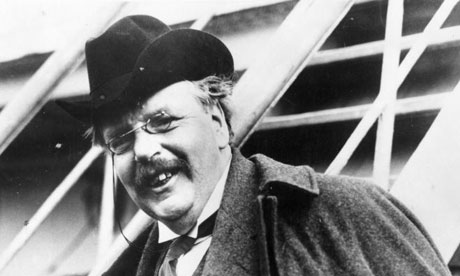
Chesterton (1874-1936) is hard to sum up, but here's Ahlquist's attempt: Who Is This Guy and Why Haven't I Heard of Him?. Ahlquist answers the latter half of that question:
Modern thinkers and commentators and critics have found it much more convenient to ignore Chesterton rather than to engage him in an argument, because to argue with Chesterton is to lose.Chesterton argued eloquently against all the trends that eventually took over the 20th century: materialism, scientific determinism, moral relativism, and spineless agnosticism. He also argued against both socialism and capitalism and showed why they have both been the enemies of freedom and justice in modern society.
And what did he argue for? What was it he defended? He defended "the common man" and common sense. He defended the poor. He defended the family. He defended beauty. And he defended Christianity and the Catholic Faith. These don't play well in the classroom, in the media, or in the public arena. And that is probably why he is neglected. The modern world prefers writers who are snobs, who have exotic and bizarre ideas, who glorify decadence, who scoff at Christianity, who deny the dignity of the poor, and who think freedom means no responsibility.
MORE:
Dawn Eden met Dale Ahlquist in 2004 and found him to be "a living epistle" of Chesterton:
The quality of Chesterton that is most noted by his fans, beyond his gift for insightful analysis and his counterarguments against heresies such as relativism, is his sense of wonder at the world. Over and over, in Orthodoxy, The Man Who Was Thursday, and, really, every other work of his that I can think of, he outlined the necessity of having a permanent sense of awe and gratitude for God's creation. I sensed that wonder in Dale, as well as an effervescent desire to carry out another one of Chesterton's dictums: that we should be happy.
(You'll have to visit the Wayback Machine to see the twin priests she mentions.)
QUOTATIONS by G. K. Chesterton, from the American Chesterton Society:
"The act of defending any of the cardinal virtues has today all the exhilaration of a vice." - A Defense of Humilities, The Defendant, 1901
"A dead thing can go with the stream, but only a living thing can go against it." - The Everlasting Man, 1925
"Progress is a comparative of which we have not settled the superlative." - Chapter 2, Heretics, 1905
"Progress should mean that we are always changing the world to fit the vision, instead we are always changing the vision." - Orthodoxy, 1908
"My attitude toward progress has passed from antagonism to boredom. I have long ceased to argue with people who prefer Thursday to Wednesday because it is Thursday." - New York Times Magazine, 2/11/23
"I still hold. . .that the suburbs ought to be either glorified by romance and religion or else destroyed by fire from heaven, or even by firebrands from the earth." - The Coloured Lands
"The true soldier fights not because he hates what is in front of him, but because he loves what is behind him." - ILN, 1/14/11
"Once abolish the God, and the government becomes the God." - Christendom in Dublin, 1933
"The Declaration of Independence dogmatically bases all rights on the fact that God created all men equal; and it is right; for if they were not created equal, they were certainly evolved unequal. There is no basis for democracy except in a dogma about the divine origin of man." - Chapter 19, What I Saw In America, 1922
"If you attempt an actual argument with a modern paper of opposite politics, you will have no answer except slanging or silence." - Chapter 3, What's Wrong With The World, 1910
"For fear of the newspapers politicians are dull, and at last they are too dull even for the newspapers." - All Things Considered, 1908
"If there were no God, there would be no atheists." - Where All Roads Lead, 1922
"There are those who hate Christianity and call their hatred an all-embracing love for all religions." - ILN, 1/13/06
"The Christian ideal has not been tried and found wanting; it has been found difficult and left untried." - Chapter 5, What's Wrong With The World, 1910
"These are the days when the Christian is expected to praise every creed except his own." - ILN 8-11-28
"Art, like morality, consists of drawing the line somewhere." - ILN, 5/5/28
"The whole structural system of the suburban civilization is based on the case for having bathrooms and the case against having babies." -G.K.'s Weekly, 7-6-29
"Progress is Providence without God. That is, it is a theory that everything has always perpetually gone right by accident. It is a sort of atheistic optimism, based on an everlasting coincidence far more miraculous than a miracle." - Wells and the World State, What I Saw in America
LINKS:
G. K. Chesterton's Works on the Web
G. K. Chesterton quotations
A Chesterton reading plan
One can argue about whether the death of marriage leads to big government or vice versa, but simply raising the topic shouldn't put one beyond the pale, should it?
OCPA has raised that question, and they're giving high school seniors a chance to do some deep thinking about a hot issue and maybe earn a college scholarship at the same time.
The Oklahoma Council of Public Affairs will award $12,000 to five high school seniors in this year's essay contest. We asked students to answer the following question:
What impact, if any, does the structure of civil society, including family structure, have on the growth of government and vice versa?
The deadline is this Monday, April 1, 2013. For contest rules and an entry form visit http://ocpathink.org/2013-essay-contest.
Some food for thought, along these lines:
There are those fiscal conservatives who believe that defending the traditional view of marriage and family, held nearly worldwide for millenia, is a losing cause, and so they advocate surrendering, so that the conservative movement can put all of its resources into the battle over the size and scope of government, which they presume to be more winnable.
In 2010, Indiana Governor Mitch Daniels, a pro-life Christian and founder of an inner city classical Christian school, told the Weekly Standard:
that the next president, whoever he is, "would have to call a truce on the so-called social issues. We're going to just have to agree to get along for a little while," until the economic issues are resolved.
In September 2010, Mike Pence (then a congressman, now Governor of Indiana) responded to that perspective:
To those who say that marriage is not relevant to our budget crisis, I say, you would not be able to print enough money in a thousand years to pay for the government you would need if the traditional family continues to collapse.
Phyllis Schlafly calls the divide between fiscal and social issues "phony":
Contrary to politicians who want to call a truce about social issues, there is absolutely no way to separate social and fiscal issues; they are locked in a tight political embrace....That's because the social issue of marriage, and its importance to our society, has become a tremendous fiscal issue. The problem of marriage absence is now costing the taxpayers even more than national defense....
It is obvious that when the mother of these children has no husband to support her and her babies, she calls on Big Brother Government. You and I then pay the bills for what is labeled welfare. It's not poverty that causes broken families; it's the absence of marriage that causes poverty and puts kids below the designated poverty line. Social issues cause fiscal expenses.
Columnist Mark Steyn speaking at Hillsdale College in March 2012:
Anytime I went into an ABC show all the people said, "How can Rick Santorum be a credible presidential candidate? He's so weird." Then I actually asked what's weird about him. He's weird because he believes marriage is between a man and a woman. He's weird because the family is the basic building block of society. In fact, it was non-weird for almost all of human history. What's interesting to me is not Santorum's weirdness, but the fact that so much of what he says is now presumed to be weird. I think he's right on the basic issue, which is that the crisis America faces is not primarily an accounting problem or a bookkeeping problem. We're broke for a reason. This country is the most broke nation in history because it is not the republic of limited government and self-reliant citizenry De Tocqueville observed two centuries ago. So he's right in the extent that the [financial] brokenness is a symptom of the problem not the problem and in that sense I don't find Santorum half as weird as 90 percent of his critics.
Oklahoma State Sen. Rick Brinkley is also a pastor as well as the head of the local chapter of the Better Business Bureau. His pastor's heart shines forth in frequent thought-provoking posts on his Facebook account. He was kind enough to allow me to share a post from March 14, 2013, pondering the legislature's deadlines -- and life's deadlines. With the recent passing of my accomplished mother-in-law, I found it particularly resonant.
I'm exhausted. Today was the final deadline for Senate Bills to be passed off the floor & sent to the House.
Unlike the Federal Government, the Oklahoma Legislature is required to work on a strict schedule. Every three weeks is a deadline week. Any Bill not making the deadline is dead. This ensures that things get done. No one can sit idly by while the deadlines pass. It also forces individual legislators to make tough decisions regarding their own Bills. Sometimes you have to let bills which aren't that important to you go in order to get other bills through the process by the deadline. The entire session must be over by the last Friday of May....that day is called "Sine Die"....which means "Without assigning a day for future meeting"....anything not completed by that day is dead. There's also the rule that each "legislature" is actually two years. The rules state that if a bill is killed in committee or on the floor, it cannot be brought up again until the next legislature, which this year means it could not be brought up again until 2015. If a legislator feels his/her Bill may fail when voted upon, he/she will hold the bill until the next year in order to work on it to get the votes to pass it. It causes you to look at the bigger picture of taking risks on a bill that is important to you. I, personally, think these deadlines are great.
Without deadlines, there is rarely a sense of urgency to get things done. I hope I lead my life the same way.
If you do not realize that there is a deadline on your life, you may sit idly by and watch your life unfold before you without even participating in it.
Just like Oklahoma's legislative rules:
*Sometimes you have to prioritize what is important & let things go that keep the really important things from being accomplished.
*Other times you have to place a hold on really important things to make sure you get them right. You never want the important things to fail because you didn't take the time to execute them properly.
*At some point your "Sine Die" will arrive. There will not be another day assigned to you. Everything you have not accomplished will die with you, unless you plant those dreams in the next generation to accomplish in your stead.
Every day you are living, you are one day closer to dying. Let me say that again, at the end of today you will be one day closer to dying. Have you met your deadlines & made the important things the important things?
Your life is also run by a deadline. Make sure you get everything accomplished that you can. But, realize the important things aren't things, they're the people in your life. Your deadline is 24 hours closer to arriving. Get stuff done, but celebrate life with those you love along the way.
RELATED: In March 2011, I wrote about life's intermediate deadlines and the value of having a bucket list for each distinct season of life, with a particular focus on a bucket list for traveling as a family.
(NOTE: As a student of Latin, I was surprised to hear "sine die" pronounced for the first time by a legislator. In school it would be pronounced "SIH-neh DEE-eh," but in the legislature they pronounce it "SIGH-knee DIE.")
 Former U. S. Surgeon General C. Everett Koop died Monday at the age of 96. Many of the headlines about his death have focused on his time as a member of President Reagan's cabinet and his breaks with conservative allies on government policies regarding tobacco and AIDS.
Evangelicals of a certain age will remember their first encounter with Koop, in the 1979 film series Whatever Happened to the Human Race?. Koop, then a leading pediatric surgeon, appeared in the series with Christian philosopher Francis Schaeffer reviewing threats to the sanctity of human life -- abortion, infanticide, and euthanasia -- and calling their fellow Christians to take action to resist these threats.
David Bayly, who knew Koop personally, writes:
The Roman Catholic pro-life movement had its legion of stalwarts in the seventies and early eighties: Joe Scheidler, Mother Theresa, Father Paul Quay, Archbishop O'Connor; the list is impressive. And Evangelicalism? Who were her pro-life leaders? There literally weren't any, at least initially. But then God brought Everett Koop and Francis Schaeffer together and the battle was joined from the Protestant side. It's not an exaggeration to say that Dr. Koop and Francis Schaeffer were the twin fathers of the modern Evangelical pro-life movement.So we praise God for the life and witness of Dr. Koop. He was there when almost no one else was. Some in the Christian Medical Society may lionize Dr. Koop at his death, but they will perhaps have forgotten Dr. Koop's disgusted resignation from an organization he helped found for its refusal to take an officially pro-life position--a stance he maintained even after Tim's and my father assumed its presidency for a few years in the early 80s. Despite their friendship, Dr. Koop refused Dad's request that he rejoin. Even after passage of a clear and forceful pro-life stance, he initially refused to rejoin an organization that, as he saw it, had been cowardly on the central moral issue of the day.
Read the whole thing. Bayly tells of Koop's correction and encouragement to him as an amateur boy scientist, an anecdote that highlights Koop's devotion to science.
Before he became a public figure, Koop was a pioneering pediatric and neonatal surgeon. From the Philadelphia Inquirer's obituary:
After interning at Pennsylvania Hospital, Dr. Koop joined Children's in 1948, the staff's first pediatric surgeon. For a time, he was the hospital's entire surgery department. When he retired at 66, he presided over 26 full-time surgeons in eight specialties.Dr. Koop was a pioneer in surgery on newborns, developing techniques for birth defects that, before him, had meant certain death.
The parents of ailing children saw him as heroic. He achieved national prominence in 1974, when he headed a team of 20 surgeons that separated conjoined twin girls who had been born in the Dominican Republic....
To save a life, he did not always follow the rules. In a 1968 interview in Philadelphia Magazine, he told how, on an icy night in 1953, he had received a call from Pennsylvania Hospital about a newborn who had been delivered with abdominal organs in the chest.
Within minutes, Dr. Koop drove to the hospital, parked his car on the sidewalk, and raced to the delivery room. He wrapped the baby in a blanket, placed it on the floor of the car near the heater, and drove back to Children's.
He took no X-rays. He carried the baby to the operating room, opened the chest, put the organs in their proper place, repaired a hole in the diaphragm, and closed it back up.
He had broken all the rules, he said, and would not have followed that procedure at the time of the interview. "On the other hand," he said, "we had a living baby."
He rejected abortion and abhorred amniocentesis, a test to see if a fetus has genetic defects. He labeled it "a search-and-destroy mission." Most women who have amniocentesis did not keep their babies if a defect was found, he noted. "Many of the congenital defects are things that I have spent my entire life correcting," he said.
MORE:
Whatever Happened to the Human Race, as a YouTube playlist:
C. Everett Koop papers at the National Institutes of Health
The C. Everett Koop Institute at Dartmouth
P. S.: The Inquirer obit mentions that the Senate held up his nomination for 10 months. I suspect (can't find the details) that Senate Democrats were responsible for that hold. He wasn't the only Republican appointee to be blocked by Democrats, and present-day Senate Republicans should remember that even as a minority party they have leverage and ought to use it for the good of the country.
From the official C. S. Lewis Facebook page:
What Satan put into the heads of our remote ancestors was the idea that they could 'be like gods'--could set up on their own as if they had created themselves...invent some sort of happiness for themselves outside God, apart from God. And out of that hopeless attempt has come nearly all that we call human history--money, poverty, ambition, war, prostitution, classes, empires, slavery--the long terrible story of man trying to find something other than God which will make him happy.
-- Mere Christianity
I'm in Scottsdale, Arizona, where I've been at a blogger retreat held by the Franklin Center for Government and Public Integrity, an organization that is working to bolster news coverage of state and local government, an area of journalism that has been declining in parallel with shrinking mainstream press budgets. The Franklin Center has Watchdog State Capitol reporters in about 20 states, including Pat McGuigan in Oklahoma City. The weekend was informative, filled with ideas for improving the way we cover stories and communicate with our readers. It was also encouraging to be around bloggers from all over the country who face the same sorts of challenges and opportunities. We "get" each other. Most of the event was in a conference room, but we had time for fun, too, including a jeep tour of a desert wilderness area.
To come across that C. S. Lewis quote as the retreat ends is a bracing reminder that, for all that we do to serve our communities through blogging, the ultimate problem behind all the world's miseries is not one that we can solve with reporting or persuasion. Our work as watchdog bloggers can ameliorate the results of mankind's rebellion against God as that rebellion manifests itself in government corruption, oppression, and self-dealing. To blog about government is a way in which those of us gifted to dig and research and write can love our neighbors, but it doesn't solve the root problem that Lewis describes.
I must not lose sight of the real struggle in human history and in my own heart, and I must not neglect the means -- the Word, the sacraments, prayer, and fellowship -- that God has appointed to strengthen and transform my mind and heart. I also must not neglect to spur myself, my wife and children, my family and friends to sanctify Christ as Lord in our hearts, to be outposts of His kingdom in a fallen world.
 Dr. Benjamin S. Carson, Director of Pediatric Neurosurgery at Johns Hopkins Hospital, was the featured speaker at this morning's National Prayer Breakfast, and he delivered a powerful, inspiring, and wide-ranging 25-minute message which touched on the self-discipline and education necessary for self-government, the urgent need to avoid the moral decay and fiscal irresponsibility that led to the fall of ancient Rome, the dangers of political correctness, and the need to give as much honor to academic achievement as we do to athletic achievement.
Regarding that last point, Carson spoke of his Carson Scholars Fund, which is designed to treat academic high achievers as the stars that they are, with trophies and recognition and college scholarships. The fund also sponsors reading rooms in elementary schools, where children have access to a wide range of books to help them develop their reading skills in a welcoming environment.
Carson spoke about how reading transformed his own life. He and his brother would not apply themselves to their school work, but his mother prayed that God would give her wisdom to help her sons learn. She then restricted their TV viewing to a minimal amount and required them to read two books each week from the library and to write a book report about each. She dealt with complaints from her sons and resistance from other mothers, who told her that keeping her boys inside and reading would make them hate her, but she stuck to her plan. Eventually, he came to love reading, and his reading taught him that he could control his own destiny, and that the poverty he hated need be only temporary.
In the course of the speech, Carson compared Alexis de Tocqueville's account of education and literacy in 19th century America to the state of education today; he cited the Biblical tithe, with its standard percentage for all, as a model of the fairest and simplest approach to taxation; and he commended individual Health Savings Accounts as a means to provide access to care for all while controlling costs and encouraging people to take responsibility for their own health. Carson suggested that the government could fund HSAs for those who cannot afford to fund their own.
Carson presented all of his thoughts as mere common sense informed by history, without wading into the usual terminology of ideological or partisan debate.
Hat tip to fellow blogger Nice Deb, who has video of Dr. Ben Carson's speech and links to reporting and commentary on the speech.
Photo of Dr. Ben Carson courtesy carsonscholars.org.
UPDATE: Don't bother with the Sacra Pagina exhibit at ORU, especially if you have young children. The line to see the first exhibit case stretched halfway around the room. After waiting for over 30 minutes with two kids bored and tired of standing in line, we were finally up to the front of the line for he first case, when a group of people old enough to know better cut in front of us. When I politely pointed out where the line began, one of the group said, "Sir, there is no line." While it was true that no official was enforcing a line, and you could opt to elbow your way in or peer over someone's shoulders to see any of the exhibit cases arranged in a circle around the room, nearly everyone was proceeding counterclockwise around the room starting at that first exhibit case; and there was a long line waiting to see it. With two kids under five feet tall, peering over shoulders or squeezing our way in was not going to be an option. We gave up and went home.
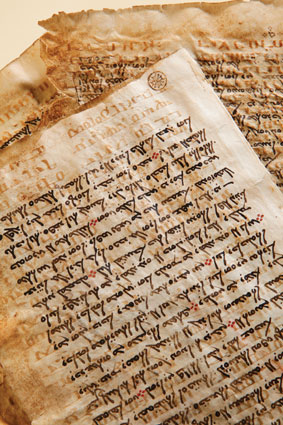 For the next few days, through Saturday, February 2, 2013, Oral Roberts University (ORU) is hosting an exhibit of 50 rare items from The Green Collection, the world's largest private collection of Biblical manuscripts and artifacts.
The exhibit is called Sacra Pagina, Latin for "the sacred page." Admission is free. The exhibit is in the Mabee Center, 8023 S. Lewis Ave. in Tulsa, in the Conference Banquet Center at the South Lobby. Exhibit hours are 10 a.m. to 8 p.m., through Saturday, February 2, 2013.
Some of the items on display:
- A leaf from the Codex Climaci Rescriptus, which contains some of the earliest and most extensive copies of the New Testament in the dialect closest to Jesus' household language of Palestinian Aramaic. (Shown in the photo to the right. Photo courtesy of The Green Collection.)
- A leaf from the Aitken Bible, the first-known English Bible to be printed in America and the only Bible ever to receive official Congressional approval.
- A leaf from the first printing of the Gutenberg Bible.
- Manuscripts from the 13th through the 15th centuries.
As you might have guessed, the Green in The Green Collection is the family that owns Hobby Lobby and which has led the revitalization of ORU. The Green Scholars Initiative is giving researchers at over 30 universities in the US and Europe (including ORU, Oklahoma City University, and the University of Oklahoma) access to ancient manuscripts for study. That research is to be conducted by teams led by a senior scholar working with and mentoring undergraduate and graduate students.
Notes hither and thither:
If you're a fan of beautiful cartoon art, you should make at least a weekly visit to Whirled of Kelly, which features the art work of Walt Kelly, most famous for the comic strip Pogo. Blogger Thomas Haller Buchanan has been running a series of Sunday strips from 1952, scanned in color from the newspaper. The sequence involves Albert telling a fractured fairy tale called Handle and Gristle. The January 2013 archive also includes scans of Story Book Records from 1946: The discs were illustrated by Walt Kelly, and he's the reader on the recordings.
Nice Deb's Sunday tradition is a hymn, and this week it's a metrical setting of Psalm 23: The King of Love My Shepherd Is.
Maggie's Notebook has a bizarre story: The State of Delaware is stripping its county sheriff's departments (all three of them) of the power to make arrests and enforce the law. This despite a constitutional provision that says that "the Sheriffs shall be conservators of the peace within the counties respectively in which they reside." Only one of the three sheriffs, from Sussex County, is objecting to the change.
Route 66 News reports on a new Route 66 Dining and Lodging Guide, handy for finding comfortable, historic, and locally owned along Route 66. (I love Jack Rittenhouse's guidebook, but it's old enough to collect Social Security, and Michael Wallis's book is old enough to drink.)
It's easy for Christians to get tangled up in everyday life or politics and to lose sight (or never gain sight) of what God is doing around the world to redeem a people for Himself "from every tribe, tongue, and nation," much less what we could be doing to participate in His redemptive work.
At 200 sites across the nation this winter and spring, including nine sites in Oklahoma you have a golden opportunity to correct that deficiency. It's a 15-week collegiate-level course called Perspectives on the World Christian Movement. Weekly classes begin this week in the Tulsa area, and you can sample the first night of the course for free. The course is offered by the U. S. Center for World Mission, an organization focused on mobilizing effective action to reach those cultures which are yet unreached with the Gospel.
The course begins with Biblical perspective, and God's purposes in reaching every nation as revealed from Genesis to Revelation. Historical perspective covers the spread of Christianity in the early centuries and the tremendous push over the last two centuries to fulfill the Great Commission. The final six sessions deal with culture and strategy for reaching every ethnos -- every distinct culture -- in our time with the Good News of salvation in Jesus Christ.
As this preview video hints, the Perspectives course will change the way you think about world missions and can turn your life upside down.
The course can be taken for college credit through Trinity International University, for a certificate (you complete weekly homework and a semester project and receive course feedback from an instructor), or, if you don't have time for all the work, the key readings level allows you to see the lectures but do less reading and homework. Course cost is $500 for college credit, $275 for certificate or key readings levels.
There is a Perspectives course in the Tulsa area for nearly every night of the week:
Mondays: Garnett Church of Christ, begins January 7, 2013 (tonight!)
Tuesdays: Arrow Heights Baptist Church, Broken Arrow, begins January 8, 2013
Wednesdays: Baptist Collegiate Ministries Building, University of Tulsa, begins January 9, 2013
Thursdays: Tulsa Bible Church, begins January 10, 2013.
The course will also be offered starting next week in Bartlesville, Norman, Edmond, Stillwater, and Yukon.
Those of you who tune into BatesLine for political commentary likely won't care about this, but it's my blog, so I can indulge myself with notes about a topic of discussion around our lunch table today -- the topic being the history and origins of infant baptism (aka paedobaptism, household baptism, covenant baptism) as it is practiced in our church and why my wife and I disagree with it.
My wife and I grew up in churches affiliated with the Southern Baptist Convention. (Her childhood church was a rare congregation also affiliated with the American Baptist Convention.) In 1990, we started attending at a congregation of the Presbyterian Church in America, the Bible-believing offshoot of the mainline Presbyterian Church. The church's strengths in missions, music, and adult Christian ed, and their offer (at that time) of seminary extension classes were all appealing to us, so we joined and got involved.
We came when the senior pastor of the time didn't place a great deal of emphasis on the doctrine; a few of the elders and deacons were not paedobaptists. A few years after we joined, all that changed under a new pastor from a more traditionally Presbyterian background, and those officials who dissented from paedobaptism were removed from their responsibilities (although many of them remained involved in the church in other ways). We love our church, but we have that one difference of opinion: βαπτίζω means "immerse" and only a follower of Jesus is a proper subject of baptism.
In my 22 years at this church, I've been confronted with all the arguments in favor of paedobaptism. The arguments have always seemed to me to have massive gaps and internal contradictions. For example, if 1 Corinthians 7:14 justifies baptizing the children of believers, it also justifies baptizing unbelieving spouses of Christians.
A resource I found especially helpful was a series of tapes on the doctrine of baptism by Greg Nichols, then an elder at Trinity Baptist Church in Montville, N. J. Trinity is a Calvinistic Baptist church, agreeing with Calvinistic Presbyterians on most topics other than infant baptism and church governance. Nichols led an adult Sunday School class through a 32-week series covering every imaginable aspect of baptism with a special focus on the arguments made by Reformed (Calvinist) paedobaptists. I still have the tapes, but I just recently discovered that the audio has been converted to MP3, and the entire series is online.
Click here for a detailed outline of "Infant Baptism: Is It Biblical?" by Greg Nichols. Here's another link with just the titles of each talk and a link to the audio.
More recently, Pastor Nichols has written a book on covenant theology, partly to refute the notion that rejecting paedobaptism means rejecting the unity of God's redemptive plan. (A sample of the book may be found here.)
RELATED: If you'd prefer a shorter, written treatment of this issue, see Fred Malone's personal account of his journey away from paedobaptism to disciple-only baptism, "A String of Pearls Unstrung." Malone's rethinking of the issue cost him his job as a Presbyterian minister. It began with his reading of Exodus 12, and wondering why, if children of believers are to be added to the covenant community by baptism, they should be excluded from the covenant meal, and then noticing the inconsistent hermeneutic applied by Reformed paedobaptists to baptism and communion. (Malone has also published a book on the subject: The Baptism of Disciples Alone: A Covenantal Argument for Credobaptism Versus Paedobaptism - Revised and Expanded.
And in the Winter 2012 issue of the Founders Journal, Robert R. Gonzales, Jr., observes that John 1:12-13 bolsters the case for baptizing only those who make a credible profession of faith in Christ.
MORE: At a much more basic level, here is a pamphlet, "The Truth about Baptism," by I. M. Haldeman, pastor of the First Baptist Church of New York City from 1884 to 1933. The pamphlet explains what baptism is, what it means, and why Christians are obligated to be baptized.
UPDATE: I'm informed that Greg Nichols's title at Trinity Baptist Church was "elder," and I have corrected the text above accordingly. My use of the term "associate pastor" was based on my understanding of his role -- a preacher and teacher, but not the principal preacher and teacher.
The six-year-old was learning about Belshazzar, the king of Babylon, in Sunday School, so I gave him some supplemental educational material: A straightforward retelling of the story from the Book of Daniel by Johnny Cash, accompanied by the Carter Family and the Statler Brothers. At the beginning of the video, Cash mentions that this was the first song he sang for Sam Phillips when he came to Sun Records to try out for a chance to record.
Life has been busy. There's a lot to write about -- last week's Oklahoma State Supreme Court decisions; Mayor Junior's desire to rebrand Tulsa -- not much time to write.
 Author Eric Metaxas, who has written biographies of two men whose fervent Christian faith impelled them to act decisively and sacrificially in the realm of politics -- William Wilberforce of England and Dietrich Bonhoeffer of Germany -- calls Christians in America to fast and pray for the 40 days leading up to our general election. That means starting this Thursday, September 27, 2012 (links added):
We often worry and/or complain about what's happening in our nation, but can we doubt that God wants us to pray about it in a concerted way? Can there be a time more conducive to focusing our attentions than the 40 days before this extremely important election? Exactly how we do this is up to each of us -- perhaps you could fast one day per week, or gather with friends to pray once per week -- but won't you join me in this, believing and knowing that God longs for His people to take their concerns to Him -- to be anxious "for nothing" and to pray boldly and with faith and trust Him with the results? So many people wonder: "What can I do?" We can do this. If the church has forgotten that God answers prayers, there really is no hope. Jesus said: "Ask and it will be given unto you." So won't you join me in asking? And please tell your pastors and friends about this. God bless you. And may God bless America for His purposes -- so that we can be a blessing to the rest of the world.
If you plan to be part of a concerted season of prayer and fasting leading up to the election, let us know about it in the comments below or send me an email.
We're in the midst of the High Holy Days, the period between Rosh Hashanah (the Jewish New Year) and Yom Kippur (the Day of Atonement), and I just came across an apropos video excerpt of a talk by Leonard Nimoy, the actor famous for his role as First Officer Spock in Star Trek, the original series.
In this clip, Nimoy responds to the question, "Is there Judaism in Star Trek?" He begins by listing Jewish values -- education, social justice, compassion for those in need, the dignity of the individual -- that are found in Star Trek. He talks of his childhood as a Jew in overwhelmingly Catholic Boston and how it informed his role as an alienated character, "the other, the outsider," not fully at home among either humans or Vulcans.
His Judaism not only made him feel at home in the series and in the role, but it was the well from which he drew the Vulcan greeting gesture. In the clip, he talks about the impression made on him as a child by the drama of the Priestly Blessing chanted by the kohanim (men of the congregation directly descended from Aaron) on the bimah (platform) of the synagogue:
(Nimoy grew up in the West End of Boston, then an Eastern European Jewish neighborhood, cleared in the 1950s by "urban renewal" for high rises.)
MORE: What I was looking for when I found the above video: From the July 28, 1967, episode of Malibu U, Leonard Nimoy sings "The Ballad of Bilbo Baggins":
Richard Wurmbrand, who was tortured and imprisoned for preaching the Gospel in Romania, was the founder of Voice of the Martyrs, the Bartlesville-based organization that seeks to call the attention of Christians in the west to our persecuted brothers and sisters around the world.
Thirteen of Wurmbrand's books, including Tortured for Christ and his prison memoir In God's Underground, are currently available in Kindle e-book format for $1 each.
Way back in 2003, when this blog was in its infancy, I wrote about a weekend visit to Fayetteville, Arkansas, for a reunion of alumni of the New Creations, University Baptist Church in Fayetteville's collegiate choir. My wife sang with the group throughout her time at the University of Arkansas. During the reunion, long-time director Tanner Riley led a massed choir of alumni in several oft-performed songs.
I needed to hear one of those songs again today; perhaps, at the end of a hard week, you do, too. It's by John Purifoy, and it's a setting of Jesus' words in Matthew 11:28-30. Here's the New Creations from their 1984 spring concert. The second clip has a few words of invitation from Pastor J. D. McCarty followed by a reprise of the song.
Come to Me All Who Labor (MP3)
Come to Me All Who Labor (reprise) with remarks by J. D. McCarty (MP3)
MORE: From Pilgrim's Progress
Now I saw in my dream, that the highway up which CHRISTIAN was to go was fenced on either side with a wall; and that wall was called "Salvation"."In that day shall this song be sung in the land of Judah; We have a strong city; salvation will God appoint for walls and bulwarks." Isaiah 26:1
Up this way, therefore, did burdened CHRISTIAN run; but not without great difficulty, because of the load on his back.
He ran thus till he came at a place somewhat ascending; and upon that place stood a Cross, and a little below, in the bottom, a sepulchre. So I saw in my dream, that just as CHRISTIAN came up to the cross, his burden loosed from off his shoulders, and fell from off his back, and began to tumble; and so continued to do till it came to the mouth of the sepulchre, where it fell in, and I saw it no more.
Then was CHRISTIAN glad and lightsome, and said, with a merry heart,
"He hath given me rest by his sorrow,
And life by his death."Then he stood still awhile to look and wonder; for it was very surprising to him, that the sight of the cross should thus ease him of his burden. He looked therefore, and looked again, even till the springs that were in his head sent the waters down his cheeks.
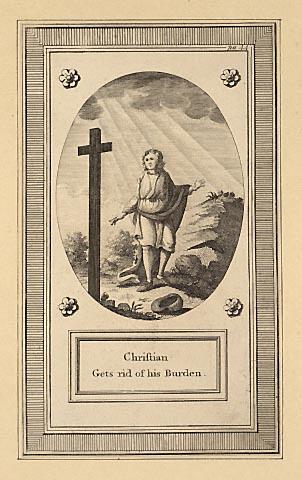
When the Dean of the School of Theology at Southern Baptist Theological Seminary and a secular philosopher hit the same theme in the same week, it's worth paying attention:
First, Dean Russell Moore, writing for Desiring God Blog -- Fake Love, Fake War: Why So Many Men Are Addicted to Internet Porn and Video Games:
You know the guy I'm talking about. He spends hours into the night playing video games and surfing for pornography. He fears he's a loser. And he has no idea just how much of a loser he is. For some time now, studies have shown us that porn and gaming can become compulsive and addicting. What we too often don't recognize, though, is why.In a new book, The Demise of Guys: Why Boys Are Struggling and What We Can Do About It, psychologists Philip Zimbardo and Nikita Duncan say we may lose an entire generation of men to pornography and video gaming addictions. Their concern isn't about morality, but instead about the nature of these addictions in reshaping the patten of desires necessary for community....
But the compulsive form of gaming shares a key element with porn: both are meant to simulate something, something for which men long.
Pornography promises orgasm without intimacy. Video warfare promises adrenaline without danger. The arousal that makes these so attractive is ultimately spiritual to the core.
Satan isn't a creator but a plagiarist. His power is parasitic, latching on to good impulses and directing them toward his own purpose. God intends a man to feel the wildness of sexuality in the self-giving union with his wife. And a man is meant to, when necessary, fight for his family, his people, for the weak and vulnerable who are being oppressed.
The drive to the ecstasy of just love and to the valor of just war are gospel matters. The sexual union pictures the cosmic mystery of the union of Christ and his church. The call to fight is grounded in a God who protects his people, a Shepherd Christ who grabs his sheep from the jaws of the wolves....
Moreover, these addictions foster the seemingly opposite vices of passivity and hyper-aggression. The porn addict becomes a lecherous loser, with one-flesh union supplanted by masturbatory isolation. The video game addict becomes a pugilistic coward, with other-protecting courage supplanted by aggression with no chance of losing one's life. In both cases, one seeks the sensation of being a real lover or a real fighter, but venting one's reproductive or adrenal glands over pixilated images, not flesh and blood for which one is responsible.
Zimbardo and Duncan are right, this is a generation mired in fake love and fake war, and that is dangerous. A man who learns to be a lover through porn will simultaneously love everyone and no one. A man obsessed with violent gaming can learn to fight everyone and no one.
The answer to both addictions is to fight arousal with arousal. Set forth the gospel vision of a Christ who loves his bride and who fights to save her. And then let's train our young men to follow Christ by learning to love a real woman, sometimes by fighting his own desires and the spirit beings who would eat him up. Let's teach our men to make love, and to make war . . . for real.
About all that I'd add is that the drive to fight doesn't necessarily mean war, although we may have occasion to take up arms to defend our loved ones, our country, and our civilization against those who would destroy them. There are countless opportunities to stand up for truth and justice. There are billions of people who have never heard the gospel, and many of them live in lands where proclaiming the gospel could cost you your liberty or even your life. You may have a revolutionary idea that would make lives better or even save lives, but to pursue it requires you to leave a comfortable and safe job. The world cries out for true servant-leaders, good shepherds who will, in imitation of Christ the Good Shepherd, put their own reputations, comforts, and lives on the line for the sake of others.
Indulging in porn and video combat dissipates our innate drive to woo, to excel, to achieve, to compete, to win, to innovate. When our restlessness should push us forward to take risks, these impostors pacify us into complacency and invite us to settle for mediocrity.
This brings to mind the old hymn, "Rise Up O Men of God":
Rise up, O men of God!
Have done with lesser things.
Give heart and mind and soul and strength
To serve the King of kings.
Rise up, O men of God!
The kingdom tarries long.
Bring in the day of brotherhood
And end the night of wrong.
Rise up, O men of God!
The church for you doth wait,
Her strength unequal to her task;
Rise up and make her great!
Lift high the cross of Christ!
Tread where His feet have trod.
As brothers of the Son of Man,
Rise up, O men of God!
(I've always loved Phil Keaggy's setting of these words.)
Next, here's perpetually interesting philosopher Alain de Botton responding to questions about his new book on sex in a chat with Grauniad readers. (Emphasis added.)
It is perhaps only people who haven't felt the full power of sex over their logical selves who can remain uncensorious and liberally 'modern' on the subject. Philosophies of sexual liberation appeal mostly to people who don't have anything too destructive or weird that that they wish to do once they have been liberated.However, anyone who has experienced the power of sex in general and internet pornography in particular to reroute our priorities is unlikely to be so sanguine about liberty. Pornography, like alcohol and drugs, weakens our ability to endure the kinds of suffering that are necessary for us to direct our lives properly. In particular, it reduces our capacity to tolerate those two ambiguous goods, anxiety and boredom. Our anxious moods are genuine but confused signals that something is amiss, and so they need to be listened to and patiently interpreted - which is unlikely to happen when we have to hand one of the most powerful tools of distraction ever invented. The entire internet is in a sense pornographic, it is a deliverer of constant excitement which we have no innate capacity to resist, a system which leads us down paths many of which have nothing to do with our real needs. Furthermore, pornography weakens our tolerance for the kind of boredom which is vital to give our minds the space in which good ideas can emerge, the sort of creative boredom we experience in a bath or on a long train journey. It is at moments when we feel an irresistible desire to escape from ourselves that we can be sure that there is something important we need to bring to consciousness - and yet it is precisely at such pregnant moments that internet pornography has a habit of exerting its maddening pull, thereby helping us to destroy our future.
de Botton is right to broaden his view of the problem beyond internet porn to the internet itself. Even as I've been putting this post together, every time I get stuck on a word or unsure about the next sentence, I've had to fight the urge to open another tab and see what's new on Twitter or Facebook or Homestar Runner or Ace or email.
Internet porn and first-person shooters aren't the first distractions in history capable of sapping a man's will to fight and strive and achieve. TV does a pretty good job of it, although eventually you run out of channels. (You never run out of Internet.) Porn has been around for a long time, too, doing its deadening work in the form of paper and celluloid and magnetic tape, but never before has it been as readily and anonymously accessible. It's always been possible to dampen down restlessness, boredom, and anxiety with the help of alcohol or narcotics. Many a man has dissipated his initiative in sports fanaticism, obsessive collecting, and compulsive hobbies. Some (but not all) of these things can be enjoyed in moderation as a needed respite from the battle; all have the potential to become a substitute for the battles we are called to fight but prefer to avoid.
When I feel the nagging sense that I could be doing more with the opportunities and abilities God has given me, when the cavernous gap between my potential and my accomplishments screams at me, I need to resist the temptation to reach for the nearest distraction, and instead thank God that I can still feel restlessness and ask Him for the wisdom to know where best to channel it, for His Kingdom's sake.
Young men -- who play video games and use porn the most -- are being digitally rewired in a totally new way that demands constant stimulation. And those delicate, developing brains are being catered to by video games and porn-on-demand, with a click of the mouse, in endless variety.Such new brains are also totally out of sync in traditional school classes, which are analog, static and interactively passive. Academics are based on applying past lessons to future problems, on planning, on delaying gratifications, on work coming before play and on long-term goal-setting.
Guys are also totally out of sync in romantic relationships, which tend to build gradually and subtly, and require interaction, sharing, developing trust and suppression of lust at least until "the time is right."
And here is Zimbardo's talk at TED on The Demise of Guys.
Brian Ervin, former reporter (and a darned good one) for Urban Tulsa Weekly, has started a blog called TheThirdHelix.com, and his first entry asks some tough questions of his fellow Christians about Christmas:
Jesus said, "Anyone who loves their father or mother more than Me is not worthy of Me; anyone who loves their son or daughter more than Me is not worthy of Me. Whoever does not take up their cross and follow Me is not worthy of Me. Whoever finds their life will lose it, and whoever loses their life for My sake will find it."So when we say "Christmas is all about family" as an alternative to the commercialism that typifies the season, does that really honor Him? Howler monkeys and hyenas and wolves have "family values" all on their own, quite apart from any Christian influence.
When we celebrate this mish-mash of customs and obligations we call "Christmas," do we really do it to worship Him? Or is it just that these are a part of our cultural security blanket, and we do it out of childhood nostalgia or a sense of obligation to the people who inculcated those customs?
Julie R. Neidlinger has had her fill of Christmas, American style:
Church, which should be a place where the never-ending nails-on-chalkboard noise slips away, becomes its own monster. Pressure to be festive and solemn and then festive and then introspective at church services, as jerked about by worship leaders and sermons and well-meaning folks leaves me nothing but angry. This last Sunday, the sermon was wonderful and just as I began to mull it over in the difficult place in life I find myself, it was wiped from usefulness by a rendition of the Chipmunks Christmas song and wanting hula hoops because I guess Christmas is about the kids and we can't possibly leave the service without choking down something upbeat.
Don't miss that link in the above quote. It leads to Julie's account of a Christmas eve megachurch service that seemed to miss the whole point.
My own Christmas eve church experience this year (also at a megachurch, with the relatives we were visiting) began with clips from Rankin/Bass holiday specials, A Charlie Brown Christmas, Miracle on 34th Street, It's a Wonderful Life, Jingle All the Way, National Lampoon's Christmas Vacation, and, of course, A Christmas Story, displayed on the big screen in an endless loop until it was time for the Christmas concert to begin in earnest. Yes, concert -- the worship leader and his family, amped up so we couldn't hear the singing of our fellow audience members, and the lights down so we could keep our focus on the family at the front. ("What would Christmas eve be without the [worship leader's] family?" asked the senior pastor rhetorically. An actual worship service, perhaps?) And this was what they called the "traditional service."
There was one almost traditional touch: At the end, we sang "Silent Night" as candlelight spread through the audience, along with the sickly green-yellow glow of the glowsticks they gave to the small children (liability issues, presumably).
Finally, here's an interesting story about Christmas eve traditions from a religious group that doesn't observe Christmas: Slate: Benyamin Cohen: Holy Night: The Little Known Jewish Holiday of Christmas Eve. Seriously. It's about Jewish traditions that evolved from the 1500s or earlier, in the face of persecution, on how to keep oneself safe and holy on the Christian holiday.
MORE: Here's another Jewish Christmas tradition via a photo posted by GaelGreene on Twitter. The sign in the photo reads:
The Chinese Rest.
Assoc.
of the United Stateswould like to extend
our thanks to
The Jewish Peoplewe do not completely
understand your dietary
customs...But we are proud and
grateful that your GOD
insist you eat our food
on Christmas.☯ Happy Holidays! ✡
A call to prayer from King's College, Cambridge, and nearly 100 years ago:
Beloved in Christ, be it this Christmastide our care and delight to hear again the message of the angels, and in heart and mind to go even unto Bethlehem and see this thing which is come to pass, and the Babe lying in a manger.Therefore let us read and mark in Holy Scripture the tale of the loving purposes of God from the first days of our disobedience unto the glorious Redemption brought us by this Holy Child.
But first, let us pray for the needs of the whole world; for peace on earth and goodwill among all his people; for unity and brotherhood within the Church he came to build, and especially in this our diocese.
And because this of all things would rejoice his heart, let us remember, in his name, the poor and helpless, the cold, the hungry, and the oppressed; the sick and them that mourn, the lonely and the unloved, the aged and the little children; all those who know not the Lord Jesus, or who love him not, or who by sin have grieved his heart of love.
Lastly, let us remember before God all those who rejoice with us, but upon another shore, and in a greater light, that multitude which no man can number, whose hope was in the Word made flesh, and with whom in the Lord Jesus we are one forevermore.
These prayers and praises let us humbly offer up to the Throne of Heaven, in the words which Christ himself hath taught us:
Our Father, which art in heaven, hallowed be thy name, thy kingdom come, thy will be done on earth as it is in heaven. Give us this day our daily bread, and forgive us our trespasses, as we forgive those who trespass against us, and lead us not into temptation but deliver us from evil. For thine is the kingdom, and the power, and the glory forever. Amen.
A hymn:
As with gladness, men of old
Did the guiding star behold
As with joy they hailed its light
Leading onward, beaming bright
So, most glorious Lord, may we
Evermore be led to Thee.As with joyful steps they sped
To that lowly manger bed
There to bend the knee before
Him Whom Heaven and earth adore;
So may we with willing feet
Ever seek Thy mercy seat.As they offered gifts most rare
At that manger rude and bare;
So may we with holy joy,
Pure and free from sin's alloy,
All our costliest treasures bring,
Christ, to Thee, our heavenly King.Holy Jesus, every day
Keep us in the narrow way;
And, when earthly things are past,
Bring our ransomed souls at last
Where they need no star to guide,
Where no clouds Thy glory hide.In the heavenly country bright,
Need they no created light;
Thou its Light, its Joy, its Crown,
Thou its Sun which goes not down;
There forever may we sing
Alleluias to our King!
The Festival of Nine Lessons and Carols from King's College, Cambridge, is available for listening online via BBC Radio 4.
As kids send emails to Santa, as we update our own online wish lists and peruse the lists of our loved ones, Bartlesville-based ministry Voice of the Martyrs (VOM) is asking Christians to include on their gift lists their brothers and sisters in Christ who are suffering persecution.
By persecution, I don't mean Christian store clerks in America who are forced to say "Happy Holidays!" or school children prohibited from singing Christmas carols, as sad as that is. We're talking about meeting the physical needs of Christians who have been beaten and imprisoned, the families of Christians who have been killed, whether by the government, by criminal gangs, or by vigilante mobs (with the government's implicit permission), Christians whose homes have been burned, Christians whose generosity has been repaid with betrayal. Out of our abundance, we can be used of God to provide them with comfort and encouragement.
 Voice of the Martyrs is offering two gift packs that you can purchase for them to deliver to Christians in North Africa. A Christmas Care Pack ($25) is a backpack filled with a new set of clothing, toiletries (soap, toothpaste, toothbrush, etc.), school supplies (including notebook, pens, crayons), treats, vitamins, Christian story books, coloring books, and a toy. VOM hopes to distribute 10,000 of these.
For $75 you can give a North African church leader or evangelist a Village Outreach Pack a small library of materials to help them more effectively teach their neighbors about Jesus. The packs include a DVD player, DVDs, tracts, Bibles, and Christian literature. VOM hopes to raise enough money to distribute 3,000 of these.
General donations to VOM allow the organization to fund legal aid, medical treatment, housing, clothing, and other help to those directly suffering persecution and their families.
Whether or not you can give, you can pray with VOM's weekly prayer updates. At PrisonerAlert.com, you can learn about individual Christians who are imprisoned for their faith, so that you can pray for them and their families, advocate on their behalf (petitioning the imprisoning government, raising public awareness), and, often, send notes of encouragement to prisoners.
There are countless worthy ways you can share Christ's love with others during the Christmas season, including many opportunities here in Tulsa. But don't forget your brothers and sisters who share in Christ's sufferings as they steadfastly proclaim His Name.
Give Thanks to the Lord
by Katherine BatesGive thanks to the Lord for he is good,
Sound hymns of joyous praise,
And Jesus Christ, whose sacrifice
Has freed the former slaves.
He died upon that blessed cross
And now we can enjoy
Salvation! Hearts are freed from sin
And Satan's evil ploy.
Back in April, I told you about Chuck Stophel, a fellow parent and booster of Augustine Christian Academy, and the benefit being held to help his family meet a serious and expensive medical challenge, non-Hodgkins lymphoma. (Mr. Stophel has had an honored place in my five-year-old son's nightly prayers these past few months.)
Chuck is now a cancer survivor for a second time; as a young adult, he also received a heart transplant. For all that, Chuck is one of the most positive people you'll ever meet.
Now Chuck is back on his feet, and has a message worth hearing about making the most of life:
 I have a list of 15 topics that I want/need to write about, but this afternoon it seemed more appealing to work with my five-year-old to pick up and put away the Hot Wheels, Magformers, Puzzibits, Lego and Duplo pieces littering his bedroom floor.
The long list of topics I need to tackle, far from energizing me, fills me with despair. But what makes it harder is that we are nearing the official start of Tulsa's 2011 campaign season. In the coming days, weeks, and months, I'll be writing some things that voters need to understand, but they're things that will likely cost me some friends and make me a target.
Over the last seven years, going back to the historic 2004 election that ushered in a grassroots majority on the City Council, Tulsa citizens have increasingly had a voice and a seat at the table at City Hall. The PLANiTULSA process that shaped Tulsa's first comprehensive plan in a generation from the input of thousands of Tulsans is perhaps the zenith of the progress we've made over the last seven years.
Unfortunately, the bunch that used to have unchallenged control of city government -- a group I've nicknamed the Cockroach Caucus for their aversion to the sunlight of public scrutiny -- is trying for a comeback. Between now and November, you will see a well-funded, coordinated effort to seize control of City Council and shut out the priorities and concerns of regular, working Tulsans. You can expect well-produced TV and radio ads and slick postcards that will use misdirection and misinformation to try to warp your perception of the issues and the candidates. You can expect a rerun of the "Momentum" campaign in Oklahoma City, funded with money funneled through a series of organizations to hide its origins, spent on ads that used national issues in an unprincipled and inconsistent way to elect its preferred candidates. The Tulsa version involves some of the same people, appears to be using the same funding strategies, and has already used its pull to get its preferred set of council district boundaries enacted.
If they get their way, the gains of the last seven years will be halted and reversed. We'll be back to the days of puppet city councilors that only pretend to listen to the concerns of their constituents. The key issue of this campaign: Will city government be run for the benefit of all Tulsans, or only for the benefit of a favored few?
As I look ahead to the coming election season, I feel overwhelmed. I worry about communicating the danger I see in an effective and compelling manner. I worry because many of my friends and allies who have fought the good fight these many years are on the sidelines this year, exhausted and bruised from the attacks they've endured. I worry whether I can write as much as I need to without neglecting the demands of my day job or the needs of my family.
So I'm asking for your prayers, and not only for me, but for bloggers, candidates, and campaign volunteers. Pray for endurance, perseverance, and encouragement. Pray for insight in analyzing issues and candidates and clarity in expressing that analysis to the voters. Pray for "malice toward none... charity for all... firmness in the right as God gives us to see the right." Pray that God would raise up reinforcements -- candidates, activists, and bloggers who will fill in the gaps left by those who have stepped away from the battle lines to bind up their wounds. Pray that these people would have the financial and personal support they need to bring their message to the public.
As for the Cockroach Caucus: Pray that God would "confound their politics, frustrate their knavish tricks," that their deceptive tactics will be clumsily executed and easily exposed. Pray for chaos and dissension in their ranks. Pray that some insiders would have an attack of conscience and expose the Caucus's inner workings to the public.
Finally, pray for the voters, that they would have the wisdom to see through deception and misdirection.
P. S. I expect there will be a lot of eyes on this site in the days and weeks to come. Election seasons always bring a readership peak. There are two great ad spaces available -- your ad will appear at the top of every BatesLine page. Ads start at $20. In June, according to the awstats analysis of my server log, BatesLine served 516,504 pages to 72,786 visitors, and that's likely to increase as interest in city elections rises.
Marsha M. Linehan, a professor of psychology, psychiatry, and behavioral science whose life work has focused on help for the chronically suicidal, has spoken to the New York Times about her own struggle with self-destructive urges. The revelation comes some 50 years after she was admitted to a psychiatric hospital in Connecticut, where she was described in her discharge papers as "one of the most disturbed patients in the hospital."
Linehan has decided to speak out to give hope to her fellow sufferers that it is possible to live a successful productive life despite a mental illness.
Two notable things here. First, Dr. Linehan is from Tulsa:
Her childhood, in Tulsa, Okla., provided few clues. An excellent student from early on, a natural on the piano, she was the third of six children of an oilman and his wife, an outgoing woman who juggled child care with the Junior League and Tulsa social events.People who knew the Linehans at that time remember that their precocious third child was often in trouble at home, and Dr. Linehan recalls feeling deeply inadequate compared with her attractive and accomplished siblings. But whatever currents of distress ran under the surface, no one took much notice until she was bedridden with headaches in her senior year of high school.
Her younger sister, Aline Haynes, said: "This was Tulsa in the 1960s, and I don't think my parents had any idea what to do with Marsha. No one really knew what mental illness was."
More significant: What sustained her and ultimately empowered her to live was her faith in Christ:
It was 1967, several years after she left the institute as a desperate 20-year-old whom doctors gave little chance of surviving outside the hospital. Survive she did, barely: there was at least one suicide attempt in Tulsa, when she first arrived home; and another episode after she moved to a Y.M.C.A. in Chicago to start over.She was hospitalized again and emerged confused, lonely and more committed than ever to her Catholic faith. She moved into another Y, found a job as a clerk in an insurance company, started taking night classes at Loyola University -- and prayed, often, at a chapel in the Cenacle Retreat Center.
"One night I was kneeling in there, looking up at the cross, and the whole place became gold -- and suddenly I felt something coming toward me," she said. "It was this shimmering experience, and I just ran back to my room and said, 'I love myself.' It was the first time I remember talking to myself in the first person. I felt transformed."
Mountaintop experiences never last, but tough times no longer drove her to suicidal impulses. She had come to a point of "radical acceptance":
She had accepted herself as she was. She had tried to kill herself so many times because the gulf between the person she wanted to be and the person she was left her desperate, hopeless, deeply homesick for a life she would never know. That gulf was real, and unbridgeable.
This kind of acceptance doesn't preclude the possibility or necessity of change, but that drive to change can be productively directed forward rather than generating despair over the unchangeable past.
The article goes into further detail about the evolution of dialectical behavior therapy, her approach to helping "supersuicidal people."
There is video accompanying the article of Dr. Linehan describing the spiritual experience that led to her healing. It does not surprise me that this experience of radical acceptance was connected to meditation on the cross.
There is therefore now no condemnation for those who are in Christ Jesus.... What then shall we say to these things? If God is for us, who can be against us? He who did not spare his own Son but gave him up for us all, how will he not also with him graciously give us all things?... For I am sure that neither death nor life, nor angels nor rulers, nor things present nor things to come, nor powers, nor height nor depth, nor anything else in all creation, will be able to separate us from the love of God in Christ Jesus our Lord. (Romans 8:1, 31-32, 39)
P. S. Dr. Linehan is the director of the Behavioral Research & Therapy Clinics. Their website appears to be gone, and her own webpage is in dire need of an update. (There's a download link for RealJukebox!) The BRTC's contributions page seeks someone to develop and maintain their website. The date on the page is from 2002, so I'm guessing they never found anyone. If you have web skills and suicide prevention is a cause that touches your heart, follow that link and get in touch.
(There are a fair number of stream-of-consciousness reminiscences in this piece, so to simplify matters, the main thread of last Friday's story is in normal text, and the flashbacks are in italics.)
My feet hit the floor at 4:15 a.m. Eastern time Good Friday morning; pitch black outside. After a shower, some final packing, a "breakfast" of leftover pulled pork and some broccoli, cauliflower, and carrots from the big bag I got at Sams, I checked out. At 5:15 I pulled out of the lot, making a brief stop at the Wawa on the way out of town for a cup of coffee. As I headed north, I watched the rosy-fingered dawn spread and brighten across the marshes to my right.
At 6:50, I'm pulling my "preferred upgrade," a Mercury Grand Marquis -- not much of an upgrade with gas pushing $4 a gallon -- into the rental return queue. By 7:10, my bag is checked, and I'm ready to go through the nearly empty security line. Or ready as soon as I polished off my four leftover pieces of mozzarella string cheese. (I figured the dry salami slices and the broccoli would be OK, but the cheese constituted a liquid or gel and no doubt would violate TSA rules.)
The TSA agent checking my boarding pass and ID wondered why someone would go through Chicago to get back to Oklahoma, instead of DFW. I explained that DFW was south, and passing through there involved backtracking. That seemed to satisfy his curiosity -- or was it suspicion?
By the end of the day, I came to share his suspicion of anyone that would fly through O'Hare in April. You'd have to question a traveler's sanity, if not his intentions.
On my outward bound trip, on Palm Sunday, my plan to fly through Chicago was thwarted when American delayed the in-bound flight of the plane I was supposed to take to Chicago. I'd miss my connection, so the ticket agent changed my flight, rerouted me through DFW, then went to the baggage room, pulled my bag, and re-tagged it to match the new itinerary. Of course, I didn't learn of the delay until I was at the airport, having rushed around all morning to finish packing, and having skipped lunch with my family to make the flight -- unnecessary as it turned out. And my aim in taking that early afternoon flight -- arriving at the hotel at about 10:30 -- was thwarted, too, by a three-hour margin.
Once I arrived at my destination airport and was issued my land yacht -- it was after midnight and too late to mess with trading cars -- I started on my 90 minute drive to my destination. A highway sign for a 24-hour Dunkin Donuts lured me off the interstate. At the donut shop, a small group of regulars in the corner watched in amusement as an evidently drunk customer berated the young Indian behind the register.
The drunk customer was only buying three donuts and he wanted a donut box to hold them. The clerk insisted he didn't have one. After a few go-rounds, the clerk admits to having the big dozen donut boxes, leading the drunk to exclaim that the clerk was holding out on him. The drunk paid and headed outside, or so I thought. He came back a minute later to ask the clerk to hold the door so he could wheel his trike out of the entryway. I supposed a connection between his condition and his choice of transportation, but wouldn't it still be DUI no matter what type of vehicle you're operating on the public roads?
But back to the dark and stormy Good Friday at O'Hare: American Airlines delayed my homeward bound flight by almost two hours, and eventually they cancelled it, as well as the flight to follow. Looking for an American gate agent, I found one cheerfully suggesting that cancelled Harrisburg passengers might find it convenient to fly to Boston instead. She met my puzzled expression with a shrug. She transferred my reservation to a United flight due to leave about the same time as my cancelled flight, took a description of my bag and the number of my baggage claim check, then wrote a six-digit number (the bag change order number, evidently) on the claim check. All seemed to be well, and I was led to believe my bag would be joining me on the flight home.
I strode over to the United terminal, past the "Kids on the Fly" playground where my oldest played during long layovers, back when my wife worked for Sabre, and we had non-rev privileges on American. I remembered another stormy Chicago spring night, when my oldest, then three, entertained the other passengers at the gate where we waited for the last flight to Tampa. He turned a roll-aboard with the handle extended into a ticket window. I remember that we were strung along, expecting that the final flight would go after the storms moved through. Instead, the flight was canceled, so we claimed our luggage, found a nearby down-on-its-heels hotel with a shuttle service, and as my wife and son slept, I searched Sabre for a flight that could get us within a couple of hundred miles of where we wanted to be. (Miami was our best option, as it turned out. Somewhere, in an old Franklin planner 7-ring binder, I must still have my cheat-sheet of Sabre commands -- N-display, VNR, VNL....)
My oldest had another milestone at O'Hare: He was about 8 months old, on the seat of a parked people-mover cart, and he pulled himself up for the first time, using the back of the seat.
Back to 2011: I found some chairs in the walkway between E and F concourses with power plugs under each seat. By some miracle, the T-mobile hotspot I connected to didn't require me to log in -- must have been the cyber-equivalent of pulling up to an unexpired parking meter. All was well until the 6'5", 300 lb, young man with terrible BO decided the seat next to me was the best place to air out his feet and make a phone call (in some Slavic tongue). I left shortly thereafter.
The United flight left on time. I dozed off and on through the flight, in between attempts to read through the Gospel according to Mark on my PDA. As we crossed into Oklahoma, I had a clear view of Route 66, in sunlight, and a dramatic view of the backside of a line of cumulonimbus clouds which had the Will Rogers Turnpike hidden in deep shadow. We turned west, flew south along Peoria, then at Southern Hills we started the U-turn for landing. The storm had moved through Tulsa by the time we landed.
At the Tulsa airport, I learned that neither United nor American had any idea where my bag was or which airline had custody of it. United's system had no record of it; American's system showed a bag change order but no confirmation of its current whereabouts. Most likely it would come in on American's only uncanceled ORD-TUL flight after 11 pm, and then would be transfered at TUL to United for me to pick up. I filed my phone number and a description of the bag with both airlines, just in case.
At 5:30 -- 14 hours since my feet hit the floor, 13 since I left the hotel -- I walked into my own home, sans checked bag. We debated whether to go to church for the Good Friday Tenebrae service or to have some sort of devotional at home. We decided to have a quick meal -- the soup my wife had been cooking, plus some leftover hoagies -- and head to Christ Pres.
I grew up in a very non-liturgical church but came to appreciate the concept of the church year and in particular, Holy Week. After returning to Tulsa from college, I remember looking for special services to attend. I went to the Three Hours at St. John's Episcopal, Tenebrae at Immanuel Lutheran in Broken Arrow when it was on the hill, Easter Vigil at St Aidan's led by the beautiful baritone of Father Masud Syedullah. That may have been all in the same year, 1988. The following year I was in London on Good Friday, the last full day of a five-week work assignment there. I went to the Litany at St. Paul's Cathedral in the morning, the Three Hours at All Souls Langham Place in the afternoon. I flew home Saturday and went again to a Father Masud-less Easter Vigil at St. Aidan's. It wasn't the same.
So I'm happy to be a member of a church that holds special Holy Week services; all the more reason to forget my weariness and get everyone rounded up and in the car to go to church. We were wrong about the time -- we thought 7:15 instead of 7:30 -- so we were atypically on time.
Tenebrae is Latin for "shadows," and the service involves seven readings that lead from the light of the Last Supper, through the growing darkness of betrayal, abandonment, condemnation, crucifixion, and burial. After each reading, a candle is snuffed out, and at the end of the service the sanctuary is pitch black.
The candles were set in bowl-like holders, arranged on the communion table in the center of the platform. As we waited for the service to start, our associate pastor of 30 years noticed the candles flickering, so he got up from the front pew, shut the air vents that blow onto the platform, and the flames stood still. The associate pastor is a master of detail, and his knowledge of the physical plant pales in comparison to his knowledge of the church members, regular attenders, and even new visitors, and using that knowledge to help connect people with one another. He will be missed.
While we were sitting in the pew, accidentally early, the senior pastor approached to say that the first of seven readers backed out at the last minute and could I read in his place?
The service began with a hymn ("Jesus, Keep Me Near the Cross") and two passages from the Old Testament read by the pastor about the suffering of God's Anointed -- Isaiah 53 and Psalm 22. Another hymn ("Ah, Holy Jesus, How Hast Thou Offended"), and then I walked up to read the first lesson from John 13 where Jesus dips a morsel and hands it to Judas, telling him to do what he has to do quickly. I read slowly and somewhat dramatically, snuffed the first candle, then returned to our pew. As I sat, our five-year-old exclaimed, in an emphatic stage whisper: "Great... job... Dad!"
The five-year-old was not so excited at the end of the service, when all the lights were out and the pastor took the Christ candle to the back of the sanctuary, then led the congregation in "Were You There?" The five-year-old was a bit spooked by the darkness as we left the sanctuary in silence, but as he got into his car seat, he was singing, "Sometimes it causes me to tremble," over and over again.
As we pulled into the driveway, the garage door opener wouldn't work. Then we noticed that the porch light was off. In fact the power was out for our whole block.
We walked in to the darkened house and rounded up the lanterns and flashlights -- standard spring equipment for an Oklahoma household. The five-year-old said over and over again that he was scared. I held his hand and led him with a lantern in the other hand. I got him dressed for bed, gave him his allergy medicine (also standard spring equipment for Oklahoma), brushed his teeth, and tucked him into bed. His 10-yr-old big sister climbed into bed with him and read him a story by flashlight -- The Case of the Great Train Robbery, about a kid with a skunk for a pet.
We found a rechargeable electric "candle" that he could use as a nightlight, and he had his sister's Hello Kitty lantern to turn on if he needed to get up. We said prayers. We couldn't turn on his usual CD, but the toads and frogs were singing in our backyard pond, and his big brother was out on the deck practicing his violin under the light reflecting off of the clouds, softly playing "Maiden's Prayer" and "Tamlin" and snippets of the classical pieces he's been learning.
Shortly after the five-year-old fell asleep, the lights came back on. I head to the airport. A while later, I headed to the airport in time for the arrival of the last AA flight from ORD, delayed by an hour or so. My bag came up on the carousel -- it never had been transferred to United -- so I grabbed it and headed home. My head hit the pillow approximately 24 hours after my feet had hit the floor that morning.
Over Christmas and New Year's weekend, BBC Radio 7 broadcast all seven of the Focus on the Family Radio Theater adaptations of C. S. Lewis's The Chronicles of Narnia. I've been listening to them in publication order -- I've just finished The Silver Chair.
Paul Scofield, who won an Oscar for A Man for All Seasons, is the narrator. David Suchet, known for his portrayal of Agatha Christie's Belgian sleuth Hercule Poirot, provides the voice for Aslan. Ron Moody, famed as Fagin in the stage and film versions of Oliver!, is perfect as pessimistic Puddleglum. British comedy fans will recognize other voices in bit parts: In Prince Caspian, John Bluthal (parish clerk Frank Pickle in The Vicar of Dibley) can be heard as a soldier near the beginning of the story, and Betty Marsden (from the radio sketch shows Beyond Our Ken and Round the Horne) turns up as the hag.
The voice characterizations, incidental music, and sound effects are all very well done, and they all work wonderfully to keep the listener fully engaged in the story. In the best radio tradition, this is theater of the mind.
Focus on the Family Radio Theater has produced audiodramas of classic works of both fiction and non-fiction, including A Christmas Carol, Anne of Green Gables, Silas Marner, and Les Miserables, and biographical dramas about William Wilberforce, Dietrich Bonhoeffer, and Corrie Ten Boom. There's also a dramatization of the Gospel according to Luke: "The Life of Jesus: Dramatic Eyewitness Accounts from The Luke Reports."
Links, on parenting and other topics, hither and yon:
La Shawn Barber marks the 400th anniversary of the King James Version of the Bible with a review of God's Secretaries, Adam Nicolson's book on how this unparalleled influence on the English language and Anglophone culture came into being.
Al Mohler calls attention to a New York Times report that 40% of pregnancies in New York City end in abortion; in the African-American community in New York, the number is 60%. Nationally, 22% of American children are murdered in the womb.
In the pages of the Wall Street Journal, Amy Chua, the author of Battle Hymn of the Tiger Mother evangelizes for her rather stern approach to motherhood; Ayelet Waldman answers with a defense of more lenient parenting. (Via Tim Bayly, who also offers the Taiwanese animated version of the dispute.)
Paul Tripp writes that we should never treat opportunities to parent our kids as an interruption. Among other things, this means not treating our kids' foolish behavior as a personal affront.
Our new Miss America, 17-year-old Teresa Scanlan was "home schooled until her junior year because she needed to grow out of being shy as a child." (Via Brandon Dutcher.) Why damage a sensitive girl's love of learning by insisting it be coupled with the relentless cruelty of her peers?
Free Range Kids author Lenore Skenazy writes that the tendency to assume all men are predators puts kids in danger.
Rick Harrison raises questions about the accuracy of GIS databases that indiscriminately aggregate data from a variety of sources; no substitute for a real survey, he says.
Tulsa photographer Emmett Lollis shares his experience of converting his website from HTML to PHP, with all the glorious, gory details.
Good in-depth story by LAWeekly: Zoning changes advertised as innocuous housekeeping are discovered instead to create a presumption against neighborhood protections in Los Angeles:
When he pored over the fine print in the Core Findings Ordinance itself, Brazeman was stunned to discover that rather than the policy-neutral word changes throughout the zoning code that were advertised as the ordinance's purpose, the new phrasing chipped away at community protections in favor of developers.Within days, Brazeman spent an undisclosed sum to purchase full-page ads in the Los Angeles Times and Los Angeles Daily News, issuing a warning to residents that zoning code protections were being undone citywide. His cell phone was soon jammed by callers ready to join his effort to publicly call out the Core Findings Ordinance.
(Via Mickey Kaus on Twitter.)
Finally, Skip Oliva calls attention to "eight crazy constitutional scenarios" including the 25th Amendment loophole that could allow the president to be recalled under congressional authorization. (Via Tim Carney on Twitter.)
Once in royal David's city,
Stood a lowly cattle shed,
Where a mother laid her Baby,
In a manger for His bed:
Mary was that mother mild,
Jesus Christ, her little Child.He came down to earth from heaven,
Who is God and Lord of all,
And His shelter was a stable,
And His cradle was a stall:
With the poor, and mean, and lowly,
Lived on earth our Saviour holy.For He is our childhood's pattern;
Day by day, like us, He grew;
He was little, weak, and helpless,
Tears and smiles, like us He knew;
And He cares when we are sad,
And he shares when we are glad.And our eyes at last shall see Him,
Through His own redeeming love;
For that Child so dear and gentle,
Is our Lord in heaven above:
And He leads His children on,
To the place where He is gone.Not in that poor lowly stable,
With the oxen standing by,
We shall see him, but in heaven,
Set at God's right hand on high,
When, like stars, his children crowned
All in white shall wait around.
Lyrics and video via Northern Plains Anglicans and via lifeministries.org.au, where you'll find a meditation on the lyrics of this hymn.
Clearing out my browser tabs and clearing my conscience of failing to write a blog post about each one:
Gabriel Malor, co-blogger at Ace of Spades HQ, will be on 1170 KFAQ with Pat Campbell at about 6:30 to discuss the CAIR lawsuit to stop Oklahoma's anti-sharia amendment.
Joe Miller is just a hat shy of looking like Bogart as Fred C. Dobbs in Treasure of the Sierra Madre (or the parody of the character in a Bugs Bunny cartoon): "Say, pardon me, but could you help out a fellow American who's down on his luck?" The stubble probably cost him the election. Either shave it off or grow it out to a respectable length. "Miami Vice" has been off the air for 20 years.
Tulsa Public Schools to consider eliminating schools: KRMG news story says the Tulsa district has 90 schools, same as the 1960s, but we have only half the students today that we did 40 years ago. The student population stat sounds right, but the school count can't possibly be the same: TPS has closed plenty of schools since peak baby-boomer enrollment, including more than a dozen I can think of off the top of my head: Mason High School; Bates, Lynn Lane, Lincoln, Lowell, Longfellow, Pershing, Revere, Franklin, Riley, Ross, Whittier (or Kendall -- they merged) Elementary Schools; Horace Mann Jr. High, Wright Jr. High (repurposed as an elementary). Did I miss any? I can't think of the name of the old elementary school near 45th and Peoria that now serves as home of the Tulsa Ballet.
Brandon Dutcher at Choice Remarks links to a HuffPo entry by John Thompson about the projected low number of graduates for African-American males in Oklahoma City Public Schools neighborhood high schools. Thompson calls this a crisis, but he uses too many qualifiers to exclude too many students who are being educated successfully in OKC public schools (e.g. students at charters like Harding High School, magnet school students, students in inner-suburban districts), and he fails to give us numbers as bases of comparison (how many total African American male students in neighborhood high schools are there?). Oh, and he's wrong to equate neighborhood schools with non-selective schools. Charter schools can't select their students, either. There's probably a story here, and it may be jaw-dropping, but it needs a teller who'll be more careful handling the numbers.
Thompson links to this interesting map of the OKC metro area showing population as color-coded dots - whites are red, African-Americans are blue, Asians are green, and Hispanics are orange. Each dot represents 25 people. Thompson says it shows racial segregation, and while it's true that there's a predominantly African-American area between the Santa Fe tracks and I-35 as well as a rural African-American area in NE Oklahoma County, and undoubtedly this reflects the official and unofficial segregation of earlier decades. But a look at the big version of the map shows blue dots scattered through out, alongside red, green, and orange.
Here's the Tulsa race and ethnicity map from the same set. Note how colorful the ORU campus is.
Cassy Fiano writes that feminist blogger Jessica Valenti is a big ol' chicken for refusing to participate in a panel discussion that includes just one conservative woman.
Sarah Palin to freshman Republican congressmen-elect:
Remember that some in the media will love you when you stray from the time-tested truths that built America into the most exceptional nation on earth. When the Left in the media pat you on the back, quickly reassess where you are and readjust, for the liberals' praise is a warning bell you must heed. Trust me on that.
Ed Morrissey recounts a Clarence Thomas anecdote about justices reacting to social pressures and remarks:
With that in mind, the freshman class should steel themselves that getting the job done right will mean few plaudits in the media in the short run, even fewer speaking invitations, and no medals or plaques from lobbyists and Academia. Their reward will be a more secure, less indebted, and fiscally restored United States of America, and the gratitude of a nation in the long run for restoring sanity and accountability. And frankly, that should be enough.Warner Todd Huston reports that mainstream media's coverage of a crooked Maryland county politician has (once again) neglected to identify the crook's party affiliation.
Muslim extremists protest Armistice Day in London. And J. E. Dyer comments on the shifting of Britain's place in the world as the U. S. under Obama has distanced itself from the Special Relationship the two countries long enjoyed.
Tim Bayly writes about the new NIV's further slide away from scripture and toward political correctness.
In case you missed it, Joseph Hamilton, restaurant reviewer for Urban Tulsa Weekly had a cover story last week that at least partly answered a question I've long pondered: how would one go about keeping kosher in Tulsa?
I'm a brother of Zeta Beta Tau, which was founded as a Jewish fraternity in 1898, but became non-sectarian in 1954. During my years at MIT, about a third of our chapter's brothers were Jewish. It was interesting to notice the various levels of observance, particularly regarding dietary laws. Several brothers had a kosher kitchen set up in the basement, and they took turns cooking for each other. Just a few blocks from our house, on Harvard Street in Brookline, you could find a variety of shops offering kosher food. A number of brothers who came from less observant homes started to keep kosher and to adopt a more observant way of life while in college. But many of the Jewish brothers ate the same food as the rest of us; alternative entrees were available when pork was the main dish.
Hamilton's story does a good job of explaining that keeping kosher goes beyond avoiding pork and shellfish. It affects the appliances and utensils you use in cooking, your dishes, and the way in which meat is prepared. It is a challenging and complex way of life and requires careful thought and planning.
It also requires nearby merchants who can provide kosher ingredients. So are there kosher butchers and kosher delis in Tulsa? Is it practical to keep kosher in Tulsa?
But Rabbi [Marc] Fitzerman of B'nai Emunah said no one should have trouble finding kosher foods."Kosher-supervised goods are widely available in every part of the country," he said. "This is a fast-growing part of the economy; with many people who are not Jewish themselves seeking out kosher goods on the assumption that supervision insures greater quality. The challenge is almost always kosher meat.
"Many markets in Tulsa carry it, and the Synagogue always stocks products for the sake of convenience. But like many smaller communities, we don't have a local kosher butcher who can supply fresh goods. I hope that the Synagogue will eventually be able to remedy that problem, but it's a work in progress."
Rabbi Charles Sherman of Temple Israel said that because of the almost total lack of kosher restaurants and a decided lack of a Jewish neighborhood and temples within walking distance, Orthodox Jews simply don't move to Tulsa. Keeping an Orthodox and kosher lifestyle is an almost unachievable goal in anything other than the most austere of circumstances.
Others in the Jewish community echo his sentiments by saying without hesitation that there are no places in Tulsa that accommodate the kosher community well and no kosher-only meat markets at all. Even travelers passing through Tulsa planning to stick with a kosher diet have to pack their bags with a few of their own foods. The Tulsa International Airport only offers retail packaged items that are certified kosher.
I was pleased to see that Hamilton spoke to Rabbi Yehuda Weg of the Chabad House, home to Tulsa's often-overlooked third synagogue, Beth Torah. Temple Israel, a Reform congregation, and B'nai Emunah of the Conservative denomination have been around for 96 and 94 years respectively. Chabad, a branch of Hasidic Judaism, has only been in Tulsa since 1988, the first Orthodox presence in the city since B'nai Emunah moved into the Conservative fold some decades ago. Unlike the two older congregations, Beth Torah doesn't have a large and elaborate physical plant; they are based in a 1940s farmhouse on a couple of acres, tucked back in a neighborhood. It would have been interesting to read Rabbi Weg's advice to those seeking to keep kosher in Tulsa.
MORE about Jewish history in Tulsa and Oklahoma:
Wikipedia's list of synagogues in Oklahoma, including inactive synagogues in Ardmore, Enid, Chickasha, and Hartshorne.
"Jews" article in Encyclopedia of Oklahoma History and Culture: The Jewish population in Oklahoma peaked at 7,500 in the 1920s, was about 5,000 at the 2000 census.
Part 1 of Tulsa's Jewish Pioneers, which notes that in the 1910s, there were two kosher butchers -- one at Main, Boulder, and Haskell, and one on 9th between Cincinnati and Detroit.
Meats 2 U: A shop at B'nai Emunah offering kosher meat.
Wikipedia article on Jewish religious movements, explaining the differences between Reform, Conservative, Orthodox, and other movements
Following a link to a critical article about Glenn Beck, I came across a blog called Architecture + Morality. The blog's tagline: "Musings on Architecture, Urbanism, Politics, Economics and Religion." The two co-bloggers are "relieved debtor" -- a Lutheran pastor -- and "corbusier" -- an architect, both based in the DFW metro area.
The mix of topics is fascinating to me, and the directness and depth of thought represented by each entry makes for satisfying reading. Here are a few of their recent entries:
Distillation in Desert Climate: Some observations about Albuquerque and the impact of climate on the built environment.
Are House Churches the Future of American Protestantism? The entry begins, "If you can get everything you spiritually need from a small group, why would you ever attend an established congregation?" But then this question is asked and answered, "So if house churches solve so many problems, why were large congregations ever allowed to exist in the first place?"
Glenn Beck: An Ego in Search of a Message: "Not only does he presume to be a political expert, he is now some sort of preacher of an ambiguous gospel. And why has he adopted this new religious tone?"
"Imagine": Theme Song for the Morally Vague: "The song really is an imagining of a world without human beings that are what they are. Why don't we instead work with the problems of man and aim to fix them? I suppose a song that offered that proposition would not be nearly as appreciated."
Designing for the Apocalypse: why many architects love a crisis: "The issue's inherent demand for greater control over the environment in the hands of an enlightened elite complements well with architects' own (and as yet, unrealized) ambitions of becoming the major shapers of the built environment. Idealistic architects ultimately want to transcend the rough-and-tumble, at times crass, reality of the free market, and if the global warming issue makes this possible they will quickly jump on the bandwagon." This is a sweeping piece that covers the history, from Vitruvius to the present, of what is an architect's mission.
Why Conservatism is So Counterintuitive and Ideologues are Lazy, Part 2
Why do people relinquish control over their own money, their own property, or even their own way of life? The only answer that makes sense to me is that when conservatism is explained in policy terms, when its shortcomings are highlighted, a bleak picture of it can be, and is, painted. A system without the proper controls, a system with loopholes, a system that leaves the most vulnerable without guarantees...these are the results of the free market. To support such a system, then, could hardly be considered moral. Every time something goes wrong in a free society, the lack of central control is an easy explanation, even if inaccurate. It's an easy solution to a complex problem. It's intuitive, even if false.People need to know, it seems, that someone is at the switch. Someone needs to be in charge of providing housing, someone needs to be in charge of food, someone needs to be in charge of jobs and healthcare. And when the natural business cycle (and/or government regulation) results in high prices or inavailability, the market is the scapegoat. There aren't enough controls and we need someone who can guarantee me what I need. That need for control is so intuitive, its practically biological. So when conservatism refuses to answer the question of who will provide food/shelter/healthcare/etc. with anything more than a shrug, it is considered morally delinquent. In truth, it trusts that someone will provide the service needed. That service may be provided imperfectly, but it always does so more perfectly than a central planner.
The most recent entry is about a music video from Tulsa's own Church on the Move, called "Dad Life," and what it says about the megachurch movement.
... the celebration and appreciation of the middle class lifestyle has to be one of the primary reasons the megachurch appeals to suburban middle class.They should think twice about this approach. The entire gospel is on the line when this kind of pandering takes place in the Church. It delegitimizes those of us that hold fast to transcendent traditions and it forces the church into a marketplace it has no business being in. It openly creates competition between congregations because they take credit for being the Church when they are not.
Perhaps nothing epitomizes this more than the above viral video. The video is a simple celebration of suburban fatherhood, seen by about 5 million people on YouTube and a product of the Church on the Move in Tulsa, OK. I can relate to it. I have a daughter. I have an SUV. I spent lots of time doing yardwork. I don't buy gas station sunglasses, however; I find the far better deal is the dollar store.
But what is missing? The gospel! There is no mention of God, Jesus, the cross, or even a shameless plug for their own congregation. (Isn't Sunday worship, even at a megachurch, part of "the dad life"? I guess not.) Why should this video kick off a sermon series at a church? Wouldn't it be more appropriate at a PTA meeting or sports team parents get together?
The video and the blogger's comments bring to mind why (20 years ago) we left a non-denominational Bible church that seemed too focused on the lifestyles of the upwardly mobile middle class and went searching for (and found) a church focused on sound doctrine, missionary outreach (in Tulsa and abroad), and God-centered worship.
Architecture + Morality is not often updated, but every entry is worth pondering.
Leftists seeking social transformation have long seen public education -- K-12 and college alike -- as a golden opportunity to alienate young people from their parents' benighted customs, morals, and opinions, so that they can be re-educated to a progressive point of view. But seldom has this missionary misuse of taxpayer-funded institutions been so blatant and so close to home.
Not only is Oklahoma State University officially recognizing Lesbian, Gay, Bisexual and Transgender (LGBT) History Month, the university has invited an atheist philosophy professor to campus today to preach to OSU students that their views on homosexuality, shaped by their religious faith, are all wrong, according to a September 30, 2010, story in the Stillwater NewsPress:
John Corvino, a philosophy professor at Wayne State University in Detroit, will deliver a guest lecture, titled "What's Morally Wrong With Homosexuality?" at 3 p.m. Friday in 10 Willard Hall on the Oklahoma State University campus.Corvino said his lecture will deal with a number of arguments against homosexual relationships. Those arguments generally claim that homosexuality is unnatural, harmful or in violation of religious principles....
During the lecture, Corvino hopes to break down those arguments, showing fallacies in each. In response to claims that homosexuality is unnatural, Corvino said he will explore what the claim means and if it matters. In response to arguments that homosexuality is harmful, Corvino said he will confront certain myths about homosexuality. And in response to claims regarding religion, Corvino said he will point out inconsistencies in the use of religious texts to support the argument.
Corvino, now an atheist, has a strong background in the church, and was once a candidate for the priesthood. He said he hopes to reconcile progressive ideas about sexuality with religion, particularly Christianity....
Corvino's lecture is the first of three events in OSU's Lesbian, Gay, Bisexual and Transgender (LGBT) History Month program.
It is an outrage that a state university, funded by Oklahoma taxpayers who are overwhelmingly conservative and Christian, is using taxpayer dollars to bring in an atheist, someone who abandoned his Christian faith, to "break down" traditional moral arguments against homosexuality and specifically to "point out inconsistencies" in religious arguments.
This is not a matter of academic freedom. A professor might invite a provocative speaker with one perspective as part of an overall balanced curriculum. Nor is this a case of a student-funded and -organized group inviting a speaker, where freedom of speech and association come into play. Corvino was invited by the OSU administration, as part of a university-sponsored lecture series for LGBT History Month.
Here's what an OSU administration official, Jen Macken, coordinator of women's and LGBT issues, had to say about Corvino's upcoming lecture:
Jen Macken, OSU's coordinator of women's and LGBT issues, said Corvino's lecture is a good fit for Oklahoma in general, and OSU in particular."Because Stillwater is located in the Bible Belt, many discussions about sexuality are based in terms of morality or religion," Macken said. "Dr. Corvino's academic training in philosophy equips him to frame the discussion in these terms, but to offer an alternative to the perspective that one may normally think of as the moral position on LGBT issues."
Macken said she expects a strong turnout for the event. She said she hopes the event will give listeners a broader understanding of LGBT issues.
Worse yet, the title of the lecture is deceptive: "What's Morally Wrong With Homosexuality?" is a title that might attract students with traditional moral views looking to bolster their ability to argue in favor of traditional values, not seeking to have their moral views undermined.
Ms. Macken, who is also the vice chair of the Employees Queers and Allies League, sent out a university press release promoting the OSU LGBT History Month lecture series. Here are descriptions of the second and third lectures in the series:
The Department of Counseling Psychology and Counseling, in conjunction with Stillwater Parents and Friends of Lesbians and Gays (PFLAG) and the Employee Queers and Allies League (EQuAL) will be sponsoring a viewing of the film For the Bible Tells Me So on Monday, October 18th at 6:00pm in 313 Classroom Building. The film examines the intersection between religion and homosexuality in the United States and will be followed by a panel discussion with university and community representatives.On Tuesday, October 19th, scholar Mary L. Gray will be giving a talk titled, "'There are no gay people here': The politics of queer visibility in the rural United States." Mary L. Gray is an Associate Professor in the Department of Communication and Culture and an affiliate faculty in Gender Studies at Indiana University, Bloomington. Her research looks at how everyday uses of media shape people's understandings and expressions of their social identities. This lecture will take place at 4:30 in Bartlett 109 and is sponsored by the Gender and Women's Studies program, Sexual Orientation Diversity Association, and National Organization of Women at OSU.
OSU has an entire department called "Institutional Diversity," a great example of the institutional bloat and loss of focus that drives up the cost of higher education. The only reason for the state to be involved in higher education is to train the professionals -- engineers, agronomists, attorneys, doctors, veterinarians, etc. -- needed for the state's economic development. It may well be that this can now be accomplished more efficiently through distance learning.
But even if you believe in a more expansive role for the state in higher ed, surely we can all agree that taxpayer-funded colleges shouldn't be in the business of moral re-education, particularly of the sort designed to attack and undermine the values held by those taxpayers.
If OSU is going to bring in speakers to convert students to a certain point of view, shouldn't it be the point of view held by the vast majority of the taxpayers who fund the university? The OSU administration could invite Ravi Zacharias to a university-sponsored lecture to point out inconsistencies in atheist arguments or bring in Dawn Eden to argue for the benefits of chastity and to explain the emotional damage caused by promiscuity. At least those speakers and topics would be a good match for Oklahoma values.
I suspect that the Institutional Diversity department's true purpose is to provide employment for people with worthless college degrees (e.g. a Master's in Women's Studies).
The OSU regents should shut down the Institutional Diversity department, shut down the office of LGBT issues, cancel official recognition of LGBT history month, and fire the OSU executives responsible for approving and implementing all of the above. And if the regents are unwilling to take action, then the legislature should.
Taxpayers are beginning to wake up to the massive waste of their money happening on both public and private college campuses. (Taxpayers subsidize private colleges through financial aid, subsidized student loans, and government research grants.) Young people are beginning to realize that college as a general-purpose credential isn't worth much. As Michael Barone wrote recently, the higher education bubble is about to burst. This latest outrage from OSU is one more reason Oklahoma taxpayers and their elected representatives should take a metaphorical ax to worthless college departments and programs that add no educational or economic value.

Every year around this time, Gary Ezzo, creator of a popular system for child-rearing and discipline (including books like Babywise and Growing Kids God's Way), holds an annual "National Leadership and Alumni Conference" for his organization, Growing Families International.
And every year, conservative Christian bloggers who reject Ezzo's approach as physically dangerous and unbiblical hold a special Ezzo Week emphasis to educate parents on the problems with Gary Ezzo and his teachings. Blogger TulipGirl launched Ezzo Week in 2004; you can read through her archive of material on Gary Ezzo, Babywise, and Growing Families International .
This year Ezzo's conference is being held in the Tulsa metropolitan area at First Baptist Church of Broken Arrow, which is why I'm making a special effort to make my Tulsa readers aware of the other side of the story. The last time the Ezzo conference met in Tulsa, Tulsa Kids ran an excellent article featuring interviews with moms who had used Ezzo's feeding plan and whose children struggled with failure to thrive, and with people who had been involved in Ezzo's organization. The author of that piece also wrote two earlier pieces for Tulsa Kids: Babywise? Be Wary! Part 1, published in January 2000, and Babywise? Be Wary! Part 2, from February 2000.
As parents-to-be, we heard glowing reports from many of our friends about Babywise, Ezzo's plan for getting babies on a feeding schedule ("Parent Directed Feeding") and sleeping through the night within two months, and Growing Kids God's Way, which emphasized "First Time Obedience." Last year I wrote about my regrets in following the Ezzo approach:
That approach to discipline alienates parents from children, and sets mom and dad up as scorekeepers and penalty managers. I found myself denying myself the enjoyment of time with my brilliant, funny, and beautiful kids for the sake of teaching them a lesson. And a child's natural desire to please mom and dad turns to despair -- the feeling that nothing he does will ever be good enough, so why bother trying?It is hard to ditch the Ezzo mindset. You're confronted with regrets over years wasted and damage done, as the letter on Quiet Garden discusses. There's also the inner Ezzo nagging you that you're being too lax, too lenient, that you're spoiling your kids. But I'm starting to think that the worst kind of spoilage would be if my child no longer felt connected to me, if my child felt alienated from me, no longer identifying with my values, uninterested in my advice, unwilling to learn from my experiences.
I'd rather work alongside my children, enjoying their company, sharing laughter, and guiding them down the right path -- not like the guy back at the gas station who gave you directions but like the sherpa who is with you step-by-step up the treacherous mountain trail.
If you know young parents or parents-to-be, or those who teach and mentor new parents, please send them a link to this article and encourage them to tune into to TulipGirl's blog for Ezzo Week 2010.
MORE:
Voices of Experience on ezzo.info
A timeline on controversy surrounding Gary Ezzo, his methods, and his estrangement from churches and family members

Two recent posts on the subject of grief, both by Oklahoma bloggers, deserve your attention.
C. Michael Patton (the theologian from Edmond, not the recycler from Tulsa) lost a sister to suicide six years ago. He was encouraged to write a "grief letter" to his sister and to share it, so he's posted it to his blog. He writes of her encouragement to him as he pursued teaching theology, her struggling with doubt and depression, and how her tragic death has fired his passion for grounding people in solid theology, as a way of preparing them to deal with the inevitable grief and loss of this life.
Those of you who followed Brandon and Susie Dutcher's blog through the roller coaster of their daughter Anne Marie's brief life have seen up close how that works. In the latest entry, Susie writes about
the help and encouragement that has come during this time of deep sorrow -- help from the Bible, from others who have lost babies, from books and sermons. (She links to several helpful sermons by John Piper, whom she says "is about the best when it comes on teaching and preaching on sovereignty and suffering.") She concludes:
So yes, help has come. The awful pain is still there, and seems only to get worse because I miss Anne Marie more and more each day. But sometimes I forget that if it didn't hurt so bad then it wouldn't be called suffering. And in this suffering, God is helping me "to feel in my bones and not just know in my head that God is for me" and that "behind a frowning providence, He hides a smiling face."
My friend Dave Russ sent along a link to Ann Coulter's latest column, saying it was "Ann Coulter at her smart-aleck best." Coulter takes Brit Hume's two or three sentences on Fox News about Tiger Woods, Christianity, and redemption as her starting point.
Hume's words, being 100 percent factually correct, sent liberals into a tizzy of sputtering rage, once again illustrating liberals' copious ignorance of Christianity. (Also illustrating the words of the Bible: "How is it you do not understand me when I speak? It is because you cannot bear to listen to my words." John 8:43.)
As she is wont to do, she runs with the topic, turning her column into a competent and clear explanation of the Good News. With a bit of cleanup, it could be tract-worthy. Here's her conclusion:
In a boiling rage, liberals constantly accuse Christians of being "judgmental." No, we're relieved.Christianity is also the hardest religion in the world because, if you believe Christ died for your sins and rose from the dead, you have no choice but to give your life entirely over to Him. No more sexual promiscuity, no lying, no cheating, no stealing, no killing inconvenient old people or unborn babies -- no doing what all the other kids do.
And no more caring what the world thinks of you -- because, as Jesus warned in a prophecy constantly fulfilled by liberals: The world will hate you.
With Christianity, your sins are forgiven, the slate is wiped clean and your eternal life is guaranteed through nothing you did yourself, even though you don't deserve it. It's the best deal in the universe.
The latest episode of Goodbye Tulsa is an unusual one: Gary Richardson talks about meeting with Oral Roberts, in which Roberts asked Richardson to explain the legal problems of fellow televangelist Robert Tilton. At the end of the meeting, Richardson, in turn, asked Roberts for the opportunity to talk to one person who had been unable to walk but was healed instantly after Roberts or one of his colleagues prayed for him. Roberts' answer is interesting.
Time is now fleeting, the moments are passing
Passing from you and from me
Shadows are gathering, death beds are coming
Coming for you and for me.
An uncle of mine died this week. He was 70.
He and my aunt were in the process of moving into a new house. The day after Christmas he went back to the old house to take care of something, fell, and evidently hit his head. He was able to call a friend for help, but by the the time he reached the hospital his brain was beginning to shut down. He lost consciousness and never regained it.
He leaves behind his wife of nearly 50 years, two daughters, and two grandchildren. And while he suffered some chronic health problems, which may have intensified the effect of the fall, neither he nor his wife had any reason to think that his words to her as he left on his errand would be the last he would ever speak to her.
I last saw my uncle in early November, at the annual early Thanksgiving celebration for that side of the family. I took some extra photos because we knew it would be our last Thanksgiving at that house. It never crossed my mind that it would be our last Thanksgiving with my uncle.
No one wants to suffer through a long, painful demise, but most of us would hope for enough advance warning to get our affairs in order and to say our farewells to those who love us. Yet so many people never get that chance. Another uncle died last year from a sudden stroke. A former coworker was felled by a heart attack at the age of 40, two months after his youngest child was born. A friend died suddenly one afternoon of an aortic aneurysm. Another friend was in one of the highest stories of the north tower of the World Trade Center on September 11, 2001.
Pete Maravich and Jim Fixx were both athletes in excellent health, but both dropped dead suddenly from heart attacks.
Only God knows the hour in which you will take your last breath. But whether death comes suddenly or slowly, one thing is sure: Death is coming.
They nailed his hands
There on the cross,
On his head the thorns did lay.
Be prepared to go;
There's one thing I know:
You're gettin' closer to the grave each day.You're gettin' closer to the grave each day.
Sinner man, won't you stop now and pray?
Live the road of sin alone.
Let Jesus lead you home.
You're gettin' closer to the grave each day.On the great Judgment Day
When life's book is read
There'll be no time to pray
Learn to love and forgive
While on earth you live.
You're gettin' closer to the grave each day.
By the sweat of your face
you shall eat bread,
till you return to the ground,
for out of it you were taken;
for you are dust,
and to dust you shall return.
Come now, you who say, "Today or tomorrow we will go into such and such a town and spend a year there and trade and make a profit"-- yet you do not know what tomorrow will bring. What is your life? For you are a mist that appears for a little time and then vanishes.(James 4:13-14)
None of us have any guarantees that we will wake up in the morning. When you leave your house in the morning, you cannot know for certain that you will return that evening.
Why should we tarry when Jesus is pleading,
Pleading for you and for me?
Why should we linger and heed not his mercies,
Mercies for you and for me?Come home.
Come home.
Ye who are weary, come home.
Earnestly, tenderly,
Jesus is calling,
Calling, O sinner, come home.
Today is the only day we know we have. Every moment is entrusted by God to us as stewards, to be used for His glory.
Even if I survive 2010, 2010 will have its share of loss. We go through life expecting every week to be like the last. But in the course of 2010, I will travel through places that I will never visit again. I will spend time with friends and family members that I will never see again. Opportunities will come my way that I will never see again. Friendships will end. At some point in 2010, my youngest child will correct himself and stop uttering some cute malapropism forever. In just a few days, he will no longer be a three-year-old.
Every moment is its own little death.
Look carefully then how you walk, not as unwise but as wise, making the best use of the time, because the days are evil. (Ephesians 5:15-16)
One message you've been hearing a lot this year is to shop locally. Shopping in your own town keeps money circulating in the community, which keeps your friends and neighbors employed, and generates sales tax to help fund local government.
The Tulsa area has many unique local businesses that can help you stuff your Christmas stockings as you help the local economy. One of those businesses is Grace & Truth Books, based in Sand Springs:
Grace and Truth Books is a Christ-centered Christian book publisher and Christian book distributor that provides character building children's books and books for fathers and Christian women's books to help develop family devotion in the home. Many Christian book sellers carry and promote what "sells" and not what is spiritually profitable to build Christian charcter and strong godly families. At Grace and Truth, our focal point and goal has always been to bring the great, character-building books of past centuries to the attention of this generation of families! At Grace & Truth Books you'll find a great selection of Christ-honoring Christian Books for the whole family.
Grace & Truth Books is owned and operated by the Gundersen family, the realization of a long-held dream. They began selling classic 19th century books on character building from a small specialty publisher, became that publisher's biggest distributor, then acquired the publisher and began developing their own catalog of books.
You'll find contemporary books and classic books in Grace & Truth's catalog. The list of December specials includes
- Christian in Complete Armour, the (3 volume set) by William Gurnall
- A Simple Christmas: 12 Stories that Celebrate the True Holiday Spirit by Mike Huckabee (autographed-by-author copies)
- Raising Real Men: Surviving, Teaching, and Appreciating Boysby Hal & Melanie Young
- Before You Meet Prince Charming - A Guide to Radiant Purity by Sarah Mally
- For You They Signed: Character Studies from the Lives of the Signers of the Declaration of Independence by Marilyn Boyer
- Morning by Morning: TruTone Leather, ESV edition by Charles H. Spurgeon
- The Person I Marry ~ Things I'll Think About Long Before Saying "I Do" by Gary Bower, featuring the oil paintings of Jan Bower
There's also a special collection of 19th-century children's books -- 11 titles, 900 pages total, on sale in December for $39.
Continued on sale for December! One of the best Christmas gifts you could ever give a child: the renowned, classic 19th century Children's Character Building Collection, in the highest-quality edition ever printed, as all 11 titles have beautiful new hand-painted covers! This is our all-time favorite set of children's stories from last century, and all with fresh artwork that captures the era!Each of these delightful volumes are full of Biblical truth, presented in the most winsome possible stories, sure to warm the heart and teach the mind of every family member. The reading level for this set is said to be 4th - 5th grade, but we find children of all ages enjoy them, and even adults often tell us they find them delightful to read....
Filled with rich, Christ-centered (not merely moralistic) content, these reprints from the best of the American Tract Society's children's selections of the 1800's will be valued by any family who desire your children to be saturated in God's truth, as portrayed in fascinating stories.
Not on special this month, but if you're looking for books that will help history come alive for your children, they have G. A. Henty's historical novels.
According to Dennis's Facebook page, "Still taking Saturday book orders - and we can get them to you by Christmas."
I gasped when I heard the news at Sunday worship, by means of an elder's prayer for the family of little Anne Marie Dutcher, who had died Saturday night, at the age of 37 days.
It was the end of what her parents, Brandon and Susie Dutcher, had described as a roller coaster ride. From the ultrasound diagnosis in July of a congenital diaphragmatic hernia, through the delivery and surgeries and tests and consultations and now, as they return home from Dallas and prepare for Monday's funeral, Brandon and Susie have generously shared their joys and sorrows on their blog, demonstrating the truth of the Apostle Paul's words in II Corinthians 1:
Blessed be the God and Father of our Lord Jesus Christ, the Father of mercies and God of all comfort, who comforts us in all our affliction, so that we may be able to comfort those who are in any affliction, with the comfort with which we ourselves are comforted by God. For as we share abundantly in Christ's sufferings, so through Christ we share abundantly in comfort too.
In early November, after a particularly disheartening test result, Brandon wrote that whatever the outcome, God would be glorified:
One of two things is going on here. Either:
- Anne Marie is going to die and be ushered into Christ's presence. If so, God will receive glory -- for the salvation He provided for her in Christ, for the sanctification he is working in her parents, and for a thousand other reasons yet unknown. Or,
- God is going to preserve Anne Marie's life. If so, God will receive glory -- for answering the prayers of His people by displaying His mighty power and unfathomable mercy.
Please pray for the Dutcher family as they mourn and grieve for the loss of Anne Marie and as they return home and to the routine of everyday life. And thank God with them that "we know that all things work together for good to those who love God, who are called according to His purpose."
As generally pleased as I am with Tuesday's election results, the outcome that's most on my mind is this one. Please pray.
UPDATE 2009/11/11: After coming off ECMO, Anne Marie Dutcher's numbers are good and stable, much to everyone's amazement. Her mom, Susie, blogs that God has done something extraordinary. There are still many hurdles to come, so keep praying.
My apologies for posting this so late, but perhaps a few of you who work downtown will see this early enough to attend. (Postdated to remain at top until the service begins.)
As it has every year since 2002, Trinity Episcopal Church at 5th & Cincinnati in downtown Tulsa will hold a service of remembrance at 8:46 a.m., Friday, September 11, 2009, which will include readings, music by a city-wide choir, and an address by Trinity's rector, the Rev. Stephen McKee.
MORE: Blogger "Allahpundit" was awakened in his downtown Manhattan apartment at 8:46 a.m. on September 11, 2001, by the sound of the terrorist-piloted airliner striking the north tower of the World Trade Center. He is recounting the day from his perspective on his Twitter account. The first entry is here. (Lori Z has put Allah's tweets in chronological order and added her own memories of the attack as she viewed it from the west bank of the Hudson River. [Fear not: Despite her blog's name, it is entirely safe for work.])
A cool bit of news from Linda Duntley's Tulsa Home Educators e-mail list:
Starting Sep 9, 2009, Grace Lutheran Church (located on the corner of 5th Place and Lewis) will be offering a 20-minute Latin morning prayer service for Latin students and their families. Starts at 9:00 a.m.Held in the beautiful medieval-style sanctuary of Grace Lutheran Tulsa, the Latin service is based on the "Ordo Oficii ad Completorium," as found in the "Brotherhood Prayer Book."
The Latin service will be held every 2nd and 4th Wednesday.
This is an excellent supplement to any Latin class--demonstrating that Latin is a living language!
I love Latin and love the tradition of the divine office -- meeting together for a daily liturgy of scripture and prayers -- and it's wonderful to see the two brought together by this traditional, liturgical Lutheran church.
By the way, if you're a homeschooling family and don't subscribe to T.H.E. News, you're missing out on a lot -- for $15 a year you get a comprehensive monthly newsletter and regular news items in your inbox. The next newsletter is due out on September 28, and it's the annual field trip guide.
I was five years old, but I got to stay up late to watch the moon walk. We were at my grandparents' house in Nowata. My grandpa sold and repaired TVs, radios, and appliances (Johnny's Electronics), so he had a color TV. (We wouldn't have one for a few years yet.) Not that color TV mattered -- the only picture was a ghostly black and white image of Neil Armstrong descending the ladder.
To this preschooler, the Apollo missions seemed like a regular TV series: Apollo 7 in October 1968, Apollo 8 at Christmas, Apollo 9 in March '69, Apollo 10 in May. (Of course, there was a NASA TV series -- I Dream of Jeannie -- and that space program seemed to have a mission every week.) I knew the names of the spaceships -- Gumdrop and Spider, Charlie Brown and Snoopy, Columbia and Eagle. The Gulf station at Washington and Frank Phillips Blvd gave away very intricate cardboard lunar module models -- the kind you put together with tab A and slot B. (We didn't know it at the time, but it's funny to think that the thin cereal-box cardboard was thicker than the LEM walls.) Like all five-year-old American boys in 1969, I wanted to be an astronaut when I grew up.
I've been reliving those eight days in July through a series of YouTube videos -- excerpts of ABC and NBC coverage of Apollo 11. While it's interesting to learn more about the behind the scenes, through newly released and restored film and interviews, it's been fun to experience the events and to share them with my children as most of us experienced them four decades ago. (Someone else posted the videos; I just created a playlist.)
The videos cover the launch, moon landing, moon walk, rendezvous, splashdown, and arrival on the USS Hornet. ABC used animations -- hand-inked cartoons -- and simulations -- guys in spacesuits in mockups of the CM and LEM -- to accompany mission audio and show what couldn't be shown by live video. Both ABC and NBC commentators left room for the astronauts and Houston to be heard. (I saw some of the CBS coverage on the History Channel; as others have observed, Cronkite didn't know when to be silent.)
Frank Reynolds anchored coverage for ABC, with science reporter Jules Bergman. The NBC coverage includes David Brinkley, Chet Huntley, and Frank McGee.
One of the excerpts has a long discourse by Huntley, with McGee chiming in, about priorities, about whether America's space program was just a series of bad decisions triggered by Sputnik. The two suggested that just as government had engineered a successful trip to the moon, government could fix hunger and homelessness if only the political will were there. (McGee said, "We have the technology -- the software and the hardware.") After watching this, my son and I had an interesting discussion on the fallacy behind the lament, "if we can put a man on the moon, why can't we solve complicated social problem X?"
Another segment has Frank Reynolds throwing it over to a very young Peter Jennings for a short ABC newscast with stories on Vietnam, Chappaquiddick, and a possible air traffic controller strike. The story on Vietnam was interesting -- the report insisted on referring to the Viet Cong as the "National Liberation Front," making it sound like an indigenous guerrilla movement rather than the arm of the Communist North Vietnamese government that it was.
In another segment, Rod Serling led a panel discussion on the moon landing with science fiction authors Frederick Pohl and Isaac Asimov, asking whether any of the authors had predicted a moon landing in their books.
An interesting historical note: After the moon landing and before the moon walk, Buzz Aldrin took communion on the moon in conjunction with his congregation (Webster, Tex., Presbyterian Church) back home, using bread and wine and a chalice provided by his pastor. In 2003, the Episcopal Church recognized the occasion by making July 20 a lesser feast day in the church calendar: "First Communion on the Moon."
Here is the collect for the feast:
Creator of the universe,
your dominion extends through the immensity of space:
guide and guard those who seek to fathom its mysteries [especially N.N.].
Save us from arrogance lest we forget that our achievements are grounded in you,
and, by the grace of your Holy Spirit,
protect our travels beyond the reaches of earth,
that we may glory ever more in the wonder of your creation:
through Jesus Christ, your Word, by whom all things came to be,
who with you and the Holy Spirit lives and reigns, one God, for ever and ever.
Amen.
The Rev. Mark Cooper, current pastor of Webster Presbyterian Church, tells more of the story:
At the time of the lunar landing Aldrin was an elder in our church. A communion kit was prepared for him by the church's pastor at the time, the Rev. Dean Woodruff. Since Presbyterians do not celebrate private communion, the communion on the moon was structured as part of a service with the congregation back at the church. Aldrin returned the chalice he used to earth. Webster Presbyterian continues to possess the chalice, which is now kept in a safety deposit box. Each year the congregation commemorates the lunar communion on the Sunday closest to the anniversary of the landing.
Finally, an excerpt from Charles Krauthammer's recent column, The Lunacy of Our Retreat from Space
Michael Crichton once wrote that if you told a physicist in 1899 that within a hundred years humankind would, among other wonders (nukes, commercial airlines), 'travel to the moon, and then lose interest . . . the physicist would almost certainly pronounce you mad.'... Fourteen months from today, for the first time since 1962, the United States will be incapable not just of sending a man to the moon but of sending anyone into Earth orbit. We'll be totally grounded. We'll have to beg a ride from the Russians or perhaps even the Chinese.... But look up from your BlackBerry one night. That is the moon. On it are exactly 12 sets of human footprints -- untouched, unchanged, abandoned. For the first time in history, the moon is not just a mystery and a muse, but a nightly rebuke.
MORE: How They Built it: The Software of Apollo 11:
The Apollo Guidance Computer (AGC) systems on each craft were designed and built by teams of researchers and students at the Massachusetts Institute of Technology (MIT), led by the late Dr. Charles Stark Draper, under contract with NASA. Garman was one of the many NASA workers who helped run, test and debug the fledgling MIT code that would run the Moon mission from launch to splashdown. Some dedicated hobbyists have even designed and built their own computers to replicate the original Apollo devices."The AGC was very slow, but very reliable and very small for that time in the history of digital computers," Garman said. "It was the earliest to use integrated circuits."
The software as it was designed was built basically from scratch by MIT, he said. How did they know what to start with? "MIT didn't really--they sort of made it up as they went along. Neither NASA nor MIT had built software for digital flight control and guidance systems in the past--no one had near this magnitude. So it took some soul-searching on both NASA and MIT's sides to write down requirements and create hard schedules and test plans."...
Jerry Bostick was 30 years old and was a member of Kranz's White Team for Apollo 11.
"I started out in the mission planning division, designing missions," he said. "We would write the requirements for all of the software in both the ground-based and the onboard computers, working primarily with MIT and IBM."
"We would give instructions to the programs by punching cards," Bostick said. "You had to wait at least 12 hours to see if it would work right." The early programming was done in the real-time computing complex in Houston using IBM 7094 computers with 64K of memory. There were no hard disks. All the data was stored on magnetic tape, with each computer having about eight tape drives. Most programs used for the mission were written in Fortran, Bostick said. "After Apollo 1, we upgraded to the biggest and the best equipment that government money could buy, the IBM 360 with an unheard of 1MB of memory. We went all the way from 64K to 1MB."
Alisa Harris posted a clip from the movie On the Waterfront on the World Magazine Blog in memory of Karl Malden. It's a powerful speech in which Malden, as Father Barry, gives last rites to a longshoreman who was ready to testify against the Mob and paid for his courage with his life. Father Barry finds in Christ the courage to take his own stand in the face of a hostile crowd. It had me in tears.
I came down here to keep a promise. I gave Kayo my word that if he stood up to the mob I'd stand up with him -- all the way. And now Kayo Dugan is dead. He was one of those fellows who had the gift of standing up....Now what does Christ think of the easy money boys who do none of the work and take all of the gravy? And how does He feel about the fellas who wear $150 suits -- and diamond rings! -- on your union dues and your kickback money? And how does He, who spoke up without fear against every evil, feel about your silence?
You want to know what's wrong with our waterfront? It's the love of a lousy buck. It's making the love of the lousy buck - the cushy job - more important than the love of man. It's forgetting that every fellow down here is your brother in Christ. But remember, Christ is always with you - Christ is in the shape up. He's in the hatch. He's in the union hall. He's kneeling right here beside Dugan. And He's saying with all of you, if you do it to the least of mine, you do it to me!
And what they did to Joey and what they did to Dugan, they're doing to you -- and you -- you -- all of you! And only you -- only you with God's help have the power to knock 'em out for good!
(If you're reading this on the home page, you can watch the clip in the extended entry. Otherwise, scroll down.)
Less eloquently, I tried to make a similar point in my November 2, 2005, column in Urban Tulsa Weekly on faith and political courage:
But faith is more than reciting a creed or performing certain rituals. Faith involves confidence and trust. During a worship service you profess certain things to be true about God's nature and character. During the rest of the week, your true faith--what you really believe about God and his dealings with you and the rest of the humanity--becomes apparent in the way you live your life, and particularly in the way you deal with adversity.For that reason, what an elected official really believes about God's nature and character affects how he conducts himself in office. Someone who has genuine confidence and trust in God as He is revealed in the Bible will have courage and persistence in the face of discouragement, danger, hostility, oppression, and injustice....
The usual pressure tactics won't succeed with the politician who reads and believes the Epistle to the Philippians. He turns his anxieties into prayers to his all-sufficient Father. You can threaten his job or his wife's job, but he reads that God will supply all his needs. You can threaten him with removal from office, but he is learning, with Paul, to be content in any situation.
You can threaten his reputation and position, but he is a follower and servant of Christ, who forsook his heavenly throne, "made himself of no reputation, and took upon [himself] the form of a servant." You can threaten his life, but he knows that "to die is gain"--the worst you can do is send him on to his heavenly home earlier than he expected. He expects to share in the sufferings of his Lord, but also in his Lord's resurrection.
If you're a Councilor steeped in Scripture you aren't going to be deterred when a big donor threatens to fund your opponent; when someone from the Chamber or the Home Builders corners you to cuss you out over a vote, or when the morning paper does another front-page hatchet job on you....
If we want elected officials who are fearless to do what is right, we ought to look for men and women whose character has been shaped by confidence in a God who is bigger than any adversary they may face.
MORE:
From 2005, some reactions to that column, including this from Councilor Rick Westcott, then a first-time candidate:
I also think that a person's faith gives them a sense of identity which helps ground them in times of trouble. Because I know who I am in Christ, who God made me, because I know He has a plan for me, it gives me a sense of identity that isn't shaken by those who might attack me. I don't need the external validation that some seek from others.
More than 80 Chinese Christian leaders, most of them involved in the 1989 Tiananmen Square protest movement, released a statement today calling for "forgiveness, repentance, truth, justice, and reconciliation." They call upon all Chinese Christian churches, in China and overseas, "to pray between May 12 - the anniversary of the Sichuan Earthquake and June 4 - the anniversary of the massacre. They urge churches to make May 12 and June 4 'Pray for China' days and to hold special prayer meetings during that time."
The Tiananmen Square Massacre, known in China as the "June 4th Incident, " was the tragic end to a movement of students and intellectuals calling for free media and formal dialogue between authorities and student-elected representatives. Between April 15 and June 4, approximately 100,000 Chinese citizens, the majority of whom were university students, led peaceful protests in Beijing's famous Tiananmen Square. On June 4, the Chinese government sent in armored tanks and, as the world watched, killed hundreds of the demonstrators. According to the Chinese government, the official death toll was 200-300. However, the Chinese Red Cross estimated that the actual deaths were between 2,000 and 3,000. More than 10,000 Chinese citizens from all over China who were involved in the movement were sentenced to death by the government as retribution. June 4, 2009 will mark the 20th anniversary of the massacre.Bob Fu, president and founder of ChinaAid, was one of the student leaders in the Tiananmen Square movement. "The fact that this tragic massacre happened 20 years ago and is still not allowed to be commemorated in China by the Chinese government, should remind the international community that the road toward true freedom for the Chinese people is not an easy one, " Bob Fu stated. "We are encouraged that the persecuted Chinese church and church leaders are awakened to repent for their silence regarding the massacre and to move forward toward true justice and reconciliation."
Note to smug, pop-musician hipsters: If you want to use your clothing to proclaim your opposition to oppression and your love of freedom, forgo the bloody * hammer and sickle and wear a T-shirt with this image, instead:

* Meant literally. With whom do you stand, Michael Ivins? The man courageously blocking the tanks? Or the Chinese Communist leaders who ordered the tanks to smash a peaceful protest for freedom?
TulipGirl linked to this post on a blog called Quiet Garden. It's a letter from one mom to another on making the shift away from some of the controlling, behavioristic parenting methods popular in evangelical circles and toward a way of Christian parenting that reflects God's fatherly grace towards his children. It is packed with helpful and convicting insights. Here are just a few:
I started questioning all of the things I had been taught about "christian parenting", and I did word studies in the Bible on things like "obedience" and "discipline". I was shocked at what WASN'T in there... none of the harshness or retribution I expected; instead, obedience was almost always linked to *love*, especially in the New Testament. "If you love me, you will obey me"... not "if you don't obey me, you will suffer". It was obedience based on relationship, not fear of punishment, which was a totally foreign concept to me. I guess in my mind I thought it was "if you obey me, then I can love you".I had to really look at how I viewed my relationship with God... is that the way I thought he saw me? If I was obedient, he would love me and be nice to me, but if I wasn't, he would make bad things happen to me? I couldn't find that idea anywhere in scripture. Instead I found him saying "if you focus on loving me, you will WANT to be obedient". The focus was always on my relationship with him, my obedience was supposed to be a natural product of my love for him.
When I started asking God to show me how to parent, it didn't happen the way I expected. Instead of getting "Holy Spirit parenting tips" on how to make my kids behave, I started getting convicted for my OWN behavior. When I started to get angry at them for something they were doing, I would be reminded of a situation where *I* was doing the exact same thing my child was doing, only in an adult context....
If I wanted them to handle frustration calmly and reasonably, then I had to demonstrate self-restraint and not fly off the handle and yell at them when they ticked me off. The idea is not just to *tell* them how to act, but to *show* them what it looks like. After all, how can we expect them to do something we can't?...
If I could not behave better than my child, how could I be so arrogant as to stand in judgement over him and be less merciful than I would want God to be to me? God showed me all of the times I made excuses for myself for my bad behavior, for being crabby or impatient or selfish, or just plain rebellious towards him. It was so easy to rationalize my own behavior, but my children, who were immature and still learning were expected to jump to it, never have a bad day, never make mistakes?...
Take your cue from the Holy Spirit... one who is called along side to help. Instead of MAKING your kids do what you want, work on finding ways to HELP your kids do what you need them to do. Don't see yourself as standing over them, but be someone who comes in alongside them and helps them do what they need to do. More kindly coach/mentor and less crabby old school teacher.
There's more. She unpacks the description of love in I Corinthians 13, turning each phrase into a question for parents to ask ourselves about our motivations in how we direct and discipline our children.
We read the Ezzo books before our oldest was born. Many of our friends -- good, loving Christian people -- recommended them to us. I regret it. That approach to discipline alienates parents from children, and sets mom and dad up as scorekeepers and penalty managers. I found myself denying myself the enjoyment of time with my brilliant, funny, and beautiful kids for the sake of teaching them a lesson. And a child's natural desire to please mom and dad turns to despair -- the feeling that nothing he does will ever be good enough, so why bother trying?
It is hard to ditch the Ezzo mindset. You're confronted with regrets over years wasted and damage done, as the letter on Quiet Garden discusses. There's also the inner Ezzo nagging you that you're being too lax, too lenient, that you're spoiling your kids. But I'm starting to think that the worst kind of spoilage would be if my child no longer felt connected to me, if my child felt alienated from me, no longer identifying with my values, uninterested in my advice, unwilling to learn from my experiences.
I'd rather work alongside my children, enjoying their company, sharing laughter, and guiding them down the right path -- not like the guy back at the gas station who gave you directions but like the sherpa who is with you step-by-step up the treacherous mountain trail.
If you're an evangelical Christian who has struggled finding a church where you feel at home, my friend Forrest Christian has a webinar scheduled for next Sunday, April 19, at 8 p.m. Central time, called "Why You Hate Your Church" that could help you understand why and what you can do about it (other than grim endurance).
Is this you?
- You feel a personal faith but you have just become so disappointed in your church. Or any church.
- You used to feel a strong sense of belonging in church, but now feel alienated just by showing up.
- You feel like no one wants to talk with you, and indeed they really don't.
- People at your church don't bother calling you for a party, but always call you when something goes wrong.
- Your Christian friends assume that you have lost your faith in Christ when to you it feels like you lost your faith in the church, not God
- After awhile, you've just gotten plain bitter about the whole "church thing".
Forrest Christian is a career consultant and a writer on the subject of the way individuals fit (or, more often, don't fit) into the companies that employ them. He's also an evangelical Christian, and he began recently to explore how these ideas on management and job fit apply to churches:
As I examined the dominant ways that evangelical leaders are taught to organize their churches, I realized that these organizational rules show how their very success can marginalize thoughtful and spiritually-oriented Christians.
Although the webinar is designed for disaffected evangelical Christians from "Generation X" (born 1961 to 1978), those from other Christian traditions may find it useful. Forrest adds that, "Church leaders and those who minister to cranky parishioners will find value in learning how to better minister to them."
Because this is a seminar dealing with a matter of faith, Forrest is waiving his usual webinar fee and offering "Why You Hate Your Church" on a "pay what you want" basis. Space is limited. Follow this link to sign up and for more details.
Although I don't hate my church, I plan to participate in this webinar. The "symptoms" Forrest lists call to mind past frustrations with churches and religious organizations, frustrations that I expect my children will experience as they grow older.
There's plenty more information at the webinar link, and be sure to check out Forrest Christian's blog, Requisite Writing.
Updated 2020/01/22 to reroute old links to a 2009 snapshot at the Internet Archive. Forrest Christian's blog is still online with a reorganized website.
This morning, Christians will gather in freedom across America and throughout the western world to celebrate the resurrection of Christ, His victory over death. Although our faith is the object of ridicule and contempt, none of us in the west need fear arrest, imprisonment, or torture because of our faith.
But we have brothers and sisters who are suffering even as we celebrate. In many nations, particularly in those nations still in thrall to Islam and Communism, Christians are subject to persecution by the government. In other countries, freedom of religion exists, but mobs threaten Christians who are open about their faith.
Let me call your attention to one prominent case. Gao Zhisheng, 44, is a Christian and a human rights attorney in China. Once a member of China's Communist Party and hailed in 2001 by the justice ministry as one of China's ten best lawyers, Gao helped his fellow citizens defend themselves against corrupt local officials.
In 2004, Gao began to dig into the persecution and torture of members of Falun Gong. In October 2005, he wrote a letter to the leaders of China urging an end to this persecution. His law firm was shut down. He quit the Communist Party in December 2005. He was abducted by secret police in August 2006 and later that year convicted of subversion. In 2007, after urging a boycott of the Olympic Games, he was again abducted and tortured for two months. (Here is a link to Gao's open letter, in which he details the torture he suffered during this period.)
On February 4, 2009, security police took him from his home. He has not been seen since. His wife and children are now in the United States under political asylum.
Voice of the Martyrs, based in Bartlesville, Okla., is seeking to call world attention to Gao's fate in hopes of pressuring the Chinese government into releasing him. They have joined with China Aid in setting up the Free Gao website, where they are soliciting signatures on a petition to the Chinese Ambassador to the U. S., e-mails to Chinese officials, and funds to help defend Christians in China:
We will deliver a printed copy of all the signatures collected to the Chinese embassy. Add your voice, and encourage your friends to sign the petition, to make the Chinese government aware that the world is watching this situation and to call them to account for their inhumane treatment of Gao Zhisheng.
Officially, China claims to have freedom of religion and a system of law that protects human rights. During the Cold War, public attention and pressure in the West brought about the release of many dissidents in the Soviet Union. The hope is that public attention to Gao's cause will not only result in his freedom, but will help all who suffer religious persecution in that country. I urge you to join me this Easter in praying for Gao, for his family, and for all those who share in Christ's sufferings around the world. And I urge you to take action.
MORE:
New Yorker blog entry from April 3 about Gao's disappearance
A description and excerpts from Gao's book, A China More Just
A Facebook "fan" page for Gao Zhisheng -- a way for Facebook users to show support and raise awareness
Today, I learn from Ron Coleman, is the once-in-28-years recital of Birkat Hachama, the Blessing of the Sun, on the day when, according to the Talmud, the sun returns to the starting point in its cycle, the same place it was when it came into being on the fourth day of Creation.
As explained in the Talmud, there is a tradition that the Sun was created in its vernal equinox position at the beginning of the springtime Jewish lunar month of Nissan.[18] The sages of the Talmud settled disputes over the halachic definition of the vernal equinox by establishing it on March 25 of the Julian calendar. Because both the Julian calendar and Jewish tradition define a solar year as exactly 365.25 days, the halachic vernal equinox historically fell out on March 25th every year. This halachic equinox now falls about 17 days after the true equinox, with the error increasing by about 3/4 of a day per century.In summary, Birkat Hachama is recited when the halachic vernal equinox (the position at which the Sun was created) occurs at sundown on a Tuesday (the time at which the sun was created).
The blessing to be recited at the sight of "the sun at its turning point" is "Blessed are You, LORD, our God, King of the Universe who makes the works of Creation."
According to Wikipedia, the service of observance includes the first six verses of Psalm 148:
Praise the LORD! Praise the LORD from the heavens;
praise him in the heights!
Praise him, all his angels;
praise him, all his hosts!Praise him, sun and moon,
praise him, all you shining stars!
Praise him, you highest heavens,
and you waters above the heavens!Let them praise the name of the LORD!
For he commanded and they were created.
And he established them forever and ever;
he gave a decree, and it shall not pass away.
The next occurrence is April 8, 2037.
Given that life would be impossible on Earth if the sun were closer, further away, or not there at all, the least we can do is to say a little prayer of thanks for its existence once every 28 years.
Tulsa Teachers Credit Union, one of the area's largest thrift institutions, has been running radio ads lately about their humble origins -- a cigar box in the desk drawer of a Central High School teacher, as teachers pooled funds to help one another meet their financial goals.
In the US, the cigar box approach to finance is long gone, and it's hard to tell credit unions apart from banks these days, but the idea of mutual finance on a small scale is alive and well in the developing world, and it's being used to lift people out of poverty in a way that's sustainable over the long run. The idea is called microcredit, and it's just one of the economic development tools being researched and taught by an organization called the Chalmers Center for Economic Development, which is affiliated with Covenant College and the Presbyterian Church in America. (The PCA is one of the Presbyterian denominations that still believes that Jesus is the Son of God and rose from the dead and that the Bible is the Word of God.)
The Chalmers Center's director, Brian Fikkert, spoke this morning at Christ Presbyterian Church (CPC) about the work of the center. The organization is not a charity or a missions agency; rather, it researches best practices in the realm of sustainable economic development and then trains missionaries and church leaders in their application, by means of seminars, distance learning, and literature. The aim is to help the church to help the poor to help themselves, without creating dependency.
(For the OK-SAFE folks who are freaking out because I used the word "sustainable," this has nothing to do with the environment. We're talking about an approach to economic development that becomes self-perpetuating, unlike anti-poverty programs that require continued massive infusions of money from the outside.)
For example, about a year ago, CPC funded a Chalmers Center training course for Pentecostal pastors in Uganda, so they could start microcredit and micro-business development courses through their congregations. A Chalmers-trained woman is working for the Anglican Church in Rwanda; the archbishop wants every parish to begin one to three rotating savings and credit associations (RoSCAs) in the next year. So far they're on track to have 80,000 families involved in a RoSCA by the end of 2009. A group of 50 HIV-positive Kenyans, rejected by their families and living in a slum in Nairobi, have been meeting weekly as a RoSCA. After a year or so, not only have they been able to build capital for their own needs, nearly every member has started one or more RoSCAs on their own.
Here in the US, the Chalmers Center is training churches to teach jobs preparedness and financial literacy and to set up Individual Development Accounts, to help the poor build wealth toward lump-sum expenses -- a home, a car, education, equipment for a small business, resources to handle emergencies.
I hope to tell you more about what I learned this morning. It strikes me that these techniques may become more and more useful in the US and the west as our massive banking infrastructure falters. Going back to small groups, with mutual trust and accountability, pooling money to lend to one another, may be the way to escape the credit crunch.
This evening (Sunday, March 8, 2009) from 5 to 8:30 at Christ Presbyterian Church (51st St, between Lewis and Harvard), Fikkert will lead a Christian Economic Institute seminar on these topics. There's no charge to attend or for dinner, which will be served during a break. If you're interested in how to help the poor both here and abroad, please come.
A reminiscence from Pastor Ray Pritchard:
Legendary radio broadcaster Paul Harvey died today at the age of 90. Besides virtually creating his own medium that combined reporting with news commentary, he also knew how to tell a story. He gave the tease, paused, told a bit more, paused, let the story unravel a bit at a time, pausing along the way, then he would hit the punch line. He was a master writer with an utterly distinctive voice. For more than a generation, his was the dominant voice on the AM dial.I mention his passing to honor him and because I knew him slightly during my early years in Oak Park. He and his wife Lynne (whom he always called "Angel") lived in nearby River Forest, and some years before I came to Calvary, he had attended the church on a regular basis. When the pulpit committee interviewed me, they made sure I knew that Paul Harvey had once attended the church.
And who showed up on my very first Sunday but Paul Harvey and his wife Lynne.
That created a bit of stir, and I was ushered out to meet him. I remember him as being tall with a shock of reddish hair. When he saw me, he stuck out his hand and said, "Hello, Tex!" in exactly the same tone in which he would say, "Hello, America . . . Stand by for news!"Paul and Lynne Harvey attended services at Calvary a half-dozen times during the first couple of years of my ministry. We never had a lengthy conversation, but he was always very friendly and very gracious. It is a tribute to the power of his personality that although I haven't seen him in many years, I still vividly remember his first greeting.
Paul Harvey was a believer in Jesus. Now he knows . . . the rest of the story.
Tampa Bay Rays blogger Cork Gaines:
We would be remiss if we did not mention the passing of Paul Harvey, the man we consider the original blogger.Harvey often worked with stories that flew under the radar knowing that the news that was presented was not always the news that most people were talking about. And he would often take a very popular story and find a new angle, like the time I heard him tell the life story of the iceberg that sank the Titanic.
And quite frankly...what is more blog than that?
Richard A. Sherman, Mr. Modem, remembers a visit to Harvey's Chicago studio:
I was first introduced to Mr. Harvey in name only, a number of years ago, by a mutual friend. Subsequent to our introduction, Mr. Harvey would periodically mention "Mr. Modem" during his radio broadcasts, particularly in conjunction with several books I had out around that time. Each time Mr. Harvey mentioned my books, I would immediately begin receiving email from listeners worldwide who heard it, and book sales would spike. And for one brief period of time -- okay, one VERY brief period of time -- I had the number one book on amazon.com, thanks to Mr. Harvey.I'll always be grateful for his generous comments and support. He didn't have to say anything about me or my books, of course. His radio sponsors paid enormous sums of money for his folksy, conversational style of product promotion -- something I could never have afforded -- yet he and his wife, Angel, read my books and weekly newsletter, (http://www.mrmodem.com/) enjoyed them, and without any fanfare, nor any advanced notice, he would occasionally wax expansive about "Mr. Modem" to his listeners in his unique style of personal endorsement. It was Mr. Harvey who first described me on the air as "taking the gobbledygook out of computers," then graciously gave me his permission to use that quote and audio clip from his broadcast. It was a tremendous gift to me and it opened a lot of doors and created many opportunities....
As he entered his studio, I assumed I would remain outside, in the engineer's booth to observe the broadcast. Instead, Mr. Harvey invited me into the booth with him. I sat across the table, he being behind the microphone. Knowing that his broadcast would be heard on more than 1200 radio stations and 400 Armed Forces networks, I kept thinking to myself, "Whatever you do, don't sneeze or cough in the middle of his broadcast!" Fortunately, I did not.
With a well-rehearsed cue from his engineer, The Voice emerged, "This is Paul Harvey. Stand by for news." It was a voice I had heard for many years, from many parts of the country, at varying times in my life, and I couldn't help but think back to times I listened to Paul Harvey with my parents as a child, as an adolescent, or throughout my adult life. Paul Harvey was always there, his distinctive voice a calming, reassuring presence no matter what other events might have been transpiring. And suddenly here I was, sitting across a table from the iconic Paul Harvey, knowing at that precise moment millions of people were listening. The word "awesome" is grossly overused these days, but I can truly say that I was awe-struck sitting there...listening...observing the master at work.
During the broadcast, Mr. Harvey announced to his worldwide listening audience that he was pleased to have "Mr. Modem" with him in the studio, and he went on to say some very nice things about my books and newsletter and encouraged his listeners to subscribe. How can one ever adequately thank someone for an endorsement like that?
At one point he looked at me during the broadcast and asked what sounded like a rhetorical question -- but I wasn't sure. Terror-struck, it flashed through my mind, having listened to his broadcasts for many years, that there was never another voice on the air with him. It was always Paul Harvey's voice alone. So in classic "deer-in-the-headlights" fashion, I didn't know whether to speak or simply sit there like a muted lump. In that split second, I decided to say nothing and selected the muted-lump option. I was later told by his engineer that I made the right decision. Whew....
In the months after our visit in Chicago, Mr. Harvey would periodically call me to ask a question about the Internet, or verify something technological he was planning to talk about on his show. When prospective computer-related sponsors wanted to advertise on his show, he would ask me to evaluate the product or service and share my opinions with him. If a given product was not up to par, or if it failed to perform as represented, he would not accept it as a sponsor at any price. Integrity of that caliber is in woefully short short supply these days.
Sherman goes on to tell how he rescued the domain name paulharvey.com from a squatter, gave it to Paul Harvey, and then in 2000, when Harvey was negotiating with ABC for contract renewal, he had Sherman come along to provide advice as they discussed the network's plans for his website.
Marketing coach and columnist Terry Brock offers "Principles We Can Learn And Apply From Paul Harvey". Harvey was "different, but professional," did his homework, was extraordinarily creative in his delivery, would only advertise products he had personally used, and stayed young by doing a job he loved:
This working at what you love thing gives us life and energy --- science now proves it. Find a job you love so much you'll keep doing it till the day you die. Live life passionately and with vibrancy always --- you'll live longer and healthier that way. Keep going strong mentally and physically and you'll not only help others but you'll do better for yourself.
Joseph Farah of WorldNetDaily called Paul Harvey "my inspiration":
Later, when I became a professional [newsman], I thought about what made Paul Harvey so special, what gave him the universal appeal. It was clear to me it wasn't just the voice, the cadence of his speech and the repetition of keywords. It was much more than the style - which was artistic, original, creative and captivating. It was mostly the content - his news judgment.Paul Harvey made his living sorting out the news for America - giving us a glimpse of what was really important and entertaining. Long before Matt Drudge entered the scene with the Internet, Paul Harvey was giving us headlines we might not see in our local newspapers or hear on the network TV news.
And all during my many years running daily newspapers, I would often instruct my editors what I expected from them - Paul Harvey-style news judgment.
Paul Harvey, who passed away last week, was a giant in broadcasting. But, more than that, he was a giant in journalism. He was a giant in the news business.
Yes, he could tell a great story, as in "the rest of the story." But what I loved most about him was his ability to find those great little gems of news - stories that escaped the attention of so many of his colleagues.
Farah was especially proud of an on-air mention of his book, Taking America Back, which Harvey said, "might make a real good Christmas present for the uninformed." It was in the context of an item about the legality of saying, "Merry Christmas": "And if anybody tries to tell you you cannot say 'Merry Christmas,' you have God and government on your side."
Shortly after his death, the biography Good Day! The Paul Harvey Story was published. That link leads to a WND preview of the book, which contains a number of Paul Harvey "quotes worth re-quoting":
- "In times like these, it's important to remember there have always been times like these."
- "The only people who get hurt on a roller coaster are the ones who jump off."
- "Like Mark Twain reportedly said about the music of Richard Wagner, 'It's not nearly as bad as it sounds.'"
- "Be careful ... when a government is mocked by its own citizens, that laughter is often the death rattle with which empires die."
- "It's OK to be worried - that means there is still hope! Let's just worry about the right and important things."
- "In the history of the world, God often chooses the simple ones to confound the wise."
This message board about Georgia radio has some reminiscences about Paul Harvey. Ben Sandifer wrote:
WNEX was a top 40 station in those days, but having Paul Harvey didn't matter even with their target demo. When I was in high school, my best friend and I would eat lunch together every day. We'd hurry through our lunch just so we could go sit in his car and listen to Paul Harvey at 12:30.
The first time I ever heard of Paul Harvey or found out who he even was, I was a student at Virginia Tech in 1970. I was having a bad time with some grades and had an appointment with a guidence counselor to help me work through the problems, get my schedule readjusted, and hopefully keep from flunking out! I waited in the counselor's waiting room for about 35 minutes. Finally, he called me in, told me to have a seat, and tell him what was on my mind. I reached down deep in my gut and spilled out everything a 19-year old in panic of his college career could muster out. The counselor just leaned back in his chair and appeared to half-listen. When I finished, I took a deep breath and was waiting for him to come to my rescue. Instead, without saying a word, he stood up, walked over to a bookshelf on the other side of the room, and turned on a radio. I noticed the clock read 12:30pm. I looked at him totally puzzled as he came back around to his desk and plopped down in his chair. He pointed to the radio he had just turned on and said, "Shhhhh! Paul Harvey is on. We'll get back to you in a few minutes!" Oh yeah...I flunked out and got drafted!!
Another user posted the ABC Radio Networks bulletin to affiliates about what would fill Paul Harvey's timeslot. "Embedded network inventory" refers to ads read by the presenter; "local avail" is a slot for the local station to run a commercial. (KRMG would insert additional commercials at the end of each "page"; my recollection is that the broadcast would run to nearly 20 minutes. That's an indication of the audience Paul Harvey attracted.) Gil Gross took over the morning (Mon-Fri) and midday (Mon-Sat) newscasts; Doug Limerick took over the "Rest of the Story" slot, but with a different focus.
Beginning Monday, March 9, ABC Radio Networks will feed the following programming from ABC News Radio talents Gil Gross and Doug Limerick via XDS to all current Paul Harvey affiliates at the existing feed times. This programming will match the current Harvey feeds exactly.Gil Gross
An award-winning journalist with more than 30 years experience reporting on global events, Gross has covered major stories including the assassination attempt on Pope John Paul II, the terrorist attacks of September 11, Timothy McVeigh and the Iraq War. He previously hosted The Gil Gross Show for CBS and was the trusted, primary substitute through the years for both Paul Harvey and Charles Osgood. He brings an array of news experience and perspective to the day's top stories.
* Morning Report (4 minutes of content plus minute of embedded network inventory)
o Weekdays at 8:30 a.m. ET (refeed at 9:30 a.m. ET)* Midday (11 minutes of content plus 3 minutes of embedded network inventory, plus a 1 minute local avail for a total of 15 minutes)
o Weekdays
+ 11:35 a.m. ET
§ 12:06 p.m. ET (refeed at 1:06 p.m. ET)o Weekends
+ Saturday (4:30 minutes of embedded network inventory)
# 11:10 a.m. ET (reefed at 12:10 p.m. ET)
# Also fed at 10:45 a.m. ET (prefeed) and 1:10 p.m. ET
# We also send a prefeed of the Saturday report at 7:25 p.m. ET on FridaysDoug Limerick
ABC Morning News anchor Doug Limerick is a master at highlighting the unusual and quirky from the current news and pop culture and showcasing the information in an entertaining fashion for radio audiences. He has won two prestigious Edward R. Murrow Awards for Best Newscast. Limerick's features for ABC Radio Networks will focus on the day's news mixed with folksy, positive stories.
* Afternoons (4 minutes of content plus :30 embedded network inventory)
o Weekdays at 2:06 p.m. ET (prefeed) 3:06 p.m. ET* Weekends
o Saturdays at 8:30 a.m. ET (refeeds at 9:30 a.m. ET and 10:30 a.m. ET)
From May to August 2001, Paul Harvey was off the air, having completely lost his voice, the result of a virus. WND reported on his Thanksgiving weekend broadcast that year, in which he reflected on his recovery and the state of the nation in the wake of the 9/11 attacks:
"Inescapably, I was haunted by the possibility that I might not broadcast again," he said.Many friends including fellow broadcasters Mike Wallace of CBS and ABC's Sam Donaldson - both of whom had endured their own periods of voicelessness - called Harvey to provide encouragement. "Don't let anyone touch those vocal cords with a knife," Harvey was admonished....
In Harvey's on-air explanation of his absence, he said he was invited to speak at a Salvation Army event in Cincinnati, but sought to be excused due to his voice problem. The organization, though, had sold thousands of tickets, and asked him just to show up to the event without having to utter a word.
"I'll never forget the delegation who met my plane," said Harvey. "I was unable even to return their greeting."
On the tarmac of the airport, Harvey recounted how Salvation Army Maj. Philip McMichael led a prayer with his colleagues for the speechless newsman. "Lord, we know something good will come from Mr. Harvey's silence."
"Well, by George, something good did," Harvey continued. He says over the ensuing days, an epiphany taught him a new way to pray.
"You remember Jesus had prescribed for his disciples a perfect prayer, the essence of which is 'Thy will be done.' My prayers so often had been a shopping list of things I wanted to be done, and I began to pray for what He wanted.
"And doors began to open. I was led to a voice specialist. An outpatient procedure reinforced a weakened muscle alongside a vocal cord and within minutes, the voice which had been mostly mute for weeks came back to life."...
Harvey concluded by focusing on the brighter side of events, stressing that storms are part of life's normal climate, and that Americans need to learn to ride them.
"Don't let noisy news distress you, don't let the headline writers rain on your parade," he said. "My goodness, there's resiliency in this country we've not yet begun to use."
Paul Hale, writing at the Christian Index in 2016, told the story of Paul Harvey's belated baptism:
Paul Harvey Aurandt was born on September 4, 1918 in Tulsa, Oklahoma. Twenty-five years later, the surname was dropped for professional reasons as his star rose in the world of radio.Tragedy struck early as three-year-old Paul lost his father while he was in the line of duty as a Tulsa policeman. The burglar's bullet put the family in desperate financial straits. To keep debt collectors at bay, Paul's mother had small apartments built into their house to make money from renters....
Leaving Chicago for a needed vacation in Arizona, Harvey tells the story of driving up a mountain road on Sunday morning to visit a country church in a hilltop clearing. He said, "The little steeple pierced an azure sky, and white clapboard siding reflected the morning sun."
As the Chicago city slickers settled into their wooden folding chairs amid a dozen or so worshippers, the country preacher announced that he would be preaching on being baptized the Bible way. Harvey was reminded of his long-ago experience of believing in Jesus while alone in his room as a young man. He grew up going to church. He was reminded of clinging to his favorite Bible verse of John 3:16 through the years.
The simple eloquence of the country preacher made Harvey twist in his chair as he realized that he had never done what the Lord Jesus commands all new believers to do. Harvey realized that he had never taken that step of obedience in following Jesus in believer's baptism.
As the sermon drew to a close, and as the pianist plinked out a familiar hymn, the country preacher's closing invitation to the small gathering was to yield themselves totally to Christ. Paul Harvey found himself stepping into the aisle and walking forward with a desire to be fully obedient to Christ.
After coming up out of the watery grave of baptism, Harvey said, "I cried like a baby, a kind of release I suppose. I remember looking at Angel and her eyes were shining. She knew well what this meant to me, for she had been blessed with the same experience as a girl."
A new joy invaded the daily routine of deadlines and headlines in Harvey's world. With one of the most powerful microphones in the free world before him each day, his humbling step of public baptism seemed to free him up to be more vocal about his Christian faith.
Paul Harvey aircheck from 1966 from KRSI, St. Louis Park, Minnesota. He was broadcasting that day from Nashua, New Hampshire.
Another Paul Harvey aircheck from March 1966 included the report of Cassius Clay's refusal to be inducted into the Army.
NOTE 2019/10/15: This item was originally planned to be a description of Tulsa's Pearl District when Paul Harvey lived there, from his birth in 1918 until his graduation in 1936, but it became a place to collect other tributes I came across shortly after his death. At the time I never got around to cleaning up the links and hitting "publish." In the intervening 10 years, many links have broken. Those I couldn't find in the Wayback Machine are captured here for posterity.
Life coach John C. Donahue offered a quotable quote from Paul Harvey:
"They have gun control in Cuba.
They have universal health care in Cuba.
So why do they want to come here?"
A folksy essay about the value of dirt roads, attributed to Paul Harvey, but seems to lack his touch:
There's not a problem in America today, crime, drugs, education, divorce, delinquency that wouldn't be remedied, if we just had more Dirt Roads, because Dirt Roads give character.
I was trying to find out who came up with the threefold classification of American political cultures as moralistic, individualistic, and traditionalistic. (For moralistic, think English Puritans and Norwegian Lutherans -- think Minnesota and the upper Midwest. For individualistic, think Scotch-Irish, frontiersmen, and the Southwest. For traditionalistic, think big cities in the Northeast with their machine politics and small towns in the South with their good ol' boy networks.)
It seems to have originated with Daniel Judah Elazar, in his 1966 book, American Federalism: A View from the States. Elazar, who passed away in 1999, wrote a number of books on the cultural, religious, and ethnic influences on American political institutions, as well as explorations of federalism in its various manifestations worldwide. It's an interesting mix of topics. Here are a few links, as much for my benefit as yours.
This is collection of Daniel J. Elazar's writings on Federalism, on the website of the Jerusalem Center for Public Affairs. One of the articles describes Minnesota as the epitome of the moralistic political culture.
From Google Books:
- The Covenant Connection: From Federal Theology to Modern Federalism
- A summary of Elazar's concept in Public Budgeting in the United States By Steven G. Koven
- The three political cultural types described in terms of episodes of The Simpsons, in Homer Simpson Goes to Washington By Joseph J. Foy, Stanley K. Schultz
And there's this: The first two chapters of his memoir of his father, who was born in Jerusalem during Ottoman rule and lived through the British mandate and the establishment of the State of Israel in 1948. The excerpt includes a description of Elazar's Sephardic heritage and life in turn-of-the-20th century Jerusalem -- fascinating stuff.
Via Instapundit, I found this article by Kevin Kelly about the Amish and technology. It jibes with a similar story I read some years ago in Technology Review. The Amish aren't anti-technology; rather, they're careful about the impact of technology on the integrity of their community and their independence from outsiders:
In any debate about the merits of embracing new technology, the Amish stand out as offering an honorable alternative of refusal. Yet Amish lives are anything but anti-technological. In fact on my several visits with them, I have found them to be ingenious hackers and tinkers, the ultimate makers and do-it-yourselfers and surprisingly pro technology....The Amish, particular the Old Order Amish -- the stereotypical Amish depicted on calendars - really are slow to adopt new things. In contemporary society our default is set to say "yes" to new things, and in Old Order Amish societies the default is set to "no." When new things come around, the Amish automatically start by refusing them.
The story points out the differences in practice among different Amish communities, but common motivations to protect the cohesion of the community against technologies like the car and the telephone which exert a centrifugal force and to protect the distinctives of the community against technologies like grid electricity which bind them too closely to the rest of the world.
Within the confines of those aims, the Amish can be quite creative. Kelly tells us about "Amish electricity" at one farm -- a massive diesel generator powers a pneumatic system which drives power woodworking tools and can also be used for specially adapted kitchen equipment.
In fact there is an entire cottage industry in retrofitting tools and appliances to Amish electricity. The retrofitters buy a heavy-duty blender, say, and yank out the electrical motor. They then substitute an air-powered motor of appropriate size, add pneumatic connectors, and bingo, your Amish mom now has a blender in her electrical-less kitchen. You can get a pneumatic sewing machine, and a pneumatic washer/dryer (with propane heat). In a display of pure steam-punk nerdiness, Amish hackers try to outdo each other in building pneumatic versions of electrified contraptions. Their mechanical skill is quite impressive, particularly since none went beyond the 8th grade. They love to show off this air-punk geekiness. And every tinkerer I met claimed that pneumatics were superior to electrical devices because air was more powerful and durable, outlasting motors which burned out after a few years hard labor. I don't know if this is true, or just justification, but it was a constant refrain.
At another farm, Kelly encountered a $400,000 computer-controlled CNC machine, used to make precision parts for pneumatic machinery and kerosene stoves. It was operated by a 14-year-old girl in a bonnet.
The story describes the typical pattern for testing and evaluating new technologies and addresses the dilemmas posed by off-the-grid electricity (solar) and telecommunications (mobile phones).
It's interesting too to read that the Amish (at least some of them) embrace technologies like disposable diapers and genetically-modified corn that city-dwelling crunchy conservatives reject.
Will the Amish way of life survive? In technological terms, they have a better shot than we "English" of surviving a situation like "The Long Emergency" -- the massive, painful societal readjustment that Jim Kunstler predicts as the age of cheap energy ends. Or even a short emergency: As I noted in the aftermath of the December 2007 ice storm, we've forgotten how to build homes and arrange our lives so that we can be well-fed and comfortable without the grid in any weather.
It seems to me that the true heart of Amish culture is not technological aversion or pneumatic ingenuity but mutual subjection to a common rule of conduct, grounded in the principles of their faith.
That's extremely countercultural. The broader American culture seems to have lost the impulse to live up to the expectations of the group. Voluntary societies like churches and clubs often have to choose between enforcing standards and retaining membership. (That's a topic that deserves further consideration.)
As long as Amish communities are successful at screening out socially corrosive technologies, they should be able to maintain the cohesion required for their way of life. The decentralized aspect of Amish culture may help preserve it in general even if a particular community is disrupted.
One last anecdote: Last fall, we went with our homeschooling group to a hearty dinner at an Amish home near Chouteau. The dining room was lit with what appeared to be propane -- brightly glowing net wicks of the sort I remember from Coleman lanterns. As we were leaving, my wife told me that one of the Amish men was trying to figure out how to set up a photocopier he just bought.
The National Archives has a special exhibit on their website called "Eyewitness". It brings together eyewitness accounts in the form of text, paintings, photos, audio, and videos to illustrate significant moments and periods in history.
It's all in a single Flash application, so I can't link to individual items (you'll need to click the Contents tab) but here are a few of the topics, some renowned, some obscure:
- George Washington on the threat of biological warfare during the Revolution
- Thomas Jefferson, writing from Paris, on the storming of the Bastille
- Lt. Col. Dwight D. Eisenhower on a 1919 transcontinental convoy: This experience, and his encounter with Germany's autobahns during WW II, inspired his push for an interstate highway system.
- Herb Morrison's radio broadcast of the Hindenburg disaster
The site includes a film I've heard about for years, but had never before seen. Cmdr. Jeremiah Denton, Jr., later an admiral and U. S. Senator from Alabama, was a Navy pilot who had been shot down and held prisoner in Vietnam. He was required to be interviewed by a Japanese reporter. As he spoke, he sent a coded message with his eyes. He blinked out the Morse code for the word "torture" over and over again, providing U. S. intelligence with the first confirmation that POWs were being tortured by their North Vietnamese captors.
Robert Stephens of Alphabet City has transcribed some of Denton's description of the event, of the torture he endured, and of God's sustaining grace during that torture, as he recounted it for the film Return with Honor:
DENTON: One night was very memorable to me, it may have been two two thirty in the morning quiet and uh, the guard was a pretty decent guy I thought, a kid named Smiley about eighteen years old. He did his duty, but I don't think he liked it too much. And obviously the Camp Commander had told him to come in there and break me. was telling the guy going more, more, more and I said lord, I -- I've thought of every prayer that I know by heart, I've thought of everything that just sort of uh, uh, expresses my will and -- and beg you to help me and I -- I -- I've run out of things. I'm totally without resources for even prayer. It was the first time I'd ever said okay God, you've got it, I'm just gone. . And at that instant, I -- I breathed that total surrender I was relieved of all pain. And I had felt as if a blanket had been placed over me. A warmth and comfort I had absolutely not only no fear but the greatest feeling of comfort and total confidence that nothing could happen to me bad the rest of my life in this condition I was in. And that's when Smiley looked at me as he was pulling and I looked at him and my face must have said well Smiley what are you doing? You're not hurting me. I -- you can't break me. And at that point his face just broke and he -- tears started coming down his face. He let go of the line. Went out and started screaming at the Officer.DENTON: Having tortured me for my confession they were going to hope they could carry over to an interview in which I would say the words they wanted me to say. But I decided I'd -- for -- for what it was worth, just say the opposite of what they briefed me on. And uh, saw the lights of the TV cameras. . And -- and I saw the lights, I decided I'd blink my eyes in -- in Morse Code and -- and -- and spell out the word torture over and over again. In case they fitted words into my mouth, that were apologetic on my part. In other words, faked it. I would at least let them know I'd been tortured by the T-O-R-T-U-R-E.
David Wayne, who is about to begin chemotherapy for Stage 4 metastatic colon cancer, posted this excerpt by the late pastor and author D. Martyn Lloyd-Jones, writing about Psalm 43:
Have you realized that most of your unhappiness in life is due to the fact that you are listening to yourself instead of talking to yourself? Take those thoughts that come to you the moment you wake up in the morning. You have not originated them, but they start talking to you, they bring back the problems of yesterday, etc.Somebody is talking. Who is talking? Your self is talking to you. Now this man's treatment was this; instead of allowing this self to talk to him, he starts talking to himself. "Why art thou cast down, O my soul?" he asks. His soul had been depressing him, crushing him. So he stands up and says: "Self, listen for a moment, I will speak to you ..."
The main art in the matter of spiritual living is to know how to handle yourself. You have to take yourself in hand, you have to address yourself, preach to yourself, question yourself. You must say to your soul: "Why art thou cast down" -- what business have you to be disquieted?
You must turn on yourself, upbraid yourself, condemn yourself, exhort yourself, and say to yourself: "Hope thou in God" -- instead of muttering in this depressed, unhappy way. And then you must go on to remind yourself of God, Who God is, and what God is and what God has done, and what God has pledged Himself to do.
Then having done that, end on this great note: defy yourself, and defy other people, and defy the devil and the whole world, and say with this man: "I shall yet praise Him for the help of His countenance, who is also the health of my countenance and my God."
So a Christian should talk to himself. Not just talk, but upbraid, exhort, and defy himself to believe what God says about Himself and about those who put their hope in Christ.
Jared Wilson summarizes it by saying Christians need to preach the gospel to ourselves. He offers this quote from Colin Smith:
About 90% of a pastor's job is reminding himself & others of the gospel. The other 10% is answering the phone & stuff.
This is a favorite hymn. I memorized it in college, and it comes back to me when I need it.
It has been called a "hymn-sermon." The first verse is a call to Christians to remember God's promises, firm foundation for our faith. The remaining verses paraphrase and combine various promises in Scripture, including Phil. 4:12-13, Deut. 33:25, Isaiah 41:10, Isaiah 43:1-2, 2 Cor. 12:9, and Hebrews 13:5. (Text via TulipGirl.)
How firm a foundation, ye saints of the Lord,
is laid for your faith in his excellent word!
What more can he say than to you he hath said,
to you that for refuge to Jesus have fled?"In every condition, in sickness, in health;
In poverty's vale, or abounding in wealth;
At home and abroad, on the land, on the sea,
As thy days may demand, shall thy strength ever be.""Fear not, I am with thee; O be not dismayed!
For I am thy God, and will still give thee aid;
I'll strengthen thee, help thee, and cause thee to stand,
upheld by my righteous, omnipotent hand."When through the deep waters I call thee to go,
the rivers of woe shall not thee overflow;
for I will be with thee, thy troubles to bless,
and sanctify to thee thy deepest distress."When through fiery trials thy pathway shall lie,
my grace, all sufficient, shall be thy supply;
the flame shall not hurt thee; I only design
thy dross to consume, and thy gold to refine."The soul that on Jesus hath leaned for repose,
I will not, I will not desert to its foes;
that soul, though all hell shall endeavor to shake,
I'll never, no, never, no, never forsake."
I've changed the subtitle of the blog, for the moment, to ἀποÏοÏμενοι ἀλλ' οá½Îº á¼Î¾Î±Ï€Î¿ÏοÏμενοι. That is from 2 Cor. 4:8. It means "perplexed, but not despairing":
We are afflicted in every way, but not crushed; perplexed, but not driven to despair....
There's a nice parallelism in the Greek:
| á¼Î½ παντὶ θλιβόμενοι | ἀλλ' οὠ| στενοχωÏοÏμενοι |
| ἀποÏοÏμενοι | ἀλλ' οá½Îº | á¼Î¾Î±Ï€Î¿ÏοÏμενοι |
The two words, ἀποÏοÏμενοι and á¼Î¾Î±Ï€Î¿ÏοÏμενοι, are related -- just the added prefix ek- ("out of" or "beyond") in the second, which seems intended to intensify the meaning from "to have no way out; to be at a loss" to "to be utterly at a loss." We don't know which way to go, but we haven't given up hope that the Lord will make a way.
The second of the two occurs in a slightly different form in 2 Corinthians 1:8-11:
For we do not want you to be ignorant, brothers, of the affliction we experienced in Asia. For we were so utterly burdened beyond our strength that we despaired of life itself. Indeed, we felt that we had received the sentence of death. But that was to make us rely not on ourselves but on God who raises the dead. He delivered us from such a deadly peril, and he will deliver us. On him we have set our hope that he will deliver us again. You also must help us by prayer, so that many will give thanks on our behalf for the blessing granted us through the prayers of many.
Earlier this week, actor Patrick McGoohan died at the age of 80. He created and starred in the late '60s series The Prisoner. I caught glimpses of the show as a four or five year old when it first aired in the US -- Dad watched it -- and I was terrified by the sight and sound of Rover.
When I was in high school, it was shown on public TV. I was hooked, and so was a classmate of mine. He and I weren't friends otherwise, but after we learned of our mutual interest in the show, he'd call after an episode to talk about it. When the last two episodes were aired, there was a lot to talk about. It ran in Boston during my senior year in college, and several of us took to using the "Be seeing you" salute, just for fun. During a business trip to Shropshire in 1999, I made a point of visiting Portmeirion, the Italianate village on the west coast of Wales, used as the setting for the series. (Number 6's place is now a gift shop.)
I read somewhere that McGoohan was in line to play Gandalf in the Lord of the Rings films or Dumbledore in the Harry Potter movies but ill health prevented him from taking either role.
As I mentioned over at The Judge Report, McGoohan was married to the same woman for over 50 years, his first and only wife, and insisted that his on-screen characters would never so much as kiss another woman, a stipulation that ruled out playing Simon Templar and James Bond. It would be interesting to know something about his faith and how it influenced his ethics and his artistic vision. So far I've seen nothing on that, but, as we know, "the press doesn't get religion." (I did find this mention, at Reason's website of all places, that McGoohan was a devout Roman Catholic.)
Ricardo Montalban, who also died this week, is another rare example of a Hollywood actor with a long marriage. He had been married for 63 years, from 1944 until his wife's death in 2007. Mark Evanier has an anecdote about a sketch he wrote for Montalban's cameo on a short lived comedy series. Montalban didn't care for the sketch, but why he didn't like it and how he went about making his objections known are remarkable for Hollywood.
I suppose most people will remember Montalban as Mr. Rourke on Fantasy Island. I'll remember him for his role as Khan in Star Trek II, perhaps the greatest of the great even-numbered movies, and for his role as the grandfather in Spy Kids 2 and 3, movies my kids have watched over and over again. By that time, a spinal injury from the '50s was causing him so much pain that he was confined to a wheelchair, and he appeared in the wheelchair in both films. But in Spy Kids 3, in which the characters wind up in a video game, director Robert Rodriguez used the magic of CGI to put Montalban back on his own two feet.
As we get closer to the debut of AMC's new version of The Prisoner, starring Jim Caviezel, the network has placed all 17 of the original episodes on its website for streaming, along with photos and trivia.
Christmas 2008 so far:
On the way to work the morning of the 24th, I spotted water flowing out from our street onto the nearest arterial. I doubled back and saw that the source a couple of springs emerging from cracks in the concrete. I called my wife, who called the Mayor's Action Center. She had everyone get an early bath, washed dishes, stockpiled water in pitchers and bathtubs, figuring we'd be without water for a day or so while the city fixed the leak. In fact, we never lost water -- upstream from the leak, evidently. When I returned from shopping, they were excavating across nearly the full width of the street. By the time we got back from church, the leak was nearly repaired. By the time the children were in bed, they had temporarily filled in the hole with mud and gravel, and it was open to traffic. Kudos to the city workers who got the job done quickly and with as little disruption as possible.
I left work early that day and did some last-minute shopping. I needed to go to Best Buy for a camcorder battery and a couple of other things. Rather than head to 71st and US 169, the nearest store to the office, I opted to visit the newest Best Buy in the new Tulsa Hills shopping center. It was a longer drive, but the traffic wasn't as bad and the stores, while busy, weren't absolutely packed. While there, I stopped at Lowe's for a couple of gift cards, at Radio Shack, and at Books-A-Million. Books-A-Million is new to the Tulsa market, well-organized, open late, and has an in-store coffee shop. I picked up a book for each of the kids, as well as a cool world map puzzle which has separate pieces for each country.
We went to the 6 pm service at Christ Presbyterian Church. Scripture readings were interspersed with carols. Carols were accompanied by our orchestral ensemble; my wife was the lone violin. The pastor offered a brief Christmas eve meditation. After the service we chatted with friends before heading home.
The kids opened their Christmas pajamas and robes -- it was a Christmas tradition when I was a kid to get new PJs on Christmas Eve. After getting dressed in them, they finished hanging ornaments on the Christmas tree and helped tidy up the living room. Just before bed our 12-year-old read the Christmas story from The Advent Book, a beautifully illustrated book with a page for each day, showing a door. Open the door, and you see a part of the text of the Christmas story, with pictures. It was a gift from my parents a few years ago, and it's now a part of our family tradition.
Little Brother and Big Sister serenaded us, too:
Our almost-three-year-old left some sugar cookies on a plate for Santa, which we placed on the hearth. (He made the sugar cookies with grandma at her house a couple of days earlier.) The kids were finally in bed at about 10:45, with the understanding that they couldn't come into the living room until 9 the next morning. The two younger ones went to sleep to Vince Guaraldi's A Charlie Brown Christmas album.
And so to bed... for the children anyway.
The next morning at 9 or so, the kids came in to see what Santa Claus had left in their stockings. Rather than making them wait until after breakfast, we let them go ahead and open the gifts under the tree, too.
We spent the afternoon at my parents' house, where we had Christmas dinner (ham and sweet potatoes) and opened more presents. Little Brother got Grandpa to read him his Cars book.
Our almost-three-year-old is good at expressing gratitude. Several times, unbidden and unprompted, he said, "I always wanted a [whatever he'd just opened]," followed by a kiss on the cheek to the giver.
Before we left, Dad showed us a gift from his brother: A DVD transfer of 8mm home movies from the late '50s and early '60s. Although most of the film was shot before I was born, the people and places and activities hadn't changed that much by the time of my earliest memories a few years later. My grandmother (she wasn't in many shots, so I assume she was running the camera) captured a lot of family times together: Playing croquet in the yard, eating homemade ice cream on the patio under the shade of the pecan trees, celebrating birthdays, Christmas, and Easter, watching parades in downtown Nowata. Of course, there were plenty of shots of Dad, then a skinny 20-something, clean-shaven and with a crew cut. Quite a contrast with the guy who can today pass for a certain right jolly old elf.
Next stop was my sister's house and a chance for my kids and hers to spend some time together. It was exciting to see my dad in a photo on the front page of the daily paper. A story about him was in last week's Urban Tulsa Weekly, and he had been on KVOO Tuesday morning, hearing what listeners wanted for Christmas. The story in the Tulsa World was about generous giving to the Neediest Families Fund -- a program started by the late, lamented Tulsa Tribune -- and how donors had helped meet specific needs.
Earlier in the month, there was a story about Margie Edwards, an 11-year-old girl who used to receive visits from Santa every year, but her Santa, her stepfather, had been shot and killed this summer. A Santa in California had gotten wind of the story and contacted my dad to see if he could visit Margie this year.
The story about Santa's visit to Margie, written by Jarrel Wade, was well done and accurate. Wade wrote: "After reading about the family's struggles in the Tulsa World, an anonymous donor made sure Santa knew to visit Margie this Christmas to bring her presents." But the caption under the photo read: "A concerned donor from California called and paid Santa to show up at the Reeds' house."
While Dad is compensated for his work at private parties and public events, he would never accept pay for humanitarian appearances such as this one or his visits to the children's ward at the hospital. He sent a polite e-mail to the reporter to let him know about the inaccuracy and received a reply that the a correction would run, which happened the next day. Dad wasn't too bothered by it, but at least one employee of the paper was rather troubled by the mistake. Understandably so: One inaccuracy of that sort by a line editor erodes the credibility that other employees are working hard to rebuild. It wasn't just an error.
Even if Santa had been paid to appear (which is not the case), it's unnecessarily ugly to say so bluntly. Saying that the donor "arranged for Santa to show up" acknowledges the donor's thoughtfulness without raising questions in young minds about Santa's financial dealings.
But the matter was quickly passed over, as the kids went upstairs to play the new edition of Guitar Hero. My sister and I got roped in to do vocals with the band. The vocalist has to match the pitch of the original (although they seem to be ok with raising or lowering it an octave). She did a creditable job on "Beat It." I got 93% on "La Bamba" (the Los Lobos version), but didn't do quite as well on "On the Road Again" and "Ramblin' Man." I considered trying The Doors' "Love Me Two Times" -- I thought I could match Jim Morrison's croony baritone -- but I thought the lyrics might be too suggestive for the audience. I tried my hand at drumming on "Sweet Home Alabama" but stunk.
We had a great time playing a game called "Bananagram." Like Scrabble, it involves letter tiles and building crosswords, but there's no board. You work independently, arranging and rearranging your letters to use them all up in a connected set of valid crossword words. I ruled at this, winning most of the hands, but I had tough competition. I was especially proud of using "oxcart," "goiter," and "quince" in various puzzles. (The word "quince" was acquired from a Reader Rabbit game -- they used it in a game as a food that started with the letter "Q". "Quince -- it's a fruit.")
More later. Hope your Christmas was merry, too.
There are over a million orphaned children in Russia. One of them is named Losha Sokolov. He is 12 years old, and he lives in an orphanage in Chuvashia. As a 10 year old, he came on his own to the orphanage, where he hoped to have clothing and food.
A Pawhuska family hosted Losha early in November for 10 days as part of a program of the Russian Orphan Lighthouse Project. Jacky and Marie Payton had two boys of their own, then six years ago they adopted two brothers and a sister, all under the age of three. They had no intention of adding to their family when they agreed to host Losha, but the whole family fell in love with him and are seeking to bring him back to Pawhuska for good.
There's a catch: $45,000 in adoption-related fees and another $15,000 in travel expenses.
They raised over a thousand dollars at a fundraiser over the weekend. Their oldest boy, Garrett, is willing to sell his palomino horse and auction off the '65 Mustang that his father has been saving for him in order to reach the goal.
You can learn more about the Paytons and how you can help them bring Losha home on their website, paytonshope.com. There's a blog where you can follow their progress.
MORE: The Paytons and Losha were featured in this story in the Bigheart Times and in this article in the Tulsa World.
Several Russian orphans will be coming to Tulsa for a 10-day visit in January. If you'd like to host one of them, contact the Russian Orphan Lighthouse Project for details.
Brandon Dutcher is thankful for private property rights, which is at the root of our nation's prosperity. Its importance was learned early on by the Pilgrims of Plymouth Colony:
Father Robert A. Sirico, president of the Acton Institute for the Study of Religion and Liberty, says the Plymouth colony had "declared all pastures and produce in common and enshrined this principle in law. The result was economic chaos, disease and starvation."...Bradford placed the blame squarely on "this communistic plan of life," and believed that "God in His wisdom saw that another plan of life was fitter" for human beings trying to forge a civil society. A devout Christian, Bradford seemingly understood that God had granted property to the heads of families, not to the state.
So "after much debate," Bradford recorded in his diary, "every family was assigned a parcel of land" and each man was allowed "to plant corn for his own household."
The result? "This was very successful," Bradford wrote. "It made all hands very industrious, so that much more corn was planted than otherwise would have been by any means the Governor or any other could devise, and saved him a great deal of trouble, and gave far better satisfaction."
David Gelernter ponders Abraham Lincoln's last thanksgiving:
Four themes flow together at one of the most remarkable points in American history--the evening when Abraham Lincoln for the last time proclaimed a national day of thanksgiving. It was April 11, 1865: two days after the Civil War ended with Robert E. Lee's surrender at Appomattox; four days before the president was murdered. Our national Thanksgiving Day is a good time to remember the president who had more to do with the institution of Thanksgiving and the actual practice of thanking God than any other, and to recall his last public speech.On that misty April evening, the world had a rare glimpse of the symbolism of a powerful prophecy literally fulfilled, if only for a few moments. The brilliant "city on a hill" that the 17th-century Puritan settlers spoke of seemed embodied in Washington, as the capital sprang to life in a blaze of gaslight. The president spoke of the nation's long-sought victory in terms not of triumph but of reconciliation, and of the nation's debt to God.
Some of Lincoln's friends and admirers, recalling that night, remembered the president as if he were Moses looking "into the Promised Land of Peace from the Pisgah summit," as one of them, the journalist Noah Brooks, wrote. Lincoln like Moses stood at the very brink of the promised land he would never enter.
Seamus Hasson suggests that in our secular era we should rename it the Feast of the Intransitive Verb:
Intransitive verbs, as we all remember from those unpleasant days of diagramming sentences in grammar school, are verbs that do not require an object. Verbs in sentences like "The horse ran" and "The wind blows" are intransitive because the horse doesn't have to run anything or the wind blow anything. They can simply run and blow without any object at all. Well, what about the verb "to thank"? It's supposed to have an object. You can't just sit there and "thank." You have to thank someone. Which is why secularists don't use that word much in late November anymore. Their creed requires them to celebrate the day by being grateful while thanking no one. And it's embarrassing to have to choose between being politically and grammatically correct. So secularists prefer the circumlocution "to give thanks." It doesn't require an object. You can get away with "giving thanks" without having to be grateful to anyone in particular. It's much more comfortable that way. Thank whomever you want. Or, don't thank anyone, it's entirely up to you. Either way you can still "give thanks." That's the beauty of using an intransitive verb; it doesn't need any object.
Bob Brody is thankful for encouragement through a troubled time from someone with even greater troubles:
Peter had gotten laid off a few times himself, so he knew how I felt. He'd always found new jobs. Over breakfast at a coffee shop just south of Central Park, he fed me advice and encouragement -- and in the coming weeks never stopped. Though Peter had his own job, a wife and three kids, a long train commute and other, much closer friends, he made time for me....I knew full well how long it might take to find another job, especially at my age. The older you get, no matter how significant your accomplishments, the harder it can be. The looming recession and the tough job market gave me ample cause for anxiety.
But Peter would hear none of it. Day in and day out, he doled out pep talks laced with hard-won wisdom. Talent always rises, he said. Hold yourself accountable to your goals. After you've done all you can, do more....
Now, none of this might be all that unusual, except for this: Peter had cancer....
Peter had issues of his own, and could have told me so, and I would have understood. But he never did, and just continued to help me. Thanks to him, I was better able to keep my own life in perspective. If Peter could face the end of life without complaint or a hint of self-pity, surely I could face my troubles.
(Via KFAQ's Pat Campbell.)
Finally, a Rotary Club project is giving land mine victims a reason to be thankful. During a commercial break on Jones TV tonight, we saw a video about a simple prosthetic hand called the LN-4, easy to fit and easy to use, which allows people who have lost a hand to write, eat, and type on a keyboard:
An estimated 500,000 children worldwide have been maimed by land mines. Even more, both adults and children, are survivors of acts of violence, political oppression, vehicular and other accidents, and birth defects.This web site is devoted to the development of the LN-4 Prosthetic Hand by Ernie Meadows as a memorial to his daughter Ellen. It tells the story of how Rotary became involved with the hand and how Rotary Districts 5110 and 5160 joined together to provide the hand for those in need . . . . at no cost to the recipients.
A few days ago on the linkblog, I linked to Brandon Dutcher's story of a surprising word of reassurance in the midst of tremendous stress, out of the blue in the middle of a sermon:
"Who has chest pains?" he asked. "Stand up."I was somewhat taken aback, yet I stood up because, indeed, for about a week I had been having some pain on the right side of my chest, the cause of which was unclear to me. Since the pain wasn't severe, I had pretty much dismissed it as a nagging inconvenience that would go away soon enough. It certainly hadn't been on my mind during the service. But as I stood there, this man, his face and his voice exuding genuine compassion, said to me something altogether unexpected: "Don't worry. You'll be able to get all your work done."
Until that moment, it hadn't even remotely occurred to me that stress and worry could be the source of the pain, but in an instant it became clear. Then began to wash over me an overwhelming realization that God really does love me and is intensely concerned with my well-being. Even amid my disobedience ("Be anxious for nothing"), here was Almighty God--who was, after all, quite busy running the universe, everything from galaxies to governments--taking the time and the initiative to attend to one redeemed sinner in Nowata, Oklahoma.
As I sat down I tried to maintain my composure, but this realization was simply too much. I spent the next several minutes in that rickety little church weeping, as God's love--how to put this?--poured over me like warm oil. And he wouldn't let up. He just kept telling me how much he loved me and how he didn't want me to worry.
Michael Spencer is very open on his Internet Monk blog about the challenges and discouraging circumstances in his ministry and his personal life. That openness sometimes brings him "encouragement" from readers of the sort Job received from his "friends." (I've been guilty of offering that kind of encouragement in his blog comments.) On Saturday, Michael wrote about two examples of genuine encouragement from surprising sources. He concluded with this reflection on discouragement:
There is discouragement in my world, but if I am honest, most of it is smaller than I make it. I am the one who amplifies it most of the time.As I've learned to listen more and more to the promptings of the Holy Spirit, I'm learning that Jesus was very dependable when he taught us that the Kingdom of God is upon is. Right here, right now, close by.
I choose to not see it because I am lobbying for that most destructive of emotions: self-pity. Jesus is reminding me that there is sufficiency in the love he extends, and the love he places around us. That love comes in thousands of different ways in a day.
The problem is that I don't expect it, don't listen or look for it, don't live in expectation that his gracious love will meet me throughout the day.
Lamentations 3:22-24 "Because of the Lord's great love we are not consumed, for his compassions never fail. They are new every morning; great is your faithfulness. I say to myself, "The Lord is my portion; therefore I will wait for him."
Saturday night, I drove the family to Bartlesville, to the Kiddie Park. It's one of my favorite places, where I get to watch my children have fun on the same rides that delighted me forty years ago. The two-year-old rode everything he could (except the roller coaster), and this year he liked it all. The almost-eight-year-old is almost too tall for many rides, but she was able to join her little brother on the ferris wheel, the pirate ship, the airplanes, the trucks, the boats, and the bumper cars. We all rode the train and the carousel.
The twelve-year-old can only ride the same rides the grown-ups can, so he brought along the juggling sticks he bought the day before to keep him occupied and walked around the park practicing tricks. He was already pretty good at it. Toward the end of the evening, an older boy walked by, said, "That's awesome, dude," and handed him a dollar. His first tip, and he wasn't even trying!
Before we left for Bartlesville, my daughter's Sunday School teacher called to remind us that she needed to review Psalm 121, as the class would be reciting it during the morning service. So as we prepared to head home from Bartlesville, I looked up the Psalm on my Palm, and handed it back to her so she could practice as we traveled. As she recited, we each had opportunity to ponder the Psalmist's words:
I lift up my eyes to the hills--
where does my help come from?My help comes from the LORD,
the Maker of heaven and earth.He will not let your foot slip--
he who watches over you will not slumber;indeed, he who watches over Israel
will neither slumber nor sleep.The LORD watches over you--
the LORD is your shade at your right hand;the sun will not harm you by day,
nor the moon by night.The LORD will keep you from all harm--
he will watch over your life;the LORD will watch over your coming and going
both now and forevermore.
MORE: David Rollo wrote to remind me that Thomas Matthews, the late sacred music composer, organist, and choirmaster of Trinity Episcopal Church, wrote a setting of Psalm 121, which was included on the Coventry Chorale's CD of Matthews' anthems. Here it is:
UPDATE: There's a sweet song about the Kiddie Park that they play over the loudspeakers at the end of the evening. There's a page on the Kiddie Park website where you can read the lyrics, read the story of the song, and listen to it.
Summers come and children grow And life goes on you see But time stands still in Bartlesville Where the last train ride is free
My blogpal Anna Broadway has her first book out: Sexless in the City: A Memoir of Reluctant Chastity. It's an entertaining read, especially for those who grew up in the same evangelical subculture that shaped Anna's view of the world. The heart of the book is the conflict that arises as she moves out of that hothouse environment and into the Big City. The resulting collision of values helped to demolish her inadequate, sometimes idolatrous, notions of sex, love, romance, and marriage, making it possible to rebuild on a firm, God-centered foundation.
Last week, Carla Hinton, religion editor for the Oklahoman, interviewed Anna and wrote an insightful account of the conversation:
The book "Sexless in the City" is lighthearted enough that it should keep the reader laughing and wondering what Broadway is going to say next. The humor does not hinder or water down her thought-provoking message for singles attempting to maintain a chaste lifestyle in a society that says the very idea of chastity is crazy and out of touch with reality...."I really hope that it raises questions about what the basis of our identity is," Broadway said of the book.
"You know, when I started the book, I would say I was closer to the perspective I describe in the prologue -- of being torn between wanting to serve God but thinking that sex is the ultimate experience in life. So, in other words, if I was chaste my whole life and died without having sex, I pretty much thought, even if I hadn't admitted it to myself, that I was going to die with an unfulfilled life.
"But in the course of having the blog and writing the book, I've come to realize that that's only true if my identity is rooted in my sexuality and if I believe that my sexuality is the most important part of me.
"But if my identity is based on something else, then I can have a fulfilled life no matter if I ever marry or not. My fulfillment is not dependent on the number of lovers or sexual experiences I have. I really hope that is the message people can take away from the book, regardless of whether they share all of my values or not, that they find hope in that -- that who we are as people doesn't have to be just limited to and defined by one part of us."
That same link includes a brief audio interview.
I was happy for Anna's book to get coverage in Oklahoma, but I also came away very impressed with Carla Hinton. She comes across as not only knowledgeable but also understanding of the people and ideas she writes about. That's not always true of the religion writers in the mainstream media.
Carla Hinton's Religion and Values blog is a place where she can offer more personal reflections than would be appropriate in a news story (for example, this item on her love of Vacation Bible School), provide links and additional context (e.g., this item relating to a story about bloggers who write about the Southern Baptist Convention, and summarizing reader reaction to a story (such as this entry about a story on tithing). It's a good example of a reporter using a blog to complement her reporting.
Can you imagine this kind of reaction to Paul Verhoeven's rewrite of the Gospels?
A fifth day of rioting and bombings rocked North America and Europe as the Christian community reacted to news of a controversial biography of Jesus Christ. While public officials have appealed for calm, Christian rage seemed only to escalate yesterday as Pope Benedict issued a papal bull calling for the beheading of the book's author, Paul Verhoeven. Samaritan's Purse, a Christian "charity", has announced a $3.2 million reward for anyone fulfilling the papal bull....Christian marketing groups responded to the controversy with a line of Precious Moments figurines featuring Verhoeven alternately immolated, beheaded or stoned to death. Artist Thomas Kinkade has completed a print of Verhoeven being beaten to death at sunset in a New England fishing village. Big Idea Productions has also announced the latest in its popular Veggie Tales line of children's films -- Larry and the Big Bang.
Of course, you can't. But Conservative Intelligencer can -- click through to read the whole story.
This entry started as a place to collect some related links on the topic of vocation and how to find it, which can be a great challenge for individuals whose capabilities and potential put them well outside the norm. It has been sitting in unpublished limbo since April 9, 2008. On January 29, 2020, I fixed broken links, added some descriptive text, and published it.
Theologian Os Guinness, in a Q&A on Christians and vocation, offers a Biblical approach to divine career guidance very different from putting out a fleece or waiting on a prophetic word:
Q: I can relate to what you said about having too many choices. I feel paralyzed. I don't know which job to choose. I have several career options and I want God to make clear which I should choose, but He is silent. So am I really free to pick the job that seems best to me? I would feel better if there was some sense of divine confirmation.Dr. Guinness: It is very important not to confuse calling with guidance. We need to remember the entrepreneurial part of calling. In the parable of the talents and pounds, the master never told them what to do. There was no micromanagement. They were simply given gifts, talents, and praised or blamed at the end according to what they had done. When we confuse calling with guidance, we get paralyzed wondering if this is truly God's will and then we do nothing. Whereas calling is a venture and there is always risk. So I would not wait until you hear "it" from the Lord, but rather weigh up the talents of gifts and opportunities and figure out how best you can add fruit or value to the world. And recognize that there is always a process of trial and error.
Guinness mentions A Treatise of the Vocations or Callings of Men, written in 1602 by William Perkins. In 2015, Ben Rochester, pastor of an OPC congregation, published a lengthy exposition of Perkins's book.
The Lilly Project at Transylvania U.:
One of the difficulties in fostering education for Christian Vocation at the dawn of the 21st century is that there are very few resources at present that have been written specifically for use in constructing curricula for use in church-related universities. On the other hand, there are quite a few resources that we have found that are adaptable or can be modified for specific uses in the context of classroom and co-curricular activities.Students, faculty and church leaders who are interested in reading more about these issues should consider the following resources. Items listed have been found to be useful in curricular programs and faculty discussion groups initiated by the Lantz Center for Christian Vocations at the University of Indianapolis, a United Methodist-related comprehensive university. Persons in other university or church-related contexts may find this list of materials more or less useful.
Guinness also mentioned in his interview the work of Ralph Mattson, who along with Art Miller, Jr., developed the idea of analyzing the pattern of a person's motivated abilities, as revealed in moves over the course of a person's life which provided satisfaction in one's self and affirmation from others. The Giftedness Center is a Dallas-based firm that uses analysis of motivated abilities to help individuals and companies find the best fit by understanding their unique capabilities. This page, no longer on their site, provides some background on the development of the analysis of motivated abilities as a guide to vocation:
The Giftedness CenterSM (formerly known as The Hendricks Group) was founded in 1985 by Bill Hendricks, an author, business consultant, and graduate of St. Mark's School of Texas, Harvard University (B.A.), Boston University School of Public Communication (M.S.), and Dallas Theological Seminary (M.A.B.S.).The phenomenon of giftedness was first recognized and studied in a formal way shortly after World War II by Bernard Haldane, a British doctor who emigrated to the United States in the 1930s.
In the late 1950s, Art Miller, Jr., director of personnel at Argonne National Labs, encountered Haldane's work and collaborated with him to learn what he had discovered about job fit. In 1961, Miller formed People Management International (PMI) and began to refine a systematic approach to identifying giftedness, called the System for Identifying Motivated Abilities (SIMA®)....
In 1982, Bill Hendricks was introduced to the ideas of Bernard Haldane, and used Haldane's process of Success Factor Analysis in making the decision to start his own consulting practice. Then in 1985, Bill met Ralph Mattson, a colleague of Art Miller's at PMI, who took him through the SIMA process. The information gained confirmed Bill's career choice, and Bill incorporated The Hendricks Group, now known as The Giftedness CenterSM.
Over the next decade, Bill collaborated on a number of SIMA-related projects with PMI and its clients. In 1996, he began co-writing a book with Art Miller on the subject of giftedness, now published under the title, The Power of Uniqueness (Zondervan, 1999). Today, The Giftedness CenterSM is an Affiliate of PMI. We use the best of SIMA research and expertise to help individuals make meaningful choices for their life and work, and to help companies work with people's natural motivation to maximize their value to the enterprise.
The Giftedness Center website offers an online exercise for discovering your giftedness by analyzing your stories about things you enjoyed doing and felt you did well.
Forrest Christian writes about giftedness from the perspective of Requisite Organization, as developed by Elliott Jaques, Wilfred Brown, Warren Kinston, and others. Requisite Organization is interested in levels of complexity at which different people operate, and how to place them within an organization for maximum fit and benefit. "Mode" here refers, roughly speaking, to the slope of the curve at which a person's level of capability increases over time: a low-mode individual's level of capability hardly advances over the course of his life; a high-mode individual's level of capability increases on a high trajectory. Here is the first in a series of posts introducing many of the concepts of Requisite Organization with a focus on high-mode individuals that aren't in jobs that make full use of their abilities.
In this piece, Forrest Christian describes The Growth Trajectory of the Underachiever:
This is something that Jaques does not seem to deal with in his discussion of modes. And why I think that Kinston may be right when he implied in that GO Society exchange that there are several hierachies. The high mode individual may pursue something that others fail to understand because his mental life is outside of their experience. Kinston's published materials on inquiry have a lot to say here, that the highest level of inquiry is really contemplative. That level may only find usefulness as it is worked out into details further below, but it is in this pure thinking realm that major breakthroughs.I note that our world could go for some major breakthroughs. I do not believe that the leaders we have are capable of imagining the new world order. It turned out to be very similar to the old world order that the stuffed shirts thought up back with Rhodes.
Our companies are likewise in need of new thinking. The markets are changing, the original dust of the Information Revolution is settling, leaving us to the real transformations that are coming. We have a mother lode of high-capability lying in our bottom ranks. It's an almost instant solution to the Succession Crisis. Right now, most people who could use their talents don't want the work that comes with it to get them into usable shape. And, yes, many of them are truly playing a much higher game than the simple one of business. (In this I think that Kinston is right, and there are different hierarchies that play out differently.) But many of them can be groomed for upper management or executive staff positions, if we are willing to take the time.
Forrest links to this essay, Stephanie S. Tolan: Discovering the Gifted Ex-Child:
The experience of the gifted adult is the experience of an unusual consciousness, an extraordinary mind whose perceptions and judgments may be different enough to require an extraordinary courage. Large numbers of gifted adults, aware not only of their mental capacities but of the degree to which those capacities set them apart, understand this.For many, however, a complete honoring of the self must begin with discovering what sort of consciousness, what sort of mind they possess. That their own perceptions and judgments are unusual may have been obvious since childhood, but they may have spent their lives assuming that this difference was a deficit, a fault, even a defect of character or a sign of mental illness (Lovecky, 1986; Alvarado, 1989). Thinking independently may seem foolhardy or antisocial.
Who am I? is a question they may need to ask themselves all over again because the answers devised in childhood and adolescence were inaccurate or incomplete (Silverman & Kearney, 1989; Tolan, 1992; Wallach, 1994)....
Recently a definition of childhood giftedness as "asynchronous development" (Columbus Group, 1991) was advanced to look at giftedness from a phenomenological viewpoint, considering what it is like from the inside. Throughout childhood asynchronous individuals reach noticeable and clearly defined developmental milestones and acquire various skills earlier than other children. But the difference is not mere precocity, not just "getting there sooner." The child who deals with abstract concepts early brings those concepts to bear on all later experience. This different, more complex way of processing experience creates essentially different experience. The result is that the differences, far from shrinking as the child develops, are likely to grow larger. A child whose cognitive development is within the normal rather than the gifted range will not "catch up" with the gifted child any more than a younger sibling will catch up in age with an older sibling. The developmental trajectory diverges early and does not come back to norms....
Some of the cognitive characteristics of gifted children that are differences in kind rather than in precocious acquisition are: extraordinary quantity of information, unusual retentiveness; advanced comprehension; unusually varied interests; curiosity; unusual capacity for processing information; accelerated pace of thought processes; comprehensive synthesis; heightened capacity for seeing unusual and diverse relationships; ability to generate original ideas and solutions; evaluation of self and others; persistent, goal-directed behavior (Clark, 1988). These characteristics not only persist into adulthood, but interact through time to create a geometric progression of significant differences from the norm (Wallach, 1994; Roeper, 1991).
In addition to these cognitive characteristics, many researchers have found in gifted children heightened emotional sensitivity and intensity (Morelock, 1992), (a characteristic that is likely to go underground in adulthood, especially in males) (Kline & Meckstroth, 1985; Roeper, 1991), a keen sense of humor (that may be gentle or hostile, sophisticated or bizarre) (Webb, Meckstroth & Tolan, 1982), an early and heightened concern for justice and morality (Roeper, 1991) and the desire to make certain that actions are consistent with values (Hollingworth, 1942).
Socially, gifted children may have difficulty placing themselves with chronological peers, as their interests are likely to be different. In addition, their emotional sensitivity and intensity may make social interactions, particularly in settings where emotions are distrusted, devalued or directly censured, especially complicated (Kline & Meckstroth, 1985). Where their abilities cause jealousy in others there may be a powerful incentive to hide or disguise those abilities in order to "get along" more successfully. Sometimes this effort becomes powerful and long term denial of their differences. This is particularly true for girls during adolescence (Kerr, 1985; Noble, 1989; Silverman, 1993)....
All of these characteristics, continuing into adulthood, create a different experience of life for the gifted adult, just as they do for the gifted child, whether or not the individual is achieving and being recognized as gifted, whether or not the individual understands and accepts his differences, (Lovecky, 1986). Sometimes the different life experience is a positive, but not always. Sometimes it is painful or even destructive (Alvarado, 1989).
The cognitive differences can lead to high levels of career success in many fields. These are the specific abilities that so often produce the recognized gifted adult, the ground-breaking physicist, the great philosopher, the peace-making diplomat, the successful entrepreneur. But for the adult whose life circumstances do not readily provide an arena for the positive use of these abilities the result may be a feeling of frustration, lack of fulfillment, a nagging sense of being tied down, imprisoned, thwarted (Roeper, 1991; Smith, 1992)....
None of these individuals may fully understand the reasons for their dissatisfactions. They may not see a way or even a need to give themselves an outlet for their abilities, because they do not recognize the source of the problem. Having bought into society's achievement-bound definition of giftedness, they are unlikely to think of themselves as gifted adults. Few adults today were identified as gifted in childhood and they may never have understood their own differences from the norm. Because it is hard to be different, those who were identified may have protected themselves with denial.
The gifted frequently take their own capacities for granted, believing that it is people with different abilities who are the really bright ones (Alvarado, 1989; Tolan, 1992). Not understanding the source of their frustration or ways to alleviate it, they may opt to relieve the pain through the use of alcohol, drugs, food or other addictive substances or behaviors. Or they may simply hunker down and live their lives in survival mode....
Socially, the experience of gifted adults can be diverse. Those who have chosen a career path that puts them into contact with other gifted adults may regularly experience the joy and excitement of the intellectual synergy that occurs in such a group. In person or on computer networks these people build on each other's ideas, moving with great, exhilarating leaps through complex intellectual realms. There can be a sense of almost magical connection as the ideas flow from one to another, seeming to take on a life of their own. When unusually capable minds are working together there is a powerful sense of community and belonging.
For others, or for these people outside the work place or off the networks, social interaction can be both problematic and difficult to understand. A gifted adult may find herself in the workplace and/or outside associating with many individuals who do not share the complexity and depth of her perceptions. She may find it difficult to share important aspects of herself with others. She may have to weigh her words, simplify her conceptions, hold herself back in conversation. This experience is both tiring and frustrating.
Particularly if she does not understand or accept her giftedness, she (and others) may interpret her difficulty as social ineptitude. Even if she is able to match her interactions to her companions' level of interest or understanding, she may leave a social event feeling isolated, "weird," dissatisfied, unhappy. Others may clearly enjoy activities that the gifted adult finds stultifying and repetitious or prefer entertainment that lacks the depth and intellectual nourishment she craves. The hunger for intellectual companionship is felt even when it is not recognized or understood. Lacking companions with similar interests, the gifted adult may withdraw from interaction with others and resign herself to a solitary life.
My wife and I both laughed out loud this morning when we heard 1170 KFAQ's Chris Medlock relate that when he was a kid his mother sent him to school on St. Patrick Day wearing orange to make a political statement. (And you wondered where his contrary streak comes from.)
Way back in the mid-'90s, B.C., (before children) we took a couple of trips to Ulster, spending time both in Northern Ireland and in County Donegal, part of the Republic of Ireland. My maternal ancestors were Presbyterian Ulster Scots who came to America from the eastern part of County Donegal, a region called the Laggan, in 1769. My great-grandfather on my father's mother's side came from Irish Roman Catholic stock in county West Meath. Family lore says his parents intended for him to go into the priesthood. Instead, he came to America, made his way to Kansas and married a girl 21 years his junior.
During our trips, we saw first-hand the two cultures that exist in that region -- the Irish Roman Catholic culture and the Protestant Ulster Scots culture, planted in Ulster by King James of England and Scotland in the early 17th century. The Irish flag was designed to represent both cultures -- green for the Roman Catholics, orange for the Protestants, and the white band in the middle to keep them apart, or so the legend goes. The color orange became identified with Protestants in Ireland because it was William III of England, Prince of Orange, a Protestant, who defeated James (II of England, VII of Scotland), a Roman Catholic, at the Battle of the Boyne in 1690.
But St. Patrick belongs to Protestant and Roman Catholic Irish alike, and indeed to all with roots in the British Isles. Patrick was a Briton who grew up near what is now Glasgow, Scotland. Sold into slavery in Ireland, he returned to the Christian faith of his family. Upon his return to Britain, he was called of God to go back to the land of his captors and preach the gospel to them. He is said to be buried at Downpatrick in Northern Ireland, and Armagh in the north is the seat of two St. Patrick's Cathedrals -- one Roman Catholic and one Church of Ireland (Anglican).
There's no need to wear orange today to show solidarity with Loyalists and Protestants. Patrick belongs to us too. (Save the orange wear for the 12th of July. Or the next OSU home game.)
George Grant has a post today about Patrick's conversion and zeal for missions:
Of his conversion he later wrote, "I was sixteen years old and knew not the true God and was carried away captive; but in that strange land the Lord opened my unbelieving eyes, and although late I called my sins to mind, and was converted with my whole heart to the Lord my God, who regarded my low estate, had pity on my youth and ignorance, and consoled me as a father consoles his children. Every day I used to look after sheep and I used to pray often during the day, the love of God and a holy fear of Him increased more and more in me. My faith began to grow and my spirit was ardently stirred. Often, I would pray as many as a hundred times in a single day--and nearly as many at night. Even when I was staying out in the woods or on the mountain, I would rise before dawn for prayer, in snow and frost and rain. I felt no ill effect and there was no slackness in me. As I now realize, it was because the Spirit was maturing and preparing me for a work yet to come."...Thus, Patrick returned to Ireland. He preached to the pagan tribes in the Irish language he had learned as a slave. His willingness to take the Gospel to the least likely and the least lovely people imaginable was met with extraordinary success. And that success would continue for over the course of nearly half a century of evangelization, church planting, and social reform. He would later write that God's grace had so blessed his efforts that "many thousands were born again unto God." Indeed, according to the early church chronicler Killen, "There can be no reasonable doubt that Patrick preached the Gospel, that he was a most zealous and efficient evangelist, and that he is entitled to be called the Apostle of Ireland."
Grant has also posted the text of the great prayer known as St. Patrick's Breastplate, which includes these lines:
I bind unto myself today The power of God to hold and lead, His eye to watch, His might to stay, His ear to hearken to my need. The wisdom of my God to teach, His hand to guide, His shield to ward; The word of God to give me speech, His heavenly host to be my guard.Against the demon snares of sin,
The vice that gives temptation force,
The natural lusts that war within,
The hostile men that mar my course;
Or few or many, far or nigh,
In every place and in all hours,
Against their fierce hostility
I bind to me these holy powers.
RELATED: Manchán Magan says that the Irish language is disappearing from Ireland. He tried to use it all over the country and was greeted with incomprehension at best, rudeness at worst.
I left Dublin with renewed hope. Outside the capital, people were more willing to listen to me, though no more likely to understand me. I was given the wrong directions, served the wrong food and given the wrong haircut, but I was rarely made to feel foolish again. Even in Northern Ireland, on Belfast's staunchly British-loyalist Shankill Road, I was treated with civility, though warned that if I persisted in speaking the language, I was liable to end up in hospital. In Galway, I went out busking on the streets, singing the filthiest, most debauched lyrics I could think of to see if anyone would understand. No one did. Old women smiled, tapping their feet merrily as I serenaded them with filth. In Killarney, I stood outside a bank promising passers-by huge sums of money if they helped me rob it, but again no one understood.
(Via Hot Air.)
From Pulpit Magazine, adapted from Alone with God by John MacArthur:
To "pray without ceasing" refers to recurring prayer, not nonstop talking. Prayer is to be a way of life -- you're to be continually in an attitude of prayer. It is living in continual God-consciousness, where everything you see and experience becomes a kind of prayer, lived in deep awareness of and surrender to Him. It should be instant and intimate communication -- not unlike that which we enjoy with our best friend.To "pray without ceasing" means when you are tempted, you hold the temptation before God and ask for His help. When you experience something good and beautiful, you immediately thank the Lord for it. When you see evil around you, you ask God to make it right and to use you toward that end, if that is His will. When you meet someone who does not know Christ, you pray for God to draw that person to Himself and to use you to be a faithful witness. When you encounter trouble, you turn to God as your Deliverer.
Thus life becomes a continually ascending prayer: all life's thoughts, deeds, and circumstances become an opportunity to commune with your Heavenly Father. In that way you constantly set your mind "on the things above, not on the things that are on earth" (Colossians 3:2).
(Emphasis added.)
From the Ash Wednesday sermon of a Capuchin monk, as related on The Dawn Patrol:
[W]e normally start Lent promising so much change for the better. Yet it is not (most frequently unatttainable) virtues that will save us, but God, and the thing is to be as close to Him as possible.
From the Letter to the Hebrews and the Gospel according to Luke:
For we do not have a high priest who is unable to sympathize with our weaknesses, but one who in every respect has been tempted as we are, yet without sin. Let us then with confidence draw near to the throne of grace, that we may receive mercy and find grace to help in time of need. -- Hebrews 4:15-16This makes Jesus the guarantor of a better covenant. The former priests were many in number, because they were prevented by death from continuing in office, but he holds his priesthood permanently, because he continues forever. Consequently, he is able to save to the uttermost those who draw near to God through him, since he always lives to make intercession for them. -- Hebrews 7:22-25
Therefore, brothers, since we have confidence to enter the holy places by the blood of Jesus, by the new and living way that he opened for us through the curtain, that is, through his flesh, and since we have a great priest over the house of God, let us draw near with a true heart in full assurance of faith, with our hearts sprinkled clean from an evil conscience and our bodies washed with pure water. Let us hold fast the confession of our hope without wavering, for he who promised is faithful. -- Hebrews 10:19-23
And without faith it is impossible to please him, for whoever would draw near to God must believe that he exists and that he rewards those who seek him. -- Hebrews 11:6
"But when he came to himself, he said, 'How many of my father's hired servants have more than enough bread, but I perish here with hunger! I will arise and go to my father, and I will say to him, "Father, I have sinned against heaven and before you. I am no longer worthy to be called your son. Treat me as one of your hired servants."' And he arose and came to his father. But while he was still a long way off, his father saw him and felt compassion, and ran and embraced him and kissed him." -- Luke 15:17-20
From Spurgeon's Faith's Check Book:
The nearer we come to God, the more graciously will He reveal Himself to us. When the prodigal comes to his father, his father runs to meet him. When the wandering dove returns to the ark, Noah puts out his hand to pull her in unto him, When the tender wife seeks her husband's society, he comes to her on wings of love. Come then, dear friend, let us draw nigh to God who so graciously awaits us, yea, comes to meet us.Did you ever notice that passage in Isaiah 58:9? There the Lord seems to put Himself at the disposal of His people, saying to them, "Here I am." As much as to say -- "What have you to say to me? What can I do for you? I am waiting to bless you." How can we hesitate to draw near? God is nigh to forgive, to bless, to comfort, to help, to quicken, to deliver. Let it be the main point with us to get near to God. This done, all is done. If we draw near to others, they may before long grow weary of us and leave us; but if we seek the Lord alone, no change will come over His mind, but He will continue to come nearer and yet nearer to us by fuller and more joyful fellowship.
I'll close with a short excerpt from an article I just came across by Googling the phrase "draw near." I don't know anything about the author, so I won't offer a blanket endorsement of his site, but what I read here makes sense (even if it is somewhat awkwardly expressed) and it ties neatly back to the quote with which I began:
Purity becomes practical when we meet our need for the presence of God. Personal purity in our outward behavior is the result of continually quenching our thirsty desires with God and not by earthly means.It is a continuous cycle. The more you draw near and quench your thirst with God the more you will experience purity. The more you experience purity the more you will feel the freedom you need to keep on staying in His "holy place" and drinking His presence.
Which comes first? Do you avoid all sin and then draw near? On a practical level it doesn't work that way....
The gist of the article is that as we keep ourselves apart from God out of our sense of shame, we try to fill the emptiness with more sin, which brings on more shame, and more alienation from God -- a vicious circle. If instead we trust that we are clothed in Christ's righteousness, if we draw near boldly and seek God's grace, we find that God satisfies our desires, starting a virtuous circle which causes us to purify ourselves and draw ever closer to Him.
From Clarence Thomas's memoir, My Grandfather's Son, p. 237:
Each day I left the Caucus Room tired, tormented, and anxious, and each day Virginia and I bathed ourselves in God's unwavering love. I knew that my team was doing all they could for me, but the long months of preparation had worn me down to a shadow of myself, and I knew that no human hand could sustain me in my time of trial. After years of rejecting God, I'd slowly eased into a state of quiet ambivalence toward Him, but that wasn't good enough anymore: I had to go the whole way. I recalled one of Daddy's sayings, "Hard times make monkey eat cayenne pepper." Now, with Virginia at my side, I ate the pepper of faith -- and found it sweet.Psalm 57 showed me the way:
I will take refuge in the shadow of your wings
until the disaster has passed....
I am in the midst of lions;
I lie among ravenous beasts --
men whose teeth are spears and arrows,
whose tongues are sharp swords.
They spread a net for my feet --
I was bowed down in distress.
They dug a pit in my path --
but they have fallen into it themselves.
"Therefore I tell you, do not be anxious about your life, what you will eat or what you will drink, nor about your body, what you will put on. Is not life more than food, and the body more than clothing?"Look at the birds of the air: they neither sow nor reap nor gather into barns, and yet your heavenly Father feeds them. Are you not of more value than they? And which of you by being anxious can add a single hour to his span of life?
"And why are you anxious about clothing? Consider the lilies of the field, how they grow: they neither toil nor spin, yet I tell you, even Solomon in all his glory was not arrayed like one of these. But if God so clothes the grass of the field, which today is alive and tomorrow is thrown into the oven, will he not much more clothe you, O you of little faith?
"Therefore do not be anxious, saying, 'What shall we eat?' or 'What shall we drink?' or 'What shall we wear?' For the Gentiles seek after all these things, and your heavenly Father knows that you need them all. But seek first the kingdom of God and his righteousness, and all these things will be added to you."
-- Jesus, in his "Sermon on the Mount" (Matthew 6:25-33)
Wherewith shall I come before the LORD, and bow myself before the high God? shall I come before him with burnt offerings, with calves of a year old? Will the LORD be pleased with thousands of rams, or with ten thousands of rivers of oil? shall I give my firstborn for my transgression, the fruit of my body for the sin of my soul?
He hath shewed thee, O man, what is good; and what doth the LORD require of thee, but to do justly, and to love mercy, and to walk humbly with thy God? -- Micah 6:6-8
From Charles Spurgeon's sermon, "Micah's Message for To-day":
...[T]he humility here prescribed involves constant communion with God. Observe that we are told to walk humbly with THY God. It is of no use walking humbly away from God. I have seen some people very proudly humble, very boastful of their humility. They have been so humble that they were proud enough to doubt God. They could not accept the mercy of Christ, they said; they were so humble. In truth, theirs was a devilish humility, not the humility that comes from the Spirit of God. Oh, no! This humility makes us walk with God; and, beloved, can you conceive a higher and truer humility than that which must come of walking with God?Remember what Job said, "I have heard of thee by the hearing of the ear: but now mine eye seeth thee. Wherefore I abhor myself, and repent in dust and ashes." Remember how Abraham, when he communed with God, and pleaded with him for Sodom, said, "I have taken upon me to speak unto the Lord, which am but dust and ashes;" "dust"--that set forth the frailty of his nature, "ashes"--as if he was like the refuse of the altar, which could not be burnt up, which God would not have. He felt himself to be, by sin, like the sweeping of a furnace, the ashes, refuse of no value whatsoever; and that was not because he was away from God, but because he was near to God.
You can get to be as big as you like if you get away from God; but coming near to the Lord you rightly sing,--
"The more thy glories strike mine eyes,
The humbler I shall lie."Depend upon it that it is so. It might be a kind of weather-gauge as to your communion, whether you are proud or humble. If you are going up, God is going down in your esteem. "He must increase," said John the Baptist of the Lord Jesus; "but I must decrease." The two things go together; if this scale rises, that scale must go down.
Dare to keep with God, dare to have him as your daily Friend, be bold enough to come to him who is within the veil, talk with him, walk with him, as a man walks; with his familiar friend; but walk humbly with him. You will do so if you walk truly; I cannot conceive such a thing,--it is impossible,--as a man walking proudly with God. He takes his fellow by the arm, and feels that he is as good as his neighbour, perhaps superior to him; but he cannot walk with God in such a frame of mind as that. The finite with the Infinite! That alone suggests humility; but the sinful with the Thrice-holy! This throws us down into the dust....
...[T]he humility that is here prescribed includes delightful confidence. Do let me read the text to you, "Walk humbly with God." No, no, we must not maul the passage that way, "Walk humbly with thy God." Do not think that it is humility to doubt your interest in Christ; that is unbelief. Do not think that it is humility to think that he is another man's God, and not yours; "Walk humbly with thy God." Know that he is your God, be sure of it, come up from the wilderness leaning upon your Beloved. Have no doubt, nor even the shadow of a doubt, that you are your Beloved's, and that he is yours. Rest not for a moment if there is any question upon this blessed subject. He gives himself to you; take him to be yours by a covenant of salt that never shall be broken; and give yourself to him, saying, "I am my Beloved's, and my Beloved is mine."
"Walk humbly with thy God." Let not anything draw you away from that confidence; but then, in comes the humility. This is all of grace; this is all the result of divine election; therefore, be humble. You have not chosen Christ, but he has chosen you. This is all the effect of redeeming love; therefore, be humble. You are not your own, you are bought with a price; so you can have no room to glory. This is all the work of the Spirit.
"Then give all the glory to his holy name,
To him all the glory belongs.""Walk humbly with thy God." I lie at his feet as one unworthy, and cry, "Whence is this to me? I am not worthy of the least of the mercies that thou hast made to pass before me." I think this is the humility prescribed in the text. May the Spirit of God work it in us!
Todd Seavey, a libertarian and atheist writer from New York, has mentioned in passing that February on his blog will be the "Month without God".
It got me thinking, and I think I'm going to make February here on BatesLine a Month with God.
A Month with God isn't intended as a response to Todd's idea -- anyway, I'm not really sure what he has in mind for his Month without God. It's more of a take-off or a spin-off. With Lent beginning on February 6th, it's a good fit.
The key word here is with. Christians believe that God is both transcendent and immanent, both infinitely beyond and above His creation and at the same time present with His people. One of the names given to the Messiah is Immanuel, which means "God with us." John the Evangelist wrote that God "became flesh and dwelt among us." Jesus promised His disciples that the Father would send another Comforter, the Holy Spirit, to be with them forever. He told them after His resurrection that He would be with them always.
The transcendence and immanence of God are both affirmed in Scripture, but American evangelical spirituality tends to emphasize God's immanence nearly to the point of an over-familiar irreverence. Living here in Tulsa, the Word-Faith Capital of the World, God sometimes seems reduced to a being a combination of personal errand boy and Magic 8 Ball, handling all requests, no matter how trivial, and providing a constant stream of personal revelations to cover every decision, no matter how minor. I worked with a man who refused to set his alarm clock because he "had the faith" to believe that God would wake him up when He wanted him up.
When I swam the Rhine (or should that be the Forth?) and became a Calvinist, the pendulum swung the other direction, overreacting to the evangelical imbalance toward immanence with an imbalance toward transcendence. At times I feel I've become a practical Deist: God is sovereign, but it's hard to think of Him as being directly involved with or concerned with my day-to-day life.
The idea, then, behind a Month with God is to remember what God has said in His Word about His presence and His personal love and guidance in the lives of His people, and so to get that pendulum back where it ought to be in my own heart and mind. To that end, I intend to post something here in that vein each day in February -- a scripture passage, a hymn, an excerpt from devotional literature. Your suggestions are welcome, in the comments on this entry or by e-mail. We'll start on Friday.
YouTube has already succumbed to the Church of Scientology's pressure, but you can still see the nine-and-a-half minute video of "Tom Cruise on Tom Cruise, Scientologist" on Gawker. (Via Wizbang.) Here's what Gawker has to say:
You have to watch this video. It shows Tom Cruise, with all the wide-eyed fervor that he brings to the promotion of a movie, making the argument for Scientology, the bizarre 20th-century religion. Making the argument is an understatement. The Hollywood actor, star of movies such as Mission Impossible, is a complete fanatic. "When you're a Scientologist, and you drive by an accident, you know you have to do something about it, because you know you're the only one who can really help... We are the way to happiness. We can bring peace and unite cultures." There's much much more. Let me put it this way: if Tom Cruise jumping on Oprah's couch was an 8 on the scale of scary, this is a 10.
If you want to save a copy for yourself, here's a download link. And here's one for another segment of the same video, about his setting up a Scientology detox center in Manhattan after the September 11, 2001, attacks. (It's still on YouTube.) And another one of his speech at an awards ceremony, in which he speaks to dead L. Ron Hubbard. (It's also still on YouTube.) Right-click on the links and "save target as." (You'll need a player like VLC which can play .flv files.)
An edited version of this column appeared in the December 26, 2007, issue of Urban Tulsa Weekly. The published version is no longer online. Posted on September 10, 2017.
Pray Tell
by Michael D. Bates
Recently it was reported that area ministers are being excluded from offering a prayer at the opening of Tulsa City Council meetings if their prayers fail to conform to the form and content prescribed by a local religious group.
Rev. Danny Lynchard, Chief Chaplain of the Tulsa Police and Fire Chaplaincy Corps and the pastor of Fisher Baptist Church west of Sand Springs, schedules a rotation of local religious leaders to offer a prayer at the opening of each Tulsa City Council meeting. In the absence of someone to voice a prayer, the meeting begins with a moment of silence.
(Lynchard, like everyone on the Chaplaincy Corps, is an unpaid volunteer.)
According to news reports, it's Lynchard who is imposing this doctrinal standard. Any minister whose prayer fails to conform is "removed from the rotation."
The ironic thing is that this religious conformity is being imposed in the name of religious tolerance and diversity. And it has been done without the knowledge or approval of the City Council.
The "unpardonable sin," as it were, is to pray in the name of Jesus.
It is not clear whether the banished clergymen were made aware of the connection between their offensive words and their exclusion from the prayer rotation.
This policy was put in place at the urging of Karl Sniderman, described by the daily paper as a board member of the Tulsa Interfaith Alliance and a member of the Humanist Association of Tulsa.
Sniderman's goal seems to be to have religious leaders from a wide variety of religious beliefs come before the council to offer one homogenous, bland, generic sort of prayer.
Humanists with a capital H deny the supernatural. The HAT website says, "We deplore efforts to denigrate human intelligence, to seek to explain the world in supernatural terms, and to look outside of nature for salvation."
It's hard to figure how someone with no faith in the supernatural becomes a board member of an "interfaith alliance." Or how someone who doesn't believe in prayer wields such influence over how public prayer is conducted at City Council meetings - more influence than the city councilors, evidently.
This is not the first time this issue has come up. On December 17, on 1170 KFAQ, attorney Bill Kumpe recalled a similar controversy in 2000, when he "represented a police chaplain who was in hot water for praying in Jesus' name before the council."
Rev. Ken Farnham, filling in for a few weeks that June, offered the opening prayer in Jesus' name his first two weeks before the council. He said at the time that he had been given a city brochure with guidelines on what phrases were generic and therefore acceptable for public prayer.
Kumpe points out that such a policy amounts to government specifying the content of prayers. "We have a thing called the establishment clause in our constitution which says that the government cannot tell us how to worship our God or how to pray to him." He cited the Supreme Court's ruling in Engel v. Vitale (1962), in which the court struck down a generic school prayer specified by the New York state legislature. "The bottom line is you cannot have government composing prayers and telling people how to pray them."
Even without a brochure, Lynchard's practice of dropping ministers whose prayers don't conform from the prayer rotation seems to amount to the same kind of unconstitutional government control over religious expression.
Constitutional issues aside, generic prayer in the name of inclusion and diversity actually excludes and suppresses diversity. Real diversity would be served by allowing a variety of clergyfolk to offer up prayers each according to the dictates of his or her conscience.
Each person listening could choose to agree and pray along with the prayer, to offer a silent prayer according to the dictates of his or her own conscience, or to maintain a respectful silence for the brief duration of the invocation. How hard is that?
If a prayer is going to be offered for the sake of our city and its leaders, I'd rather have the one praying do so as fervently and sincerely as he would offer a prayer for his own family, in the way that he believes valid and acceptable to the one to whom he prays, even if his way of prayer is not mine.
If a Pastafarian prelate were to offer an invocation, I would expect him to implore the Flying Spaghetti Monster to stretch forth his Noodly Appendage of Blessing upon our fair city. (And all the people said, "RAmen.")
Prayer is not merely an exercise in mumbling lofty words. Although the word is rarely used in this way any more, "to pray" can mean to make a request of anyone in a position to help you.
In the religious sense of the word, prayer is beseeching a powerful supernatural being - in monotheistic religions, the All-Powerful Supernatural Being - for help, for mercy, for the necessities of life, for protection, for wisdom.
When you're making a request to a powerful leader or official, you follow a certain protocol to ensure that your petition is not rejected out of hand. Most religions teach their adherents to approach the deity in a certain way in order to receive a hearing and to earn the deity's favor.
Muslims are taught to perform certain washings before prayer, to face the Kaaba in Mecca, and to surround their personal petitions within a certain form of words.
A polytheistic pagan may have a different method for every deity he must petition and propitiate - incense for one, sprinkling of blood for another, an offering of fruits and vegetables for yet another, with certain verbiage to invoke each god or goddess.
In the Hebrew Scriptures, the writer of the book of Ecclesiastes advises care and deliberation when approaching God in prayer:
"Guard your steps when you go to the house of God. Go near to listen rather than to offer the sacrifice of fools, who do not know that they do wrong. Do not be quick with your mouth, do not be hasty in your heart to utter anything before God. God is in heaven and you are on earth, so let your words be few."
Christians, whether Orthodox or Catholic or Protestant, pray in the name of Jesus because He told us to. We believe that Jesus is the mediator between sinful humans and a holy God. It is through Him and Him alone that we can approach God's throne with confidence, "that we may receive mercy and find grace to help in time of need." Jesus promised His followers, "Whatever you ask of the Father in my name, he will give it to you."
In place of the ablutions and oblations of other faiths, Christians believe that we can approach a holy God because of the purity of Jesus and His sacrifice on our behalf. Jesus' name is central to the notion of Christian prayer.
A policy that genericizes prayer is not religiously neutral. It advances a system of belief that finds adherents in many different Christian denominations - particularly in the mainline Protestant churches - and in other religious traditions. This system of belief posits that God, if He exists, isn't actively involved in human affairs. Prayer may serve some psychological or social need, but it isn't real communication with a power beyond ourselves. It is this religion that a policy of generic prayer acknowledges as our official faith.
We've seen the same homogenization in the mashing together of winter-time holidays with very different purposes and meanings into a vanilla something someone has labeled Hanuramakwanzamas.
Wouldn't it be more exciting to have everyone celebrating their own holiday and their own traditions to the fullest extent, rather than dumbing everything down into generic Winter Holidays?
Now that they're aware of this policy that has been adopted and enforced without their input, I would hope that the City Council will pass some sort of resolution affirming the freedom of each person who offers an invocation at Council sessions to do so as he or she sees fit. Based on some of their public comments, I expect that will happen.
All my heart this night rejoices, a hymn for Christmas by Paul Gerhardt, translated by Catherine Winkworth:
All my heart this night rejoices,
As I hear, far and near, sweetest angel voices;
"Christ is born," their choirs are singing,
Till the air, everywhere, now their joy is ringing.Forth today the Conqueror goeth,
Who the foe, sin and woe, death and hell, o'erthroweth.
God is man, man to deliver;
His dear Son now is one with our blood forever.Shall we still dread God's displeasure,
Who, to save, freely gave His most cherished Treasure?
To redeem us, He hath given
His own Son from the throne of His might in Heaven.Should He who Himself imparted
Aught withhold from the fold, leave us broken hearted?
Should the Son of God not love us,
Who, to cheer sufferers here, left His throne above us?If our blessèd Lord and Maker
Hated men, would He then be of flesh partaker?
If He in our woe delighted,
Would He bear all the care of our race benighted?He becomes the Lamb that taketh
Sin away and for aye full atonement maketh.
For our life His own He tenders
And our race, by His grace, meet for glory renders.For it dawns, the promised morrow
Of His birth, Who the earth rescues from her sorrow.
God to wear our form descendeth;
Of His grace to our race here His Son He sendeth.Hark! a voice from yonder manger,
Soft and sweet, doth entreat, "Flee from woe and danger;
Brethren, come; from all that grieves you
You are freed; all you need I will surely give you."Come, then, let us hasten yonder;
Here let all, great and small, kneel in awe and wonder,
Love Him Who with love is yearning;
Hail the star that from far bright with hope is burning.Blessèd Savior, let me find Thee!
Keep Thou me close to Thee, cast me not behind Thee!
Life of life, my heart Thou stillest,
Calm I rest on Thy breast, all this void Thou fillest.Thee, dear Lord, with heed I'll cherish;
Live to Thee and with Thee, dying, shall not perish;
But shall dwell with Thee for ever,
Far on high, in the joy that can alter never.
It has been reported that Southwest Oklahoma State University officials banned SWOSU employees from using the word Christmas on the advice of Oklahoma Attorney General Drew Edmondson. The story has appeared on a number of websites and blogs around the country today, along with reports of denials from spokespeople for SWOSU and Edmondson. The original story has since been confirmed by other sources, but many of the blogs that picked up the denials missed the later confirmations and additional details.
Confused? I was, too. Let's try to sort it all out, but here's the bottom line: SWOSU officials did ban their employees from using the word Christmas in emails, memos, or decorations. What's not clear is whether the AG's office had anything to do with that decision.
I received an email about this late this morning from Erick Erickson, editor of RedState.com, but didn't have a chance to post anything about it because of a lunchtime meeting. I'm glad I had to wait.
Here's the original alert from Erickson (highlights his):
Dear RedState Reader,
Drew Edmondson is the Oklahoma Attorney General. Recently he rounded up conservative activists and threw them in jail for circulating petitions to get conservatives on the ballot.
Now, however, Oklahoma Atty Gen. Drew Edmondson has done something even nuttier. He has issued an advisory opinion from the Attorney General's Office directing universities and public employees in Oklahoma to refrain from using or writing the word "Christmas."
Mark Tapscott with the Washington Examiner has the details. Mark notes, "Edmondson issued an advisory opinion to officials at Southwestern Oklahoma State University in Weatherford advising them that the word "Christmas" should not be spoken by any employee of the state school, not written in any official holiday decorations."
Attorney General Edmondson can be reached at 405-521-3921. Please call and wish him a Merry Christmas and ask why he banned Christmas.
All the best and
Merry Christmas to you,
Erick Erickson
Editor, RedState.com

This alert was sent to a number of bloggers who posted the story, including Ace of Spades HQ, Hot Air, and Captain's Quarters.
Mark Tapscott, an Oklahoman who writes for the Washington Examiner, has updated his original post several times, reporting both the denials from Edmondson's office and the university, and an on-the-record confirmation from a university employee, admissions coordinator Connie Phillips:
A veteran administrative employee of SWOSU confirmed that she and her colleagues in her department were told by their boss "to take the word 'Christmas' off of our email signatures and not to use that word in any official correspondence."The story appears to have originated with a group called Liberty Counsel, which focuses on defending the free exercise of religion enshrined in the First Amendment. Here is Liberty Counsel's initial press release:
Connie Phillips, SWOSU's admissions coordinator, said she refused to comply. "I told them they could write me up but I was not going to take it off my signature."
Other SWOSU employees were resisting the orders as well. "The people in the business office had a decoration up with the word 'Christ' in it and they were told to cover it over. They did but then they took it off. It's been on and off about three times now, I think."
Phillips said others in her office agreed and that a number of SWOSU employees came to work today wearing buttons saying "Merry Christmas" as a protest. "We just can't believe this is happening, this is supposed to be America."
Asked if she was concerned about reprisals, Phillips said "I don't know, I guess we'll see. I've been here 24 years and I've got just four more years to retirement, so I hope not."
Weatherford, OK - Southwestern Oklahoma State University (SWOSU), has issued a disturbing policy which requires all employees to refrain from using the word "Christmas" in oral or written form. This directive was given by the university upon legal advice of the Oklahoma Attorney General, W.A. Drew Edmondson. Liberty Counsel sent a demand letter to SWOSU following a complaint from a university affiliate.
David Misak, the Director of Human Resources, recently visited various university departments and employee groups and informed everyone that any decorations featuring the words "Christ" or "Christmas" in any work or public areas of the university must be immediately removed. He also instructed everyone to discontinue the use of the term "Christmas" in their speech while on the job. This censorship specifically includes exchanging email greetings of "Merry Christmas" among employees or with nonemployees, whether initiated by a nonuniversity employee or not. Christmas remains a legal holiday for state employees, including those at SWOSU. The directive does not include any other legal holidays such as Thanksgiving or New Year's.
The announcements made by Misak are in direct violation of the United States Constitution and other federal law. The First Amendment prohibits government from being hostile to religion. Selecting one legal holiday for negative treatment and special restrictions solely because it has religious aspects clearly demonstrates hostility toward religion. Moreover, the free speech rights of employees at the university are infringed when their speech is censored solely because of a religious viewpoint or perceived religious viewpoint. A public employer like SWOSU also violates the Civil Rights Act when it prohibits its employees from using the words "Merry Christmas."
Liberty Counsel's demand letter requests an immediate reversal of the university's unconstitutional policy. Liberty Counsel's Friend or Foe Christmas Campaign educates and, if necessary, litigates to insure that Christmas is not censored.
Mathew D. Staver, Founder and Chairman of Liberty Counsel and Dean of Liberty University School of Law, commented: "Of all places, a public university should foster free expression. How can public university officials honestly believe that the state can prohibit its employees from wishing each other 'Merry Christmas?' After all, Christmas is a state and federal legal holiday."
After the rash of denials, Liberty Counsel issued a second release explaining how the story came to them:
Earlier today we informed you in a Liberty Alert about a ban on the word "Christmas" by Southwestern Oklahoma State University in Weatherford.
We believe that your emails and phone calls are making an impact. We are hearing more details from our sources including some within the university.When public officials start to feel the heat of public scrutiny, they often try to make excuses or deny that events took place. Some staff members who are answering the phone are even telling people that the incidents we are reporting never happened!
We decided to go on the offense and release some additional details on this situation.
After Weatherford City Commissioner Warren Goldmann heard from a constituent that the word "Christmas" was banned by the university, Goldmann contacted the Provost of the university, Dr. Blake Sonove. Dr. Sonove confirmed the "Christmas" ban policy and indicated that the university was relying on an opinion from Attorney General Drew Edmonson. Commissioner Goldmann then reported the information to Liberty Counsel.
Connie Phillips, an Admissions Coordinator, reported that David Misak, Director of Human Resources, entered the registrar's office with Tom Fagan, Vice President of Finance. They ordered the words "Christ" and "Christmas" covered up in decorations and instructed that there could be no use of "Merry Christmas" in emails!
A records coordinator verified that her department was told they could not use "Christmas" in email or voice mail.
The same action occurred in the business office where someone asked for the directive in writing and was told that the written policy is still being drafted. Another person provided Misak with written information showing that using "Christmas" is constitutional, but Misak would not change his stance.
Additionally, the ITS department was told to change the introduction page of the university's campus-wide database. The page has been edited since yesterday to remove a statement that said: "Have a very Happy Holiday ... Merry Christmas ... Happy New Year."
This censorship of Christmas is a trend that must be changed!
Now that you have these specific details, don't let the university play games with you on the phone!
The university president, John Hays, has the authority to change university policy. Call or email him and urge him to reverse the ban on the word "Christmas."
His contact information is: Telephone (580) 774-3766, Fax (580) 774-7101, email president@swosu.edu.
Thank you for your help. If you are aware of similar situation, let us know. You can also download a copy of our Legal Memo on Christmas in the Workplace at www.LC.org. If you cannot open the document from our web site, contact us and we will mail you a copy.
SWOSU president John Hays has a non-denial denial on the school's website:
An attempt to be respectful of the diverse religious population at Southwestern Oklahoma State University has been misinterpreted as an attempt to ban Christmas on the Weatherford campus.
The rumor of this ban is not true.
The university attempted to prevent the appearance as a state agency of endorsing any particular religion.
John Hays
SWOSU President
No one was saying that Christmas was banned at SWOSU, only that employees were banned from using the word "Christmas." Hays's mention of "an attempt to be respectful of the diverse religious population" at SWOSU and that the "university attempted to prevent the appearance as a state agency of endorsing any particular religion" acknowledges that an official action was taken. Hays's statement is entirely consistent with the alert from RedState, the story by Mark Tapscott, and the press release by Liberty Counsel.
What remains a mystery is the involvement, if any, of Attorney General Drew Edmondson. Given his support for New Jersey's lawsuit trying to force the Boy Scouts to allow homosexual men to be scoutmasters and his handcuffing of three leaders of the Taxpayer Bill of Rights petition drive, it wouldn't surprise me if he had weighed in on the side of the anti-Christmas Grinches. He has three years until the next election, and his soft-spoken and folksy manner seems to erase any memory Oklahoma voters have of his leftish antics.
Edmondson's name came up because SWOSU provost Blake Sonove told Weatherford City Commissioner Warren Goldmann that the policy was based on an opinion by Edmondson. There's the possibility that Sonove was mistaken or that Goldmann misunderstood what Sonove said. Perhaps the opinion came from an attorney for the university or an attorney for the Oklahoma State Regents for Higher Education (OSRHE), the governing body for colleges like SWOSU.
There's also the possibility that SWOSU was relying on an opinion that Edmondson issued to another state agency under different circumstances. Many AG opinions are archived on the Oklahoma State Courts Network. My searches on "Christmas," "religious," and "sectarian" didn't turn up anything applicable, but there may be opinions that have been issued but not yet posted online.
We'll keep you posted about any developments.
UPDATE: Mark Tapscott reviews the events of the day and comes to a complementary conclusion:
Second, it's clear somebody at SWOSU got the idea that employees there should be told to stop using such terms as "Christmas" and "Christ." I have no doubt that Edmondson personally didn't provide SWOSU "legal advice" in a formal advisory opinion. The man isn't dumb. But AGs and their staff provide informal advice every day, sometimes in person, sometimes in email, sometimes on the telephone. Sometimes even to journalists!
Maybe that somebody mis-understood something that was said to them by the AG or his staff. Or maybe that somebody simply took it upon themselves and informally advised SWOSU managers to spread the word among the troops. That somebody ought to come forward and clear up the confusion.
If they do and it turns out Edmondson had absolutely nothing to do with anything here, I will promptly retract the assertion in my original post that he was "banning Christmas" or had "issued an advisory opinion" to that effect.
But "Okie Napoleon" stays. Even if he's not the Grinch who banned Christmas, he's more than earned the sobriquet.
Tapscott says he tried to call SWOSU Provost Blake Sonove, but the call was returned by a spokesman instead. Seems like Dr. Sonove is the person who can solve the mystery of where school administrators got the idea they needed to have employees stop saying "Christmas."
The political topic of the week was Mitt Romney's speech on religion, his attempt to defuse any concerns voters may have about his Mormon faith.
Over at National Review Online (of all places), Jason Lee Steorts responds to criticism that "Mormonism is nuts" (as he puts it) by saying that all religion is nuts.
I'm not going to attempt a comprehensive treatment of why Mitt Romney's Mormonism does matter in the presidential campaign, but here are a few thoughts I had while gazing into my stovepipe hat at a rock folding laundry.
1. Mormonism's weirdness goes beyond the strangeness of its specific doctrines (e.g., God is a man who earned his godhood on the planet Kolob) to two more worrisome qualities: Its esoteric nature and the fact that it relies on the testimony of a convicted con-man, someone who used fakery to bilk people out of money and used the same sort of fakery to invent a religion.
While there's plenty of "weirdness" to be found in Christianity, it's all out in the open for anyone to see. But the Mormon temple and its ceremonies are off-limits to all but the faithful.
In that regard, Mormonism bears a resemblance to a much newer American-born religion: Scientology, where you have to work (and pay) your way through several levels of initiation to hear the core doctrines about galactic warlord Xenu and the poor Thetans he blew up.
2. While a candidate's view on, say, the propriety of infant baptism or the nature of the Trinity may be irrelevant to his performance in public office, there is a branch of theology that is fundamental to governance -- anthropology, which in a theological context deals with the moral and spiritual attributes of mankind. Historically, Christian doctrine has affirmed the special dignity of man as created in the image of God, but also his fundamental depravity as a result of the Fall. One's views on this topic will affect the way you approach right-to-life issues, animal rights, education, law enforcement, and defense policy. The belief that mankind's dignity and depravity are immutable characteristics -- a fundamental precept of conservatism -- will lead you to different conclusions than the belief that human nature is evolving and progressing. The notion of checks and balances stems from the notion of human depravity and the need to limit the power available to selfish human beings.
More importantly, your views on human nature will either square with reality or they won't. The proof's in the pudding: An accurate understanding of human nature will help you develop policies that work, just as an accurate understanding of the principles of aerodynamics will help you develop aircraft that fly.
The Mormon view of human nature strikes me as a kind of Pelagian moralism, which is bound to err in the direction of trying to achieve moral improvement through legislation. To be fair, plenty of Christians err in the same way.
3. I keep thinking about Harold Bloom's book The American Religion, which lumped Mormonism and the dominant strain of Southern Baptist thought for most of the 20th century (until the conservative resurgence in the 1980s) together with Emerson's transcendentalism as varieties of gnosticism. (David Wayne's review of the book is worth reading.) Jimmy Carter and Bill Clinton were both Southern Baptists of the type that Bloom identifies with gnosticism. What about Mike Huckabee?
ONE MORE:
4. Romney said, "There are some who would have a presidential candidate describe and explain his church's distinctive doctrines. To do so would enable the very religious test the founders prohibited in the Constitution." Dead wrong.
The Constitutional prohibition is a limit on government: The federal government can't make a rule that, for example, all customs inspectors must affirm the Nicene Creed or denounce the Pope.
Recall that for over a century, anyone holding an office under the Crown of England had to receive communion in the Church of England and had to subscribe to the following declaration:
"I, N, do solemnly and sincerely in the presence of God profess, testify, and declare, that I do believe that in the Sacrament of the Lord's Supper there is not any Transubstantiation of the elements of bread and wine into the Body and Blood of Christ at or after the consecration thereof by any person whatsoever: and that the invocation or adoration of the Virgin Mary or any other Saint, and the Sacrifice of the Mass, as they are now used in the Church of Rome, are superstitious and idolatrous..."
This Test Act was still in effect when the U. S. Constitution was drafted.
Romney is wrong to suggest that the prohibition in the U. S. Constitution forbids individual voters from considering a candidate's religious views. I can choose not to vote for Romney because he wears magic long-johns and follows a religion founded by a con-man. I can choose not to vote for him because of his impeccable hair. I can choose not to vote for him because of his flip-flopping on social issues.
Or I can choose not to vote for Mitt Romney because he is deliberately misreading the Constitution in a self-serving and freedom-limiting way.
UPDATE (2007/12/11): The misreading and mischaracterization spreads. I'm no fan of Lawrence O'Donnell, but Hugh Hewitt is wrong to say that O'Donnell favors a religious test because he wants Romney to explain where he disagrees (if at all) with the tenets of the Mormon religion. Hewitt also asks O'Donnell, "Why are you so bigoted against Mormons?" That's an unfair question and beside the point. It's the sort of cheap rhetorical ploy I'd expect from a radical lefty.
MORE (2007/12/13): Rod Dreher has this right, regarding Huckabee's recent comment about an odd Mormon doctrine:
To be sure, I don't care what Romney believes about this matter, as long as it doesn't affect the way he proposes to be president, and I think it's a big mistake to hold that against him. But surely it isn't an "attack" for Huckabee merely to have brought up one of the more unusual doctrines of the Mormon church.What Romney is really doing is trying to deflect public attention from a religious teaching he would rather not explain by trying to make Huckabee seem like a villain for having raised it in the first place. It's a strategy I'm familiar with. There's a Muslim lay leader in Dallas who has repeatedly accused me of attacking the Islamic faith when I have pointed out unusual and threatening things that Islam teaches, and have tried to get him to explain, or at least own up, to it. To his credit, he hasn't backed away from the sharia's brutality, even as he affirms it as just and right, but he indefatigably characterizes my perfectly legitimate questions about what he believes his faith requires of him in public life (e.g., killing homosexuals) as bigoted attacks on his faith. He keeps saying we ought to all try to get along. Well, yeah, let's get along ... but let's not deny real and important differences, especially when they involve theological sanction for revolting violence, even murder. Ya know?
Saint Augustine Academy's fall banquet, titled "Wisdom and Eloquence at the Renaissance" (the Renaissance Hotel, that is), was a wonderful event. People even thought the 25 minutes when I spoke went well; at least that's what they told me. It was a privilege to serve as the keynote speaker.
I'm used to writing for publication, where I can perfect the delivery of my thoughts before I actually "deliver" them to the reader. I'm used to speaking extemporaneously on whatever topic is thrown my way, as I do every Tuesday morning at 6:10 on KFAQ with Gwen Freeman and Chris Medlock. Giving a prepared speech is in some ways the worst of both worlds. There's a need to be conversational and engaging and to "read the room" (a challenge when everyone is sitting at banquet tables a great distance away). At the same time, there's a need to choose words with great care, something that can't be done spur of the moment. I'm afraid I wound up reading most of my speech.
I was preceded by the local chapter of the Gospel Music Workshop of America, a 100-voice gospel choir sound produced by about 15 singers. They were a fitting and rousing introduction to my talk, which I announced as "Tax Increment Financing: The Benefits and the Risks." (Another dad told me afterwards he was sort of hoping I would talk about TIF districts. I told him to read my column in this coming Wednesday's Urban Tulsa Weekly. Or you could read about them here.)
Later we had the pleasure of listening to testimonials from Caleb Gayle, class of '07, and Leah Farish, whose daughter Colleen graduated from SAA. Both spoke about the excellent preparation that SAA gives to its students to prepare them to think and to contend for the truth. (Colleen served in Congressman Sullivan's Washington office and as an intern in the White House speechwriters' office. She served as a scheduler and constituent services assistant for Texas State Rep. Dan Gaddis in the last legislative session. You can read about her post-SAA background in the resolution passed by the Texas House thanking her for her service.)
Kirk Post, the principal and one of the founders of SAA, then spoke eloquently about the school's distinctive qualities, and Dr. Larry Ehrlich, the school's administrator, closed out the evening with an appeal for funds to support the school's programs.
At some point, probably not until after the weekend, I'll post the audio of my talk. In the meantime, several people asked me about some of the anecdotes and quotes I used and the books I mentioned, so here are some links to point you in the right direction. (You'll find many of them in the linkblog, which is on the left sidebar of the main page. I used the linkblog to bookmark quotes of interest as I worked on the speech.)
The anecdote I opened with came from the blog of the Dallas Observer, in an item by Julie Lyons, "How Jesus Found Dawn Eden Goldstein". Here's a link to Dawn Eden's blog and the website for her first book, The Thrill of the Chaste: Finding Fulfillment While Keeping Your Clothes On.
You can read G. K. Chesterton's The Man Who Was Thursday online at the Christian Classics Ethereal Library. You can also download the book in various formats.
Dorothy L. Sayers' essay, "The Lost Tools of Learning," may be read on the Saint Augustine Academy website. As I mentioned in my talk, it's one of the foundational documents for the present-day effort to recover classical education. In the essay, she explains the concept of the trivium and its suitability to the ways children learn at different stages in their growth. I'll give you one paragraph to whet your appetite for more:
Has it ever struck you as odd, or unfortunate, that today, when the proportion of literacy throughout Western Europe is higher than it has ever been, people should have become susceptible to the influence of advertisement and mass propaganda to an extent hitherto unheard of and unimagined? Do you put this down to the mere mechanical fact that the press and the radio and so on have made propaganda much easier to distribute over a wide area? Or do you sometimes have an uneasy suspicion that the product of modern educational methods is less good than he or she might be at disentangling fact from opinion and the proven from the plausible?
"Today" in that quote was in 1947.
The Joel Belz quote came from his May 13, 2006, WORLD Magazine column, "Confessing Our Weaknesses." (For some reason, I was able to Google into the full article, but following my own link, I only get the opening paragraphs.)
Although I didn't quote directly from it, I was helped by this Susan Olasky column from 2001.
The Gene Veith quote was from an interview about homeschooling and classical Christian education on The Old Schoolhouse website.
I mentioned the Oklahoma Council for Public Affairs (OCPA), a free-market think-tank leading the effort for school choice in Oklahoma. Here's a recent column by OCPA's Brandon Dutcher, reminding us that, "Yes, school choice is alive and well in Oklahoma--if you can afford it. Simply pay tuition to a private school, or buy a house near the public school of your choice. If you can't afford it, well, sorry. No exceptions."
UPDATE: Here are several audio excerpts:
Religion News Blog has set up a special category for stories relating to the lawsuit against Oral Roberts University by three former professors.
One of the more recent items is this overview of the ORU controversy that ran in Sunday's Oklahoman. The story provides an overview of the Oral Roberts-related entities, the various subsidiaries, compensation received by Richard and Lindsay Roberts, and key figures on the board of regents:
The Board of Regents at ORU is a mix of professionals from around the country. But the majority are heads of large ministries with a presence on either Trinity Broadcasting Network or Daystar Television Network.Many, like Oral, Richard and Lindsay Roberts, are self-professed faith-healers and teach the Word of Faith or Prosperity Gospel.
The story mentions that four of the regents -- Benny Hinn, Kenneth Copeland, John Hagee, and Creflo Dollar -- head ministries that have received "F" grades for transparency from ministrywatch.org.
Meanwhile, the ministrywatch.org home page features a 20/20 story from March about financial accountability. The group tracks over 500 ministries and provides detailed, balanced, and informative reports.
Many private Christian schools require that a student's parents are Christian, too. One of the advantages of such a school, usually not spoken explicitly, is that your child will be going to school with other children who are being shaped by the same values as yours.
But there are Christian schools which welcome non-Christians, and Michael Spencer is chaplain for one such boarding school, a school that requires Bible classes and chapel attendance and which is unapologetic about its Christian mission:
For the past 30+ years, our school has taken many internationals and children of internationals as students. A fair number of these have not been Christians. Some are from other religious traditions, like Islam, and some are from Atheistic cultures like China....Several times in yesterday’s ceremony, essays by students were read and the student said…
1) I am not a Christian.
2) Thank you for all you’ve done for me while I have been here.
3) I now understand Christianity much better (or I now realize Jesus is very important.)...
God brings non-Christians to us because we are inexpensive and offer the language and science background international students want to get them into American universities. Our school does not have the “nice†things that more expensive schools have, but many of these internationals do not have American ideas of comfort and entitlement. They are open to our school, the hospitality and friendship of our staff and the generosity and compassion we share with them.
We do not mince words about the Gospel. At least I don’t. I point out the difference between Mohammed, Buddah and Jesus all the time. I preach Christ as the exclusive way to eternal life. I preach that hell exists and judgement without Christ is eternal condemnation. I engage atheism as an inadequate answer. I preach, teach and proclaim the Gospel with all my abilities....
When we do anything with our students, we tell them that we are doing it because of Jesus Christ. I regularly connect up what we do with what Christ has done for us.And so, sitting there yesterday, I heard many student essays talk about finding Christ and about renewing commitments to Christ. But I also heard about coming here for one, two or more years and leaving without Christ.
And saying so. “I am not a Christian.†One of my best Bible students said it in her essay. “I am not a Christian.†But she thanked me and others for showing her Christ, and she said she is on the way.
Others said they were not Christians, but now they understood better what Christianity means. Some said they had learned that what they had been told about Christians in their culture was not true.
There's a great opportunity coming up later this month for Tulsa-area Christians with an interest in sound theology and a concern for the lack of interest in same which prevails in much of the evangelical realm.
Dr. David Wells is professor of historical and systematic theology at Gordon-Conwell Theological Seminary. Wells will be speaking at this year's National Founders Conference, to be held June 26-29 at Bethel Baptist Church in Owasso, Okla.
This is the 25th annual conference of the Founders Movement within the Southern Baptist Convention. The word "Founders" signifies the group's aim to promote within the SBC the doctrines of grace that were held without apology by the founders of the convention. That doctrinal heritage -- and the accompanying theological depth -- was lost around the turn of the 20th century. Awareness and understanding of the Reformed (Calvinistic) doctrines of grace is growing in the SBC, as is acceptance. One of America's most prominent Southern Baptists, Albert Mohler, president of Southern Baptist Theological Seminary, is Reformed, and he and his colleagues throughout the SBC seminary system are influencing the next generation of SBC pastors.
The theme of this year's conference is "God's Truth Abideth Still: Confronting Postmodernism." They couldn't have picked a better keynote speaker. Wells has written a series of challenging and brilliant books on the culture's abandonment of the notion of truth and its influence on evangelical Christianity.
The first book, published in 1993, was No Place for Truth or Whatever Happened to Evangelical Theology. It had its origin in an offhand comment by one of the students in the required theology class that Wells taught. The student told him that he had struggled with his conscience about whether to take the course:
Was it right [the student wondered aloud] to spend so much money on a course of study that was so irrelevant to his desire to minster to people in the Church?
As I look through the book, I find my pencil marks on every page. Here's one section I found worthy of note, beginning on page 293:
The vast growth in evangelically minded people in the 1960s, 1970s, and 1980s should by now have revolutionized American culture. With a third of American adults now claiming to have experiences spiritual rebirth, a powerful countercurrent of morality growing out of a powerful and alternative worldview should have been unleashed in factories, offices, and board rooms, in the media, universities, and professions, from one end of the country to the other. The results should by now be unmistakable. Secular values should be reeling, and those who are their proponents should be very troubled. But as it turns out, all of this swelling of the evangelical ranks has passed unnoticed in the culture. It has simply been absorbed and tamed....Here is a corner of the religious world that has learned from the social scientists how to grow itself, that is sprouting huge megachurches that look like shopping malls for the religious, that can count in its own society the moneyed and the powerful, and yet it causes not so much as a ripple. And its disappearance, judged in moral and spiritual terms, is happening at the very moment when American culture is more vulnerable to the uprooting of some of its cherished Enlightenment beliefs than ever before, because it knows itself to be empty....
Here's another, from a couple of pages on:
It may be that evangelicals will never recognize their pious self-absorption for the cultural thing that it is because conformity is a powerful force in the evangelical world, and it quickly stifles lone dissenters. Nevertheless, reality will take its toll. The publicized exodus of various evangelicals into the Roman Catholic and Greek Orthodox churches in recent years is simply a notable symptom of widespread disquiet in the evangelical world. Many ordinary believers are disillusioned with their churches, with their ministers, and with the larger evangelical empire, which has failed in the business of making known the character, acts, will, and purposes of God in the larger society and in embodying these in the kind of service that has the ring of spiritual authenticity about it.
The good news is that the intervening years have seen the beginnings of the kind of reformation for which Wells called. In addition to the growth and influence of the Founders movement in the nation's largest Protestant denomination, a trans-denominational movement emerged in the late '90s, the Alliance for Confessing Evangelicals, which, in its Cambridge Declaration, reaffirmed the historic solas of the Reformation and set each one against its opposing tendency in modern evangelicalism.
The classical Christian education movement has emerged, helping Christian children develop a Christian worldview which is grounded in timeless truth and preparing them to engage the broader culture equipped with that worldview. The movement stands in contrast to Christian schools which were all about isolation from the world, hiding out in a tidy evangelical subculture and preaching to the choir.
World Magazine brings that same idea to the field of journalism:
We stand for factual accuracy and biblical objectivity, trying to see the world as best we can the way the Bible depicts it. Journalistic humility for us means trying to give God's perspective. We distinguish between issues on which the Bible is clear and those on which it isn't. We also distinguish between journalism and propaganda: We're not willing to lie because someone thinks it will help God's cause....We cover all aspects of the news: national, international, and cultural; politics and business; medicine, science, technology, and sports. We have feisty columns and religious reflections. We even have cartoons and a page with funny or strange stories of the week. But what matters the most is this: We believe in a God who tells the truth and wants us to do the same.
An affiliated organization, World Journalism Institute, is engaged with the task of preparing Christians to work as journalists in the mainstream media. The curriculum includes both basic journalism skills and the development of a Christian worldview.
These are hopeful signs, but postmodernism, with denial of the very notion of truth, is still a strong influence in the culture at large and, through the culture, in the church.
The National Founders Conference ought to be well worth attending. Because the target audience is pastors, the schedule isn't convenient for those of us with 8-to-5 jobs, but Wells is speaking at two evening sessions. Although Founders Ministries is focused on the SBC, I see nothing in the online material that would exclude pastors and laymen of other denominations from registering.
No, this is not satire (Hat tip: WorldMagBlog):
Former Gov. James E. McGreevey has started the process to become a priest in his newly adopted Episcopal faith and hopes to begin a three-year seminary program in the fall.McGreevey, who often described himself as a devout Catholic while in public office, was officially received into the Episcopal religion on Sunday, at St. Bartholomew's Church in Manhattan, and is now part of the church's "discernment" phase that usually precedes any seminary work, said the Rev. Kevin Bean, vicar at St. Bartholomew.
While some commenters on the above linked article thought that McGreevey's history of corruption and dishonesty -- particularly cheating on his wife with a man, and putting said man on the public payroll as head of the state's homeland security office -- might disqualify him from the Episcopal priesthood, others suggested he was not only qualified, he was bishop material.
The retired bishop of McGreevey's diocese is the famous liberal theologian John Shelby Spong, who doesn't believe in the virgin birth, the resurrection of Christ, the miracles recorded in the Bible, the authority of Scripture, or even the veracity of Scripture. It's unclear if he even believes in God by any conventional definition of the word.
Mr. Spong has been quoted in two recent Urban Tulsa Weekly articles on the growing influence of liberalism in Tulsa churches. Last week's article featured Carlton Pearson of New Dimensions Worship Center, Stephen McKee of Trinity Episcopal Church, and Bruce Ewing of Fellowship Bible Church. In the story, we learn that the pastor of the city's biggest Episcopal parish, like Spong, apparently believes Jesus is still dead.
"It's a very powerful, truthful story, but it's not literal," said McKee of the biblical accounts of Christ's sacrificial death on the cross and subsequent resurrection.
So it's truthful, but not actually true? Is that like truthiness?
In part 2, in this week's issue, we get this gem from Carlton Pearson, who abandoned the Christian faith for universalism and lost his congregation in the fallout, and whose new congregation meets at Trinity on Sunday afternoons:
I've never questioned the resurrection, but it wouldn't change my faith in God if they discovered Jesus' bones in a tomb.
And McKee elaborates on his views of Christ's resurrection:
When asked if he believes Christ was resurrected in the literal, bodily sense, McKee responded, "To answer that question is not important to me--'resurrection,' to me, is, because we believe that Jesus Christ rose from the dead, a life of following the resurrected Jesus is a life of caring about the things he cared about. Another is that, when God gives life, he gives it forever."As for the traditional notion of a literal, bodily resurrection, McKee said, "I just can't believe it. There may have been a physical resurrection, and I would be very happy if there were, but it's not that important to me."
So what is the point of showing up on Sunday morning if Jesus is still dead? And why pretend to "believe" something that you don't really believe? Why recite the Nicene Creed if you don't believe any of it? Why chant, "Christ, have mercy," if he's dead and can't hear you?
Is it just so you can prance about in shiny vestments?
Trinity Episcopal Church is a beautiful place to spend time, but every shard of stained glass, every piece of statuary, every rib of every Gothic vault is meaningless garbage if Jesus was not literally, bodily raised from the dead.
Brian Ervin had the same question:
With objections like these in mind, Spong was asked: Without a literal resurrection, a personal God and the Bible as an external standard for belief and conduct, in what sense do your beliefs qualify as "Christian"? Why not just do away with Christianity altogether?"That's a question that reveals a profound ignorance," answered Spong.
"I don't know of a single biblical scholar who takes the Bible literally or who believes in a literal, bodily resuscitation of Jesus," he said.
This is what we call evasion (insult the questioner instead of answering the question) and petitio principii. In Spong's world, anyone who takes the Bible literally isn't a biblical scholar. QED. And so's your old man.
As the folks at Kirk of the Hills are finding out, as the folks at the former Episcopal Parish of the Holy Spirit already found out, it's really all about real estate. The liberals could never build a denominational empire based on their doctrine of hopelessness. (If they could, they'd be competing with the Unitarians, who have a corner on that market.) So instead, they wormed their way into the seminaries and into the denominational hierarchies. Now the liberals own the buildings, and if a congregation that is faithful to the historic creeds and confessions chooses to withdraw from a now-liberal denomination, they lose their real estate (paid for by the parishoners, not the hierarchy) and their pastors lose their pensions.
It all reminds me of cowbirds. They wait until some other bird makes a nest and lays eggs. Then they take over the nest, destroy the eggs that were there, and lay their own eggs in a nest that some other bird built.
UPDATE: Mark Krikorian calls it chutzpah defined:
The female head of a church with a practicing homosexual bishop planning to "marry" his lover, a church that could accept into seminary the adulterous homosexual governor of New Jersey, a church that embraces splitting open babies' skulls and vacuuming their brains out, is complaining about Nigerian Anglican bishops coming to Virginia this weekend" to formally install the head of a parallel denomination, being a violation of ancient customs.
Well, sodomy and Moloch worship are pretty ancient.
TRACKBACK: A conservative Anglican blogger calls McKee's comments about the incarnation "More Schoriesque traditionalism" (referring to the new Presiding Bishop of the Episcopal Church USA Katharine Jefferts Schori and her comments mentioned by Mark Krikorian above):
It’s all just symbolism, after all, right? Part of a Mediterranean myth-structure (based on ancient fertility cults) that uses imagery of resurrection to illustrate the regenerative power of hope and forgiveness and compassion for the individual “believer.†Sure, Jesus is “risen†in that sense–he “lives on†in the hearts of those who, as Father McKee puts it, “care about the things he cared about.†Like global warming! I don’t know, though. Somehow I tend to be slightly skeptical of anyone who claims to understand Christianity more deeply than St. Paul did: “But if there is no resurrection of the dead, then Christ has not been raised; if Christ has not been raised, then our preaching is in vain and your faith is in vain.†The logic of that statement seems solid, and brutally honest, to me; I suppose Bishop Spong would say that it reveals “profound ignorance†on the part of that cranky old Paul of Tarsus.
I'm sure Bishop Spong has no use for Paul the apostle whatsoever.
See Dubya at Hot Air links to the Washington Times story about the installation of Martyn Minns as the presiding bishop of a parallel conservative Anglican denomination in America, a mission of the Anglican Church of Nigeria. Yes, African Christians are planting churches in pagan America, and it has some of the pagans a bit upset.
Next Friday night at 9, OETA, Oklahoma's public television network, will air "Islam in Oklahoma":
Oklahoma is home to more than 30,000 Muslim Americans. Join leaders from Oklahoma's Muslim community as they address the questions and issues raised by America at a Crossroads, Friday May 4 at 9 p.m.
(Is it just me, or does the background of that title image look more like Hebrew than Arabic?)
OETA says more panelists will be announced, but for now they only list Sheryl Siddiqui, a leader in the Islamic Society of Tulsa, Imam Imad Enchassi, Ph.D., president of the Islamic Society of Greater Oklahoma City, and Dr. David Vishanoff, Associate Professor of Islamic Studies, University of Oklahoma.
The facilities of the Islamic Society of Greater Oklahoma City and of the Islamic Society of Tulsa are owned by the North American Islamic Trust (NAIT), which is part of a network of Saudi-funded organizations working to extend the influence of Wahhabism in the US. (There's more detail about NAIT and its related organizations -- the Wahhabi lobby -- in this post I wrote some months ago.)
There's a name that ought to be on that list of panelists discussing Islam in Oklahoma -- Jamal Miftah. His name belongs on the list for his eloquent condemnation of terror in the name of Islam. But it also belongs there because of the response that he received from the leaders of the Tulsa mosque, who confronted him angrily in the prayer hall and in the corridor of the mosque, saying that because of his column he was anti-Islamic, a label that could be heard by others as a thinly veiled incitement to violence against him.
Just this week, two more threatening comments targeting Miftah were posted from a Pakistan IP address at JunkYardBlog, simply because he condemned those who use their religion to justify their acts of violence.
If OETA spends an hour talking to two leaders of Wahhabi-connected mosques, without hearing any other Muslim voices, viewers will not get the complete story of Islam in Oklahoma. If you agree, drop a line to info@oeta.tv. OETA says they want input on the show's content, so let 'em (politely) have it.
UPDATE: A reader sent the following note to OETA:
I have always thought of OETA as an educational channel that was fair. However; regarding the upcoming program on “Islam in Oklahomaâ€, Oklahomans deserve an unbiased discussion. If OETA has two leaders of Wahhabi-connected mosques on the discussion panel without hearing any other Muslim voices, viewers will not get the complete story of Islam in Oklahoma. Please do the right thing in providing a fair and balanced program by inviting other Muslims such as Jamal Miftah.Oklahomans are not stupid, please don’t portray us as such.
Here's the reply from OETA public information manager Ashley Barcum:
Thank you for sharing your concerns about Islam in Oklahoma. Please note that OETA worked with the Oklahoma Governor’s Council on Ethnic Diversity to select the panelists and to ensure a balanced panel.We do have a non-Muslim academic on the panel, Dr. David Vishanoff, who is Associate Professor of Islamic Studies at the University of Oklahoma. He will be on hand to provide an objective viewpoint. Due to the short time of the program, the producers would like to keep the panel limited to the three panelists, which includes Dr. Vishanoff.
Please note the panel discussion will primarily involve a discussion of the experience of Muslims in Oklahoma. What the program intends to do is provide a look at the local experiences of those practicing one of the state’s minority religions. It is an ongoing conversation sparked by the recent PBS series America at a Crossroads.
In addition, the program will be moderated by Gerry Bonds, a veteran broadcast journalist.
Please let me know if you have additional questions or concerns.
Why, that makes it all better, doesn't it? The governor says these two Muslims are representative of the diversity of Oklahoma Muslims so it must be so. Never mind the ethnic diversity within Islam -- Arab, Pakistani, Indonesian, Turkish, North African. Never mind that there are other views than the Wahhabi view, even if those other views aren't as well funded.
And how can you have a panel discussion about local experiences of practicing Muslims while ignoring a very local, very recent experience of an Oklahoma Muslim that made national news?
Notice that the website statement that there would be additional panelists has been contradicted by Barcum, who now says that those three are it.
MORE about "America at a Crossroads," the PBS series to which "Islam in Oklahoma" is a follow-up: Okie on the Lam had this entry on April 9 about PBS's decision to suppress one of the films in the series. The film was called “Islam vs. Islamism: Voices From The Muslim Center.†It was one of 34 proposed films for this series selected for a research and development grant by the Corporation for Public Broadcasting. Here's the description in the list of grant awards:
Islam vs. Islamism (Martyn Burke, Frank Gaffney and Alex Alexiev, ABG Films Inc., Los Angeles) will explore how Islamic extremists are at war with their own faith, and how the consequences of their ambitions and policies devastate the socio-economic potential and well-being of the Muslim world. The filmmakers will follow the stories of several Muslims who have been victimized by the radicals and who are fighting back.
Sounds like a story that needs to be told, right? The CPB thought so, because it then selected the film for one of 20 production grants -- the money needed to get the film made.
But now PBS is refusing to broadcast the film. One of the film's executive producers, Frank Gaffney, explained why in an April 12 Washington Times op-ed:
As it happens, I was involved in making a film for the "America at a Crossroads" series that also focused on, among others, several American Muslims. Unlike Mr. MacNeil's, however, this 52-minute documentary titled "Islam vs. Islamists: Voices from the Muslim Center," was selected through the competitive process and was originally designated by CPB to be aired in the first Crossroads increment.Also unlike Mr. MacNeil's film, "Islam vs. Islamists" focuses on the courageous Muslims in the United States, Canada and Western Europe who are challenging the power structure established in virtually every democracy largely with Saudi money to advance worldwide the insidious ideology known as Islamofascism. In fact, thanks to the MacNeil-Lehrer film, the PBS audience soon will be treated to an apparently fawning portrait of one of the most worrisome manifestations of that Saudi-backed organizational infrastructure in America: the Muslim Student Association (MSA). The MSA's efforts to recruit and radicalize students and suppress dissenting views on American campuses is a matter of record and extremely alarming.
In an exchange with me aired on National Public Radio last week, however, Robert MacNeil explained why he and his team had refused to air "Islam vs. Islamists," describing it as "alarmist" and "extremely one-sided." In other words, a documentary that compellingly portrays what happens to moderate Muslims when they dare to speak up for and participate in democracy, thus defying the Islamists and their champions, is not fit for public airwaves -- even in a series specifically created to bring alternative perspectives to their audience.
The MacNeil criticism was merely the latest of myriad efforts over the last year made by WETA and PBS to suppress the message of "Islam vs. Islamists." These included: insisting yours truly be removed as one of the film's executive producers; allowing a series producer with family ties to a British Islamist to insist on sweeping changes to its "structure and context" that would have assured more favorable treatment of those portrayed vilifying and, in some cases, threatening our anti-Islamist protagonists; and hiring as an adviser to help select the final films an avowed admirer of the Nation of Islam -- an organization whose receipt of a million dollars from the Saudis to open black Wahhabi mosques is a feature of our documentary. The gravity of this conflict of interest was underscored when the latter showed an early version of our film to Nation of Islam representatives, an action that seemed scarcely to trouble those responsible for the "Crossroads" series at WETA and PBS.
You can read an independent perspective on the dispute here. The film may yet air, but there are no guarantees.
Dawn Eden, who is Jewish and a Roman Catholic Christian, wrote recently about a botched attempt by an evangelist to convert her over the phone when she was a college student. His blunt and presumptuous answer regarding the eternal destiny of her saintly Jewish grandmother put her off the Christian faith for another decade.
The entry spawned an interesting intra-Catholic debate in the comments thread about whether it's necessary or appropriate to proclaim the Gospel to Jewish people, or if it is only for Gentiles. This comment, by a reader called Kate B., kicked off the debate:
The Jews have their own covenant with the Lord, and don't need to be worried about being saved by any other covenant.
My first thought was, "I didn't know there were dispensationalist Catholics."
My second thought was that, while you could delve into deep theological debates about how salvation was applied with respect to the faithful of the Old Testament, the question about whether the Gospel is for Jews as well as Gentiles is simple to answer. You only need to look at the first sermon delivered by the apostle that Catholics regard as their first pope.
It happened on the Feast of Weeks (Shavuot), one of three obligatory pilgrimages, when all male Israelites were commanded to appear before the Lord. While those assembled spoke many languages and came from many places throughout the Roman Empire, they were Jews, either by birth or proselytes. Here are Simon Peter's words:
"Men of Israel, hear these words: Jesus of Nazareth, a man attested to you by God with mighty works and wonders and signs that God did through him in your midst, as you yourselves know-- this Jesus, delivered up according to the definite plan and foreknowledge of God, you crucified and killed by the hands of lawless men. God raised him up, loosing the pangs of death, because it was not possible for him to be held by it. For David says concerning him,"'I saw the Lord always before me,
for he is at my right hand that I may not be shaken;
therefore my heart was glad, and my tongue rejoiced;
my flesh also will dwell in hope.
For you will not abandon my soul to Hades,
or let your Holy One see corruption.
You have made known to me the paths of life;
you will make me full of gladness with your presence.'"Brothers, I may say to you with confidence about the patriarch David that he both died and was buried, and his tomb is with us to this day. Being therefore a prophet, and knowing that God had sworn with an oath to him that he would set one of his descendants on his throne, he foresaw and spoke about the resurrection of the Christ, that he was not abandoned to Hades, nor did his flesh see corruption. This Jesus God raised up, and of that we all are witnesses. Being therefore exalted at the right hand of God, and having received from the Father the promise of the Holy Spirit, he has poured out this that you yourselves are seeing and hearing. For David did not ascend into the heavens, but he himself says,
"'The Lord said to my Lord,
Sit at my right hand,
until I make your enemies your footstool.'Let all the house of Israel therefore know for certain that God has made him both Lord and Christ, this Jesus whom you crucified."
Now when they heard this they were cut to the heart, and said to Peter and the rest of the apostles, "Brothers, what shall we do?" And Peter said to them, "Repent and be baptized every one of you in the name of Jesus Christ for the forgiveness of your sins, and you will receive the gift of the Holy Spirit. For the promise is for you and for your children and for all who are far off, everyone whom the Lord our God calls to himself." And with many other words he bore witness and continued to exhort them, saying, "Save yourselves from this crooked generation." So those who received his word were baptized, and there were added that day about three thousand souls.
Not only was Peter's first sermon delivered to Jews ("Men of Israel," as he began), whom he charged to be baptized in the name of Jesus Christ, it took some direct and special revelation to convince him that the Gospel was also for Gentiles.
In the introduction to his letter to the Church at Rome, Paul writes:
For I am not ashamed of the gospel, for it is the power of God for salvation to everyone who believes, to the Jew first and also to the Greek. For in it the righteousness of God is revealed from faith for faith, as it is written, "The righteous shall live by faith."
"To the Jew first" -- that's the phrase that appears in Greek as the title of this entry. They, God's chosen people, were the first to receive the Gospel and the first to proclaim the Gospel. The Greeks -- the Gentiles -- are secondary.
In his letter to the churches in the region of Galatia, Paul refers to the proclamation of the Gospel to the Jewish people as Peter's special mission:
On the contrary, when they saw that I had been entrusted with the gospel to the uncircumcised, just as Peter had been entrusted with the gospel to the circumcised (for he who worked through Peter for his apostolic ministry to the circumcised worked also through me for mine to the Gentiles), and when James and Cephas and John, who seemed to be pillars, perceived the grace that was given to me, they gave the right hand of fellowship to Barnabas and me, that we should go to the Gentiles and they to the circumcised.
When Dawn challenged the evangelist about her grandmother's salvation, the truthful (and tactful) answer would have been something like this: "It is not my place to sit in judgment over your dear grandmother. That belongs to God, who is utterly good and merciful and just. I can only repeat the words which Jesus spoke to the Jewish men who were his closest followers. Jesus said, 'I am the way, and the truth, and the life. No one comes to the Father except through me.'"
RELATED: Paul Greenberg has a beautiful, moving column for Easter Sunday. Taking his text from John 20, he imagines Mary Magdalene remembering that first Easter many years later:
I was perfectly prepared for how bad Good Friday would be, but Easter Sunday? My dear, that was quite beyond me. How could I have understood? You might as well have tried to describe sight to the blind, music to the deaf, belief to the cynical. My reality was limited to the evidence of things seen, the substance of things feared.The empty tomb should have been proof of hope; I saw it only as cause for despair.
So when I saw the gardener -- for who else could he be? -- I wept and wailed and pleaded. I wanted to wallow in my grief; that was one thing I thought no one could take from me. I held on to it like a treasure.
Then I heard my name. How puzzling: How could the gardener have known me? That's when I turned. And I realized who had spoken to me, and who The Gardener was, and the whole, fake world was gone, the curtain lifted, the night shattered forever as the sun rose Easter morning. He had risen.
Funny how all you need is to be called by your right name and turn. You have to turn, you know. So you can really see. Only then does everything fall into place.
AND DON'T MISS: Christine, who writes, produces, stars in, and edits the wonderful "Happy Slip" videos, has a special video for Easter, a song of praise that she wrote and performs. Video here, lyrics here. This is the first explicitly Christian thing I've seen on her website, but as one commenter wrote, "I knew there was something 'right' with [her]"
(UPDATE: A hearty endorsement of Shaun Groves from Michelle of GetRightOK in the comments: "I took my three daughters to the Shaun Groves concert the last time he was in Tulsa. The concert was wonderful. He's a funny guy, and his music is great. He has a song called Twilight that is a favorite of my kids (it's my favorite SG song too).")
About a week ago, I received an e-mail from Shaun Groves. He said he was a Christian recording artist and KXOJ was bringing him to Broken Arrow for a show this weekend. He was looking for ways to get the word out about the concert and came across this blog.
I wrote back:
Thanks for writing. To tell the truth, I'm not a big fan of CCM [Contemporary Christian Music], mainly because so much of it is theologically shallow and musically dull. But I will have a look at your site, and if I like what I see and hear, I'll give you a plug. How's that?
In his reply, Shaun said, "You and I share that beef with CCM in general," and he pointed me to a recent post on his music blog about profaning the name of God. He points to Ezekiel 36, which talks of how God's people dishonored His name with their actions.
Shaun goes on to talk about how some CCM profanes God's name, drawing from his experience as a suicidally depressed Christian teen. He describes listening, with friend who was also depressed, to a program of Christian music that his church youth leader had recommended:
I turned to it wanting to feel better. I remember feeling angry instead. What I heard was music I couldn’t relate to at all, what sounded out of touch with reality, written by happy people who’d never been where I was, who’d never felt hopeless before. No words I could put my heart behind and sing to God. The messages in the broadcast, to me, were clear: God doesn’t care and good Christians don’t have problems.
That anger became a driving force in his songwriting:
That night made me mad enough to write about it. It was the first poem I ever wrote in fact and so, I guess, that anger I felt at Christian music that night is partially to credit for me becoming the song writer I am today. That poem even won some contest back in Texas. But it did more than that. Not only did that poem begin for me the habit of funneling my emotions through a pencil onto a page, but it also gave my creativity a purpose.That purpose is why I moved to Nashville - to write music that supports the spiritual health of Christians, that encourages through honest discourse, acknowledges the good and bad in life, that reminds us all that a life spent knowing God and not also making Him known is only half a life, a life without meaning and prone to depression and anxiety. I moved here to write songs that hometown station of mine wouldn’t broadcast when I needed them to all those years ago....
My career... has always been about saving listeners from the misery I languished in for so long - desperate to hear a sermon, read a book, or tune to a song that touched even a little of the pain I dealt with daily. The goal is to meet people where they are by being honest about where I am and where I’ve been, and from there, walk with them out of the despair and into a life full of purpose and hope.
All victorious music all the time sends the wrong message:
You see, when God is ignoring your hurts - which is what I felt when listening to sermons, Sunday school lessons and songs as a teen - we begin to suspect that God either doesn’t exist or He’s some sick twist who gleefully ignores our woe. And the Enemy wins. We believe his lie: God isn’t good. That’s where always happy gets us....The best weapon I’ve found in the battle against this powerful lie is honesty. Honesty about the greatness, the laughter inducing, the breathtakingly miraculous, the sweetness of life. Honesty about the tears and fears and hurries and worries we all have in common.
That’s human. That’s Christian. That says God is good, He knows you hurt, He hears you, He’s sent this song, this book, these words to tell you you’re not alone. We’ve been there too. And we and our God want to meet you where you are and help you from there. There’s so much good stuff about life and God you might have forgotten about and we want to remind you of all that. Trust us. We’re just like you. If I’d heard that kind of music when I was sixteen I wouldn’t have been cured, not with one listen, but I may have tuned in again, I may have bought that CD, gone to that concert, gotten out of bed, opened up to someone sooner, felt a lot less dysfunctional and strange and unChristian.
Instead, he turned to music that spoke about the pain he was feeling -- nihilistic music like Nirvana and Nine Inch Nails -- but which offered no hope, only commiseration. In the end, he was brought back to faith by a girl (who came to be his wife), her father (a pastor) and family. They were willing to be honest about their struggles, about their mistakes, about their sins.
My wife’s honesty, and her family’s, brought me back to life. I found in them a safe place to be myself, to ask questions, to beg for prayer. A place I wanted to spend the rest of my life. By sharing their wounds mine were healed.
Shaun goes on to issue a challenge to Christian radio stations, to be willing to play music that's good, that's listenable, but which may not be "all happy all the time."
Even if his music weren't good (but it is), writing that essay alone is worthy of a plug and a link here.
Shaun Groves's Broken Arrow concert is Friday night at 7 p.m. at the Church at Battle Creek. (That's just north of the Broken Arrow Expressway -- OK 51 -- on 145th East Ave, aka Aspen.) Proceeds go to the poverty relief program Compassion International.
Below I'm going to try to provide some cultural context for James Dobson's comment casting doubt on Sen. Fred Thompson's Christian faith (while applauding serial bigamist Newt Gingrich). But first, these folks had some worthwhile things to say on the subject:
Dobson has alienated a lot of people with his comment and he's also set up the biggest Sistah Souljah moment of the upcoming race. Fred ought to use this as a chance to talk about his faith, and also to differentiate himself from shrill voices like Falwell and Dobson.
Allahpundit at Hot Air, where See-Dubya has this to say in the comments:
Speaking as someone who was baptized in the Church of Christ myself, [Dobson] has just used up every last bit of goodwill I had for him. It’s sanctimonious jackass spokesmen like Robertson, Dobson, and Reed who are making Christian conservatism irrelevant and driving us into the arms of mushy-headed Rick Warren feelgoodism.
In the comments of the same post, blogger Right Wing Sparkle defends Dobson's career, but not his comments in this situation.
Much as my instinct is to lash out at Dobson (I mean, who is he to say who is or is not a Christian) I know that he is quite a big deal, especially in the swing state of Colorado. I don't know what he has against our man Fred, but I do hope he cuts this nonsense out.
The USA Today article included a quote from a Dobson spokesman that may be difficult for non-evangelical readers to parse:
In a follow-up phone conversation, Focus on the Family spokesman Gary Schneeberger stood by Dobson's claim. He said that, while Dobson didn't believe Thompson to be a member of a non-Christian faith, Dobson nevertheless "has never known Thompson to be a committed Christian -- someone who talks openly about his faith.""We use that word -- Christian -- to refer to people who are evangelical Christians," Schneeberger added. "Dr. Dobson wasn't expressing a personal opinion about his reaction to a Thompson candidacy; he was trying to 'read the tea leaves' about such a possibility."
Let me try to translate and provide some context, without justifying Dobson's comment.
Evangelicals draw a distinction between nominal Christians and committed Christians. Within the evangelical subculture, the bare word "Christian" means someone who has a personal relationship with Jesus, someone who has had a conversion experience, someone who has asked Jesus to come into his heart, someone who has been born again. (As I write those phrases, I'm struck by the difficulty of explaining the concept to people who aren't native speakers of evangelicalese.)
While other branches of Christianity define being a Christian in terms of participation in the sacrament of baptism, which they regard as objectively making a person a Christian, evangelicals understand being a Christian in experiential terms -- making a decision to follow Christ, having a conversion experience.
The pietistic predecessors of modern evangelicalism looked at the institutionalized churches of the 17th century and saw a dead orthodoxy -- the form of religion was there, but the life-changing power of the resurrection was absent. America's Great Awakening in the early 18th century was not about converting pagans but about calling a nation of outwardly moral, faithful churchgoers back to a lively personal faith in Christ.
From the evangelical frame of reference, it makes perfect sense to ask the question, "Is he a Christian?" of someone who was baptized and has gone to church every Sunday morning of his life. As the saying goes, being born in a Christian home doesn't make you a Christian any more than being born in a garage makes you a car. The reality of your faith and the security of your salvation is suspect if you can't point to a date and place when you came to faith.
I can remember, as a Campus Crusader in college, being very suspicious of people who claimed that they couldn't remember a time when they weren't Christian. There were a number of students in our group who grew up in Christian homes and had been baptized as infants, but they had conversion experiences in college. Many chose to be baptized as adult believers, because only now did they consider themselves Christian. Their earlier church involvement was mere religion, not living faith in and a vital personal relationship with Christ.
To bring this back to politics: Here in Oklahoma, even our Catholic politicians are expected to be born again. When a Republican politician from a liturgical background runs for higher office, you can expect to see an interview with him in a magazine like Community Spirit, in which the pol tells of a personal conversion experience and describes his devotional habits of prayer and Bible reading. (Extra points for being part of a Bible study or prayer group with fellow politicians.) Evangelical voters are reassured to hear a politician talk in this way: He must really be saved, and therefore he has the spirit of God dwelling within him, and therefore he can make godly decisions as a government official.
The demand to hear a conversion story can have comical results. I can't find the exact quote, but I recall that the elder George Bush, a lifelong Episcopalian, had a typically awkward answer when asked, during his campaign for the White House in 1988, whether he was born again. He knew he had to say yes, but it was clear that he didn't really understand the question.
While Dobson might be upset that Thompson hasn't come to pay his respects, I suspect Dobson's main problem is that Thompson doesn't wear his faith on his sleeve, that he doesn't talk about his prayer life or having a quiet time or being in a Bible study or listening to Christian radio. The problem with that is that it mistakes the talk for the walk. It puts Dobson (and those he influences) at the mercy of whoever can make the most convincing use of the standard evangelical buzzwords, which doesn't necessarily correlate with genuine devotion to Christ.
UPDATE: Mollie Hemingway at Get Religion gets it. She agrees that the follow-up quote from Schneeberger is the key to understanding what Dobson said:
I also think it’s worth highlighting that what we’re seeing here are classic distinctions in how various Protestants define Christian.Whether they admit it or not, many Americans adopt a view similar to that held by Dobson: Christianity is mainly about behavior and feelings. Christians of all stripes — as well as folks who don’t define themselves as religious — tend to judge Christians’ fidelity to their faith (and adherents of other religions) by their actions. Many of them incorporate personal testimonies into the equation as a means of speaking to behavioral change or a change of feelings. I bet that many readers are nodding their head and saying, “And what’s the big deal about this?â€
Well, this view is extremely different from that held by other believers, myself included. In my church body [Lutheran Church Missouri Synod, one of the most conservative branches of American Lutheranism] we don’t really speak of personal behaviors or statements — as Dobson seems to have done — to determine someone’s religious status. Instead we point to whether they’ve been baptized.
ALSO: Barb the Evil Genius, a Lutheran blogger, initially thought I was defending Dobson and wondered if I still held the opinions that I say I held as a Campus Crusader in college. You can see my response, plus some additional thoughts, in the comments below. If you can't imagine that someone can be a genuine Christian without a crisis conversion experience, you need to read Barb's thoughts on the subject.
Doug Loudenback has a nearly comprehensive history of downtown Oklahoma City hotels from the beginning to the present day, illustrated with postcards, vintage photos, and present day photos. The fate of each hotel is described. One of the more interesting "whatever happened to" stories involves the Holiday Inn (built in 1964) on the west side of downtown, which last operated as a hotel in 1993, closing for good just before the launch of MAPS. Here's what Doug found when he rang the doorbell:
A pleasant young lady came to the door, spoke with me, did not invite me in, but, after a time, she allowed (at my request) that I enter the lobby since it was so damn cold outside! The lobby area was beautifully appointed just like a fine hotel would be. At the lobby desk, we were joined by another pleasant young lady. There, I asked a few but not many questions (understanding that I was an uninvited guest and not wanting to be too pushy) and not necessarily in this order:(1) Was the building owned/used by the City of Oklahoma City (given the OKC flag flying in the frontage)? Answer: No.
(2) What is the building used for? The young woman who allowed me in said something like it was a character development center. I said, "You mean, like a rehabilitation center?" She said, no, it had nothing to do with rehabilitation. I asked her to explain a little. I don’t recall her exact answer, but it had to do with training programs to build character. Not really understanding and not wanting to be too nosey, I asked if I could have a brochure or something simple, and she gave me a single sheet "flyer" type of paper with the name "Character Council of Oklahoma City" at the top and which contained a picture of Mayor Cornett at the bottom. I asked if there was a website where I could read more, and the young lady gave me this address: http://www.characterfirst.com and, later, I noticed another name on the "flyer", http://www.characterok.org. She also said that a monthly breakfast and lunch was available, the next being 1/24 at 7:00 a.m. and 1/26 at 11:45 a.m., and that I would be welcome to attend (after telephone a fellow to let him know for planning purposes). I asked about the condition of the building above the lobby level and I was told that most of them had been reconditioned, all but 2 or 3. I did not ask what they were used for but didn't get a clear answer about that. That was pretty much the extent of my visit and I left with good feelings generated from the pleasant ladies but still not knowing a lot more than I did in the first place.
Doug did some further digging and learned that the Character Training Center is part of the Bill Gothard empire. The heart of Gothard's teaching is that God's blessing is to be found in unquestioning obedience to the God-ordained authorities to which you are subject. (Here is a pretty fair Time story on Gothard from 1974.)
A version of his teaching that has been sanitized of any religious content has been adopted by many cities, including Owasso. Owasso City Manager Rodney Ray is quoted on the Character Cities website about the program's results:
In the three years prior to our character initiative, we had 42 labor grievances and employee grievances, and seven different lawsuits. In the three years since we put the character initiative in place we have had two grievances and no lawsuits from employees.
State Superintendent of Public Instruction Sandy Garrett also provides a testimonial:
From experience, I have found this program to be an excellent tool for filling the void of moral character within our state's youth… I recommend the implementation [of this program] within every level of state and local government.
Oklahoma is a "State of Character," which would explain why we have a state-sponsored lottery and public officials going to jail at regular intervals.
During my time as a member of the Oklahoma Republican Committee, many of our quarterly meetings were held in the center's meeting rooms. While there were always a few staffers around the lobby desk, I noticed that they were always polite but never outgoing, and they never seemed to talk to one another. For young people, they seemed emotionally buttoned up.
The walls of the lobby are decorated with framed posters of each of the 49 character qualities that Gothard has identified, each illustrated with an animal who exemplifies that quality. (Some of the connections are quite a stretch, but it would be disobedient to point that out.) If you run in Tulsa's River Parks, you've seen the names of these qualities stenciled on the storm sewer blocks.
(Gothard has also identified 49 "general commands of Christ", each of which he assigns to one of the 49 character qualities.)
Teaching good character is a fine thing, but there doesn't seem to be any need in Gothard's system for grace, atonement, and forgiveness. Jesus appears only as a lawgiver, not as the one who perfectly fulfilled the Law's demands on our behalf. It's a good moral system, a fine civic religion, but it isn't the Gospel.
If you can filter all the Christian content out of a program without substantially changing it, it wasn't all that Christian to begin with.
UPDATE: Doug Loudenback adds a comment and a link to a lengthier account of his research into the owners of the old downtown OKC Holiday Inn. And his article links to another account of someone who wondered what was going on in that building.
Our 10-year-old was running a degree of fever Friday morning, so we kept him home from school. This morning he was at 104, was coughing, aching, and congested, and he threw up, so I took him to the urgent care center. They were very efficient at processing us in, and it didn't take much longer to get to the examining room than it would have if we'd made a normal doctor's appointment. (I was surprised, however, that the urgent care clinic didn't have access to his records and our insurance information, since his pediatrician is part of the same medical system. We had to fill out all the paperwork again for the urgent care clinic.)
The doctor ordered a nasal and throat swab to check for flu and strep. My son went back to the waiting room while I walked the samples down to the lab. About 20 minutes later we were called back in for the results: Influenza.
For goodness' sake, it's March already! The daffodils are blooming! Flu season is supposed to be over!
So we've got him quarantined in his room, away from little sister and little brother. He and I and little sister are taking Tamiflu.
Since my wife is still nursing little brother twice a day, we're debating what to do for her. Tamiflu could help her not get the flu, but since they don't know if the medication passes into breastmilk and what effect it would have on a 14-month-old if it did, her taking it means not nursing him. We're reluctant to stop nursing, because it immunized him against the intestinal bug that ran through the family two weekends ago. (Also, my wife says, nursing is nice. It would be sad to have to stop.)
Flu means the 10-year-old will miss a sleepover birthday party. The backup plan, if he didn't feel up to a sleepover, but was up to getting out (this was before we knew it was flu), was to take him to the Bob Wills Birthday Celebration -- he wanted to hear Oklahoma Stomp. (I would have liked that, too, and to hear the Texas Playboys' longer set tonight. Would someone please go tonight and e-mail me -- blog at batesline dot com -- to tell me all about it?)
We're quarantining ourselves as much as possible, so the other thing we're going to have to miss is a special program at Christ Presbyterian Church tomorrow morning. Jerram Barrs, head of the Francis Schaeffer Institute at Covenant Theological Seminary, will be the keynote speaker for our church's annual missions conference. He will be speaking during worship at 9:15 a.m., and then during a combined adult Sunday School class at 11:00. After a catered box lunch, there will be a further Q&A session.
Barrs teaches apologetics at Covenant Seminary. The title of his talk is "Finding Grace in Unexpected People." The vision statement of the Francis Schaeffer Institute will give you an idea what to expect:
The Church is to take the Gospel of Jesus Christ to every person. Unfortunately, Christians can retreat into a subculture due to fear of the surrounding society. Many do not understand or are unsure how to respond to secularism, postmodernism, New Age spirituality, and the challenges of science and technology. Instead of seeking to grow in understanding, Christians can withdraw behind defensive barriers for protection.The tragedy is that the barriers work both ways. They not only keep the culture away from Christians, but they also keep the Gospel away from those who need it. We can begin to develop an "us versus them" mentality which isolates us from our neighbors and prevents others from hearing the Gospel and seeing it at work in our lives. We often are regarded merely as "religious," not as earnestly concerned for truth.
The goal of the Schaeffer Institute is to assist Christians in breaking down these barriers, to become more faithful and effective in evangelism, and to become more obedient to God's Word in all areas of life. We seek to do this by training Christians to observe and understand the culture in which they live, and by modeling respectful dialogue with those who are not Christians. In this way we hope to prepare Christians to be involved effectively as salt and light beyond the Church in the wider culture.
So while much of this missions conference will focus on the missionaries and outreaches sponsored by our church in Ukraine, Uganda, Mexico, the Philippines, Cameroon, Brazil, and Kurdistan, among other places, tomorrow morning's focus will be on effectively stepping outside of the evangelical subculture to reach our fellow Tulsans with the truth of Christ.
One of the things that attracted us to this church when we joined 15 years ago was the commitment to reach the world with the Gospel. Missions wasn't just a special offering collected a couple of times a year, or a small percentage automatically deducted from the budget. The church was directly involved in supporting individual missionaries and missionary families, in sending its own leaders and lay members on short-term missions, and in helping our own members to become full-time missionaries.
You can learn more about the missions program and the 2007 conference from the CPC missions conference brochure (PDF format).
Jim Miller, pastor of the First Presbyterian Church of Tulsa, took a sermonal swipe last Sunday at Kirk of the Hills, the Presbyterian congregation which decided last year to disaffiliate from the mainline PCUSA and become a congregation of the Evangelical Presbyterian Church. Here's what Miller said:
“They left the presbytery because they believed that the Presbyterian Church is the Titanic. And if you’re on the Titanic, the best thing that you can do is get off the Titanic….â€â€œI believe that if you use the analogy of a ship [and] there is a fire in the engine room, in the boiler, and if you have a crisis in the engine room you don’t need to have people getting off the ship, you need to have people getting in the boiler room and beginning to put things right.â€
Tom Gray, pastor of Kirk of the Hills, says he and his church's leadership have spent 15 years trying to put things right:
I, Wayne, and a significant number of our elders attended many General Assemblies and were participants and officers in various renewal groups. We’ve met with denominational officials over the years, written letters and articles, caucused with sessions and pastors of like mind, and generally have invested a tremendous amount of time and treasure in trying to turn the ship back on course.I’ve spent at least two weeks of every year since 1991 devoted to addressing the PCUSA’s wayward course. I’ve made hundreds of phone calls in that service. I hesitate to compute the tens of thousands of miles I’ve traveled throughout the U.S. working with others in an effort to redirect the denomination. I’ve taken stands that have made me unpopular at home, and I’ve had to hear the general presbyter complain about people like me who are “at the extreme†for wanting the denomination to remain true to its traditional beliefs.
Gray says the problem isn't in the engine room; it's on the bridge.
The ship of PCUSA is heading in the wrong direction even though it has a clear map of where it is supposed to go, found in Scripture and in the denomination’s confessions. Sometime between 1950 and today, in the denominations from whence the PCUSA was formed, there was a very slow and subtle mutiny. Those opposed to the direction of Scripture gained control of the rudder....If I had paid fare to travel, say, from New York to London, and found that the ship had, without permission or announcement, changed its course for Antarctica, I’d have good reason to get onto another ship—one going in the right direction. This is what the Kirk did when we disaffiliated. The fact that other churches (passengers) are willing to hope that the ship goes back to its rightful course is their business. We found that the officers on the bridge were deaf to our concerns, so we came to the conclusion that the rudder is now lashed in the wrong direction.
The case could be made that the PCUSA started heading south in 1967, when they eliminated adherence to the Westminster Standards as a requirement for ordination and adopted a new watered-down confession.
First Pres has a beautiful and historic facility. It would be hard to leave an apostate denomination knowing that it might cost them their building, but that's the same challenge the Kirk is facing, fighting in court to keep control of the property that their members built.
I'm thankful that forty years ago the founders of our congregation placed faithfulness to God's unchanging Word above the perishable glory of buildings and were willing to forgo stained glass and pipe organs for Sunday worship in a school cafeteria.
"Sheshe," a mom to eleven kids, is being evaluated for deep brain stimulation surgery to deal with severe dystonia. She asks for prayers for wisdom on the decision she'll have if the doctors decide she's a good candidate for surgery.
Amy Wilhoite is a young mom with a fourteen-month-old baby boy who was diagnosed with an aggressive form of leukemia last summer. She had chemotherapy and a bone marrow transplant, but she learned today that the cancer has returned, and there are few remaining treatment options. She writes:
We are heartbroken. This is not the news we wanted to hear. We wanted to raise our son, to grow old together, but God has different plans for our family. And as much as we don't understand them right now, we know that He is sovereign over this as well. Please pray for us, and for my family especially. My part in all of this is rather easy. I get to die and be with my Savior in glory. I get to miss out on all the suffering this world holds. It is my family who bear the grief and the pain day in and day out. It is for them that my heart breaks.
(Via Rocks in My Dryer.)
The Ace of Spades, a non-believer himself, has a post wondering why non-believers get offended at the fact that believers think they're going to Hell, and it includes this perceptive passage:
Most Christians who get heat for this don't offer the statement "You're going to Hell" of their own volition. What usually happens is that non-believers begin badgering them -- "You can't possibly believe I'm going to Hell!" -- which Christians initially attempt to deflect away. Because they do in fact wish to be polite, and don't want to hurt someone's feelings.But if you keep badgering a committed Christian this way, your are forcing him to choose between 1) Being polite and 2) Expressly repudiating his religion.
At some point the deflections stop working and this becomes a very easy call.
I knew a fundamentalist Christian in high school, and he was always troubled by the compromises he had to make as he navigated the world among nonbelievers. On one hand, he didn't want to hurt anyone's feelings and wanted to fit in, as anyone does. On the other hand, he believed the Bible compelled him to "witness" and "testify" as much as possible; he was always troubled that he was choosing the easy, non-Christly way of keeping his beliefs hidden.
Most practicing Christians are similarly conflicted. They don't want to hurt feelings or cause conflict or even just make themselves look "weird" among nonbelievers; but however they navigate their way through these rocky shoals, there's one thing they can't do: Deny the divinity of Christ.
And if you keep badgering them, they will, at some point, tell you those hateful words: "Yes, since you don't believe in Christ, you're going to Hell. Christ said he was the only way into Heaven, and I'm inclined to believe him."
So why doesn't everyone who's so terribly bothered by this stop badgering these people? Stop asking. I can tell what they'll say; in fact, I just did.
There's your answer: Yes, you're going to the Hell you don't believe exists.
Satisfied? Good. So you don't have to ask anymore, jaw hanging in disbelief, eyes welling up with angry tears.
Speaking of Dawn Eden, I like what she said recently to Terry Mattingly regarding churches' outreach to singles:
If church leaders truly want to reach out to women and men who are looking for an alternative to that lifestyle, said Eden, they must realize that the last thing single adults need is a singles ministry that turns "your church basement into a sort of 'Animal House' with crosses."What congregations should do is rally single adults around worship, prayer, books, the arts and service to others, she said. Then friendships and relationships can develop out of activities that strengthen the faith of those that choose to participate.
"You really don't have to dumb things down for us," said Eden. "There are plenty of ways for single adults to get less church if that is what they really want. Why not talk to some of your young adults and ask them what they really want. They may want more church _ more faith _ not less."
That's not just true for singles. You don't have to dumb things down for the rest of us either. Christianity is at its most attractive when it stands in contrast to the ways of the world. If a person has come to realize that the "lust of the flesh, the lust of the eyes, and the boastful pride of life cannot satisfy his soul," why would he then be drawn to something that looks like a cheap watered-down imitation? If he's discovered that he can't find contentment by making himself the center of his life, why would he seek out a church that puts the focus on him? Why disguise a fountain of living water as a broken cistern?
Perhaps if the real reason for tarting up church activities is to appeal to cradle Christians who might otherwise feel that they're missing out on all the fun the world has to offer. I suspect that many church activities are most effective at recruiting people who are already churchgoers rather than attracting the unchurched.
Or perhaps it's because church leaders have become bored with what is foundational, what is solid, what is time-tested, what is true and lovely. It's a problem that extends to every area of church life. For example, music.
I'm reminded of the way a choir director will get tired of performing the Hallelujah Chorus every Easter. It's old hat to him, and he's jaded, so he wants to replace it with something modern. The choir director reasons that if he's bored with it, the congregation must be bored with it too. But to the people in the pews, it's a thing of beauty and transcendence. There's always someone in the congregation hearing it for the first time. There are plenty more who will feel cheated if they don't get to hear it again. Likewise for old hymn tunes, ancient prayers, etc.
On Palm Sunday 1989, I was attending Holy Trinity Church, an evangelical Anglican parish in Hounslow, Middlesex, west of London. I was excited to be in a liturgical church for the beginning of Holy Week. I was excited that we would be singing "All Glory, Laud, and Honor" as the processional hymn, and I was all set to boom out the traditional tune, but instead a different, sappy little modern tune was sung. Whoever planned the service must have been bored with the majestic traditional tune. I felt like I'd been deprived of the very reason I sought out an Anglican parish.
Preachers even get bored with the Gospel of Jesus Christ, preferring to deliver self-help messages. They forget that even long-time believers need to hear that Jesus died for their sins and has reconciled them to God. (Our pastor doesn't forget that, I'm happy to say.)
This tendency -- getting bored with and discarding the church's most attractive distinctives -- must be especially grating on Catholic converts like Eden, drawn to the church by a beautiful and ancient tradition, only to have their eyes and ears assaulted with ugly modern buildings and music, created by people who were evidently bored with Gothic architecture and Palestrina.
On a business trip to Montreal a couple of years ago, I took a walk up and over Westmount to St. Joseph's Oratory, which dominates the skyline on the north side of the island. Construction of the basilica began in 1924, and the exterior is dramatic and stately in the Italian Renaissance style.
The interior was completed in 1967 -- and it looks it. It was like being in a very large bank vault. There were only a couple of other people there, tourists like me, taking pictures.
I made my way to the lower level of the complex, to the crypt chapel, which was built in 1917 and used as the main church until the basilica was completed. It was as warm and colorful as the basilica had been cold and grey. Here you had traditional stained glass and statuary and shrines and thousands of votive candles and racks of abandoned canes and crutches. It looked like a Roman Catholic church is supposed to look. And here, not up in the basilica, is where you found dozens of people praying.
Seekers are looking for something solid, something permanent. Why remake the church into something flimsy and ephemeral?
To return to the quote: Eden's suggestions for singles activities are spot on, and not just for singles. Churches hold mixers, progressive dinners, and ice cream socials, build massive recreation centers and even open Starbucks franchises in the lobby, trying to create a sense of fellowship and friendship among their members. But it doesn't work. True koinonia is built when the people of God are side-by-side in worship, study, and service.
TRACKBACKS: Manasclerk has three entries addressing this topic:
Don't Smarten Up Church Either
More on singles in Christian churches
Again with the singles
From that last entry:
I suppose one of the things that I found sad about Eden's comments was that someone actually has to say "I would like to learn about God at church, please." Her requests are ludicrous as Requests For Singles because they should simply be Things That We Do Here. Singles should not have special classes on the faith simply because they are single. They should participate in the full life of the congregation as members, including teaching and learning the doctrines and the scriptures.Not that I haven't seen it recently. Friends of mine left our church in part because there wasn't any opportunity to learn about the Bible. In depth. Not just verses but the whole thing. They're married, with kids. And he has a great new job. How can we lose someone when they want to learn about God more deeply?
Somewhere, we became embarrassed about the only distinctive that we have: we're the adopted children of the Almighty. We have the Word of God among us, and can read the words about the Word to learn more of him. (Yes, he's a heretic but he's right on that point.) What can be better than learning about the work of God through the scriptures?
UPDATED 2020/01/02 to redirect dead links to the Internet Archive's Wayback Machine. Alas, the Manasclerk articles were not archived as individual entries, but you can read the brief intros to each as part of the monthly archive for February 2007 here.
I've been listening to David Calhoun's lectures on Ancient and Medieval Christianity, and the third lecture is about the persecutions of Christians in the Roman Empire. Christians were sent to their deaths for refusing to deny their faith in Christ, for refusing to offer incense or bow to an image of the emperor.
The persecutions continue today -- mainly in places like Sudan, Indonesia, North Korea, and China, lands under the sway of Communism and Islam. Every year, 160,000
Christians are martyred for their faith.
But these people aren't just numbers. They are our brothers and sisters in Christ.
Please watch this four-minute video, which introduces us by name to several Christians who suffered for their faith but survived.
It was produced by The Voice of the Martyrs, an organization based in Bartlesville, Oklahoma, which is devoted to making western Christians aware of our suffering brethren, and providing the persecuted with prayer, support, and any comfort they can offer.
You can keep informed about opportunities to pray for and act in support of persecuted Christians by reading Persecution Blog, a online publication of The Voice of the Martyrs.
Calvinist hip-hop? Fo' rizzle:
Bethlehem Baptist pastor John Piper took the podium at a Saturday evening service in downtown Minneapolis last fall and introduced Curtis "Voice" Allen, a hip-hop artist. After warning the largely white congregation that his music would "thump" a bit more than typical Bethlehem fare, Allen launched into a lyrical testimony about the unstoppable power of God's irresistible grace: "I been exposed to bright lights, the doctrines of grace, I'm elected, imputed perfected, becuz of the power of God resurrected and his gift of faith, that when we see his face we're not rejected."...Even the harshest online attackers had no ill words for the theology of his rap, a departure from the shallowness that has characterized much of Christian hip-hop since its commercial inception in the mid-1990s. Allen is part of a small but growing cadre of artists who lace their stylized rhymes with orthodox Calvinism.
The end of the article in World Magazine tells of another Reformed rapper, Dishon Knox, now a student at Covenant Theological Seminary:
Knox, aka Born2Di, believes hip-hop can become a force for doctrinal correction. "The black church suffers a lot from theological malnutrition, for lack of better words," he said. "That's what drives me to go to seminary."Knox is not shy with his musical styling on campus, recently performing during a chapel service. The song "True to Reformed Faith" chronicles his view of his own Presbyterian denomination: "Faithful to Holy Scriptures, true to Reformed faith. Presbyterian Church in America, grow in grace. Obedient to the 'Great Commission,' that's the mission. History ain't perfect, but the goal is gradual submission."
The blog Exhibiting the Value of Knowing God has links to video and audio of some of the Reformed hip-hop songs mentioned in the article, including the history of the PCA rap, which traces the development of Reformed doctrine and polity beginning with the 95 Theses and Calvin's Institutes of the Christian Religion, the Puritans and the Westminster Assembly, Jonathan Edwards, the Great Awakening, the New Side/Old Side controversy, Francis Schaeffer, and the "joining and receiving" of the PCA and the Reformed Presbyterian Church, Evangelical Synod in 1982. (I think it would be cool if, for his next historical rap, he sampled Prof. David Calhoun saying the name "Kirkegaard.")
Dishon Knox's desire to make hip-hop a "force for doctrinal correction" is not a vain hope. It seems to me that the structure of rap music would enable it to carry more complex information than, say, a praise chorus. Rap lends itself to long sentences and limited repetition, and the use of rhythm and rhyme would be an aid to memorization.
(That link to Prof. Calhoun's name goes to his lectures on Reformation and Modern Church History. You can also listen to all of his lectures on Ancient and Medieval Church History, along with 20 other Covenant Seminary courses in Bible, theology, ethics, apologetics, homiletics, missions, and ministry. I took Calhoun's video courses on church history many years ago, and I highly recommend them.)
...Al Mohler, president of Southern Baptist Theological Seminary, who is recovering from pulmonary embolism. His condition is improving, but still serious.
... and D. James Kennedy, pastor of Coral Ridge Presbyterian Church (PCA), who suffered a heart attack on December 28, had a pacemaker implanted on Wednesday, and is now recovering.
No one is indispensible, but these two men have made valuable contributions to their own denominations and to the broader evangelical world, particularly in applying a Christian worldview to American culture. I pray that each have many more years of fruitful ministry ahead of them before their homegoing.
For to me to live is Christ, and to die is gain. If I am to live in the flesh, that means fruitful labor for me. Yet which I shall choose I cannot tell. I am hard pressed between the two. My desire is to depart and be with Christ, for that is far better. But to remain in the flesh is more necessary on your account. -- Philippians 1:21-24, ESV
Sung at our church's communion service tonight:
Who is this so weak and helpless,
Child of lowly Hebrew maid,
rudely in a stable sheltered,
coldly in a manger laid?
'Tis the Lord of all creation,
who this wondrous path hath trod;
he is God from everlasting,
and to everlasting God.Who is this, a Man of sorrows,
walking sadly life's hard way,
homeless, weary, sighing, weeping,
over sin and Satan's sway?
'Tis our God, our glorious Savior,
who above the starry sky
now for us a place prepareth,
where no tear can dim the eye.Who is this? Behold him raining
drops of blood upon the ground!
Who is this, despised, rejected,
mocked, insulted, beaten, bound?
'Tis our God, who gifts and graces
on his Church now poureth down;
who shall smite in holy vengeance
all his foes beneath his throne.Who is this that hangeth dying
with the thieves on either side?
Nails his hands and feet are tearing,
and spear hath pierced his side.
'Tis the God who ever liveth,
'mid the shining ones on high,
in the glorious golden city,
reigning everlastingly.-- William Walsham How
The first of seven ancient antiphons, each used at vesper prayers in the seven days leading up to Christmas, each invoking Jesus with a different name and inviting meditation on a different attribute of His nature:
O Sapientia, quae ex ore Altissimi prodisti, attingens a fine usque ad finem fortiter, suaviter disponensque omnia; veni ad docendum nos viam prudentiae.O Wisdom which camest out of the mouth of the most high, reaching from one end to another, mightily and sweetly ordering all things; come and shew us the way of understanding.
(Latin text found at Dappled Things, translation found at the website of St Peter's, Nottingham.)
The blog Godzdogz has more about the history and meaning of the Great Antiphons of Advent and will be posting a video clip each day of the antiphon being chanted over video of the music for the antiphon in Gregorian notation. Here is the video for O Sapientia.
"Edwards, Spurgeon, Ryle and Friends," an excellent blog devoted to excerpts from Puritan and Reformed devotional literature, has not only been deleted but has been hijacked by spammers. Its former location was jonathanedwards.blogspot.com. I've had to delete it from my blogroll, along with thenewvintage.blogspot.com, another abandoned Blogger site. (The New Vintage's blogger has resurfaced, anonymously, elsewhere.)
I wrote about the zombie blog harvester phenomenon last year, but here's a reminder -- and if you're a blogger reading this, please spread the word: If you must take your Blogger blog down, please, please don't delete the blog! Backup the content and then delete all the entries, but keep control of the blog as a placeholder. There are unscrupulous spammers (I repeat myself) who will grab the URLs of highly-linked blogs and use that high page rank to promote whatever it is they're trying to promote. When you delete the blog, anyone can claim that URL, and websurfers looking for your content will find whatever these cyberspace cowbirds have posted in its place.
One blogger who deleted his blog learned that his old URL had been claimed by a porn spammer, much to the surprise of his wife's grandmother who went to read his site. (To make matters worse, the pornographic story coincidentally used his wife's name as one of the protagonists of the story.)
Protect your reputation; keep hold of your blog's URL.
Chuck Colson responds to the conclusion of Tempting Faith, by David Kuo, the disillusioned former staffer in President Bush's office of faith-based initiatives.
But Kuo is dead wrong to suggest that that Christians ought to enter into a time of "fasting" from politics. These words, which I wrote in 1987, that so influenced David are true today: "Christians need to influence politics for justice and righteousness." But we must do so "with eyes open, aware of the snares . . . Today Christians may find themselves suspect -- I have experienced this myself -- to the very people on whose side they are fighting. But that is the price they must pay to preserve their independence and not be beholden to any political ideological alignment." That's what I wrote in 1987; that's what I mean today.Fasting from politics is the exact opposite of what I taught David Kuo, however. Only by continuing to fight for our beliefs, regardless of the temptations, compromises, or being called "nuts," can we achieve the kind of moral reform and protection of human rights that Christians throughout the centuries and in every culture work for.
This is why Christians must never "fast" from politics. And it's why Christians, of all citizens, ought to be lining up to vote on Tuesday. Do your civic duty because you'll do your duty to God in the process.
And to abandon the battle on behalf of the sick and the suffering, the prisoner and the unborn: That would be a true sin.
RELATED: Democrats are making a strong pitch for the support of Values Voters, particularly in the South. Tennessee Senate candidate Harold Ford Jr. is calling himself pro-life, but Kathryn Jean Lopez says that as a congressman he hasn't voted that way:
According to the National Right to Life Committee, Ford's claim to be pro-life "is radically at odds with Ford's 10-year voting record in the U.S. House. Overall, Ford has voted against the pro-life side 87 percent of the time." Among his most notable votes cast on this front, Ford voted against "Laci and Conner's Law," which recognizes an unborn child who is injured or killed in the commission of a federal crime as a child and crime victim. Even though the bill was not explicitly about abortion, abortion groups considered its implications and thought long term -- if we give in here, will it hurt us later? They knew it could very well, and so they opposed the bill, despite Conner Peterson. And so did Harold Ford, even though all but one member of the Tennessee congressional delegation voted for it.
A quote and a few thoughts about this article by Michael Spencer, on "Christian Community, Friendship, and the Quest for Accountability":
It is certainly true that most of us avoid accountability relationships because there is no one we would trust with our secrets, failures and struggles. Contemporary evangelical spirituality values outward demonstrations of piety, not interpersonal honesty where we confess our sins and ask for advice in our struggles. We are supposed to confess our victories over sin, not our struggles with sin. Holiness, for most evangelical Christians, is a state of arrival, not a journey of response to the Gospel. We want triumph, not lessons. Abiding in Christ is supposed to result in “victory.†The “fruit†of the Christian life is suppose to come in lives where all the major problems have been resolved, and we gather to pray for further victory, for strugglers and for what Joel Osteen calls “God’s Favor.â€The focus of evangelical spirituality in America works against accountability relationships, and even when those relationships occur, it works against true honesty, repentance and the pursuit of humility.
There's much more to Spencer's article, and I encourage you to read the whole thing. In addition, consider the impact of modern city life on accountability. In a small town, accountability is unavoidable, as the people you see at church on Sunday are the same people you deal with at work, at school, in civic groups, and in your neighborhood. In a city, we worship with one group of people, work with another, and are neighbors to yet another, with very little overlap between communities. It's easy to go an entire week and not see someone from church. Even if one is involved in a small prayer group or Bible study with friends from church, that disconnect still exists.
Spencer writes of accountability relationships, "Such relationships can’t be easily constructed. They can’t simply be scheduled or assigned. In a very real sense, they must be born of the Holy Spirit and the providence of God." Trust is something that takes a long time to develop. At least, it should take a long time to develop. There are lots of reasons why it's easier to build accountability relationships in the context of a campus ministry than in the context of a congregation, but one reason is that college students are less wary, quicker to trust, because they haven't been burned enough times or badly enough.
When a small group of adults does gel, when the members feel comfortable enough to trust each other, the group ought to be left alone, but often it's broken up by church leaders. The usual reasons are that the group is becoming "ingrown" or cliquish, that more successful groups can be created if the group members are spread out to different groups, that group members need to be challenged afresh to build new relationships. There may even be an unspoken fear that a cohesive group of laypeople is a challenge to the authority of the leadership. The result of breaking up and reassigning the members of such a group is that new friendships and trust have to be developed from scratch, and the friendships nurtured in the old group fade without that weekly scheduled time to spend together.
On Evangelical Outpost, Joe Carter looks at seven votes in the U. S. House of special concern to social conservatives, then compares the voting records of the current Republican House committee chairmen with those who would replace them if the Democrats win a majority of seats in November. While not all the Republican chairmen have stellar records on this set of votes, all but two are over 50% (Jim Leach of Iowa and Howard Coble of N. C. only voted the right way on 3 of 7), and 8 of the 13 chairmen voted the right way on at least six of the seven votes. Meanwhile, most of their Democratic counterparts scored a big fat zero. (Three exceptions: One chairman voted the right way once, another voted the right way twice, and Ike Skelton of Missouri, ranking Democrat on the House Armed Services Committee, who scored a 71.)
I've heard politically-active evangelicals around here say that "the lesser of two evils is still evil." Carter leads off with a quote from Thomas à Kempis book The Imitation of Christ: "Of two evils, the less is always to be chosen." To choose otherwise is to let the greater evil prevail. Refusing to choose, waiting instead for some ideal to fall from the heavens, is to make a choice for the greater evil.
Overall, under Republican leadership in the House, the desired result for social conservatives was attained in five of these seven measures. (A sixth, regarding embryonic stem cell research, was stopped by President Bush's veto.) Looking at the scores of these current and potential committee chairmen, I have no doubt that under Democratic leadership, legislation that protects the sanctity of human life and the traditional definition of marriage would never make it out of committee.
We've seen exactly that situation here in Oklahoma, where, despite a professed pro-life majority in both houses, a Democratic Senate committee chairman, supported by the Democratic Senate majority leadership, blocked pro-life bills from being debated on the Senate floor. The lead story October 2006 issue of the Oklahomans for Life newsletter (PDF) tells how this year's landmark pro-life legislation nearly didn't make it to the Governor's desk:
Senate Democrats were determined to prevent any pro-life legislation from being enacted this year. Senate Democrats facilitated the killing of seven (7) prolife bills that had passed the House this session. The bills were killed by a Democrat committee chairman, serving at the pleasure of the Democrat Senate Leader, who, in turn, serves at the pleasure of the Senate’s Democrat members.When the Republican House of Representatives reinserted five of those bills in another piece of legislation which had already passed the Senate (and, therefore, did not have to go through committee in the Senate again), the Senate Democrats resisted as forcefully and as long as they possibly could. They were fully prepared to ignore the rules of the Senate by refusing to allow the Republican author of SB 1742 to present the bill for a Senate vote.
The Democrat Leader of the Senate told the bill’s author as late as May 17, the day before the bill ultimately passed, that the bill would not be granted a vote on the Senate floor. It was only when Republicans made it clear that they would attempt to force the issue through a procedural
motion (which would have been voted on in public) that the Democrats relented and agreed to let the vote occur.With great reluctance, the Democrat Leadership of the Senate allowed the bill to be voted on when the political pressure had built to such an extent that they could no longer contain it.
Once the bill was allowed to come to a vote, SB 1742 passed the Oklahoma Senate 38-8.
At the state level and at the federal level, which party will have control of the chamber is as important as which individual will represent your district.
Here's the conclusion Joe Carter draws:
Social conservatives have reason to be disappointed in the Republicans in Congress. As these scores indicate, though, we will be even more disappointed should the Democrats gain majority control. The GOP doesn't deserve to win; but if the Democrats regain power, it will be society that loses.
RELATED: Paul Weyrich points to the Bush Administration's solid record on judicial appointments and says you can expect strict-constructionist nominees like Samuel Alito never to get a hearing in a Democrat-controlled Senate. "I understand, and am sympathetic to, the reasons not to retain the current crowd in office. But there are two very big reasons why they should be re-elected. If they do not improve their performance in the 110th Congress, recruit primary candidates and replace them."
AND THIS: Are social conservative voters budding theocrats? Bill Rusher hits the nail on the head:
What has happened is that, in the past thirty years, a large number of Americans whose deepest beliefs and concerns are not political but religious have concluded that they have no choice but to gird themselves for participation in the nation's political wars. There are quite enough such people to influence the election returns, and they have been doing so.But -- and this distinction is crucial -- their posture is essentially defensive. They are not seeking to turn America into a theocracy. They are simply trying to preserve, and where necessary restore, the politico-religious balance that has been traditional in this country. It is the intellectuals, with the critical support of the courts, and above all the Supreme Court, that have successfully eroded that balance, seeking to marginalize religion and convert the entire civic framework of the nation into a purely secular arena, on the pretense that this is required by the First Amendment's supposed erection of a high "wall" between church and state.
Those who imagine that it is religion's defenders who are the aggressors here are simply not paying attention to the increasingly sharp attacks on religious faith that can be found today in such influential places as The New York Times.
In May 1963, six months before his death, C. S. Lewis was interviewed by Sherwood E. Wirt at Magdalen College, Oxford. The first part of that interview is now online. In it, Lewis answers questions about the craft of writing, and contemporary authors that he found helpful. Lewis makes an interesting comment on Chesterton's statement that he joined the Church to get rid of his sins. Asked about his conversion, and whether he felt he had made a decision, he replied:
I would not put it that way. What I wrote in Surprised by Joy was that ‘before God closed in on me, I was offered what now appears a moment of wholly free choice.' But I feel my decision was not so important. I was the object rather than the subject in this affair. I was decided upon. I was glad afterward at the way it came out, but at the moment what I heard was God saying, ‘Put down your gun and we'll talk.'
Pastors.com promises to post part 2 of the interview next week.
There are all sorts of websites devoted to humor, and all sorts devoted to Evangelical Christianity, but there are a number that combine the two, poking gentle fun, from an inside perspective, at the unintentionally funny things about Evangelical subculture.
One of my favorite such sites is Lark News, a fake-news website in the mold of The Onion (but without any of the filthy stuff The Onion sometimes runs). To give you a flavor, here are a few headlines:
- 40 Days of Purpose draws Deadhead-style following
- Jack Chick buys popular comic strips
- Missionaries maintain obesity against long odds
- Rapture takes two
- Christian couple maintains abstinence through first two years of marriage
- Mega-church downsizes, cuts non-essential members
- New Guinea tribe sees savior in Ark. pastor
- Man in market for Single, Lonely and Depressed Study Bible
- Presb. Church USA launches ambitious plan to lose only 5% of members
- Small Group 'Survivor' experiment fizzles
- Outsourced prayer lines confuse callers
Other Evangelical humor sites find that truth is stranger than fiction:
- Purgatorio: "a panoply of evangelical eccentricities, un-orthodox oddities & christian cultural curiosities." My favorite feature is Divine Vinyl -- odd album covers for Christian albums. There's a lot more polyester on display than actual vinyl.
- Crummy Church Signs: Documenting the weird and the trite.
- Kinda Kitschy: Does anyone really need a Thomas Kinkade angel figurine?
The British website Ship of Fools is broadly Christian, not specifically Evangelical. It's also not solely a humor site. (It reminds me of the way the British satirical mag Private Eye mixes satire and serious investigative articles.) Favorite features include Signs and Blunders and The Mystery Worshipper -- reviews of church services of all denominations from all over the world. The latest "blunder" is a phone message left by a vistor to a church on the pastor's answering machine, gently letting the pastor know that one of the female worship leaders was getting into the music a little more than she should. (After listening to the phone message, you can hear it remixed and set to music!)
Sometime ago, via comments on another blog, I came across Nihilo, a blog by a couple, former Tulsans who now live in Alabama, who have 11 children from five different countries. Five years ago this month they adopted three older Russian siblings, a girl and two boys.
In honor of the fifth anniversary, the mom has published her recollections of the adoption process and the trip to Russia, and each of the three children (Jennifer, Sergei, and Zhenya) have written their own thoughts, how they came to be in an orphanage, what life in the orphanage was like, and the adoption process from their perspective. These are touching stories, reminders of the blessings of family and America.
Part of the story is about the experience of Americans traveling to Russia soon after the 9/11 terrorist attack:
Everywhere we went, the Russian people were compassionate towards us. In the open air market, vendors gave us discounts we did not ask for, simply because we were Americans and they felt badly for what had just happened in our country....While we were riding on the [Moscow] subway with our translator, a Russian woman began talking to her and asking questions about us. When she reached her stop she gave a package she had been carrying to our translator and hurried on to her destination. Tatia would not talk about what the package held until we subsequently reached our own stop. At that point she told us that the woman had been so touched by the story of our adoption that she had given us a loaf of bread that she had been given for her own birthday. Anyone who knows even a little about the Russian culture knows how much they love their breads! And this one was an exceptional example of their fancy, sweet breads. It was made all the more sweet as we thanked God for this generous woman and prayed that He would bless her in return for the gift she shared with us.
This morning at our church, I heard that the Eastern Oklahoma Presbytery of the PCUSA was sending in a supply preacher to oversee worship this morning at Kirk of the Hills, the congregation that left the PCUSA earlier this month.
As I understand it, this is the theory behind the move: The pastors of the Kirk resigned from Eastern Oklahoma Presbytery, but the congregation did not leave the presbytery, because they did not go through proper channels. Therefore, the presbytery will supply interim leadership, whether the congregation wants it or not.
When I heard this I said, "Where's Jenny Geddes when you need her?"
In 1637, King Charles I of England and Scotland was attempting to create uniformity of religion in all his realms, and commissioned an Anglican-style Book of Common Prayer to be used in Scotland, replacing the simpler form of worship that had been in place for the previous seven decades. The new prayer book was first used on July 23, 1637, at St. Giles High Kirk in Edinburgh. According to legend, Jenny Geddes, a market woman, was highly offended by the intrusion of alien forms of worship, and flung her stool right at the head of the dean who was leading the service. She is said to have yelled, "Devil give you the colic, false thief! Dare you say Mass in my ear!"
I'm sure the good people of Kirk of the Hills are too genteel to fling so much as a hymnbook at an uninvited supply preacher, but I had to smile at the idea of history repeating itself.
Reading Kirk pastor Tom Gray's blog this evening, I learned that the presbytery had planned to send a supply pastor to preach at the Kirk this morning, but that they had backed off after communication with the Kirk's attorneys, and that the Kirk was filled this morning with enthusiastic worshippers showing support for the Kirk's departure from the PCUSA. In another entry, Gray explains the rationale for the method of the Kirk's departure from the PCUSA. He also links to a report of a 2005 attempt by PCUSA leadership and a minority faction to take over the worship service of a Korean Presbyterian congregation in Torrance, California.
In making their escape from the PCUSA, the Kirk's congregants and pastors have taken the risk of forfeiting their property and pensions, and the potential for confrontation and disruption of their services, but they are taking these risks for the sake of the truth. Keep the Kirk in your prayers.
From the blog of Tom Gray, pastor of Tulsa's Kirk of the Hills:
Yesterday the elders and the trustees of Kirk of the Hills voted to disaffiliate from the Presbyterian Church (U.S.A.) denomination in response to decisions made by the PCUSA at the national level which depart from the authority of the Bible and the denomination’s historical beliefs.Rev. Tom Gray and Rev. Wayne Hardy have resigned from the PCUSA, and have been hired by the Kirk of the Hills Corporation as co-pastors of the church. Rev. Gray said, “I ask that Christians in Tulsa and around America pray not only for Kirk of the Hills, but also for the Presbyterian denomination as a whole. We will continue to love and pray for our brothers and sisters in that denomination, and trust in our Lord Jesus Christ to use these recent events for His will, and to accomplish His work.”
With this disaffiliation from PCUSA, the Kirk of the Hills will affiliate with the Evangelical Presbyterian Church (EPC).
Read back through Gray's archives to learn more about what led up to this decision. Gray warns that the liberals running the denomination have already prepared plans for wresting control of church property from congregations who want to leave for a more conservative Presbyterian denomination.
This is a courageous and difficult step, one that could have been justified 20 years ago, but one that the Kirk deferred for the sake of unity. But at some point, if you're committed to truth, you have to say with Martin Luther, "Here I stand. I can do no other. May God help me."
May God help and bless Kirk of the Hills.
 | You scored as Reformed Evangelical. You are a Reformed Evangelical. You take the Bible very seriously because it is God's Word. You most likely hold to TULIP and are sceptical about the possibilities of universal atonement or resistible grace. The most important thing the Church can do is make sure people hear how they can go to heaven when they die.
What's your theological worldview? created with QuizFarm.com |
(Via Manasclerk, whose blog is fascinating reading that will challenge your mind and heart.)
David Wayne, the Jollyblogger, has an interesting entry, "On Thinking New Theological Thoughts." He cites the late Presbyterian theologian John Murray, no liberal or modernist he, who writes of the need for each generation to deal with the issues of the day in the light of Scripture. While the ancient creeds and Reformation confessions are a rich heritage and are not to be set aside, we can't rest on our theological laurels. Murray wrote:
When any generation is content to rely upon its theological heritage and refuses to explore for itself the riches of divine revelation, then declension is already under way and heterodoxy will be the lot of the succeeding generation.... A theology that does not build on the past ignores our debt to history and naively overlooks the fact that the present is conditioned by history. A theology that relies on the past evades the demands of the present.
Note that he is not saying that we should regard the old confessions as mere historical curiosities, as most of the liberal mainstream denominations do, but we need to apply the truth of the Bible to modern concerns that weren't on the radar in 325 or 1647, while building on the foundation laid by those earlier generations. New problems, new theological movements, new technologies need to be addressed in light of the timeless Word of God. Principles that were held by all respectable members of society four hundred years ago, and thus did not need to be affirmed in a confession, are now up for debate, and the church needs to take a stand.
Occasionally a conservative denomination like the Presbyterian Church in America will adopt a position paper -- for example, on the role of women in the Church. (Here's a repository of position papers adopted by American Presbyterian denominations, including a fairly comprehensive collection of position papers from the PCA and from the RPCES, a separate denomination that merged into the PCA in 1982.)
Only very rarely, however, will a conservative denomination modify the church's basic confession. There are very high hurdles to prevent such an action from being taken lightly. In the PCA it amounts to an amendment of the denomination's constitution, and the process is analogous to amendment of the U. S. Constitution, requiring adoption by the General Assembly followed by ratification by three-quarters of the presbyteries. So while theological statements are issued from time to time on various subjects, rarely are they made a part of the denomination's standards and made binding on ministers, elders and deacons.
I appreciated this statement from David Wayne:
It is proper to examine the older statements to see if they erred in their exegesis. It is also proper to examine them to see if the framers brought presuppositions to the table that skewed their understanding. In my own Reformed tradition this has happened. A case in point is the change in the Westminster Confession's position on the pope being the anti-Christ.
I would add the unbiblical practice of infant baptism in Reformed churches as an example of a doctrine that was shaped by the political realities of the 16th century. The Reformation succeeded then where earlier reform efforts failed because of the support and protection of civil governments. Dukes, princes, and city councilors were deciding matters of theology. Reform could only go as far as the civil magistrates were willing, and they were not willing to abandon the idea that everyone within their jurisdiction was born into and subject to their established church. Once it was decided to retain the practice, it took about a century to develop the theology to construct a theological rationale for it which was more or less consistent with Reformed soteriology. (I need hardly add that this is an area where I take exception with the doctrine of the church to which I belong. It's my prayer that some day this will be revisited, but I'm not holding my breath.)
Ultimately, the infallible, inerrant Word of God is the standard by which all creeds, confessions, sermons, liturgies, and pious opinions must be judged. That's the meaning of sola scriptura. Semper reformanda means the work of "bringing into captivity every thought to the obedience of Christ" is never done.
BONUS LINK: The 1647 text of the Westminster Confession of Faith with notes showing amendments adopted by various presbyterian bodies in the United States. For example, most churches have dropped the "Pope is the Antichrist" clause, and take a different view of the involvement of government in church affairs than the Westminster Assembly, which was convened by the English Parliament in 1643.
The national assembly Presbyterian Church in the United States of America (PCUSA) has authorized congregations to use alternative names for the Holy Trinity in worship:
BIRMINGHAM, Ala. (AP) — The divine Trinity — "Father, Son and Holy Spirit" — could also be known as "Mother, Child and Womb" or "Rock, Redeemer, Friend" at some Presbyterian Church (U.S.A.) services under an action Monday by the church's national assembly.Delegates to the meeting voted to "receive" a policy paper on gender-inclusive language for the Trinity, a step short of approving it. That means church officials can propose experimental liturgies with alternative phrasings for the Trinity, but congregations won't be required to use them.
"This does not alter the church's theological position, but provides an educational resource to enhance the spiritual life of our membership," legislative committee chair Nancy Olthoff, an Iowa laywoman, said during Monday's debate on the Trinity.
Evidently not one to be content with half-hearted heresy, Josh Trevino has further suggestions, including:
- Superman, Batman, and Green Lantern
- Rock, Paper, and Scissors
- Moe, Larry, and Curley
Pejman Yousefzadeh chimes in at Red State. Here's a sample:
- Alvin, Simon and Theodore
- Tinker, Evers and Chance
- Dewey, Cheatham and Howe
He also suggests "Sonny, Michael, and Fredo," but I think "Vito, Michael, and Tom Hagen" makes for a better parallel.
Nearly all of the Presbyterian Churches in Tulsa are a part of the PCUSA. Christ Presbyterian Church is a congregation of the Presbyterian Church in America (PCA). I usually describe it as the Bible-believing Presbyterian denomination (as opposed to the liberal mainline denomination).
While the PCA (which has its General Assembly this week) has its lively theological debates, they are well within the scope of the Westminster Confession, the historic standard of Presbyterian belief. There are 27 overtures on the agenda -- many dealing with presbytery boundaries and committee structure -- but the big theological issue at this year's GA will be whether the Federal Vision / Auburn Avenue / New Perspectives on Paul understanding of covenants and justification are within the bounds of PCA doctrine.
I know a lot of good, devout Christian folk who belong to PCUSA congregations, and there are PCUSA congregations that are, by and large, faithful to the Scriptures. When the northern and southern mainline churches reunited in the early '80s, there was a period in which congregations could withdraw and align with another denomination, without forfeiting their church buildings, which are owned by the denomination, not the individual congregation.
That grace period has long since ended. It would be a huge sacrifice for a congregation to leave the PCUSA, but the level of nonsense seems to grow year after year.
UPDATE: Tom Gray, pastor of Kirk of the Hills in Tulsa, one of those faithful Bible-believing, gospel-preaching congregations in the PCUSA, has been blogging the PCUSA General Assembly. One of the commenters below mentions passage of the PUP report -- "Peace, Unity, and Purity." Gray says of the report's adoption:
The PCUSA rejected clear, important Biblical injunctions on sexual behavior in order to adjust to our culture’s standards. "Sola Scriptura" has become "Via Vulgaris."
A bit further on:
I had the chance, following the vote, to visit with many people in the various conservative renewal groups. Some are claiming "victory," since there was a minor alteration in one paragraph, and because the GA did not strike down G-6.0106b (the "chastity and fidelity" clause).On the first they are, I believe, deluded. The whole point of the PUP report has been to start a new "experiment" in being the church; an experiment that allows for the ordination of practicing homosexuals and, inevitably, the encouragement and endorsement of same-sex marriages. On the second, retaining G-6.0106b is irrelevant since local option negates it.
His description of the committee that reviewed the PUP report will tell you a lot about the forces that have control of the denomination. Here are his notes of comments made by committee members about the notion of allowing local option ordination standards.
In a comment on that post, Gray echoes the concern I had (which, thankfully, didn't come to pass) about the commission that was reviewing Tulsa's City Charter. It's a common disease of committees:
What I find most frustrating here is that commissioners (some) tend to want to be "nice" and go along with what is presented to them. Because the average member (commissioner) is not highly Biblically literate, thery are vulnerable to "experts." Combine that with the "niceness" factor and we have a high speed slippery slope.
He elaborates on this in a later entry:
I have deep reservations about the committee process at General Assembly. When commissioners first arrive they are instructed as to how to work in the committee. This is done, in my experience, through a process where the commissioners are repeatedly enjoined to suspend their previous opinions. The upshot of this, particularly for vulnerable commissioners, is the sense that opposition to what someone else says is in bad taste.
He goes on to describe the "discernment" time that the Ecclesiology Committee went through before starting its work. Here is part of what the leader of that session said:
"One of the ways to know the opening of God is when there is energy; when there is freedom, openness and freshness. Another is in that neutral place, letting go of agenda or outcome. Imagine one of the options open to you and imagine going down that pathway." [Letting go of agenda is what the "standard" commissioner preparation tries to accomplish. Is it a bad thing to have a strong opinion? Why?—Tom]
I suspect that the experts aren't letting go of their agendas, but they want these lay people to feel that they are following the Holy Spirit by turning off their brains and letting themselves be swayed by emotional arguments.
(I can't help but think of the application of this to Tulsa's city government. Debate is called bickering by the Whirled and their allies. People with strong opinions are dismissed as naysayers. All of this is to clear the ground for their agenda to be enacted.)
Here is the result of that mental clear-cutting:
The committee members were asked to share what they felt during the discernment time. ...Another young woman said an image of a music class came to her. "I’ve taken music theory this year, and we learned about dodecaphonic music... you basically throw the notes down on the floor to make your original theme, and then create a piece using only those themes. I personally disliked that part of music theory because I like to pick my pitches... We were all worried about it, but when I stepped back, the piece was beautiful. That is what we are going to do in this committee. It will come out as whatever God intends and we will go home happy because it all works out."
A convocation of evangelical PCUSA congregations, the New Wineskins Initiative will be held at Kirk of the Hills July 19 - 22. It looks like the embryo of a new Presbyterian denomination. They would do well to learn from the mistakes and successes of the PCA, which was founded in a similar way by existing congregations leaving what was then the PCUS (the southern Presbyterian Church).
Our church sponsors a chapter of Reformed University Fellowship at the University of Tulsa, and as a result we've had an influx of college age, young singles, and young married couples into our congregation. (RUF is the collegiate ministry of the Presbyterian Church in America, a conservative evangelical denomination.)
Along with the new people, the RUF connection has brought new songs into our worship service, or, more accurately, new tunes to old hymns by writers like Charles Wesley, Isaac Watts, John Newton, and Augustus Toplady.
The tunes can be found in the RUF Hymnbook. The RUF Hymnbook Online Hymn Resource provides PDF lead sheets, guitar chord sheets, lyric-only sheets (for overhead projectors), and brief demos (usually a verse and a chorus) in MP3 format.
Kevin Twit is the composer of many of the new tunes, and the RUF Hymnbook Online Hymn Resource is a part of his website, Indelible Grace Music. Twit has a blog on the site as well, and one of his recent entries is "Thoughts on writing a new tune for a hymn text."
This morning I was on KFAQ to talk about SB 1324, but before we got to that subject, Gwen Freeman mentioned Carlton Pearson's new TV ads, which straightforwardly proclaim his embrace of universalism -- the doctrine that all are saved from God's wrath, whether or not they repent and believe in Jesus Christ. In that context, I said this:
I'm happy to say that because of [Carlton Pearson's] heresy, my son's school has a new campus. Regent Preparatory School has bought the old Higher Dimensions campus on South Memorial... So we've got a nice new big campus with some wild space, ponds, and woods, and it's going to be a great place for a school, and we owe it all to Carlton Pearson being a heretic.
It was said in a jocular tone of voice, and it provoked laughter from Gwen Freeman and Ron Howell, who was her sidekick this morning.
I got a call later from someone who had heard about the remark second-hand and was concerned that it might reflect badly on the school.
I want to make it clear here that I do not represent Regent Preparatory School in any way. My only affiliation with the school is that two of my children are students there.
For its first six years of existence, Regent has been a tenant of Central Assembly of God, which is located in the old Bates Elementary School building near 51st and Memorial. It has been a good location, but the classical Christian school has been searching for a permanent place where it can settle in and expand. At one point three years ago, Regent was poised to purchase the old Children's Medical Center facility on I-44 between 41st and Yale, but the effort was thwarted by then-City Councilor Randy Sullivan. (That area is now home to a Best Buy and a Bed, Bath, and Beyond.) This new campus is an answer to many years of prayers.
I don't mean to be ungracious to Carlton Pearson, whom I met during the 2002 mayoral campaign. But Pearson turned his back on the historic Christian faith by embracing universalism. As a result, many of his church members left, and many of his fellow pastors and evangelists do not wish to give him a platform at their revival meetings and conferences for his false doctrine.
This decline in popularity, stemming from the rejection of truth and the embrace of falsehood, led to the financial decline of the church and the necessity of selling their facility near 91st and Memorial. The remnant of his church now worships Sunday afternoons at Trinity Episcopal Church.
For a minister of the gospel to turn his back on the truth and lead others astray is a grave thing, and I take no joy in it. Nevertheless, it is a happy thing that, as a consequence of one man's rejection of the truth, a school that is committed to the truth and is grounded in sound Christian doctrine now has a campus that will enable it to grow and to thrive.
Here's an interesting idea from National Review's editorial about the situation of Abdul Rahman, the Afghan citizen who has been charged with a capital crime for converting from Islam to Christianity.
It is important that, while we push for justice in the case, we don’t play into the hands of [Afghan President] Karzai's enemies, who are eager to capitalize on the fears of a very traditional society. We should make it clear privately, but very firmly to Karzai — who would have to sign Rahman's death warrant — that we expect him to find some Afghan way to short-circuit the case before it ever gets to that point.
From a Washington Times story, I get the impression that such a way has been found:
But prosecutor Sarinwal Zamari said questions have been raised about [Rahman's] mental fitness."We think he could be mad. He is not a normal person. He doesn't talk like a normal person," he told The Associated Press.
Moayuddin Baluch, a religious adviser to President Hamid Karzai, said Mr. Rahman would undergo a psychological examination.
"Doctors must examine him," he said. "If he is mentally unfit, definitely Islam has no claim to punish him. He must be forgiven. The case must be dropped."
Over on the Religion of Peace? blog, there's a comparison of American, German, Italian, and Canadian official responses to Rahman's prosecution. America looks pretty squishy compared to the more forceful responses of Germany and Italy.
On a related topic, the Nail Yale blog notices an irony in a 2001 editorial cartoon by Jim Borgman, who proposed terrorizing the Taliban by giving Afghan women scholarships to Yale. Instead, Yale is admitting a Taliban official as a special student.
I'll let others wrangle over the implications of this for American foreign policy. For now, what matters is that a brother in Christ named Abdur Rahman is under arrest in Afghanistan for converting from Islam to Christianity. If he refuses to deny Christ and turn back to Islam, the prosecutor intends to seek the death penalty.
Stacy Harp at Christian Persecution Blog is tracking the story. The latest update has links to stories about the situation and to an online petition asking for President Bush to intervene.
This Reuters story says that Afghan officials in the US are hearing from our government and from the American people in support of Rahman and religious freedom.
In a related story, LifeSite reports that the Canadian government rarely to grants asylum to Egyptian Coptic Christians who have suffered physical persecution in their home country.
The Washington Times has more details:
A Kabul court confirmed Sunday that Mr. Rahman, 41, was facing a death sentence under Islamic Shariah law for converting to Christianity. The conversion, which happened 16 years ago when Mr. Rahman was employed by a Christian aid organization in Pakistan, came to light during a custody battle over his two children. ...But [Afghan Foreign Minister Abdullah Abdullah] insisted that the case was a legal one involving Mr. Rahman and his family.
"The government of Afghanistan has nothing to do with it," he said.
Afghanistan's constitution is based on Islamic Shariah law, which many argue forbids Muslims to convert to any other faith. The Afghan judiciary is considered a bastion of conservative orthodoxy, largely unreformed despite the ouster of the Taliban more than four years ago.
Prosecutor Abdul Wasi told the Associated Press that the capital case against Mr. Rahman would be dropped -- if the defendant would convert back to Islam.
"We are Muslims, and becoming a Christian is against our laws," Mr. Wasi said.
"He must get the death penalty."
Dawn Eden wrote about this story early Monday morning, linking to this story in The Times (London). There are details here that contradict Mr. Abdullah's claim that the matter is beyond the reach of the Afghan central government:
If Judge Zada, who is head of the Primary Court, passes the death penalty under Afghan law, Mr Rahman still has two avenues of appeal, the Provincial Court and the Supreme Court. The death penalty then has to be ratified by President Hamid Karzai....Repeated request for an interview with Mr Rahman were rejected by prison officials who said the Justice Ministry had threatened to sack them if an interview was granted.
Pray for Judge Zada, for Abdul Wasi, the prosecutor, and for the other officials involved in Rahman's trial and imprisonment, all the way up to President Karzai.
Pray for Abdur Rahman, not only for spiritual grace, but for his physical needs. Food is spartan, and while other prisoners receive food from family, none of his family has been to visit -- not surprising as it was his parents who reported him to the police.
Chris Arsenault, a commenter on The Dawn Patrol entry, offers this prayer:
My prayer is that the Holy Spirit moves American Christian soldiers in the units in Afghanistan to visit Mr. Rahman in prison. I'm talking units, large numbers of units, visiting him, or even requesting to visit him. Like a non-stop number of visitors with food and translators. If his Christian brothers visited him continually, even if they can't speak, you will see tears in the eyes of all the other prisoners, maybe even in the eyes of the administrators and judges and lives will be transformed. It starts by Christians contacting Christians.
According to this Financial Times story, Rahman is being held at Pul-i-Charki jail in Kabul. There were riots at the prison a month ago.
Pray, too, for all followers of Christ in Afghanistan. The Afghanistan entry from the prayer guidebook Operation World predates 9/11 and the war against the Taliban, but here is how it suggests for praying for Christians in Afghanistan:
Though there is no visible church in Afghanistan, the number of Afghan believers is increasing in urban and some remote rural areas. Because of fear and suspicion, many believers find it difficult to meet in groups. Some find help and encouragement through Christian radio programmes in the main languages of Afghanistan. The Taliban religious police are active in seeking out ‘converts’ who are considered apostates. Pray for their protection, consistency of faith and clarity of witness whenever opportunity arises. Pray also that the small fellowships (many are family groups) of Afghan Christians that have come into being in South Asia, Europe and North America may become bold witnesses for Christ.
It's the golden age of the autodidact.
An increasing number of universities are making course materials available online for free. The materials can't be used for course credit, but they are available for one's personal enlightenment and enrichment. Two institutions where I gained some higher learning offer online course material.
First, there's the MIT OpenCourseware program.
For example, the Urban Studies and Planning department offers materials from well over 50 undergraduate and graduate courses, with syllabi, reading lists, lecture notes, and assignments. Their introductory course, 11.001J, looks like an excellent, well, introduction, to the history, terminology, and trends of urban planning.
The Electrical Engineering and Computer Science department offers everything I took in my undergraduate program, including the four foundational courses taken by all Course VI undergrads (Structure and Interpretation of Computer Programs, Circuits and Electronics, Signals and Systems, Computation Structures); Artificial Intelligence; Automata, Computability, and Complexity. They even have Strobe Lab, including the required lab experiments (student must supply own stroboscope, rifle, ammunition, and target objects).
Back in the early '90s, our church offered extension courses from Covenant Theological Seminary, and I took about a half-dozen until our church dropped out of the program. Covenant, in St. Louis, was founded in 1956 as the seminary of the Evangelical Presbyterian Church (EPC), a denomination which, through a couple of mergers, became part of the Presbyterian Church in America (PCA), which denomination the seminary now serves. (There's a newer EPC, founded in the 1980s, which has no connection with the earlier denomination.)
Anyway, Covenant Worldwide offers materials from the 20 courses that would constitute the Master of Arts in Theological Studies program if you were taking the courses on campus. For each course there is lecture audio in MP3 format, plus lecture notes in PDF format, and a list of recommended reading materials.
I can highly recommend Ancient and Medieval Church History and Reformation and Modern Church History, both taught by Prof. David Calhoun. One of my fond memories about his lectures is that he always began with a prayer written in the age he is covering in the lecture.
The Francis Schaeffer course is interesting, too -- not only because it's about the background, life, and work of the renowned evangelical writer, but because the milestones of his life were the milestones that shaped modern evangelicalism, from the fundamentalist/modernist controversy in the '20s, through the break between separation-minded fundamentalists and evangelicals in the '50s, to the beginnings of Christian political activism in the late '70s.
I've never heard his lectures on theology, but Robert Peterson served as pulpit supply at our church during two periods when we were between pastors, and he's a wonderful teacher. His course, Humanity, Christ, and Redemption is online.
Some interesting faith-related items from the blogroll:
Swamphopper wonders about the latest release from some prominent evangelical leaders (including Purpose-peddler Rick Warren) calling for an end to global warming:
These are the questions going through my mind today: What will the evangelical church look like ten or twenty years from now? What happens when the gospel becomes an occasional sermon slipped in among series of social topics, "conservative" or "liberal" ones? What happens when the gospel, the good news of Christ crucified and resurrected, becomes a side note rather than the main theme of worship?
Dan Paden has a review of By His Grace and for His Glory: A Historical, Theological, and Practical Study of the Doctrines of Grace in Baptist Life. Tom Nettles begins with the origins of the Baptist movement in 17th century England and traces the influence of what is commonly called Calvinism through the Baptist history in America. Dan mentions that the book traces the decline of the doctrines of grace in the Southern Baptist Convention from the 1920s. I wonder if it deals with the influence of E. Y. Mullins, identified by Harold Bloom in The American Religion as steering the Southern Baptist Convention in a Gnostic direction, a direction that prevailed until the conservative resurgence of the 1908s and 1990s.
The Internet Monk says that "Romeo Is Better Off Dead":
As best I can tell, romance is our poor imitative version of the love of God that is ours in the Gospel; a kind of minor league salvation story for people who need to be “saved” from being alone and unloved. What the love of God in the Final Word, Jesus the messiah and mediator, is for us infinitely and perfect, romance imitates and celebrates imperfectly, and often, tragically.
His thoughts on romance haven't been formed in a vacuum:
It is hard for me to explain what the accumulated experiences of thirty years of listening to teenagers will do for one’s view of romance. Perhaps it is best expressed in what I might say about my own children. I would pray for them the deepest experiences of sacrificial, passionately humanizing love for another person, but I would never, ever wish upon them the kind of intoxication of mind and emotions that could make life, friends, family and all other experiences worthless in comparison to the attentions of the beloved.
Is rekindling romance the way to heal a wounded marriage? iMonk thinks not and explains why. Read the whole thing.
There's been a lot of discussion about the remarks of a guru of the Emerging Church Movement. Brian McLaren wrote, in an article on pastoral response to homosexuality, "Frankly, many of us don't know what we should think about homosexuality. We've heard all sides but no position has yet won our confidence so that we can say 'it seems good to the Holy Spirit and us.'" David Wayne has links to the initial article and the responses it generated, along with his own thoughts:
I am certainly not laughing at anything Brian McLaren has said and appreciate his pastoral passion. But in telling pastors they need to respond pastorally to the homosexual question he isn't telling them anything they haven't always been doing. Pastors have been responding pastorally as long or longer than french fries have been being made out of potatoes. What he seems to be suggesting is that we go beyond tolerating, loving, accepting and caring for the person, to being more tolerant of the sin itself.
Doug Wilson thinks that McLaren's handwringing over the issue is about "lusting after respect from the world, which they will not give to you unless you are busy making plenty of room for their lusts."
On a related note, Al Mohler responds to a New York Times column by Dan Savage, who says that Christians are foolish to want homosexuals to "convert" and enter into straight marriages, predicting that "if every gay man became ex-gay tomorrow... millions of straight women would wake up one morning to discover that they had married a Jack or an Ennis." Mohler says we should thank Savage for what he wrote, because it's a reminder of "the deceitfulness of sin, and its ability to imprison us. We need to be reminded that this is true for all humanity, heterosexuals and homosexuals alike."
We need to be reminded that sexual desires (call them an orientation, profile, or whatever) are deeply rooted in our own sexual selves, with some parts consciously known to us and other parts unknown. We need to be reminded that the sin of homosexuality seems especially (though not uniquely) prone to hold its victims in bondage.But, beyond all this, we really need to be reminded that we really do believe that the Gospel can and will completely transform sinners, and that the Holy Spirit does perform His work of sanctification within the life of the believer. And this means that we really do believe that homosexuals can come out of the sin of homosexuality by God's power.
Finally, Bowden McElroy has a thorough roundup on the controversy at the Southern Baptist Convention's International Mission Board. I haven't followed the matter closely, but it seems to be about the validity of baptisms performed in non-Baptist churches, something I remember from my Baptist upbringing as a matter of dispute. (If you're wondering, that's the "xenobaptism" mentioned in the title. It means "foreign baptism" and has nothing whatsoever to do with Xenu or body thetans.)
(If you wish to comment, please join the ongoing discussions at the blog entries linked above.)
I received an urgent prayer request from Israel this morning. Herbby and Anne Geer, representatives of the Southern Baptist Convention in Israel, have been denied visa renewals, an unprecedented act by the Interior Ministry:
This past week, we have been told by the Ministry of Interior, here in Israel, that they will not renew our A3 visa, and they have requested that we leave the country. They have refused to give a reason, namely, they don't have a legal one. Never in the history of the Southern Baptists has a visa been denied. We are here because of a historical right (Baptists were in Israel pre-1948), and also because of the Law of Status Quo (Israel and the US have an agreement which allows the exchange of Religious persons between the two countries).Such a move by the Ministry of Interior would be precedent setting, one we can't allow to happen. It could impact the whole Christian community within Israel.
On Sunday, the Lawyer for the Southern Baptists and our business manager will approach the offices responsible for the decision to deny our visa.
We ask you to pray on this day: pray that the Lord would reverse the decision.
I received this message from Phil and Heidi Litle, friends from college who are also in Israel on Southern Baptist visas, working with the Christian community in Haifa.
I suspect this change has something to do with the political situation leading up to the March 28 parliamentary elections there. The voting system is an extreme form of proportional representation, and it often results in very small but very intense parties holding the balance of power as a major party tries to build a ruling coalition. Often the ultra-religious parties wind up holding all the cards, trading their support for key cabinet posts, such as the Ministry of Interior, which deals with immigration and religious regulation.
These ultra-religious groups want Christianity out of Israel. They are especially angry about Christian groups who provide help to Jews who have immigrated to Israel from the old Soviet Union. Their opposition has kept many Christian workers out of Israel. Nevertheless, until now, the Israeli government has "grandfathered" the visas that were allocated to Baptists, Catholics, Orthodox, and other Christian groups prior to independence in 1948. The decision not to renew the Geers' visa reveals that the respect for precedent is gone, and that puts the presence of every foreign Christian worker in jeopardy.
Please pray, and contact your congressman and senators and express your concern.
To get a flavor of the Geers' work in Israel, here's a story from the Anniston, Alabama, Star about their involvement in the Maccabiah Games.
You scored as Chalcedon compliant. You are Chalcedon compliant. Congratulations, you're not a heretic. You believe that Jesus is truly God and truly man and like us in every respect, apart from sin. Officially approved in 451.
Are you a heretic? created with QuizFarm.com |
(Hat tip to Joel, who is Chalcedon compliant, albeit semi-Pelagian.)
Julie R. Neidlinger writes of a Christmas Eve service at the Church of the Living Powerpoint:
And therein lies another problem: we were not a congregation, but an audience. We were performed to by a bunch of talented musicians and a music pastor and a pastor who had planned the service to a T, with few glitches, all quite lovely. I looked around at the rest of the people, and everyone seemed to be really into it.Except me, because I am an alien.
The start of the service should have served as a warning. The music pastor took his place behind the keyboard and as a non-Christmas chorus flashed on the screen, he told us he was going to teach us a new chorus.
Teach us a new chorus. During the Christmas Eve service.
I got up and walked out of the sanctuary. I was absolutely angry, because it just bothers me so much and I couldn't even say why. I waited outside in the hallway, pretending to read a bulletin board, while a few other choruses that had little, if any, Christmas connection were sung. A few parishioners came in and out of the sanctuary, but I avoided eye contact for fear they would attempt to share the four spiritual laws with me, assuming I was a pagan visiting family for Christmas and was unable to sit through the service.
If Julie's an alien, so am I. I remember being just as disturbed some years ago at a Christmas eve service. We were visiting out-of-town family and went to worship at a megachurch I call the Bobble Barn. (That's the way they say "Bible" in those parts.) I walked out, too.
Two things really got to me. At the beginning of the service, the music pastor told the parents not to correct their kids' behavior because, after all, it was Christmas eve. It struck me as the same sort of idolatry of the family to which evangelicalism is prone, the idea that Christianity is all about happy marriages and well-adjusted children (never mind all that gross stuff about God's wrath and a perfectly holy God-man offering himself as a bloody sacrifice to satisfy that wrath). The music pastor's admonition reflects a world-view in which Christmas is a holiday for children -- "tiny tots, with their eyes all aglow" -- not a day of rejoicing for all the redeemed.
And then, through most of the service, the house lights were down, and there was a spotlight on the music pastor. It was as if we were at his concert, and he was graciously allowing us to sing along. What was missing was any sense that we were assembled there corporately (as a body) to offer praise and adoration to the Word Made Flesh. A pagan wouldn't have had any trouble sitting through the service -- there wasn't anything that would have offended a pagan in this comfy, cozy, cardigan-clad Christmas concert.
Julie's essay is a re-run from a year ago, brought back because it articulated the feelings of many readers, all of whom no doubt wondered if they were aliens, too. I found myself nodding in agreement, especially when she comes to the issue of emotional manipulation:
I fear that evangelical denominations are desensitizing their own parishioners with this constant manipulation, to the point that their hearts are no longer moved by the simpleness of the Gospel, as well the complexity and wonder of the Gospel. They need a minor chord progression in the background before they know the presence of God, or appreciate something He's done.The Bible says to let our yes be yes, and our no be no. It doesn't say anything about a violin in the background.
Julie plans to post an update, revisiting the ideas she was trying to get across in this entry. I'll look forward to that.
The five-year-old added the thought balloons to the cover of this morning's order of service.

Lance Salyers has posted his first blog entry in a few months, stepping out of hiatus with a post at Eternal Revolution about the War on the War on Christmas. He begins with vocal Christians who have their knickers in a twist over this year's White House Christmas Card, which has a Bible verse but also says "Happy Holidays" instead of "Merry Christmas":
This is just the latest in a series of skirmishes in the war to save our culture from itself. The call of Christ to help rescue fellow sheep that are lost often gets tabled for bigger missions, like ’saving Christmas’ by boycotting Wal-Mart, or ’saving marriage’ by boycotting Disney. How can the Enemy not love these morality crusades? They accomplish two things, neither of which are good:1. They create an image of Christianity that is easily (and understandably) disdained: a shallow religion that concerns itself most with coercing others into an appearance of uniform morality.
2. They distract attention and divert resources of Christians away from doing the work Jesus actually calls us to do: bringing hope to the lost by personifying God’s love for them.
Lance goes on to suggest what we really ought to be doing to ensure that Christmas has meaning for us and for others.
I'm happy to see Lance posting again, even if this is only a brief cameo. I'm also happy to report that Lance's old URL, ragged-edges.blogspot.com, is now back under his control. When he decided to step away from blogging for a while, he deleted his blog. A spammer grabbed the URL to take advantage of the strong search engine page rank the URL enjoyed, thanks to all of the links to Lance's writing on other blogs. (His is not the only blog to have been hijacked in this way. I wrote about this phenomenon back in October.) The spammer went away, or more likely was booted, the URL became available again, and I was able to help Lance reclaim it before some other spammer could get hold of it.
There's always funny stuff over on Purgatorio, but the latest batch is laugh-until-you-cry quality:
- Religious LP covers: "The Addicts Sing" (nice sketch of someone shooting up on the back), "From Nightclubs to Christ" (the conversion of a debauched accordionist), "Lynne and Gwynne" (the singing twins), and Christmas adventures with the Six Million Dollar Man.
- 10 Reasons Why You Probably Shouldn't Be Amish Anymore: Number 10: "You start what you think is a really good Amish blog and your only visitors are Hutterites."
- Kitschy nativity sets, including Peanuts and Veggie Tales characters, Precious Moments figurines, and an all-dog cast (including a dog in the manger, natch).
- Nuns with guns: It's a caption contest; be sure to read the comments.
- Snake handlers: In memory of snake-handling pioneer George W. Hensley, who died 50 years ago... you can guess what from.
Bookmark it, blogroll it, enjoy.
P.S. Yes, I will get back to serious stuff, and I will analyze the 4 to Fix the County vote and the latest developments with the Mayor's "Citizens' Commission on City Government" -- but not tonight.
Michael Spencer has a roundup of responses (including his own) to the news that many of the nation's evangelical megachurches are punting services on Christmas morning, although they will have Christmas eve services.
Cancelling Sunday service on Christmas day is not as novel as some of the reaction seems to suppose. There was one Sunday Christmas during my schoolyears -- 1977 -- and if I recall correctly, the little Southern Baptist congregation we belonged to cancelled Sunday services.
Also, it was our church's practice to sing Christmas carols only on the Sunday nearest to Christmas. The Sunday School quarterly (it was a long time before I knew it wasn't spelled cordalee) had a lesson from the nativity accounts on that Sunday, and the pastor would preach a Christmas sermon, and that was about it for our church's observance of the holiday.
It wasn't that Christmas-themed content was banned on other Sundays, it's just that we stuck to the usual pattern the rest of the time -- gospel hymns from the late 1800s and early 1900s, and the pastor preaching from wherever he happened to be on his expository preaching through the Bible. No Advent, no Christmastide, no Christmas eve or Christmas day service.
We did have our own family Christmas traditions -- reading the nativity story and a time of prayer as a family, driving around to look at Christmas lights, then opening one gift each on Christmas eve -- new pajamas. Christmas day was always about gifts, food, and family.
I'm glad the church we now belong to has a Christmas eve service. I think it's right to come together as a church to celebrate the Incarnation of Christ. I agree that our country's biggest and most visible churches ought to be open on Christmas day and ready to receive and minister to those who will only enter a church on Christmas. But, for what it's worth, closing a church on Christmas day is nothing new, and nothing especially progressive.
UPDATE: Our church, Christ Presbyterian Church, 51st and Columbia, will have services at 6 and 11 p.m. on Christmas eve, and at the usual time, 10:45 a.m. on Christmas day, with Sunday School at 9:15. No services that Sunday evening.
In the comments, Elaine Dodd has posted times for her church's Christmas eve and Christmas day services. If you're part of a Tulsa area church having services on those days, feel free to post a brief comment with the details.
Kevin McCullough, New York radio talk show host, blogger, and columnist, has come up with a positive way to protest the push to turn Christmas into Generic Winter Holiday.
I'm joining Kevin and a number of other bloggers around the country to urge you to send a Merry Christmas card to the ACLU national office in New York City. Not "Season's Greetings," not "Happy Holidays," not "Harry Eidiwalihanukwanzamas," but "Merry Christmas." ("Happy Christmas" is acceptable if you're an Anglophile.) And make it as specifically Christmassy as you can. You might even write a note explaining what Christmas means to you.
Here's the address:
ACLU
"Wishing You Merry Christmas"
125 Broad Street
18th Floor
New York, NY 10004
Kevin reminds us to be respectful: "[P]lease be kind, even cheerful in sending the card. Trust me - kindness will produce more smoke out of their ears than anything untoward you could think of anyway..."
Some of you may object that the ACLU doesn't deserve all the credit or blame for the increasing secularization of Christmas, and that's fair enough. And although I'm sure the ACLU would not interfere with our ability to observe Christmas in our homes or churches, they have damaged the ability for a community to come together and acknowledge Christmas. And ACLU litigation has created a "chilling effect" that has led to overreactions by public schools (like banning the school choir from singing Handel's Messiah) and private companies who genericize the holiday season in their advertising.
I think the chilling effect is not just fear of being sued, but the ACLU's efforts give the impression that more people are offended by explicit references to Christmas than really are. The message is starting to get through to retailers that avoiding "Merry Christmas" offends more people than are offended by using it.
As Greta (Hooah Wife), who is Jewish and lives in the Tulsa area, wrote, "Merry Christmas is a holiday greeting to me - it does not and should not offend me. If it does, then I need to re-examine my own values."
I'll update here periodically, but read Kevin's blog for the latest on the effort.
A couple of weeks ago I linked to Michael Spencer's essay "With Regrets, All My Love," in which he let us look over his shoulder as he wrote to his wife and children with regret about the way his pursuit of the ministry had hurt their life as a family. (Please don't bother trying to find it; it's not there.1 Actually, it is there, but password protected. Go to his home page and e-mail him if you want access.) I just linked to it, without comment, but I linked to it because I thought it had some important things to say about vocation and family.
For his openness, Spencer has been hammered by some of his fellow Christian bloggers. One jumped on a comment he made on another blog, on an unrelated issue (the "Emergent Church" movement), writing, "[Y]our hatred of the Christian life (starting with your own) disqualifies you from being a reasonable commentator." "With Regrets, All My Love" was the smoking gun. The same blogger wrote in a later comment, "It is my contention that because Mr. Spencer hates his life as it is, and hates the church which caused his current life, his opinions about the state of the church and church culture are suspect."
We Tulsans hear that sort of thing all the time, don't we? "Because you've voiced your frustration at the way the poor leadership of Tulsa's establishment has damaged our city's beauty, history, safety, and economic viability, you are disqualified for reasons of being a naysayer, a grump, a negativist, from voicing your opinion on city policy. Only contented people may offer criticism."
Without wading into the whole ugly argument, which I spent way too much time reading this afternoon, I will say it reminds me of what sharks do when there's blood in the water.
I for one am glad that Michael bothers to write the occasional confessional essays. For those of us who aren't perfect (and acknowledge the fact2), it helps to read that someone else has had the same struggles and trials and that nevertheless God hasn't given up on him or vice versa.
Michael has helpfully collected links to about a dozen of his confessional essays, including one about coming to terms with his dad's depression, and one about his marriage after 25 years.
Michael's writing reminds me a lot of Mike Yaconelli's essays in the Wittenburg Door, a magazine I discovered and read in college. The Door and Martin Luther, between them, helped me believe in Christianity when I could no longer place my confidence in the hothouse variety of the faith taught by our college campus ministry.
The victorious Christian life. The Spirit-filled life. Entire sanctification. Promise keeping. Covenant faithfulness. In a state of grace. The vocabulary changes from one century to another, from one denomination to another, but the illusion persists that we can make the brokenness go away while we are still in this flesh. And the corollary is that if I still see brokenness in my own life, I must not belong to Christ. And that notion drives some to denial and some to despair. We are taught to give our testimonies -- before Christ I was a mess, but now Jesus is on the throne of my life and all my dots are neatly lined up. You can get the impression that Jesus is only for those who can do a thorough job of cleaning themselves up and keeping themselves tidy.
I'm glad that there are writers like Michael Spencer who remind us that God still cares about us and even uses us in our brokenness.
Tomorrow is the First Sunday in Advent. It's one of the two penitential seasons in the church year. As we prepare to celebrate the Light entering the world, we need to prepare our hearts to appreciate that Light by considering the darkness that is in the world and still in our own hearts. It ought to lead us to give thanks for the First Advent 2000 years ago and to long for the Second Advent, when sin and death will be no more, and every tear will be wiped away.
Those of you who have managed to conquer your sin and weakness on your own, I don't imagine Advent and Christmas will mean much to you.
1It's too late to say they're sorry. How would he know? Why should he care?
2Confessing guilt for petty annoyances doesn't count. "Why, of course, I acknowledge I'm still a sinner. Sometimes I forget and leave the seat up, ha, ha."
UPDATE 11/28: Dan Paden at No Blog of Significance and Joel at On the Other Foot.
It's a better question to ask than WWJD, according to a blogger who calls himself Father of Eleven:
One day I was out in a boat with the twelve (my wife and the eleven kids) when a storm came up. Seeing the ship starting to flounder and the panicked look on the faces of the twelve, I said "What would Jesus do?" Of course, remembering a story from Sunday School, I did exactly what Jesus did in a similar situation, I stood up in the bow of the boat and rebuked the waves. Suddenly a large wave crashed over the bow knocking me into the water and nearly swamping the boat.
This blogger, a former Tulsan, built his own family football team in part via adoptions, and he presents some theological insights drawn from his experiences with his adoptive kids. This, for example, about the two teenage boys they adopted from Russia, where children in the orphanage have two career choices -- the Army or the Mob:
One day we were talking about the future, and we were talking about what they were going to do. They kept asking about what the American Army was like. I kept explaining to them that "if" they went into the Army it would be like so and so. The word "if" kept confusing them. Suddenly it dawned on them what I was saying; they were not required to go into the Army. They began to realize that, with their new father, not only had their present life changed, but their future as well. They suddenly had a new hope in life.
I found Father of Eleven's blog via this comment on an entry at Phil Johnson's Pyromaniac about Mardel's, the local Christian superstore:
Mardel's always seemed a metaphor for the state of Christianity today. 50,000 sqft of store space and three shelves of theology, half of it bad.
(The next time Phil Johnson comes back to Tulsa and strolls through Mardel's doing running commentary, I want to tag along.)
Father of Eleven calls his blog Nihilo, the ablative case of the Latin word for nothing. He explains why in his initial entry:
So what is this Blog really about. It is more about the God who created everything out of Nothing. The God who has brought a man who hated Him and hated children to be raising eleven children in the nurture and admonition of the Lord. Talk about creating something out of nothing.
Mister Snitch!, a Hoboken, NJ, based communications consultant, has posted a response to my Urban Tulsa Weekly column about faith and political courage. It's an interesting perspective, coming from someone who has worked with Blue State politicians.
When I've finally caught up on sleep, I'll respond to his post and the earlier responses to my column, which you'll find here.
I sent out an all-points bulletin to fellow faith-n-politics bloggers, asking for their reflections on my column in this week's Urban Tulsa Weekly, "Of Faith and Political Courage." As I spot responses, from them and from other readers, I'll link to them here.
Rick Westcott, a Republican running for Tulsa City Council District 2, wrote about another aspect of faith and political courage:
I also think that a person's faith gives them a sense of identity which helps ground them in times of trouble. Because I know who I am in Christ, who God made me, because I know He has a plan for me, it gives me a sense of identity that isn't shaken by those who might attack me. I don't need the external validation that some seek from others.
The other side of that same coin: I have known elected officials overawed, absolutely dazzled, because now important and wealthy people would return their phone calls and invite them to their homes. That shouldn't be true of someone who believes she's a child of the King of Kings. (For that matter, even someone who doesn't believe that, but has a proper regard for the people who elected her to office, should consider her position as elected representative as impressive as the wealth of any one constituent.)
Dan Paden, of the badly misnamed No Blog of Significance, asks and answers a broader question:
What sort of belief-system should be preferred in our government's office-holders? The atheist's? The relativist's (by this, I mean all relativistic religions,such as Hinduism, Buddhism, "New Age," Paganism and Neo-paganism, etc.)? The Jew's, or the Muslim's? Or the Christian's?
He examines how different worldviews would affect one's approach to government, then brings out some relevant quotes from America's Founding Fathers about the kind of belief system they thought was necessary to the system of government they designed.
Eric Siegmund of Fire Ant Gazette has some kind words for me and this blog and writes:
Michael's column is worth reading whether you care anything about Tulsa politics or not. It contains some universal truths about why Christianity and politics can mix without diluting the former or distorting the latter. If nothing else, perhaps it will give some critics of "religious politicians" a better understanding of why many of those politicians are not hesitant to refer to the role that faith plays in their lives...and politics.
manasclerk says that living within a faith community that holds its members accountable makes a difference, and draws a contrast between Jimmy Carter and Bill Clinton in that regard.
Red Bug at Tulsa Chiggers compares the situation on the Tulsa City Council to power politics at work on a non-profit board.
Sean Gleeson has posted two responses in a planned series of three entries on faith in the public square: God and Bates in Tulsa, The Fool's Heart Inclineth to the Left. UPDATE: The third installment of the trilogy is up -- The New Devouter -- in which he says that I got it backwards, and he may have a point.
PCA pastor David Bayly, who has some personal experience with faith and boldness in the public square, writes:
Michael's vision of Christian action in the political sphere is both bracing and realistic--bracing because it is realistic in its view of the centrality of faith to action. In a Christian world where what matters politically is usually numbers and pragmatism, Bates speaks Christian realism: faith, not numbers, not connections, not wealth, is power.
Also linking: Caffeinated Musings.
I'll update this entry as I spot more responses to the column. Email me at blog AT batesline DOT com, if I've missed yours. And at some point soon, I'll actually respond to some of the responses.
UPDATED 2020/01/02 to redirect dead links to the Internet Archive
An edited version of this column appeared in the November 2, 2005, issue of Urban Tulsa Weekly. The published version is available online via the Internet Archive's Wayback Machine. My blog entry linking the column is here, responses from other bloggers are linked here and here. Posted online October 6, 2017.
Faith and political courage
by Michael Bates
It's been just over a week since "Tulsans for Better Government" launched their initiative petition to change the Tulsa City Charter to cut the number of City Council districts from nine to six and to add three super-councilors, to be elected citywide for four year terms. Already there's a strong backlash: An opposition group is getting organized, and it's drawing support from across the political spectrum. The Tulsa County Democratic Executive Committee has already issued a formal statement opposing the at-large councilor scheme, and grassroots Republicans are pushing for their party to come out against it as well.
Like so many other local issues, it doesn't divide along party lines. Instead you have certain privileged interest groups pushing for it, and ordinary Tulsans, concerned about fairness and equal representation in government, pushing back. Of the 22 members of the advisory board for Tulsans for Better Government, 18 live in the wealthy sections of Council District 9 or right next to Southern Hills Country Club in District 2. District 9 already has two City Councilors living within its borders -District 7 Councilor Randy Sullivan has lived there for nearly two years, preferring not to live among the people who elected him - but apparently that isn't enough for these people.
Of all the provocative things I wrote in last week's column on this topic ("Seeing the Light on City Charter"), this sentence has provoked the most comment: "Councilors Medlock, Mautino, Turner, and Henderson are all men of devout Christian faith."
The statement was in the middle of a paragraph about how these four reform-minded councilors have withstood relentless pressure from the defenders of the status quo. All four have said publicly and privately that their faith in Christ has sustained them through all the trials they have faced.
Over on my blog, batesline.com, Michael Sanditen commented that my statement was "off base and makes you appear a bigot. I will remind you that without the Jews in Tulsa, this town would be extremely pitiful. They are the quiet givers, the anonymous ones, many more than just the Kaisers, Schustermans, and Zarrows!" I'm amazed that the statement, intended as a compliment to the four councilors, would be read as an insult to adherents of any other faith. I concur that the contribution of the Jewish community to the prosperity and welfare of Tulsa far outweighs its numbers, but that has nothing to do with what I wrote.
Other commenters objected to any mention of religion in this context. One wrote, "Whether these men are Christian is irrelevant. Whether these men can perform their duties as city councilors is much more important." Another said, "Religious persuasion (or a lack thereof), for me, is not a litmus [test] for the qualifications for public service. I don't need to know what faith these Councilors follow to know that they are good men.... I hope you will realize bringing religion into the debate will most likely divide us more than it unites us."
I think I understand the root of their objections. If you think of faith as just professing agreement with certain doctrines, then what I wrote would be irrelevant to the discussion. If you confuse faith with religion, then you might well wonder what a Councilor's position on the propriety of infant baptism, which foot to lead with when genuflecting, or whether musical instruments have a place in worship has to do with his performance in office.
But faith is more than reciting a creed or performing certain rituals. Faith involves confidence and trust. During a worship service you profess certain things to be true about God's nature and character. During the rest of the week, your true faith - what you really believe about God and his dealings with you and the rest of the humanity - becomes apparent in the way you live your life, and particularly in the way you deal with adversity.
For that reason, what an elected official really believes about God's nature and character affects how he conducts himself in office. Someone who has genuine confidence and trust in God as He is revealed in the Bible will have courage and persistence in the face of discouragement, danger, hostility, oppression, and injustice. From the Torah, he knows that God delivered His people from slavery in Egypt, made a way of escape through the Red Sea, provided food for them in the wilderness, and settled them in the Promised Land. In the prophets, he reads of God's hatred for injustice, favoritism, and false dealing.
The politician who believes in the God of the Bible knows that he is in office not because of his brilliant campaign strategy, but because God put him there; in Psalm 75, he reads that "promotion cometh neither from the east, nor from the west, nor from the south. But God is the judge: he putteth down one, and setteth up another." He reads Jesus' parable of the talents and knows that he is accountable first to God for what he does with the office which has been entrusted to him. He reads Mordecai's appeal to Esther and knows that he too is where he is "for such a time as this" - that it is not by accident that he is in office at this particular moment. There is something to be accomplished now, not put off until after the next election.
The usual pressure tactics won't succeed with the politician who reads and believes the Epistle to the Philippians. He turns his anxieties into prayers to his all-sufficient Father. You can threaten his job or his wife's job, but he reads that God will supply all his needs. You can threaten him with removal for office, but he is learning, with Paul, to be content in any situation. You can threaten his reputation and position, but he is a follower and servant of Christ, who forsook his heavenly throne, "made himself of no reputation, and took upon [himself] the form of a servant." You can threaten his life, but he knows that "to die is gain" - the worst you can do is send him on to his heavenly home earlier than he expected. He expects to share in the sufferings of his Lord, but also in his Lord's resurrection.
If you're a Councilor steeped in Scripture you aren't going to be deterred when a big donor threatens to fund your opponent, when someone from the Chamber or the Home Builders corners you to cuss you out over a vote, or when the World does another front-page hatchet job on you.
History is filled with men and women whose faith gave them the courage to persist in the political realm. One example: William Wilberforce, a member of the British parliament in the early 1800s, was driven by his faith to push first for the abolition of the slave trade, then for the abolition of slavery itself. His faith sustained him through the18 years it took to accomplish the first aim and another 15 years to accomplish the second. He spent most of those years as one lonely voice trying to overcome apathy and the opposition of powerful commercial interests.
There are and have been courageous politicians who are not Bible-believing Jews or Christians, and they draw their strength from other wells. But the Scripture is a deep well from which to draw.
Please understand that I am not talking about the sort of politician who wears his religion on his sleeve, who flits about from one megachurch to another, more in search of votes than spiritual nourishment. And I'm not talking about where a politician stands on any particular issue, although a worldview shaped by Scripture is bound to affect one's platform. I am talking about men and women who have learned through hardships, setbacks, and disappointments that the God of the Bible is still present and is worthy of their complete trust.
We say that we are weary of run-of-the-mill politicians. We are tired of compulsive people-pleasers who can't make a decision and stick with it. We are fed up with officials who abandon reform at the first sign of resistance. We have had it with "public servants" who seek only to serve themselves. If we want elected officials who are fearless to do what is right, we ought to look for men and women whose character has been shaped by confidence in a God who is bigger than any adversary they may face.
Starting from Philippians 3:13-14, Eric Siegmund writes, "God's grace is often poured out on us via the ability to forget." For me, wince-inducing memories of failures and embarrassments are more vivid than memories of successes and triumphs, so this is a form of grace I can use. As a formerly teetotaling Baptist (now a Reformed Baptist attending a Presbyterian church who can still count the number of alcoholic beverages I have in a given year on my fingers), I note this with some hesitation: God sometimes provides this grace in liquid form, although I have not personally used that method to avail myself of the grace of forgetfulness.
You'll find many more thoughtful and funny entries over at Eric Siegmund's Fire Ant Gazette.
Via Christian Persecution blog, an account of a young Afghani whose parents were Muslim converts to Catholicism. They kept their faith quiet and deliberately avoided using the term "Christian". His father was killed for his faith. It wasn't until he arrived as a refugee in Italy that the young man understood how his family had been different from the neighbors.
I feel I'm somewhat derelict in my duties as a blogger just to throw up a few links and say go read them. I ought to at least provide some witty or enlightening commentary, but I'm too tired, and at least, by posting the link, I'm saying that something is worth reading. So read it, OK?
- Manasclerk has learned a lot of lessons in two-and-a-half years -- about faith, leadership, job size, object oriented programming, software risk management, and organizational design. A selection of 30 months of blog wisdom in summary form:
Although bigger people can do bigger jobs (larger work), there is a point where you are too big to be useful doing anything that makes money.
Moses would never have led the Jews out of Egypt had he not ruined his career by killing the Egyptian.
If you don't have money, prestige and power, you are unlikely to be able to do anything to change the world.
If you have either money, prestige or power, you're highly unlikely to change the world.
You really can keep going even when you have no hope of ever having hope.
(I think I kind of understand what he means about modes and trajectories and "size", but I'd like to understand it better.)
- Joel, a Catholic blogger, has written an entry about five fallacies he sees in the way Protestants talk about Catholicism. David Bayly, a pastor in the Presbyterian Church in America, has posted a response, and the discussion -- respectful but direct -- continues in the comments on Baylyblog. (For some reason I'm now getting a 403 error when I try to access Joel's blog, but perhaps the problem will be fixed soon.)
- Michael Spencer is tired of weird Christians: "...'normal' Christian experience is increasingly seen as 'bad' or 'abnormal,' while weirdness is increasingly seen as 'normal' and proof that a person is really 'spiritual.'"
UPDATED 2020/01/02 to replace dead links with Internet Archive links.
A few faith-oriented links for your Sunday reading:
Catholic Seminarian Dennis Schenkel is back from his intensive language course in Guatemala. Browse back through his archives for accounts and photos of his travels. There's an entry from a couple of weeks ago about why Evangelicals are having success in Central America at the expense of Catholicism, which has been the predominant religion in the region going back to its colonization by Spain. It's interesting to read about this phenomenon from the perspective of "the other side". The most persuasive explanation came from one of the commenters: It's a matter of spiritual vitality. Success in evangelization depends on knowing and loving Christ.
Matthew has gone back to Ohio to see his grandfather, who is facing death:
More than this, I will be about the work of the LORD - serving my family in the most loving way I know: by bearing witness to the Truth, giving reasons for the Hope that I know, and fighting for my grandfather’s Soul with all that I am capable. Though his Salvation is my desire, I know the battle is the LORD's - and it is by the Grace of GOD that one comes to Faith, not my clumsy speech.Now at his life's twilight, my dear grandfather is clinging so fearfully to his life - under the horrible distress of a great dread that he can scarcely understand in total, but still knows well enough within his heart. Despite a long life lived without knowing Christ, he knows that beyond the veil lays something he does not wish to face.
Please remember Matthew and his grandfather in your prayers.
Steve Camp has recently been added to my blogroll. He's a contemporary Christian musician, which might lead you to expect little of substance, but you'll find a great deal of depth. He's a Calvinistic Baptist, and he takes a contrarian view of Christian political involvement, saying that "evangelical co-belligerence" amounts to watering down the gospel for the sake of building alliances to fight temporal political battles. He writes today:
People who champion evangelical co-belligerence will never win the culture wars, though they might improve them some. But they will have failed miserably by sacrificing the gospel message, sound doctrine, theology, the church, and the biblical duties that the Lord has called us to all along “for a piece of political pie” with the reward of temporary fame, increased fortune and the still unrealized fantasy of a moral Christianized world without Christ and His truth at the core.
I'd like to believe that Camp is working with outdated information about the aims of Christian leaders who are engaged politically. 20 years ago, it seemed that some Christian political leaders believed that political victories could transform society. I think Christian engagement in the culture war today is aimed at protecting the innocent, particularly the unborn, and protecting religious liberty, not at achieving the transformation of society through legislation. You may not agree with Camp, but you'll find what he has to say worth your attention.
Continuing with the topic of Christian political involvement, George Grant has a fascinating and lengthy biographical sketch of William Wilberforce, the Member of Parliament who strove for 50 years to pass legislation abolishing the slave trade. One of those who encouraged him to remain in politics and persevere in pursuit of this goal was his pastor, former slavetrader John Newton.
Finally, David Bayly has banned the use of historical pejoratives in his church office. He says that calling someone a "Donatist" or a "gnostic" doesn't engage the issues at stake and doesn't win arguments.
The evening excerpt for Wednesday, July 13, from Spurgeon's Morning and Evening is one I have formatted and taped up next to my computer, where I don't look at it as often as I should. The text is Psalm 56:9: "When I cry unto thee, then shall mine enemies turn back: this I know; for God is for me."
Spurgeon writes:
It is impossible for any human speech to express the full meaning of this delightful phrase, “God is for me.”He was “for us” before the worlds were made; he was “for us,” or he would not have given his well-beloved son; he was “for us” when he smote the Only-begotten, and laid the full weight of his wrath upon him—he was “for us,” though he was against him; he was “for us,” when we were ruined in the fall—he loved us notwithstanding all; he was “for us,” when we were rebels against him, and with a high hand were bidding him defiance; he was “for us,” or he would not have brought us humbly to seek his face.
He has been “for us” in many struggles; we have been summoned to encounter hosts of dangers; we have been assailed by temptations from without and within—how could we have remained unharmed to this hour if he had not been “for us”?
He is “for us,” with all the infinity of his being; with all the omnipotence of his love; with all the infallibility of his wisdom; arrayed in all his divine attributes, he is “for us,”—eternally and immutably “for us”; “for us” when yon blue skies shall be rolled up like a worn out vesture; “for us” throughout eternity.
And because he is “for us,” the voice of prayer will always ensure his help. “When I cry unto thee, then shall mine enemies be turned back.” This is no uncertain hope, but a well grounded assurance—“this I know.” I will direct my prayer unto thee, and will look up for the answer, assured that it will come, and that mine enemies shall be defeated, “for God is for me.”
O believer, how happy art thou with the King of kings on thy side! How safe with such a Protector! How sure thy cause pleaded by such an Advocate! If God be for thee, who can be against thee?
Some faith-related entries of note from my blogroll. Not all of these are recent, but all are worth your time and attention.
Christian Persecution Blog reports that this is a national weekend of prayer for the people of Darfur, in Sudan. You'll find some additional background information here.
David Wayne, the Jollyblogger, has posted a review of I Don't Have Enough Faith to Be an Atheist, by Norman Geisler and Frank Turek.
Marsupial Mom has been writing about her journey from the word-of-faith movement to Reformed (Calvinist) theology. She recommends a video series and book by R. C. Sproul called What Is Reformed Theology? And her husband chimes in with a sketch of his spiritual background and journey, some things he appreciates about Reformed theology, and more recommended reading.
Michael Spencer writes about his first pastorate, which was in a small church. He began with optimism.
And then....I was taken for a ride in a truck. Mr. So and So, (not his real name) says, "Now you know I give more money than anyone else in the church don't you?" The shine was off of Mikey's new toy. (Actual true story.)It didn't take long to discover that I was pastoring a network of extended families, and if I were going to do anything here, I was going to have to memorize a map that was never printed; a map of who mattered, who had power, who called the shots, and whose blessing would determine my support.
His health and family suffered during his four years at the church, which has run through three more pastors in the 13 years since he left. Spencer writes that thousands of pastors face the same situation at small churches "that are nothing more than 'family chapels,' gatherings of family and cultural loyalty where the question of ball caps in church becomes a major division and an ugly testimony to the disunity of Christians." He understands why young pastors prefer to start new churches and bypass the kind of politics he had to deal with, but he says we can't write off small churches, which remain the spiritual home for a large proportion of Christians.
Phillip Johnson measures the crisis in "Fad-Driven" modern evangelicalism by the length of Jan Crouch's hair extensions. He also recalls a special dinner with Esther Ahn Kim, a Korean Christian who suffered persecution as a Japanese prisoner during WW II for her refusal to bow before a Shinto shrine. If you haven't already, you'll want to read about his trip to London, particularly his account of the day of the terrorist bombings and his visit to Bunhill Fields, the burying place of John Bunyan, William Blake, John Owen, and Thomas Bayes, the mathematician whose theories are hard at work fighting spam nowadays. The best way to read it all is to go to his July archive, start at the bottom, and work your way up.
I'm sure hotels are accustomed to getting more letters of complaint than of praise, but Brian of An Audience of One has written an eloquent letter of appreciation to the proprietor of a fabled extended-stay establishment, down at the end of Lonely Street:
It's been a year since I first lugged all my baggage in your front door. I started to explain why I was there, but you smiled and waved me off. You'd heard it all before. I was sure I was the only person in the world who felt this way. You gave me the ten-cent tour, some bedside reading, and an extra toothbrush. "Hey buddy", you said. "You'll get over it some day. We all do.""Hey man!", I replied, "you just don't understand. My heart is permanently broken. In pieces. I can't even pick it up. I'll need to borrow your whisk broom and dustpan just to get it all in one place again." You puffed on your stogie, and blue smoke swirled around your head when you sighed and said, " my friend, all it takes is time. The human heart has the ability to heal and regenerate itself. You'll see. Now take these clean towels and go find your room."
The staff there caters to the guests, but the customer isn't always right:
I took your advice. I wondered if a man with no taste in cigars would know anything, but I thought I had nothing to lose. I got in touch with old friends. I kept up conversations with current ones. I met some wonderful new people. Some of them touched my life in ways I could not have imagined. People I could trust. People I could count on. People who taught me things. People who gave me hope. Do you know how powerful it is to realize that so many people give a damn? When people that know you call to see how you're doing? When people you've never even met reach out a hand of friendship? When someone can look at you with all of your warts and find you attractive? I may try one of those cigars of yours.
Congratulations, Brian, and well written. The rest of you, go read the whole thing, especially if you're just checking in.
Monsignor Julius Jia Zhi Guo, the Roman Catholic bishop of Zhengding, Red China, was jailed by government agents yesterday for the sixth time in the last 18 months. (Via Catholic World News, via Christian Persecution Blog.)
Government officials had warned the churchman in advance of the arrest and had ordered him to tell people that he was being taken away for medical tests. Msgr Jia is currently not ill, nor is he in need of any medical treatment.Msgr Jia has been a bishop since 1980 and has already spent 20 years in prison. His is one of the most vivacious dioceses in Hebei, the area with the highest concentration of Catholics, some 1.5 million. He lives almost constantly under house arrest. Not being recognized by the government, he is technically not allowed to exercise his ministry. For this reason, prior to important religious celebrations (Christmas, Epiphany, Easter, Pentecost, the Feast of the Assumption), he is taken into custody and forced to undergo indoctrination sessions, to prevent celebrations and gatherings by underground Christians. At other times, such as important Party meetings or visits from foreign heads of state and other prominent figures, he is segregated to some secret location. In 1999, to thwart his activities in evangelization, the police tried to close down an orphanage for abandoned and handicapped children. Authorities, however, had to backtrack on their intent, due to international pressure. The bishop shares his home with some 100 disabled children whom he supports at his own expense.
China has an officially recognized Chinese Patriotic Catholic Association which is controlled by the state and is not in communion with Rome. Since China is a totalitarian state, anything it doesn't ultimately control is illegal, so Catholics loyal to the Vatican must operate underground. The Chicoms have also set up an official Protestant organization known as the Three-Self Patriotic Movement. (That's not a trinitarian reference -- it refers to self-governing, self-supporting, self-propagating, i.e., no foreign involvement or influence.) Evangelicals who operate outside the officially recognized church are also subject to persecution.
The need to persecute and suppress betrays the ultimate weakness of Chinese Communism. How strong can a system be if it feels threatened by the existence of an orphanage?
Thank God and pray for Bishop Jia and for all those in Red China who suffer for the sake of Christ.
Penitent Blogger has an update on the complaint (noted here a few days ago) by a liberal Episcopal (Episcopal Church, USA) parish's rector about a nearby conservative, continuing Episcopal (United Episcopal Church of North America) parish referring to itself as Episcopal. The liberal rector, Lowell Grisham of St. Paul's Episcopal Church (ECUSA) in Fayetteville, Arkansas, replied to Fr. Leo Michael of St. Gabriel's Episcopal Church (UECNA) in Springdale, and said that St. Gabriel's use of the name "Episcopal" was no different than St. Paul's calling itself "Catholic":
Your argument is the same one I might make should I say that the Roman Catholic Church violated the "truth once delivered to the saints" with its pope and other accretions, and that my church is the true Catholic church. So, from now on, I would advertise my church as St. Paul's Catholic Church or even St. Paul's Roman Catholic Church. How false and confusing that would be to Catholics moving into NW Arkansas. It would be dishonest of me.
That would be dishonest, but some might call it even more dishonest for a denomination like the ECUSA to continue to call itself Episcopal when it rejects Anglicanism's doctrinal standards and traditions and seems bound to reinvent itself as Unitarianism with nicer vestments.
You can read Fr. Leo's gracious reply on his blog here.
(Also, I enjoyed Penitent Blogger's ideas for updating notations in the hymnal to encourage livelier singing. Examples include "Twice as fast as you think appropriate," "Not using your inside voice," and "In the voice of Elmer Fudd.")
The rector of St. Gabriel's United Episcopal Church in Springdale, Arkansas, which is running a widely-supported and effective relief effort for those in southern India affected by last fall's tsunami, has been asked by the rector of St. Paul's, the largest Episcopal Church USA parish in nearby Fayetteville, to stop calling St. Gabriel's an Episcopal church. After a bit of buttering up, he writes:
I have one request, however. When you identify your churches in public venues (signs, newspapers, etc.), would it be possible for you to be attentive to identifying your denominational affiliation with the United Episcopal Church of North America. It can be a source of confusion if you call yourself "St. Gabriel's Episcopal Church." I've had a couple of parishioners mention the confusion to me.
Matt of Overtaken by Events, a parishoner of St. Gabriel's, notes that the e-mail arrived a couple of days after the leadership of St. Paul's announced plans to move ahead toward performing blessings of same-sex relationships. Matt asks, "Is there unrest in the pews of St Paul's?" I'll bet the rector of the liberal congregation is concerned that his older, more conservative parishoners will leave and take their money with them if they know that there is another Episcopal Church in the area, one that is faithful to the truth.
Fr. Leo Michael, the rector of St. Gabriel's, has posted the e-mail and his reply on his blog.
Penitent Blogger, another St. Gabriel's parishoner, has more about the liberal parish's process of dialogue on same-sex blessings, which is set up to lead inevitably to approval. Her description of how the process works is spot on, especially this bit: "It's just a matter of time before this so-called 'vestry-led congregational process' leads to the actual approval of same-sex blessings, and the term used to inform the community of this inevitable decision will neccessarily contain flowery, politically-correct, multi-syllabic words in excess of ten per sentence, instead of just coming out and saying 'screw you, we did it anyway.'" She thinks St. Paul's should change its name to "Saul's Sociopalian Entity, proudly undermining 2,000 years of Scripture, history and tradition, whether you like it or not."
It's great to see that Penitent Blogger is back to blogging after a month or so of working on other projects. In her previous entry, she takes apart St. Paul's rector Rev. Lowell Grisham's recent op-ed attempt to expound a biblical justification for abortion. I love her concluding remark: "Fortunately, I'm not inclined to take seriously the opinions of a priest who hosts labyrinth walks in celebration of the full moon at what is supposed to be a Christian church."
One more word of praise -- Overtaken by Events and Penitent Blogger are among the few blogs on my blogroll which are directly pinging BlogRolling.com so they show up as "recently updated" when they've recently updated. That means that more people will notice that they have new content and will go to read it. If you're a Movable Type user, it's an easy thing to fix, and if you use Blogger, there's a simple manual procedure. Click here for more information on the problem and the workaround.
Also seen in that Nebraska truck stop, on a rack of Christian books: The 25th anniversary edition of Decision Making and the Will of God, by Garry Friesen and Robin Maxson. I first read this book about 10 years ago and about 15 years too late for me -- after most of my major life decisions had been made -- but not too late to help shape my children's understanding of the freedom and responsibility they will have to choose among the many options they'll be presented with.
The thrust of the first part of the book is that the "traditional view" (a view that appears to trace back to the 19th century Keswick movement) of making life decisions is unbiblical. The idea you are likely to encounter in a church youth group or in a campus ministry is that God has a perfect will for your life -- where to go to college, what career to pursue, whom to marry. Your job is to figure it out, and if you guess wrong, you will miss out on the abundant life God desires for you (except that He apparently doesn't desire it for you enough to tell you how to find it).
As an alternative, Friesen looks at what the Scriptures say about decision-making and summarizes what he finds with the name "the way of wisdom." Where God gives us a specific command in Scripture, we're to obey it. Beyond that we have the freedom and responsibility to make choices in accordance with Biblical principles, trusting that God will sovereignly work through those choices to accomplish His purposes.
In the new edition, the section describing the traditional view is significantly reduced, and more space is given to presenting the Biblical view and how it can be applied in specific decision-making situations. The back of the book has a list of Frequently-Asked Questions raised in the 25 years since its first edition -- the FAQ list refers the reader back to specific chapters to read the answers. There's also a "study guide" -- discussion questions for each chapter.
You can read a review of the 1980 edition here on the 9 Marks website. Can't seem to find a detailed review of the new edition on the web.
UPDATE (2006/04/18): Garry Friesen has a section of his website devoted to the new edition of the Decision Making and the Will of God. The website has the forward, intro, first two chapters, and the opening section of the original edition. There are answers to frequently-asked questions and reviews by Friesen of over 30 other books on the topic of life decisions. Very helpful and informative.
George Grant has an interesting biographical sketch of Christopher Wren, the architect of the rebuilding of London following the Great Fire. He was a professor of astronomy at Oxford and designed his first building at the age of 31. Three years later he was overseeing the rebuilding of St. Paul's Cathedral, outwitting the committee that was overseeing his work. Grant's piece also touches on how Wren's theology affected the architecture of St. Paul's.
Dory of Wittenberg Gate has posted the latest entry in the series on dealing with controlling personalities in the church. (That entry has links to the first three entries.) In an earlier entry, she also has links to a couple of resources that may help those recovering from spiritually abusive situations -- a sermon on spiritual exhaustion and a review of Martin Lloyd-Jones's book Spiritual Depression.
Oh, the joys of those who do not follow evil men's advice, who do not hang around with sinners, scoffing at the things of God: But they delight in doing everything God wants them to, and day and night are always meditating on his laws and thinking about ways to follow him more closely. They are like trees along a river bank bearing luscious fruit each season without fail. Their leaves shall never wither, and all they do shall prosper.
-- Psalm 1:1-3, The Living Bible
Kenneth Taylor, who published his paraphrase of Scripture as The Living Bible, passed away last week.
The Living Bible was the first Bible I really read for myself. My parents gave me a copy when I was eight -- an Easter gift if I remember correctly. When our VBS class memorized John 14:1-6, I was the oddball who memorized the LB version -- everyone else recited the King James. Up until I received a Scofield Study Bible in high school (KJV with dispensational premillenialist study notes), The Living Bible was how I got to know God's Word.
Christianity Today has posted several articles in tribute to Taylor: an obituary, an interview from 1979, and a review of his 1992 autobiography.
From that 1979 interview, some insight into Taylor's motivations for paraphrasing Scripture:
The children were one of the chief inspirations for producing the Living Bible. Our family devotions were tough going because of the difficulty we had understanding the King James Version, which we were then using, or the Revised Standard Version, which we used later. All too often I would ask questions to be sure the children understood, and they would shrug their shoulders—they didn't know what the passage was talking about. So I would explain it. I would paraphrase it for them and give them the thought. It suddenly occurred to me one afternoon that I should write out the reading for that evening thought by thought, rather than doing it on the spot during our devotional time. So I did, and read the chapter to the family that evening with exciting results—they knew the answers to all the questions I asked!
You'll find a more personal tribute to Taylor at Baylyblog, starting here. Tim Bayly is Taylor's son-in-law. (We all got acquainted with Tim and his brother David as they kept vigil outside Terri Schiavo's hospice in Pinellas Park, Florida, and reported their observations on their blog, back in March.)
For whatever God says to us is full of living power: it is sharper than the sharpest dagger, cutting swift and deep into our innermost thoughts and desires with all their parts, exposing us for what we really are.-- Hebrews 4:12, The Living Bible
I'm not going to be doing any writing of my own tonight, but here are a few links on faith, theology, etc., for your Sunday edification:
- Evangelical Outpost has the commencement speech Neil Postman never delivered (but you're welcome to give it, if you ever get the chance). Graduates, will you align yourselves with the Athenians or the Visigoths?
- Michael Spencer, the Internet Monk, has an essay on assurance of salvation, entitled "On Faith's Crumbling Edge: Restoring The Uprooted Assurance Of The Ordinary Christian." From my years in the Southern Baptist Convention, I can affirm his observation that although the denomination professes belief in the security of the believer, it is home to many believers who are filled with doubts about their standing with God. I saw plenty of people who "got saved" again because they weren't sure they really meant it the first time. (There's a typo in the piece that made me laugh -- an errant "r" turns Lifeway, the publishing/bookselling arm of the SBC, into Lifewary, which is probably true of a lot of the tender consciences that Spencer writes about in this essay.)
- Speaking of the SBC, Southern Baptist Seminary president and powerhouse Al Mohler turns out a thoughtful, in-depth essay every single day on subjects moral, theological, and political. His May 31 column is a review of Paige Patterson's new book on the reformation within the SBC in the '80s. The denomination nearly followed every other large Protestant body in the US into relativism, but thanks to a dedicated group of laymen and pastors, the SBC is firmly committed to the gospel of Christ and the truth of Scripture. That victory required both prayer and politicking. But even if you don't care about the history of the Southern Baptist Convention, you will care about the other topics -- sanctity of life, sanctity of marriage, deliberate childlessness -- that he has written on in the last few days.
- In response to native Tulsan Philip Johnson's piece on Quick-and-Dirty Calvinism, Marsupial Mom owns up to her nascent Calvinism, and finds that real-life Calvinism is easier to take than the Internet variety. (She also mentions having been involved in the "Toronto Blessing" movement. To put that in Internet terminology, that's the Church of ROTFLMAO.)
- Jacob Hantla, also responding to "Quick-and-Dirty Calvinism", said his pastor compared him to Barney Fife during his early enthusiastic days as a Five-Pointer. "At the discovery of the most humbling message around, I became boastful, proud, and arrogant, even harsh." He talks about the mentors and the books that helped him out of what I've heard called "the cage period" -- the period when new Calvinists should be locked up so as not to harm themselves or others by beating people over the head with the new understanding they've acquired.
- Jacob also enthusiastically recommends John Piper's sermons on "Sex and the Supremacy of Christ," the topic of 2004's Desiring God Ministries national conference.
- Bowden McElroy has some thoughts on Henry Cloud's Christianity Today article "Dating is Not about Marriage". Before anyone gets their knickers in a twist, what Cloud describes sounds like "Crusade Dating" to me -- conversation over lunch or dinner, no promise or expectation of long-term commitment, and no physical contact beyond a wee hug at the end of the evening -- just time to get to know another person and sharpen one's own social skills. (We called it "Crusade Dating" because that's how we were taught to date in Campus Crusade for Christ in college.)
Have a blessed Sunday. Attend church!
Robert Williams latest three entries on Dead Man Blogging are all excellent essays:
- God's Sovereignty Over Pharaoh: How God hardened Pharoah's heart so as to deliver Israel in a way that brought great glory to Himself, to make His name great among the nations. Williams notes that Pharoah let Israel go, and that might have been the end of the story, but God hardens Pharoah's heart, and he continues to pursue Israel all the way to and into the Red Sea.
- Appeal to Consequences is no way to Rightly Handle the Bible: You can't make a valid argument against a theological assertion based on the fact that you don't like the conclusions to which it leads you.
- Losing My Religion: Williams outlines his faith journey over the last 10 years from Arminian dispensationalist to Calvinist, and it resembles mine in many ways -- growing up in a small Southern Baptist congregation, Campus Crusade in college, a brief time in a Bible Church, then settling in a PCA congregation, and in the process coming to a very different understanding of what it means to live the Christian life:
I’m trying to understand what a Christian life ought to look like. I’m losing my Gnostic religion. I’m losing my “busyness is godliness” religion. I’m understanding godly living and Christian service to be in the small things. I don’t have to light a fire and start a ministry that will change the world. If I pursue a close walk with God, lead my family, look to my wife’s sanctification, raise my children in the nurture and admonition of the Lord, work diligently and enjoy the work itself as well as the fruit of my labor, spend time with a very few good friends, go to worship regularly at my church, serve a little bit at my church (e.g., by teaching theology), take care of my extended family and my church family, I’m full. There’s not a lot of time to do much else. And that’s OK. No, it’s more than OK. It’s good.
Robert from 10 years ago might not like the Robert of today, but that’s his loss.
Three entries well worth your time and pondering.
Phil Johnson is well known to admirers of the 19th century English Baptist evangelist Charles Spurgeon and to searchers for online Christian history and theology resources. Starting in the early days of the web, Phil has developed an extensive online archive of Spurgeon's sermons and writings. "Next door" to the Spurgeon archive is the Hall of Church History -- 14 pages of annotated links to collections of primary texts, timelines, and history, including Early Church Fathers, Medieval theologians, Reformers and Counter-Reformers, Puritans, revivialists, and even heretics. Phil has also put together an annotated collection of links to theology resources on the web -- not just links to the good stuff, but links to bad, really bad, and really, really bad theology.
Phil has just started blogging, and he calls his blog PyroManiac. As you might expect, the blog is mostly about theology -- such as this entry on "ugly Calvinism" -- but one of his first entries is about the eccentric early 20th century French composer Erik Satie. It includes a link to a MIDI version of Satie's most famous composition (Gymnopedie No. 1). The entry also includes a few of Satie's eccentricities, such as the artist's account of his daily regimen:
I eat only food that is white: eggs, sugar, shredded bones; fat from dead animals; veal, salt, coconuts, chicken cooked in white water; mouldy fruit, rice, turnips; camphorated sausage, pasta, cheese (white varieties), cotton salad, and certain kinds of fish (minus their skins). I boil my wine and drink it cold mixed with juice from the fuchsia. I have a good appetite but never talk while eating for fear of strangling myself. ...Once every hour a servant takes my temperature and gives me another.
I've added Phil to the blogroll at right. Check out his blog, and be sure to check out the wonderful collection of online resources he has developed.
It's one of the wonders of the Internet that you can learn about a new blogger in your own backyard by reading a blog thousands of miles away.
I'm looking through referrers to my website and check out a site that sent me a visitor. Carla Rolfe is a Reformed (Sovereign Grace) Baptist blogger and mother of seven homeschooled kids in Ontario, Canada. In her latest entry, she announces:
Dennis from Grace and Truth Books (hands down, THE best bookstore in the universe) is now blogging here. Go say hello to Dennis, then go buy a book from his store, you’ll be blessed senseless.
Dennis is Dennis Gunderson, pastor of Grace Bible Church here in Tulsa. I met him many years ago through mutual friends, David and Susan Pedrick Simpson. (Susan and I were high school classmates.)
Dennis's online bookstore features works by John Calvin, Jonathan Edwards, and the English Puritans, books from Banner of Truth and Soli Deo Gloria publishers. Grace and Truth is also a publishing house, focusing on devotional and educational material for families.
His first blog entry is an excerpt from his eulogy for his best friend, John Bower, who died suddenly three weeks ago:
I just never knew anyone less easily satisfied when it came to getting answers to his questions about God! John did not tolerate shallow answers! Surface. Superficial. Half-baked. Now, as for you, if you could settle for that, he would smile that incredible smile at you, of amazement at how you could settle so little, but he had to have more than that. He was just driven to understand the truth as deeply as God would allow a man to know it this side of heaven.And guess what? Now he’s satisfied. Can you imagine John Bower, satisfied? Completely satisfied with his knowledge of God?!? But it’s true: he is! John has no more questions! No more battles to fight, no more dragons to slay; no more controversies to settle; no more “but what about this”? I think that’s what makes me happiest for John right now: John has all he wants. He is satisfied with the life he has – eternal life – which means not just endless time, but a quality of life which is boundless. And John is satisfied with the light he is given.
A worthy beginning to your blog, Dennis. Welcome to the blogosphere.
A wonder of the Internet is that you can recall something that had puzzled you or that you had wondered about years earlier, but could never find an answer for at the time, but now, with about a minute's worth of Googling, you have what you were looking for. That happened to me a few minutes ago.
The Thirty-Nine Articles, the statement of faith adopted by the Church of England in 1563, has an article devoted to something called the Second Book of Homilies -- a book of sermons commended for reading in the churches -- and in another article makes specific mention of a homily on justification.
For some reason I thought of that again today, and sure enough the two Books of Homilies are available on the web. It appears that the intent of publishing these books was to ensure that each parish could provide its parishoners with a basic education in doctrine (e.g. "Of the salvation of all mankind") and in living the Christian life (e.g. "Against idleness").
Dory of Wittenberg Gate has an excellent post up about manipulative people and the harm they can do in a church, particularly when they are in leadership:
Even more problematic, though, is when the controlling personality in the church is a member of the pastoral staff or the lay leadership. The lay couple I described above had no authority in the church, though they apparently thought they did. Most people in the congregation were able to simply ignore them when they became obnoxious. But a pastor or church officer does have real authority, and where there is real authority, there is the possibility of abuse or misuse of that power. There is also the opportunity to shape the culture and group dynamic that prevails in that congregation.I think it is important to note that a manipulative leader can create a cult-like dynamic in a church that is not cultish or heretical in its doctrine, but rather well within the range of what would be considered the historic Christian faith. There may be an unbalanced emphasis on certain doctrines, such as an attitude that emphasizes works at the expense of grace, or an emphasis on such things as submitting to authority and giving financially to the church in a sacrificial way.
On the next post on this topic, I will write about the warning signs that we can look for when looking for a new church, or evaluating one we have already joined. In this post, though, I want to discuss the common characteristics of a controlling personality.
Dory provides a long list of characteristics, with a description and example of each, and there is a good discussion going on in the comments.
The second post in the series -- warning signs to watch for when considering joining a church -- is here.
Congratulations to Lawton, Oklahoma, pastor and blogger John Owen Butler for getting a mention in a Business Week article on religious podcasting. John's podcast can be found at psalmcast.blogspot.com, and it features recordings of the singing of the Psalms by choirs from around the world.
His latest entry is Psalm 98, set to the tune "Desert," a joyous tune I've also heard used for the hymn "O for a Thousand Tongues to Sing." (The tune is Common Meter, so it could be used for a vast number of hymns.)
It's been a summer tradition for Oklahoma Baptist teenagers, going back almost 90 years, to spend a week in the hottest part of Oklahoma, in the hottest part of the summer, sitting on hard wooden benches and sweltering in an immense open-air tabernacle to sing hymns and choruses and hear the Word of God preached. My parents first met there as teenagers. I went three times to Falls Creek Baptist Assembly as a camper, once as a sponsor. While the cabins where campers ate and slept were renovated and air conditioned over the years, the tabernacle remained open on the sides, with only some big fans to try to make a breeze on a still summer evening. (The fans had to be turned off when the choir was singing, as they would have inhaled some of the more petite vocalists.)
The preaching and singing will continue, but the old tabernacle at Falls Creek Conference Center south of Davis is being replaced with an air conditioned auditorium with theater-style seats. The wooden benches, up to 20 years old, covered in graffiti, and ranging in size from four to twelve feet, are being auctioned off. Unfortunately for old campers, the auction house does not provide a searchable index of doodles, so the odds are slim of you finding the bench where you and your sweetheart de la semaine proclaimed your everlasting love with a penknife.
There's an opportunity for graffiti of a sort in the new auditorium, but it's only the one chance and it'll run you $500. For that price, you can "save a seat" and have it inscribed with the text of your choice. You could commemorate your conversion, remember a departed loved one, or honor your church. I suppose a camper could still get an inscription in the time-honored form AB+CD, but $500 is a bit much to pay and a brass plaque is a bit permanent for what may turn out to be wistful memories of the girl you surreptitiously held hands with during the sermon. It might be worth it, though, if that week-long romance turned into 44 years (and counting) of marriage, as it did for a couple I know.
(Found via the dead-tree version of the Baptist Messenger.)
You're encouraged to carve your favorite Falls Creek memories in the comments.
As much as I would have preferred that John Piper or J. I. Packer had been elected to the See of Rome, both of those outcomes were rather unlikely.
Evangelicals should nevertheless be encouraged that the new leader of a billion Roman Catholics is someone who believes that there is objective truth about God and what He requires of us and that it is knowable. Not all branches of Christianity are so blessed. Can you imagine the chaos that would have been unleashed had some sort of mushy relativist been elected, particularly here in the United States where so many Roman bishops already lean in that direction? With the Roman Church under Benedict's leadership, evangelicals can hope not only to continue to find culture-war allies among the Catholic laity and priesthood, but increasingly among the hierarchy as well.
In the meantime, we'll keep praying that the full splendor of the Gospel of Christ will be restored to the Roman Church -- the splendor of God's grace, His unmerited favor towards us, which outshines every gilded reliquary and every shard of stained glass.
MORE: Tim Bayly, a conservative Presbyterian pastor, explains why he sees Cardinal Ratzinger's election as a positive outcome.
AND MORE: Dennis Schenkel, a Roman Catholic seminarian, posts some thoughts from one of his classmates, who says that Ratzinger's reputation as "God's rottweiler" comes from his faithful pursuit of his role as head of the Congregation of the Doctrine of the Faith, and that he set aside his own speculations as a theologian to fulfill those duties. I found this bit particularly interesting:
He was a priest and Bishop in Germany in the late 50 and 60’s. When he was serving in those roles, he worked on his own theological ideas, such as how the power to be a good Christian is a grace from God but at the same time, there is work to be done on our end in terms of preparing ourselves for that Grace. So, the big question is how does the fact that God gives grace freely work with the idea that our actions can make us more or less likely to receive it? It is a very complicated issue, and theologians around the world (such as Cardinal Ratzinger) are always encouraged to work on this idea (along with countless others) and develop their responses.... Cardinal Ratzinger, like any good theologian, would usually put his ideas out there and sort of say, “OK, here is what I’m thinking. I ask that fellow theologians and bishops etc. show me where I’m wrong or unclear etc.”
James Lileks writes:
The defining quality of 20th century modernity is impatience, I think – the nervous, irritated, aggravated impulse to get on with the new now, and be done with those old tiresome constraints. We’re still in that 20th century dynamic, I think, and we will be held to it until something shocks us to our core. Say what you will about Benedict v.16, but he wants there to be a core to which we can be shocked. And I prefer that to a tepid slurry of happy-clappy relativism that leads to animists consecrating geodes beneath the dome of St. Peter's. That will probably happen eventually, but if we can push it off for a century or two, good.
I admire Christian bloggers who are willing to open their hearts and let us readers watch as God works in their lives, especially when they write with expressive power.
One such blogger, Manasclerk, has announced that Manasclerk's Power Struggle is closing up shop, possibly as soon as today. Time to move on, he says, and while he'll be migrating the stuff about information technology and organization to other sites, what he's written about personal and spiritual matters is "going into storage." (NOTE: There's an update at the end of this entry -- click the "continue reading" link if you're reading this on the home page.)
That's a shame, because it is challenging and thought-provoking material. He's Reformed, and that informs his perspective, but he doesn't write theological essays. He writes about Christians in community, from his own observations and his own struggles in relationships with friends, family, and churches. He writes about the work God does sanctifying him through those relationships. It's worthy of your consideration no matter what your theological or denominational affiliation.
Now online: Last Sunday's communion meditation, preached by Pastor David O'Dowd at Christ Presbyterian Church in Tulsa.
If you're pro-life, you'll find it interesting because, woven into David's exposition of Exodus 12 -- the account of the Passover -- is the story of the conversion of Norma McCorvey, known to the world as the Jane Roe of Roe v. Wade, and the touching story of how God used the seven-year-old daughter of an Operation Rescue volunteer to draw Norma to Himself.
The meditation also includes one of the clearest explanations I've heard of the Presbyterian view of the sacrament of the Lord's Supper. Catholics, in particular, seem to assume that all Protestants, or at least all evangelicals, hold to the Zwinglian view that the bread and wine are mere symbols and the Lord's Supper is a memorial, an ordinance commanded by Christ, but not a sacrament or a means of grace. That's not the case for the PCA or other bodies which hold to the Westminster Confession of Faith, which teaches the real presence of Christ in the elements.
You can find the sermon notes here, streaming audio here, and a downloadable MP3 here.
Tulsa Christian counselor Bowden McElroy has some excellent brief entries about the grieving process:
- Men, Grief and Relationships
- Grief: A Rollercoaster of Emotions
- Losing a Child Increases Risk of Mental Illness
- Grief
That first entry has sound advice for men who are grieving over the loss of a significant relationship, often the reason that a man seeks out counseling. Some of that sound advice: take care of yourself physically so you can think clearly, don't turn into "evil stalker guy" ("There is nothing attractive about desperation."), and learn to pray unselfishly -- not for her to change, but for you to be the man you ought to be, regardless of what she does.
The second entry includes the observation that someone experiencing grief may be in a different stage of the process for each facet of the loss, which is why someone may experience wide mood swings.
I admire Bowden's ability to communicate something profound and practical in just a few words, and if you aren't making his blog a regular read, you should be.
It's late, and I will save my own thoughts for another time.
Don Singleton has a comprehensive biographical sketch of John Paul II, along with details of the process to select his successor, and links to reactions in the mainstream media and the blogosphere. (I was remiss in not adding Don, a fellow Tulsan, to my blogroll sooner -- that's now been fixed.)
Joe Carter of the Evangelical Outpost gives some reasons for admiring this Pope -- he stood on the right side of history against Communism, he stood for truth against relativism, and he stood for life against the culture of death. He praises John Paul II for being a leader of the "catholic church" -- with a small "c" -- for his influence extended beyond the Church of Rome:
He was a true Christian leader – Any Pope can lead the Catholic Church. It is, after all, what the job is all about. But it takes a special person to lead the “catholic church”. While my old fundie pastor would surely disagree, I believe John Paul has been an example for all Christians, regardless of denomination. American evangelicals are particularly indebted to him. Before John Paul our concern for our neighbors was almost exclusively missional and focused on making converts. Now, evangelicals are not just concerned with sending out missionaries but with being salt and light to a troubled world. John Paul deserves some of the credit for that shift. The Pope has reminded us that the church is not defined by any one nation and that there are no borders within the body of Christ.
Finally, Carter praises John Paul for remaining active, traveling and ministering, even as his health declined: "Though his words often failed him in the end, he continued to preach using his frail body as the sermon."
Sad but funny: Ed Morrissey has a screen grab of the initial posting of the New York Times story on the Pope's death. In the midst of quotes from critics of the Pope, there's this placeholder: "need some quote from supporter." What ultimately filled that space was scarcely an improvement over that placeholder, as you can see in Captain Ed's story.
John Hinderaker of Power Line links to a blog about Lutheran liturgy and hymnody. The Evangelical Lutheran Church in America (ELCA), the largest and most liberal of the Lutheran denominations, has a proposed new hymnal and service book called Renewing Worship, and the authors of www.worshiphymn.org are documenting the "improvements" contained in the new hymnal, such as the unnecessary rewriting of Joachim Neander's "Praise to the Lord, the Almighty."
But the highlight is the most recent entry, a parody by Gracia Grindal of the worst in modern mainline liberal hymns, "Hymn to God the Whatever." Here's the stirring second stanza:
You are like a weaving grandma,
Or a father making rugs,
Like a farmer on her tractor
Trying not to kill her bugs.
We create you when we name you
You appear at our command.
Aren't you glad that we still want you
Here to take us by the hand?
I can just imagine Garrison Keillor singing the final verse with gusto:
We will work for peace and justice,
We are not Republicans.
We believe in Marx and Engels
Not the brotherhood of man.
It is foolish to do mercy
Without handling the root cause.
We will work to feed the hungry
By the passing of new laws
The rest of the blog has thoughts on liturgy and worship and the Church Year that would be thought-provoking for a Christian of any denomination. I was interested to learn that Martin Luther published two worship services only with the greatest reluctance, concerned that congregations would regard it as binding:
He concluded his preface to the German Mass: "In short, this or any other order shall be so used that whenever it becomes an abuse, it shall be straightway abolished and replaced by another, even as King Hezekiah put away and destroyed the brazen serpent, though God himself had commanded it be made, because the children of Israel made an abuse of it (II Kings 18:4). Lutheran worship should be free."
Then there's this profound observation about liturgy:
Liturgy is meant to be transparent, like the glass in your household windows. You don't look AT the glass, but THRU it to the outside world. Because the PURPOSE of glass is to let the outside world IN: not to call attention to itself.Likewise the purpose of liturgy is to present you to His Majesty, the King, so that you may see Him, hear Him, know Him: give Him thanks and praise. If the worship service does not do this to some degree, it is not helpful, or worshipful, but simply becomes something "we do in church" to please God. Even ancient liturgies (loved by liturgists) can become a museum of ancient artifacts no longer efficacious in worship today.
Prayers and best wishes go to these Lutherans who are working for worship that honors God.
I suppose if one must wake up feeling utterly hopeless, it's helpful if one has already obligated oneself to lead the congregation in worship on Easter Sunday. Staying in bed and pulling the covers over one's head is not an option.
Not only my mood, but my voice was limping along as well -- Bb and up just weren't there -- but with a little help from my Friends and bit of hot coffee, the voice loosened up sufficiently.
The tonic for my mood was the service itself, which began with the congregation reciting the Nicene Creed. Here is the part that always chokes me up, whether I'm reciting it in English or singing it in Latin:
Who for us men, and for our salvation, descended from heaven.
Qui propter nos homines et propter nostram salutem descendit de coelis.
Jesus left the glory of heaven, and did so for us and for a purpose, a purpose He accomplished on the cross. As Ron Dunton, one of our founding elders, prepared to lead us in a time of prayer, he called our attention to the banner underneath the cross at the front of the church, his voice breaking as he did. The banner is partially split in the center, starting at the top, a reminder that as Jesus died, the veil of the temple was torn in two, from top to bottom. No longer are sacrifices and priests required to obtain access to God, but Christ as our great High Priest, offered Himself as a sacrifice once for all, so that we might enter into God's presence:
Having therefore, brethren, boldness to enter into the holiest by the blood of Jesus, by a new and living way, which he hath consecrated for us, through the veil, that is to say, his flesh; and having an high priest over the house of God; let us draw near with a true heart in full assurance of faith, having our hearts sprinkled from an evil conscience, and our bodies washed with pure water.
We have bold and direct access -- not through a priest, not through a saint, not through any other human intermediary, but through the one mediator between God and men, the Man Christ Jesus. And there does not need to be a weekly or daily sacrifice for our sins -- Christ's one sacrifice is sufficient for all the sins of all His people. (With all due respect to the followers of the Pope who are valiant allies in the fight for the sanctity of human life, I do not know how anyone who has read the Epistle to the Hebrews can buy into the Roman Church's teachings on the sacrifice of the mass.)
Pastor David O'Dowd's sermon was challenging and encouraging (as usual), and when it's online and I've heard it again, I'll write about it and provide a link to the audio.
I wish I could tell you that the afterglow of the service kept me in a good mood for the rest of the day, but it didn't. It took a CD of Charles Wesley hymns on the drive down to keep my mind off my troubles and on things above. That is the daily and hourly challenge.
This prayer seems especially apt today. It's from the Good Friday liturgy (from the 1978 Episcopal Book of Common Prayer): "for all who suffer and are afflicted in body or in mind." It should remind us to pray for Terri Schiavo, and for those around us who suffer from grave disabilities. What are we to pray for them?
That God in his mercy will comfort and relieve them, and grant them the knowledge of his love, and stir up in us the will and patience to minister to their needs.
At noon our time tomorrow, Terri Schiavo will have endured a full week without food or water. That's about the time many Christians will gather to remember the three hours of darkness that fell as Christ hung on the cross.
I encourage you to attend a Good Friday service, even if it isn't at your usual place of worship. Although we are free as Christians to observe special days or not, it is a good thing to set aside a special time to meditate on God's great love for us, that while we were His enemies, He sent His Son to die for us, to pay the penalty for our sins. It is a good thing to gather with believers all over the world to celebrate this day of victory -- the day our Redeemer accomplished our Redemption, and purchased for Himself people from every tribe and tongue and nation. If you cannot come to a church, the Good Friday liturgy linked above could be used for your own private devotions.
Few aspects of worship move me so much as those hymns which direct us to meditate on the Cross and Our Lord's wounds, which He suffered out of love for us.
Do you have trouble believing that God could love you? Look at the Cross!
See from His head, His hands, His feet,
Sorrow and love flow mingled down.
Did e'er such love and sorrow meet,
Or thorns compose so rich a crown?
Crown Him the Lord of love!
Behold His hands and side!
Rich wounds, yet visible above,
In beauty glorified.
No angel in the sky
Can fully bear that sight,
But downward bends his burning eye
At mysteries so bright.
And can it be that I should gain
An interest in my Savior's blood?
Died He for me who caused His pain,
For me who Him to death pursued?
Amazing love! How can it be
That Thou my God shouldst die for me?’Tis mystery all: th’Immortal dies:
Who can explore His strange design?
In vain the firstborn seraph tries
To sound the depths of love divine.
’Tis mercy all! Let earth adore,
Let angel minds inquire no more.He left His Father’s throne above
So free, so infinite His grace—
Emptied Himself of all but love,
And bled for Adam’s helpless race:
’Tis mercy all, immense and free,
For O my God, it found out me!Long my imprisoned spirit lay,
Fast bound in sin and nature’s night;
Thine eye diffused a quickening ray—
I woke, the dungeon flamed with light;
My chains fell off, my heart was free,
I rose, went forth, and followed Thee.Still the small inward voice I hear,
That whispers all my sins forgiven;
Still the atoning blood is near,
That quenched the wrath of hostile Heaven.
I feel the life His wounds impart;
I feel the Savior in my heart.No condemnation now I dread:
Jesus and all in Him is mine.
Alive in Him, my living head,
And clothed in righteousness divine.
Bold I approach the immortal throne
And claim the crown through Christ mine own.
For your morning amusement, a funny (but a bit sad) piece by a Church of England vicar on the bizarre vows and readings people want to use for their weddings these days, in place of the poetry of the 1662 Book of Common Prayer.
He, with the David Beckham haircut and clothing hanging about him in like manner, wanted to stand at the chancel steps and begin his lifelong vows with the immortal words,Ever since we met last year in the disco…This is the sort of degraded demotic that ought to qualify this bloke for a place on the Liturgical Commission. We didn't get as far as her reply. They took kindly enough to my advice -Sorry dears, this is the Church of England. Have you tried Blind Date?- and shoved off.
I have just started exploring this Christian group blog, which introduces itself with the following words:
On February 7th, 2002, a diverse group of Christians started a wide-ranging weblog conversation. Today, that conversation continues and you're invited to pull up a chair. Welcome to the Boar's Head Tavern.
It's an interesting mix of topics. As the name suggests, it's not a particularly solemn place. Worth noting in the sidebar is a good collection of online devotional resources.
From Sunday's choral evensong
Psalm 103
The Lord knows whereof we are made.
He remembers that we are but dust.
Bless the LORD, O my soul,
and all that is within me, bless his holy Name.
Bless the LORD, O my soul,
and forget not all his benefits.
The Lord knows whereof we are made.
He remembers that we are but dust.
He forgives all your sins
and heals all your infirmities;
He redeems your life from the grave
and crowns you with mercy and loving-kindness;
He satisfies you with good things,
and your youth is renewed like an eagle's.
The Lord knows whereof we are made.
He remembers that we are but dust.
The Lord executes righteousness
and judgment for all who are oppressed.
He made his ways known to Moses
and his acts to the children of Israel.
The Lord is full of compassion and mercy,
slow to anger, and of great kindness.
The Lord knows whereof we are made.
He remembers that we are but dust.
He will not always accuse us,
nor will he keep his anger for ever.
He hath not dealt with us according to our sins,
nor rewarded us according to our wickedness.
For as the heavens are high above the earth,
so is his mercy great upon those who fear him.
As far as the east is from the west,
so far has he removed our sins from us.
The Lord knows whereof we are made.
He remembers that we are but dust.
Like as a father cares for his children,
so does the Lord care for those who fear him.
For he himself knows whereof we are made;
he remembers that we are but dust.
Our days are like the grass;
we flourish like a flower of the field;
When the wind goes over it, it is gone;
and its place shall know it no more.
The Lord knows whereof we are made.
He remembers that we are but dust.
But the merciful goodness of the Lord endures for ever
on those who fear him,
and his righteousness on children's children;
On those who keep his covenant,
and remember his commandments and do them.
The Lord has set his throne in heaven;
and his kingship has dominion over all.
The Lord knows whereof we are made.
He remembers that we are but dust.
Bless the Lord, you angels of his,
you mighty ones who do his bidding,
and hearken to the voice of his word.
Bless the Lord, all you his hosts,
you ministers of his who do his will.
Bless the Lord, all you works of his,
in all places of his dominion;
bless the Lord, O my soul.
Glory be to the Father, and to the Son, and to the Holy Ghost:
as it was in the beginning, is now, and ever shall be, world without end. Amen.
The Lord knows whereof we are made.
He remembers that we are but dust.
Last August, Al Mohler, president of Southern Baptist Theological Seminary, gave a speech ("The Mystery of Marriage") to a singles conference in which he suggested that there is something sinful about young Christians delaying marriage. He lays much of the blame at the feet of Christian men who seem to prefer an extended adolescence to shouldering the burdens of adulthood. The speech drew praise, criticism, and ridicule. (Mohler wrote two columns about the speech -- part 1 and part 2. You can find audio of the speech itsef here.)
Mohler's speech has generated a lot of discussion about Christians, churches, and singleness. It also seems to have brought to the surface a lot of frustration among Christian singles, both men and women, as you'll see if you'll follow the "Continue reading" link below.
Michael Spencer has written a lengthy and thoughtful post, partly in response to Mohler, but looking at the bigger picture:
This debate is a small part of what I see as a major evolution within evangelicalism; an evolution toward overemphasizing marriage at the expense of much that is Biblical, good, healthy, balanced and normal in human and Christian experience. From the best of motives, some bad fruit is appearing.
Spencer presents six ways that churches can overemphasize marriage, elaborating on each point:
I've added yet another blogroll to my sidebar. I'm now a participant in the League of Reformed Bloggers. That doesn't mean I'm going to stop blogging and take up a more wholesome hobby. I'm as addicted as ever to putting my thoughts up for everyone to see.
"Reformed" in this context means committed to the doctrines of the Protestant Reformation, as expressed by the five "Solas":
- Sola scriptura: The scriptures alone our rule of faith and practice
- Solus Christus: Christ the one mediator between God and man
- Sola gratia: Salvation by grace alone
- Sola fide: Salvation through faith alone
- Soli Deo gloria: To God alone be the glory
The Cambridge Declaration, adopted in 1996 by the Alliance of Confessing Evangelicals, explains each of the solas and how they speak to the practices and beliefs of modern-day evangelicalism.
Another entrance requirement for the League is adherence to one or more of the historic Reformed confessions, at least to the system of doctrine taught, if not to every particular. For me that's the 1689 London Baptist Confession of Faith, even though I am a member of a Presbyterian Church in America congregation.
David Wayne, the Jollyblogger, and Tim Challies, of Challies.com, are moderators and managers of the League. There's an aggregator of League posts here.
To learn more about the League of Reformed Bloggers, and how to join if you are interested in so doing, read this entry on Jollyblogger.
Sciolist of the Rough Woodsman reports that NBC's Dateline tonight (6 p.m. Central Time) is a two-hour report on televangelist Benny Hinn. The good news is that Michael Horton of the White Horse Inn -- a radio program on theology and apologetics from a Reformation perspective -- was interviewed for the show, and that means there will be some solid Biblically-based perspective on Hinn's practices.
Michael Horton has written some excellent books on Reformation theology and on modern Christian culture examined through a Reformation lens. Unlike many theological works, Horton's books are clearly written and accessible to any intelligent reader. A couple of his books that I've read and enjoyed: Putting Amazing Back into Grace -- the Bible's God-centered view of salvation and the Christian life, and how that differs from the Catholic view and the understanding held by many evangelical believers -- and The Agony of Deceit, an anthology of essays about the heretical roots of many of the teachings of televangelists.
Here is a link to the White Horse Inn's page of resources on televangelism. I can't speak highly enough of the White Horse Inn and Modern Reformation magazine -- lively, high-quality efforts to apply the insights of the Reformation to the situation of modern culture and today's church.
This is a slight revision of an entry that appeared a year ago. It will stay at the top of the home page through Saturday night -- scroll down for more new entries.
Please read this, read the earlier articles linked below, and please pray for the Litle family and the families of the other victims through this season of remembrance. And pray for real, lasting peace in Israel.

Saturday is the second anniversary of a suicide bombing of a city bus in Haifa, Israel, which took the life of 16 innocent people, including Abigail Litle, the 14-year-old daughter of Philip and Heidi Litle, college friends of mine. In memory of her, I invite you to read an article I wrote shortly after the bombing, and an article by her dad, written a month after the attack, about Abigail's triumphant faith in Jesus.
Remembering Abigail, a victim of hate
Remembering Abigail, a victor in faith
In a letter to friends and family just before the first anniversary, Phil told us how Abigail's school planned to remember her and a classmate who died in the attack:
The Christ Presbyterian Church Missions Conference concludes tomorrow. Two of our missionaries will be speaking to the combined adult Sunday School classes. Bob Mulloy is with Tulsa-based Literacy and Evangelism International, assigned to Mindanao in the Philippines. Bob's next assignment is to develop a written language for an ethnic group that is known for piracy and which follows a blend of Islam and animism. This group has about a dozen Christians in a population of over 100,000. The other missionary speaker, Doug Shepherd Jr., will be headed back to Ukraine later this year with his Ukrainian bride Masha and their first child (once first child arrives). The Shepherds will be planting Presbyterian churches for Mission to the World. Doug will also be preaching during morning worship. (For what it's worth, I'll be filling in as worship leader.)
Bob, Doug, and Masha spoke at Friday night's missions banquet. The content was very interesting -- I hope to write about what Doug and Masha said about the gap between the program-oriented approach American mission organizations take to ministry and the things that really had an effect on the lives of Ukrainians.
For now, I'll just mention the food. A good missions conference should introduce you to some unfamiliar customs, words, and sounds, and, if possible, strange food. Friday night's buffet line featured styrofoam cups of hot purplish-red stuff with a dollop of something white and creamy. Hot cherry jello with whipped cream? was the question in the mind of the man who once, in a cafe in Wales, put a spoonful of mushy peas in his mouth expecting to taste guacamole.
It was borscht, of course, and it was good, but then I like beets. The whole meal was Ukrainian. The main course was chicken pilaf, which we were told was really an Uzbek dish that has been adopted by Ukrainians.
Dessert was a cake of many colors, textures, and flavors -- green icing and white cream and chocolate cake and some light brown crumbly stuff (nuts?) and red cherry filling in layers. Apparently you can't get a cake like this in Tulsa, so someone brought it from the Kiev Bakery in Brooklyn, New York. The cake box had a checkmark next to the word крещатик, and I'm told the cake is also known as Kiev torte. I don't know if our cake had a fancy design on the outside -- it was already cut when I got some -- but that page about Kiev torte is a great description of the texture and flavor. I suspect this is the same kind of cake I tasted (and later blogged enthusiastically about) at an event in New York last August.
You hear about homesick folks who have favorite foods from home shipped to where they are -- wings from Buffalo, deep-dish pizza from Chicago, ribs from Texas. I was impressed that someone would think to have this cake shipped in, not to satisfy his or her own yearning for familiar flavors, but to go beyond sight and sound to use another of the senses to connect our congregation with Ukraine, a nation where we've been investing our prayers, our finances, and our people for over the last 10 years.
Dan Paden, on the badly misnamed No Blog of Significance, has posted notes from the latest lesson from the Sunday School class he teaches at Sheridan Road Baptist Church here in Tulsa: "Can God Fix This?" The lesson focuses on Hosea 14 and is a follow-up to last week's lesson, "Does God Want Me Back?"
Having plenty of blown opportunities and damaged relationships to my credit (or debit, I should say), this lesson piqued my interest. From the introduction:
Maybe you've broken things in your life that don't seem so easy to fix. Maybe you've broken hearts; maybe you've wrecked your financial future; maybe you've wrecked your health, or maybe destroyed your witness. Maybe you've broken things that can't be fixed with a little rubber hose. Is there any hope at all that your mess can be cleaned up?
You'll have to read the whole thing to find the answer.
Dan also has a post about Calvinists and Arminians, asking if anyone really takes credit for his own salvation. He discovers that J. I. Packer made the same point in his book Evangelism and the Sovereignty of God, a book I recently re-read. In the same post, he mentions that he has discovered a used bookshop with "a remarkable number of theological books," a shop he does not name. Dan (as if I didn't already have enough books, but anyway), I charge you to tell us where to find this treasure trove!
UPDATE: In the comments, Dan says it's the bookstore next to the dollar theater in the Fontana Shopping Center. That's Quicksilver Books, at the northwest corner of Fontana Shopping Center, off of 49th Street west of Memorial Drive.
Our own Sunday School class this morning was fascinating. As part of our church's missions conference, all the adult classes met together to hear David Vila, assistant professor of religion and philosophy at John Brown University. Prof. Vila spoke on the early history of Christian missions, from the beginning through 1300. In the course of his lecture, there were three recurring themes: How persecution of Christianity led to the spread of Christianity, the importance of apologetics (writings defending Christianity to the outside world), and the all-too-frequent reluctance of God's people, from Jonah to present day Christians, to take God's message of reconciliation to hostile nations. Vila also introduced us to some Arab Christian martyrs, theologians, and apologists from the Middle Ages, some with names that link them to familiar places in present-day Iraq.
Dan Paden of No Blog of Significance posted the first installment of notes from the Sunday School class he teaches at Sheridan Road Baptist Church. He writes a bit about how he prepares to teach and how he conducts the class, and then launches into a study of Hosea 11, beginning with this intro:
Think, please, of things that can be ruined. Have you ever seen a ruined house (try not to think of the state of your own house!)? Something utterly destroyed by termites and neglect? How about a ruined car--something allowed to rust away to nothingness, or made to run without oil or coolant? Ruined books (I've lent enough books out to know that it can be done!)? Appliances? Jewelry (a painful thought)? ...Is your life like that? Is it possible to ruin it beyond all repair? Isn't it the case that you can--indeed, have--ruined your life? ...
And the worst is yet to come: unlike your house, your car, or your 'fridge, a ruined life is ruined beyond the reach of all human efforts at repair, for all time! But is human effort all that counts? Can God forgive your ruination of the life He gave you and repair it?
Well, can He? If you missed church today, or even if you didn't, go read it. It's good stuff, and the 19-41 class is very blessed indeed.
Pocket-sized need not apply: Some guys are just into BBWs -- big Bible women. (12 MB Windows Media file, via X-ATI Guy.) Lyric excerpt:
I like big Bibles
And I cannot lie.
You Christian brothers can't deny
That when a girl walks in with a KJV
And a bookmark in Proverbs
You get stoked.
Got her name engraved
So you know this girl is saved.
It looks like one of those large ones
With plenty of space in the margins.
UPDATED after the jump with links to other blog reminiscences of Gene Scott. And don't miss my multimedia homage to Doc's fundraising style.
Another UPDATE 11/29/2005: The Wittenburg Door, a Christian satire magazine, has a short video of Gene Scott in one of his fundraising rants. My parody of him was extremely mild in comparison to reality.
It was the summer of 1986. I had just graduated from MIT and came back to Tulsa to look for a job, either here or in northwest Arkansas near my girlfriend. Dad had been laid off the previous September after 20 years with Cities Service and had taken a job in Abilene, Texas. Mom planned to move down there in a few months. My sister was back home after her freshman year at OU, and I had moved back home.
Since I didn't have to be up mornings, Mom and sister and I would tune in every night to watch KSHB out of Kansas City -- Uncle Ed Muscari's "All Night Live". I'd make a pan of Orville Redenbacher, and we'd watch "Twilight Zone", "Alfred Hitchcock Presents", and the Three Stooges, interspersed with Uncle Ed talking on the banana phone, his cat Caffeina snoozing in front of him on the desk. At midnight we'd switch over and catch Letterman.
When Letterman went off at 1, if I wasn't ready to crash, I'd surf over and watch Dr. Gene Scott. I don't remember if he was on KSHB, or some other channel. He was strange, but strangely compelling, this preacher smoking a cigar, wearing one funny hat or another, shouting at his pledge-takers, showing the same ancient video of the Statesmen singing "I Want to Know" over and over and over again until he raised as much money as he felt was necessary before he continued his teaching. Another tune that got heavy rotation was "The P*ssant Song," a ditty devoted to all the carpers and complainers who criticized Scott's teaching and style.
Where was the money going? You didn't need to know. Gifts were payable to Dr. Gene Scott himself -- not a tax-exempt ministry. He could and would do with them as he pleased. He might buy expensive clothes, cigars, saddlebred horses. In his view, you didn't give for specific projects; you gave in appreciation for his teaching. The man lived large, but he also is said to have given generously.
Now, the time has come for you people to demonstrate whether you value the blogging you've been receiving night after night. I'd like to blog to you about the airport investigation, the City Council recall, and the meaning of the Pyramids, but right now I'm lookin' over at the phones and not a one of 'em is ringin'. It's time for you to pick up the phone and demonstrate the value of the blogging with your tithes. I'm not doing any more blogging until you GIT ONNA PHONES!
Play "I Wanna Know"!
I.... I wanna know...
(I want to know that Jesus welcomes me there)
I do not want...
(I do not to be denied)
Well.... I wanna live (let me live) in that city so fair
That's enough (that's enough) for me to know.I do not know (doot-do-doot-doot)
The day my Savior will come
I must be (doot-do-doot-doot)
Prepared to go-o
If from earth I know he'll call me, O Lord,
That's enough (that's enough) for me to know.I want to know (a-know-know)
That Jesus welcomes me there,
I do not want (a-want-want)
To be deni-ied.
Let me li-ive, in that city so fair,
That's enough... for me... to know!

All right.... [click, click, puff] There are still five, six, seven Voices of Faith that aren't talkin' to one of you on the phone.
Play it again!!!! And GIT ONNA PHONES!
That's more like it. Now before we get to more blogging, I've got some video of my saddlebred horses at a competition....
Confused? See next entry. Hat tip to the Daffy Net for the audio and images. And (updated 11/29/2005) if you want a glimpse of the real thing, the Wittenburg Door has a short video of Dr. Gene Scott in full rant.
Some of you will get the next entry (above), and some of you won't. If you don't get it, just skip it.
In memory of w. euGene Scott, a pioneer of satellite television and religious broadcaster sui generis....
Today was the first day of our church's annual missions conference. This is not the typical missions conference, with slideshows about specific missions work in specific countries. Instead, the aim of the conference is to shake up our understanding of the purposes of God, the central message of the Bible, the main point of the Christian faith. The aim of the conference is to help us replace cat theology with dog theology.
What's the difference between dog theology and cat theology?
A dog says: "You pet me, you feed me, you shelter me, you love me. You must be God."A cat says: "You pet me, you feed me, you shelter me, you love me. I must be God."
The old joke is that Presbyterians sing "Que Sera, Sera" for their hymn of invitation. Discoshaman explains why this isn't so -- why Calvinism isn't fatalism, and how it can be some of the greatest evangelists of all time were men thoroughly convinced of the Reformed doctrines of grace:
God is working everything that happens in the Universe according to his own divine plan and will. But He's chosen to work out this will through means. No Calvinist believes that God makes robots of us. The Westminster Confession itself says that God does no violence to our wills. Instead He works through our own actions -- both good and evil ones.So how does this work out practically? Take prayer as an example.
God has ordained that prayer changes things. When I pray, God really does hear and respond to it. But if God has a purpose to be accomplished, there WILL be prayer for it. God ordains both the ends, and the means to accomplish it. Far from fatalism, I have the comfort of knowing that my prayers fit perfectly into the gracious plan of God.
Evangelism is the same. God has ordained the foolishness of preaching as his primary means of reaching the lost. So I can never say, "Ah, no need to evangelize. God'll save them anyway." No, He won't. I'm responsible to preach both in season and out. But it is true that if God has ordained that someone will hear the Gospel, it WILL invariably be preached to them. Again, both means and ends.
A commenter challenged Discoshaman to list some of the practical implications of being a Calvinist, and he promised to post a reply.
A great book explaining, in layman's terms, Reformation theology and its implications for the Christian life is Michael Horton's Putting Amazing Back into Grace. We used it some years back as the basis for a small group discussion. Horton came to Calvinism from a form of revivalist evangelicalism, with its emphases on lists of dos and don'ts and exclusive focus on man's responsibility for salvation -- the discovery of the doctrines of grace, as clearly set out in Romans and Ephesians, indeed throughout the scripture, revolutionized the way he lives out his faith.
One of the most comforting and challenging aspects of Calvinism is its understanding of providence. We learn to see God's hand in everything, that God not only works through direct intervention but more commonly through the ordinary workings of cause and effect. God even works through our sin and folly to accomplish his purposes.
I have a strong tendency to wallow in regret, to look back over foolish decisions, some of them made decades ago, some just days ago, and say, "if only." Ancient follies can make me blush or cringe as if I had just committed them. Recent follies even more so: I saw the doctor a while back because my heart would start racing from time to time. I checked out healthy, but then I realized that I would induce the condition every time my mind turned to what I had done to inflict apparently irreparable damage on a once-close friendship.
The doctrine of providence teaches me that, however I got to this point, I am exactly where God, in his goodness and mercy, wanted me to be at this point, and my task is to be thankful in all things and to be faithful to his calling in my present situation, not to continue to flagellate myself over what I did, or carry bitterness over what others did, to get me to this point. Acting on that knowledge goes against the grain of my personality, but I am called to believe that God works all things for good. Christians who believe that God is somehow handcuffed by the choices we mortals make cannot share in that comfort.
...she takes the painful grit of her own past and turns it into pearls of God's grace. Here's the latest example. Go read it.
"...to give unto them beauty for ashes, the oil of joy for mourning, the garment of praise for the spirit of heaviness; that they might be called trees of righteousness, the planting of the LORD, that he might be glorified."
X-ATI Guy's latest entry explains why his site speaks to more than just those who were once involved with Bill Gothard's Institute of Basic Life Principles or Advanced Training Institute. Ordinarily I'd just put up an excerpt, but you need to read the whole thing:
X-ers hold a unique place in Christianity. Whether one's background is IBLP or some other Christian subculture that emphasizes individual performance over Christ's grace, we've endured a level of spiritual scarring--a hardening of the soul. Some of us don't make it, and they become the spiritual washouts, the reprobates, the backslidden untouchables. Others of us realize the problem was in the system, and once we exit the system, we begin the rehabilitative process of discovering God's grace for the first time.But leaving the program is not enough. The residual effect of the indoctrination controls our perception of God in unhealthy ways. Freeing yourself from years of harsh judgment and performance-based Christianity is a messy process; it is often accompanied by rage, substance abuse, moodiness and long nights of inner reflection. Exiting the Matrix is not pretty. At times, our suspicion of systems of though[t] makes it difficult for us to assimilate truth. Which, of course, provides plenty of ammunition for those still in the Matrix to condemn the X-er. "He has left us because he was not one of us."
God's love is powerful, though, and eventually we discover the joy of a life redeemed by Christ.
For those of us who have unplugged from the system, there's no going back. Supporters of the system label this abandonment as "rebellion," "anger," "pride," and "judgmentalism." If we speak out against the system, we're told to forgive those who have offended us--to go and share how we were damaged. We're advised to move on and get over our hurts. We're frequently told that we're bitter. But you're talking bitterness, and we're talking freedom.
We're told that unity in the Christian world is more important than individual suffering. But since when was the program we left interested in Christian unity? Systematic conformity is more like it.
Our intent is not to judge people, but to judge error. And we make no claims of a special insight into Scripture or a unique connection with God that sets us apart from other believers.
Have we been hurt, misled and damaged? Yes. Are we healing and experiencing God's grace? Yes and yes. That's the ethos of the X-er revolution.
I've never been involved in any of Gothard's ministries, but through college I was a FAT participant in Campus Crusade for Christ. FAT stood for faithful, available, and teachable. "Faithful" meant if your staff discipler asked you to do something, you did it. "Available" meant you didn't get involved in other campus activities or even allow your studies to absorb your free time -- your time was reserved for ministry activities. "Teachable" meant you didn't question the Biblical basis for what was presented; you didn't challenge what you were being taught.
Why would I put up with this? I longed to fellowship with other Christians who were serious about living a dedicated Christian life -- something I didn't see in my home church. Recently I read through Whittaker Chambers' explanation, in the book Witness, of why he, or anyone else, would become a Communist. From my Crusade experience, I could understand the desire to be dedicated to a cause worth living for and worth dying for.
As a committed Crusader, I thrived on the affirmation I received for jumping through the prescribed hoops. Jumping through those hoops had some value. I studied and memorized Scripture. Leading singing at Friday night meetings built my confidence in front of a crowd. Leading small group Bible studies forced me to deepen my own knowledge of scripture. Going on summer missions projects forced me out of my comfort zone. But the affirmation that I was becoming a "man of God" and a "spiritual giant" was what kept me going.
I came to trust my staff disciplers, to believe that they had my spiritual best interests at heart. Looking back years later, I can see that their principal concern was building me into a useful tool for the movement, at whatever cost to preparing me for a lifetime as a Christian in the real world, and all the decisions that entails. (UPDATE: My wife, herself a Crusade veteran, suggests that I don't mean it quite the way it comes across, and she's right. My staff disciplers were not cynical manipulators seeking to use me for their own ends. They simply couldn't distinguish between the best interests of the institution and the best interests of the Kingdom of God. I will add that my first discipler, a senior student, was more focused on building in his disciples a foundation for living the Christian life, less focused on building the Crusade organization.)
One of the things that comes toughest to me as an X-Crusader is believing that I can trust a mentor, that someone out there would be able to help me sort through my options without steering me in a direction that fulfilled his own agenda.
I like X-ATI Guy's comment: "At times, our suspicion of systems of though[t] makes it difficult for us to assimilate truth." Crusaders were sold a systematic approach to the Christian life that only works within Campus Crusade. It makes it hard to buy into any attempt to apply scripture and define the normal Christian life. Cynicism is an easy reaction.
It's a long process of recovery, learning how to live a life motivated by grace instead of the desire to please others.
From A. W. Tozer, The Knowledge of the Holy, Chapter 20:
Our Father which art in heaven, we Thy children are often troubled in mind, hearing within us at once the affirmations of faith and the accusations of conscience. We are sure that there is in us nothing that could attract the love of One as holy and as just as Thou art. Yet thou hast declared Thine unchanging love for us in Christ Jesus. If nothing in us can win Thy love, nothing in the universe can prevent Thee from loving us. Thy love is uncaused and undeserved. Thou art Thyself the reason for the love wherewith we are loved. Help us to believe the intensity, the eternity of the love that has found us. Then love will cast out fear; and our troubled hearts will be at peace, trusting not in what we are but in what Thou hast declared Thyself to be. Amen.(As quoted in Putting Away Childish Things, by David A. Seamands.)
Discoshaman has a post about Ukraine President-elect Yushchenko's program for reforming the government there, focused on ending corruption, with steps such as cleaning up the way state-owned businesses are privatized, and cleaning out the tax code to make it reasonable enough that people and businesses will pay their taxes.
Discoshaman also links to this very interesting post, on developing an evangelical method for sanctification. It looks like worthwhile reading anyway -- with lots of links to previous entries with supporting material. I'm a bit too tired to tackle it at the moment.
I must say that the notion of a "method" for sanctification strikes the wrong note with me. Ultimately, God himself works sanctification in the hearts of his elect through means of his choosing. We're learning about one of God's tools for sanctification in a new Sunday School class at our church -- namely, marriage. The class, called "Sacred Marriage" (based on a book by Gary Thomas) asks this question: "What if God designed marriage to make us holy more than to make us happy?" I can truthfully say that being a husband and a dad has revealed rough edges of my soul in need of sanding, edges that would never have been exposed had I remained single.
And if you need help finding a godly wife, X-ATI Guy comes to the rescue with a Biblical Guide to Wife-Finding -- and he has links to more about relationships in the strange little subculture he studies -- and it rings all to this one-time Campus Crusader.
Lileks offers his help to Blue Staters trying to understand what makes Red Staters tick. And he continues his latest creative project -- trying to imagine a life from a collection of matches (in alphabetical order).
Diplomad is a new addition to my blogroll -- it's the creation of members of the Republican Underground within the U.S. State Department. Here's an interesting post on foreign aid and unintended consequences.
Sunday morning our pastor challenged us to read the Bible through this year. Here's one site, set up like a blog, to make it simple. They've got several RSS feeds, too, for different reading methods.
The version is the English Standard Version, which stays close to the King James Version, while avoiding archaic language and making use of the best available manuscripts -- it's now the version of choice in our church.
It's been too long since I tried something like this, and consequently I no longer know the Scriptures as thoroughly as I once did. While years past of more diligent study have sustained me thus far, it's like trying to survive on your own body fat, without eating -- eventually all your reserves are exhausted.
Many years ago, my dad read the entire Bible in a single day. He used the Living Bible and the speed-reading techniques he had learned to get through it all in 24 hours. I remember that he had marked time estimates at the end of each book so he could pace himself. He was our little Baptist church's Church Training Director at the time, and the stunt was a way to encourage church members to read the Bible through at 1/365th the pace. How hard could that be?
It's not every Sunday service that you hear the pastor read a poem called "I Want to Have a Space Alien's Baby." Not only did our pastor read said poem this morning, he read it twice. In a day or two you'll be able to find out for yourself what that had to do with the rest of his sermon, by going here and listening to the sermon.
In the meantime, you can read the poem here.
When he read this line:
"I spent a night beyond the moon
one time. Aliens are wonderful lovers.
You know that old song about slow hands?
They have six of them."
I nearly let out a belly-laugh, but no one else laughed (we're Presbyterian), so I held it in.
Believe it or not, the poem really is appropriate to the season. And here's something about the man who wrote the poem.
With everyone else exhausted and in bed, and me exhausted but not yet in bed, as I cleared away some dirty dishes, I treated myself to the Christmas Festival of Nine Lessons and Carols from King's College Cambridge. The service, held annually (with a few war time exceptions) on Christmas eve since 1917, is a gift from the college to the City of Cambridge. The nine lessons are nine readings from the Bible which set the incarnation in the context of redemptive history, beginning with the fall of man in Genesis 3, the promises made to Abraham, the prophecies of Isaiah, the nativity narratives from Matthew and Luke, and concluding with the first chapter of the Gospel according to John, about the mystery of the incarnation. Interspersed are Christmas hymns, carols, and anthems, mostly traditional, some new but composed after the traditional style.
For many years, Holland Hall School held such a service at Trinity Episcopal Church downtown. As a student I was required to attend the service, grudgingly the first time, but gladly thereafter, and as a member of the Concert Chorus and Madrigal Singers I performed at two services.
As far as I can determine, the tradition was introduced to Tulsa by Father Ralph Urmson-Taylor, a Lancashire-born Anglican priest who came from Yorkshire to Tulsa in 1962 to be a chaplain at Holland Hall. I first encountered Father Taylor when I came to Holland Hall as a third grader, in 1971. For chapel, Father Taylor read to us from The Lion, the Witch, and the Wardrobe, and planted in my heart the seed of an openness to hear more of what C. S. Lewis had to say, a seed that bore fruit eight or nine years later, when I casually pulled The Abolition of Man down from a B. Dalton bookshelf.
(Fr. Taylor is also responsible for bringing another English seasonal tradition to Tulsa -- Trinity's annual Epiphany Procession, patterned after the annual service at York Minster. God willing, I'll be one of the singers at this year's service, January 2nd, at 5 p.m., at 5th & Cincinnati in downtown Tulsa.)
At the beginning of the service, after the processional, Father Taylor would read the bidding prayer. Confessing Evangelical has it as I remember it:
Beloved in Christ, be it this Christmastide our care and delight to hear again the message of the angels, and in heart and mind to go even unto Bethlehem and see this thing which is come to pass, and the Babe lying in a manger.Therefore let us read and mark in Holy Scripture the tale of the loving purposes of God from the first days of our disobedience unto the glorious Redemption brought us by this Holy Child.
But first, let us pray for the needs of the whole world; for peace on earth and goodwill among all his people; for unity and brotherhood within the Church he came to build, and especially in this our diocese.
And because this of all things would rejoice his heart, let us remember, in his name, the poor and helpless, the cold, the hungry, and the oppressed; the sick and them that mourn, the lonely and the unloved, the aged and the little children; all those who know not the Lord Jesus, or who love him not, or who by sin have grieved his heart of love.
Lastly, let us remember before God all those who rejoice with us, but upon another shore, and in a greater light, that multitude which no man can number, whose hope was in the Word made flesh, and with whom in the Lord Jesus we are one forevermore.
These prayers and praises let us humbly offer up to the Throne of Heaven, in the words which Christ himself hath taught us: Our Father, which art in heaven...
That's a beautiful prayer, and I get goosebumps thinking about that next to last paragraph, and think of people like my Uncle Bud Hunt, who passed away earlier this fall -- a man with zeal for God's Word, for God's spirit, and a love for his fellow man that compelled him to proclaim the gospel to others -- now free from pain and delighting in the presence of the Savior he loved so dearly in this life. I think of the last verses of the Epiphany hymn, "As with Gladness, Men of Old":
Holy Jesus, every day Keep us in the narrow way; And, when earthly things are past, Bring our ransomed souls at last Where they need no star to guide, Where no clouds Thy glory hide.In the heavenly country bright,
Need they no created light;
Thou its Light, its Joy, its Crown,
Thou its Sun which goes not down;
There forever may we sing
Alleluias to our King!
The King's College version of the bidding prayer is a bit different, as one would expect, with references to Mary, the patron saint of the chapel, to the college and city, and to the Monarch. As I listened, I noticed a difference that can't be attributed to differences in local conditions. Dealing with politics as I do, I tune in to what is said and what is carefully left unsaid. There's a difference in the fourth paragraph above. Here's the current Cambridge version:
And let us at this time remember in his name the poor and the helpless, the cold, the hungry and the oppressed; the sick in body and in mind and them that mourn; the lonely and the unloved; the aged and the little children; and all who know not the loving kindness of God.
What's missing? First, the phrase, "because this of all things would rejoice his heart" -- the notion of being in the presence of Jesus, who would be pleased by our intercession for those in need. Second, the final phrase, "all those who know not the Lord Jesus, or who love him not, or who by sin have grieved his heart of love," becomes "all who know not the loving kindness of God." Here again we have language that speaks of the Lord Jesus as one whom we owe love, one whom we may know, and one whose heart is grieved by sin. The language of the traditional prayer reminds the hearer that Jesus is not just a babe in a manger 2000 years ago, not an ancient, long-dead moral teacher, but our living Lord, to whom we owe allegiance and honor. And for what greater need can we intercede, than the need for all mankind to know, love, and obey Jesus?
On the way to Christmas Eve service tonight:
Joe: "Dad, what does PCA stand for?"
Dad: "Presbyterian Church in America."
Joe: "What are the initials of the Presbyterian church for Democrats?"
BBC Radio 4 is running a series of three historical debates -- modern scholars championing the arguments of one of the principals in an important dispute from history. The first program pits St. Augustine of Hippo versus Pelagius on the question of original sin, grace, and the possibility of human perfection. You can listen by clicking here. (Real Player required.)
Dawn Eden links to an interview about the Roman Church's view of the salvation of infants who die without baptism. In that system of doctrine, baptism is required for the washing away of original sin, and that has led their theologians to theorize variously that those dying without benefit of baptism are doomed to hell or consigned to limbo. The article reports that in October Pope John Paul II commissioned an in-depth study of the issue.
Plenty of Protestants have wrestled with this issue as well. I have wondered why it is that, given the higher rates of infant mortality that must have prevailed in Bible times, the Scriptures never deal directly with the fate of children dying in infancy or in the womb.
In looking at what great thinkers and preachers in the Reformed tradition have had to say about the subject, they consistently affirm that those dying in infancy are among God's elect, and by the saving work of Christ on the cross, they are welcomed into the presence of God. Some examples:
- A sermon by Charles Spurgeon.
- A section from Lorraine Boettner's Reformed Doctrine of Predesitination.
- Thoughts from Reformed Baptist pastor John Piper.
Perhaps the clearest and most satisfying answer I've seen is this one by Al Mohler, president of Southern Baptist Theological Seminary. His answer seems to hinge on a key difference in the Catholic and Reformed understandings of the effects of original sin. Original sin is present in all of Adam's descendants, making us mortal and making us "utterly indisposed, disabled, and made opposite to all good, and wholly inclined to all evil." (That's from chapter 6 of the Westminster Confession of Faith. That link will take you to the annotated text with proofs from Scripture.) But when the Bible speaks of eternal judgment, we will be judged according to our deeds:
For we must all appear before the judgment seat of Christ, so that each one may receive what is due for what he has done in the body, whether good or evil.
Although they share in the common corruption of the human race, that corruption has not come to fruition in those who die in infancy. On that ground, and on analogy with other scriptures, Mohler argues that these infants will be saved and therefore are evidently among the elect. This echoes a similar argument in a 1907 book, The Theology of Infant Salvation by R. A. Webb -- justice would not be satisfied if punishment were inflicted on one who could not understand the reason for punishment.
In the movie "Minority Report," the police determine who is going to commit a crime and arrest and punish the potential criminals before the crime is committed. God doesn't operate that way. He doesn't punish potential or likely or future disobedience, only actual disobedience. There's a passage -- can't remember exactly where at the moment -- that says that God waited until the wickedness of the Canaanites had reached its fullness before bringing the Israelites up from Egypt to conquer the land.
I've written more here than I intended, and less than I should to give this sensitive subject its due. To those who have lost a child in infancy, I offer this with a prayer that God will use these words to comfort you that your child is safe in His arms.
In response to a Seattle pastor who claims that President Bush is the Antichrist, Ace of Spades reposts his "Top Ten Mandated Changes to Make Christianity More Politically Correct and 'Inclusive'". (Warning: contains one mild vulgarity.) An excerpt:
7. Placards displaying "John 3:16" outlawed at sporting events; spectators wishing to display their spiritual beliefs may substitute oversized foam-finger bearing the corporate slogan "Dude, You're Getting a Dell!"5. Christ's words are modified to make them less "harsh" and "hostile" to non-believers; "I am the Way and the Light" changed to "I am the Way and the Light, if you believe in that kind of thing, and assuming that's your bag"
Evangelical Christianity doesn't have a Pope or a Presiding Bishop to speak with authority on behalf of such a diverse movement, which includes entire denominations like the Presbyterian Church in America and the Southern Baptist Convention, megachurches like Willow Creek Community Church near Chicago, parachurch ministries like the Billy Graham Evangelistic Association, Campus Crusade for Christ, and Prison Fellowship, independent seminaries and colleges like Wheaton College and Gordon-Conwell Theological Seminary, and individual congregations and individual believers who belong to denominations that are not as a whole identified with evangelicalism. While it would be tough to come to a commonly-agreed definition, groups like the National Association of Evangelicals and the Lausanne Committee on World Evangelization have made an effort.
With all this diversity in the evangelical movement, it's disheartening to see Jerry Falwell and Pat Robertson plopped in front of a camera every time the media needs a spokesman from the evangelical community, when there are far more credible and eloquent spokesmen who can communicate effectively beyond the evangelical subculture with the rest of the world. I cringed when I saw a recent talk show pitting Falwell against Al Sharpton. Our faith deserves better representation.
David Wayne, the Jollyblogger, writes about the recent column by David Brooks, in which he says the media and the Democrats should acquaint themselves with the real leaders and voices of influence in the evangelical community. As an alternative to Falwell and Sharpton, Brooks nominates John R. W. Stott, the rector emeritus of All Souls Church, Langham Place, in London:
[Stott] was the framer of the Lausanne Covenant, a crucial organizing document for modern evangelicalism. He is the author of more than 40 books, which have been translated into over 72 languages and have sold in the millions. Now rector emeritus at All Souls, Langham Place, in London, he has traveled the world preaching and teaching.When you read Stott, you encounter first a tone of voice. Tom Wolfe once noticed that at a certain moment all airline pilots came to speak like Chuck Yeager. The parallel is inexact, but over the years I've heard hundreds of evangelicals who sound like Stott.
It is a voice that is friendly, courteous and natural. It is humble and self-critical, but also confident, joyful and optimistic. Stott's mission is to pierce through all the encrustations and share direct contact with Jesus. Stott says that the central message of the Gospel is not the teachings of Jesus, but Jesus himself, the human/divine figure. He is always bringing people back to the concrete reality of Jesus' life and sacrifice.
I have read some of Stott's books, including Basic Christianity and Baptism and Fullness, and have had the privilege of hearing him preach at All Souls, including a wonderful sermon, just before New Year's Day 1992, about living in the tension between "the already and the not yet," the reality that God's Kingdom is at hand, but has not yet been fully consummated. He has a wonderful clarity of thought and expression.
But there are other evangelical leaders, and in particular, American evangelical leaders, who are well equipped to speak intelligently to matters of faith in a cultural and political context. To name a very few: Chuck Colson of Prison Fellowship, Marvin Olasky of World magazine, Al Mohler of Southern Baptist Theological Seminary, and Cal Thomas. Behind giants like these is a deep bench of columnists, pastors, seminary professors, and bloggers who combine passion for the truth with wit, precision of thought and expression, and compassion.
Wouldn't it be refreshing to hear important moral issues discussed with the sophistication of thought and expression that these issues deserve?
UPDATE: Comments from readers after the jump.
L'Abri Fellowship, the network of study centers founded by Francis and Edith Schaeffer, will, in 2005, celebrate the 50th anniversary of its beginnings in Switzerland.
L'Abri (the word means "shelter") was established as a place for people "to seek answers to honest questions about God and the significance of human life." The Schaeffers, sent by the Bible Presbyterian Church to Europe as missionaries, just after World War II, sought to respond effectively to the cultural and spiritual trends in an increasingly secular continent. Students come for a few months and spend their days in study, helping with the practical work of the community, and engaging in conversation with the staff and fellow students.
Here's the L'Abri philosophy in a nutshell, from the webpage of L'Abri in Rochester, Minnesota:
The centrality of L'Abri teaching is that Biblical Christianity is true, and that it offers sufficient evidence to say 'it is the Truth'. It can be proclaimed and known without committing intellectual suicide or simply having to say 'just believe'. Because Christ is Lord of all life, Christianity speaks to all areas, not to only what might be called 'religious'. True spirituality is seen in lives, which, through Christ's redemption, are free to be fully human. Therefore, Christians can and should realize the implications and relevance of a Biblical worldview in the arts, sciences, politics, etc. If Christianity is 'the Truth', it will stand up to examination and provide satisfactory answers, and on this basis your questions will be taken seriously and addressed honestly.
World Magazine has just set up a sub-blog devoted to testimonials and reminiscences from those who studied at L'Abri, particularly during the Schaeffer years. It should make for challenging reading, as the church continues to struggle with the question: "How do you confront the culture with the truth of Scripture, when the culture rejects the very notion of truth?"
I never spent any time at L'Abri, but Francis Schaeffer's books have shaped the way I view the world and my faith. If God is there and if He has spoken to mankind, those facts should affect every aspect of life. Here are a couple of sites where you can learn more about Schaeffer: The Shelter and The Francis Schaeffer Institute at Covenant Theological Seminary. And here is a 1982 sermon called "A Christian Manifesto," based on the book of the same name.
Some reading material for Thanksgiving Day:
Pilgrim Hall has the only two primary source accounts of the first Thanksgiving in Plimouth Plantation, and the text of every Presidential Thanksgiving proclamation.
Here is President Lincoln's 1863 Thanksgiving proclamation, which counts the nation's blessings in the midst of war. Lincoln begins:
The year that is drawing towards its close, has been filled with the blessings of fruitful fields and healthful skies. To these bounties, which are so constantly enjoyed that we are prone to forget the source from which they come, others have been added, which are of so extraordinary a nature, that they cannot fail to penetrate and soften even the heart which is habitually insensible to the ever watchful providence of Almighty God. In the midst of a civil war of unequalled magnitude and severity, which has sometimes seemed to foreign States to invite and to provoke their aggression, peace has been preserved with all nations, order has been maintained, the laws have been respected and obeyed, and harmony has prevailed everywhere except in the theatre of military conflict; while that theatre has been greatly contracted by the advancing armies and navies of the Union.
MayflowerHistory.com is a website devoted to the history of the Mayflower and the Pilgrims. The site has the full text of some books and letters written by the Pilgrims.
Karol of Alarming News, who was born in the Soviet Union, tells us what she's thankful for.
Here's a photo from a big family dinner on Thanksgiving Day 1945 at the Waldorf-Astoria. And another dinner from the same year.
For the 44th year, the Wall Street Journal publishes its traditional pair of Thanksgiving editorials: "The Desolate Wilderness," "And the Fair Land." The former is Nathaniel Morton's contemporaneous account of the Pilgrims' tearful departure from Delftshaven and what they saw upon their arrival in the New World. The latter piece is an editorial, ever-timely though first published in 1961, in tribute to what the Pilgrims and their heirs have built in the desolate wilderness:
But we can all remind ourselves that the richness of this country was not born in the resources of the earth, though they be plentiful, but in the men that took its measure. For that reminder is everywhere-in the cities, towns, farms, roads, factories, homes, hospitals, schools that spread everywhere over that wilderness.We can remind ourselves that for all our social discord we yet remain the longest enduring society of free men governing themselves without benefit of kings or dictators. Being so, we are the marvel and the mystery of the world, for that enduring liberty is no less a blessing than the abundance of the earth.
And we might remind ourselves also, that if those men setting out from Delftshaven had been daunted by the troubles they saw around them, then we could not this autumn be thankful for a fair land.
(This was going to be a general blog roundup, but the Dynamic Duo in Ukraine had too much interesting material.)
Discoshaman is busy after a summer on hiatus. He posts his response to the clowns at sorryeverybody.com, and he lists Entertainment Weekly's list of top cult films and highlights the ones he's seen. And he reflects on evangelicalism, cities, and heaven:
The Duchess and I are both big city people. While Red State in our values, the idea of actually living in one is a little scary.So I got to thinking. . . our eternal reward described in Rev. 21 is a city. Which explains why Paris, San Fran, Prague or Budapest all feel like a foretaste of heaven. I'm sure there's some charm to small towns that I've missed, but nothing compares to the energy of the City.
I agree. Especially Prague.
The Discoshaman's wife, TulipGirl, is blogging about child development mis-leader Gary Ezzo and exposés of his teaching by TV stations in Detroit and Wichita. The focus of the TV stories was on the hazards of Ezzo's approach to scheduled infant feedings, but as TulipGirl says in the comments, "I honestly think the advice for toddlers and older children is more harmful in the big picture." About that advice -- dealing with discipline and behavior -- another mom comments, "Following the Ezzo plan for older children turned our children into little 'moralists.' They could spout the right and wrong of things, but they had not incorporated anything into their hearts. It was all about being trained in behavior rather than reaching to their hearts. It also turned their good behavior into ways to get rewarded. They did things for reward, as opposed for the love of virtue, which is what Ezzo's plan is supposed to prevent."
TulipGirl also blogs about a program with similar flaws: Bill Gothard's Institute for Basic Life Principles (IBLP) and Advanced Training Institute (ATI).
In the olden days, it was customary for pastors to preach election day sermons, an opportunity to instruct the flock in the Biblical principles that should inform the exercise of their franchise. The practice is enjoying something of a revival. The best election sermon is not one marked by blatant advocacy for or against a candidate but by calling the congregation to consider first principles: For what purposes did God establish human government? What is its proper place among God's ordained institutions, such as the church and the family? Christians in New Testament times were persecuted and didn't have the right to participate in imperial Roman politics (not that anyone else had the right) -- how then should we conduct ourselves in a nation where we do have such rights?
Christians have tended to oscillate between radical activism and pietistic apathy. The Oklahoma Council for Policy Analysis has posted a fascinating speech by Graham Walker, delivered to a chapel service at Oklahoma Wesleyan University. Walker seeks to guide the listener to steer a course between the two extremes. No time to comment, but you will find it here.
When I walk through the shades of death
Thy presence is my stay;
One word of thy supporting breath
Drives all my fears away.
Thy hand, in sight of all my foes,
Doth still my table spread;
My cup with blessings overflows,
Thine oil anoints my head.
The sure provisions of my God
Attend my all my days;
O may thy house be mine abode,
And all my work be praise!
There would I find a settled rest,
(While others go and come,)
No more a stranger, nor a guest;
But like a child at home.
Sunday morning our church choir sang this beautiful hymn, a metrical paraphrase of Psalm 23 by Isaac Watts. The tune is "Resignation" from Southern Harmony, the popular 19th century hymn collection.
For Yom Kippur (the Day of Atonement) Dawn Eden features an article written by her mom Rachel in reply to one of Dawn's readers. Like Dawn, Rachel and her husband Ron are Jews who follow Jesus. (You can find links to their accounts of their spiritual journeys on the left-hand side of Dawn's blog.)
Rachel's article deals with replacement theology, the notion that there is no longer any place in God's economy for the descendants of Abraham, Isaac, and Jacob. Rachel cites numerous passages of scripture, including the 11th chapter of Paul's letter to the Romans. You really have to stand on your head to read those passages as referring to anything other than the natural descendants of Abraham, Isaac, and Jacob. (And I have seen this done, metaphorically speaking.)
This paragraph particularly impressed me:
I LOVE being Jewish. I grew up with a meaningful, joyous and restful Sabbath. Our family spread a white tablecloth on the table, dined on traditional foods, sang Grace and hymns together. We celebrated all of the Festivals of the Bible; Passover, the Feast of Weeks (Shavuot a.k.a. “Pentecost”), and Sukkot (Tabernacles). We built a booth, a Sukkah, and ate in it for eight days. We learned Hebrew from the age of five. When I became a believer, I became a Biblical Hebrew teacher. I love that I can unravel some of the wonderful secrets of the Hebrew Bible because I understand how many of the words are related to each other. And I love sharing these secrets with other believers. My family still celebrates all of the Festivals or Leviticus 23, and we are amazed at the Lord’s fulfillment of each. Most people think that Communion is just about wine and bread memorializing Christ's death on the cross. Yet He Himself is the Paschal (Passover) Lamb, and He told us at that last Seder to "Do this in remembrance of me" (Luke 22, Matthew 26, Mark 14). It makes sense, since He made great preparation for that Seder, and that He wants us to do the entire thing in remembrance of Him.
My college fraternity was founded as a Jewish society, later becoming non-sectarian. Our chapter was about a third Jewish, two-thirds Gentile. Although I had had Jewish friends in high school, it was much different, and fascinating, to observe first hand the variety of ways that these young men practiced their faith. The Jewish guys in the fraternity came from a variety of backgrounds -- from laid-back LA agnostics to strictly observant Long Island Orthodox and the whole spectrum of belief and practice in between. Some kept strictly kosher, cooked meals in their own kitchen, and used separate sets of pots and dishes for meat and dairy. At the other extreme, I saw someone eat ham and cheese on matzoh during Passover. But for all that diversity, everyone observed the principal holidays -- Pesach and Yom Kippur.
After graduation, I attended the weddings of a number of my Jewish fraternity brothers. The ceremonies, the traditions, and the blessings made me wish I had as rich a tradition to draw from, and it sparked an interest in Anglican liturgy, but that tradition doesn't have an equivalent to the Jewish emphasis on family worship, which is evident in the paragraph I quoted above.
We did what we could to tap into some sort of tradition, and it seemed reasonable to draw on the Book of Common Prayer as the common cultural heritage of the Anglosphere, whether or not we were Anglican ourselves. Mikki and I used the ceremony from the 1979 Episcopalian BCP for our wedding ("Dearly beloved" and all that), with the traditional vows, and we even made the Bible Church pastor who presided wear his doctoral robes over his suit, since he refused to wear a cassock. (Had I known better then, I probably would have chosen the traditional version from the 1662 BCP.) Writing your own wedding vows just seems wrong to me -- as if the happy couple were inventing marriage on their own terms, rather than following in the footsteps of the billions of couples who had gone before. (Are the origins of today's marriage debate to be found in sappy self-authored '60s ceremonies?)
From time to time, we tried, in our early married years, to use the BCP evening prayer service for our family worship time, but it was hard to stick with it. At least, the attempts have given me a lasting appreciation for liturgy and the benefit of reading prayers written by others, the sort of thing that was mocked as rote, inauthentic, mere formalism in the Baptist church I grew up in.
Evangelical family worship is pretty much "roll your own", and even if you adopt or develop a satisfactory pattern, there's something missing, because it doesn't connect you with the community of faith. In fact, it sets you apart, because it's unlikely that anyone else is using the same pattern as your family. I appreciated what our pastor did for our church this last Advent -- he wrote and distributed a short home liturgy, which our family used each night to light the Advent candles. (Katherine, then three years old, would break in at the same point each night. As I would read the written prayer which began, "O God, as light comes from this candle," she would stop me and say, "No, Dad, you mean, 'As God's light comes to this candle.'") It was nice to have something that was both theologically sound and prescribed, something that connected us to other church families who were following the same liturgy. We continued to use the Advent service, adapted somewhat, through Christmastide, but ran out of gas when we reached Epiphany -- I was sent out of town for two weeks, and we were without a plan for continuing.
While I greatly appreciate the freedom we have in Christ to observe holidays or not, and to decide how to observe them, there are times I wish I could say we're celebrating in this way because our people have been celebrating in this way for centuries.
Even if you aren't Anglican and aren't classically inclined, you will still enjoy the Classical Anglican Net News, a link-heavy news blog that covers the Anglican and Episcopalian world, faith, and culture, but everything else under the sun as well. A headline, a link, and a pithy comment -- more than 100 every two or three days. Some recent samples:
HU'S ON first-- becomes China military chief. Abbot & Costello ensues .... (reuters)THE LORD'S MUSIC AND THE DEVIL'S WORDS-- Ray Charles, 1930-2004 .... (steynonline)
HE WENT TO PAKISTAN to become a fighter, martyr, but he returned home a Christian .... (newindpress.com)
AL QAEDA wants to nuke a U.S. city. There are simple ways to stop it .... (latimes.com)
THE ROOTS of Pentecostal Scandal—Romanticism Gone to Seed .... (CT)
That last article was pretty interesting and I may blog about it, if I get the time to do so.
CANN -- links to hundreds of interesting articles, plus links to Morning and Evening Prayer in accordance with the 1662 Book of Common Prayer. Doesn't get much better than that.
An observation for a Sunday morning.
You can sing Charles Wesley's hymn, "And Can It Be," to the tune of the verse of Nirvana's "Smells Like Teen Spirit."
The question is, "Should you?"
The answer is, "No."
Screed on singing traditional hymns to "modern" tunes will follow when I'm feeling especially screedy.
I'll accept this:
| "God will not suffer man to have the knowledge of things to come; for if he had prescience of his prosperity he would be careless; and understanding of his adversity he would be senseless." |
| You are Augustine! You love to study tough issues and don't mind it if you lose sleep over them. Everyone loves you and wants to talk to you and hear your views, you even get things like "nice debating with you." Yep, you are super smart, even if you are still trying to figure it all out. You're also very honest, something people admire, even when you do stupid things. |
What theologian are you?
A creation of Henderson
Hat tip to Just Believe.
While Googling for a Robert Hall reference I found this insight, in the epilogue of an account of a cross-country bicycle trip taken by Illinois schoolteacher Robert Graham in the summer of 1999:
Without having exact measurements, I'm pretty sure that every foot of slope I coasted or screamed down was met with a corresponding slope I had to climb back up. When people take pictures of bicycle tourers they are always either running down a hill or pedaling easily across the flat. It looks like SUCH fun. But in terms of real time, that picture is way out of whack. Three days up the Sierras, twenty minutes down. Three days up the Rockies, three hours down. And innumerable mountains and hills in between. One hour up at 5 mph, two minutes down at 40 mph. And I don't even want to TALK about the Appalachians!I'm working on a life analogy here. There is no way I would have enjoyed the thrill of the downhills without the pain of the uphills. Yes, I could have gotten a ride to the top of every hill and just ridden down. What a rush. But the pleasure wouldn't, couldn't have been the same.
American culture has been inundated with advertising that, no matter what the product, has told us over and over for years and years now that we DON'T have to climb the hill in order to enjoy the thrill of the drop. We've heard it so many times it has become a part of our cultural fabric. (And we're spreading it so successfully to the rest of the world!)
Problem: you can TRY to hide from truth, but you can't succeed. So we have a nation full of people who think they're happy. They MUST be happy. Why? Because the TV tells them 10,000 times a day that they ARE happy. Get your pleasure with no pain attached!! And get it NOW! No waiting!!! Who even hears anymore the few true preachers of the Word who are saying the opposite? It's a million against one. No contest. Game over.
But the gut doesn't lie: we feel crappy. We keep buying, using, consuming; keep finding steeper and steeper hills to go down, using stronger and stronger drugs...and it's all so temporary. Nothing makes the ache go away. And we have no idea why. (We used to vaguely remember, but we're in the 2nd television generation now. And the preachers have joined the circus.)
We wonder why our suicide rate is skyrocketing, why our mental health industry is exploding, why our pharmaceutical industries are on top of the stock market (are YOU making money off the nation's death throes?), why illicit drug use continues to plague us, why extreme sports are getting more extreme, why we have that dull blankness in the pit of our stomachs.
There's only one solution. You've got to climb the mountain in order to experience the full joy of zooming down the other side. The climb takes way longer than the zoom. And that's just how it is. People I know who are happiest understand this formula. It gets harder and harder to teach.
And there's more, about America, about fatherhood. Interesting stuff.
Eve Tushnet reviews a new book by David Aikman, the former Peking bureau chief for Time magazine, Jesus in Beijing: How Christianity Is Transforming China and Changing the Global Balance of Power.
If Aikman's assessment is accurate, China is being transformed from the inside out, and the nation may make a smoother transition to liberty because of it. The rise of Christianity and the rise of capitalism are rebuilding mediating institutions and networks of trust that had been destroyed by Communism as a matter of policy. In the West, civil society preceded civil liberty. In the Third World and in liberated totalitarian societies, the reverse has often been true, with disastrous effects.
This month marks 15 years since the remarkable demonstrations in Tienanmen Square. Our hopes were dashed to see the regime's brutal crushing of dissent, but of course God causes all things to work for good -- even the oppression of tyrants -- and perhaps the delay of freedom and democracy prevented chaos and a return to even fiercer oppression. God's words to the Israelites in Exodus 23:28-30 comes to mind:
I will send the hornet ahead of you to drive the Hivites, Canaanites and Hittites out of your way. But I will not drive them out in a single year, because the land would become desolate and the wild animals too numerous for you. Little by little I will drive them out before you, until you have increased enough to take possession of the land.
Let's keep China's Christians in our prayers.
An interesting piece in the latest The New Republic about globetrotting evangelist K. A. Paul:
Over the past two decades, Kilari Anand Paul, a self-described "Hindu-born follower of Jesus," has cultivated a peculiar specialty as spiritual adviser to the scum of the earth. Liberia's Charles Taylor, Yugoslavia's Slobodan Milosevic, and Iraq's Saddam Hussein are among the more infamous butchers to talk with Paul about the moral implications of running a brutal, repressive, and occasionally genocidal regime. In fact, Dr. Paul, as everyone calls him (thanks to an honorary degree from Living Word Bible College in Swan River, Manitoba), has counseled scores of corrupt political leaders at all levels of government, as well as warlords, rebels, and terrorists from Mumbai to Manila to Mogadishu. By Paul's estimate, he has gone mano a mano with the leaders of every significant terrorist and rebel group in the 89 countries where his ministry operates. ...But, despite such high-profile interventions, Paul remains virtually unknown in the United States--and the anonymity is driving him crazy. It's not that he craves public acclaim, says Paul (though quite clearly he does). It's that GPI's humanitarian work--aiding disaster victims and supporting thousands of orphans and widows throughout the Third World--costs money, and the United States is where the money is. But it's hard to raise cash when no one has ever heard of you. ...
Americans tend to prefer their humanitarian and spiritual leaders humble and self-deprecating, à la Jimmy Carter or Billy Graham. Paul, by contrast, is so desperate to convince you of his influence that he can come across as either a liar or a crank. ...
By all accounts, Dr. Paul's overseas peace rallies are sights to behold. Most take place in Africa or India, where villagers stream in from around the countryside to see, as one Indian paper put it, "the mesmerizing evangelist," who has become a minor celebrity across much of both continents. A "small" rally is defined as an audience of 10,000 or 20,000. Large rallies stretch upward of a million. (GPI claims its largest was three million attendees at a 2001 event in Lagos, Nigeria.) Surrounding the speakers' podium, on which Paul is joined by local politicos and traveling dignitaries, bodies crowd together in a sea of humanity. "I hesitate to tell people how big these crowds are, because they can't comprehend it," says Texas oil billionaire Nelson Bunker Hunt, who served as co-chair of GPI until recently. Until you see the crowds yourself, you assume the numbers are inflated, agrees Arkansas Governor Mike Huckabee, who traveled to India with Paul in January 2002. "But there were maybe seventy-five thousand, a hundred thousand," Huckabee says of the rally he attended. "I'm not sure I ever saw that many people except at a major football game."
Very interesting to read of this man and his cultural dilemma -- how do you win the support of Americans when the way you talk about yourself pegs the finely-tuned B.S. meters of most Americans. American evangelicals are accustomed to hearing "evang-elastic" accounts of ministry success, which they credit in inverse proportion to the size of the claim.
The same article links to an earlier TNR story about India's untouchables, and the troubles they face if they convert from Hinduism to a religion that will treat them like equals.
This poem was a favorite of the late Queen Elizabeth the Queen Mother. The opening four lines were used by her husband, King George VI, to open his Christmas address to the nation in 1939, just a few months after the start of World War II.
I said to the man who stood at the gate of the year
'Give me a light that I may tread safely into the unknown.'
And he replied, 'Go into the darkness and put your hand into the hand of God
That shall be to you better than light and safer than a known way!'
So I went forth and finding the Hand of God
Trod gladly into the night
He led me towards the hills
And the breaking of day in the lone east.
So heart be still!
What need our human life to know
If God hath comprehension?
In all the dizzy strife of things
Both high and low,
God hideth his intention."
I really need to curtail my surfing and get some work done or at least some sleep, but I should let you know that Dawn Eden has written a series of excellent, thought-provoking essays called "The Truth in Small Things". She's on the sixth installment, and I suspect that there is more to come. You can find all of them in the April archive of her blog, the Dawn Patrol.
Here's a highlight, from her third essay:
As for myself, I'm thirsty all the time. I'm also hungry—I can never understand those people who claim that they "forget to eat." But when I read the Scriptures, I realize that I am not hungry enough."He turneth the wilderness into a standing water, and dry ground into watersprings. And there he maketh the hungry to dwell, that they may prepare a city for habitation" (Psalm 107:35-36).
What does this tell us?
You could say that it means God feeds the hungry, which He does—the next verses say He gives them fields to plant and that he allows their cattle to increase. But there's another meaning in those verses, one which gives me pause:
There is a condition for living in the city of God. And that condition is hunger.
It doesn't say, "God takes the satisfied people and sets them up so they can stay satisfied." It says, "He maketh the hungry to dwell..."
That hunger is a figurative hunger—the same hunger that Jesus speaks of in the Sermon on the Mount, when he blesses "they which do hunger and thirst after righteousness" (Matthew 5:6).
When you are hungry, really hungry, it's hard to think about anything else. Likewise, hungering for righteousness means not being able to rest until your hunger is satisfied. As Augustine wrote of God, "Our hearts are restless until we find rest in You."
Today I am going to practice an exercise. Whenever I feel hungry or thirsty, before I fulfill that need, I am going to get in touch with it and try to imagine, just for one moment, how much I really need God for everything in my life. Because "in Him we live and move and have our being," yet "His footsteps are not known." He is so omnipresent that it is possible to go through the day without sensing his presence.
Hunger—real spiritual hunger—is a gift. Cherish it.
A failure to focus on the Cross of Christ, to "preach" to ourselves the good news of God's forgiveness and acceptance of us in Christ, can lead to busyness or to introspection. I realize I don't measure up to God's standards, and it is easy to look to my performance as a way to affirm my standing before God. Or at the other extreme, I can withdraw into introspection and self-pity, despairing of fellowship with God and finding other ways to comfort myself. That's the gist of an excellent essay by Jay Wegter:
Certain temperaments are prone to specific departures from cross-centeredness. The “catalytic extrovert” has a personality that makes things happen. He shies away from introspection. He seldom retreats into the “grey castle of self.” He prefers to manage his dereliction (depravity) by performance, production, and by the generation of massive amounts of work.The extrovert’s problem is harder to see than the person’s who is neutralized by condemnation. Yet the extrovert’s deviation from cross-centeredness is just as real – he may be operating by law, not grace.
By contrast, the person laboring under a yoke of condemnation feels that heaven is staring at him in one large cosmic frown. Thus he retreats into the grey castle of self and attempts to comfort his soul with sensual things justified by self pity.
Having lost sight of the cross, he does not entertain high prospects of the Lord’s desire to meet him and commune with him. Comfort from the Lord seems light years away.
From John Owen's The Things of This World:
Whither so fast, my friend? What meaneth this rising so early and going to bed late, eating the bread of carefulness? Why this diligence, why these contrivances, why these savings and hoardings of riches and wealth? To what end is all this care and counsel? "Alas!" saith one, "it is to get that which is enough in and of this world for me and my children, to prefer them, to raise an estate for them, which, if not so great as others, may yet be a competency; to give them some satisfaction in their lives and some reputation in the world." Fair pretenses, neither shall I ever discourage any from the exercise of industry in their lawful callings; but yet I know that with many this is but a pretense and covering for a shameful engagement of their affections unto the world. Wherefore, in all these things, be persuaded sometimes to have an eye to Jesus, the author and finisher of our faith. Behold how he is set before us in the gospel, poor, despised, reproached, persecuted, nailed to the cross, and all by this world. Whatever be your designs and aims, let his cross continually interpose between your affections and this world. If you are believers, your hopes are within a few days to be with him forevermore. Unto him you must give an account of yourselves, and what you have done in this world. ...Labor continually for the mortification of your affections unto the things of this world. They are, in the state of corrupted nature, set and fixed on them, nor will any reasonings or considerations effectually divert them, or take them off in a due manner, unless they are mortified unto them by the cross of Christ. Whatever change be otherwise wrought in them, it will be of no advantage unto us. It is mortification alone that will take them off from earthly things unto the glory of God. Hence the apostle, having given us that charge, "Set your affection on things above, and not on things on the earth," Col. 3:2, adds this as the only way and means we may do so, "Mortify therefore your members which are upon the earth," verse 5. Let no man think that his affections will fall off from earthly things of their own accord. The keenness and sharpness of them in many things may be abated by the decay of their natural powers in age and the like; they may be mated by frequent disappointments, by sicknesses, pains, and afflictions, as we shall see immediately; they may be willing unto a distribution of earthly enjoyments, to have the reputation of it, wherein they still cleave unto the world, but under another shape and appearance; or they may be startled by convictions, so as to do many things gladly that belong to another frame: but, on one pretense or other, under one appearance or other, they will forever adhere or cleave unto earthly things, unless they are mortified unto them through faith in the blood and cross of Christ, Gal. 6:14. Whatever thoughts you may have of yourselves in this matter, unless you have the experience of a work of mortification on your affections, you can have no refreshing ground of assurance that you are in anything spiritually minded.
Link via The Threshold, and its page of links on the godly life.
Surfing around I found an interesting website, spiritualdisciplines.org. The site's proprietor, Don Whitney, is a frequent guest speaker at churches and conferences, and he has come up with a list of 10 questions for a conference planner to consider, in order to insure that they are treating the meeting's guest speakers with courtesy and consideration. In church settings, guest speakers aren't usually compensated as professionals, paid for their time or expertise, which makes it all the more important to ensure that their expenses are covered and their basic needs are met. Here's his introduction, and a sample of the 10 questions:
Those with little experience hosting guest speakers may be unaware of some of the courtesies their guests will appreciate. Because of my frequent travels as a guest speaker, I'm sometimes asked for tips on showing hospitality to other visiting speakers. Answering these questions will help you excel in this sort of hospitality....
Are you prepared to offer several restaurant options?
Just about everyone has likes and dislikes. You may be planning on going to your favorite local seafood restaurant, for example, but not know that your guest doesn't like or is allergic to seafood. If you plan for your guest to eat a complimentary breakfast served in his hotel, ask if it is sufficient. The quality of these varies widely, and nearly all supply nothing but carbohydrates, something your guest may be trying to minimize.
I found Whitney's website through the links page of Grace To North America, a ministry which works to facilitate planting churches which are faithful to the Reformed doctrines of grace. The links page is going to be worth exploring further: It includes links to online repositories of the works of Jonathan Edwards and Charles Spurgeon and to a host of other soul-provoking articles.
And I found Grace to North America through Founders Ministries, an organization devoted to "encourag[ing] the return to and promulgation of the biblical gospel that our Southern Baptist forefathers held dear."
I'm part of a group going through The Purpose Driven Life, and I've just read Chapter 5, which refers to the Parable of the Talents. That reminded me of this item from Lark News, a very funny Christian news satire website, which I meant to blog about months ago. Actually, the more I think about this the sadder it seems:
Man, 91, dies waiting for will of GodTUPELO — Walter Houston, described by family members as a devoted Christian, died Monday after waiting 70 years for God to give him clear direction about what to do with his life.
"He hung around the house and prayed a lot, but just never got that confirmation," his wife Ruby said. "Sometimes he thought he heard God's voice, but then he wouldn't be sure, and he'd start the process all over again."
Houston, she says, never really figured out what his life was about, but felt content to pray continuously about what he might do for the Lord. Whenever he was about to take action, he would pull back "because he didn't want to disappoint God or go against him in any way," Ruby says. "He was very sensitive to always remain in God's will. That was primary to him."
Friends say they liked Walter though he seemed not to capitalize on his talents.
"Walter had a number of skills he never got around to using," says longtime friend Timothy Burns. "He worked very well with wood and had a storyteller side to him, too. I always told him, 'Take a risk. Try something new if you're not happy,' but he was too afraid of letting the Lord down."
To his credit, they say, Houston, who worked mostly as a handyman, was able to pay off the mortgage on the couple's modest home.
Many evangelical Christians are afflicted with this form of paralysis, which is the result of defective teaching about discerning God's will and making decisions. There's this notion that God has a specific plan for your life that He expects you to follow, and if you don't, you've wasted your life, but He's not going to make it easy for you to find out what that plan is, or to distinguish between your own gut feelings and human advice and what God really wants you to do.
The truth is that God has revealed in the Bible everything He wants us to know about Himself and what He wants us to do. Within those boundaries, we have the freedom and the responsibilty to make prudent decisions. In terms of career, that means seeking the counsel of friends, parents, and mentors, and having a realistic view of our own gifts and skills, and even considering our own desires.
I could go on about this, but I'm too tired right now. Go look at larknews.com and have a thought-provoking laugh. And for a more serious treatment of the issue of decision-making, vocation and God's will, check out this page of Q&A from Tim Keller, the pastor of Redeemer Presbyterian Church in New York City. Note particularly the entries under "God's Will" and "Vocation".
On the PCAnews website, there's an article by Paul Kengor, author of God and Ronald Reagan, about how Reagan's personal faith emerged in his speeches and letters:
In a March 1978 letter to a Methodist minister who expressed doubts about Christ's divinity—and accused Reagan of a "limited Sunday school level theology"—Reagan responded:"Perhaps it is true that Jesus never used the word "Messiah" with regard to himself (although I'm not sure that he didn't) but in John 1, 10 and 14 he identifies himself pretty definitely and more than once. Is there really any ambiguity in his words: "I am the way, the truth and the life: no man cometh unto the Father but by me?"… In John 10 he says, "I am in the Father and the Father in me." And he makes reference to being with God, "before the world was," and sitting on the "right hand of God."…
"These and other statements he made about himself, foreclose in my opinion, any question as to his divinity. It doesn't seem to me that he gave us any choice; either he was what he said he was or he was the world's greatest liar. It is impossible for me to believe a liar or charlatan could have had the effect on mankind that he has had for 2000 years. We could ask, would even the greatest of liars carry his lie through the crucifixion, when a simple confession would have saved him? … Did he allow us the choice you say that you and others have made, to believe in his teachings but reject his statements about his own identity?"
A politician who is just trying to adopt a veneer of religiosity for political convenience would not write a letter trying to persuade someone of the deity of Christ -- why risk offending a voter? This letter displays deep knowledge and the deep love of a Christian toward his Savior.
Reagan's critics, unwilling to debate the issues, would attack his intelligence, creating a false public image that has even seeped into the consciousness of his admirers. The publication of his private letters and his radio broadcast notes, memoirs by close aides like Peggy Noonan and Peter Robinson -- all have served to refresh our memories of his intelligence, his clarity of expression, his firm convictions, and his warmth and grace, even toward his detractors. We read things like this, from the period just before his 1980 campaign, and we remember why conservatives were so energized at the thought of him serving as our president.
Read the whole thing.
She dreams about non-existent train stations. She writes songs about historic events that occurred in Worms, Germany. She writes liner notes for '60s pop album reissues. She writes about replacement theology.
She's Jewish. She's a born-again Christian.
Her name is Dawn Eden, and she has a fascinating and well-written blog. Check it out.
Here's her story of coming to faith in Christ, and the perspective of her sister, a Reform rabbinical student.
Oh, and she's single. Here are her "looking fors" and "deal breakers". She has high standards, and although I don't aspire to be the one she's looking for (already taken, thanks), those are characteristics I aspire to have. And this "Salonica" she has planned for tomorrow afternoon -- "literate, Christian-friendly discussion and fellowship over Sunday brunch at one of New York City's best-loved Irish pubs" -- sounds like great fun.
Thanks to dustbury.com for linking to Dawn's song about the Concordat of Worms.
Today is the anniversary of a suicide bombing of a city bus in Haifa, Israel, which took the life of 16 innocent people, including Abigail Litle, the 14 year old daughter of Philip and Heidi Litle, college friends of mine. In memory of her, I invite you to read an article I wrote shortly after the bombing, and an article by her dad, written a month after the attack, about Abigail's triumphant faith in Jesus.
Remembering Abigail, a victim of hate
Remembering Abigail, a victor in faith
In a recent letter to friends and family, Phil told us how Abigail's school planned to remember her and a classmate who died in the attack:
Heidi has focused for the past weeks on the upcoming one-year remembrance of Abigail's death. The Jr. High and grade school have begun a month emphasizing the value of human life. During the course of the next month in the Hebrew calendar they intend to discuss subjects such as how to cross the street with care and why not to use drugs. They will mark the anniversary of the bombing on the first of Adar (February 23rd) with a memorial ceremony and a march to the site of the bombing. During this month the school has planned a hike in memory of Yuval -- Abigail's classmate who was killed -- and an exhibition of Abigail's art at the school.
Heidi has been very involved with the administration in setting up this program, particularly in helping select and frame Abigail's work. The school has taken the song The Power of a Moment by Chris Rice as the theme of the exhibition. The page from Abigail's calendar on which she drew two clouds kissing as they partially cover the sun while rain falls, watering a tree and which included her paraphrase of Chris's song, will be the centerpeice of the exhibition. The school has translated the song into Hebrew. This translation will be displayed along side her drawing. During the course of the month, the students will study the text of song in their literature classes.
While holidays and days of remembrance follow the Hebrew calendar, most people here think in terms of the Gregorian calendar. So on March 5th we will hold a one year memorial service at the grave side. Children from school and officials from the city as well as members of our local congregation are planning to attend. Our children want to be involved in doing something to remember their sister. We've talked some about what we want the time to include, but there is still much to think about -- with a lot of that falling on Heidi to work through.
To read more about Abigail:
Israel's Ministry of Foreign Affairs has a page about Abigail.
Here is an account of her faith and how it was expressed through her funeral.
Here is a Jerusalem Post story about the bombing, with links to other stories.
And here (scroll down toward the bottom) is an editorial by Israel's consul in the Midwest US:
Abigail Litle, also an American citizen, who died at 14. She was one of 17 innocent civilians killed (and 53 injured) by a homicide bomber while riding home from school on a Haifa bus March 5th. Litle, like so many of the 772 innocent Israeli victims of Palestinian terrorism and violence, was simply involved in a normal activity in her daily life-coming home from school. She was not aware that her life was at risk simply because she was riding a bus with her classmates. The bomber alone made the decision that it was her time to die a horrible death.Litle, the daughter of the representative of the Baptist Church in Israel, had lived in Israel since infancy. She lived in Haifa, a town with a large Arab population. Abigail had been part of the Children Teaching Children program at the Jewish-Arab Center for Peace at Givat Haviva since last September - a program that teaches pluralism, tolerance and coexistence. They and their classmates were preparing for the upcoming meeting with Arab youth from a neighboring town.
Abigail personified the promise of a future where Jews and Arabs could coexist peacefully. She worked for dialogue and understanding between Christians, Jews and Muslims. She truly embodied a spirit that anyone seriously concerned with achieving a just peace in the Middle East, would do well to emulate.
Keep the Litles in your prayers, and pray for real peace (not just a phony "peace process") for Israel.
National Review Online has a great interview with the author of A Travel Guide to Heaven. DeStefano is not writing some New Age nonsense that sprang full-grown from his own imagination. He is attempting to present orthodox Christian doctrine about heaven in a manner accessible to mainstream readers. When asked when and why he decided to write the book, here's his reply:
Coventry Chorale is rehearsing for a traditional Advent Service of Lessons and Carols at Grace Episcopal Church in Ponca City. (5 p.m., Sunday, December 14.) Tonight we rehearsed a hymn for Advent that was new to most of the singers but was well-received for its text and lyrics.
Here is the first verse:
The people who in darkness walked
have seen a glorious light;
on them broke forth the heav'nly dawn
who dwelt in death and night.
It is a metrical paraphrase of Isaiah 9:2-7 by John Morison (1749-1798), set to the tune Dundee, from the Scottish Psalter of 1615. The text, as altered in the 1982 Episcopal Hymnal, is here. An evidently older version, perhaps closer to the original, is in the 1961 Trinity Hymnal. The original seems to be here, in the Scottish Psalter and Paraphrases. (CyberHymnal also has that version.)
What I like about this song is that it is truly a hymn for the Advent season, not just a Christmas carol we sing early. It is a paraphrase of a prophecy of the coming Messiah. It expresses a central theme of Advent -- the contrast between the darkness and light -- between the darkness of mankind's rebellion against God and the light of Christ, which has pierced the darkness. Each night as our family lights the Advent candles we read the passage from Isaiah 9, as part of a devotional prepared by our pastor. Now we can sing it as well.
Advent is mostly forgotten or observed as an extended Christmastide. Traditionally, Advent was a penitential season, like Lent, signified by the liturgical use of purple, in contrast to the white of Easter and Christmas. Advent is a time to reflect on our own brokenness and sinfulness, to renew our yearning for redemption and reconciliation with God, a time to retrospectively look forward with the saints of the Old Testament, longing for the redemption which came in Christ's first advent, and a time to look forward to the consummation of all things and our ultimate deliverance from sin and death at our Lord's second advent. Advent is a time to build up an appetite, to hunger and thirst for righteousness, so that we can properly appreciate our hunger's fulfillment in the miracle of the Incarnation.
A major part of my college experience was my involvement with Campus Crusade for Christ, an evangelical interdenominational outreach to college students. The Sunday's Boston Globe has a story on the growth of evangelical groups at Harvard, MIT, and other Boston campuses.
There are 15 evangelical Christian fellowship groups at the Massachusetts Institute of Technology alone. This is a pretty stunning development for a university where science has always been god, where efficiency and rationality are embedded in the DNA of the cold granite campus. Hundreds of MIT students are involved in these fellowships -- blacks, whites, Hispanics, and Asians, especially Asians. Some of the groups are associated with powerhouse national evangelical organizations, like Campus Crusade for Christ and InterVarsity Christian Fellowship. Others are more home-grown. Either way, the ranks are multiplying. ...And somewhere along the way, evangelical Christianity -- which a generation earlier had been a mark of embarrassment, a sign that you had checked your brain at the gate -- became not just tolerated but cool.
You can see this in the throngs of students from around Boston who cram into Harvard's Science Center on Friday nights to sing, "We are hungry for more of You/We are thirsty, oh Jesus." The event is called RealLife Boston, which is Campus Crusade's name for its 500-student Boston-area ministry, and the SRO crowd is made up of well-built athletes, attractive faces, even artsy types with chin hair and trendy black glasses. The emcee is Aaron Byrd, an easygoing junior from Abilene, Texas, who plays safety on the Harvard football team.
Sounds like the evangelical groups are approaching or surpassing the level of 20 years ago, when I was on campus.
It's an interesting profile, from the Globe's left-wing, secular perspective, but fairly balanced nonetheless.
(Link via Instapundit.)
UPDATE 6/2/2005: I'm sure the article is long-gone from the Globe's website, but you can still read it here, on the website of Brian Ellis, a CCC staffer based in Cambridge.
Clayton Cramer calls attention to a remarkable survey by Barna Research, which reveals a lot of theological confusion in America -- born-again Christians who believe that you can earn a place in heaven by good works, and atheists who believe in heaven, hell, and that Jesus is the way to eternal life. From the report:
Many of those who describe themselves as either atheistic or agnostic also harbor contradictions in their thinking. “Half of all atheists and agnostics say that every person has a soul, that Heaven and Hell exist, and that there is life after death. One out of every eight atheists and agnostics even believe that accepting Jesus Christ as savior probably makes life after death possible. These contradictions are further evidence that many Americans adopt simplistic views of life and the afterlife based upon ideas drawn from disparate sources, such as movies, music and novels, without carefully considering those beliefs. Consequently, the labels attached to people – whether it be ‘born again’ or ‘atheist’ may not give us as much insight into the person’s beliefs as we might assume.”
On the one hand, this is encouraging news for Christians, because these contradictory beliefs held by atheists represent a point of contact between the atheist and the Biblical world view, and thus an avenue for the Gospel. On the other hand, the idea that one's worldview should hang together logically no longer seems to be accepted by the American public -- that's bad news for the spiritual realm and the civic realm.
Blogging has been light -- we've been taking it relatively easy the past few days.
Doing our part to help the local tourism industry, we decided to stay in Oklahoma for my son's fall break, including a day here in town.
We actually left the state for the weekend, so that my wife, Mikki, could attend a reunion of her college church choir, the New Creations. The New Creations choir was part of the collegiate ministry of University Baptist Church in Fayetteville, Arkansas. The choir was founded in the late '60s and was active for 30 years, involving over a thousand students over the years. During Mikki's involvement (1980 - 1985), the choir sang at the Sunday morning collegiate services and went on spring break tours around Arkansas and around Europe. In addition to weekly rehearsals, a singer would meet once each week with a different singer for prayer. Tanner Riley was the choir's director during my wife's involvement, and many students who sang for him describe him as more than a choir director -- a friend, mentor, and counselor as well.
UBC has the distinction of a mission that matches its name -- University isn't just an indicator of proximity to campus, but ministry to college students has been the heart of its mission, particularly under the nearly 40 years of leadership from Senior Pastor H. D. McCarty. Along with the choir, UBC ran a student housing program for many years, using nearby houses and an old fraternity house. UBC housing was not just a place to live but also a program of mentoring to develop students as followers of Christ. Mikki is also an alumna of that program.
About 100 singers, and three of the choir's four conductors, gathered for the reunion, along with spouses and kids. Although I was just there as the spouse of a singer, I enjoyed the weekend as well. I didn't feel out of place: Many of Mikki's fellow singers were still around Fayetteville when Mikki and I started dating, and I met them at them at the many weddings we attended in the years after graduation. It was fun to watch the directors put the choir through their paces.
The music they sang would never be described as timeless. The music, by composers Beryl Red and John Purifoy, among others, reflected its era, a time when church musicians were trying to connect with the Baby Boom youth culture by dropping old hymn tunes and campmeeting songs in favor of more modern sounds. To be honest, the attempt at being contemporary was always about 10 years out of date, and the sounds I heard had more in common with an Andy Williams rendition of an adult contemporary chart topper than with the Beatles or Janis Joplin.
The music may have been the audio equivalent of polyester bell-bottom slacks, but the message is timeless. I was especially touched by John Purifoy's setting of Jesus' words in Matthew 11:28-30:
Come to me all who labor
And are heavy-laden down
And I'll give you rest...
Here you'll find rest,
You'll find rest for your weary souls,
For my yoke is easy,
And my burden is light.
Come to me.
Those words must have had a poignancy for these singers that they lacked decades ago amidst the relative simplicity of college life. In the rubble of broken dreams and good intentions unfulfilled, there remains a promise of rest in Christ Jesus.
UPDATE: 2009/10/07 -- There's now a New Creations group on Facebook to help alumni of the choir reconnect. And David Winberry has digitized some of the performances from the late '70s and early '80s.
UPDATE: 2012/07/06
Audio from the 1984 New Creations spring concert:
"Come to Me All Who Labor" (MP3)
Invitation and comments from Pastor J. D. McCarty, with a reprise of "Come to Me All Who Labor" (MP3)
The Facebook page is still online, but it seems to have had its membership purged at some point, so if you had joined before, you will want to rejoin.
The Kiev (Ukraine) Symphony Chorus and Orchestra will perform this Friday night at 8 p.m. at Union Performing Arts Center, as part of their 2003 US tour. These talented musicians are a symbol of the resurgence of music, culture, and faith in the old Soviet Union.
The chorus was founded in 1992 by a visiting American musician, who organized the first Ukrainian performance of Handel's Messiah in over 70 years. The following year the chorus was expanded to 100 singers and an orchestra was added. Over time, a church of 600 members and ministries to widows and orphans emerged as part of a larger organization called Music Mission Kiev.
The link above will take you to their repertoire for this concert tour, which includes works by Tchaikovsky, Prokofiev, Mussorgsky. I am particularly looking forward to the selection of Slavic a capella pieces. As a member of Coventry Chorale, I had the privilege some years ago to sing selections from Rachmaninoff's Vespers, an a capella setting of ancient Orthodox chants. This music will give you goosebumps, and all the more when you know how the lyrics glorify Christ and exult in his incarnation and resurrection.
The link above will take you to the website of Christ Presbyterian Church (my home church), which is cosponsoring the concert with the TU music department and Reformed University Fellowship (a campus ministry of the Presbyterian Church in America). Tickets are $10, and most area Christian bookstores have them for sale.
This morning at 8:46 am local time, Trinity Episcopal Church will host a choral concert to remember the victims of the September 11, 2001, terrorist attacks. Coventry Chorale and singers from other Tulsa choirs will present Gabriel Faure's Requiem. Admission is free.
Reflections in d minor, another Oklahoma-based weblog, with an emphasis on classical music, links to a biographical survey and analysis of the music French composer Gabriel Fauré (1845-1924), by Terry Teachout, in the June issue of Commentary.
Fauré's Requiem (text and translation here) is one of my favorite choral works. I particularly love the movement "In Paradisum", which beautifully weds text and music, and leads the listener to the gates of the New Jerusalem:
In paradisum deducant angeli:
In tuo adventu suscipiant te martyres,
Et perducant te in civitatem sanctem Jerusalem.
Chorus angelorum te suscipiat,
Et cum Lazaro quondam paupere
Aeternam habeas requiem.
Into paradise may the angels lead you:
May your arrival be greeted by the martyrs,
And may they lead you into the holy city, Jerusalem.
Choirs of angels sing to you,
And with Lazarus, once a poor man,
May you have eternal rest.
Christian sages from Richard Baxter to C. S. Lewis follow the apostle Paul in exhorting us to set our minds on things above. The Requiem, with its dire warnings and its hope of eternal rest, can help us in that regard.
This year's September 11 memorial service at Trinity Episcopal Church in downtown Tulsa will feature Fauré's Requiem, performed by the Coventry Chorale and members of other Tulsa choral groups. Details to be added to this entry later.
The most difficult part of heavenly contemplation is, to maintain a lively sense of heavenly things upon our hearts. It is easier merely to think of heaven a whole day, than to be lively and affectionate in those thoughts a quarter of an hour.Faith is imperfect -- for we are renewed but in part -- and goes against a world of resistance; and, being supernatural, is prone to decline and languish, unless it be continually excited. Sense is strong according to the strength of the flesh; and, being natural, continues while nature continues. The objects of faith are far off; but those of sense are nigh. We must go as far as heaven for our joys. To rejoice in what we never saw, nor ever knew the man that did see, and this upon a mere promise of the Bible, is not so easy as to rejoice in what we see and possess.
It must, therefore, be a point of spiritual prudence, to call in sense to the assistance of faith. It will be a good work, if we can make friends of these usual enemies, and make them instruments for raising us to God, which are so often the means of drawing us from him. Why hath God given us either our senses or their common objects, if they might not be serviceable to his praise? Why doth the Holy Spirit describe the glory of the New Jerusalem in expressions that are even grateful to the flesh? Is it that we might think heaven to be made of gold and pearl? or that saints and angels eat and drink? No, but to help us to conceive of them as we are able, and to use these borrowed phrases as a glass, in which we must see the things themselves imperfectly represented, till we come to an immediate and perfect sight. Besides showing how heavenly contemplation may be assisted by sensible objects, this chapter will also show how it may be preserved from a wandering heart.
-- Richard Baxter, The Saints' Everlasting Rest, Chapter 15
Participants in this year's Tulsa course of the Royal School for Church Music will sing several Choral Evensong services around Tulsa this week. Here's the schedule:
Monday 14 July - Thursday 17 July 7:45 p.m. - University United Methodist Church 5th Street and South College AvenueFriday 18 July
6:00 p.m. - First Presbyterian Church
7th and Boston AvenueSunday 20 July
4:00 p.m. - Trinity Episcopal Church
5th and CincinnatiThe course participants will also sing the morning liturgy at Trinity
Episcopal Church on Sunday 20 July at 11:15 a.m.James Litton - Director; Jeremy Bruns - Organist
Music by Shephard, Archer, Bairstow, Sowerby, Sumsion, Smith, Bainton, Mundy and Howells
Choral evensong is a brief, traditional Anglican service that combines the reading of scripture, Psalms set to Anglican chant, and eloquent prayers that are as relevant today as when they were composed over 400 years ago. It is a world away from contemporary worship services that seem more focused on the worship leader than on God. Make it a point to attend at least one service this week.
This week, the week of the 4th Sunday after Trinity, each evening's service will include the following "collect" (prayer):
O God, the protector of all that trust in thee, without whom nothing is strong, nothing is holy; Increase and multiply upon us thy mercy; that, thou being our ruler and guide, we may so pass through things temporal, that we finally lose not the things eternal: Grant this, O heavenly Father, for Jesus Christ's sake our Lord.
It's graduation time, and our thoughts turn to the commencement ceremony. Three weeks ago I was at my cousin's high school graduation, where we listened to the superintendent urge the graduates to register to vote and elect legislators who would shovel more money into the schools. 17 years ago, at my college graduation, we all sat in heavy rain for an hour while we listened to the World's Most Boring Commencement Speaker (William R. Hewlett) read, in monotone, a speech that he was apparently seeing for the first time as he stood at the podium. It was a litany of his company's engineering achievements, recited in excruciating technical detail. I have a photo of me, looking like a drowned rat, taking my diploma from Paul Gray, MIT's last good president, and not coincidentally, its last alumnus to serve as president. Gray's charge to the class (continued on this page) was actually pretty good, although we were all too wet to notice. Gray delivered the only funny line of the day, which came from a parent:
"After the soaking I've take from this place for the past four years, what's a little rain?"
Here is a much shorter, much funnier, and much more inspirational commencement speech. It's three years old, but I just came across it, thanks to a link today from Jonah Goldberg on The Corner. Conan O'Brien addressed the Harvard class of 2000, on the 15th anniversary of his own graduation from the red brick schoolhouse up Chuck River from MIT. In an inspirational speech, he prepared the students for a lifetime failure and ridicule:
So what can you expect out there in the real world? Let me tell you. As you leave these gates and re-enter society, one thing is certain: Everyone out there is going to hate you. Never tell anyone in a roadside diner that you went to Harvard. In most situations the correct response to where did you go to school is, "School? Why, I never had much in the way of book larnin' and such." Then, get in your BMW and get the hell out of there.You see, you're in for a lifetime of "And you went to Harvard?" Accidentally give the wrong amount of change in a transaction and it's, "And you went to Harvard?" Ask the guy at the hardware store how these jumper cables work and hear, "And you went to Harvard?" Forget just once that your underwear goes inside your pants and it's "and you went to Harvard." Get your head stuck in your niece's dollhouse because you wanted to see what it was like to be a giant and it's "Uncle Conan, you went to Harvard!?"
He went on to tell the story of his post-Harvard career, marked by low-paying jobs and bad career moves, like leaving SNL to write a sitcom that never made it to air. Even taking the Late Night post looked like a bad move at first, as he suffered a barrage of negative reviews. He winds up by telling the graduates not to fear failure:
Needless to say, I took a lot of criticism, some of it deserved, some of it excessive. And it hurt like you wouldn't believe. But I'm telling you all this for a reason. I've had a lot of success and I've had a lot of failure. I've looked good and I've looked bad. I've been praised and I've been criticized. But my mistakes have been necessary. Except for Wilson's House of Suede and Leather. That was just stupid.I've dwelled on my failures today because, as graduates of Harvard, your biggest liability is your need to succeed. Your need to always find yourself on the sweet side of the bell curve. Because success is a lot like a bright, white tuxedo. You feel terrific when you get it, but then you're desperately afraid of getting it dirty, of spoiling it in any way.
I left the cocoon of Harvard, I left the cocoon of Saturday Night Live, I left the cocoon of The Simpsons. And each time it was bruising and tumultuous. And yet, every failure was freeing, and today I'm as nostalgic for the bad as I am for the good.
So, that's what I wish for all of you: the bad as well as the good. Fall down, make a mess, break something occasionally. And remember that the story is never over.
That's a gem -- buried in the laugh lines, something these graduates really needed to hear. If you've gone to a school like Harvard or MIT, you either succeed big or you never get over the sense that you could have done more with your opportunities. And a fear of big failure can keep you from taking the risks that could lead to big success, so you settle instead for middling security.
Conan and I started college the same year. I could have been his classmate, as I had an offer from Harvard, but declined it for MIT's offer because I figured an engineering degree would give me a better chance at a job after graduation. (Yes, there is a difference between being smart and being savvy.) Some night, when I'm feeling especially rueful, I'll tell the story of what went into that decision. Don't get me wrong -- I made wonderful friends at MIT, I got a solid education, and I have many happy memories. And MIT is a great choice if you are in love with science or engineering. I chose MIT because it promised a career that would provide a secure future in comfortable surroundings, not necessarily a career that I would love.
Looking at my job history and Conan's circa 1990, my choice of MIT and engineering looked pretty sound -- I had been continuously employed, my salary had gone up every year, and I had received job offers from competing companies. Since 1990, I've stayed on a linear track. Conan took risks, was doing something he loved, and after a slow and bumpy start his rise was exponential. Of course, his career track may just as easily have followed a spectacular downward curve, but at least he'd be failing while doing something he loved.
The Bible reminds us that neither earthly success or earthly failure are permanent:
So my heart began to despair over all my toilsome labor under the sun. For a man may do his work with wisdom, knowledge and skill, and then he must leave all he owns to someone who has not worked for it. This too is meaningless and a great misfortune. What does a man get for all the toil and anxious striving with which he labors under the sun? All his days his work is pain and grief; even at night his mind does not rest. This too is meaningless.
In light of this reality:
A man can do nothing better than to eat and drink and find satisfaction in his work. This too, I see, is from the hand of God, for without him, who can eat or find enjoyment?
My advice to my graduating cousin? Understand and delight in your God-given abilities and inclinations. Find a job you will love. Use college to help you get there. Don't play it safe.
UPDATE: Steve Young has written a graduation address with a similar theme, which begins, "THE MOST IMPORTANT FACTOR TO SUCCESS IS FAILURE!" Citing the examples of Elvis Presley, Oprah Winfrey, and Walter Cronkite, Young writes:
All these people share one thing in common. They ignored the "experts." They refused to let hardships stop them on the road to victory. They learned that every triumphant discovery resulted from many unsuccessful experiments; that every home run has been tempered by a multitude of missed swings; that every great script was built on the back of endless rewrites; that every top performer has been humiliated by more than one performance; that failure is part of the process that breeds success.
In NRO today, David Klinghoffer (who is Jewish) argues that there shouldn't be objections to Christians communicating the Gospel as they bring supplies and help to the Iraqi people. After all, Abraham, revered by Judaism, Christianity, and Islam, was a missionary for monotheism, and used hospitality to create opportunities for his message:
Abraham was pretty aggressive. In another cryptic verse in Genesis, he's said to have planted an "eshel" in Beersheba (21:33). If that is just a kind of tree, as many translators say, who cares that he planted one? According to the Talmud, this eshel refers to an inn Abraham established in the wilderness, a hospice where he taught wayfarers to acknowledge God. The patriarch would give them food, then ask them to say grace.Sound familiar? As Christian missionaries understand, food creates fellowship. We eat with our friends. And it is friendship that, more than food itself, leads to conversions.
How could any religious believer, who thinks his faith has the answers to ultimate questions, not share those answers with others? The patriarch operated in a free market of ideas, where he was able to share his conception of the One God. Part of his legacy is missionary work. Another part is the liberty to make friends by offering food, and then to tell them about your God.
With a tip of the cap to Andrew Stuttaford of National Review Online for pointing this out, here is a fascinating review by Christopher Hitchens of a new book on the origins of the King James Version of the Bible by Adam Nicholson. The review includes a link to the book's first chapter.
Although I find translations like the NIV or the more word-for-word literal NASB better suited for study and comprehension, the King James Version is a cornerstone of the modern English language, and its turns of phrase inhabit our everyday speech. That's why I'm happy that the scripture memorization my son does at his school is done in the KJV. That is the only appropriate choice for a school with a classical emphasis.
UPDATE: The Washington Post has posted this review, by Jonathan Yardley.
There's more to the story of Abigail Litle. About a month after her murder by a terrorist, her father Phil, a friend of mine from college, collected his thoughts and remembrances of his daughter, of learning of her murder, mourning her death, and celebrating her victory over death through her faith in Christ. With Phil's approval and encouragement, I want to make her story known as widely as possible. The full text is below. (You can also download the original PDF from Phil. It's a large file, 961 KB, which included some color photos, but the text is identical to what you see here.)
Here's a quote from Phil's introductory letter, which is an apt summary of the article.
The measure of our love for Abigail can be found in the depth of our pain. How it hurts that we can no longer hold her, that our partnership in the dreams she dreamt is broken and that our dreams which included her being here on earth with us are over. But we are finding comfort and strength in the Lord through the prayers of the multitudes who are interceding for us -- many who we have never met. We are thankful that we can know that we will hold her once again as we share together in our Heavenly Father's Kingdom.We have tried to record some of the events and our experiences beginning with the moments we first heard of the bus bombing in Haifa. Our desire is that the Lord would enourage your hearts and strengthen you as you pray for us in the weeks and months ahead.
In case you missed it, an excerpt from the remarks of State Senator Bernest Cain:
"I got a quote the other day that I got from Adolf Hitler. Adolf Hitler. And I don't have the exact words, but here's basically what it says. He says, in our government we are going to put Christians in key positions of responsibility because there has been too much liberal access going on out there and we are going to straighten up and make sure that the Christian culture is back in control. Now folks, they took Jewish people and they took them out and they strung them apart, they killed them, they mass murdered some of those people, and all of the ideas that were behind that were, and they were doing this while they were having Christian music going on, while they were having hymns. They killed thousands of Jews while they were doing hymns. That is what happens when you let the right wing of the Taliban come in and try to dictate to the State how we should run our business."
You can read it all here in the context of the legislative debate, with a brief, apt rebuttal from State Senator Charles Ford.
Cain has used his position as chairman of the Senate Human Services Committee to block legislation aimed at protecting the dignity and sanctity of human life. For example, he blocked a ban on human cloning which passed the State House on a 96-0 vote and which was sponsored by fellow Oklahoma City Democrat Opio Toure. On this occasion as well, he took the opportunity to bash supporters of the bill.
"I'm not going to pass laws just so a bunch of right-wingers can go pump to their folks that they passed something," Cain said. "I'm not going to do that. We've got too much of that junk."
I see from Cain's bio (linked above) that he learned philosophy as an undergraduate at Oklahoma Baptist University. Hope they do a better job of filtering out the duds nowadays.
Updated 2020/01/24 to redirect the links to the transcript and the Oklahoma Medical Research Foundation press release to the Internet Archive.
Separation of church and state notwithstanding, you can't separate your theology (or lack thereof) from your politics. What you believe about the existence and nature of God and the nature of mankind will shape your ideas about government and society. If we build public policy on a solid foundation of ideas that reflect the world as it really is, we will build a peaceful, happy and prosperous society. If we build policy on a complete misunderstanding of human nature, we will produce chaos and despair. That's why I like to ask candidates -- particularly judicial candidates who won't be drawn out on specific issues -- "Are people basically good, or basically evil?" If they get this question wrong, they'll make all sorts of bad decisions, and I'll end up in my house behind seven different kinds of locks, hoping the marauding hordes will leave me alone.
This is what got me thinking about this: In today's "Bleat", James Lileks tells us about a couple of Anthony Burgess's dystopian sci-fi novels (The Wanting Seed, A Clockwork Orange), and how they reflect Burgess's fascination with "the dynamic between the teachings of St. Augustine and the Pelagian heresy." Augustine said that it was not possible for man not to sin -- because of the fall, humans cannot acheive perfection, apart from God's grace. Pelagius said, yes, it was possible for man to be perfect, and Augustinians shouldn't be so lazy about attaining personal holiness. Of course, theology has implications for public policy: "...in this argument, Burgess saw the two poles of political philosophy at work in the West, and beyond. Augustinian philosophy, which saw man as flawed and sinful and basically hosed when it came to perfectibility in this mortal plain, was the conservative view. Pelagius was liberalism: our nature is not only perfectible, we can perfect ourselves here and now."
Which view you hold comes down to a matter of religious conviction but it leads you to very different conclusions about the role of government, how to educate, how to deal with crime. Some theological propositions aren't testable, but with regard to human nature, we have thousands of years of recorded history to draw from. We can see how real humans have responded to various methods of governing and quickly determine which set of presuppositions, which model, is closest to reality.
I am reminded of a Monty Python bit: The Amazing Mystico and Janet, an illusionist (and his assistant) who builds high-rise apartments by hypnosis -- they stay up as long as the tenants believe in them. In real life of course, apartment buildings stay up only if they are constructed in accordance with the immutable laws of physics, exploiting those laws to produce the desired result. In the same way, a society built in accordance with the immutable laws of human nature will stand firm, while no amount of sincere believing will sustain a society built upon an illusion.
Read the whole article. Lileks' Bleat is always worth reading, and the rest of his site is hilarious, thought-provoking, and amazing, too.
 Subscribe to this blog's feed: