Recently in Western Swing Category
After meeting a friend for a chat and a beer at Lola's after work today, I decided to take advantage of the clear, warm (but not hot) evening and went for a walk through the Brady District.
Heading up Main Street I passed The Marquee (located between the Tulsa Violin Shop and the White Rabbit Deli, in the former location of Mooch and Burn) and the House that Bob Built, the legendary Cain's Ballroom. Reading the posters, I noticed that two wonderfully fun and talented musical acts, both with unique sounds, will be in town over the next week.
Friday night at 9, The Marquee will host Brave Combo, the New Wave polka band from Denton, Texas. Here's how they describe themselves:
Succeeding in its first mission, Brave Combo is America's premier contemporary polka band, and a Grammy winning one at that. In the same breath, to name some but hardly all of the colors found on Brave Combo's musical palette, one can describe them as a groundbreaking world music act, a hot jazz quintet, a rollicking rock'n'roll bar band, a Tex-Mex conjunto, a sizzling blues band, a saucy cocktail combo, a deadly serious novelty act, a Latin orchestra, and one of America's dance bands par excellence. It's all in a night's music for Brave Combo, often in a synergistic fashion that includes everything from klezmer surf rock to rocking cha cha to what The Washington Post calls "mosh pit polka," as well as to the hokey pokey and the chicken dance. And zyedeco, acid rock, Muzak, bubblegum, cumbia, classical, and the twist, to still not exhaust the list. This plethoric multitude of musical styles and flavors is frequently mixed, matched, and melded, into delicious, new concoctions by an imaginative team of musical gourmet master chefs.
Doors open at 8, all ages are welcome, admission is $10.
Now the show I'm really, really excited about: Hot Club of Cowtown will play Cain's second stage next Thursday night at 8.
Hot Club of Cowtown is Whit Smith on guitar, Elana James on fiddle, and Jake Erwin on bass. This trio brings together the sound of Django Reinhardt's Quintette du Hot Club de France and Bob Wills and His Texas Playboys at their swingingest -- as they sounded on the mid -40s Tiffany Transcriptions.
(Of course, you don't have to cover too much distance to bring those two sounds together. Curly Lewis, fiddler for the Johnnie Lee Wills band, has said that all the western swing fiddlers tried to sound like Stephane Grappelli, Hot Club de France's legendary jazz violinist.)
Hot Club of Cowtown is just brilliant. Here they are, from just a couple of weeks ago, performing "Chinatown":
Tickets are $14 in advance (Starship, Reasors, and, of course, Ida Red), $16 at the door. All ages admitted. Doors open at 7. Cain's is a (hooray!) smoke-free venue.
MORE: Here's a Brave Combo video -- a polka version of The Doors' "People Are Strange":
Elvis Polo has an entertaining and enlightening talk show every Saturday night from 6 to 9, but as an extra special treat, he's invited my son Joe to bring his fiddle to the studio and play the bumpers into and out of the commercial breaks during the first hour, from 6 to 7. Tune in to 1170 to listen live, or check the weekend shows podcast page later to listen on demand.
Here's Joe's performance at last month's Skiatook Bluegrass Festival. (He did even better at the Texas Cowboy Reunion, but I haven't got that uploaded yet.)
Backing Joe up is Eldon Combs, from Lowell, Ark., on upright bass, and Scott Pendleton on rhythm guitar.
MORE: Here's the podcast from Saturday night.
Drummer Johnny Cuviello and steel guitarist Herb Remington wrote and recorded this song as part of Bob Wills and His Texas Playboys way back in 1947 -- with Johnny's drum solos alternating with a catchy steel melody. Sixty years later, last October, on Johnny's 92nd birthday, they played it again at Patsy's Cowgirl Cafe in Austin, Texas. Go, Johnny, go!
MORE: Here's a number from a 1964 Texas Playboys TV appearance in Dallas -- Joe Andrews sings "You Can't Break a Heart," a release on the Longhorn label:
Earlier I posted two other videos from this same TV appearance: Billy Jack Wills singing "Rockabye Baby Blues" and Luke Wills singing "Take Me Back to Tulsa."
Back in May, I wrote about a store soon to open on Brookside called Ida Red:
Just across from the Coffee House pushcart, Jim and Alice Rodgers of Cain's Ballroom had a booth to promote their new Brookside venture, Ida Red, named in honor of the famous Bob Wills tune (which in turn inspired the Chuck Berry hit "Maybelline").Ida Red, at 3346 S. Peoria, will be an outlet for Cain's concert tickets and merchandise, gifts, and CDs by local musicians. At the booth they had on display some of the 28 flavors (at least) of premium brands of soda pop they plan to offer at Ida Red, along with cupcakes and free wi-fi. (Hooray for free wi-fi!)
The Rodgers family has already achieved great things with the House that Bob Built on N. Main St. Cain's Ballroom has been beautifully restored, with its facilities modernized in a way that respects its rich history. It consistently ranks in the top 50 in ticket sales for club-sized venues worldwide.
Ida Red has its grand opening celebration tonight and tomorrow night with live "red" music both nights at 8 p.m. Tonight it's Red Alert. Saturday night it's the Red Dirt Rangers. Kids are welcome. As the song says,
Hurry up boys and don't fool around.
Grab your partner and truck on down.
For something to do after the party, get on your bike and ride to Circle Cinema. The midnight movie this week is Pee-Wee's Big Adventure, a classic 1985 cult comedy directed by Tim Burton.
MORE: Local artist Amby has custom totes and artwork for sale at Ida Red.
I can't let this entry go by without a performance of the song "Ida Red." Here's Elana James and the Continental Two -- that's Tulsa's own Whit Smith on guitar and Jake Erwin on upright bass.
Belated congratulations to Tulsa's Emma Jane Pendleton, 14, who took first place in the Patsy Montana National Yodeling Championship, and to her younger sister Marina, 13, who took second. The two sisters are also top fiddlers; Emma Jane is the reigning Oklahoma Junior Fiddle Champion and won the junior championship at the Grand Lake National Fiddle Fest.
Here's a Tulsa World slideshow featuring Emma Jane Pendleton singing Patsy Montana's million-selling hit "I Want to Be a Cowboy's Sweetheart."
We saw the Pendleton family a couple of weeks ago at the Skiatook Bluegrass Festival, where the two girls both won prizes in the Youth Fiddle competition. Emma Jane won first and Marina won second in the 11-15 and took first and third in the open category (if I recall correctly). Their dad, Scott Pendleton, played rhythm guitar for all the contestants. My oldest son was in the competition as well. The Tulsa World posted a slideshow of photos from the contest, which includes interviews with the Pendleton sisters, my son, and Claremore fiddler Jordan Flippo.
The Pendletons' next performance is Tuesday, July 15, at 7:30, in downtown Sand Springs at the Triangle Park. You'll enjoy hearing this multi-talented musical family perform.
(Corrected, July 18, results of the Skiatook context.)
I am very proud to announce that my son finished second Saturday in the 18-and-under division at the Old Timers Fiddle Contest at the 2008 Texas Cowboy Reunion in Stamford, Texas. His prize was a $50 bill, presented to him by the event's MC, former Congressman Charlie Stenholm. He performed Cotton-Eyed Joe, Tennessee Waltz, and Faded Love. I heard a number of people in the audience humming along on that last number. He has only been playing violin for two years, and he's made great strides since last year's contest, when he placed third.
As I told him before his performance, however the contest turned out, we already know he's a much better fiddler than he was a year ago. I hope to post video later in the week. (Internet connectivity here is rather limited.) One of the senior contestants, Bonnie Workman, complimented him afterwards and encouraged him to keep going, even though he didn't win. She told him it takes heart to be a fiddler, and she could hear it in his music.
He had the novel experience of being recognized today. He was wearing a distinctive hat, which made a difference, but a couple of people stopped him when we went back for the cowboy poetry performance that afternoon -- a young man told him he was in awe of his fiddling ability. He was recognized again at a dance at Old Glory that evening. We just happened upon the event - a Czech polka band playing under an open-air pavilion to a crowd of about 50.
Abilene TV station KRBC was covering the fiddle contest and interviewed my son. Click that link to see the video.
There may not be a better place to experience old time Texas than Stamford, Texas, at the annual Texas Cowboy Reunion.
Some swing for your weekend: Bruce Springsteen in concert in Milan, Italy, May 12, 2006, performing a boogie-woogie, Western swing version of "Open All Night":
(Hat tip to Richard Hedgecock.)
I was really excited to find this recent upload to YouTube. It's Bob Wills and His Texas Playboys from about 1960 on WFAA-TV in Dallas, and it features Bob's baby brother Billy Jack Wills singing his signature tune, "Rockabye Baby Blues." Billy Jack had his own band in Sacramento from 1952-1954, holding down the fort at the Wills Point ballroom with mandolinist Tiny Moore, while Bob took the Playboys around the country. (This All Music Guide bio tells the story.) This was his theme song:
That's Gene Crownover on console (non-pedal) steel guitar, and Maurice Anderson on what appears to be a pedal steel guitar. I'm not sure who the fiddler is on the wagon with Bob. Luke Wills is one of the bassists.
Billy Jack Wills' Western Swing Band was heard on KFBK, and Joaquin Records has issued two albums of the band's radio transcriptions. Billy Jack, 20 years younger than big brother Bob, took western swing in a direction influenced by jump blues and bebop. The band's recordings are a real pleasure to listen to, not only because of the tight arrangements featuring trumpet, electric mandolin, and steel guitar, but because of the vocals -- sometimes Billy Jack himself, but more often Tiny Moore, whose smooth stylings didn't get enough exposure with the Texas Playboys.
(Here's another great find! The Internet Archive has a complete Billy Jack Wills KFBK program, including ads for Standard Furniture Warehouse at 2018 I St., in Sacramento. Tiny Moore is the announcer. Toward the end you'll hear steel guitarist Vance Terry on "Panhandle Rag." )
Billy Jack penned one other baby-inspired tune (and a favorite of our family's) called "Bottle Baby Boogie." He also wrote and sang "Cadillacin' Model-A," a rockabilly-tinged song about a young farm boy off to "pick up his sweet-sweet-sweet and go honky-tonkin' at the county seat," promenading through town Cadillac-style in his old four-banger jalopy. He first recorded it with the Texas Playboys:
but here he is singing it with his own band:
But Billy Jack Wills's biggest songwriting success was writing the lyrics for an old fiddle tune called "Faded Love," which became one of brother Bob's most enduring hits and Oklahoma's official State Country and Western Song.
Here's one more song from that same TV appearance. This time it's brother Luke, Luther J. Wills, singing "Take Me Back to Tulsa":
ONE MORE: From one of Bob's westerns, Saddles and Sagebrush, here's Leon McAuliffe singing "Hubbin' It," with a nice little guitar solo by Junior Barnard. (Bob sings a little, too, as does one other Playboy whose voice I don't recognize.)
AND FINALLY: Since I mentioned him, here's a link to some of Tiny Moore's early work with the Port Arthur Jubileers on the Western Swing on 78 blog.
Mosey on over to On the Other Foot to see a grand old Hollywood western: Tex Ritter with Bob Wills and His Texas Playboys in Take Me Back to Oklahoma (1940). You've probably seen clips from the movie of Tex and Bob riding a stagecoach and singing "Good Old Oklahoma" or Bob and the Playboys performing the Lone Star Rag. Joel has the whole movie and a great lead-in description to boot.
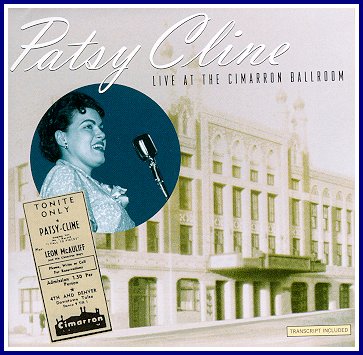
Don't forget: Bob Wills Birthday celebration is next Friday and Saturday night at Cain's Ballroom, with the Texas Playboys, led by Leon Rausch and Tommy Allsup, performing on Saturday night only. No better place to hear Bob Wills's music than the Mother Church of Western Swing, and no better band to play it than the boys who played with Bob back when.
There are far more important things to write about, but this news is too, too exciting.
The Tiffany Transcriptions feature some of the most exciting, liveliest Texas Playboys music on record. These selections were recorded in San Francisco in the mid '40s for use by radio stations. Those who were around then have said that the Tiffanies come closest to capturing the band's live sound. Songs that were left off Bob Wills's commercial recordings -- such as covers of popular big band tunes like "Take the A Train" -- found a place here, featuring Eldon Shamblin's tight arrangements for steel, mandolin, and guitar. Even standard western swing tunes got special treatment, with longer and more spontaneous improvisations, like Junior Barnard's proto-rock-n-roll guitar solos.
Nine of the 10 discs were first issued by Kaleidoscope as LPs, then reissued by Rhino as CDs. A 10th disc, featuring the vocals of the McKinney Sisters, was only issued on CD. Over the last three or four years, Rhino has dropped one disc at a time from their catalog, leaving only Vols. 1, 2, and 5 in print last I checked. Out-of-print volumes have been fetching $60 to $100 on Amazon.com.
But very recently, Warner Music Group began selling DRM-free MP3s via Amazon, and that includes the Rhino catalog. All 10 volumes are available for download at the low, low price of $9.99 each. (Vol. 10, which has twice as many songs as the other volumes, is $10.99.) You can buy individual songs for 99 cents each.
I bought a couple of later Bob Wills albums via Amazon MP3 for my dad's birthday (Together Again and Mr. Words and Mr. Music, both from the early '60s when Bob Wills and Tommy Duncan reunited for a time), and I was pleased with the quality (256 kbps) and the ease of downloading. Because the files are DRM-free, there are no obstacles to playing them on any digital media player.
Volume 5, linked on the image above, is my favorite so far, but I haven't heard them all yet.
A little break from politics:
Our littlest one turned two years old on Friday. His use of words has exploded in the last few months, although he mostly says the beginning sound of each word, which is adorable, of course. (That's him in the photo, during a visit to Pops on Route 66 back in November, smiling after a sip of Boylan Natural Cane Cola.)
Fire truck becomes fie kuh, for example. Train is "tshoo tshoo wai." Initial S isn't there yet -- snake, snowman, and snowflake become nay, no-mah, and no-feh, respectively. Sock is chah, where that first ch is a voiceless velar fricative pronounced in the back of the throat like a Hebrew "ch." So before he can "go ou-chai" (go outside) he "nee chah an tsioo" (needs socks and shoes).
Some of his most endearing words are starting to evolve. "Da-da" is becoming "da-dee." "Ja-ja" has become "gwahmah" and will be "grandma" before too long.
For months, he would hear and understand the word "car" but he would always pronounce it by making a car sound -- vocalizing on a high and rising pitch and vibrating his lips together. "Do you see the big car?" "Beeg blblblblblblbl!" But about a week ago he stopped, started saying "cah" consistently, and even substituted a less impressive "vroom" for his standard car noise. I managed to cajole the old sound out of him last night, but he did it almost sheepishly.
As we would look at books and pictures, every man with a long white beard he would call "Bah" -- my dad, his grandpa. Pictures of Santa Claus were "Bah", too, which is easy to understand. Now, after Christmas, he makes the distinction between his grandpa and "Sah Caw."
Still, every man with a hat in a black and white picture is "Dah Whee." We were looking at old family photos on the wall, and I was showing him pictures of me and my wife when we were small. He would say the names as he looked at the photos. There's a black and white one of me next to my grandparents' house in Nowata, probably about three years old, wearing a little hat and suit. So he called the boy in the picture "Dah Whee."
"Dah Whee" is Bob Wills, whose music is often heard in our house. Our two-year-old recognizes the cover of Wills's For the Last Time album, which shows a 68-year-old Wills in a cowboy hat, but he also recognizes as Bob Wills the smiling man in the big cowboy hat, as depicted on the cover of Charles Townsend's biography of Wills, San Antonio Rose. The boy will sometimes request "Dah Whee" music when he's eating in his high chair or when it's naptime. (Leon McAuliffe and Johnnie Lee Wills are acceptable substitutes.) Sometimes he will ask to sit in my lap when I'm at the computer and ask to watch a Bob Wills video (like this one from 1951 of the "Jo-Bob Rag" and "Liberty"). (But his favorite website is the one with the funny kitty pictures.)
Last night, my wife was putting him to bed. He wanted to hear the "Blue's Clues" CD, but his older brother, sleeping in the same room, protested, and Mom was worried that it wasn't conducive to sleep. When she asked, "How about something else?" the toddler said "Dah Whee," which was just fine with our eleven-year-old fiddler. She started the CD and walked out of the room to the opening notes of the Texas Playboy Theme. As she passed the crib, she heard a little voice saying "Ahhhh-haaaa!"
John Wooley writes to be sure we know about a special event tonight (Friday night) at the Oklahoma Jazz Hall of Fame, in the old Tulsa Union Depot, downtown at 1st & Boston.
John Wooley & Chuck Cissel will bring you an evening of big band and western swing. The Round Up Boys and the TU Big Jazz Band One will perform this Friday, December 7 starting at 7:30pm at the Jazz Depot in Downtown Tulsa. For information please call 596.1001
Admission is a mere $10.
Other upcoming concerts at the Jazz Hall of Fame: Sunday night, December 9, Pam Van Dyke Crosby sings the music of Patti Page, Kay Starr, and other Oklahoma jazz vocalists; December 16, SCORE featuring Ms. Sandy Gardner, presenting Broadway show tunes (including our own state song); December 23, Holiday Gospel and Jazz Celebration.
And of course you can hear John Wooley's "Swing on This," presenting an assortment of great western swing music each Saturday night at 7 on KWGS 89.5.
Honky-tonk great Hank Thompson passed away Tuesday night at the age of 82 from aggressive lung cancer. Here he is singing, "Whoa, Sailor," his first big hit, a tune about a sailor trying to chat up a girl in a bar, with a funny twist at the end:
Although he was born in Texas and finished his days there, he felt an attachment to Oklahoma, too. He lived in the Tulsa area for a time, and lent his name to Rogers State College's Hank Thompson School of Country Music.
There will be no funeral for Mr. Thompson, according to his wishes. Instead, he will be cremated; some of his ashes will be spread in Texas and Oklahoma, and the remainder will be buried in Waco next to his parents. He's survived by Ann. A celebration of his life will be held at 2 p.m. Wednesday at Billy Bob's Texas, 2520 Rodeo Plaza in Fort Worth.
One of the greatest singing cowboys of all time is just six weeks older than the great State of Oklahoma, and this weekend the town named for him is hosting a big celebration in his honor, the Gene Autry Oklahoma Museum Film and Music Festival.
Gene Autry (the town) is a little ways north of Ardmore in south-central Oklahoma, about seven miles east of I-35 on OK-53.
The big party, featuring screenings of Autry's films and performances by cowboy singers and poets, began on Wednesday and winds up on Sunday.
The high point of the celebration is today, the actual centennial of Autry's birth on September 29, 1907. Riders in the Sky, who have been upholding the tradition of cowboy music for over a quarter of a century, will give two performances, at 3:10 and 8:30. They'll be preceded on stage by Steve Mitchell, the Les Gilliam Trio, and Johnny Western. Riders in the Sky put on a great show for the whole family -- a mix of comedy and beautiful western harmonies.
Tickets are $20 each for the matinee show and the other events, except for the evening stage show, for which tickets are $35 for reserved seats, $25 for general admission. Check the festival page for all the details and contact information.
Tulsans will be able to catch Riders in the Sky a little closer to home on Sunday -- they'll perform at the Bartlesville Community Center at 2 pm on September 30. There are still a fair number of tickets available, ranging from $15 to $43 for adults, $5 to $20 for students.
(I've seen the Riders perform at the Cowboy Hall of Fame in Oklahoma City, at the Poncan Theatre in Ponca City, at the fair in Springfield, Missouri, and at the Walton Center in Fayetteville, Arkansas. As far as I know, they have never performed in Tulsa, even though their radio show used to air on KWGS and KVOO.)
Via Tyson Wynn, a wonderful clip of legendary western swing guitarist Eldon Shamblin playing and singing "Changes Made," following a bit of banter with steel guitarist Leon McAuliffe. This appears to be from a performance by The Original Texas Playboys (the drumset you'll see in the background is on display at Cain's Ballroom). According to YouTube user jsham66 (a relative of Eldon's?), the clip is circa 1986.
And, posted by the same user, here's the tribute video from Eldon Shamblin's 2006 induction into the Oklahoma Music Hall of Fame:
If you don't know much about him (or even if you do), you should read this tribute to "The Greatest Texas Playboy: Eldon Shamblin," by Buddy McPeters.
There's a complete 11 minute Bob Wills and His Texas Playboys transcribed broadcast from c. 1945-1946 available for your listening pleasure as part of a World War II audio web exhibit from the University of Missouri-Kansas City. The show includes the opening and closing theme and vocals by Tommy Duncan and the McKinney Sisters. The McKinneys sing a funny novelty number called "Feudin' and Fightin'." There are two slots for ads which are filled on the transcription disk with a message to radio stations explaining how successful these Bob Wills programs have been at pushing B. F. Goodrich merchandise.
Despite the text that accompanies the recording, I don't think this is a Tiffany Transcription, but rather predates that series. The page includes a number of other songs and audio clips from the World War II era.
Yes, I know it's Dfest weekend, with bands playing on 13 stages in the Blue Dome District until 2 a.m., but if your tastes run more retro than metro, you won't be left out.
Saturday morning from 8 to 10 on KXBL 99.5, legendary country DJ Billy Parker will be playing two hours of western swing and truly classic country.
Then Saturday evening from 7 to 8 on KWGS 89.5, you can hear music historian John Wooley spin his favorite western swing discs on "Swing on This." John's show is followed at 8 p.m. by two hours of "Big Band Saturday Night."
But if you want to hear live western swing the way it should be swung, you need to head down Route 66 to Bristow. Bob Wills' Texas Playboys will be performing at 8 p.m. at the National Day of the American Cowboy in Bristow's City Park, joined by Billy Mata and Richard Helsley of the western swing band The Texas Tradition (Here are directions to the park.) The Playboys' performance caps a day of events in Bristow, starting with a 10 a.m. parade, a chuck wagon lunch at 1, and a concert beginning at 7 with David Ingles and His Cowboy Band.
Here's a minute-long clip from a performance earlier this month: Bob Wills' Texas Playboys performing "A Big Ball in Cowtown," featuring a steel guitar solo by Bobby Koefer.
The news is depressing, so let's turn to music for some relief.
Ever wondered how virtuosi like Herb Remington, Leon McAuliffe, Santo and Johnny, Noel Boggs, and Bobby Koefer tease those sweet sounds out of their steel guitars?
Steel guitarist Rick Alexander has posted a series of song and technique videos on YouTube demonstrating the non-pedal steel guitar -- sometimes called lap steel or console steel. Instead of having a series of pedals to alter the pitch of the strings, non-pedal steel guitar usually has multiple necks -- sets of six or eight strings, tuned differently -- enabling the player to switch between keys without retuning the instrument.
All the videos are shot from above, so you get a good view of what he's doing with his picks and steel bar, and in the instructional videos he carefully explains every move he makes.
Here's the eight-minute course intro -- Steel Basics 101:
And here's Rick playing a Hawaiian number, "Song of the Islands":
Rick Alexander has teamed up with Texas Playboy Herb Remington to produce "Tuff Fun Tab," a book of 12 songs hand-annotated with Herb's chords and tablature and accompanied by a CD with two versions of each song -- one with Herb on steel, and one with backup only by Rick's band. It includes "Steel Guitar Rag," "Maiden's Prayer," "Love Me Tender," and "Song of the Islands."
This little detail from the Wikipedia bio of the Farina brothers, Santo and Johnny, made me smile:
When they were very young, their dad was drafted into the Army and stationed in Oklahoma. There (on the radio) he heard this beautiful music. It was the sound of the steel guitar and he wrote home to his wife and said "I’d like the boys to learn to play this instrument."
I like to think Mr. Farina was listening to this guy over KVOO -- from "Steel Guitar Rag" to "Sleepwalk" in one generation.
Specifically, it's Noel Boggs, who played with Hank Penny, Bob Wills, and Spade Cooley, and fronted his own band, the Daysleepers. He's on a Fender Quad Stringmaster, playing "Alabamy Bound", from the 1954 short "Jimmy Wakeley's Jamboree":
A guest appearance by Bob Wills and his fiddle on the country & western showcase "Star Route." Glen Campbell handles the vocals and plays the banjo on the song "Take Me Back to Tulsa."
Listen closely during the first chorus, and you'll hear Bob call, "Circle eight, spread out wide, grab your partner, go hog wild! Sooey!"
The date on the YouTube summary says 1956, but something tells me this is closer to '64 or '65.
This one's even better: Glen and Bob on "San Antonio Rose." There's an extended closeup of Bob playing fiddle. The director doesn't seem quite sure what to do with Bob's hollers. Most of them occur off camera, but he gets one in while they're still in a two-shot and is rearing back for another when the director cuts back to Glen. There's a hilarious look on Bob's face when they catch him hollering on camera, a sort of "maybe I hadn't of oughta done that" expression. And on the next verse, Glen goes up on the lyrics.
The intro calls "comes as close as any to being the theme song of history's greatest war" and says that over 14 million copies had been sold.
These videos illustrate the shift in focus from the band to the singer. In the Big Band era the singer was a part of the band. (Sinatra started to change that equation.) By the time this TV show was taped, the band was mere backup, and there's certainly no place on screen for a band leader who might distract from the singer with the pretty teeth and hair.
Here's a video I've posted before which highlights the band members as well as the singer: It's Bob Wills and His Texas Playboys from 1946 performing "Goodbye Liza Jane," with Tommy Duncan and the McKinney Sisters singing, and solos by Joe Holley and Louis Tierney on fiddle, Millard Kelso on piano, and the great Junior Barnard on guitar.
I'm not sure what to think of this review of Legends of Country Music: Bob Wills & His Texas Playboys. I think the reviewer likes the music, but I'm not sure:
Of all the subgenres of country music, perhaps none has dated as poorly as Western swing, the New Deal amalgam of jazz and the string band.
Does he mean that the music has aged well? That it doesn't seem out-of-date? That it has a certain timelessness? Or does he mean that it has nothing to offer modern listeners?
Then there's this line. See what sense you can extract from it:
It's saddening to the extent that Wills' bucolic big banditry sounds positively atavistic in the countrypolitan-on-steroids present, even to a listener who loathes latter-day Billy Sherrilloid abominations like Garth Brooks and Shania Twain.
And this parenthetical comment, about Wills's use of horns and drums
(Such orchestral eclecticism might otherwise position Western swing as the country subgenre most likely to interest country haters, but for the fact that such haters hilariously seem to regard the Stratocaster as the sonic alpha and omega of Western Civilization.)
might make sense, except that Wills's guitarist and arranger Eldon Shamblin played a Stratocaster, one that was given to him by Leo Fender himself, who was a fan of western swing.
I think the reviewer, Mr. Hollerbach, managed to violate every rule in Strunk and White, and he seems more interested in impressing us with his vocabulary and his ability to string words together than communicating any actual information.
A few links, recently discovered, that illustrate the diversity of western swing and its influences:
First is an Amazon "Listmania" list by Tony Thomas, one of Amazon's top 500 reviewers. The list is entitled "Western Swing: what it is and what it ain't" and includes Thomas's recommendations and comments on 22 CDs and box sets and 3 books. His introduction:
Too many people think of Western Swing as a varient of "Country" music. In fact, the classic Western Swing of the 1930s and 1940s was closer to Jazz and Blues music and was a completely different animal than country music of its time. Indeed, the one time Bob Wills, the greatest Western Swing star, appeared on the Grand Ole Opry, he was almost physically removed for using a full drum kit and smoking a cigar on stage. Go to the net page for each item to read my online reviews that go deeper into the history of Western swing. Besides all this, every one of these recordings is a load of fun to listen to.
Thomas covers albums from different eras of Bob Wills's career (the prewar recordings on OKeh and Brunswick), the Tiffany Transcriptions of the '40s, the MGM recordings from the late '40s and early '50s, For the Last Time from 1973), includes several other key western swing band leaders (Billy Jack Wills, Milton Brown, Spade Cooley, Tex Williams, Leon McAuliffe, Adolph Hofner, Moon Mullican), the western swing revival (Asleep at the Wheel, Merle Haggard, Hot Club of Cowtown), and early influences on western swing (Mississippi Sheiks, Emmett Miller).
This article by Norman Weinstein, called Secret Jazz: The Swinging Side of Western Swing, explains how the sound of a famed jazz trombonist influenced the emerging sound of the steel guitar and how elements of the Delta blues, New Orleans jazz, big band swing, bebop, and progressive jazz found their way into the western swing repertoire. He opens the piece with this: "Western Swing is a musical genre wonderfully described by its leading historian Cary Ginell as 'a bastard child that neither country nor jazz is willing to accept into their own house.'" And here's how Weinstein tries to define western swing: "The simplest way to define the genre is to identify it as a style evolving from a hybridization of black and white Southwestern string band styles encompassing a broad variety of jazz, blues, and country music characteristics."
It should be pointed out that western swing isn't by any means disconnected from country music, but it may be more accurate to call it an influence on country rather than a branch of country music. Country stars from Oklahoma, Texas, and the Central Valley of California grew up listening to western swing and it shaped their sound -- older generation artists like Willie Nelson, Ray Price, Merle Haggard, and Buck Owens (who in turn influenced Dwight Yoakum), and more recent stars like Reba McEntire, Vince Gill, and George Strait. And while Hank Williams isn't considered western swing, you can hear the genre's influence in his band's use of steel guitar and rhythm guitar.
If you listen to Hank Williams, it was at the peak of Bob Wills' influence, and a lot of Hank's stuff has got Western swing kind of stuff in it, especially the guitar playing, which for me was the whole thing. Like the Texas Troubadours; [Ernest Tubb] is a direct outgrowth of Bob Wills, but it was real country. That's where we came from. On a break, the Texas Troubadours would play hot jazz Western swing, and then Ernest Tubb would come up and go, "I'm walking ..." boom-chucka, boom-chucka. Which is where Junior Brown gets his sound.
That was from Ray Benson, whose band Asleep at the Wheel has led the western swing revival. Plenty of country artists are fans of western swing, and Benson had no problem recruiting country stars to perform on his two albums of Bob Wills music. Here's an Austin Chronicle interview with Benson on the 1999 launch of the second tribute album, Ride with Bob:
Six years ago, in 1993, the Wheel put out an album that was considered a landmark in the band's already storied history: Tribute to the Music of Bob Wills. It was a star-studded collection that not only won the band a Grammy, it also brought together the old masters -- former Texas Playboys like Eldon Shamblin, Leon Rausch, and Johnny Gimble -- with modern-day Nashville staples like Garth Brooks and Suzy Bogguss, and even an oddball or two, such as Benson's old pal Huey Lewis. And they made it sound great; even the bland, middle-of-the-road types who get blamed for country's current sad state came off sounding like diamonds, and the Wheel reached new audiences that had likely never heard of either them or Wills....
Later, Benson explains how his own eclectic musical tastes led him to western swing in the early '70s:
But as a kid, that was my first group there -- see those four kids? [Points at a black-and-white photo on the wall.] That's me at the top in 1960, and we sang folk music, 'cause folk music was big: Kingston Trio, Woody Guthrie, the Carter Family, the Lamplighters. All these musical influences were kind of going around, and then in 1969, we decided to form a band and get back to the land, which is where all the hippies were going anyway; get out and play country music, half because of Bob Dylan and half because of Hank Williams. But I had all these other musical influences. And I loved the blues. I knew everything. I didn't realize that there was compartments to music, 'cause we listened to all this music and we played it all.So when we got to do this country band, we said we've gotta narrow our focus down. So we just played hillbilly music. And we said, "Wow! We really want to play roots music." That was our rallying cry: "We're going to play roots music!" I hate Led Zeppelin. Really. I hate white guys sounding like wimpy blues singers. But we loved blues. I love Jimi Hendrix. So we formed the band. We started doing this thing, and then the creative urge to play, to jam, to improvise especially, was there, and I couldn't do it in country music. You did a turnaround or half a chord, you know what I'm saying?
All of the sudden, Western swing entered, and I went, "Wow, I can sing hard songs with country themes and play fiddle breakdowns like I've always played in square dance bands. I mean, you could do it all. I could play swing music, improvise jazz however complex you want within the structure they give you, and wear a cowboy hat. That was the deal. That's how it all happened.
Finally, here's an article from the March 13, 1950, issue of Time magazine (bless you, Time, for putting your complete archives online) about the origin of the song "Rag Mop," a top pop hit for Johnnie Lee Wills and His Boys. It all started when steel guitarist Deacon Anderson was in the Army:
"Deacon" Anderson, 26, had worked out a kind of K.P. chantey as he swung his mop. As he explains now: "It's hard to think up words with any sense when you're tired, and I got to spelling out r-a-g m-o-p."To Anderson, who now plays in a Western band in Beaumont, Texas, the result added up to a song; he gave it a hillbilly beat and tried it on his steel guitar. After the war, he tried to sell the song, but everyone around Beaumont thought the whole idea was just plain silly. Last year he made a recording—he didn't know how to write the notes down—and sent it to a friend with the Johnnie Lee Wills band. Says Tulsa's Johnnie Lee, the idol of the Southwest's square-toe boot and blue-jean set: "At first I thought it was crazy. Then it kinda irritated me." He rearranged it, added some notes and a little pep & polish.
At least some folks think that "little pep and polish" turned "Rag Mop" into one of the first rock and roll records.
Sometime ago, I got an e-mail from someone who stumbled across the long list of things I've written here about western swing music. The e-mail came from John England, who fronts a Nashville-based band called the Western Swingers. John asked me if I'd like a free CD, and I said, "Of course!"
John sent me a copy of Swinging Broadway, released in 2003. The whole family has been enjoying it for a couple of weeks now, and by whole family I mean everyone from the 16 month old toddler to Mom and Dad. The CD passes a couple of key quality tests:
(1) The baby bounce test: If the music makes the baby bounce up and down in his high chair, it's good stuff. In particular, "Your Turn to Cry," "Stumbling," and "Little Red Wagon" got the little one grinning and bobbing.
(Not just any music will make our kids bounce. When the oldest one was about eight months old, we went to a barbecue place we'd never tried before. The food was good, but it happened to be karaoke night. The baby bounced to the radio music that was being played before karaoke began, but he stopped when the first amateur balladeer started singing.)
(2) The humming/whistling/singing test: I've caught Mom and the two big kids humming or singing "Won't you ride in my little red wagon?"
My favorite cut on the disc is the instrumental "Stumbling," with its tight guitar ensemble work and rare bass and drum solos. For just six guys, they make a big, full sound.
The Western Swingers play most of their dates in and around Nashville, including a weekly gig at Robert's Western World on Broadway. The next time they'll be anywhere near Tulsa will be June 14 at the Legends of Western Swing Festival in Wichita Falls, Texas. (It's only 240 miles away!)
You can hear a few of their songs and find a list of upcoming dates on their MySpace profile. If you love western swing, you'll love the Western Swingers.
Last Friday night, I had the privilege of being at Cain's Ballroom for the inaugural gala of the National Fiddler Hall of Fame with my wife and son, both of whom play violin/fiddle. We got to meet Bob Wills's daughter Rosetta, who was there to accept the induction of her dad as the first member of the Hall, show fiddler Jana Jae, and guitarist Mark Bruner. It was nice to see two city councilors there -- Rick Westcott with his fiancee and Maria Barnes with her husband.
Music historian John Wooley did an excellent job as MC, introducing this new organization and putting the various genres of fiddle music in historical perspective. We had fun chatting with him before the program began. (He told a very funny story on himself, involving an outburst of literary criticism at a high school football game.)
The food was prepared by a competition barbecue team (made up of doctors, I think I heard) who served smoked salmon and beef tenderloin, with baked beans that included lima beans in the mix. It was all delicious.
The musical program was led off by Oklahoma Stomp, the NFHOF-sponsored western swing band of 12 to 15 year old boys. They performed Fat Boy Rag, Faded Love, Heart to Heart Talk, Roly Poly and San Antonio Rose. My son's friend from Barthelmes Conservatory plays bass in the band, and he took my boy backstage afterwards, where he got to sign the wall. My son was so inspired by the whole evening that he got out his violin as soon as he got home and started practicing Faded Love.
Eight different genres of fiddle music were demonstrated. Here's who played and what they played, backed by a house band made up of Shelby Eicher on mandolin and fiddle, Mark Bruner on guitar, J. D. Walters on steel guitar, Spencer Sutton on piano, and Dave Breshears on drums.
Bluegrass fiddling: Byron Berline with Eric Dysart; Gold Rush, Turkey in the Straw.
Country fiddling: Rick Morton with Jake Duncan; Don't You Ever Get Tired of Hurting Me, Lonesome Fiddle Blues.
Irish fiddling: Eric Ryan-Johnson with his son Seamus and with Steve Mayfield on bouzouki; Father Kelley's #1, Rocky Yard, Butterfly, Rocking Polkas.
Show fiddling: Jana Jae with Emma Jane and Marina Pendleton; Black Mountain Rag, Jesse Polka. (Jana Jae performed the first number on a specially tuned blue fiddle: A C# E A.)
Blues fiddling: James Tarver with Mark Bruner and Merrit Armitage; Sittin on Top of the World, Milk Cow Blues. (It was a treat to hear these old blues tunes, which Bob Wills had adapted to Western Swing, performed as blues.)
Contest fiddling: Monte Gaylord, Dave Gaylord, Bubba Hopkins, Douglas Thompson, and Michael Thompson; Sally Goodin, Miss Molly.
Jazz fiddling: Shelby Eicher with Jake Simpson; Walking My Baby Back Home, Summertime. (The latter was performed in the style of Stephane Grappelli, the jazz violinist for the Hot Club of France. I heard second-hand that Curly Lewis said that he was a fan of Grappelli, and that all the Western swing fiddlers wanted to sound like Grappelli.)
Western Swing fiddling: Curly Lewis, Chase Foster; Blues for Dixie, Take Me Back to Tulsa. (In introducing Lewis, John Wooley said that at age 11 he won a fiddle contest sponsored by Bob Wills.)
The grand finale featured all the performers playing the old fiddle standard "Liberty." The music continued as the house band played for anyone who wanted to dance. (At one point, the band played "Maiden's Prayer," but they didn't have anyone singing. I was awfully tempted to run up there and pitch in, but I held back.)
Many thanks to the board members of the Hall of Fame, and particularly to Jim and Alice Rodgers of Cain's Ballroom, for a wonderful, unforgettable evening.
My Urban Tulsa Weekly column this week is on two very different events: last Saturday's Oklahoma Republican State Convention and last Friday's inaugural gala for the National Fiddler Hall of Fame. The convention story covers the race for state party chairman and a brief description of what delegates were saying about next year's presidential race. (More about the NFHOF gala in a separate entry.)
From 1946 (the Tiffany Transcriptions era), Bob Wills and His Texas Playboys perform "Goodbye, Liza Jane":
That's Bob Wills introducing and playing fiddle. Tommy Duncan sings, backed by Dean and Evelyn, the McKinney Sisters. The other right-handed fiddler (who plays behind Tommy on the last verse) is Louis Tierney. The left-handed fiddler is Joe Holley. Millard Kelso, "the little man with the moustache," plunks the piano. And the highlight of this video is an all-too-brief solo by ahead-of-his-time guitarist Junior Barnard, who had a fuzz tone and knew how to use it. (Here are a few more clips of Junior's choruses.)
(Via Tyson Wynn, who has several more Bob Wills videos he found on YouTube, including three of the Snader Transcriptions from 1951 -- "Blue Prelude," "Sittin' on Top of the World," and "Three Miles South of Cash" -- and the Cindy Walker song "Election Day" from one of Bob Wills's movies, sung by Leon McAuliffe.)
Belfast hosted a songwriters' festival recently, which featured musicians from Belfast's American sister city, Nashville.
(That's an apt pairing. Belfast is the buckle of the Bible Belt of Europe, the most religious region in the UK. Nashville is HQ for the Southern Baptist Convention. And Tennessee was settled by Ulster Scots, sometimes known as Scots-Irish, who are ethnically connected to the Presbyterians of Northern Ireland.)
FAMEmagazine's Billy McCoy reviewed one of the festival's concerts:
Lee Roy Parnell and Paul Overstreet were brilliant, not only for their singing, but for their repartee, they worked well together, were very friendly and appreciative of their reception. Lee Roy was particularly good at the Bob Wills number 'Moo Cow Blues' and it was even more pleasing to hear it without the interventions which, in my opinion, takes away from the original. This feature, in my opinion, spoils most of Bob Wills, otherwise good music.
First of all, Billy, it's "Milk Cow Blues," by Kokomo Arnold, and it's one of many old-time blues numbers that Bob Wills and His Texas Playboys performed. And Bob's brother Johnnie Lee Wills and His Boys had a hit with it, too.
As for those "interventions," Art Satherley, the Englishman and traditional folk music enthusiast who was Bob Wills's producer from 1935 to 1947, didn't like them either, at first, complaining at the Texas Playboys' first recording session that Bob's hollering was covering up the musicians. He also complained about the band's use of horns and drums, unheard of in hillbilly music. Bob's response was to threaten to pack up and walk out. You hire Bob Wills, you get Bob Wills, playing his music his way.
I can't provide a direct quote, but musicians who played for Bob Wills have said that when he called out the name of one of his sidemen it was like he turned the spotlight on him. It gave the musician a boost and inspired him to play his best. Musicians and audience members alike would tell you that you could tell the difference in quality and intensity of the music when Bob was on the bandstand and when he wasn't. Such was his presence, and his hollering and smart-aleck remarks were a big part of his presence.
On recordings, Bob's hollers meant that the listener knew who was responsible for that hot solo he was about to enjoy. (And 30 to 70 years later, we know it too.) It wasn't an anonymous studio musician, it was Eldon (Shamblin) or Leon (McAuliffe), Herbie (Remington) or Noel (Boggs), Junior Barnard (aka Fat Boy, aka Boogerman, aka the Floor Show) or Jimmy Wyble, Jody (Joe Holley) or Jesse (Ashlock), or Tiny Moore on the "biggest little instrument in the world." And even when Bob recorded with Nashville studio musicians, in his '60s sessions with Kapp Records, he gave them the same courtesy, for instance calling out "Brother Pig!" when Hargus "Pig" Robbins took a chorus on the piano and "Ah, Tay!" for a Gene "Tagg" Lambert guitar solo.
The audience responded, too, to Bob's hollers. They were an essential part of the Texas Playboys dance experience, so much so that Cindy Walker wrote a song to answer the musical question "What Makes Bob Holler?"
Well, when a little sweetie-pie
In a mini-skirt twirls by
And rolls those big blue eyes
Ahhh! I holler!
And when some pretty chick
Says she likes my fiddle lick,
Well, that can do the trick.
Ahhh! I holler!
To say that Bob Wills's music would have been better without the hollers is to miss the point. Bob's hollers were as much a part of his music as his fiddle, so essential that when Bob suffered a stroke after the first day of recording for For the Last Time and was unable to return, his old friend Hoyle Nix filled in with his best impression.
The songs are certainly strong enough to stand on their own, and plenty of other bands have recorded great versions of his music, but a Bob Wills song is missing something without a Bob Wills holler.
MORE: A couple of Bob Wills links of interest which I don't think I've posted yet:
Last September 18, jazz and pop music writer Will Friedwald wrote a very insightful review in the New York Sun of the Legends of Country Music box set. He starts with the first track, "Sunbonnet Sue," recorded in 1932 when Bob Wills and Milton Brown were with the Light Crust Doughboys, and explains how the structure is closer to popular music of the day rather than traditional folk music:
Yet the moral of "Sunbonnet Sue"is that even by 1932, there was no longer such a thing as pure roots music. The phonograph had already entertained several generations, and particularly after about 1920 — when commercial broadcasting began and when jazz, blues, and country began to be heard regularly on record — everyone in every part of the nation began listening to everybody else....At the time, the mainstream music press labeled all sounds produced by black people as "race music" and all music produced by white people anyplace other than the two coasts or the Great Lakes as Hillbilly. Wills hated this term, much the same way New Orleans jazzmen hated being called "Dixieland." He brought both new energy and sophistication to records by importing ideas wholesale from the swing bands that were starting to dominate the music business in New York, Chicago, and Los Angeles.
Friedwald goes on to cite examples of the variety of music the Texas Playboys performed over the years, as sampled in the box set.
Next, here's the entry on Bob Wills from the MusicWeb Encyclopedia of Popular Music. It includes a number of details that you won't find in other biographies on the web, and includes parenthetical mini-bios of Leon McAuliffe, Tommy Duncan, and other Wills sidemen.
Also on the MusicWeb site is an e-book, The Rise and Fall of Popular Music. Chapter 7, The Jazz Age, the Great Depression and New Markets: Race and Hillbilly Music includes a section on the Texas Playboys, putting them in the context of other popular musicians of the era, like Paul Whiteman, Bennie Moten, the Blue Devils (from Oklahoma City), Bing Crosby, Jimmie Rodgers, the Carter Family, and Bessie Smith. (Did you know that Jimmie Rodgers recorded with Louis Armstrong? And with a Hawaiian band? Me, neither.) You'll learn something about the origins of the steel guitar and the dobro and about the importance of flour to popular music of the period.
Here's a nice short bio of guitarist Tommy Allsup, who played lead guitar with Buddy Holly, was an A&R man and producer for Liberty Records, and produced Bob Wills's final album. Allsup, recently inducted into the Oklahoma Music Hall of Fame, is carrying on the western swing tradition with Bob Wills' Texas Playboys.
Tommy's going to be touring Greece and the UK this June with Kevin Montgomery. You can find his MySpace page here.
Friday morning, Oklahoma Stomp, a new western swing band made up of nine boys, aged 12 to 16 years, played a few songs on KVOO 98.5. If you missed the live broadcast and didn't get out to Cain's Ballroom to hear them tonight, you can still listen to the KVOO podcast. Here are direct links to the songs:
San Antonio Rose"
Fat Boy Rag (the version released on Columbia, not the wild Tiffany Transcriptions version)
Roly Poly
Faded Love
These kids are good.
My wife and I had a great time tonight at the Bob Wills Birthday Celebration. We got out on the dance floor a few times. We successfully navigated the hills and valleys of Cain's curly maple floor, and we did OK with the two-step, but it took me halfway into "Goodnight, Little Sweetheart" to remember how to waltz.
The Round-Up Boys and Eddie McAlvain and the Mavericks each played a 45 minute set, then the Texas Playboys played from 9 to 11 with a 20 minute break. They said they'd be playing a longer set at the Saturday night performance.
Oklahoma Stomp, the new western swing band made up of 12 to 16 year olds, will debut at Saturday's performance. And Bob Fjeldsted, leader of the Round-Up Boys, mentioned that Bob Wills's daughter Rosetta would be there as well.
The Texas Playboys are led by vocalist Leon Rausch and guitarist Tommy Allsup (who also took vocals on several songs). Tonight's lineup: Bobby Koefer on steel guitar, Curly Hollingsworth on piano, Curly Lewis, Jimmy Young, and Bob Boatright on fiddle, Ronnie Ellis on bass, Tony Ramsey on drums, Steve "Hambone" Ham on trombone, and Mike Bennett on trumpet. Allsup, Lewis, Ham, and Bennett are all from the Tulsa area.
For the record, here is the Texas Playboys' set list from tonight:
Opening Theme
Corrine, Corrina
Lily Dale
In the Mood
Milkcow Blues
Tater Pie
Tuxedo Junction
Keeper of My Heart
Panhandle Rag
Blues for Dixie
Westphalia Waltz
Trouble in Mind
Take Me Back to Tulsa
Raining in My Heart
Faded Love
Hawaiian War Chant
Rosetta
I Don't Know Why I Love You Like I Do
Right or Wrong
???
Big Beaver
Goodnight, Little Sweetheart
Closing Theme
I didn't catch the title for one song, but it was a very lush, very pretty number featuring Bobby Koefer on steel guitar.
All the good things I had to say about last year's birthday celebration and performance at the Osage casino were just as true tonight. In addition to all that, I especially enjoyed hearing trombonist Steve Ham do the vocals on "Rosetta" and Curly Hollingsworth's piano choruses. Everyone on the bandstand turned in several swinging solos and wonderful ensemble work. Love those triple fiddles.
One big improvement over last year: No smoking in the building!
Most of the heads there were as gray as mine, or grayer, but there were a few younger folks there, too. One couple brought their daughter along -- she looked to be about six. A couple of thirty-something women volunteered to be Bobby Koefer's hula partners for "Hawaiian War Chant."
One young woman -- in her twenties, I'd guess -- spent most of the last set standing up at the edge of the stage, swiveling her hips to the music and taking pictures of the band with her cameraphone. With her Louise Brooks haircut, she bore an uncanny resemblance (as of a couple of hairstyles ago) to a certain rock historian turned chastity advocate, but instead of being dressed in mod-'60s clothes, her outfit was from a decade or so earlier, down to her bobby socks and saddle oxfords. A male companion was taking pictures of her from several feet away. After the last song, h