McGirt, Starling, and Echols
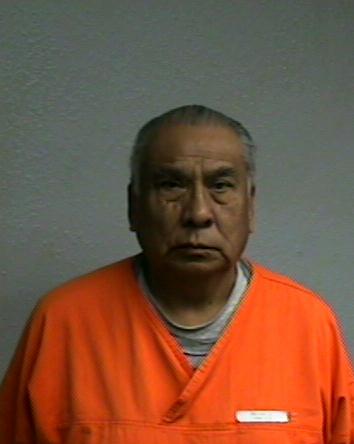 Jimcy McGirt, child molester, the Founding Father of tribal sovereignty
I've been asked why I support Jeff Starling to be Oklahoma's next attorney general, rather than Jon Echols. Echols's involvement in the imperial speakership of Charles McCall is compelling enough, but the clincher was the answer the two candidates gave at the recent News 9 / NonDoc debate on a question about ongoing litigation relating to the McGirt decision.
Here was the question posed to the candidates:
In July 2020, the US Supreme Court ruled...five to four that Congress never disestablished the Muscogee Nation Reservation. Several Oklahoma Criminal Court of Appeals decisions then affirmed the reservations for the Cherokee, Chickasaw, Choctaw, and Seminole Nations, as well as some of the nine tribes in Ottawa County. The McGirt and Castro-Huerta rulings of course mean that only the federal government and tribal nations can prosecute Indians in Indian country. Governor Kevin Stitt has advocated for the McGirt decision to be overturned either by Congress disablishing reservations or through litigation seeking concurrent state jurisdiction over tribal citizens accused of major crimes in eastern Oklahoma.... Do you believe the state should seek concurrent jurisdiction over tribal citizens in eastern Oklahoma even though it could mean costly and controversial legal battles or can better cooperation and compacting let the federal justice system and tribal courts handle all prosecutorial decisions and adjudications of Indians in eastern Oklahoma?
Starling answered:
Listen, McGirt has created a lot of uncertainty. It just has. McGirt was a federal criminal law matter related to certain major crimes, and McGirt said, the 2020 decision, that essentially the eastern half of Oklahoma was Indian territory for those certain major federal crimes. The question is how does that extend to other federal criminal matters? How does that extend to things like regulatory authority, taxing authority, hunting licenses? We've seen all this stuff in the news.I will tell you I have great respect for our tribes. I have great respect for them. My wife and I have chaired a lot of non-profits across this state. Those non-profits could not have done what they were intended to do without the support of the tribes. My wife and two daughters are Choctaw.
We need a resolution to the uncertainty created around McGirt. That does mean compacting when we can.
But these are very difficult and complex problems. The courts created the this uncertainty. They just did. We didn't have this uncertainty pre-McGirt. We have it now. And we need to be prepared, if we need to, to go back to the courts and get certainty. The tribes need the certainty. The state needs the certainty. The courts created the uncertainty. The courts are likely going to have to resolve this. Now, that doesn't mean we shouldn't work towards compacting on these issues and that should be the goal. But I think it's it just practically speaking very very difficult, without more certainty from the courts to understand what McGirt means, to get full resolution of these things. But on a criminal law matter, we should absolutely compact around this and have concurrent jurisdiction around that to the extent we can have a a mutual agreement with the tribes on this, which I know they're they're coming to this in good faith.
I've talked with a number of the tribes about it, and I'm looking forward to engaging those discussions and helping resolve this McGirt issue while respecting the tribal sovereignty that we have.
Here is Echols's answer:
Well, I think my friend and opponent has done a good job summarizing McGirt. And if I would give you my response in a sentence, it would be "more compacts, less lawsuits." Where we do have a legitimate policy disagreement, and it just comes where we come from as an Oklahoman, I don't think we need to federalize Oklahoma law. These never-ending cycle of lawsuits, what they do is turn Oklahoma law to nine US Supreme Court justices that can't find Oklahoma on a map. Oklahomans can take care of Oklahomans. We absolutely have some issues we need to work through with McGirt.But right now, and I've been traveling the state, if you've looked at our Facebook page, nobody's traveled the state as much as we have. One of the things I continue to hear from the citizens is why all the fighting. What? It's not about whether the tribes win or the state win. It's about whether the citizens win. And we need to get agreements. That's why I go back to these law enforcement endorsements. One of the one of the pro one of the events I had was at the Choctaw Nation where at the time Sheriff Johnny Christian, God rest his soul, and Chief Batton both introduced me. They have very differing views on McGirt and they both stood up and said, "This is the guy to fix it. This is the guy to work with us." They are right. I am always going to stand for you Oklahomans and I am going to stand for you Oklahomans above giving it over to the federal government.
Now, if we can't, if there's no agreement that can be reached, I've been in hundreds of Oklahoma courtrooms. No problem going back to them, but that's not what I think's going to happen. I think we're going to be able to work from an area of mutual respect.
Echols's comment, "I don't think we need to federalize Oklahoma law," is incoherent nonsense designed to appeal to the ignorant. His cry, "why all the fighting?" is sentimentalism.
The McGirt decision happened because the tribes federalized Oklahoma law. It happened because the tribes weren't content to work with the state and worked really hard to free a man who molested his wife's four-year-old granddaughter, pushing the case through the Federal courts and writing amicus briefs in support.
The legal theory behind McGirt is that Congress created reservations and then, while they were abolishing tribal governments and allotting tribal land to individual tribal members and granting tribal members US citizenship, while they were doing all that, they sorta-kinda forgot to take the step to dissolve the reservations that they never created. That's one of two elements; the other is the Indian Major Crimes Act. Congress could act unilaterally to dissolve the alleged reservations, and Congress could amend the Indian Major Crimes Act to grant concurrent jurisdiction to the State of Oklahoma. Congress could even repeal the Indian Major Crimes Act, on the grounds that the historical conflicts and ethnic divisions that made the law necessary are no longer relevant.
The McGirt decision took crime and punishment out of the hands of the DAs and judges elected by Oklahomans. We can't de-federalize our laws without the permission of either Congress or the Federal Courts.
Remember that the McGirt majority consisted of four liberal justices -- Ginsburg, Breyer, Sotomayor, Kagan -- plus Gorsuch. Now there are only three liberal justices. Ruth Bader Ginsburg died two months after the decision was announced and was replaced by Amy Coney Barrett. The subsequent Castro-Huerta decision narrowed the scope of the McGirt ruling. The majority ruling by Justice Kavanaugh (Gorsuch wrote the dissent) undercut a cornerstone of McGirt:
Kavanaugh stated that the presumption that states have no jurisdiction in tribal lands, as established in Worcester v. Georgia (1832), had been weakened in the years since and that "the Worcester-era understanding of Indian country as separate from the State was abandoned later in the 1800s". Kavanaugh then wrote that the General Crimes Act, as codified in 1948, no longer considered tribal lands as distinct from that of the state.
So there's reason to hope that further SCOTUS decisions would further constrain the impact of McGirt or overturn it entirely when the right case presents itself. That's why tribal governments are desperate to cement their status as co-regents in compacts before the Federal courts undercut their leverage. I've noticed that it's the candidates who are getting max contributions from tribal governments, like Echols, who are most vocal about "more compacts, less lawsuits." (Echols has received maximum contributions from the Muscogee Creek Nation, the Osage Nation, Otoe-Missouria Tribe, and the Habematolel Pomo of Upper Lake, California, plus former Congressman Dan Boren, Secretary of Commerce for the Chickasaw Nation.)
As I wrote during the 2024 Tulsa mayoral campaign, when Monroe Nichols was echoing Echols "more compacts, less lawsuits": "Those mitigating rulings will not happen if our elected officials choose to drop the cases. Oklahoma is already hampered by a state attorney general [Gentner Drummond] who seems more beholden to tribal governments than to the people of Oklahoma. It's in the interest of tribal officials (and the forces who hope to harness them for their own ends) to get city and state elected officials to halt legal challenges to tribal jurisdiction and agree to co-governance, creating a fait accompli before the issue reaches SCOTUS."
During the NonDoc Governor's debate, Drummond proposed the wacky idea that the tribes could deputize state government to prosecute and imprison Indian defendants "in the name of" the tribal government. This way the tribes wouldn't have to go to the expense of building courthouses and jails and hiring prosecutors and could spend more money on health care.
Cross-deputize our DA and our judges, so when they adjudicate a felon, Native American felon, they do it in the name of the state and the tribe. And when they prosecute, adjudicate and incarcerate. Right now the tribes are realizing when a federal judge sentences a Cherokee to to prison time, they go to Leavenworth or Fort Worth and that destroys the family fabric. The tribes want... it back in the bottle, what they can do instead of spending the billions of dollars which they're not spending yet on courthouses, prosecutors and judges, they can spend in healthcare and mental health and we can partner with them in that. So the solution is the state of Oklahoma doing it in the name of the tribe, showing respect, courtesy, and comity. The governor spent over $70 million trying to convince the Supreme Court they were wrong seven years ago. That doesn't work. We've wasted money. We've wasted time. We need a governor. We have a chief legal officer right now that's negotiated it. We need a governor that will accept it and pro and send forward that opportunity. So not concurrent jurisdiction, but a compact that functions like it, compact where we where the tribe we recognize the sovereignty of the tribe by adjudicating, prosecuting, and incarcerating in the name of the tribe.
Or we could -- hear me out -- just have everyone in Oklahoma tried under the same system of laws. If the tribes don't want to spend billions building a parallel infrastructure for criminal justice, why not join their voices with that of Oklahoma's officials to ask Congress to disestablish the alleged reservations?
The same day as that Governor's debate, the Oklahoma State Supreme Court struck down Monroe Nichols's side deal with the Muscogee Creek Nation. That happened only because Governor Stitt, who believes in One Oklahoma, intervened and brought the case to the court.
Meanwhile, another case, Muscogee (Creek) Nation v. Kunzweiler, is working its way through the Federal courts. Our elected District Attorney, Steve Kunzweiler, has defended the State of Oklahoma's authority to prosecute crimes committed on the claimed Creek reservation. The specific case involved an Indian who is not a Creek citizen who was arrested for DUI in the Creek Nation part of Tulsa County. Federal Judge Gregory Frizzell denied the MCN's petition for an injunction to stop Kunzweiler from prosecuting these cases.
The dream of Oklahoma's founders was that Oklahomans could take care of Oklahomans, that all Oklahomans whether Indian or non-Indian or some combination thereof would enter statehood on as equal citizens living under the same set of laws. That's why we don't have reservations where all the Indians were required to live in squalor. Instead they each got a quarter-square mile of land that they could farm, lease out, or (eventually) sell outright. One Oklahoma for all Oklahomans meant all Oklahomans voting for the same state officials and judges and legislators. Oklahoma was never meant to be overlapping and conflicting sovereignties based on one's ethnic background.
Oklahomans need elected officials who will vigorously defend the principles of One Oklahoma and Equal Justice Under Law in Federal court. We don't need elected officials who are funded by tribal governments pushing for divisive systems and complicated compacts. This year, defending those principles means electing Jeff Starling for Attorney General and Steve Kunzweiler for Tulsa County District Attorney. Their opponents have signaled an intent to surrender.
In the race for Governor, only Mike Mazzei has indicated a willingness to fight in past forums, although he side-stepped questions on the issue at the KSWO debate. In the Lt. Governor's contest, David Ostrowe, as a member of Stitt's administration, may be our best hope; TW Shannon supported the McGirt ruling, signing his name to an amicus brief.
MORE:
Here's the AG debate, cued up to the question about McGirt:
Former Attorney General John O'Connor has endorsed Jeff Starling:
I am honored to endorse my friend Jeff Starling for the very important office of Oklahoma Attorney General. As a former Attorney General, I know the experience and skills we need from our Attorney General.We need an experienced attorney, not a career politician!
Jeff Starling is the person who is best qualified to serve Oklahoma in this office. He is a smart, gifted Attorney. He has the heart of a warrior and will stand firm for our rights. At the same time, he has the heart of a public servant. He is running for the right reason -- to serve you and me.
His opponent is not an experienced attorney. He is an experienced politician. This is not who we need!
Jeff Starling is a family man, a man of integrity and faith, and a true conservative.
Join Lucia and me in supporting Jeff Starling to be our next Attorney General!
0 TrackBacks
Listed below are links to blogs that reference this entry: McGirt, Starling, and Echols.
TrackBack URL for this entry: https://www.batesline.com/cgi-bin/mt/mt-tb.cgi/9482
 Subscribe to this blog's feed: