Oklahoma Election 2012 Category
One of the most active social media accounts during the Vision2 campaign was @SayNotoVision2 on Twitter. I don't know who ran the account, but he or she was active on a daily basis, rebutting vague and misleading statements from proponents, and making the argument against Tulsa County's Vision2 sales tax scheme in clear, pithy comments.
@SayNotoVision2 announced on election night that there would be comments about the victory on Twitter at 10 am Wednesday morning. Here they are, in sequence from top to bottom:
I was in the KJRH 2 News studio election night, on a panel with news anchors Russ McCaskey and Karen Larsen and fellow analysts David Blatt of the Oklahoma Policy Institute and State Sen. Rick Brinkley to talk about state questions and other local results as they came in.
Here's our last panel segment, starting at 9:24 pm if I recall correctly, talking about Vision2. The Tulsa County Election Board didn't begin reporting any local results until about 9 p.m., so this is shortly after I got the first load results from about 20 precincts, showing strong swings to the "no" side compared to the 2007 river tax vote.
As we were getting ready to talk and watching live reports from the watch parties, I was delighted to spot my wife and kids at the Citizens for a Better Vision watch party at Tally's Cafe.
(Video after the jump, and you can also find it online: Vision2 fails to pass; supporters considering similar proposals for future ballots.)
I promise, I'll have more to say about all this very soon. As you might expect, all the chores that were deferred during the campaign are demanding attention.
 Happy Election Day! Polls open in Oklahoma at 7 a.m. and close at 7 p.m.
Tonight, I'll be on KJRH's election night coverage, part of a panel discussing state and local elections. While the main channel carries NBC's national coverage, KJRH's digital subchannel 2.2 (Cox Cable 222) will focus on state and local elections. It will also be streamed live over the internet.
You can find the your cheat sheet to the 2012 Oklahoma election here: BatesLine 2012 Ballot Card.
Statewide, Oklahoma will elect seven presidential electors, will vote on six state questions, and will vote on the retention of state supreme court justices and appeals court judges. The only statewide office up for election this year is Corporation Commission; Bob Anthony won his fifth six-year term in the Republican primary, and Patrice Douglas, appointed to fill the unexpired term of Jeff Cloud, did not draw an opponent for election to the remainder of the term.
All five congressional districts have a Republican, a Democrat, and at least one independent on the ballot.
Tulsa County races were all decided in the primary or runoff (or not at all in a couple of cases), so, as if to prove that idle hands are the devil's workshop, the County Commissioners decided to put a sales tax on the ballot four years before it goes into effect. The marketing name is Vision2, but on the ballot it's Tulsa county propositions 1 and 2, and you can read all about it here: http://www.batesline.com/vision2.
In the Tulsa area, there are contested State Senate races in District 11, where Democrat State Rep. Jabar Shumate faces Republican Dave Bell and independent Curtis Mullins for an open seat, and District 39, where Republican Sen. Brian Crain is running for his final term, being challenged by Democrat and neighborhood leader Julie Hall.
The main event among the metro area State House races is the rematch in House District 71 between Republican schoolteacher Katie Henke and Democratic social service lobbyist Dan Arthrell. Henke was certified the winner in an April 3 special election, but the discovery of a couple of ballots for Arthrell in a ballot box led a judge to throw the election out and leave the seat vacant until the regular election.
There are also contested elections in Wagoner County's House District 12 (incumbent Democrat Wade Rousselot faces Republican challenger David Tackett), House District 23 (Republican Terry O'Donnell vs. Democrat Shawna Keller for an open seat), House District 66 (incumbent Republican Jadine Nollan vs. Democrat David Phillips), House District 72 (incumbent Democrat Seneca Scott vs. Republican Randall Reese), House District 76 (incumbent Republican David Brumbaugh vs. Democrat Glenda Puett), and House District 78 (incumbent Democrat Jeannie McDaniel vs. Republican Paul Catalano).
Almost lost in the shuffle are two city council races -- non-partisan and for two year terms under the charter amendments passed last year. District 1 incumbent Jack Henderson, a supporter of Vision2, is being challenged by Twan Jones, an opponent of Vision2. In District 7, incumbent Tom Mansur is on the ballot but has taken a job in Ardmore and will resign his seat if elected; his challenger is Arianna Moore. If Mansur wins and resigns as he intends, a special election would be called, as the next election for this seat, under the amendment passed last fall, will be in 2014.
Results should start rolling in soon after 7 p.m. The Oklahoma State Election Board website will update results as they are received from the county election boards. Although results are posted on each precinct door shortly after the polls close, a precinct's results have to be taken to the county election board to be read into the state election computer system.
After some significant difficulties with the outside company that provided election night results earlier this year, the Oklahoma State Election Board has developed its own in-house capability; the templates are already online. Data nuts will be able to download results by precinct for the entire state in one download -- a huge improvement over the previous system.
A few resources as you go to vote:
- Oklahoma State Election Board website
- Find your polling place: Looks up your voter registration info in the state election board database, tells you where to vote and which districts you're in.
- Tulsa County Election Board
- Tulsa County Precinct Locator
- County election board locations and phone numbers (PDF)
- The BatesLine ballot card: My choices for the 2012 general election.
- The BatesLine archive on Oklahoma Election 2012
- The BatesLine archive on the Tulsa County Vision2 tax scheme
- Oklahomans for Life candidate surveys
- Free-market think-tank OCPA's guide to the state questions
- League of Women Voters of Tulsa voter guide
If you run into any difficulty voting or spot any irregularity, contact the your county election board. The phone number for the Tulsa County Election Board is 918-596-5780.
Posted 12:11 a.m. Tuesday, November 6, 2012. Postdated to remain at the top of the blog through poll closing time.
For your convenience, here is a list of the candidates I've endorsed, will be voting for, or otherwise recommend in the November 6, 2012, Oklahoma general election.
As I have time, I'll add links to endorsements I've already made, brief notes about those I haven't previously written about. Here's a link to the archive of BatesLine posts about Oklahoma Election 2012.
President and Vice President: Mitt Romney and Paul Ryan. They have a sensible plan for putting our economy back on track. Just to send the author of Obamacare -- and countless other taxes and regulations into retirement -- will give business owners the confidence to create new jobs. On the world front, the weak response to the attack on our diplomats abroad demands that we fire President Obama.
Congress, 1st District: Jim Bridenstine
Congress, 2nd District: Markwayne Mullin
Although I didn't endorse either of these gentlemen in the primaries, we need as many Republicans in the U. S. House as possible if we're to have any hope of undoing the damage of the Obama years, starting with a repeal of Obamacare.
County questions (aka Vision2):
Proposition 1: NO
Proposition 2: NO
These taxes will not go into effect for more than four years, and will still be in effect until the end of 2029. Please note carefully what the ballot says. It's not what you've been hearing in all the ads.
Judicial retention:
State Supreme Court: NO on all. They think it is their place to stop Oklahoma voters from passing legislation that might be appealed to the Supreme Court. They're wrong.
State questions:
SQ 758: NO
SQ 759: YES
SQ 762: NO
SQ 764: NO
SQ 765: YES
SQ 766: YES
Legislative races in general: Never forget that when you vote for a legislative candidate (U. S. Senate, U. S. House, state rep, or state senator), you're also casting a vote for that candidate's party to control that chamber, to appoint committee chairmen and control the flow of legislation. I urge conservatives to vote Republican in legislative races. For all the disappointments we've had with Republican leadership at the state capitol, remember that it's better than the alternative. On the sanctity of human life, Oklahoma has made significant advances under GOP legislative leadership, passing bills that were routinely killed in committee when Democrats controlled the State Senate.
House District 71: Katie Henke. It's a choice between a smart, conservative Republican and a Democrat whose job has been to push for bigger government. The opposition to Henke has run a nasty and dishonest campaign against this thoughtful schoolteacher.
Senate District 39: If Julie Hall were a pro-life conservative Republican; or if Brian Crain were a staunch supporter of neighborhoods and a staunch opponent of corporate welfare, this would be an easy decision, but they're not, and it isn't. Republican Brian Crain has been a disappointment on issue after issue, and yet he carried the pro-life personhood bill in the legislature. Hall is the more sensible of the two on Vision2, and she knows from personal experience the importance of anti-SLAPP legislation to protect our freedom of speech.
Tulsa City Council District 1: Twan Jones, the challenger, who opposes Vision2. While I've supported the incumbent in many past elections for standing against the Cockroach Caucus, it appears that he has made his peace with the powers that be, supporting a regressive sales tax that does little to help his constituents. Time for a change.
How in the world can you fairly assess the value of intangible property? And if you can't fairly assess it, how in the world can you fairly tax it? That's why Oklahomans should welcome the opportunity to approve SQ 766 and abolish this arbitrary tax which has only been tolerable until now because it has only been applied to a small number of big companies.
SQ 766, proposed to Oklahoma's voters by the State Legislature, would strike nearly all of the very wordy Article X, Section 6A of the Oklahoma Constitution, and replace it with the following simple language:
Beginning January 1, 2013, intangible personal property shall not be subject to ad valorem tax or to any other tax in lieu of ad valorem tax within this State.
Article X, Section 6A, was added to the Constitution by State Question 460 to prohibit the legislature from levying ad valorem tax on specific categories of intangible property. It passed by about a three-to-one margin on the August 27, 1968, state primary ballot.
Once again, here's a quick summary of how I plan to vote on all the questions:
SQ 758: NO
SQ 759: YES
SQ 762: NO
SQ 764: NO
SQ 765: YES
SQ 766: YES
And once again we turn to State Sen. Rick Brinkley, who is graciously allowing me to post his analysis of and explanation of the history of SQ 766 here on BatesLine:
State Question 766 - Ends the Taxation of Intangible PropertyThis is Part 2 of my response to some of you who asked my opinion on the 6 State Questions on the Ballot on Tuesday. Part One dealt with changes in the Department of Human Services. Please look at my Wall if you would like to read that post and a three sentence history on why every year there are state questions on the ballot.
Failure for SQ 766 to pass will result in the largest tax increase in state history.
Please excuse my very elementary explanation of this issue:
Definition: TANGIBLE Property is property that you can wrap your hands around. If you own a McDonald's, Tangible Property is the building, the fryers, tables and Chairs, etc. INTANGIBLE PROPERTY is the "name" McDonald's (what is the "brand" worth?), Client Lists, Software developed by employees (A McDonald's Franchise may not be a good example for that one), and the institutional knowledge your employees possess, etc.
History: For years, counties did not really evaluate or charge tax on Intangible Property. However, the Board of Equalization assessed an Intangible Tax on large entities like Utilities, Railroads, etc. These companies are called "Centrally Assessed" companies, because they were not assessed on a County-by-County basis. It is important to note that even "Centrally Assessed" companies were not actually assessed a tax based on an actual determination of their Intangible Property, but rather it was calculated on a Unit Basis....meaning if your company was assessed at a certain tangible property amount, a certain percentage was calculated to be your Intangible Tax. Several years ago a company challenged its being taxed on intangibles to the State Supreme Court. They claimed it was unfair because other companies were not taxed for intangibles (just the Centrally Assessed Companies). The State Supreme Court ruled that not only was the Intangible Tax Constitutional, it could be assessed against all companies in the state as well as individuals.
Your Decision to Make: The question before you is "Should We Eliminate Taxation on Intangible Property?" My answer to that question is "YES." First, by the mere definition of "Intangible", it is not something that is easily determined and the variance from County to County and Assessor to Assessor could be great. How does the government assess the value of your company's name and then tax you on it? Also, please be reminded that these companies and, especially, small business owners have already paid income tax on the company's income and the salary they have paid themselves. Now, to "double dip" and tax them again on the Intangible Value of what they created seems inherently wrong to me. They will, of course, continue to pay Tangible Property Tax, Income Tax, Unemployment Tax, Payroll Taxes, etc. Plus, the taxes they pay as individuals.
We also should not pick and choose who pays Intangible Taxes. We either all pay them or none of us pay them, but we can't (in my opinion) say we only want certain companies to pay the tax and not others. We have also not addressed the issues related to taxation of Intangibles on individuals.Opposition: The Oklahoma Tax Commission estimated the cost to eliminate the Intangible Tax would be approximately $50 million (meaning it would not collect approximately $50 Million of taxes on companies currently paying the Intangible Tax.) However, it provided no methodology for its calculations. Please remember, those companies which currently pay tax on Intangibles are really paying a "Unit Valuation" that the government uses to determine what they will charge them as their "Intangible Tax". It is not currently based on actual/factual determination of a company's Intangible worth. Those who oppose this state question do not want to see a reduction in the amount of money the state collects. However, many of them freely admit they also do not want this kind of tax to go into effect on individuals, small business owners, farmers, ranchers, etc.
It is impossible for the Tax Commission to estimate the magnitude of the taxes to be collected if Intangibles were to be taxed; however, some estimates put it between a $300 - $400 million tax increase.
My Opinion: State Question 766 needs to pass in order to be fair to Individuals/Businesses in this state, to prevent the largest tax increase in state history, and to help all businesses, especially small business owners, succeed.
Here's OCPA's analysis:
Summary: This measure would exempt all intangible personal property -- e.g. patents, inventions, formulas, designs, trade secrets, licenses, franchise, contracts, land leases, mineral interests, insurance policies, custom computer software, trademarks, trade names and brand names -- from property taxes. Historically the state has not taxed intangible personal property, except for some small instances of centrally assessed property for a small number of businesses. This measure is to respond to a recent Oklahoma Supreme court ruling mandating that all intangible personal property not specifically exempted is subject to property tax.What's at stake: From a free-market, limited-government perspective, preventing property taxes on intangible personal property would serve as an incentive to entrepreneurship and prevent a massive intrusion of government into people's lives. Only ten states assess property taxes on intangible personal property as interpreted by the Oklahoma Supreme court and such an expansion of taxing authority would likely be the largest tax increase in state history. Things such as a person's interest in a public pension, the reputable name of a small family business, intellectual work during college and a host of other "intangibles" would now be subject to "valuation" and taxation by government bureaucrats. Ultimately, this state question is pretty cut and dry, a "Yes" vote ensures that all intangible property is exempt from property tax. A "No" vote subjects all intangible property to property tax.
State Question 765 is a legislative referendum to amend Article XXV of the Oklahoma Constitution by repealing sections 2, 3, and 4 and adding a new section 6. I support this question because it makes the Oklahoma Department of Human Services fully accountable to our elected officials and thus more accountable to the voters.
Those of us with long memories will recall Lloyd Rader's 31-year reign as head of the Department of Public Welfare. He was forced to resign after a series of national exposés revealed rampant neglect, the apparent use of patronage to control legislators who might have attempted to rein him in, and the use of state funds to hire detectives to follow and harass the reporters investigating him. A Tulsa Tribune political cartoon of the period depicted Rader as an octopus with his tentacles wrapped around the State Capitol. (One of Rader's few defenders after the scandal broke? State Sen. Gene Stipe.)
While there have been legislative reforms of the department, the constitutional structure that allowed such concentration of power and lack of accountability remains in place.
If you click that link, you'll see that there was some debate about how best to represent this question on the ballot, because the names currently in use for these agencies and roles don't match their constitutional names.
Here's a quick summary of how I plan to vote on all the questions:
SQ 758: NO
SQ 759: YES
SQ 762: NO
SQ 764: NO
SQ 765: YES
SQ 766: YES
State Sen. Rick Brinkley (R-Collinsville) has written an excellent article on why SQ 765 should be approved, and he prefaces it by explaining briefly why we have so many state questions each year. With his permission, I'm publishing it here at BatesLine.
State Question 765 - The Most Poorly Written of the State Questions on the Ballot.Some of you have asked my opinion on the 6 State Questions on the Ballot on Tuesday. I will attempt to share some light on a few of them over the next several days. But, first, you have to have a bit of history on the reason there are state questions every year for you to consider. The State of Oklahoma has the longest Constitution of any state and ours is far longer than the constitution of the United States and most other Nations from around the world. Everything from the definition of Beer to the Flash Point of Kerosene is in the Constitution. In all practical senses, any change to the Constitution requires a vote of the people.
In the 1930s, what is now called the Department of Human Services was made a Constitutional Agency. This means that it answers to a Commission established in the Constitution and is subject to oversight by neither the Governor nor the Legislature, but strictly the Commission. The Department of Human Services currently employs over 7,000 people.
The State Question is written in such a way that it appears it completely does away with the Department of Human Services. In actuality, it does away with the Commission and makes the Department more accountable to the Governor and the Legislature. The number of children who have died while in DHS Custody and the number of Class Action Lawsuits filed in regard to poor performance are enough for most people to understand that with so little oversight this agency and its leadership have failed to deliver the services it needs to deliver with little fear of repercussion.
This is about policy and structure. There are thousands of DHS workers who are committed to their jobs and those that they serve and this should not be seen as an indictment of every DHS worker. Despite how poorly written the State Question is other laws already in place guarantee the continuation of the Department.
This State Question has wide bipartisan support, including support from former Commission members. In my experience, the only people I have read or heard who are against this state question are former Commission Members and former Top DHS Officials.
Those opposed to Question 765 blame the legislature for not funding the Department to the level they desire. Additional Funding will not correct the lack of Accountability and Bureaucracy that have failed to deliver the services our children and most vulnerable deserve. This enables Governor Fallin and future Governors to respond quickly to necessary changes that must be made in the Department. This places additional responsibilities upon our Governors to react to public outcry and not be forced to idly sit on their hands waiting for a commission to act.
Please vote "YES" on State Question 765.
(As an aside, you currently have approximately 8,000 children in YOUR CUSTODY. These are Children in Foster Care in our State. The people of Oklahoma are responsible for these children who have found themselves in your custody through no action of their own. We have a responsibility to provide for them the best we can and the best they deserve.)
If you're on Facebook, you can subscribe to Sen. Rick Brinkley's public updates, which are consistently thought-provoking and inspirational.
There are six state questions on the November 6, 2012, general election ballot in Oklahoma. All of them are constitutional amendments, requiring a vote of the people, and all of them are legislative referenda -- questions initiated by the legislature, rather than by initiative petition.
The state election board has the language that will appear on the ballot, but to look at the actual language that will go into the Oklahoma Constitution, you have to go to the Oklahoma Secretary of State's website. There's a special page for proposed questions, with PDFs of the relevant legislation and the verbatim proposed changes to the state constitution. (Unlike amendments to the U. S. Constitution which are tacked on at the end, Oklahoma constitutional amendments directly add to, delete from, and modify the text of the constitution.) The links on each state question name will take you directly to the Secretary of State's PDF for that question, so you can read the whole thing for yourself.
A quick summary of how I plan to vote:
SQ 758: NO
SQ 759: YES
SQ 762: NO
SQ 764: NO
SQ 765: YES
SQ 766: YES
SQ 758 takes the existing 5% cap on annual increase in taxable property value and reduces it to 3% for residential homestead and agricultural property. I'm persuaded by Tulsa County Assessor Ken Yazel's argument that this measure would shift some of the tax burden from property owners in rapidly appreciating areas to property owners where values are relatively stable. Putting a cap on valuation doesn't put a cap on tax rates.
Property taxes come in two flavors. There are straight millages that support schools, county government, the library, the health department, the community college, the vo-tech school. As taxable value increases, the amount of property tax increases by the same proportion. For these taxes, a limit on the increase in taxable value also limits the increase in taxes.
Then there are millages that vary to cover bond issues and court judgments and settlements for cities and school districts. A little more than a third of my annual property tax bill falls into this category.
General obligation bond issues and civil settlements and judgments are paid out of a "sinking fund" which then has to be replenished. The county excise board determines how much replenishment is needed each year and the amount is divided among property owners in proportion to taxable value. It's a simple fraction -- the numerator is the demanded amount of tax revenue, as approved by the excise board; the denominator is the taxable value of property in the jurisdiction as determined by the county assessor in accordance with state law, which sets valuation caps and freezes.
If the taxable value grows at a slower pace because of a cap on taxable value increase, it doesn't change the amount that has to be covered by property taxes; it just means a higher millage is required to generate the same amount of revenue. This means that even seniors with a valuation freeze will see their property taxes go up.
And because this cap only applies to homesteads and agricultural properties, SQ 758 would shift the burden of replenishing the sinking fund to residential landlords and commercial property owners. That extra cost will be passed on to shoppers (who will pay the store's higher lease costs or higher taxes), employers (who will have less money for salaries and benefits), and those who live in rental property. Among residential homeowners, the tax burden will shift from those with rapidly appreciating properties to those with frozen or slow-growing valuations.
Assessor Yazel has a chart (p. 10 of this PDF) showing the gap of a little more than 6% between fair market value and taxable value in the 15 years since taxable value caps and freezes were enacted. Looked at another way, taxable value lags fair market value by about two years. That lag, however, is not evenly distributed, although it is narrowing as fair market value has flattened in recent years.
If the goal is to keep property tax levels under control, we need to work on the numerator of that fraction:
- City attorney should aggressively defend against lawsuits, and there should be incentives to encourage that. (As things stand, cities can save general fund sales tax dollars by capitulating to lawsuit demands, which are paid by property tax dollars. That incentive needs to go away. If there's a financial judgment against the city, the responsible elected officials, managers, and employees should bear some of the cost.)
- Keep bonded indebtedness from increasing. Only pass new G.O. bond issues when old ones expire.
- Make excise board members more directly accountable to the people. Put watchdogs in those seats who will not merely rubber-stamp sinking fund requests from the taxing entities.
We should also have a review of fixed millage levels and determine whether they ought to be adjusted. Are they generating too much revenue for the taxing entities or too little?
My opposition to this measure puts me at odds with some frequent allies. Americans for Prosperity Oklahoma has endorsed SQ 758, as have State Rep. Jason Murphey, Gov. Mary Fallin and the Oklahoma Conservative Political Action Committee. OCPA writes positively about the SQ 758, but with a caveat:
From a free-market, limited-government perspective, specifying and limiting potential increases in the fair cash value of a property -- which determines property taxes -- enables property owners to better budget taxes in advance and know how much money they will have left for spending, saving and investing in the private sector -- and that's all a positive. It's important to note, though, that this is not specifically a measure to lower property taxes; again, it's a measure to limit increases to the appraised market value of a property, which determines property taxes.
MORE: Tulsa County Assessor Ken Yazel has some excellent resources on his website explaining how property taxes work, where your money goes, and how to apply for the various types of property tax relief that the legislature has authorized over the years. While the stats are specific to Tulsa County, the rules and concepts apply statewide, controlled as they are by state constitution and statute.
If you're a registered Oklahoma voter and want to vote, but circumstances will have you away from your polling place all day election day, you have two options.
Absentee in person: The easy option is to go to your county election board during "absentee in-person" voting hours:
- Friday, November 2, 2012, 8 AM - 6 PM
- Saturday, November 3, 2012, 8 AM - 1 PM
- Monday, November 5, 2012, 8 AM - 6 PM
The Tulsa County Election Board is at 555 N. Denver Ave, just across I-244/US-412 from downtown Tulsa. It's in a former Safeway supermarket building, a classic "Marina-style" with arched roof and glass front that the chain built in the 1960s.
You must go to the election board for the county in which you're registered to vote. If you live in Gilcrease Hills, for example, or western Skiatook, you have to go to Pawhuska to vote absentee in-person. If you live in the Spunky Creek neighborhood of Catoosa, you'd go to Claremore, but if you're in the Rolling Hills neighborhood, you have to go to Wagoner.
Absentee by mail: If you can't get to your county election board during those hours, you have one last opportunity to vote a traditional absentee ballot by mail. You can submit an application for an absentee ballot to your county election board; the county election board must receive the application by 5 p.m. today, Wednesday, October 31, 2012. You can apply in person or fax your application to the county election board.
Here's a direct link to the Tulsa County Election Board absentee ballot request, which has the fax number and instructions printed on it. Here's a direct link to the generic Oklahoma absentee ballot request.
The county election board will put a ballot in the mail, which, if all goes well, you'll have by Friday. You then need to vote the ballot, put it in the supplied sealed envelope, and then get a notary to witness and seal an affidavit that says it's really you voting the ballot. Get it in the mail ASAP -- in Tulsa a ballot mailed before pick-up time on Friday should be back to the election board by Tuesday. Absentee ballots must be returned by mail and will only be counted if they arrive at the county election board by 7 p.m. on election day.
(There are different rules for physically incapacitated voters, for voters in nursing homes, and for overseas and military voters. See the state election board's page on absentee voting in Oklahoma for details.)
Please note that postmarks don't count -- the application must be in the hands of the county election board by 5 p.m. today, and the ballot must be in the hands of the county election board by 7 p.m. election day.
It's the next to last weekend for the election, and there are plenty of opportunities to help good candidates in close races.
Oklahoma Republican chairman Matt Pinnell's call to the troops from a couple of weeks ago is even more urgent now:
Our nominees' need your help, and in one area in particular, knocking doors.Door to door campaigning is so effective because it accomplishes three important campaign goals, all with minimal cost: First, name ID. It builds positive name identification like direct mail cannot. Second, credibility. It shows that people really are actually supporting the candidate! And finally, turnout. It simply is the most effective method for encouraging people to vote.
Running a door-to-door canvas takes time and hard work, and to be honest, it's becoming harder and harder to find volunteers willing to walk for candidates....
I don't want to sound rude folks, but I really don't care about excuses anymore. If this election cycle won't get you off your backside, I don't know what will.
Look...we have a fantastic slate of candidates from the Courthouse to the State House and Senate that have stepped up to represent US. Please...I need you to help them. You a precinct captain? You have no excuse, it's your job. You a taxpaying citizen? No excuse, it's the future of your state and nation on the line.
Chairman Matt is right -- studies show that face-to-face, personal contact is the most effective way to mobilize voters to turn out for your favorite candidate.
Here's a list of all Republican legislative candidates on the November 6 ballot in Oklahoma, with contact phone numbers and email addresses, so you can contact them directly and see how they can use your help in these last 10 days of the campaign.
Right here in Tulsa's House District 71 (21st to 81st, Lewis to the River), Republican Katie Henke could really use your help. Long-time Tulsans may think this is a solid Republican district, because it's been held by Republicans for all but two years since its creation in 1964, and that Democrat won because the incumbent Republican had some problems that weren't discovered until too late for him to be challenged in a primary. (Warren Green, 1965-1976; Helen Arnold, 1977-1982; Bill Clark, 1983-1988; Rob Johnson, 1989-1994; John Sullivan, 1995-2001; Chad Stites, 2002; Roy McClain (the only D), 2003-2004; Dan Sullivan, 2004-2011.)
But boundaries and demographics have changed; Obama won 45% of the vote in this district in 2008.
House 71 was supposed to have been filled in April, but a special election was ruled "too close to call." Democrat Dan Arthrell appeared to have won by three votes, then Katie Henke won the recount by one vote, and then, suddenly, two votes were found stuck in a ballot box, both for Arthrell. The judge threw the election out, the seat remained vacant, and now we have a rematch between Henke and Arthrell.
You can walk for Katie Henke this morning (Saturday, October 27) at 10:30, gathering at the Tulsa County Republican Victory HQ, 2816 E. 51st St., and again tomorrow afternoon (Sunday, October 28) at the 2300 Riverside Drive condo tower at 1:00 pm.
You can also make phone calls from the Tulsa County Victory HQ on Monday, Tuesday, and Thursday nights for various Republican candidates, including Oklahoma's congressional nominees.
Further afield, the Oklahoma Republican Party still has a few openings for volunteers to knock doors in Colorado for the Romney/Ryan ticket. You have to be willing to work hard -- you'll be out knocking eight hours a day for four days. Contact the state party HQ for more info. The bus leaves Sunday.
There's a competitive Senate race just 100 miles to our northeast. Republican Todd Akin is within 2 percentage points of incumbent Democrat Claire McCaskill. This race could decide overall control of the U. S. Senate and may determine whether Obamacare can be repealed and replaced.
The closest competitive House race is here in eastern Oklahoma, but the next closest is down in southwestern Texas. Republican Quico Canseco beat the incumbent Democrat two years ago, and now a different Democrat is trying to return the favor. The district is highly competitive and covers a huge territory from San Antonio neighborhoods all the way west to the outskirts of El Paso. During my extended time in San Antonio on business in 2010, I volunteered to make calls for Quico and had the joy to be at his victory party on election night.
Even if you can't travel, the Romney/Ryan campaign and many senate and house campaigns are equipped to allow volunteers to phone from home from anywhere in the country. Visit your favorite candidate's website to learn more. And every competitive campaign could use more money. Consider making a contribution -- any amount helps.
Both candidates in the closely contested Oklahoma Senate District 39 race have taken a position on Vision2. Incumbent Brian Crain enthusiastically supports the Tulsa County 13-year, 0.6 cent tax scheme; challenger Julie Hall has expressed skepticism about the plan and the hasty, opaque process that produced it.
Sen. Brian Crain issued a press release in support of Vision2 shortly after the Tulsa County Republican Party County Committee voted to oppose the tax plan and to censure the two Republicans on the Tulsa County Commission for putting it on the ballot.
"Tulsa County has an historic opportunity to secure the future of our area, both economically and in quality of life, by assuring our status as a center of aerospace maintenance. Not since the Spavinaw Lake project of the 1920s has a public investment in Tulsa County's future of this importance been submitted to a vote of the people." Crain continued by stating, "By their action, Commissioners Smaligo and Perry have proven to be strong and far-sighted stewards of our assets and resources."
Julie Hall, Crain's Democratic challenger, wrote the following comment on Facebook in reference to my comment about some Democratic officials support for "corporate welfare funded by a regressive tax":
I don't know that you can call it corporate welfare since we have no guarantees it will keep jobs in Tulsa. It may just be a boondoggle. I also don't believe it is as simple as whether Tulsans want progress - of course, we do. This process has lacked the public involvement and transparency we deserve before authorizing the expenditure of millions of dollars. We have time for a thoughtful, strategic plan. If it is worth doing....
Happy Election Day! Polls open in much of Oklahoma at 7 a.m. and close at 7 p.m.
There are no statewide runoffs, but both major parties have a runoff in the 2nd Congressional District. Republicans have runoffs in four State Senate districts (15, 17, 33, 43), and two State House districts (53, 70) -- two of the runoffs, House 70 and Senate 33, are here in the Tulsa area. Democrats have two State House runoffs (14, 88). Many counties have runoffs, including a Republican runoff for Tulsa County Clerk, and there's a scattering of municipal special elections, and local propositions. About two-thirds of the state's precincts in 60 counties will be open for business.
Results should start rolling in soon after 7 p.m. The Oklahoma State Election Board website will update results as they are received from the county election boards. Although results are posted on each precinct door shortly after the polls close, a precinct's results have to be taken to the county election board to be read into the state election computer system.
After some significant difficulties with the outside company that provided election night results earlier this year, the Oklahoma State Election Board has developed its own in-house capability; the templates are already online. Data nuts will be able to download results by precinct for the entire state in one download -- a huge improvement over the previous system.
A few resources as you go to vote:
- Oklahoma State Election Board website
- Find your polling place: Looks up your voter registration info in the state election board database, tells you where to vote and which districts you're in.
- Tulsa County Election Board
- Tulsa County Precinct Locator
- County election board locations and phone numbers (PDF)
- The BatesLine ballot card: My choices for the Republican runoff.
- The BatesLine archive on Oklahoma Election 2012
- Oklahomans for Life candidate surveys
- League of Women Voters of Tulsa voter guide
If you run into any difficulty voting or spot any irregularity, contact the your county election board. The phone number for the Tulsa County Election Board is 918-596-5780.
Posted 1:00 a.m. Tuesday, August 28, 2010. Postdated to remain at the top of the blog through poll closing time.
In case you missed it, here is the video from last month of the only televised debate between State Rep. George Faught of Muskogee and Markwayne Mullin of Coweta, the two candidates in the runoff for the Republican nomination for the Second Congressional District of Oklahoma. The winner of this race will face the winner of a Democratic runoff between Wayne Herriman of Muskogee and Rob Wallace of Fort Gibson.
Oklahoma District 2 Congressional Runoff Debate 2012, George Faught vs. Markwayne Mullin HD from RSU Public TV on Vimeo.
The hubbub over the U. S. Senate race in Missouri, the "macaca" controversy in the 2006 U. S. Senate race in Virginia, all show the destructive power of a careless, clumsy statement, even when it comes from the mouth of a normally articulate politician. And when a politician isn't normally articulate, he's a bomb waiting to explode, taking his own career and the future of his local party and staffers with him. We don't need that kind of distraction in such a key race.
Because this is an open seat in a district that votes Republican in presidential elections by Democrat (just like great-granddaddy) in state and local elections, both sides consider it winnable. It is a key battle in the war to maintain and expand the Republican House majority and to reverse Obamacare.
George Faught has the conservative values we need in Washington, but also the job experience to implement those values. Of more immediate significance, he has the experience and alertness to avoid the Democrats' snares. We don't have to worry about George Faught embarrassing us as the Republican nominee or ultimately as our congressman.
 For your convenience, here is a list of the candidates I've endorsed, will be voting for, or otherwise recommend in the August 28, 2012, Oklahoma Republican runoff. Early voting is already underway; as this is a Federal election, early voting ("in-person absentee") began Friday and will be available at the Tulsa County Election Board at 555 N. Denver Ave in Tulsa on Monday, August 27, 2012, from 8 a.m. to 6 p.m. (All county election boards offer early voting at those times; click this link for your county election board's location.)
As I have time, I'll add links to endorsements I've already made, brief notes about those I haven't previously written about. Here's a link to the archive of BatesLine posts about Oklahoma Election 2012.
2nd Congressional District: George Faught: The only candidate with legislative experience, a track record of conservative leadership, and long-time residence in the district. Endorsed by major conservative groups and icons like Mike Huckabee, Phyllis Schlafly, David Barton of Wall Builders, Mike Farris, founder of the Home School Legal Defense Fund, Conservative Women for America PAC, Family Research Council Action PAC, Gun Owners of America PAC, and State Auditor Gary Jones. Faught's gaffe-prone opponent, Markwayne Mullin, has numerous political liabilities ripe for exploitation by the Democratic nominee. For example, Mullin claims to live in the 2nd district, but still claims a homestead exemption on a home in the 1st Congressional District. There's also the matter of the BATF raid on Mullin's business premises and questions about facilitating gun acquisition by a convicted felon in Mullin's employ. If Republicans are to have any hope of gaining this seat from the Democrats, we need a standard-bearer who won't stick his foot in his mouth, someone who has the knowledge and eloquence to explain to yellow-dog Little Dixie Democrats why the Republican Party best represents their values and concerns. George Faught, elected three times in a majority Democrat State House district, has what it takes.
Tulsa County Clerk: Dean Martin: Martin's central theme is greater transparency in county records. His opponent, the current deputy, seems satisfied with a public records system that requires monthly fees and the permission of the county commission for full online access. The Tulsa County Clerk's office needs new vision and direction, and that won't happen under a member of the current leadership team.
House 70: Shane Saunders: Shane's hands-on experience with the legislative process, his personal involvement with the oil and gas industry, his sharp mind, his devotion to his Christian faith and his family, and his affable nature will all be valuable assets not only to the citizens of House District 70, but to the majority Republican caucus and to the State of Oklahoma. Shane's also a new dad, married with a one-year-old daughter.
Disclosure: I do computer data processing work for the Saunders campaign.
This is pretty clever: A Tulsa County voter noticed that his signs supporting Dean Martin for Tulsa County Clerk kept disappearing from his yard. After losing several, he put a GPS tracker in one. It disappeared, too, but they found out who had the sign and a bunch of others besides:
When they followed the tracker, they were able to catch the campaign manager of Pat Key, Lee Alan Belmonte, on video stealing signs.They called Bixby Police who arrested Belmonte for knowingly concealing stolen property. Officers found more than 30 campaign signs in his vehicle.
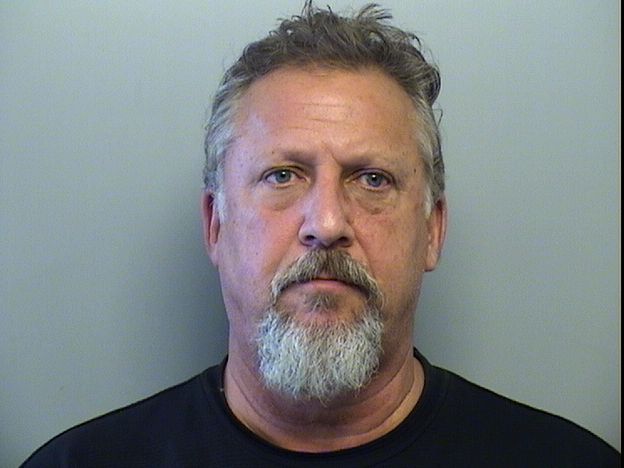 Lee Alan Belmonte, a 59-year-old resident of Bixby, was arrested at 7:57 a.m. this morning by Bixby Police and was booked at 10:37 am at the David L. Moss Correctional Center.
A subsequent report from the Dean Martin campaign says that Belmonte isn't the campaign manager for Key, but he is a Pat Key volunteer and his wife works at the County Clerk's office:
We have received word from sources from the Key campaign that Lee Belmonte isn't the campaign manager. However, we have confirmed he is a volunteer. He claims to have 2 other crews helping him. And his wife works at the County Clerk's office under Pat Key. We know he has been paid in the past for putting up campaign signs. We don't know if he has been paid by Pat Key's campaign to do the same.You may say this isn't reflection of Pat Key. However, people have given her campaign descriptions of the vehicle and the person stealing the signs in the past 2 weeks. And to not shut Lee down immediately, when they had a description of the vehicle and a partial plate number, well that's for the voters to decide if Pat should be held accountable for Lee's criminal actions...
It's worth mentioning that there is no civil service protection for county employees. They serve at the will of the elected official. While I suspect that any newly elected official would retain most of the worker bees from the previous administration, someone in management may reasonably fear being replaced by someone close to the newly elected official -- strong motivation to help your boss get elected.
MORE: Here's video of more than 30 Dean Martin signs being unloaded from Belmonte's van by the Bixby Police:
Another race that will be decided in the August 28, 2012, runoff election is the race for Tulsa County Clerk. No Democrats filed for the open seat, and none of the three candidates received a majority in the June primary, so the runoff between the top two finishers -- Pat Key and Dean Martin -- will decide who will take over this important county post.
 Although many people I respect are supporting Key, and although Key bought an ad on this site, I believe it is time for a change in leadership at the County Clerk's office, so I am endorsing Dean Martin for Tulsa County Clerk.
Key is the current chief deputy, running to succeed her boss, Earlene Wilson. Wilson was first elected in 2000 to succeed her boss, Joan Hastings. The County Clerk's job is keeping and providing access to public records, including deeds, contracts, agendas, and meeting minutes. As I wrote before the primary, the current County Clerk's office administration, in which Pat Key has been chief deputy, has dragged its feet in providing complete access to the public, and thus Tulsa County lags badly behind other jurisdictions:
The inconvenience of driving to the county courthouse to get complete information about property transactions is no accident, sadly. It's part of the philosophy of the incumbent, a philosophy I assume is shared by Key, the current deputy. The incumbent administration seems to see public access as a problem to be managed, not as an opportunity to serve the public interest. There's a stark difference between the openness and ease of access to be found on the Oklahoma County Clerk's website compared to what you find on the Tulsa County Clerk's website....Long-time readers will know that I've long been frustrated by the Earlene Wilson/Pat Key administration's foot-dragging on public disclosure. (Here's a complaint from 2004, a response to a March 2009 Journal Record column by Ted Streuli titled "Tulsa County Clerk Earlene Wilson is picking your pocket," and a concern raised this year when Pat Key might not draw an opponent.) Pat Key was Wilson's deputy throughout Wilson's tenure as County Clerk and never raised a public objection, as far as I've found, to Wilson's access-thwarting policies.
Pat Key seems like a decent person and by all accounts a competent manager. It might be very wise for Dean Martin to keep her on as chief deputy if she were willing to stay. But competent management is not enough when an organization isn't moving in the right direction.
The County Clerk's office needs a new direction, a new guiding vision, a change from the leadership of the last twenty years, which seems stuck in the pre-World Wide Web era. I believe that Dean Martin can bring that kind of leadership to the County Clerk's office.
Dean Martin is a lifelong Tulsan, a graduate of Will Rogers High School and Oklahooma State University. Martin has over 30 years of business experience, including the recruitment, training, and management of personnel. He has been endorsed by County Assessor Ken Yazel, former State Senator Randy Brogdon, and former TU football coach and Tulsa County Republican Vice Chairman Dave Rader.
As Tulsa County Clerk, Dean Martin will also give taxpayers another strong advocate for their interests and public transparency on the Tulsa County Budget Board. The County Clerk is one of eight members of the budget board. Right now, only one member of that budget board believes that all county revenues and expendtitures, including those of authorities and trusts, should be included in the county budget. Dean Martin agrees with County Assessor Ken Yazel that the budget should cover all sources of revenue and all county expenditures. Pat Key's boss didn't support that idea in the budget board meeting this year, and Pat Key hasn't expressed any disagreement with her boss on that point.
I'm also pleased that Dean Martin has come out in opposition to the idiotic Vision2 proposal -- the tax, AA corporate welfare, and pork barrel package put forward by the County Commission for November's ballot. Many elected officials may think Vision2 is poorly thought out, but few will have the courage to speak out against it. Hundreds of thousands of dollars will back the vote yes side, much of it from people and companies who stand to make a pile of money if it passes. It's a big help for the opposition when elected officials are willing to speak out against an ill-considered tax, borrow, and spend plan like Vision2. Pat Key has not taken a public stand on the issue.
Dean Martin's vision for greater access and transparency has already encouraged some positive changes in the county clerk's office. The office used to close over lunch hour, and Dean Martin said that as clerk he would have workers stagger their lunch breaks so that the office could remain open. Since so much information is only available by going to the office in person, it's important to keep the office open when people with regular jobs have the opportunity to visit. Sometime recently, this policy was implemented.
Pat Key's campaign has made much Tulsa County's A+ rating from Sunshine Review. As someone who uses government websites to research what I write here, I've always been baffled by that A+, as so much of the information I seek has not been available online. The website's disclaimer page may explain the gap between perception and reality (emphasis added):
Sunshine Review is an online open-content collaborative encyclopedia, that is, a voluntary association of individuals and groups working to develop a common resource of human knowledge. The structure of the project allows anyone with an Internet connection to alter its content. Please be advised that nothing found here has necessarily been reviewed by people with the expertise required to provide you with complete, accurate or reliable information.That is not to say that you will not find valuable and accurate information in Sunshine Review; much of the time you will. However, Sunshine Review cannot guarantee the validity of the information found here. The content of any given article may recently have been changed, vandalized or altered by someone whose opinion does not correspond with the state of knowledge in the relevant fields.
That means it's entirely possible for a Tulsa County employee to have rated the county's website and given it an A+.
As I look at the criteria by which county records are supposed to be graded, it seems to me the county deserves an "incomplete" in most categories. For example, I don't see a checkbook register or credit card receipts posted online, a requirement listed in the budget category. Minutes of past meetings are there for some boards and authorities, but not all.
Some contracts are posted, but many appear to be missing -- e.g. any contracts for the Tulsa County Industrial Authority (TCIA), the Tulsa County Public Facilities Authority (TCPFA, aka the Fair Board) contract for the Tulsa State Fair midway, the TCPFA lease agreement for Big Splash, the County Treasurer's contract with the office's outside legal counsel -- and others are missing appendices and attachments -- e.g. the Arabian Horse Show contract. Sunshine Review says that a vendor's campaign contributions should be posted with the contract, but I don't see any campaign contribution info on the website at all.
With incompletes in at least five of 10 categories, Tulsa County's website should have a C at best from Sunshine Review. While there have been some recent improvements -- making it easier to find minutes from the agendas, hotlinking agenda items to backup information, both at least partly as a result of my feedback -- it is not an A+ site, and it's a ridiculous boast to claim that it is. There is plenty of room for improvement, as you can see by comparison to the county website that the Sunshine Review criteria list points to as a paragon of transparency: Anderson Co., South Carolina.
It's time for an honest assessment of Tulsa County's efforts to gather, preserve, and make government information public, in an age when "public" means "online." We need an honest grade, not grade inflation, and a concrete plan for improvement. I see no reason to believe that someone from the current administration would depart from the current administration's foot dragging.
The Tulsa County Clerk's office needs new leadership devoted to convenient and complete public access to public information. Dean Martin has that aim as his vision, and that's why I'm voting for Dean Martin for Tulsa County Clerk.
Early voting begins tomorrow (Friday, August 24, 2012), so it's time (past time, really) for my picks in next Tuesday's (August 28, 2012) runoff election. Here's the first in a series:
 House District 70: Shane Saunders: This is an open seat -- incumbent Ron Peters has hit the 12-year limit -- and with no Democrat in the race, Tuesday's winner becomes the next State Representative for this Tulsa district. As I wrote in my primary endorsement, I've known Shane now for over a decade. He is a principled, across-the-board conservative on social and fiscal issues, intelligent, thoughtful, articulate, and personable -- all qualities that are essential to a representative who will be effective in accomplishing the right aims at the State Capitol.
In knocking doors in my neighborhood for Shane Saunders, I've heard a common theme from voters who have met both candidates: Both candidates are nice people, both are conservative, but the other guy seems uncomfortable with people, while Shane is friendly, outgoing, and at ease dealing with people. Like it or not, being an effective state rep has a strong social component. To get anything done, you need 51 votes, and to get those votes, you have to build coalitions, which involves listening, conversing, and persuading. If you're a wallflower, you won't advance the conservative cause.
It's also important to know specifics on the issues. It's well and good to have the right principles, but legislators vote on specific legislation, not broad principles. In candidate surveys and forums, Shane Saunders has demonstrated that he understands the details, the nuts and bolts of public policy, and so he can effectively shape policy in accordance with his conservative principles.
It's Shane Saunders's intelligence and personal qualities that have attracted support from groups and individuals who disagree with him on principle and whose support he has not sought. Although he's a strong school choice advocate, consistently pro-life (Shane has walked in the March for Life since he was a teenager), an opponent of corporate welfare and extravagant contracts with public employee unions, he's received unsolicited money and endorsements from organizations completely at odds with his views. I've been told by Shane that his opponent actively sought a meeting with the OEA to get their support. The OEA met with the opponent, but they also contacted Shane for a meeting, as a courtesy to him. Having heard them both, they seem to have been impressed with Shane's candor and knowledge, despite deep disagreements with him on their core issues.
It's an ideal situation: A conservative state representative who stands firm on principle in the face of opposition, but who nevertheless has the respect of his opponents for having his facts straight and making an intelligent case for his point of view.
I'm proud to be Shane Saunders's friend, to be a part of his campaign team, and to urge you to vote for Shane Saunders for State Representative in House District 70.
Ken Walker, one of the candidates in the runoff for House District 70, skipped a Tulsa Republican Club forum for runoff candidates last Friday and refuses to participate in any debate or forum hosted by the League of Women Voters. The winner of the August 28 runoff will take the open seat, currently held by Ron Peters, who has hit term limits.
Daniel went to the lion's den, but apparently Ken Walker won't speak to a friendly audience or take questions from the stridently neutral LWV.
Below is a news release from Shane Saunders, Walker's opponent in the HD 70 race. 2012 shows disturbing signs of being the year of the amateur in Oklahoma politics. All you have to do to win a Republican primary is to look appropriately somber and concerned and avoid having any taint of political involvement. Having concrete opinions on issues, wanting to pass legislation to undo bad laws and regulations, voting on a regular basis, showing up and answering questions at a candidate forum -- evidently all of these attributes make you a "typical politician" and not to be trusted.
WALKER TO VOTERS: YOU DON'T MATTERHouse District 70 Candidate rejects public scrutiny
Tulsa, OK- Demonstrating his refusal to support the basic principle that the best government is the one that listens to its people, Candidate Ken Walker is refusing to appear before voters to discuss the issues important to them.
According to Connie Siebold with the League of Women Voters of Metropolitan Tulsa (LWV), Ken Walker today refused to participate in any debate or forum hosted by the LWV, an organization that has sponsored countless debates and candidate forums in Oklahoma.
Walker also insulted the Tulsa Republican Club by failing to appear at a runoff candidate forum last Friday. This long standing conservative Republican club would have been a great opportunity for Walker to explain his views on the issues.
"Clearly Ken Walker has something to hide," said Shane Saunders, a conservative Republican running for the House District 70 seat, "He won't discuss the issues that matter to conservatives and he won't give conservative Republicans the respect they deserve to hear their views."
"If Walker can't explain his own views to a friendly audience," Saunders said, "how can he fight for conservative Republican views in the state legislature?"
"Our campaign has always operated on the principle that, in order to truly be a representative, you have to be open and engaged with the people on the issues that matter," Saunders said. "Our campaign will debate, discuss, visit or otherwise interact with any interested voter or organization anytime, anywhere."
"I know exactly where I stand on the issues and I enjoy sharing my vision to lead Oklahoma," Saunders said, "It is a shame that Ken Walker doesn't think enough of the people to do the same."
It's been a very busy, very productive week for me. It just hasn't been productive at all here on BatesLine. One urgent project at work turned into three, plus some urgent tasks at home. The family stayed plenty busy with Vacation Bible School at church (with the theme of Babylon from the book of Daniel -- the six year old is convinced it should be pronounced "Baby-Lawn").
Despite the busy-ness, I did watch and tweet about the 2nd Congressional District debate, sponsored by Rogers State University and moderated by Lt. Gov Todd Lamb, between Republican runoff candidates George Faught and Markwayne Mullin. I was amazed to hear Mullin respond to a question about the legislation he would introduce by saying we don't need more legislation. I guess he missed the civics class where they explained that you have to pass legislation in order to eliminate bad laws. Maybe someone should give Mullin a copy of the Schoolhouse Rock DVD -- a little remedial education for the carpetbagging would-be federal legislator who doesn't want to legislate.
(Mullin's criticism was funny, too, since we just had a primary campaign in the 1st District was criticized for not introducing lots and lots of legislation and getting it passed.)
Not only did Faught dominate the debate, he had a prime timeslot for a radio interview with Sean Hannity a couple of days later.
Here's a collection of links from the 2nd District campaign this week:
Oklahoma 2nd Congressional District Debate on Vimeo
Sean Hannity interviews George Faught
George Faught press release on the debate and his interview with Sean Hannity
The MullinFacts.com website has some interesting info. Although Markwayne Mullin claims an Adair County address as his residence for the purpose of running for Congress, Mullin claims a house valued at over $500,000 in Wagoner County -- in the 1st Congressional District -- as his homestead for the purpose of a break on his taxes. Here's a direct link to the Wagoner County Assessor's office showing Mullin's ownership and homestead exemption.
Another fascinating piece of info: Mullin set up a campaign committee to run for State Labor Commissioner in 2010, then decided not to make the race. He's hardly the political babe-in-the-woods he appears to be.
Finally, the Democratic Congressional Campaign Committee, which has targeted this race to retain the seat for their party in the battle for a majority in the House, calls both Republican candidates "severely flawed." You can guess what they named as Mullin's flaws -- the ATF raid on his place of business and the FEC controversy over his business advertising.
George Faught's flaws in the eyes of the Democrats? Faught supports the conservative budget plan for cutting the deficit and putting America on the road to cutting its debt, and Faught is endorsed by Mike Huckabee. Those may be severe flaws to a liberal Washington Democrat, but they're positive attributes for conservative eastern Oklahomans of all parties.
We pulled into the Sullivan HQ parking lot shortly before 9 p.m. on election night.
We were just coming back into Tulsa after five days away. We voted Friday morning at the election board, then headed southwest to hear the magnificent final performances of the choir and orchestra at the Oklahoma Summer Arts Institute at Quartz Mountain Resort and to pick up our oldest son at the end of his two-week stint in the choral program -- it had been literally and figuratively a mountain-top experience for him.
From there, we drove a few hours south into Texas cotton country for a couple of quiet days with my wife's relatives, playing Chinese Checkers and Wahoo and stirring up memories of the '20s, '30s, and '40s -- hard times but good times. By being away from home for election day and the previous weekend, we missed (but not really) the last-minute barrage of robocalls and mailers.
Tuesday started with breakfast with my wife's aunt and uncle (sausage patties, fresh biscuits, apricot preserves, cantaloupe), a game of Chinese Checkers, a lesson by my wife's aunt on how to crochet a potholder. Then a round of goodbyes, a drive by town landmarks, photos by the giant bug sculptures made of car parts, an impromptu visit with a local musician at his studio on the square, lunch at Sonic, a drive by the long-abandoned family homestead, and the long drive north, listening to Johnny Gimble and Riders in the Sky.
We had been listening on the radio, so as we pulled into the parking lot, we knew that the 1st District race was close with the lead changing hands, and we knew that results were very slow arriving at the Tulsa County Election Board. When we walked into HQ, where the watch party was being held, it was clear that they knew more. I walked over to a screen showing a spreadsheet. Runners had picked up results from most of the big precincts, revealing that turnout was incredibly low, and Sullivan trailed Bridenstine in most of them. It was close, and a win was still possible, but it didn't look promising. I ran my tired family home and came back.
I spotted Congressman Sullivan and went to shake his hand. John gave me a hug and thanked me for my help. The mood in the room was somber but calm, a mood that emanated from the candidate himself. No one uttered any angry words; there were no recriminations or second-guessing -- not even the kind of frustrated groan you let out when the Sooners fumble the ball in a bowl game. If voters could have somehow fore-seen the dignity with which John Sullivan would handle his defeat, it would have discredited the demonic caricature painted by his opponents' supporters.
The only frustration was with the slow trickle of official results from Tulsa County. The election board still didn't have air conditioning, we heard, and that seemed to be slowing everything down. John was ready to concede whenever the moment was right, but no one wanted him to take that step while there was still a chance that the race could turn around. The election board delays pushed the moment of certainty further into the night.
At some point in the proceedings, someone brought in a full-sheet chocolate cake with an outline of Oklahoma and the phrase, "I've got the Okie in me," in frosting on the top. I got to meet Conservative Bixby Chick and her husband; they were motivated to help Sullivan after they met his opponent.
At about 11:20, the precinct map begin to fill in more rapidly, and the incumbent fell further behind the challenger, not by much, but by enough to put the result beyond doubt. John Sullivan and family gathered in the back room, John called to congratulate the winner, then John and family walked through the main room to the applause of supporters and the relief of the long-suffering TV news crews.
John's statement was short, self-deprecating, and gracious, expressing appreciation for the privilege of representing the 1st District, congratulating the winner, and reminding everyone that he'd be on a plane the next morning at 8:30, headed back to Washington to do the job that's still his for the next six months.
And then it was over. John and family headed home. John's mom and mother-in-law picked up what was left of the food they'd brought. Rented chairs and tables were folded and stacked and the floor was swept of red, white, and blue confetti. And then I headed home to unpack from the trip, start some laundry, and check email.
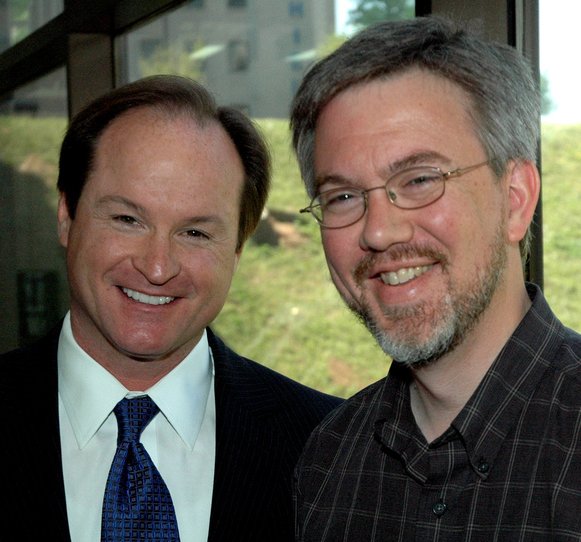 It was a strange feeling. Ten and a half years earlier, I had been part of an insurgent campaign that had come from third place to beat the establishment favorite, the First Lady of the State of Oklahoma. Countless insurgent campaigns since then had fallen short, but now, in 2012, another one had succeeded, with me on the other side from many of my usual friends and allies.
But I don't regret remaining loyal to someone who has been loyal to me and in nearly every case a good representative of my views. (Yes, Sullivan voted for TARP, but so did Coburn, and Heritage and AfP urged its passage. Yes, Sullivan endorsed the River Tax, but Medlock endorsed Vision 2025 -- he and I were even on opposite sides of a debate -- and yet I still supported him through recall, his challenge of LaFortune, and his state house race.)
How does a conservative Republican get beat in a primary in a conservative district? Perhaps his supporters were complacent, couldn't believe he could be beat, and didn't bother to show up. There was no senate or governor's race on the ballot. It was a hot day, and it was the first time the primary had been held in June, the earliest date in state history. Turnout was 15% lower district wide than in 2010, 17% lower in Tulsa County, 20% lower in Washington County, and 8% lower in Wagoner County. We should know in a few days who the missing voters were.
I can't help feel that the Tea Party was hijacked in this election. There have been certain people trying to take out John Sullivan since shortly after his first re-election in 2002, actively looking for candidates to run against him. Their issues with him mainly seemed to be personal, not political. This time they tapped into Tea Party energy and convinced them that the most conservative member of Oklahoma's House delegation was a lazy RINO. They succeeded in replacing a conservative congressman who voted 91% of the time with a conservative (as far as we know) nominee who voted 22% of the time; meanwhile Democrat tax-hikers went unchallenged and Tea Party candidates for the legislature fell well short of defeating the corporate welfare crowd that failed to cut our income tax rates this year. Had all the effort expended on the congressional race been targeted instead on legislative races, it could have changed the State Capitol for the better.
In any event, Jim Bridenstine is the nominee. We have to vote for him in November, because Republicans must keep the House, while gaining the Senate and the White House, to have any hope of repealing ObamaCare and replacing it with a sustainable, free market health care solution, and we can't afford to lose a single seat.
And because of this Bridenstine will likely face an immediate challenge: The NRCC will want to come in, displace the team that won the nomination, and take over the running of the campaign. Sullivan was hit with this after his 2001 special primary win, and he allowed NRCC to advise, but he kept his victorious team in place and in charge.
I'd expect another challenge, too; expect Bridenstine to be wooed by the big local donors, who may want him to ditch some of his campaign team. How he handles such a situation, should it emerge, will tell us much about the kind of congressman he'll be. We'll see very quickly whether his political courage is genuine or just a pose.
MORE:
The TeaPartyCheer website has John Sullivan's bios from his congressional website and his campaign website. There's a lot of positive material there about his work in Congress that didn't seem to have been presented in the campaign.
Happy Election Day! Polls open across Oklahoma at 7 a.m. and close at 7 p.m.
Results should start rolling in soon after 7 p.m. The Oklahoma State Election Board website will update results as they are received from the county election boards. Although results are posted on each precinct door shortly after the polls close, a precinct's results have to be taken to the county election board to be read into the state election computer system.
A few resources as you go to vote:
- Oklahoma State Election Board website
- Find your polling place: Looks up your voter registration info in the state election board database, tells you where to vote and which districts you're in.
- Tulsa County Election Board
- Tulsa County Precinct Locator
- County election board locations and phone numbers (PDF)
- The BatesLine ballot card: My choices for the Republican primary.
- The BatesLine archive on Oklahoma Election 2012
- Oklahomans for Life candidate surveys
- League of Women Voters of Tulsa voter guide
If you run into any difficulty voting or spot any irregularity, contact the your county election board. The phone number for the Tulsa County Election Board is 918-596-5780.
Posted 1:00 a.m. Tuesday, June 26, 2010. Postdated to remain at the top of the blog through poll closing time.
Jerry Sullivan, a retired Lt. Colonel in the US Army Reserve and retired special agent for the U. S. Customs Service, sent along a letter in appreciation of the help his family received from Oklahoma 1st District Congressman John Sullivan in dealing with the federal bureaucracy. (Jerry Sullivan is not related to John Sullivan. His distinguished career in the military and law enforcement was the subject of a 2010 Tulsa World feature story.)
Constituent service is an aspect of a congressman's job that is underappreciated by everyone except those who find themselves unable to navigate a jungle of federal red tape. A congressman and his staff serve as guides, interpreters, and expediters to the constituent in need of help.
Here's Jerry Sullivan's letter, unedited except for formatting:
"TRUE CONGRESSIONAL LEADERS ARE FEW AND FAR BETWEEN" After retiring from the US Customs Service, Office of Investigations where I had served as the Special Agent in Charge, New York, I returned to active duty at the request if the Army due to the shortage of Military Police, Lieutenant Colonel's. Due to the nature and demands of my assignment, I relocated my family to Tulsa to better meet the needs of my visually impaired daughter, Sarah who is presently an honor student at ORU. As a family, we had been used to overseas deployments and CONUS moves with both NCIS and US Customs; however, this particular move was different. I was not around and the responsibility fell squarely on my "new to the military" spouse. While I was serving with our tremendous Military Police men and women, my wife was experiencing what thousands of military family members of all services go thru without their spouses many of which are Guard and Reserve members not living near a military post or base for support .Relocating is much more intense when dealing and coordinating the special needs of a handicapped child. When difficulties arose with the school district and both state and federal agencies due to bureaucratic red tape and overly excessive processing times for essential services for my daughter, my wife turned to Congressman Sullivan and his exceptional staff for assistance. They immediately rose to the occasion and resolved the issues in question and monitored the process till completion. I cannot express the relief and gratitude we felt for their assistance. Presently, Congressman Sullivan is assisting me in resolving several active duty service connected disabilities with the Veterans Affairs Department on a claim that has languished in the bowels of the VA now for over 585 days since my retirement. Congressman Sullivan, no relation, has been a lifesaver for our family.
Congressman Sullivan is a true leader for Oklahoma and our country. He represents us and our interests as individuals within this congressional district. His leadership supporting our service men and women and veterans is strong and unwavering. He is steadfast on immigration law and policies in securing our national borders and in protecting our national security. My view of most congressional representatives is less than favorable. During a four year assignment in Washington DC, I often briefed Members of Congress and their staffers on US Customs Domestic and International law enforcement matters of national security. Most of them cared less regarding the topics at hand and were more concerned about having lunch or dinner at the Dubliner or other watering holes adjacent to Capitol Hill. Somewhere between their home district and traveling inside the Washington beltway most Members of Congress forgot who sent then to Washington in the first place along with the meaning of the words "WE THE PEOPLE".
It took me almost 32 years of a 38 year military and law enforcement career to understand that Congress for the most part doesn't care about anyone but themselves, their inexperienced law school staffers and being re-elected to a system that drastically needs fixing.
I can tell you that Congressman Sullivan is NOT one of the many described above. He takes the road less traveled. He is a strong individual with conviction who will continue to work to place the United States on the road of fiscal recovery and responsibility, lower the unemployment rate, improve our relationships overseas while improving our national security, but, above all represent each and every one of us in a Congress that has lost touch with reality. It begins right here right now and I choose a proven leader, Congressman John Sullivan to help restore this country to a position of prominence where we were once were and bring Congress back to being the representatives of the people.
MORE: A new blogger, Conservative Bixby Chick, explains why she decided to volunteer for John Sullivan rather than his opponent.
People keep sending me stuff. Here's a sampler, with a few thoughts of my own:
Pat McGuigan of CapitolBeatOK has a story about State Rep. George Faught's late surge in the 2nd Congressional District. The story notes the Faught campaign's strong cash position going into the home stretch and his deep grassroots precinct organization:
Terry Allen, a political consultant from Oklahoma who now works in the nation's capital, commented, "The Faught campaign has to be feeling pretty good right now. With 230 precinct captains, it is virtually unheard of in modern political races. This means they've covered the lion's share of where the GOP vote lies in the 2nd district, and that's impressive. The only other campaign to build a precinct walking organization to this degree is James Lankford's 2010 primary race for Congress in the 5th District."To build a legitimate walking and knocking operation to that scale is very difficult. If their precinct captains can indeed follow through on their tasks, then it puts Faught in the driver's seat for the nomination."
I heard from a reader who says he's supporting former State Rep. Wayne Pettigrew in the 2nd District race. (@TeamStipe calls him Poodlegrew in honor of the gentleman's hairstyle.) Pettigrew represented Edmond in the 5th Congressional District through 2004 and was still a registered voter there as of a year ago.
I'm amazed any conservative would support him. Pettigrew was one of six Republicans (Don Armes, Bill Case, Chris Hastings, Terry Ingmire, and Ron Peters were the other five) who broke ranks with the rest of the caucus and supported Brad Henry's lottery bill (HB1278, 2003 session), which in turn opened the door to rampant Class III Indian gaming. Had any two of those six voted with their Republican brethren that would have been sufficient, combined with the seven Democrats who voted no, to block the lottery bill from going to the voters.
CORRECTION: The House Journal record of the vote listed members only by last name and with no indication of party, which led me to think "Cox" in the lottery vote was Doug Cox, when it was in fact Kevin Cox, a Democrat from House District 97. I apologize for the error.
The following year, Pettigrew was forced into a runoff by primary challenger Marian Cooksey; rather than press ahead to the runoff, he withdrew. At the press conference, Pettigrove said of Cooksey and her supporters, "When you go to bed with those people, you get their crabs." (As reported in the July 10, 2004, Tulsa World.)
As I wrote at the time, most people would have gone for the "lie down with dogs, get up with fleas" metaphor, but evidently Mr. Pettigrew's mind runs in different circles.
Associated Press has a story about the 1st District primary race between incumbent John Sullivan and challenger Jim Bridenstine. The story does a good job of outlining the charges and countercharges between the two candidates.
Then there's this KRMG story on Sullivan's mailer attacking Bridenstine for taking accelerated depreciation on his alpacas. Without weighing in on the morality of depreciating domesticated camelids, I thought it was interesting that Bridenstine says he never made any money raising alpacas:
Moreover, he added, he and his wife never owned more than 20 of the animals, and they were more of a hobby than any kind of financial enterprise.Indeed, he says that they never even sold the animals' fleece, but rather gave it away.
Alpaca raising is an interesting hobby, and hobby is an interesting term to use, because the federal tax code doesn't allow you to deduct the expenses of a hobby. What Bridenstine said in that article would lead me to believe (to borrow a favorite phrase from Bridenstine's campaign manager) that one of two things is true: Either Mr. Bridenstine was improperly taking a business tax deduction for a hobby or else his alpaca business was a failure.
Twitter user @burkeanone offered a fairly balanced series of 14 considerations in his evaluation of Bridenstine v. Sullivan; I collected them in a Storify article. The first item: "Maybe I missed it, but I haven't heard any references to what Mr. Bridenstine's civilian job since leaving TASM has been. ????"
Anyone else bugged by the Bridenstine mailer featuring the candidate in his Navy dress whites, making puppy-dog eyes at the camera, with the caption (paraphrased from memory), "Would you sling mud at this man?" While there's plenty of fine print disclaiming any endorsement by the Navy, the gist of the ad seems like he's hiding behind his uniform, even though the criticisms from the Sullivan campaign have nothing to do with Bridenstine's military service. It occurs to me that Bridenstine has Sullivan at a disadvantage when he says he never missed a mission, while sidestepping his poor record of voting (only 22.7% in major elections) and criticizing Sullivan's 91% voting record in Congress. We can easily find Sullivan's record as a congressman, but we can only go by Bridenstine's word on his naval record, unless he were to file a 180 form to allow release of his records.
MORE: In the Senate District 33 Republican primary, Don Little says that rival Nathan Dahm received illegal in-kind campaign contributions from corporations:
Nathan Dahm is a candidate for OK State Senate District 33. He recently held a Social for his campaign and received corporate sponsorship of door prizes and auction items for this official campaign event promoting his candidacy. The corporate sponsors were among this list of businesses which Nathan Dahm thanked for sponsoring his campaign event: Charlestons, The Hub, ABC Nails, Main Street Tavern, The Green Broom, Olive Garden, Sports Clips, Life Chiropractic, B.A. Nails, Chik-fil-A, Los Cabos, On The Corner, Genghis Grill, Daylight Doughnuts, BB Auto Integrity, Main Street Studios, Rumors Salon, Bella Vita, Lazy Days, Rex's Chicken, Broken Arrow Gun Shop, Chili's, Tom Hundley Heating & Cooling, & Applebees It is an Ethics violation to receive In Kind contributions from corporations, and all contributions must be reported on a candidate's Ethics Report.
True enough that he must disclose any contributions, including in-kind, but I would not be surprised to learn that each of these companies is an LLC, which can contribute to state candidates, rather than a corporation, which cannot. (And while national chains Chili's and Applebee's may not be LLCs, the local franchise operator may well be.)
STILL MORE: An interesting report in the Daily Oklahoman about trial lawyer PACs funding support for legislative candidates who are running in the Republican primary against incumbents supported by Coalition for Oklahoma's Future and Chamber of Commerce PACs. This looks more like mutual opportunism on the part of the candidates' consultant and the trial lawyers. The candidates got into the race over issues like ObamaCare implementation, but this alliance with the trial lawyers provides a source of funding that could rival the big business bucks behind their incumbent opponents -- or at least enough to keep them in the game.
MORE to come as I have time today.
For your convenience, here is a list of the candidates I've endorsed, will be voting for, or otherwise recommend in the June 26, 2012, Oklahoma Republican primary. Early voting is already underway; as this is a Federal election, early voting ("in-person absentee") will be available at the Tulsa County Election Board at 555 N. Denver Ave in Tulsa on Friday, June 22, 2012, from 8 a.m. to 6 p.m., Saturday, June 23, 2012, from 8 a.m. to 1 p.m., and Monday, June 25, 2012, from 8 a.m. to 6 p.m. (All county election boards offer early voting at those times; click this link for your county election board's location.)
As I have time, I'll add links to endorsements I've already made, brief notes about those I haven't previously written about. Here's a link to the archive of BatesLine posts about Oklahoma Election 2012.
Corporation Commissioner: Bob Anthony: A long-time advocate for the Oklahoma consumer, he's being challenged by a former OCC staffer. I've read Brooks Mitchell's attacks on Anthony, but I don't think he makes a compelling case for replacing Anthony.
1st Congressional District: John Sullivan: Strongest conservative ratings of any Oklahoma congressman, Sullivan is on the lengthy ladder to leadership on the House Energy and Commerce Committee. His opponent's interest in public policy seems fairly recent, judging by his voting record, and he's vague about substantive policy differences with Sullivan.
2nd Congressional District: George Faught: The only candidate with legislative experience, a track record of conservative leadership, and long-time residence in the district. Endorsed by major conservative groups and icons like Mike Huckabee, Phyllis Schlafly, David Barton of Wall Builders, Mike Farris, founder of the Home School Legal Defense Fund, Conservative Women for America PAC, Family Research Council Action PAC, Gun Owners of America PAC, and State Auditor Gary Jones.
Tulsa County Clerk: Cassidy Tandy: Tandy understands the need to bring the County Clerk's office into the 21st Century by making public records publicly available and easily accessible online. Currently senior appraiser in the County Assessor's office, Tandy would, as County Clerk, join her current boss Ken Yazel on the County Budget Board as an advocate for budget transparency. One of her opponents, the current deputy, seems satisfied with a public records system that requires monthly fees and the permission of the county commission for full online access. A third candidate, Dean Martin, doesn't speak to the County Clerk's duties in his campaign material.
Senate 39: Kevin McDugle: McDugle has been endorsed by national and state conservative organizations, including the Family Research Council Action PAC and Americans for Tax Reform. I appreciate incumbent Brian Crain's support for the personhood act this year, but last year he had the least conservative voting record of any Republican in the State Senate, according to the Oklahoma Constitution's ratng. I found Crain's mailer touting his support for local decision-making ironic, in light of his past sponsorship of legislation to override local control of the zoning process.
Senate 41: Paul Blair: Blair has also been endorsed by the Family Research Council Action PAC. His opponent, incumbent Clark Jolley, was chairman of the Senate redistricting effort and is therefore responsible for the ugliest gerrymander I have ever seen. The map chops up central Tulsa to be represented by suburban-dominated districts.
McDugle and Blair have been under heavy attack from an independent expenditure group called Coalition for Oklahoma's Future. Funders include the Chickasaw Nation, Rooney Holdings Inc, Flintco LLC, Williams Co, Clayton Bennett, Continental Resources, and Chesapeake Inc. Although the group has spent money on four State House races, the bulk of their resources has gone into these two Senate races.
House 23: Jason Carini: The Carini family has been a part of our church family for many years, and we've seen firsthand the deep roots of Jason Carini's conservative principles, Christian faith, and interest in public policy. Jason has years of grassroots conservative involvement and a successful small business, a solid foundation to be the kind of conservative leader Oklahoma needs now and for many years to come. And Jason is a new dad -- his first child arrived Thursday.
House 70: Shane Saunders: Shane's hands-on experience with the legislative process, his personal involvement with the oil and gas industry, his sharp mind, his devotion to his Christian faith and his family, and his affable nature will all be valuable assets not only to the citizens of House District 70, but to the majority Republican caucus and to the State of Oklahoma. Shane's also a new dad, married with a one-year-old daughter.
House 71: Katie Henke: Henke was the GOP nominee in the April special election that ended in a virtual tie after a barrage of mendacious attacks against her. Henke, a school teacher, faces one of her special election primary opponents, perennial candidate Evelyn Rogers. Winner will face Democrat Dan Arthrell in November, and Henke is undoubtedly the best prepared to win that race.
Tulsa Charter Amendment: No. Supposedly a housekeeping amendment to clean up the sloppy mess that Tulsa voters approved last year, it fails to align Tulsa's filing period with Oklahoma's. Read it here. The city's chaotic election calendar needs some careful study and restructuring, not the carefree tinkering that we've seen over the last three years.
Disclosure: I do computer data processing work for the Sullivan, Saunders, and Henke campaigns.
I learn all sorts of interesting things at blogger conferences, and some of the most interesting are incidental to the official program. And sometimes you have to go a thousand miles away to learn about something in your own state.
 Back in April, I was at BlogConCLT, sponsored by FreedomWorks and the Franklin Center for Government and Public Integrity. We were listening to a talk by Dean Clancy, FreedomWorks Legislative Counsel and Vice President for Health Care Policy, on ObamaCare, the possible outcomes of the Supreme Court case (which parts might be overturned, if not the entire mess), and what might happen after the Supreme Court decision. Clancy praised Oklahoma as one of five states that had not established a health insurance exchange.
This caught a blogger sitting the row behind me by surprise. She said had worked for a year and a half with an Oklahoma legislator to develop legislation to set up a healthcare exchange, believing that it was the best safeguard to retain local control in the face of ObamaCare, and yet Tea Party groups were upset with their efforts.
Clancy replied that Tea Party groups were right to be upset. Because of glitches in the ObamaCare law, if a state doesn't set up a health insurance exchange, then ObamaCare can't operate in that state. Clancy acknowledged that there is some controversy over that interpretation.
The former Oklahoma legislative aide said that people from the Cato Institute, a libertarian think tank, said that it was a good thing to set up an exchange and were advising them on it; Clancy said that at this point Cato was solidly against states setting up exchanges.
Someone from another state's think tank spoke up and said that they had been looking at following the Utah model for an exchange in their state, but what caused them to drop the idea was Judge Vincent's opinion in the 11th Circuit ruling, saying that states that move forward with the individual mandate undercut their own legal argument that the mandate is unconstitutional and onerous.
The former Oklahoma legislative aide said that they had looked at Judge Vincent's argument as well, but her legislator's concern was if ObamaCare was not struck down, Oklahoma should have something set up to allow Oklahoma to have some sort of control, rather than ceding all control to the federal government.
Clancy replied that what's happened recently is the discovery of this interpretation regarding exchanges: At one point it was thought that in the absence of a state exchange, the feds would set one up anyway on their terms. Now, this glitch in the law has been discovered that means that even if the federal government does set up an exchange, the premium subsidies and the employer mandate can't operate in your state. Clancy concluded humorously, "I think we can absolve you of any sins; you just didn't know any better."
During the following break, I turned around and introduced myself. The young woman who had been an aide in the Oklahoma State House is Meredith Dake, now an associate editor for Breitbart.com. There is no doubt in my mind about the sincerity of her opposition to ObamaCare, and it's not credible that she would work to advance ObamaCare.
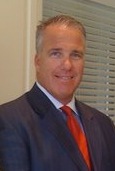 During her last session in the House, Meredith worked for State Rep. Glen Mulready. She had high praise for Mulready's work ethic, saying that he made a point of reading every piece of legislation headed for the insurance committee, which he chaired. (She also had kind words for Rep. Aaron Stiles, Mulready's office mate, and for Rep. Sally Kern, for whom she worked during her first year as a House staffer.)
The conclusion I drew from Dean Clancy's presentation and Meredith Dake's comments is that there was a point in time, when ObamaCare was first approved, that there seemed to be good reason from a conservative perspective to set up a state exchange. After further study of the sloppy mess that is the ObamaCare bill, many conservative health care policy experts have concluded that rejecting federal ObamaCare funding and not setting up an exchange is the best thing states can do to frustrate the implementation of ObamaCare.
In May, FreedomWorks hosted a live blog event on the topic "How to Stop ObamaCare at the State Level," featuring Dean Clancy, Michael Cannon of the Cato Institute, Christine Herrera of the American Legislative Exchange Council, and Ben Domenech of the Heartland Institute. The summary of the discussion includes this from Cato's Cannon:
"The biggest challenge," Cannon wrote, "in convincing states not to create Exchanges is this. Lots of state officials, including conservative ones, have been sold on the idea that "if we don't create an Exchange, the feds will IMPOSE one on us." Or that states are somehow protecting their sovereignty by creating an Exchange themselves."To be clear, establishing a state-run Exchange does not prevent a government takeover of your state's health insurance markets. That takeover took place on March 23, 2010. That's the date on which states lost their sovereignty over their health insurance markets. Establishing an Exchange makes states complicit in that federal takeover. Heck, by creating Exchanges, states are paying for the privilege of having their sovereignty taken away.
In preparing this story, I contacted Rep. Mulready to ask if, in light of this new perspective, he still supports setting up a state exchange. He characterized a state exchange as "Plan C" -- a defensive move, not the ideal, but a backup plan in case Plan A (Supreme Court declares ObamaCare unconstitutional) and Plan B (Republican President and Congress repeal ObamaCare) fail to come to pass.
Mulready doesn't buy the argument that the glitch in the law will stop the feds from forcing their will on a state without an exchange. He believes that Health and Human Services Secretary Kathleen Sebelius would simply create a rule to require states to comply, notwithstanding the letter of the law. (There's precedent for that concern: When it was learned, shortly after ObamaCare passed, that the pre-existing condition protections weren't as strong in the law as the Obama administration had promised, Sebelius effectively twisted the insurance industry's arm and forced them to comply with non-existent provisions of the law. And as the President's Friday announcement about immigration non-enforcement shows, the Obama Administration doesn't feel constrained by the law.)
Mulready believes that states creating exchanges, even if only in a slow, foot-dragging way, are less likely to attract the attention of the Obama Administration than states that aren't doing anything at all.
At this point, Mulready said that exchanges are on hold. There's now an out: States would be allowed and take back over a federally established exchange, so there isn't the urgency to set one up preemptively. While he still believes it was a good move for Oklahoma to try to do something defensively and that the exchange that was designed is a good plan if it's needed, at this point, it's on pause pending the outcome of the Supreme Court case and the presidential election.
Mulready said that the argument that those working on an Oklahoma health insurance exchange were "trying to implement ObamaCare" is disingenuous. He pointed out that prior to his run for office and prior to ObamaCare becoming law, he was giving a PowerPoint presentation to various groups entitled "ObamaCare Is Wrong for Oklahoma." He said his critics must think he's schizophrenic to believe that he went from denouncing ObamaCare to trying to usher it in.
He compared the situation to someone coming in at the end of a football game and seeing the linebackers lined up 10 yards behind the line of scrimmage. To someone just coming in, it might seem like the team on defense is deliberately trying to lose the game. Instead, it's a prevent defense -- they'd rather give up a first down in order to prevent a game-winning touchdown.
Mulready said that he's been open to alternative approaches to limit ObamaCare's effects on Oklahoma. During a visit to Washington, he took advantage of some time in his schedule to arrange an impromptu and lengthy discussion with the aforementioned Michael Cannon of the Cato Institute. He and State Sen. Gary Stanislawski sat down with U. S. Sen. Tom Coburn to get his perspective. (Coburn initially urged state-funded state-based exchanges, but more recently, in March, Coburn said that there's no point in moving forward with a state exchange until federal rules for state exchanges have been established. "I would think it would be pretty wasteful to spend a ton of money trying to design a system when we don't know what all the components of the system are going to be.") Mulready asked Oklahoma Attorney General Scott Pruitt whether an exchange would undercut Oklahoma's legal position in the ObamaCare lawsuit, but Pruitt's sense was that it would not hinder Oklahoma's position at all.
Mulready and other legislators who worked on a state-based exchange are being targeted for defeat in Tuesday's Republican primary. Mulready's primary opponent, Darren Gantz, has a website called Mulbama.com where he says Mulready is "doing everything he can to further Obama's agenda in Oklahoma." In a video on the site, Gantz claims that "Glen Mulready is pushing for his former employer to monopolize the health insurance market in Oklahoma."
If that's happening, it's not immediately apparent. I've watched the video a couple of times, which includes edited snippets of a 2010 debate on HB 2130, and I don't see the smoking gun that Gantz claims is there. I like Darren Gantz and got to know him a little better through my volunteering for Randy Brogdon's campaign for governor (Gantz was Brogdon's volunteer coordinator), and I believe he is sincerely motivated by a concern that an exchange would have jeopardized health care freedom in Oklahoma. I appreciate Gantz's implicit suspicion that anything backed by the state Chamber of Commerce or the two big metro chambers is likely to be bad for the free market, for taxpayers, and for consumers.
But I also believe that Mulready and his conservative colleagues who worked on establishing an exchange are sincerely opposed to ObamaCare, and that even if the idea of a state exchange is misguided, I believe that it was offered in good faith as a strategy to avert greater federal control. This is a complicated issue, dealing with a complicated, poorly drafted law. I suspect we'll be finding out more about what was in it for years to come, assuming the Supreme Court doesn't do us a favor and sweep it all away in one stroke of the pen.
Of course, there's more to this race and other primary races than this one issue. For example, here's Gantz's reply to a mailer making personal attacks against him. (Mulready's consultants include Majority Designs and AH Strategies, the consulting firms of Fount Holland and Karl Ahlgren.)
It should also be mentioned that a PAC called Coalition for Oklahoma's Future is making independent expenditures in support of Reps. Mulready, Marian Cooksey, Todd Thomsen, and Elise Hall, and State Sens. Brian Crain and Clark Jolley. In SD 39, the group sent a mailer attacking Crain's challenger Kevin McDugle as a conspiracy theorist for claims that Crain's efforts in support of exchanges were ushering in ObamaCare. According to Mulready, the only piece the group sent into HD 68 was a positive piece touting his pro-life views. Does this group have an interest in healthcare, or is it simply pushing the issue that will help their candidate and hurt their opponent the most on a district-by-district basis?
If you've got an opinion on this issue or on the House District 68 race, feel free to submit a comment.
The Republican nomination for Oklahoma's 2nd Congressional District is getting national attention. Kerry Picket of the Washington Times writes that Markwayne Mullin is "under the gun" regarding the 2009 BATFE and BAPD seizure of firearms at his place of business in Broken Arrow (in the 1st CD), weapons owned by one of Mullin's employees, a convicted felon arrested on firearms violations.
Picket reports that the Claremore Daily Progress reporter covering the case says she's being targeted by the Mullin campaign for her stories about the candidate:
According to the writer of the Claremore Daily Progress piece, Salesha Wilken, as a result of shedding light on this story, the Mullin campaign has engaged in a smear campaign of her reputation and attempted to get her fired from her paper."The campaign has tried to get me fired on multiple occasions. They've tried to discredit me with other publications. Obviously, they were trying to intimidate me." According to Wilken, Mullin's campaign said that she "was a target."
However, Wilken says her editors have stood behind her reporting. "Everything I've written, I can document with either audio or court documents," Wilken said. "Markwayne Mullin does not want to answer questions about problems with the campaign," Wilken added pointing out she similarly scrutinized other candidates in the OK-2 GOP primary, but she did not receive the same backlash from those campaigns.
According to FEC filings, Mullin is a client of Majority Designs and AH Strategies, political firms of Karl Ahlgren and Fount Holland.
MORE:
Of the six candidates for the GOP nomination, only three were registered to vote in the district last year, according to voter records obtained on June 30, 2011, from the Oklahoma State Election Board.
State Rep. George Faught, Dustin Rowe, and Dwayne Thompson were all registered to vote at their current addresses in Muskogee, Johnston, and Cherokee Counties, respectively. Two of their three rivals were registered in other congressional districts and one was not registered to vote in Oklahoma at all.
As of June 30, 2011, Markwayne Mullin was registered to vote in Wagoner County Precinct 730379 in the 1st Congressional District, and former State Rep. Wayne Pettigrew was registered in Oklahoma County Precinct 550341 in the 5th Congressional District. Dakota Wood was not registered to vote in Oklahoma, but was a resident of Vienna, Virginia, near Washington, DC. Pettigrew represented Oklahoma County in the State Legislature.
Markwayne Mullin moved his registration from Wagoner County to Adair County on July 11, 2011. Mullin appears to have only voted eight times since 2000, starting with that year's general election.
Wayne Pettigrew moved his registration from Oklahoma County to Pittsburg County on July 14, 2011. He was a frequent voter in Oklahoma County.
Dakota Wood registered to vote in Rogers County on September 2, 2011. He voted in the March 6 presidential primary. Wood was not registered to vote in Oklahoma last July. According to Fairfax County, Va., land records, on April 23, 2012, Wood sold his home at 2247 Loch Lomond Dr in Vienna, Virginia, for $786,000. His declaration of candidacy lists his parents' address on Carefree Drive near Claremore as his address. According to his biography, Wood moved with his family to Claremore in 1978, graduating from high school there in 1981. His wife is a Rogers County native, the sister of former State Rep. Tad Jones.
(UPDATE: Dakota Wood responds in the comments with further background information. "The opportunity to represent my home town/county/district was one I and my family couldn't pass by. I resigned my position last summer as a Senior Fellow with the nation's preeminent non-profit institute for national security and we sold our home for a $120,000 LOSS (after realtor fees and home upgrades needed to sell it in the worst market since the great depression and not counting the 9 months of mortgage as it sat on the market unsold). With no income and no ability to purchase another home given the great sacrifices we'd made, my parents moved out of the home we'd bought in 1978 so that I could rent it to have some place to house my family. We've since moved into town (Claremore) for a more permanent residence.")
The current congressman, Dan Boren, and his predecessor Brad Carson both lived outside the 2nd District until shortly before running for the office -- Boren lived in Seminole in the 5th District and moved to Muskogee, Carson lived in midtown Tulsa in the 1st District and moved to Claremore.
While you don't have to reside in a congressional district in order to run for the office, and in Britain it's normal for a member of London's political class to run in any random constituency, America has a strong tradition of geographical representation. We like the idea of sending our neighbors -- people who shop and work and worship where we do -- to represent us in Washington.
Here are the voter registration records as they were on June 30, 2011, for all candidates for the 2nd District seat. The first line is precinct and name, second line is registration number, party, and status, third line is street address, fourth line is birthdate and registration date; fifth line is mailing address (if different from street address), remaining lines are the 20 most recent elections in which the candidate has voted. First two digits of the precinct number indicate the county sequence number in alphabetical order -- 51 is Muskogee, 16 is Cherokee, 73 is Wagoner, 55 is Oklahoma.
REPUBLICANS:
510038;FAUGHT;GEORGE;E;;
510010465;REP;A;
3220;E;HARRIS;RD;;MUSKOGEE;74403;
19620714;19880806;
;;;;;
20110405;AI;20110111;AI;20101102;IP;20100824;IP;20100727;IP;20100406;AI;
20090609;IP;20090210;AI;20081104;AI;20080729;IP;20080513;AI;20080401;AI;
20080205;AI;20070710;IP;20070213;AI;20061107;IP;20060822;IP;20060725;IP;
20060509;IP;20060404;IP
350004;ROWE;DUSTIN;PRICE;;
350012796;REP;A;
502;E;9;ST;;TISHOMINGO;73460;
19750923;20030908;
;;;;;
20110405;IP;20101102;AI;20100824;AI;20100727;AI;20100406;AI;20090407;IP;
20081209;AI;20081104;IP;20080729;IP;20080401;AI;20080205;AI;20071009;AI;
20070403;AI;20061107;AI;20060822;IP;20060725;AI;20060509;AI;20060404;AI;
20050913;IP;20050405;IP
110019;THOMPSON;DONALD;DWAYNE;;
110058170;REP;A;
11396;W;835;RD;;FT GIBSON;74434;
19581218;20081223;
;;;;;
20101102;IP;20100824;IP;20100727;IP
730379;MULLIN;MARKWAYNE;;;
730053754;REP;A;
33942;;51;HWY;;COWETA;74429;
19770726;20080205;
;;;;;
20101102;IP;20100727;IP;20081104;IP;20061107;IP;20041102;IP;20001107;IP
550341;PETTIGREW;GAYLE;WAYNE;;
550137900;REP;A;
2405;;RIVA;WAY;;ARCADIA;73007;
19620726;00000000;
;;;;;
20110405;IP;20101102;IP;20100824;IP;20100727;IP;20090407;IP;20081104;IP;
20080729;IP;20080205;AB;20070403;IP;20070306;IP;20061107;IP;20060822;IP;
20060725;IP;20050913;IP;20050405;IP;20041102;AB;20040824;IP;20040727;IP;
20040203;IP;20031209;IP
DEMOCRATS:
510041;EVERETT;EARL;E;;
510010278;DEM;A;
342;W;BENGE;RD;;FORT GIBSON;74434;
19330704;19760223;
P.O. BOX 246;;FORT GIBSON;OK;74434;
20110405;IP;20101102;IP;20100727;IP;20081104;IP;20080205;IP;20070403;IP;
20061107;IP;20060725;IP;20050913;IP;20050405;IP;20041102;IP;20040824;IP;
20040727;IP;20030401;IP;20021105;IP;20020917;IP;20020827;IP;20020514;IP;
20020108;IP;20010925;IP
510055;HERRIMAN;PATRICK;WAYNE;;
510081580;DEM;A;
9151;S;CHEROKEE;ST;;MUSKOGEE;74403;
19780220;20041109;
;;;;;
20101102;IP;20100727;AI;20081104;IP
510041;WALLACE;ROBERT;ANTHONY;;
510082017;DEM;A;
208;;HERITAGE;DR;;FORT GIBSON;74434;
19630715;20050111;
P O BOX 24;;FORT GIBSON;OK;74434;
20110405;IP;20101102;AI;20081104;AI;20080729;IP;20080205;IP;20070710;IP;
20061107;IP;20060822;IP;20060725;IP;20051108;IP;20050405;IP
INDEPENDENTS:
400305;FULKS;MICHAEL;G;;
400033392;IND;A;
54562;;US HWY 59;;;HEAVENER;74937;
19561119;19941117;
54562 US HWY 59;;HEAVENER;OK;74937;
20101102;IP;20081104;IP;20061107;IP;20060725;IP;20041102;IP;20001107;IP;
20000822;IP
 To reiterate something I wrote earlier today, it's a pleasure to be able to commend to you a candidate that I've known for years before he decided to throw his hat into the ring. When I tell you that Shane Saunders is a principled across-the-board conservative, thoughtful and well-spoken, it's grounded in countless conversations over the decade that I've known him.
Shane grew up and went to school in District 70, got his bachelor's in politics and classics at Washington & Lee University, then spent three years working in Washington as a staffer for Congressman John Sullivan. He returned to Tulsa in 2005 and founded Trident Energy, an independent oil and gas producer. Shane is married, and he and his wife Taylor have a one-year-old daughter. Shane is a consistent supporter of the sanctity of human life, a cause that has been important to him since he was in high school. As a small businessman, he doesn't support corporate welfare, where government picks winners and losers, but instead believes Oklahoma should provide the kind of business environment in which any entrepreneur could start a business and grow it.
Shane's hands-on experience with the legislative process, his personal involvement with the oil and gas industry, his sharp mind, his devotion to his Christian faith and his family, and his affable nature will all be valuable assets not only to the citizens of House District 70, but to the majority Republican caucus and to the State of Oklahoma.
When I started writing on a regular basis several years ago, I stopped actively pursuing opportunities to do computer work for campaigns, but when Shane, who had worked with me on campaigns in the past, asked me to handle data for his campaign, I was happy to be a part of his team. I know Shane Saunders will be a principled conservative leader in the Oklahoma State House, and I urge you to join me in voting for Shane Saunders on June 26.
 In politics, you tend to get to know candidates just as they decide to run for office, when they're putting their best foot forward, when every statement is carefully weighed for its impact on the campaign. So it's a pleasure this year to commend to you two young men, both running for open seats in the Oklahoma House, whom I've known for many years. We've had frank conversations about politics on a regular basis, and I've seen their personal conduct in a variety of situations. I can recommend them -- Jason Carini in House 23 and Shane Saunders in House 70 -- to you with confidence that they'll be great representatives for their districts and principled leaders for Oklahoma. (More about Shane in a later entry.)
Jason Carini is seeking to succeed the late Sue Tibbs as representative for House District 23. The Carini family has been a part of our church family for many years, and we've seen firsthand the deep roots of Jason Carini's conservative principles, Christian faith, and interest in public policy. Jason has a degree in public policy from Patrick Henry College and played a key role in Tom Coburn's first race for U. S. Senate in 2004. Jason and I have had frequent after-church chats about politics and government -- not just the latest developments, but also about the bigger picture and the long run. He's no laundry-list conservative.
But Jason also knows there's more to life than politics. After a few years after college working on campaigns, Jason decided to step back from politics, and he and his brother founded a small business. Green Country Mowing and Landscaping operates debt-free and has a 95% customer retention rate, and they've done well enough that Jason last year became a homeowner in Catoosa, where he grew up. Jason and his wife Jessica are imminently expecting their first child.
We saw this year at the State Capitol that it's not enough to have elected officials with an "R" after their names. We need principled conservative leaders who won't be swayed or shaken by corporate welfare queens and turf-protecting bureaucrats. Jason Carini has a solid foundation to be the kind of conservative leader Oklahoma needs now and for many years to come.
A week ago Monday, June 4, 2012, KFAQ hosted a congressional debate between incumbent Congressman John Sullivan and challenger Jim Bridenstine, the two Republican candidates for the 1st Congressional District. Host Pat Campbell came out with guns blazing. The first question to Bridenstine was about his departure from the Tulsa Air and Space Museum; the first question to Sullivan was about his 91% congressional voting record, which Sullivan turned into a point about Bridenstine's dismal personal voting percentage. Since registering to vote in Oklahoma for the first time in July of 2010, Jim Bridenstine has voted in only 3 of the 8 or 9 elections in which he could vote. (There is some dispute about whether to count the July 2010 state primary election: Bridenstine's registration was a week after the deadline for that election, but it's arguable that he could have gotten himself around a week earlier to register.)
Bridenstine countered by saying that he "always voted absentee" when he was registered to vote in Florida, that he registered to vote in Escambia County in 1998, and later moved his registration to Orlando (Orange County).
Based on that information, I did some further research, contacting the Supervisors of Elections in both Escambia and Orange Counties. James Frederick Bridenstine is registered to vote in both Orange County, Florida, and Tulsa County, Oklahoma. He is listed as "in-active" on the Orange County voter roll.
Bridenstine registered to vote in Escambia County, Florida, on September 16, 1998. According to the office of the Supervisor of Elections, Bridenstine voted three times in Escambia County: in-person in the November 3, 1998, general election and by absentee ballot in the November 7, 2000, and November 2, 2004, elections.
On November 2, 2007, Bridenstine transferred his registration from Escambia County to Orange County. According to official records, Bridenstine voted twice in Orange County: He cast an early ballot in Florida's January 29, 2008, presidential preference primary, and he voted in person in Florida in the November 4, 2008, presidential election.
Between registering to vote in September 1998 and taking a job in Tulsa in December 2008 (according to news reports at the time), Bridenstine voted in only five of 13 major elections in Florida (38.5%), counting state and federal primaries, state and federal general elections, and presidential primaries. (There was no Republican presidential primary in Florida in 2004.)
Bridenstine's lifetime voting record in major elections (presidential primaries, state/federal primaries, state/federal generals) since becoming eligible to vote at age 18 in June 1993 is five out of 22 opportunities (22.7%). (Over the same period, Sullivan voted in 22 of 23 major election opportunities, 95.7%.)
Bridenstine has not voted in a major election since moving to Oklahoma. He cast his first Oklahoma vote in the September 13, 2011, Tulsa city council primary, the day before announcing that he was running for Congress. Since then he has voted twice: In the November 9, 2011, city council general election and in the February 14, 2012, Jenks school election. Although he started a job in Tulsa in December 2008, Bridenstine did not vote in the 2009 mayoral and city council elections or the 2010 state primary and general elections. He also skipped the 2012 presidential primary, a close, heavily contested three-way race between Rick Santorum, Newt Gingrich, and Mitt Romney.
In the 19 years since he became eligible to vote, Jim Bridenstine has voted eight (8) times. John Sullivan has voted eight times in the last three years.
Here are the two candidates' Oklahoma voter history records from 2006 to the present as of last month. What follows comes straight out of the Oklahoma State Election Board voter file; the only edit I've made is to delete addresses. The first line consists of the following fields: precinct, last name, first name, middle name, suffix, voter registration number, party, active status, date of birth, registration date. The remaining lines are pairs of voter history records -- the date of the election and the method of voting. Voting methods are IP (in-person on election day), AI (absentee in-person, aka early voting), AB (absentee by mail).
720117;SULLIVAN;JOHN;ALFRED;;720259701;REP;A;19650101;19880104;
20120306;AI;20111108;IP;20110913;AI;20110809;IP;20101102;IP;20100824;IP;
20091110;IP;20090908;AI;20081104;IP;20080826;IP;20080729;AI;20080513;IP;
20080401;AI;20080205;IP;20071009;IP;20061107;IP;20060822;IP;20060725;IP;
20060509;AB;20060404;AB
720155;BRIDENSTINE;JAMES;FREDERICK;LT;720749774;REP;A;19750615;20100708;
20120214;IP;20111108;IP;20110913;IP
Going back through my archives to voter files from earlier years, I was able to compile Sullivan's voting record all the way back to the beginning of 1994. Although Sullivan registered to vote in 1988 and almost certainly voted in an additional half-dozen or more elections over those six years, 1994 is a good point of comparison, since Bridenstine first became eligible to vote in 1993. On the right column is Bridenstine's lifetime voting record, with Florida votes converted to the equivalent Oklahoma notation.
| John Sullivan | Jim Bridenstine |
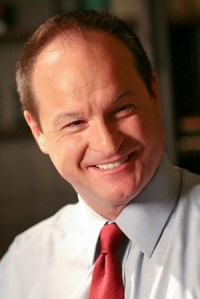
|
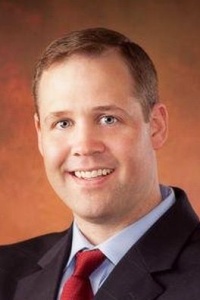
|
| 79+ | 8 |
|
20120306 AI |
20120214 IP |
Wednesday afternoon I contacted Chris Medlock of the Bridenstine campaign seeking comment from Bridenstine about his voting record and offering him the opportunity to explain his delay in registering to vote after returning to Oklahoma, his failure to register early enough in 2010 to vote for one of the candidates challenging Sullivan in the primary and to vote in a long list of contested statewide primaries, and his failure to vote in the 2012 presidential primary. Medlock acknowledged receipt of the request, but I have not yet received a response from the candidate.
One further interesting note: According to Tulsa County Election Board records, on April 18, 2011, before ever casting an Oklahoma vote but shortly after announcing his congressional exploratory committee, Bridenstine made one change to his record, adding the letters LT to his name in the suffix field. LT is the abbreviation for the military rank of lieutenant. Typically, a suffix is used to differentiate between generations with the same name (e.g., Sr., Jr., III). Bridenstine is the only registered voter in the 1st Congressional District with the suffix LT, and one of only six voters that I can find with a suffix that could be a military title.
DISCLOSURE: John Sullivan for Congress is an advertiser on BatesLine. I perform computer data processing services for the campaign, as I have done in each campaign since Sullivan's first congressional race in 2001. This investigation was undertaken at my own initiative, at my own expense, and on my own time.
In a web op-ed attacking House GOP leadership (or lack thereof) for thwarting amendments to cut wasteful spending in the Energy and Water Appropriations Bill, Richard Viguerie, a prominent leader in the national conservative movement since before the Reagan administration, singled out votes on eight defeated amendments. These eight amendments to cut spending by over $5 billion were offered by Republicans, but Republican House leadership didn't rally support for the cuts.
So how did Oklahoma's congressional delegation vote? A BatesLine analysis of the eight votes identified by Viguerie shows that John Sullivan (R, 1st District) voted for six of the cuts, leading the delegation, with James Lankford (R, 5th District) close behind with votes for five of the cuts. Republicans Frank Lucas and Tom Cole voted for a single cost-savings measure of the eight -- "prohibiting funding of Davis-Bacon union wage requirements." Democrat Dan Boren didn't vote for any of the cuts.
John Sullivan was the only Oklahoma congressman to vote in favor of California Republican Tom McClintock's amendment to save $514 million by eliminating nuclear energy research subsidies, and the only Oklahoma congressman to support Arizona Republican Jeff Flake's proposal to save $87.5 million by holding spending across the board to FY 2012 levels.
How was my Saturday at the Oklahoma Republican State Convention, you ask? It was about like this:
UPDATE: This was meant to be a tongue-in-cheek placeholder for my own detailed account of what happened, but I am still playing catch up with my offline responsibilities. Here are accounts by others of the 2012 Oklahoma Republican State Convention.
David Tackett, a delegate from Wagoner County and the Republican nominee for State House District 12, wrote from the perspective of someone who worked the registration desk and served on the credentials committee and someone who has often been on the outs with the party establishment. Tackett writes that "both sides messed up":
I was one of the volunteers who helped check in people. So I can answer exactly what the problem was.... new software, delegates who pre-registered incorrectly (we had several who registered as guests or typed their name differently than what was provided by their County Chair), and volunteers who entered in data wrong during the check-in (entering people as guests instead of delegates).It was, frankly, insulting to hear people from the RP clan suggest fraud was committed by the credential volunteers. (I.e. badges weren't secured, etc.) I know each and every single one of the volunteers who helped with the process and not one has EVER done anything unethical....
Now let's hit another issue... It was clear from the first test vote that the voting came down 60/40 (about a 500 delegate difference) each and every vote... be it voice vote (hey, let me give the RP people credit for having some MASSIVE lungs!), standing vote, or secret ballot.
It wasn't close, the RP faction was in the minority. And so whether it was standing vote or ballot, the state committee's slate would have been approved. But, I know why all these motions and point of orders were happening... because I was told by several of the RP delegates that this was their plan... to drag out the process until everyone else left then they could redo the vote and get their slate in.
Liam Ferguson is a newcomer to the convention process and he also posted a detailed account:
And, while Paul received about nine percent of the vote in Oklahoma, somewhere between 25 and 30 percent of the voting delegates present were Paul supporters.But, that wasn't enough because it wasn't a majority and what the Paul supporters didn't have was a realistic understanding of politics. They seemed to truly believe that having zeal, having a command of parliamentary procedure and being "right" would carry the day. What they failed to understand is that, while it sometimes takes awhile, a committed majority always wins. Not only because they have the votes, but because any dispute involving the rules always gets referred to the convention where, you guessed it, the majority rules--just as it will at the national convention. Colonel Robert never proposed his rules to guarantee that truth, justice and the American way would prevail. He simply proposed them as a way of expressing the majority will in an orderly fashion. Which is why the "point of order" and "point of information" aren't acting as magical force fields to stop the Romney nomination the way Paul's supporters seemed to be hoping they would.
David Byte, who developed the registration software used at the convention, has written An Open Letter to Ron Paul Supporters.
Where we differ in what we are doing today is this. While you are trying to win on technicalities of rules and disproprtional representation in precinct meetings and conventions, we are out working and winning at the local level. We are hammering away at our candidates trying to ensure that we are getting conservatives into office and hold them accountable for their actions. This is an area where the RP support team has been vastly silent. So silent in fact, that it is a generally accepted idea that we won't see most of you again until 2016 once this convention cycle is over.What this creates is a general lack of acceptance within conservative republican ranks for the RP supporters as it is felt (often rightly so) that you are coming in to hijack a process that we have been working with for months and years to ensure inclusion for conservatives and the spread of the conservative message. Now, I know you will say that not all county parties are like that and I will agree. But if you want to change that, you have to show up and volunteer. Do you know how many RP supporters have been present at the events our county party participates in since the last election cycle (3 festivals per year, multiple parades, and other events)?
What's your guess? Ten?, Six? two? How about zero! That's right, not a single one! ...
By working in the mid-term cycle in conjunction with groups like the Tea Party and 912ers, the RP support team would be able to greatly influence a turn back towards conservative ideals that is necessary for the survival of our Republic. Don't expect to come into the party and win leadership positions, rather come in and volunteer and stay involved and the leaders among you will float to the top and end up in postions where you are able to help direct America towards a brighter future.
And finally, Ron Paul supporter Suriyah Fish, a delegate from Cherokee County, captured some of the real convention and nearly all of the Ron Paul parking lot convention on her Ustream channel.
There's something creepy going on with email in the race to be Oklahoma's next Republican National Committeeman.
If you're a delegate to the 2012 Oklahoma Republican State Convention, you've been getting a barrage of emails from Richard Engle, candidate for Republican National Committeeman, announcing endorsements from a surprising mixture of people, including disgraced former Speaker Lance Cargill.
What's especially odd about these Engle emails is that they have no substantive text. If you have automatic loading of remote images turned off in your email program -- and you should, for your own Internet safety -- you won't see anything in these Engle emails but a blank space where the image would be and a link labeled, "Is this email not displaying correctly? View it in your browser."
Now, it's not unusual for a mailing list to include a remotely hosted image -- a logo perhaps, or a large photo. A link uses less disk space and bandwidth than embedding the image into the message. But good email etiquette and politeness to the blind demand that you put in an alternative text for the image -- e.g., the name of the company in text form as an alternative to the logo. Typically in these cases, the bulk of the message is plain text, readable even if you choose not to load the remote image.
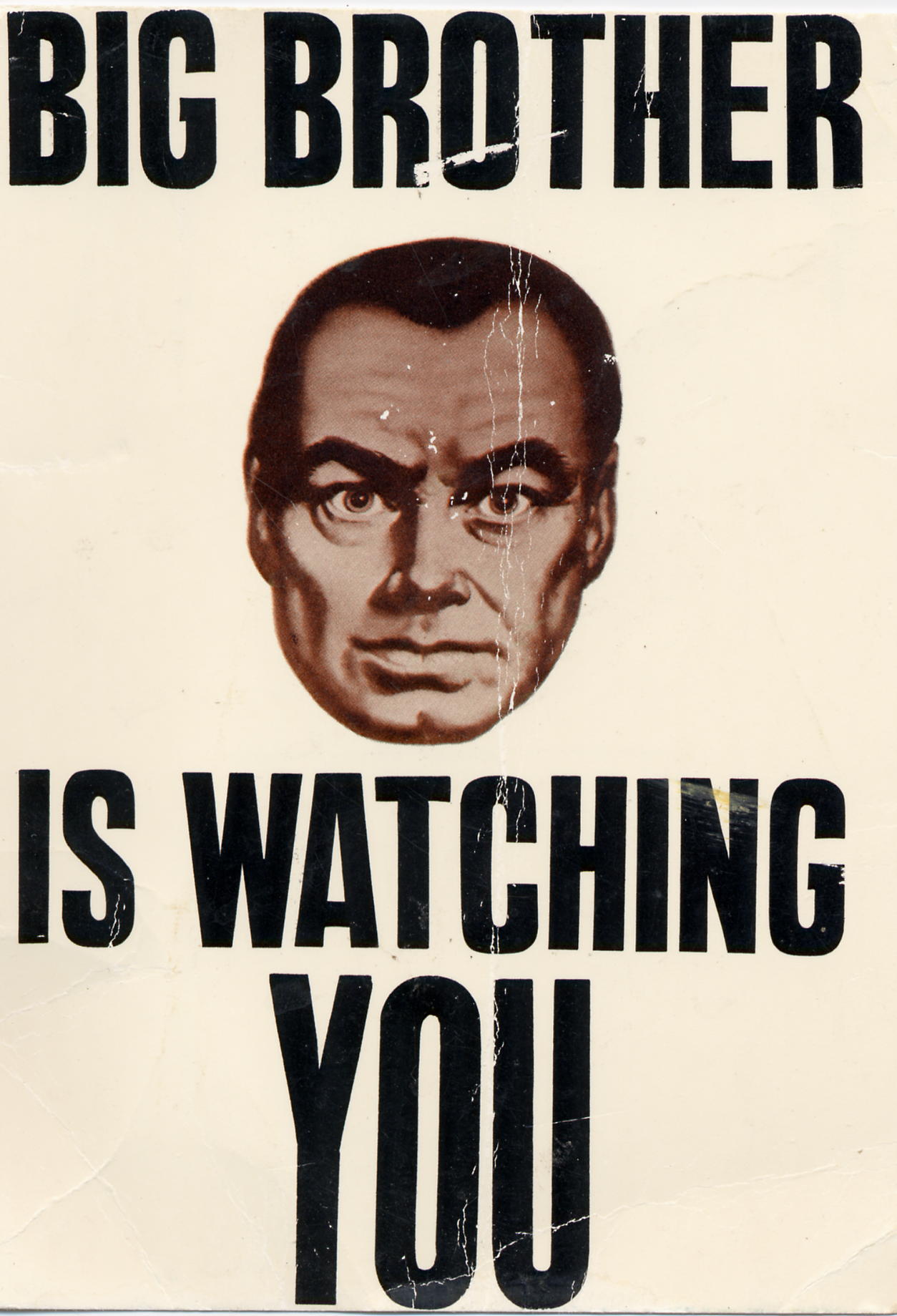 But Richard Engle's emails are different. He's embedded the text of the message in a big image which is located on a remote server. The image is not attached to the email. You can't read it unless you allow remotely hosted images to load, or unless you click the "View it in your browser" link. Among other things, this means you can't cut and paste the text of the message, you can't make the text bigger, and you can't use text-to-voice software to read it to you aloud (more disadvantage for those with limited vision).
And when you load remote images or click the "view it in your browser" link, the server that hosts the endorsement image logs your Internet Protocol (IP address) with a URL that looks like gibberish but actually is a unique identifier tied to your email address. Engle will be able to know which of the endorsement messages you have looked at and which messages you've ignored. More importantly, he will have the IP address of the computer from which you opened his email, and it would be possible to match it with other internet activity.
For most residential users, your IP address, which changes from time to time, only reveals, for example, that you're a Cox or AT&T customer. This email-based data-gathering system makes it possible for someone to pinpoint that a given address is likely to be yours. With multiple emails, you might open some at home, some at work, some at your favorite coffeehouse. Engle would be able to tie your email address to each of these IP addresses and might have enough information to establish a pattern of internet usage. The internet server logs would also let him know what operating system you're running on each of those computers and what web browser or email client you're using.
As Yakov Smirnoff might say, "In Soviet Russia, email reads you!"
Engle could use this feature to build a database of thousands of Oklahoma Republican activists, matching name to email address to one or more IP addresses. Win or lose the RNC position, Engle would have an asset with economic and political value.
Why would someone want to do this? The person sending the email could use this setup to determine who is posting unfavorable anonymous comments on a message board or sending unfavorable anonymous emails. The mailer could sell the database to website owners, who might use it to track an activist's internet activity for commercial or political advantage.
With this database, one could set up a trap: send an email to the same list from a fake "From" address, advertising some illicit website. The database may be able to pinpoint which individuals clicked that nasty link, and suddenly, "You've got blackmail!"
This odd way of sending email has absolutely no advantages to those receiving the email, but it could be very advantageous to the sender.
Is it possible that Engle is doing this innocently? Sure. But this is such an unnatural way to send an email, I have to believe it was done deliberately by someone (perhaps Engle, perhaps someone else). You have to take some time and care to arrange a huge block of text in an image file, rather than just typing the message into an email. That turtle didn't get on that fencepost all by itself.
For the rest of us: Set your email client not to load remote images automatically. Look at carefully at any link in an email before you click it. If there's a lot of incomprehensible code at the end of a URL, it's likely that the sender's email system can track your click to your email address to your IP address and report that information to the sender.
MORE:
About.com: How Reading an Email Can Compromise Your Privacy: How this privacy attack works and what countermeasures can be used.
Last week, on April 26, when State Rep. Mike Reynolds tried in vain to appeal the ruling of the speaker pro tempore, so that the Personhood bill (SB 1433) would be heard, only 15 other state representatives were willing to stand with him. This in spite of the fact that SB 1433 had passed the Senate by a wide margin (34-8) and was given a "do pass" recommendation by the House public health committee (7-4). But House Speaker Kris Steele had killed the bill, claiming that it was in response to a caucus vote not to allow it to move forward.
An appeal of the speaker's ruling requires 15 seconds. The speaker pro tem, Hickman, seemed not to see Reynolds's appeal or the seconders. Here, according to Charlie Meadows of OCPAC, are the 18 that demonstrated a willingness to give this bill a fair hearing and an up-or-down vote:
Mike Reynolds (R) *
Gus Blackwell (R) *
Paul Wesselhoft (R) *
Mike Christian (R)
Aaron Stiles (R)
Lewis Moore (R) *
John Bennett (R) *
Sean Roberts (R)
Charles Key (R)
Jason Murphey (R)
George Faught (R) *
Sally Kern (R) *
John Trebilcock (R)
Mike Ritze (R) *
Randy Terrill (R)
Rebecca Hamilton (D) *
R.C. Pruitt (D)
Richard Morrissette (D)
Those with stars after their names also appeared at a news conference last week in support of SB 1433. In addition to those listed above, Josh Cockroft (R), Ralph Shortey (R), and two candidates, Paul Blair (challenging Sen. Clark Jolley in the Republican primary) and Dan Fisher (running for an open House seat), spoke at the the news conference. Meadows notes that Hamilton is a genuine supporter of the sanctity of human life, but questions whether Morrissette's motive was to "stir controversy among Republicans."

Here is video, posted by Personhood USA, of what took place, as Rep. Reynolds sought to suspend the rule, to bypass the floor leader, so that the bill could be heard over the objection of the Majority Floor Leader (Dale DeWitt, R-Braman). Rep. Randy Terrill (R-Moore) points out that Hickman's ruling creates a Catch-22, where there is no way that even a supermajority of the House could move legislation that the Floor Leader seeks to block. This goes well beyond the pros and cons of this particular bill and raises the question: Is the State House a legislative body, or an elected dictatorship?
As you see the end of that video, Hickman claims that there were not 15 standing seconds. But State Rep. Jason Murphey, R-Guthrie, captured video from his seat showing Hickman improperly ignoring Reynolds' appeal and those who stood with Reynolds.
The video shows the list of representatives who then voted to adjourn. This vote may have appeared nothing more than procedural, but it halted Rep. Reynolds' attempts to be recognized for the purpose of overruling the chair and suspending the rules so that the personhood bill could be heard. April 26 was the last day Senate bills could be heard on the House floor, so anyone voting aye for adjournment voted to pierce the personhood bill's head, vacuum its brains out, and collapse its metaphorical skull for ease of disposal.
I would be very interested in hearing from those avowed pro-life Republicans -- many of whom have moved important pro-life bills in the past, even in this session -- who refused to give their public support to ensure that this bill was brought to a vote, and why they instead supported killing it in utero, as it were, by their silence.
 MORE: I received an pseudonymous email on Thursday (probably from a campaign operative for one of the District 2 carpetbagger candidates -- no way to know for sure, can't prove it, but the motive is there), claiming that George Faught did not speak in support of the personhood bill in caucus, and that Faught's public statement in support of SB 1433 cost him the endorsements of State Reps. Steve Martin and David Derby. I'm not sure how this operative knew what went on behind the caucus's closed doors, but it doesn't matter. Faught spoke in support of SB 1433 publicly and stood for it when it counted. Martin and Derby did not, and that they would withdraw support from Faught because of his statement suggests that they care more for caucus politics than the sanctity of human life. Derby and Martin are welcome to try to convince me that my assessment of their wobble is wrong, but it will take some very solid reasoning and facts to convince me. (UPDATE: David Derby responds, noting that he voted against adjournment and supported the bill on each caucus whip count.)
Here's the key to the 2nd Congressional District: There's the carpet cleaner -- George Faught, long-time resident of Muskogee, who runs a successful carpet cleaning business in addition to his service to the legislature -- and then you have some carpetbaggers, people who recently moved into the district after living outside the district for decades. District 2 has been represented by "newly arrived residents" since Brad Carson moved to Claremore from midtown Tulsa and won the open seat in 2000. Vote for the carpet cleaner and send the carpetbaggers packing.
BatesLine is pleased to welcome a new advertiser: John Sullivan for Congress. First elected to replace Steve Largent in a 2002 special election, Congressman Sullivan is seeking re-election to his sixth full term. His ads highlight his consistent conservative record, as evidenced by ratings by conservative watchdog groups like Numbers USA (enforcement of immigration laws), Club for Growth, Citizens against Government Waste, and National Taxpayers Union (fiscal conservative, tax and budget), National Right to Life (sanctity of human life), National Rifle Association (Second Amendment rights), and the American Conservative Union (full range of conservative issues).
I've known John Sullivan since long before I started blogging, before I became any sort of public figure. I first met him sometime in the 1990s, during his time as a state representative, when, as a member of the small Republican minority in the State House, he championed the effort to eliminate the sales tax on groceries. I encouraged him to run for State Senate when the seat opened up in 1996, but for family reasons he opted to stay in the House. When Steve Largent resigned his congressional seat in 2001 to run for governor, John phoned me, a precinct chairman, to let me know that he was running.
At the beginning of that special election, John Sullivan was running a distant third in the polls. First Lady Cathy Keating was the best known candidate and the odds-on favorite. But conservative grassroots activists liked what they saw in Sullivan and rallied around him, and I joined them in putting my name on his hundreds-long list of endorsements. A month or so later, I got a call from one of his campaign volunteers, someone I'd worked with on Sue Tibbs's campaigns, asking if I could pick up the campaign's data processing work. Thanks to the hard work of the candidate, his campaign team, and his team of volunteers knocking doors and making phone calls, John Sullivan came from a distant third to finish first in the primary, close enough to an outright majority that Cathy Keating opted to withdraw rather than continue on to a runoff. Sullivan won the general election handily over his Democratic opponent and hasn't faced a significant primary or general election challenge since then.
When I ran for City Council in 2002, newly elected Congressman Sullivan was the guest of honor at a fundraiser. I'm proud to consider John a friend and to continue to be a part of his team. We have had a small number of disagreements -- it was a mistake for him and Sen. Coburn to vote for the revised version of TARP in 2008 -- but we've been in agreement on nearly every controversial congressional issue, including some issues, like strict immigration enforcement, that put him at odds with Chamber of Commerce types.
His primary opponent has an impressive resume and is a likable person. But it strikes me that it's much easier to oppose something like TARP in hindsight, years after the frightening global financial circumstances that led to its adoption, than to speak out against it at the time. For all the years I've been involved in local politics, I can't recall any occasion when this gentleman has taken a controversial public stand on any issue, prior to his decision to run for Congress. He seems to be the latest victim of a group of Republican political consultants who have been trying unsuccessfully for years to find someone to unseat Sullivan.
Those who have known me for a long time know that I haven't hesitated to drop support for an incumbent Republican and back a primary challenger when circumstances warrant. But in John Sullivan we have a consistent, across-the-board Oklahoma conservative with growing seniority and influence in House leadership. I'm pleased to support his re-election and to have his support as an advertiser on BatesLine.
I received word from Chris Medlock that Ron Paul supporters won all three national delegate slots and all three alternate slots at the Saturday, March 31, 2012, Oklahoma 5th Congressional District Republican Convention. Medlock reports that turnout was light (only about 200 delegates), and that runoffs for each delegate slot favored the Ron Paul supporter by about a 52% to 48% margin, meaning that higher turnout by the non-Pauls could have meant a complete shutout of the Ron Paul fans.
In the March 6, 2012, Oklahoma primary, Ron Paul finished fourth in the 5th Congressional District with 10.4% of the votes cast.
Although the three delegates are bound by state party rules and the results of the March 6 primary to cast one vote each for Mitt Romney, Rick Santorum, and Newt Gingrich, if no presidential candidate gains a majority of delegates on the 1st or 2nd ballots at the Republican National Convention, or if their candidate releases his delegates, the delegates would then be free to vote their personal preference. It is possible that if enough Ron Paul supporters are elected to go to Tampa, they could pass party rules that would free all delegates from any binding commitments.
I am hoping to get specific numbers -- ballots cast, voting by round -- to analyze what happened. I am told that the 5th CD used a different runoff method than we've used since 2000 here in the 1st CD, and it's possible that their runoff method would allow the will of the majority of delegates to be thwarted, depending on the number of candidates in the race. The 1991 Louisiana governor's election is a classic example of a two-person runoff for a large field resulting in two finalists who are each loathed by a majority of the electorate.
MORE: What happened at the CD 5 convention is a continuation of the Ron Paul campaign strategy I wrote about in 2008
An unknown, untraceable organization called "Protecting Oklahoma Values" has sent three postcards to voters in support of Oklahoma House District 71 Democrat candidate Dan Arthrell and attacking Republican nominee Katie Henke. The District 71 seat is the ballot next Tuesday, April 3, 2012, in a special election to fill the vacancy left by Dan Sullivan.
Apparently unable to find anything negative about Henke personally or poiltically, the shadowy group behind the postcards seek to label the female candidate in the race as the anti-woman candidate by linking her to what is described as a "disgusting pattern of behavior towards women" by "the right-wing Republicans at the State Capitol."
The postcards supporting Arthrell make a series of claims, most of which are accompanied by footnotes with long URLs, which add credibility, but which are too long to tempt a voter to type them in order to compare assertions to reality.
CLAIM: Right-wing Republicans at the State Capitol "tried to cut funding to a Tulsa County program that provides nutrition for women and their children."
FACT: No source material was identified to back up this assertion.
CLAIM: Right-wing Republicans at the State Capitol "passed a law saying that birth is not a qualifying event for health coverage."
FACT: The item linked in the footnote is an emergency rule issued by the Insurance Department, not a law passed by the legislature. The rule deals only with "child-only" medical insurance policies and an adjustment in language to encourage more insurance companies to participate in the next open enrollment period and to write child-only medical policies in Oklahoma:
The lack of participation by insurers in the 2011 open enrollment period necessitates change to the rule in an effort to encourage insurers to participate in the 2012 open enrollment periods. During an open enrollment period, children under the age of nineteen (19) shall be offered coverage on a guaranteed issue basis, without any limitations or riders based on health status.
So the Republican Insurance Commissioner was trying to encourage more options for all children to have medical coverage.
CLAIM: Right-wing Republicans at the State Capitol "passed laws that may restrict women's access to infertility treatments and are forcing women to have invasive ultra sounds."
FACT: The first half of the statement refers to a claim by an infertility doctor that personhood legislation would hurt his business. One personhood bill, SB 1433, passed the Senate and is pending in the House. The other, HJR1067, which would put a constitutional amendment before the voters, appears to be dead for this session.
The second half of the statement refers to the 2010 law requiring that an ultrasound showing the unborn child be done prior to an abortion. The claim that an ultrasound is invasive is ludicrous compared to the invasiveness of the instruments used to scald, poison, and dismember an unborn child in an abortion.
CLAIM: Right-wing Republicans at the State Capitol "required personal information about women's gynecological history be reported to state agencies."
FACT: The footnote refers to the Statistical Abortion Reporting Act, 63 O.S. 1-738, which requires an abortion provider to submit a form to the State Department of Health for each abortion and a separate form for any abortion resulting in medical complications. The forms do not contain personally identifying information about the former mother on whom the abortion was performed. The purpose of the law is to gather accurate and complete statistical information about abortion in Oklahoma.
CLAIM: Right-wing Republicans at the State Capitol "continued to take away local control from our schools, interfering in our decisions about the education of our children."
FACT: The link is to a story about Tulsa Metro Chamber President Mike Neal, complaining about the prospect of the State Department of Education bringing in outside management to fix low-performing Hale High School in Tulsa. If our schools can't meet minimum standards, what does it say about "our decisions about the education of our children?" And what about the Democrats and local school officials who oppose school choice and sued to toss out the Lindsay Nicole Henry Scholarship law? Aren't they interfering in parents' decisions about the best education for their children?
The postcard goes on to try to plant blame on Katie Henke for the vulgar email sent by an insurance department employee (he was fired for his offense) and out-of-context comments by State Rep. Sean Roberts and State Rep. Sally Kern.
The postcards bear a strong resemblance to those sent out by an anonymous group in last year's Tulsa City Council election. Could the postcards be an act of revenge by a Republican political consultant against a Republican candidate that didn't purchase the consultant's services or an attempt to clear the way for a consultant-backed Republican candidate to run against Arthrell, who would, as a Democrat, be vulnerable in the regular general election in November? (NOTE: Consultant Fount Holland phoned to say that his firm had nothing to do with these mailers, and that in fact his firm is involved with independent expenditures in support of Katie Henke, and that he would never be involved with a pro-abortion or anti-pro-life mailer.)
A lifelong Tulsan, Katie Henke is a school teacher and is active in Tulsa civic organizations. As a Republican in an overwhelmingly Republican legislature, Henke would be in a much better position than Arthrell, a Democrat who would be part of a tiny minority, to influence legislation at the State Capitol.
UPDATE: Current speculation among insiders is that this mailer is the work of Democratic consultants, former Democratic operatives within the state party and state legislative apparatus.
MORE 2012/04/05: Ethics filings show that Protecting Oklahoma Values was organized on March 24 (Kimberly Grayson, chairman, Reid Nichols, treasurer), with the purpose of "To run an independent expenditure in HD 71." It was funded by George Krumme ($5,000 on March 26), Anthony Laizure ($1,000 on March 29), and Ed Abel ($2,000 on April 2). The funds were spent with Heartland Media of Oklahoma City: $4,186.16 for mail on March 27 and $1,000.00 for phones on March 30.
 The following Statement of Principles was adopted as part of the 2012 Tulsa County Republican Platform at the Tulsa County Republican Convention on Saturday, March 24, 2012. It is identical to the Statement of Principles section in the 2011 platform and is nearly identical to the Statement of Principles in the 2003 platform, differing by only 20 words or so. The 2003 statement is not original to that year, but constitutes a consolidation of the preamble to the platform as a whole and preambles to individual sections as found in the 2001 platform. Much of the text almost certainly predates 2001. It is the work of many people over many years.
STATEMENT OF PRINCIPLES"God who gave us life gave us liberty." - Thomas Jefferson
The United States has attained its position as a world leader and champion of freedom by protecting our God-given liberties.
We believe our rights come from our Creator. We believe in the unalienable rights of the individual. It is a government's first duty to protect these God-given rights: to life; to liberty; to property; to the pursuit of happiness.
Government is but one institution among many that exist to serve the common good. Families, religious communities, businesses, the press, and a host of voluntary societies have their roles to play in meeting the needs of society. As Republicans, we seek to reform government so that it performs its proper role with excellence and efficiency, while leaving room for the other institutions of society to thrive.
We believe that today's government is too large and intrusive, exceeding its proper scope, doing things for which individuals and private organizations are best equipped. We believe families, communities, and institutions of faith can best teach the American values of honesty, responsibility, accountability, hard work, compassion, and mutual respect.
We believe that the functions of government should be handled at the level nearest and most accountable to the people. The Tulsa County Republican Party seeks to apply these time-honored principles at all levels of government:
- Faithful adherence to the U.S. Constitution as originally intended;
- The sanctity of human life, from the moment of conception to its natural end;
- The equality of all people before the Law - that individuals should be judged without regard to race, gender, creed, disability or age;
- Public integrity - enforcing and administering the laws justly, in the fear of God;
- Restoring and preserving Judeo-Christian morality in our culture;
- Respecting the dignity of each individual and the integrity of families;
- Fiscal responsibility and restraint;
- Defense of property rights;
- Promotion of free markets, free trade and freedom throughout the world.
At the Federal level, we call for maintenance of a strong national defense, protection of our freedom of religious expression, and protection of our rights as law-abiding individuals to keep and bear arms.
We support the right of Americans to retain their hard earned wages through the substantial reduction of the federal income tax rate and the establishment of a fair system of taxation.
We believe in personal responsibility and individual accountability. We desire to limit government involvement in the lives of families and individuals. We believe that a sound, traditional family unit is essential to the strength, stability, and success of our nation. We will defend the institution of the family against those who seek to use the levers of government to undermine or redefine it.
We believe inefficient government programs have displaced individual responsibility, compassion, and involvement in our communities. We will work to reform or eliminate impersonal, inefficient and redundant programs, while encouraging individuals, families, and private organizations to exercise their civic responsibilities, act with genuine compassion and offer assistance and care to people in need.
We believe it is the right and responsibility of parents or legal guardians to direct the upbringing and education of their children, without interference, regulation, or penalty from the government.
We therefore support the right of parents or legal guardians to choose the method of schooling for their children, whether public, private, charter, home schooling, or other means of education, without interference from the government at any level.
In our public schools, we seek to restore academic excellence. We believe the primary goal of our educational system should be to teach proficiency in the essential subjects, not to indoctrinate children in a worldview at odds with our nation's heritage.
We believe the best choices are not always the easiest, and that decisions which take commitment, sacrifice and perseverance result in more honorable, longer-lasting solutions. We believe the Republican Party provides the best opportunity to translate these ideals into positive and successful principles of government.
The intent of this section is to set out the timeless principles that motivate our involvement in the political process as Tulsa County Republicans. The remaining pages of the platform consist of detailed platform planks, applying these principles to current concerns.
This year's platform committee approved a draft containing a preamble which replaced the statement of principles. Gone from this preamble were any references to the sanctity of human life, the importance of marriage and the family (as traditionally understood), religious institutions, and other mediating institutions to the health of our society. There were no mentions of public integrity, education, parental rights, or morality.
Eleven members of the Platform Committee, led by Steven Roemerman, signed a minority report, proposing to replace this new preamble with the Statement of Principles from previous years, which you see above. Here is the text of the motion:
Whereas conservative social values such as the sanctity of human life, marriage, and the family and public integrity are core values of Tulsa County Republicans and therefore warrant prominence in our party's platform,Whereas social issues have had prominence in the Statement of Principles for our Tulsa County Republican Platform for many years, but have been omitted from the Preamble submitted in this year's proposed platform,
We, the undersigned members of the Platform Committee to the 2012 Tulsa County Republican Convention, offer this minority report to the Convention, to wit, amending the Platform Committee's report to substitute the Statement of Principles from the 2011 Tulsa County Republican Platform (attached) in place of the committee's proposed Preamble.
After debate, the motion was approved by the convention by an overwhelming margin. The resulting platform consists of the above Statement of Principles and the individual platform planks that had been approved by the 2012 Platform Committee.
During my remarks (which, like Roemerman's, focused on the issue at hand and did not cast aspersions at any individual or question anyone's motives), I quoted Congressman Mike Pence, who was quoted in a recent column by Mark Steyn (well worth reading in full):
To those who say we should simply focus on fiscal issues, I say you would not be able to print enough money in a thousand years to pay for the government you would need if the traditional family collapses.
(In a similar vein, Phyllis Schlafly's latest column is titled "Phony Divide Between Fiscal & Social Issues.")
I will have more to say about this in the next day or two, but for now I wanted to get the substance on the record.
MORE: Here is the Tulsa County platform committee majority report (1 MB PDF), with the Preamble (the section that was replaced) highlighted.
Tulsa County Republican activists gathered today at the Union High School Performing Arts Center to decide on delegates to the congressional district and state Republican conventions and to adopt a platform that will inform the work of platform committees at the state and national conventions. The only dispute in the peaceful and surprisingly brief convention involved restoring the long-time "bold colors" Statement of Principles to lead off the county platform, in place of the watered-down "pale pastels" preamble that had been approved by this year's committee. (I'll detail that dispute in a separate entry, but thanks to Steven Roemerman and several other members of the platform committee for their willingness to present a minority report.)
After the chaos at many Missouri county caucuses last Saturday (see first-time attendee Duane Lester's account of the Nodaway County caucus) and reports of strife at the Oklahoma County convention earlier in the month, there was some nervousness about a conflict in Tulsa between newcomers supporting Ron Paul and long-time conservative activists at our convention.
As it happened, the convention went very smoothly, starting with the final gathering of the rules committee before the gavel this morning. The rules committee, made up of supporters of a variety of presidential candidates, unanimously approved a couple of final tweaks to the rules. And although a SNAFU resulted in an earlier version being printed distributed to delegates, only one delegate, a Ron Paul supporter, got upset by the lack of an accurate printed copy, and the upset didn't last long. The platform dispute I mentioned didn't break along lines of presidential preference, but boiled down to an old-timer who has been trying for years to water down the platform and got farther this time than ever before.
The need to hear and resolve 30 credentials appeals delayed the start of official business by nearly an hour and a half. The appeals panel of five heard from people who tried to attend their caucus, but it wasn't held at the advertised time and place, people who were elected as county delegates but whose name was left off of the precinct's delegate list, and a couple of people who just registered to vote and thought they should be able to participate.
While waiting for the credentials committee to complete their work, we heard from Congressman John Sullivan on his energy-independence efforts, Corporation Commission chairman Dana Murphy and Commissioner Bob Anthony, Oklahoma's longest-serving statewide official, State Auditor and Inspector (and former GOP state chairman) Gary Jones, state chairman Matt Pinnell, Tulsa County Commission chairman John Smaligo, Insurance Commissioner John Doak, and State Senator Rick Brinkley, among others.
The oddest moment of the day: After concluding his speech and starting up the aisle away from the stage, Tulsa Mayor Dewey Bartlett Jr stopped at my row, extended his hand to me for a handshake, waited for me to look up -- I was typing on my laptop and wasn't paying close attention -- and said, "Where'd you get all that gray hair? What happened?" I shook his hand and gave him a puzzled look in return. (I've had all this gray hair for about seven years. I don't dye it.)
But once started, things rolled quickly, with adjournment coming at 2:45 pm, more than an hour before the expected close of business. The reports of the credentials (who's qualified to vote in this convention), rules (how we conduct business in this convention), and delegates (who will we send to the next level of conventions) committees were adopted with near unanimity.
Four proposed changes to the state party rules were approved for recommendation by wide margins -- these will be brought before the state convention in May. The proposed rule changes would:
- eliminate any gender quotas on members of state and district committees,
- remove the right to seats at the county convention for precincts with no voters and for precincts that fail to hold caucuses by the state deadline,
- require that only elected county convention delegates and elected officials can be delegates for their counties at the district and state conventions, and
- require Republican candidates to declare their areas of disagreement with the state party platform.
In their pre-convention session, the rules committee adopted two last-minute changes. One of the changes was to allow candidates wishing to address the convention (including some candidates challenging incumbent Republicans) a few minutes to speak during the lunch break.
The other change simplified the process of determining who would go as Tulsa County's delegation to the state and congressional conventions, where national convention delegates are selected. If the county voted to send an "open" delegation to both higher-level conventions, those delegations would consist of every delegate elected by their precinct to the county convention, rather than requiring delegates to sign up. While it is theoretically possible that a thousand or so delegates would show up to share Tulsa County's 331 votes, the usual situation is that a fraction of the total will show up, particularly to the state convention. This approach to filling the delegate list broadens the possible pool of Tulsa County delegates, improving the likelihood that we'll be able to claim all of our votes. And, at my instigation, we made this form of open delegation the default, in the event that delays or disruptions prevented the convention from electing delegates before adjournment. (This topic deserves an entry of its own for a full explanation.)
County Chairman J. B. Alexander, Vice Chairman Mike McCutchin, convention chairman State Sen. Dan Newberry, convention parliamentarian former State Rep. John Wright, convention secretary Melinda Voss, and credentials committee chairman Ted Darr deserve much credit for the smooth convention. Following state rules strictly and developing and following strict guidelines to cover ambiguities in the state rules may be the difference between a peaceful convention and a contentious convention.
Pretty, pretty, pretty, and we get our first look at it tonight. Oklahoma's new election processing system comes with a fancy new election night reporting system, making it possible to see every race in the state -- from town trustee to president -- to see the results for each precinct as soon as it arrives at the county election board, and to know how each precinct and county has voted. It will make it much easier to analyze trends and project results.
Here's a direct link to the Oklahoma election night results website.
From a news release from the Oklahoma State Election Board:
Major features of Oklahoma's new election night results application include:
- Click the "State/Multi-County" button for state office results and aggregated results for multi-county local offices.
- Click the "County/Local" button to access a specific county's results page. (Note: County pages only include results for that county. For multi-county elections, aggregated results from all participating counties can be viewed on the State/Multi-County page.)
- Results are available in graph or tabular formats.
- Results may be viewed by county on the "State/Multi-County" results page, including viewing a map of the counties participating in an election.
- Results may be viewed by precinct on each "County/Local" results page.
- Results may be viewed by "type" - Election Day, Early Voting Absentee, or Mail Absentee.
- Election results reports can be exported in a variety of formats, including XLS and XML.
CORRECTION 2012/02/12: I had erroneously listed Evelyn Rogers as a librarian at ORU. According to her response to the House 71 League of Women Voters candidate questionnaire, she is a librarian at TCC, and I have corrected the text below accordingly.)
UPDATE 2012/02/12: See below regarding an odd complaint about this entry which appeared (briefly) on candidate Lydia d'Ross's website.
In addition to a handful of school board races around Tulsa County, there will be a primary on Tuesday, February 14, 2012, to fill a vacancy in House District 71. The incumbent, Dan Sullivan, resigned to replace Kevin Easley as head of the Grand River Dam Authority. The primary will choose two candidates to compete head to head on April 3.
District 71 covers the area between Lewis and Riverside, 21st and 81st, minus a small section just southwest of 21st and Lewis (part of Precinct 71). The district has almost always voted Republican, but this time there will be a Democratic primary, too. Democrat Roy McClain was the only Democrat ever to represent HD 71, winning the general election in 2002 after a scandal involving Republican incumbent Chad Stites surfaced too late in the process for Stites to draw a Republican challenger. Dan Sullivan defeated McClain for re-election in 2004.
The north end of the district includes some very expensive neighborhoods; the south end includes some middle-class subdivisions and apartment complexes, many of which are subsidized.
Four of the Republican candidates are women; both Democrats and one Republican are men.
Lydia d'Ross is the Oklahoma State Director of the National Hispanic Christian Leadership Conference (NHCLC). She has a Master's in Public Administration from Regent University School of Government. She serves on the Tulsa County Republican Executive Committee and the Greater Tulsa Hispanic Chamber of Commerce
Katie Henke is a native Tulsan, a graduate of the University of Alabama in early childhood development, and formerly a teacher at the Little Light House, Montessori School, and Riverfield Country Day School. She has served on the Tulsa County Republican Executive Committee. Her husband, Frazier Henke, is president of American Bank and Trust and has served as chairman of the City of Tulsa Board of Adjustment and vice chairman of the Tulsa County Republican Party.
Bonnie Huffines is a songwriter of Christian worship music, a former owner and operator (for 16 years) of a state-licensed day care, is a board member of the Brookside Neighborhood Association, and is active in local Republican organizations. She and her husband John Huffines have a Christian ministry called Jesus Praise 24-7, which appears to have as its goal establishing places where worship would take place around the clock.
Gerald Lovoi is an attorney. He ran in the Council District 9 Republican primary in 1998. (I remember appearing at a couple of candidate forums with him.) He does not appear to have a campaign website; the link goes to his law firm website.
TCC librarian Evelyn Rogers is a perennial candidate.for office. It doesn't appear that she has a website this time around.
Among the Democrats, Dan Arthrell is the Community Service Council's Director of Public Policy and Intergovernmental Relations.
Robert Walpole is an attorney and doesn't seem to have a website.
Here's the complete list of candidates, with website links where available.
Republicans:
Lydia M. D'Ross, 48, 7742 S. Victor Ave., Tulsa, OK 74136
Katie Henke, 31, 2300 Riverside Drive Unit 5E, Tulsa, OK 74114
Bonnie Huffines, 60, 256 E. 46 St., Tulsa, OK 74105
Gerald J. Lovoi, 51, 3905 S. Norfolk, Tulsa, OK 74105
Evelyn L. Rogers, 59, 6710 S. Quaker Ave., Tulsa, OK 74136
Democrats:
Dan Arthrell, 65, 1626 E 36 Place, Tulsa, OK 74105-3222
Robert J. Walpole, 57, 1133 E. 36 St, Tulsa, OK 74105
History of HD 71 representatives:
Warren Green (R), 1964-1976
Helen Arnold (R), 1976-1982
Bill Clark (R), 1982-1988
Rob Johnson (R), 1988-1994
John Sullivan (R), 1994-2002
Chad Stites (R), 2002
Roy McClain (D), 2002-2004
Dan Sullivan (R), 2004-2011
MORE: The House District 71 League of Women Voters candidate questionnaire was completed by four of the five Republican candidates and both Democrats. Lydia D'Ross did not return a questionnaire. From the responses, particularly on whether to reduce or eliminate the state income tax, it's apparent that the general election will feature a clear contrast between the Democrat and Republican nominees.
Four of the five Republicans responded to the House District 71 Oklahomans for Life questionnaire. (Neither of the Democrats did, and, once again, D'Ross was the lone Republican not to respond.) Of the four Republicans who answered the questionnaire, three -- Henke, Lovoi, and Rogers -- hold pro-life positions across the board, while Huffines gave pro-life answers to 10 questions and did not answer the remaining two questions which dealt with life-saving medical treatment.
And here is a strange: Sunday morning, February 12, 2012, Lydia d'Ross's website included a special page, headlined "Bateline News" [sic], with a link to this entry and the statement: "Bateline news writes about Lydia without permission." (Click to see full-size, as it appeared on a smartphone screen.)
By the time, I learned about it, the page had vanished, but a remnant still appeared in the Google search results (click for full-size):
The search result excerpt read: "Correction requested for Bateline News to amend statements made without a candidates permission."
There may be some confusion here about freedom of speech and freedom of the press.
And stranger still, it appears that a reference to the Greater Tulsa Hispanic Chamber of Commerce has vanished from her list of involvements on the home page of her website. A Google search for "hispanic chamber" site:lydiadross.net turns up three results, including her home page. The Google screen capture (click to view) shows "Greater Tulsa Hispanic Chamber of Commerce" between "Greater Tulsa Hispanic Affairs, Chair, International Committee" and "Tulsa Hispanic Human Resources Association," but a visit to the site at 10 p.m. Sunday shows that the Hispanic Chamber reference has vanished from her homepage.
 Subscribe to this blog's feed: